REVIEW · LAKE GARDA
A single ticket for the three museums – duration 30 days
Book on Viator →Operated by Torre di San Martino · Bookable on Viator
History comes with steep stairs.
This three-museum ticket around Lake Garda is a simple way to see key places tied to the Italian Risorgimento, with 30 days to use your entry. You can start at the Tower of San Martino della Battaglia and end in Solferino (or flip the order), and the experience is offered in English.
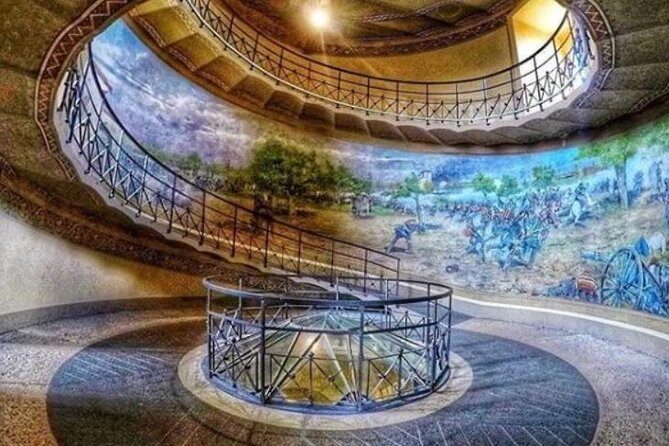
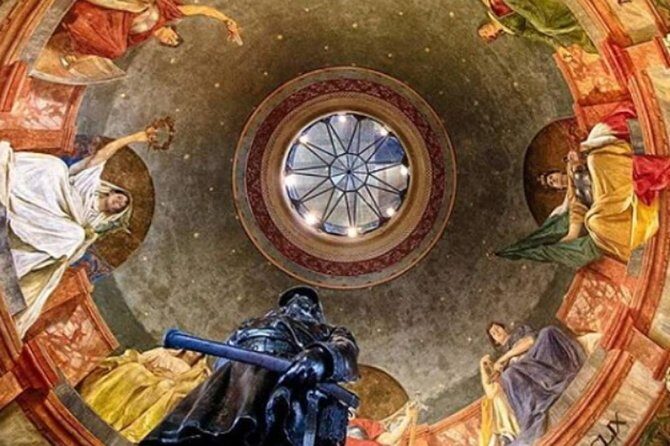
I especially like two parts. First, the Tower visit feels theatrical in a respectful way, with names projected on the walls and music playing as you begin, then a climb through rooms with frescoes up to the open roof for big views. Second, the whole complex is set up for reflection as well as sightseeing, with museum rooms covering the battle, and nearby spaces that help you slow down instead of rushing.
One drawback to plan around: the opening window is limited—Friday through Sunday only—and the site can be affected by seasonal closures or on-the-ground work. If you arrive late, some areas you expect to see may be fenced off, and getting there on time can be tricky if roads are under construction.
In This Review
- Key Things to Know Before You Go
- One Ticket, Two Towns: How This 30-Day Pass Really Feels
- Torre di San Martino della Battaglia: The Climb You’ll Remember
- The Tower Complex Beyond the Tower: Gardens, Museums, and the Ossuary Moment
- Rocca di Solferino: Fortress Views and the One-Hour Payoff
- Museo Risorgimentale di Solferino: Short Stop, Big Context
- Timing and Hours: Don’t Let Friday–Sunday Rules Trap You
- Price and Value: What $15.40 Gets You
- Logistics Without a Guide: Easy, But Not Automatic
- Who Should Book This Pass (and Who Should Rethink It)
- Should You Book This Three-Museum Ticket?
- FAQ
- What does the ticket include?
- How long do I have to use the ticket?
- How long should I plan for each museum?
- Where do I meet for the experience?
- Where does the experience end?
- What are the opening hours?
- Is the experience offered in English?
- Is a guided tour included?
- Is it refundable?
Key Things to Know Before You Go
- One ticket, 30-day validity: use it whenever you can within the window, not only in one day
- Torre di San Martino sets the tone: memorial-style opening and a climb through decorated spaces
- Rocca di Solferino adds the fortress perspective: spend about an hour here to connect the battle to the place
- Museo Risorgimentale is short but purposeful: give yourself the extra context in about 30 minutes
- Friday–Sunday hours only: plan your day around the listed times so you don’t miss rooms or roof access
- Self-guided pace: there’s no guided tour included, so you’ll want to go when you can take your time
One Ticket, Two Towns: How This 30-Day Pass Really Feels
This pass is built for flexibility. You’re not forced into a single group schedule. Instead, you get a single ticket valid for 30 days that covers three separate stops, letting you spread them out across a weekend or even a few trips if your days around Lake Garda are packed.
That matters because the sites are tied to two locations: San Martino della Battaglia and Solferino. You’ll start at the Tower of San Martino della Battaglia and finish at Rocca di Solferino if you go in that direction. If you reverse it, you’ll start in Solferino and end in San Martino. Either way, you’re putting together a short geographic story—battle → fortress/land → museum context—without needing a guided tour.
Also, this is a value play. At about $15.40 per person, you’re paying for entrance tickets to three museums that otherwise would be separate decisions. Even if you only do one site on a day you’d already be in the area, the ticket format makes it hard to feel like you’re wasting money.
You can also read our reviews of more tours and experiences in Lake Garda

Torre di San Martino della Battaglia: The Climb You’ll Remember

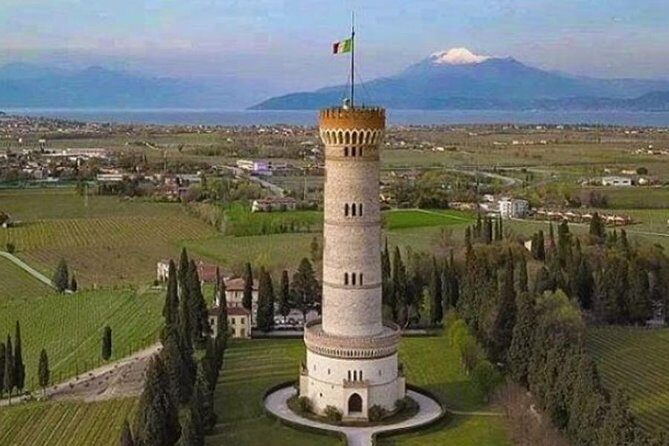
The Tower of San Martino della Battaglia is the centerpiece, and it’s the part where most people slow down and look around. The visit starts right at the entrance with projected names of soldiers on the walls and music playing in the background. It’s not loud or showy. It’s designed to make you register what you’re walking into.
Then you climb. Expect an active route with interior ramps and/or stairs through spaces that include frescoes and historical displays. The experience is very “hands-on with your own legs”—you’re moving upward as the story unfolds around you.
What I love is that the tower climb isn’t just for views. The museum rooms are part of the memorial framing: weapons, uniforms, equipment, and audiovisual elements explain the conflict and its meaning. You’re not only going up; you’re also learning while you go.
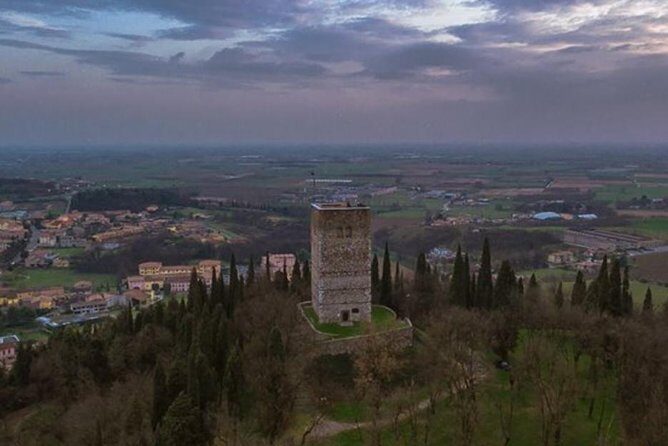
At the top, you get the open roof view. This is one of those moments where the physical work pays off: you can look out over the region and connect what you see now to what you’re reading inside. A simple bottle of water helps here, especially in warmer months when the climb can feel hot.
Practical note: planning your arrival time matters. If you show up when sections are closed or restricted, you might find that some historic rooms or viewing areas are inaccessible behind fencing. If you’re there for photos of the tower exterior or for roof access, don’t treat the hours like a suggestion.
The Tower Complex Beyond the Tower: Gardens, Museums, and the Ossuary Moment
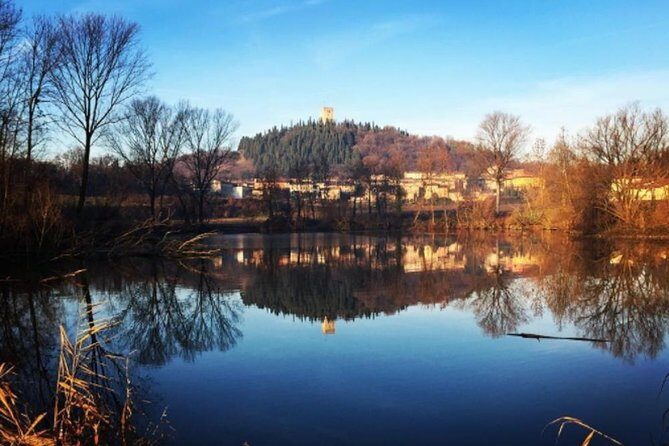
The Torre stop isn’t just one room and a staircase. Around it, you’ll find a garden setting that makes the place feel cared for and less like a rushed stop off the highway.
Behind the main tower experience, you also have museum space with documents and artifacts, including weapons and historical uniforms. There’s also a multimedia room type of experience where the story uses audiovisual tools to help you connect timelines and details.
One of the most emotional additions here is the ossuary nearby. It’s a short walk from the tower complex, and it tends to land with a heavy impact because it focuses on the human cost rather than only the battle mechanics. If you’re the kind of traveler who likes history that makes you pause instead of just look, don’t skip that.
You may also notice practical comforts in the area, like covered wooden tables and a toilet. That’s the kind of small detail that matters if you’re visiting in the middle of the day, or if you want a calm minute before you head to the next site.
Rocca di Solferino: Fortress Views and the One-Hour Payoff
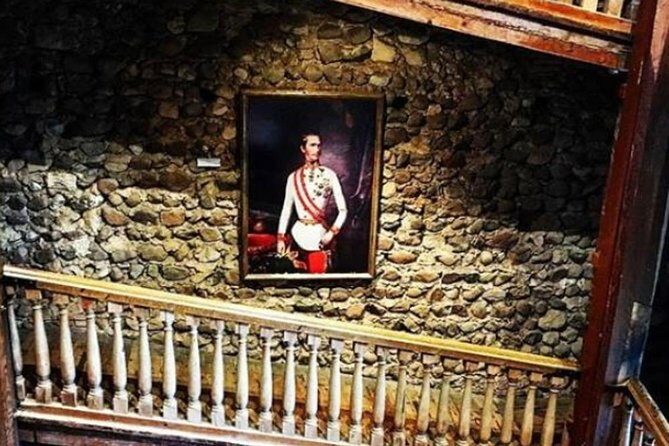
Rocca di Solferino is the second stop, and it’s a clean match for the logic of your itinerary: if the Tower gives you the personal and memorial angle, the fortress gives you the “this is the land where it happened” feeling.
Plan about one hour here. That’s enough time to walk the area, read the key materials, and absorb how the fortress setting shapes the story. This is a good site for people who want historical context that doesn’t require sitting through an endless presentation.
Rocca di Solferino is also visually satisfying. You’ll get broader views and a sense of the geography around Solferino. You don’t need a guide to appreciate that the location matters. You can feel it as soon as you’re standing there.
It also helps connect the wider theme of the Italian Risorgimento. The whole area is tied to the Second Italian Liberation War in 1859, when Italians working with the French defeated the Austrians. Even if you don’t know much going in, the sites themselves help you connect the “why” of the memorials to the political change that followed.
Museo Risorgimentale di Solferino: Short Stop, Big Context
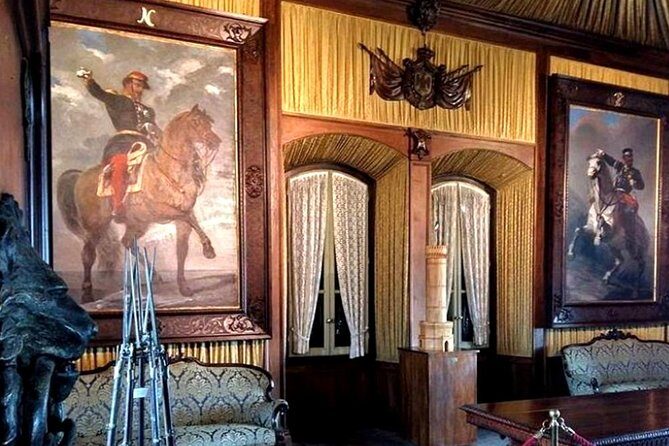
The Museo Risorgimentale di Solferino is the “wrap it up and understand it” portion of the circuit. Plan about 30 minutes.
Because the stop is short, it works best when you use it like a bridge. After the Tower and fortress visits, you’re already seeing artifacts and absorbing battle details. This museum is where you pull those pieces together into a clearer picture of the Risorgimento story—what was at stake and why this part of the peninsula mattered.
If you’re tempted to rush, resist that impulse. Thirty minutes is enough for the key points, but not if you’re scrolling through everything at speed. Sit with what you read and watch what’s presented, even if you only take in the central themes.


Timing and Hours: Don’t Let Friday–Sunday Rules Trap You
The listed opening hours are Friday to Sunday, 9:00 AM–12:30 PM and 2:30 PM–7:00 PM. The time window is the big scheduling constraint for this experience, because it’s not daily.
That means you should plan your visit days first, then fill in the sites. If you’re staying near Lake Garda during a weekday, you may need to arrange your trip to hit a Friday, Saturday, or Sunday.
Season can also change how smoothly things go. One caution from real-world experience is that in some seasons, you might run into construction work and bridge closures that slow access. You don’t want your whole day to hinge on a last-minute drive or a tight arrival.
So do this:
- Aim to arrive early enough to handle any local delays.
- If you care about specific viewing areas, don’t cut it close to the start of the closed window.
- Keep your next stop flexible if the day runs slower than expected.
Price and Value: What $15.40 Gets You
At around $15.40 per person, this pass is about buying an advantage: three admissions bundled into one decision. You’re not paying for transportation or a guide, but you are paying for entry into the sites.
Here’s what that means for value. If you were paying one admission at a time, the total would likely be higher than a single combined ticket. The bundle also makes it easier to justify spending time on the full story rather than only the most famous part.
It also encourages a better rhythm. Instead of trying to cram all three in one exhausting day, you can split them across multiple visits within the 30 days. That’s often when sites like this become more meaningful.
Logistics Without a Guide: Easy, But Not Automatic
This is a self-paced experience because a guided tour isn’t included. Translation: you’ll be reading signs, watching what’s presented, and building your own storyline across the three locations.
That works well if you:
- like to move at your own pace,
- enjoy museum layouts and interpretive displays,
- don’t need a lecture to appreciate what you’re seeing.
You should also plan for transportation because transportation isn’t included. You’re moving between San Martino della Battaglia and Solferino, and the route matters when the road situation includes possible construction or closures.
English is offered, which is helpful for readability and understanding. Still, if you’re the type who benefits from context, plan to arrive with a few basic facts about the 1859 conflict and the Risorgimento theme. You’ll get more out of the exhibits if your brain already has a map of the big picture.
Who Should Book This Pass (and Who Should Rethink It)
This pass is best for history-minded travelers who want a focused circuit rather than a long multi-hour tour. If you like memorial sites, artifacts, and museum exhibits tied to real geographic locations, you’ll likely feel satisfied by the flow from tower to fortress to museum.
It’s also good for people who enjoy active sightseeing. The Tower visit includes a climb, and you should be ready for stairs and/or ramps. If that’s a dealbreaker, you’ll want to think carefully before committing.
Finally, it’s a strong choice for travelers who want flexibility. The 30-day window is ideal if your Lake Garda itinerary changes or weather shifts.
On the other hand, if you hate strict opening hours or you can’t adjust your schedule to Friday–Sunday times, this might frustrate you.
Should You Book This Three-Museum Ticket?
Yes, if you can line up a visit during Friday–Sunday opening hours and you’re willing to do some walking and climbing. The biggest payoff is the combination: the Tower’s memorial-style opening and climb, Rocca’s fortress perspective, and a short museum stop that ties the story together.
Book it if you like history that’s presented through objects and place—less lecture, more “stand here and understand.” It’s also a smart buy if you’re staying around Lake Garda and want a low-stress way to see three admissions without paying for a guide.
Skip it only if your travel dates don’t match the opening days or if you’re the type who can’t handle the risk of seasonal access issues like closures or fenced areas.
FAQ
What does the ticket include?
It includes entrance tickets to all three museums: Torre di San Martino, Rocca di Solferino, and Museo Risorgimentale di Solferino.
How long do I have to use the ticket?
The ticket is valid for 30 days.
How long should I plan for each museum?
Torre di San Martino is about 2 hours, Rocca di Solferino is about 1 hour, and Museo Risorgimentale di Solferino is about 30 minutes.
Where do I meet for the experience?
The start point is the Tower of San Martino della Battaglia, Via Torre, 2, 25015 San Martino della Battaglia BS, Italy.
Where does the experience end?
It ends at Rocca di Solferino, Via Vicinale del, Piazza Castello, 46040 Solferino MN, Italy. If you start in San Martino, you’ll end in Solferino, and vice versa.
What are the opening hours?
Opening hours listed are Friday to Sunday from 9:00 AM to 12:30 PM and 2:30 PM to 7:00 PM.
Is the experience offered in English?
Yes, it is offered in English.
Is a guided tour included?
No. A guided tour is not included.
Is it refundable?
No. The experience is non-refundable and cannot be changed for any reason.