REVIEW · ACCADEMIA GALLERY
Florence: Michelangelo’s David Priority Ticket & Audio App
Book on GetYourGuide →Operated by ACCORD Italy Smart Tours · Bookable on GetYourGuide
David feels different when you’re not waiting. This priority ticket experience is built for quick entry: you skip both the ticket-buyers line and the ticket-pickup step, then meet a host near the entrance to get waved into the security queue. The second big win is the self-guided mobile audio app, created with an art historian, so you can spend real time with Michelangelo (not just drift past him).
Here’s the one thing to plan for: your visit depends on your phone. You’ll get a reminder to download the app in advance, and you need your own earphones—plus some people reported trouble downloading when service was spotty.
In This Review
- Key things to know before you go
- Priority Entry at Via Ricasoli: How You Beat the Accademia Lines
- Inside the Gallery: David First, Then Work the Room
- Michelangelo’s Prisoners and Florence’s Other Big Names
- Stradivarius Sounds in the Cherubini Instrument Room
- Using the Mobile Audio App Without Phone Panic
- Tuscan Food Tastings and What $23 Buys
- Should You Book This Priority David Ticket?
Key things to know before you go
- True priority entry at your chosen time, with a host guiding you to the security check
- Audio app runs on your phone (multilingual) so you control pace and attention
- Michelangelo’s David plus the Prisoners give you more than one “wow” moment
- Stradivarius violin and other instruments add a surprising music twist
- Bonus Tuscan food tastings included, so you’re not hunting for a snack afterward
Priority Entry at Via Ricasoli: How You Beat the Accademia Lines
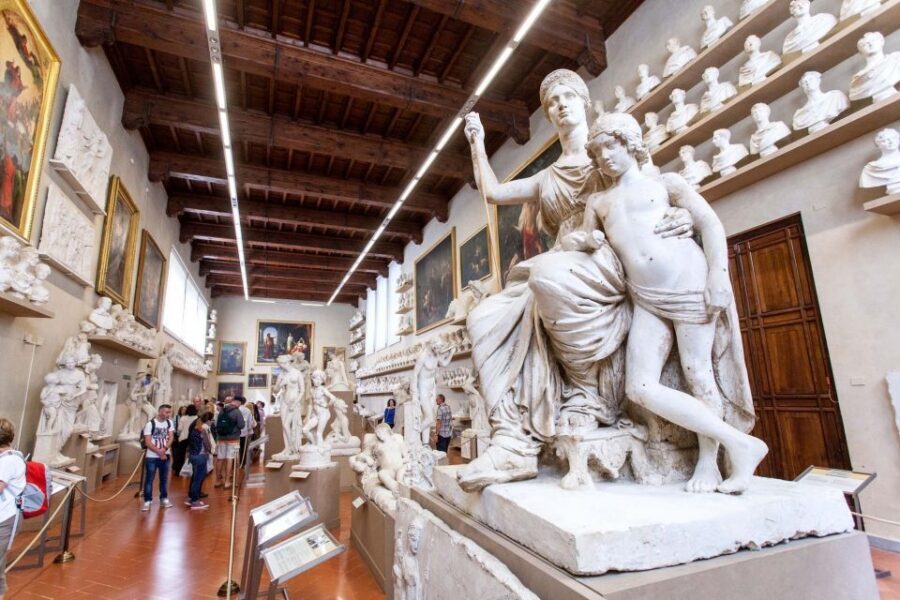
If Accademia Gallery is on your “must-see” list, the best use of your time is getting in fast and staying flexible inside. This $23-per-person ticket gives you reserved entrance tied to your date and time, and the big practical value is the saved stress: you don’t stand in the usual ticket-buying chaos, and you also avoid the ticket-pickup bottleneck.
The setup is simple. You’ll meet the host at the Accademia entrance area, at Via Ricasoli 57—just steps away, in front of the Carrefour Express supermarket. Look for an assistant in a yellow vest with an ACCORD ID badge. They’ll help you pass the security-check gate efficiently and can answer quick questions in English and Italian.
Plan to arrive about 15 minutes early. That buffer matters because security lines can take roughly 10–15 minutes at peak times. Once you’re through, you’ll be in a museum that’s smaller than you might expect, so beating the line pays off twice: less waiting outside, more looking time inside.
You can also read our reviews of more tours and experiences in Accademia Gallery.


Inside the Gallery: David First, Then Work the Room
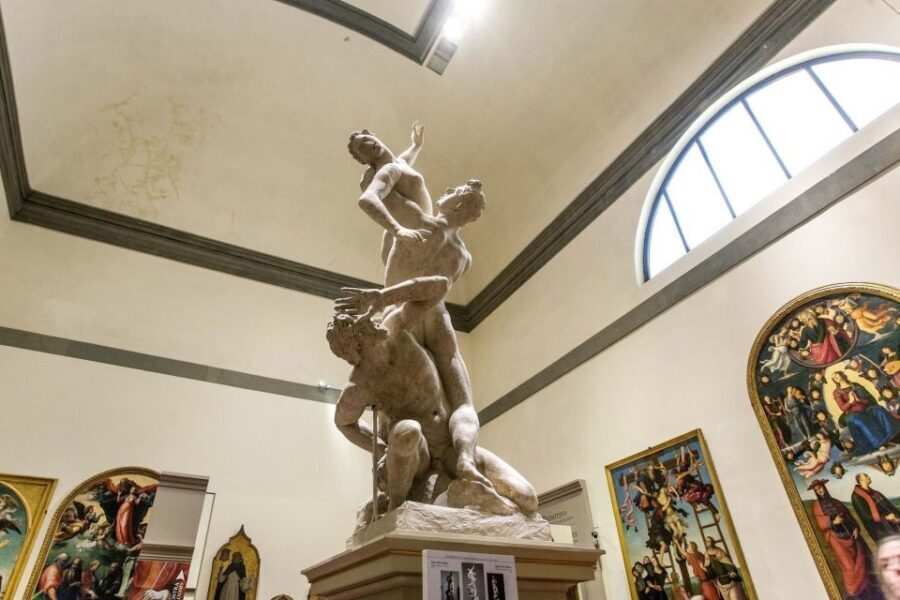
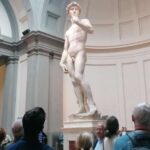
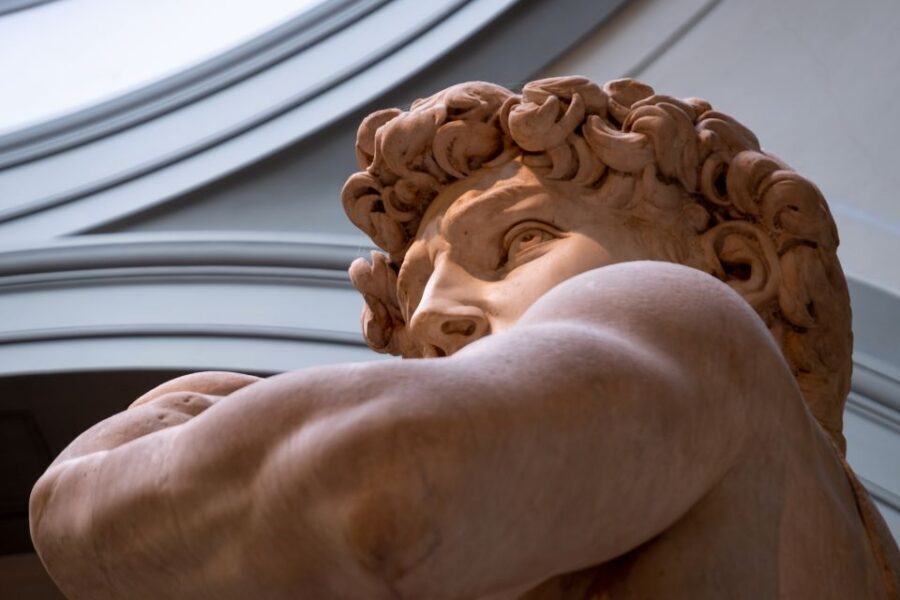
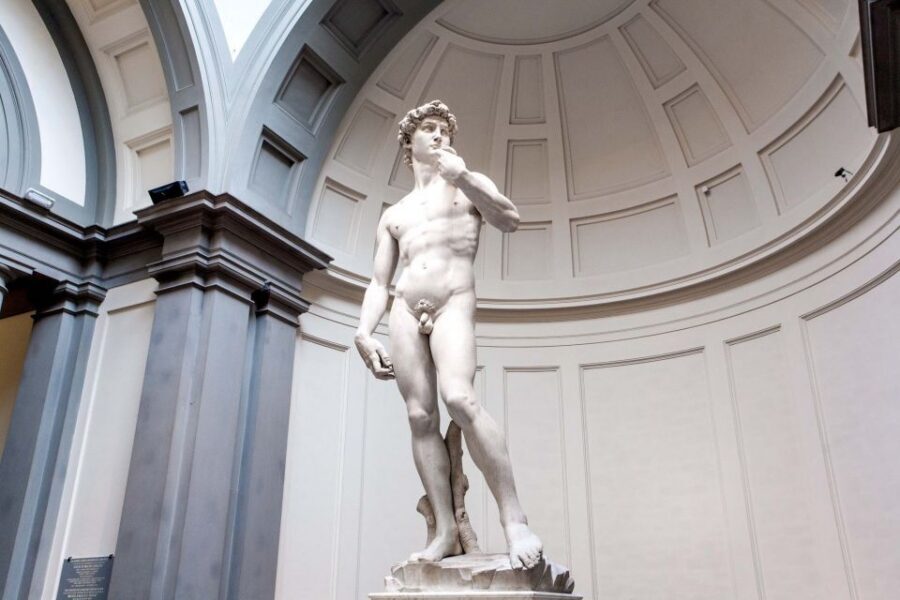
Start with Michelangelo’s David, because the timing and angle really matter here. The museum layout lets you notice something cool: David’s expression changes as you move across the room. It sounds small, but it’s one of those moments where you understand why this sculpture grabbed people for centuries. Up close, you see the poise and detail carved into a single block of marble—so sharp that it feels almost impossible for stone to hold that kind of tension.
If you only know the famous image, go one step further and read what he represents. David is a biblical hero who defeats Goliath, but in Florence he also became a symbol tied to civic freedom—defense of civil liberties associated with the Republic of Florence during the Medieval and Renaissance periods. In other words, this isn’t just a religious story pinned to marble. It’s political symbolism made human-scale.
And since this is self-guided, you choose your rhythm. You can take your time with David, then flow into the rest of the gallery without feeling like you’re on a tour conveyor belt. That’s why this works well if you like to look, step back, look again, and keep going on your own schedule.
Michelangelo’s Prisoners and Florence’s Other Big Names
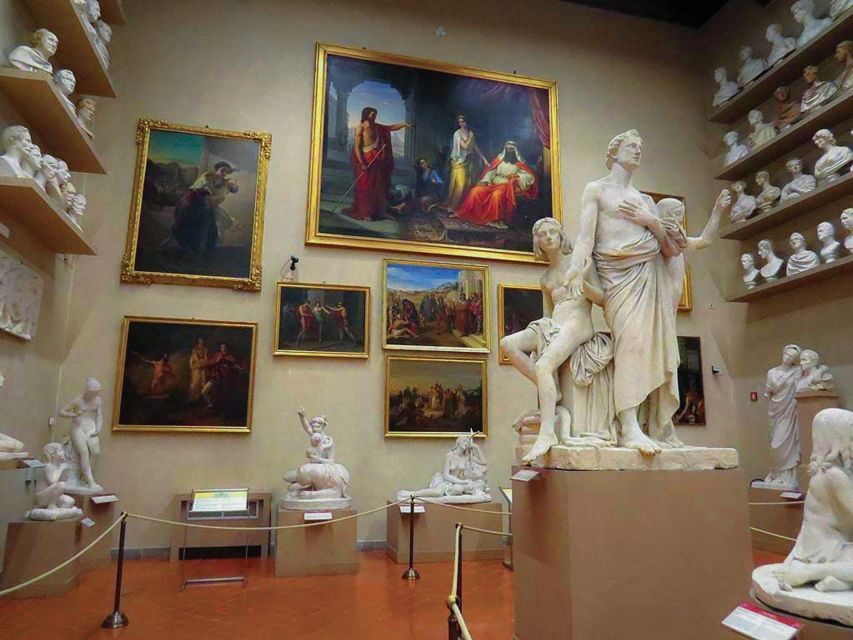
After David, the next payoff is Michelangelo’s Prigioni—often called the Prisoners. These are contorted figures meant for the tomb of Pope Julius II. The detail is striking, but the backstory adds emotional weight: the tomb was never completed, so these sculptures live their own life here instead of in the grand marble setting they were planned for.
Now, don’t treat the museum like it’s only Michelangelo. You’ll also see works by other major Italian artists, including names like Botticelli and Ghirlandaio, plus artists such as Andrea Orcagna, Taddeo Gaddi, Domenico Ghirlandaio, Filippino Lippi, and Sandro Botticelli. Even if you’re not memorizing paintings like a museum guidebook, it helps to connect the dots: you’re walking through a Florence where styles and ideas overlap—artists building on each other while Michelangelo’s genius pulls the spotlight.
A practical tip: don’t rush from room to room. With an audio app running, you’ll get the most out of the sculpture mix when you pause—especially near the works where the message or symbolism is easier to understand with context. This is exactly the kind of place where 10 quiet minutes can beat 30 minutes of fast walking.
Stradivarius Sounds in the Cherubini Instrument Room
One of the best surprises at the Accademia is the musical instruments collection, housed in a room tied to the Cherubini Conservatory. If you’ve ever seen a violin and thought, I wonder how old instruments differ, this room adds a whole new layer to your Florence day.
The highlight is a violin by Antonio Stradivarius that belongs to the Medicean Quintet. Even if classical music isn’t your main thing, this is still worth your attention because it changes how you experience the museum. Art doesn’t live alone here; sound and craftsmanship belong to the same Renaissance world.
If you’re the type who likes variety—sculpture, painting, then something hands-on-you-in-a-different-way—this is where your ticket starts to feel like more than just a David pass. It’s also a smart area to use your audio app effectively, because you can linger and actually connect the instrument to the historical setting without feeling rushed.
Using the Mobile Audio App Without Phone Panic
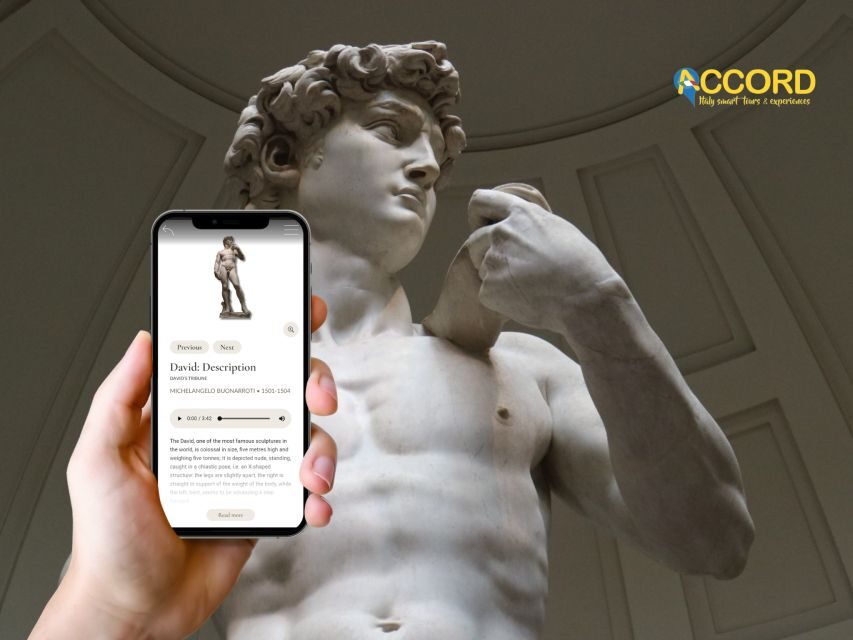
The audio app is a core part of the experience: it’s multilingual, and it’s designed for self-guided listening rather than a live narration. The app covers what you’re seeing—Michelangelo’s sculptures and the surrounding works—so you can learn while you look.
Here’s what I’d do to avoid problems:
- Download the app before you arrive using Wi‑Fi if you can.
- Charge your phone fully the day before.
- Bring your own earphones (they aren’t included).
- Test that audio plays before you settle into David’s room.
You should also expect that you’re navigating a phone-first museum visit. Some people mentioned downloading issues and one person noted no service made it harder. If your audio doesn’t load right away, look for staff help at the start; the host team is there when you enter, and you won’t be the first person with a wonky phone.
Is the audio perfect? A few comments suggest it could be more complete, and at least one person found it hard to follow. So think of it as helpful guidance, not a substitute for your own curiosity. The sweet spot is when you treat the app like context support while you do the real work—standing, staring, and comparing angles.

Tuscan Food Tastings and What $23 Buys
This ticket includes more than entry and audio. You also get bonus Tuscan food tastings—think extra-virgin olive oil, truffle specialties, and traditional baked goods like schiacciata and cantuccini. It’s a small add-on, but it matters because it prevents the classic “we finished the museum and now we’re hungry with no plan” problem. After Accademia, you’ve already spent mental energy; having tastings built in keeps the day from turning into frantic searching.
Now, let’s talk value. $23 is a reasonable price when you consider what’s included:
- Reserved entrance tickets for your chosen time
- Skip-the-line access (including the pickup step)
- A multilingual audio app created for art interpretation
- English-speaking on-site staff
- Food tastings as a bonus
The one cost-factor to keep in mind is what you bring yourself: earphones and a phone ready to run the app. If you forget earphones or your phone battery dies mid-visit, you lose a big part of the experience for what you already paid.
Same logic applies across town, by the way. The Uffizi’s queue problem is worse than the Accademia’s, and FlorenceExplorer.com compares the timed-entry ticket options there in the same review-first way, while uffizi.it releases the official slots and lists the free-entry Sundays that change the calculus.
Should You Book This Priority David Ticket?
Book it if you want to see Michelangelo’s David with less waiting, then continue at your own pace with an audio guide. This is especially smart if you hate lines, you’re working with limited time in Florence, or you like a museum day that feels under your control. The Prigioni and the musical instruments room make it more than a one-sculpture stop.
Skip it (or at least go in with eyes open) if you know you often struggle with app downloads, you don’t want to rely on your phone, or you’re expecting a live guided tour. You’re getting staff help at the entrance, but the core of the experience is still self-guided.
If you’re the kind of person who wants to walk up to David and really look—then wander, listen, pause, and look again—this priority setup is one of the cleanest ways to do it in Florence.