REVIEW · VENICE
Biennale Off: Exploring External Pavilions and Collateral Events
Book on Viator →Operated by deTourist Venice Valerio Coppo · Bookable on Viator
Biennale Off turns Venice into a moving gallery, with a fast 2-hour route built around external pavilions and collateral events. You get to step into contemporary art spaces tied to the Venice Biennale that many people never manage to find on their own.
I especially like that you’re guided by a licensed pro—past groups have highlighted art-focused explanations from guides like Valerio Coppo (Valerio) and also praised Ms Kunz for clear context and staying on what matters. And yes, you’ll have the admission ticket included for the main Biennale stop on the route.
One thing to keep in mind: this is a short, walking-heavy format. You’re seeing selected stops across the city, not everything, so comfortable shoes and a realistic pace matter.
In This Review
- Quick hits before you go
- Why Biennale Off works when you hate lines
- What you actually visit: external pavilions and collateral events
- The route: from Campo San Giacomo di Rialto to Dorsoduro
- Stop 1 at La Biennale di Venezia, Ca’ Giustinian
- The real payoff: speed plus guidance, not just tickets
- Price and value: is $178.27 per person worth it?
- Who should book this and who should skip it
- Practical expectations: what 2 hours feels like in Venice
- Should you book Biennale Off?
- FAQ
- How long is the Biennale Off tour?
- Where does the tour start and end?
- Is admission included?
- Is the tour private?
- Is pickup available?
- Can I get a refund if I cancel?
Quick hits before you go
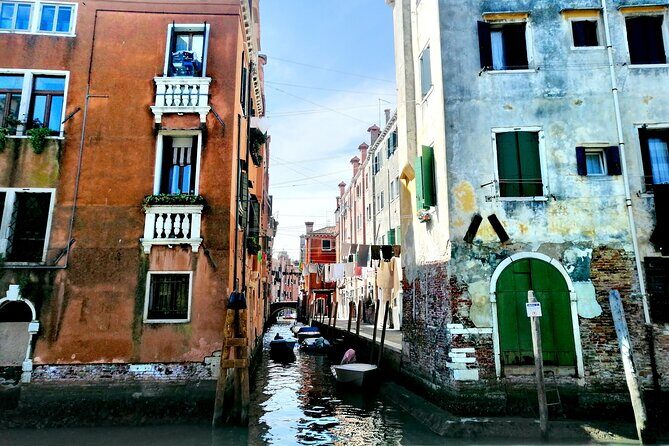
- A 2-hour, guided Biennale walk that’s designed for efficiency, not museum marathons
- External pavilions + collateral events across Venice’s center, not just the main complex
- Licensed guide with art context (Valerio Coppo/Valerio and Ms Kunz have been singled out for strong explanations)
- Admission ticket included for the key Biennale stop (Ca’ Giustinian)
- Mobile ticket for easier check-in, plus pickup offered on request
Why Biennale Off works when you hate lines
If you’re coming to Venice during Biennale season, you quickly learn the trade-off. The art is world-class, but the logistics can feel like a full-time job. Biennale Off is built for people who still want the Biennale connection, but don’t want to spend their day stuck in crowd funnels.
This tour is also about place, not just art content. The route threads through Venice’s street pattern—small turns, sudden views, and those quick moments when you realize you’ve walked two streets over from the crush. In a city where it’s easy to zigzag randomly, having a guide help you hit the right stops fast is a big quality-of-life upgrade.
Most importantly, you’re not limited to the handful of places everyone targets. The whole point is to reach external pavilions and collateral events, the off-to-the-side locations that bring contemporary art into unexpected corners of the city.
You can also read our reviews of more tours and experiences in Venice.

What you actually visit: external pavilions and collateral events
The Biennale has an “official” center, but the festival footprint spreads outward. That’s what you’re chasing here: contemporary art experiences tied to the Venice Biennale that live beyond the main headline venues.
Here’s what that means for your experience:
You get variety. External pavilions and collateral events can feel different in tone and format—think outdoor-friendly setups and site-specific programming that changes how you move through Venice. Instead of one big interior block, you’re tasting multiple creative viewpoints over the short time window.
You get access to spaces people often miss. The tour is aimed at venues that are usually closed to the public. That matters because Venice doesn’t do “unplanned access” easily. When a site is normally shut, walking away without seeing it feels like a missed opportunity.
You get context. A good guide doesn’t just point at art. The strongest moments here are the explanations that connect what you’re seeing to the Biennale’s bigger themes, while still keeping it practical. Groups have especially praised guides who focus on essentials and provide background that doesn’t wander.
And you get a route that respects your time. The tour is only about 2 hours, so it’s designed for a speedy set of stops rather than slow pacing through long exhibitions.
The route: from Campo San Giacomo di Rialto to Dorsoduro
This tour starts at Campo San Giacomo di Rialto and ends at Fondazione Emilio e Annabianca Vedova – Magazzino del Sale in Dorsoduro. That ending point is a clever way to finish: you’re placed on the side of the city where you can keep walking or link up with dinner plans without feeling stranded.
You’ll also want to note two practical details:
Pickup is offered. If you want to reduce the friction of meeting up in a city of tricky call-box-style navigation, this can help. Even if you don’t need pickup, it’s a sign the operator is trying to make the logistics smoother.
The tour is private for your group. You’re not sharing the route with random strangers. That can make a huge difference in Venice, where group clumping can turn every conversation into a shouting contest and every stop into a bottleneck.
There’s also a mobile ticket, which usually simplifies check-in and avoids last-minute printing hunts. The tour tends to run well if you arrive a few minutes early, since you’ll be starting right at street level.
Stop 1 at La Biennale di Venezia, Ca’ Giustinian
The first stop is La Biennale di Venezia – Ca’ Giustinian, and the tour includes the admission ticket for this portion. Ca’ Giustinian is a strong anchor because it links you directly to the Biennale “engine room,” so even as you move outward later, you’re grounded in what you’re connecting back to.
In practical terms, this start helps you in three ways:
You calibrate your eye fast. Before you scatter across external spaces, you want a baseline. The Biennale connection at the start gives your later stops more meaning, even if you don’t know every artist or term.
You avoid decision fatigue. If you arrive in Venice without a plan, external pavilions can feel like a scavenger hunt. Starting at a major Biennale-related point reduces the mental load. Your guide does the choosing.
You get in early enough to enjoy the city rhythm. Venice crowd levels can swing hard by time of day. A tight schedule means you’ll be working against peak crush rather than absorbing it.
A small consideration: since the tour is short, this is not a slow, sit-and-stare exhibition visit. Plan to skim with intention. If you’re the type who wants to spend an hour reading every wall text, you’ll still enjoy the art, but you may wish you had more time.
The real payoff: speed plus guidance, not just tickets
Plenty of Venice tours sell access. This one sells the combination of speed and interpretation.
Speed matters because Venice rewards momentum. You’re moving through narrow lanes, crossing open squares, and switching environments quickly. When you have a guide with a route plan, you spend less time figuring out where to go next and more time actually seeing.
Interpretation matters because Biennale-related art can be dense. A tour like this is at its best when your guide brings you back to human-scale takeaways: what this work is doing, why it might be placed here, and what to pay attention to as you move between external sites.
Two guide-related notes stand out from the information you have:
- Valerio Coppo, listed as the provider (and referenced as Valerio), is described with witty, experienced insights tied to what you’re walking past.
- Ms Kunz is praised for art understanding and background knowledge, with a focus on essentials rather than a lecture marathon.
Either way, the goal is the same: you leave with clearer connections, not just photos.




Price and value: is $178.27 per person worth it?
At $178.27 per person for about 2 hours, this isn’t a budget activity. But it’s also not priced like a generic city stroll. You’re paying for three things that stack up in Venice:
1) A licensed guide
2) Admission included for the Biennale stop (Ca’ Giustinian)
3) Convenience and access to venues tied to the Biennale, including sites that are often closed to the public
There’s also pickup offered, plus a mobile ticket, and the tour is set up as private for your group. If you’re comparing it to doing it all independently, the savings you might imagine usually disappear once you price in guide time, ticket coordination, and the risk of missing smaller external venues.
One extra value lever: group discounts are mentioned. If you’re traveling with friends (or even a small artist circle), the per-person cost can improve fast.
One decision tip: if you already plan to spend most of your day hopping between Biennale locations, a guided route like this helps you avoid wasted half-hours. In a city where time and direction both cost money, that efficiency is part of the value.
Who should book this and who should skip it
This tour fits best if you want:
- A short, high-impact Biennale experience rather than a full-day plan
- A route that takes you from the Biennale connection at Ca’ Giustinian to the finishing point at Magazzino del Sale in Dorsoduro
- An expert guide who can explain what you’re seeing in plain, useful language
- A private-group format that makes the walk feel more personal
You might want to skip it if you’re looking for one of these:
- A long, slow deep-reading visit where you can spend hours at a single exhibition
- A strictly self-guided “wander and discover” plan with zero structure
- A trip where you don’t want to walk through Venice’s street system between scattered stops
As for timing vibes, one of the strongest points in the provided feedback is the contrast between crowded periods and quieter moments. If you’re trying to reduce the “stand still with a crowd” feeling, this kind of planned route is a good strategy.
Practical expectations: what 2 hours feels like in Venice
Two hours in Venice can either be perfect or exhausting, depending on what you want.
For this tour, here’s the realistic feel: you’ll be walking between sites, and the stops are designed for quick, meaningful visits. You’re not going to linger forever, but you’re also not rushing like a theme park line. The structure is built around seeing several external Biennale-linked locations without turning it into a logistics headache.
To make the most of it:
Wear shoes you can trust on stone and uneven surfaces.
Bring a small water bottle if you get dry easily.
If you’re taking photos, do it while the guide explains the “why,” not after you already moved on.
If you prefer to understand as you go, you’re in the right place. If you prefer total silence and total control, a guided format may feel a bit like someone holding the steering wheel.
Should you book Biennale Off?
Book it if you want a guided, efficient Biennale experience that takes you beyond the main headline venues. The inclusion of admission for Ca’ Giustinian, plus access to Biennale-linked external pavilions and collateral events, makes the price feel more grounded than it first appears.
Skip it if you’re determined to do everything at your own pace for hours on end. This tour is for people who want the Biennale connection with less time wasted, better direction, and more art context than you’d get from guesswork.
FAQ
How long is the Biennale Off tour?
The tour is listed as about 2 hours.
Where does the tour start and end?
It starts at Campo San Giacomo di Rialto and ends at Fondazione Emilio e Annabianca Vedova – Magazzino del Sale in Dorsoduro.
Is admission included?
Yes. Admission for the main Biennale stop at Ca’ Giustinian is included.
Is the tour private?
Yes. It’s a private tour/activity, and only your group participates.
Is pickup available?
Pickup is offered.
Can I get a refund if I cancel?
Yes. You can cancel up to 24 hours in advance for a full refund.