REVIEW · VENICE
Venice: Byzantine Wonders Tour
Book on GetYourGuide →Operated by Venice Boat Experience · Bookable on GetYourGuide
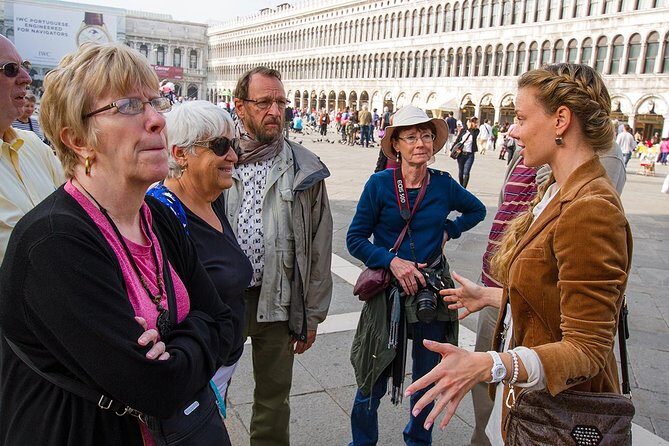
Venice can feel like a giant open-air museum. This tour turns that feeling into a clear path through the symbols and power of the Serenissima across the centuries. I love how it links major squares to the ideas behind them, and I especially like the inside look at St. Mark’s Basilica with its gold mosaics and marble floor details. One thing to consider: the basilica visit depends on conditions, and you’ll need to follow the dress rules (no shorts or tank tops) plus security limits (backpacks not allowed).
In 2.5 hours, you cover the places that most strongly explain Venice’s mindset: politics in stone, trade in street layout, and faith in the basilica’s Byzantine art. If you want the kind of tour where the guide’s stories make you look twice at what you’re seeing, this one is built for that. Just keep in mind it’s a walking tour, so comfy shoes matter.
In This Review
- Key highlights worth your attention
- Why a Byzantine Wonders Tour makes sense in Venice
- Where you start: Calle Larga de l’Ascension near St. Mark’s
- Piazza San Marco: the city’s stage, explained with names and purpose
- Santa Maria Formosa Square: Venice beyond the loud center
- The Mercerie: the practical link between Rialto and San Marco
- Inside St. Mark’s Basilica: Byzantine mosaics and marble inlays
- The one thing you should budget extra
- How 2.5 hours works in your favor (and where it can feel tight)
- Value check: is $82 worth it?
- Practical tips that will save you hassle
- Who this tour is best for
- Should you book the Venice Byzantine Wonders Tour?
- FAQ
- Where does the tour meet?
- How long is the Venice Byzantine Wonders Tour?
- How much does it cost?
- What’s included in the tour?
- Is the Pala d’Oro included?
- What should I bring?
- Is there a dress code for St. Mark’s Basilica?
- Are backpacks allowed?
- What languages are available?
Key highlights worth your attention
- St. Mark’s Basilica, skip-the-line access plus an audio receiver so you can follow along
- Byzantine art first: gold mosaics, marble inlays, and the biblical scenes on display
- Piazza San Marco as a story hub, with context for the basilica, palace area, towers, and procuratie
- Santa Maria Formosa and nearby landmarks, with anecdotes tied to squares you’ll actually walk through
- The Mercerie route, Venice’s main shopping connection between Rialto and San Marco
Why a Byzantine Wonders Tour makes sense in Venice
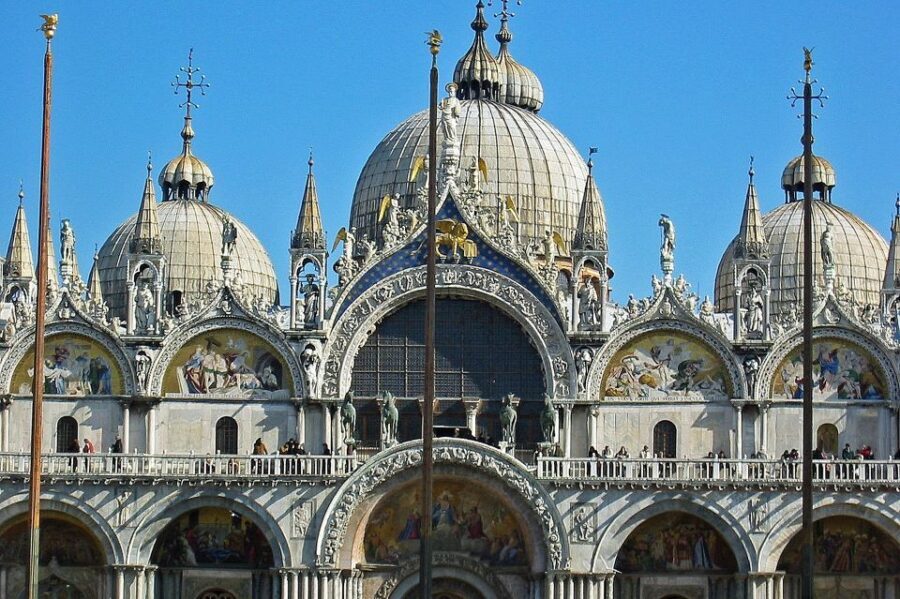
Venice isn’t short on tours, but most skim the surface: big buildings, quick photos, then “good luck.” This one is different. It’s organized around the Byzantine thread that runs through Venice’s identity—where Eastern influence shows up not as a vague idea, but in real art, real design, and real symbolism.
What I like about this approach is that it gives you a framework you can carry around the rest of your trip. You start to notice how Venice uses visual power: mosaics for belief, marble for prestige, and grand civic spaces for legitimacy. Even if you’ve been to Venice before, this kind of structure helps you see the city as a system, not random pretty corners.
And yes, you’ll still get the fun Venice part: the walk through lanes and squares that feel tailor-made for wandering. The difference is you’ll know why those places matter, not just that they look great.
You can also read our reviews of more tours and experiences in Venice.


Where you start: Calle Larga de l’Ascension near St. Mark’s
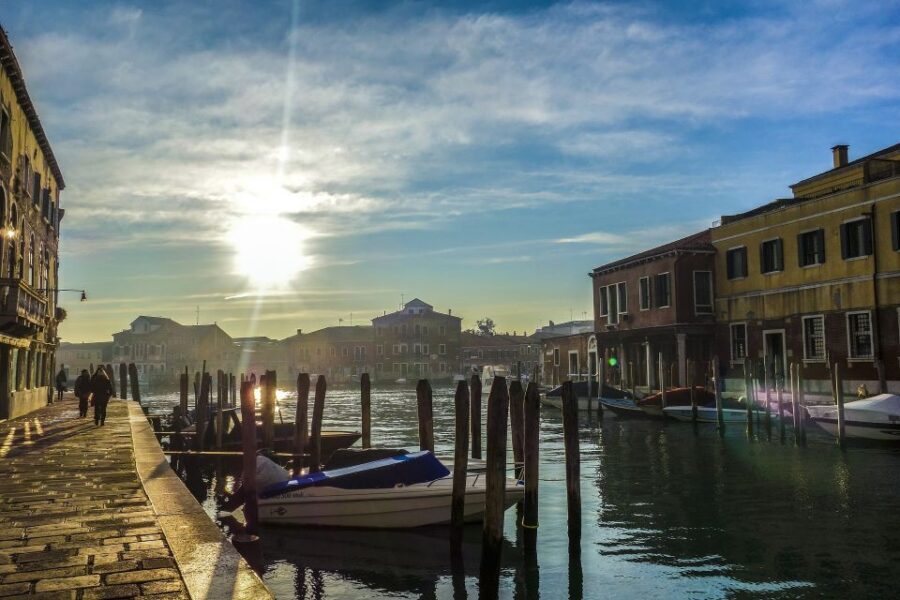
The meeting point is Calle Larga de l’Ascension, in front of the Post Office near St. Mark’s Square. Starting here is practical. It keeps you close to the heart of the experience and reduces the “how do we get there” stress that can eat time in Venice.
You’ll want to arrive with your ID or passport ready. The tour uses an official setup that requires a printed voucher, and it’s also a good habit for any skip-the-line element. For the basilica, plan ahead with clothing: no shorts or tank tops. And if you’re the type who packs a day bag, know that backpacks are not allowed for security.
Piazza San Marco: the city’s stage, explained with names and purpose
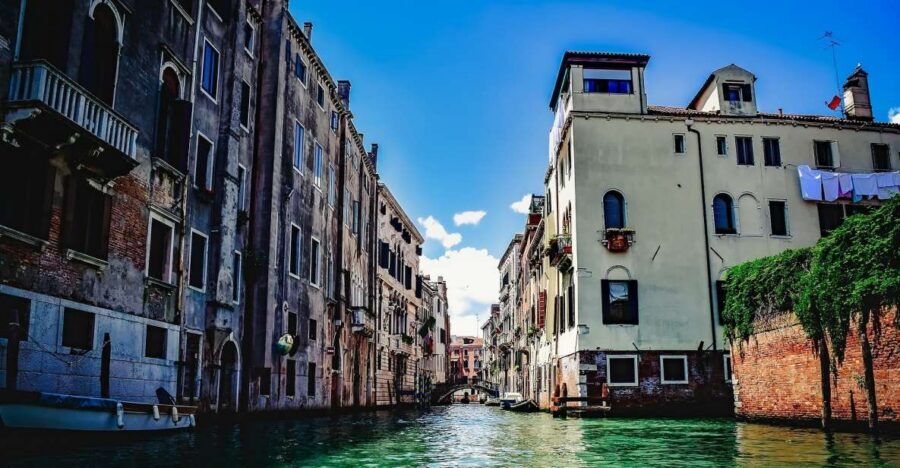
You’ll begin at Piazza San Marco, where the tour focuses on origins and why the square works the way it does. This is not just “look at the basilica.” It’s about the whole ensemble—because in Venice, buildings don’t sit alone. They act like a team.
Expect to learn about the main monuments around the square, including:
- Basilica San Marco
- Palazzo Ducale
- Bell Tower
- Clock Tower
- Procuratie
Here’s the value for you: when you understand that these weren’t random landmarks, you stop treating the piazza like a postcard and start treating it like a political and religious machine. The basilica anchors faith. The palace area signals power. The towers help define time and presence in a city that ran on routes, schedules, and control.
If you’re the kind of visitor who likes your photos with context (and who doesn’t), this stop makes your camera work smarter.
Santa Maria Formosa Square: Venice beyond the loud center
After the big square, the tour heads to Santa Maria Formosa Square. This part is where the city starts feeling more human—still iconic, but less dominated by the obvious crowd. You’ll hear the history and the anecdotes tied to this area, which helps you connect what you see to what it meant.
This section is built around a string of landmarks and stories, including:
- Campo SS. Giovanni e Paolo, often called the Doge’s Pantheon
- Great School of Charity
- Captains of Fortune
- Marco Polo’s House
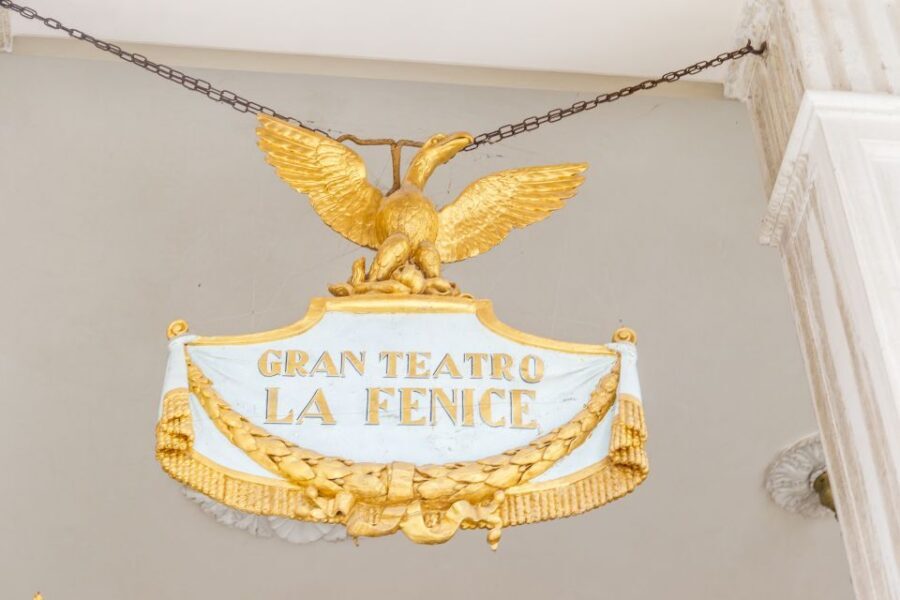
- Malibran Theatre
Even if you don’t memorize every detail, you’ll learn how Venice marked its important people and ideas in public spaces. These are the kinds of places that explain why Venice cared about reputation, patronage, and legacy—and why so many buildings were designed to carry status, not just function.
This also helps with something you’ll feel while walking later: the city becomes less confusing. You begin to recognize patterns: squares as forums, schools as social engines, and theaters as cultural branding.
The Mercerie: the practical link between Rialto and San Marco
Next comes the return route through the Mercerie, described as a vital connection between Rialto and San Marco and the main street for city shopping. This isn’t a throwaway segment. It’s one of the easiest ways to understand how Venice moved people and goods.
For you, that means you’ll walk this corridor with more attention than just window-shopping. You’ll recognize it as an artery: a place where commerce, daily life, and tourism overlap because Venice’s geography naturally channels you there.
It’s also a smart use of time in a 2.5-hour tour. You keep moving without feeling like you’re rushing past the good bits.


Inside St. Mark’s Basilica: Byzantine mosaics and marble inlays
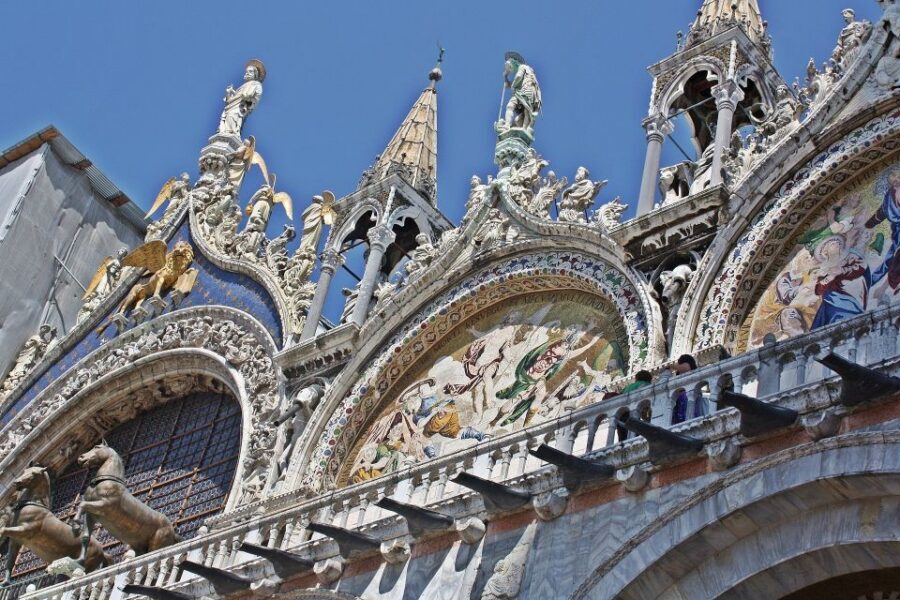
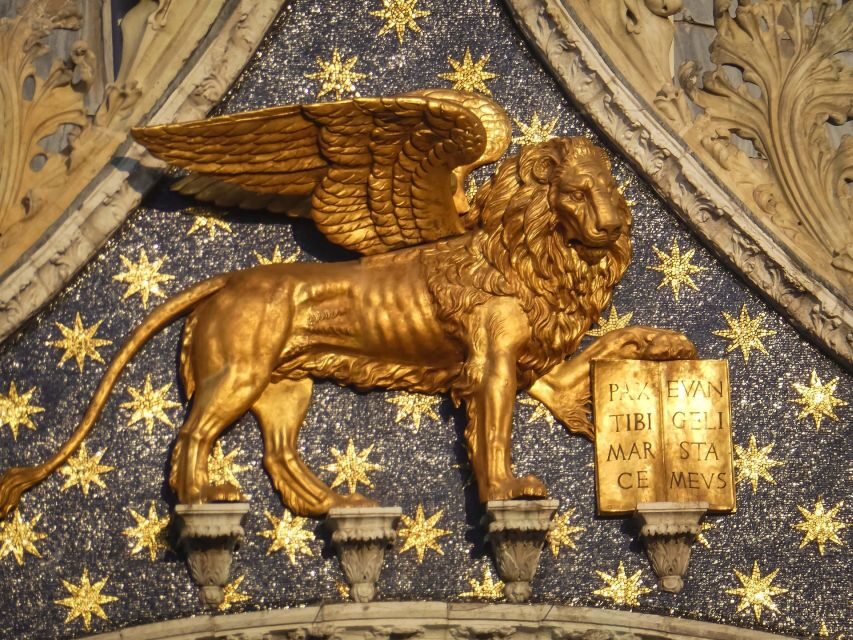
St. Mark’s Basilica is the centerpiece, and the tour is set up to make it readable instead of overwhelming. You’ll have a skip-the-line ticket, and you’ll use an audio receiver so you can hear the guide clearly while you look around.
Once inside, the focus shifts to Byzantine art—specifically how the building communicates through ornament. You’ll have the chance to savor:
- Gold mosaics
- Marble inlays, especially in the floor
A big plus here is the way the explanation is delivered. You’ll get to sit comfortably while the guide points out what you’re seeing—how the mosaics connect to biblical scenes, and what makes the basilica distinctive in Italy.
That’s practical travel wisdom: in a place like this, the art can look stunning but untouchable if nobody explains what to look for. This tour doesn’t just announce the basilica as famous. It shows you how to read it.
The one thing you should budget extra
The Pala d’Oro entrance is not included and has to be paid separately. If you’re mosaic-obsessed, it’s worth considering in advance so you’re not surprised when you see it referenced. If you’re more into the big picture, don’t worry—you can still get a lot from the mosaics and floor details that are included in the main visit.
How 2.5 hours works in your favor (and where it can feel tight)
At 2.5 hours, this tour is designed for focus. That’s good news if you want an efficient “big Venice” experience without losing the rest of your day to lineups and wandering.
The schedule also moves in a logical loop:
1) Piazza San Marco and the surrounding monuments
2) Santa Maria Formosa Square and nearby notable sites
3) Back through the Mercerie
4) St. Mark’s Basilica, guided, with skip-the-line time-saving
The trade-off is that you won’t have hours of free time in every spot. If you love lingering to sketch, read every plaque, or stop for long coffee breaks mid-walk, you might feel the pace. For most people, though, the tight timing is the point. You get the context, then you can wander afterward with better instincts.
Value check: is $82 worth it?
For $82 per person, you’re paying for three things that matter in Venice:
- a professional guide (the storytelling is the product here)
- skip-the-line access for St. Mark’s Basilica
- audio receivers, which makes it easier to follow without constantly craning your neck
If you’ve ever tried to do St. Mark’s on your own during peak hours, you know how line friction can eat your energy. Here, the skip-the-line piece helps protect your time. The guide helps protect your understanding. And the audio receiver helps protect your ability to enjoy the artwork instead of just trying to catch words over footsteps and crowds.
So the value isn’t only the building—it’s the translation of the building into something you can actually see and remember. If you’re the type who likes to know what you’re looking at, the price feels fair. If you prefer totally self-guided time, you might decide to spend less and accept less interpretation.
Practical tips that will save you hassle
- Wear shoes you trust for uneven paving. You’ll be walking between squares and streets.
- For the basilica, plan your outfit around the stated rule: no shorts or tank tops.
- Leave your backpack behind or plan another way to carry essentials. Backpacks are not allowed for security.
- Bring your passport or ID and keep your voucher format in mind—printed voucher required.
- If you’re sensitive to weather, note that the tour is not guaranteed with adverse weather conditions.
These small choices keep the day smooth. In Venice, smooth beats stressed.
Who this tour is best for
This works especially well if:
- you want Byzantine art context without feeling lost in the details
- you like walking tours that explain both art and city layout
- you want a guided path through the major squares rather than random wandering
It’s also a good match for first-time visitors who want a high-impact overview of Venice’s Serenissima identity. If you’re a total art-history specialist, you might still appreciate the structure, though you may want extra time on your own afterward to go deeper.
If you hate group pacing or need long solo pauses, this may feel a bit “compressed.”
Should you book the Venice Byzantine Wonders Tour?
If your priority is understanding St. Mark’s Basilica beyond the famous exterior, I’d book it. The tour’s strength is that it turns the basilica’s mosaics, marble inlays, and biblical imagery into something you can follow in real time. The route through Piazza San Marco, Santa Maria Formosa, and the Mercerie also helps you connect Venice’s power, faith, and trade in a way that feels practical, not academic.
Skip this only if you want a totally independent day, or if you’re likely to ignore dress rules and security restrictions (because those are real constraints here). If you’re okay with a guided walking pace and you want your Venice to make sense, this is a smart use of time.
FAQ
Where does the tour meet?
The meeting point is Calle Larga de l’Ascension, in front of the Post Office near St. Mark’s Square.
How long is the Venice Byzantine Wonders Tour?
It lasts 2.5 hours.
How much does it cost?
The price is $82 per person.
What’s included in the tour?
It includes a professional guide, a walking tour, a skip-the-line ticket for St. Mark’s Basilica, and audio receiver devices.
Is the Pala d’Oro included?
No, entrance to the Pala d’Oro is not included and must be paid separately.
What should I bring?
Bring your passport or ID card. You’ll also need a printed voucher.
Is there a dress code for St. Mark’s Basilica?
Yes. You need proper clothing with no shorts or tank tops while visiting the basilica.
Are backpacks allowed?
For security reasons, backpacks are not allowed.
What languages are available?
The live guide is available in French, German, English, and Spanish.