REVIEW · VENICE
Giudecca Island Discovery Tour
Book on Viator →Operated by deTourist Venice Valerio Coppo · Bookable on Viator
Giudecca is Venice, minus the script. This small-group tour (up to 10 people) shows you how one island shifted from banished aristocrats to working industry, then to studios, workshops, and art spaces—complete with story-driven stops and plenty of time for questions. I love the guide-led pace and the way Valerio Coppo (and sometimes Genny) ties each building to a real reason it exists.
I also like the ending: you get a proper scenic finish, not just a quick photo and goodbye. The only real drawback to plan around is the water-bus—it’s not included in the price and you buy tickets on board, so your timing matters a bit.
Giudecca’s best trick is how quickly it changes your sense of Venice: less crowds, more everyday island texture, and views that feel wider than what most people see from the main islands.
In This Review
- Key things I’d circle before you book
- Giudecca Island Discovery Tour: what it feels like on the ground
- Meet at Zattere, end at Zitelle: how the route works
- Giudecca’s name story: from zudega to rebel banishment
- Fondamenta Sant’Eufemia: an AD 890 church with a 14th-century structure
- Hilton Molino Stucky Venice: the Neo-Gothic mill turned hotel
- Fondamenta de le Convertite: the island’s harder edges
- Artisti Artigiani del Chiostro: Ex Convento Santissimi Cosma e Damiano
- Teatro Junghans: from glass factory to theater and housing
- Chiesa del Santissimo Redentore and the July pontoon pilgrimage
- Villa Heriot: Art Nouveau and southern lagoon views
- Casa dei Tre Oci: the scenic finish with San Marco and Punta della Salute
- Price and value: what you’re really paying for
- Who this Giudecca tour suits best
- Practical tips so the walk feels easy
- Should you book Giudecca Island Discovery Tour?
- FAQ
- How long is the Giudecca Island Discovery Tour?
- Where does the tour start?
- Where does the tour end?
- What is the group size limit?
- Is the water-bus ticket included?
- Is there a mobile ticket?
- What is included in the tour price?
- Are any admissions included?
- Are service animals allowed?
- Can I cancel for free?
- Is there an extra access fee on some days?
Key things I’d circle before you book
- Max 10 people keeps it easy to ask questions and actually hear the answers
- Valerio Coppo’s storytelling connects names, churches, factories, and art spaces into one thread
- Palladio’s Redentore and the July pontoon tradition give you a Venice ritual people often miss
- Former factory buildings (mill, glassworks) show you what reuse looks like in the lagoon
- A scenic finish with San Marco and Punta della Salute views makes the walk feel worth it
Giudecca Island Discovery Tour: what it feels like on the ground
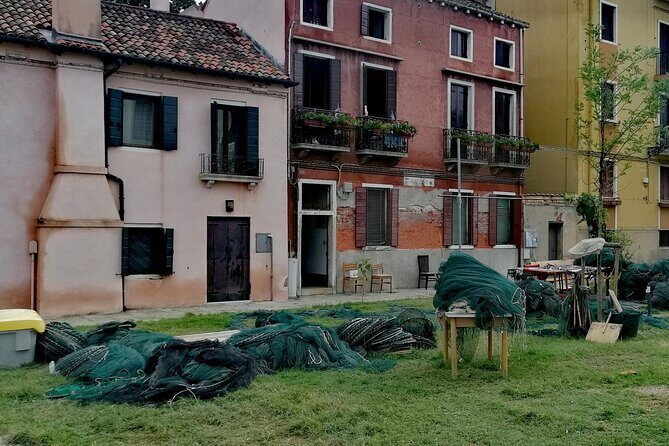
If Venice is a stage, Giudecca is the backstage. From Zattere you head toward the southern side of the lagoon, where the pace feels different right away. Instead of the main-island crowd crush, you’re walking through neighborhoods where life keeps going after the day-trippers fade out.
This tour is built for that mindset. It is small-group, around 2 hours, and it’s guided by a tour leader and an interpretive guide. You’ll cover several stops, but the aim isn’t to rush you through as many landmarks as possible. It is to help you understand how one island evolved—politics, industry, faith, and then the creative reuse of older spaces.
The guide focus matters, too. In the feedback I saw, the most repeated compliment wasn’t just that the places were pretty. It was that Valerio’s humor and communication style made the stories stick, especially when the tour turned from history facts into practical details about what you’re looking at.
Quick reality check: this is a walking tour with short stop-and-look moments. You’ll want comfortable shoes, and you’ll likely feel lagoon wind at times.
You can also read our reviews of more tours and experiences in Venice.


Meet at Zattere, end at Zitelle: how the route works
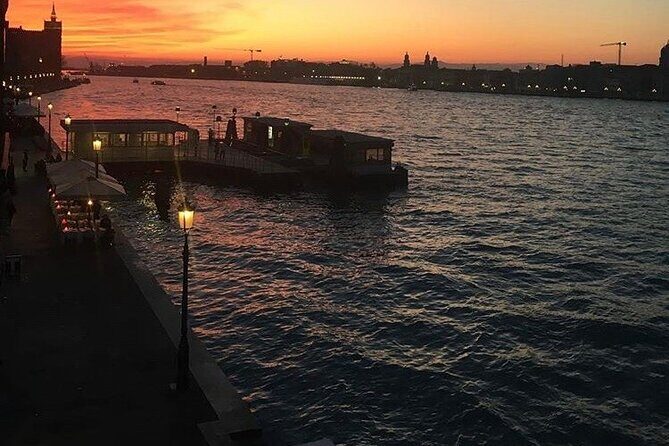
The meeting point is Zattere, 30133 Venice. You finish at Le Zitelle, Fondamenta Zitelle 33, 30133 Venice, at the Zitelle water-bus stop. That end point is useful: it lines you up for a return without forcing you to backtrack across the whole island.
You should also note the tour uses a mobile ticket, and it’s described as a group-discount-friendly experience. The maximum group size is 10, which is a big reason this works better than the large coach-style tours.
Also, the tour is clear about one practical point: the water-bus ride to Giudecca is not included. Tickets are purchased on board. So if you’re the type who hates last-minute purchases, plan for that and keep a little time buffer.
Giudecca’s name story: from zudega to rebel banishment
One of the best early payoffs is how the tour starts with the island’s name and turns it into a history lesson you can visualize. You’ll learn that the name Giudecca is linked to a Venetian word zudega, meaning the judged—tied to rebel aristocratic families being banished there back in the 9th century.
The point isn’t to memorize a single etymology. It’s to understand why Giudecca had a reputation in the first place. When power removes people from the center, you often get an island that develops a different role. Giudecca went from being a place for those pushed out of elite life to a setting that later attracted people who needed space—first for working life, and later for art.
That theme is the tour’s backbone. It helps you see why old buildings look the way they do, and why certain areas feel more industrial or institutional than the classic postcard Venice.
Fondamenta Sant’Eufemia: an AD 890 church with a 14th-century structure
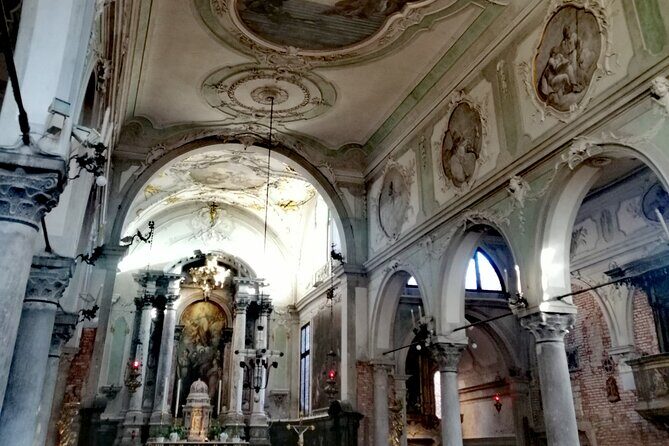
Next, you walk toward Fondamenta Sant’Eufemia, where the stop focuses on a church site traced to AD 890, with the visible Veneto-Byzantine structure dated from the 14th century.
Even if you don’t care about architectural labels, this is a good stop because it teaches you how long-layered Venetian religious sites can be. The guide’s explanation is meant to help you spot the logic of the building’s style and how it fits the wider lagoon world, not just the city center.
The church’s dedication also brings a story attached: it’s named for a Byzantine Christian martyr who was thrown to hungry lions. The legend says the lions bit off her hand, then refused to eat her holy virgin flesh. You’ll hear it as a dramatic reason the place is remembered—one of those Venice habits where faith and narrative travel together.
This is also a stop that’s fairly calm compared to the big-picture scenery. If you like stopping to read meaning off stone, this is where you’ll enjoy the tour the most.
Hilton Molino Stucky Venice: the Neo-Gothic mill turned hotel
Then you get industry, on full display. At the Hilton Molino Stucky Venice, you’ll see a huge Neo-Gothic building that originally served as a flour mill. Boats supplied it across the lagoon, and it also operated as a pasta factory.
Now it houses a luxury 5-star hotel, and the tour frames it as an example of reuse that still respects the massive original footprint. This is useful context for the way Venice keeps changing: not by wiping the slate clean, but by refitting older structures for whatever the present needs.
One warning: this stop can feel “less mysterious” than some of the smaller side streets. The scale of the building is obvious, so you might not get the same sense of hidden discovery here. Still, it’s a strong counterpoint to the quieter religious stops, because it reminds you that Giudecca wasn’t only about art and worship—it was also about production.



Fondamenta de le Convertite: the island’s harder edges
At Fondamenta de le Convertite, the tour steers you into a part of Giudecca that isn’t meant for postcards. You pass by an organic prison market area, next to a women’s correction facility.
This stop is less about looking at a pretty facade and more about understanding island life as an ecosystem. Giudecca’s evolution is not only romantic: it includes places built for confinement and institutions built to run jobs and systems.
If you have a strong preference for bright, cheerful sights only, this is the stop that might feel heavy. But it also prevents the tour from turning into a one-note “old buildings are pretty” experience.
Artisti Artigiani del Chiostro: Ex Convento Santissimi Cosma e Damiano

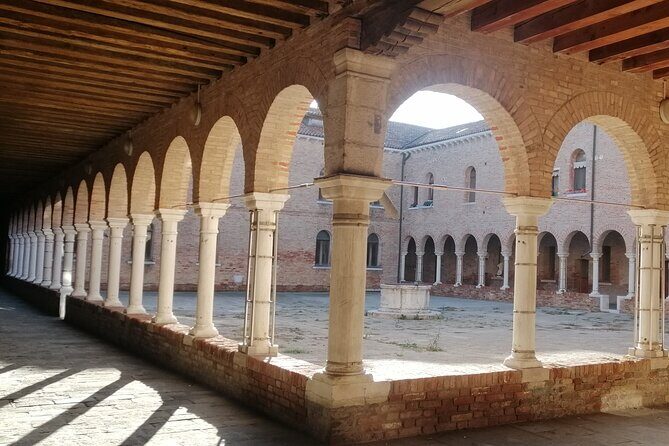
Now you shift from institutions to creation. The tour enters Ex Convento Santissimi Cosma e Damiano, used today as Artisti Artigiani del Chiostro, a center for promoting local artists and artisans.
This is the part of Giudecca that helps you connect the dots. The lesson here is that creative life didn’t arrive out of nowhere; it found usable spaces in older structures. When you see the convent setting and then learn about its current role, the island’s evolution stops feeling abstract.
If you’re an art fan, you’ll likely enjoy the way the guide connects “former function” to “current purpose.” Even when you’re only seeing part of the space from your walking route, the story changes what you think you’re looking at.
Also, this is where the small-group size pays off again. You get to ask about the difference between real artisan work and typical tourist shop sales—and why Giudecca’s model feels more local.
Teatro Junghans: from glass factory to theater and housing
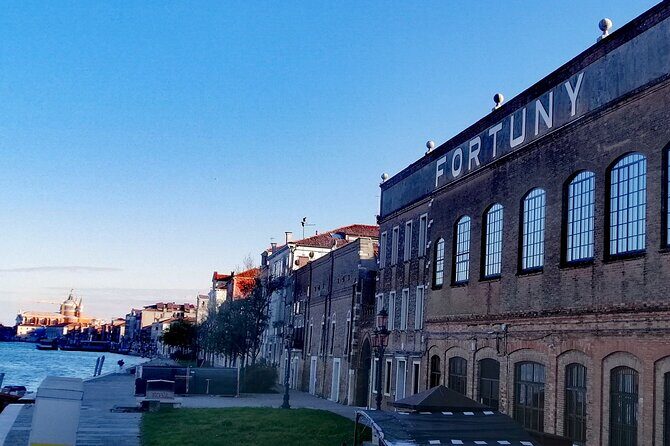
At Teatro Junghans, you see how a former factory for glasses transformed into a modern setup: a contemporary theatre facing the southern lagoon, plus a modern residential neighbourhood.
This is one of the most practical stops for visual learning. Instead of treating reuse like a buzzword, you’re shown a full-life-cycle approach: a working industrial building becomes a cultural venue and a lived-in space.
It’s also a good stop for lagoon-minded people. The theatre facing the southern lagoon gives you a sense of how the waterfront shapes daily life here. The view direction matters in Venice, and Giudecca’s location gives it a different feel than the more central islands.
Chiesa del Santissimo Redentore and the July pontoon pilgrimage
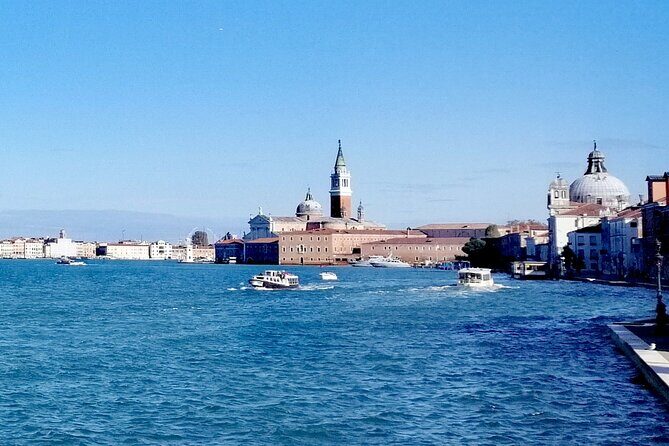
Next comes one of Venice’s most famous names—Chiesa del Santissimo Redentore—but on Giudecca it hits differently. The tour notes it was designed by Palladio and built to celebrate the city’s deliverance from the black death.
This is the kind of stop where context makes the architecture easier to read. If you understand why a church exists, you stop looking at it like a random landmark and start seeing it like a memorial built into the city’s rhythm.
The tour also includes an annual tradition: in July, Venetians make a pilgrimage across the canal to this church on a shaky pontoon bridge from the Zattere since 1578.
This detail is more than trivia. It explains why the island’s identity is braided with the main city’s survival stories. Giudecca isn’t just “somewhere across the water.” It’s part of how Venice marks turning points.
Villa Heriot: Art Nouveau and southern lagoon views
Then you move off the main sightseeing lanes again to Villa Heriot, described as an Art Nouveau villa slightly off the beaten path.
The key value here is the views. The tour emphasizes breath-taking views over the southern lagoon, and that’s exactly what makes this stop feel like a reward after the tighter streets and historical stops.
Bring a layer if it’s cool. Even when the sun is out, lagoon air can cut through. One note from a previous experience described Giudecca as nicknamed the island of seals (isola delle foche). Whether you spot seals or not, the nickname matches the vibe: cooler, breezier, and slightly wild compared to the main city.
Casa dei Tre Oci: the scenic finish with San Marco and Punta della Salute
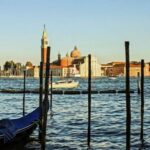
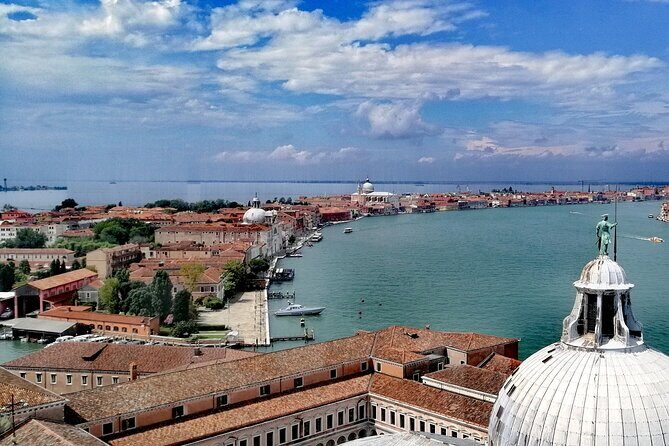
You end with one of the most satisfying payoffs: Casa dei Tre Oci and scenic views toward San Marco and Punta della Salute. Along the way, you walk past a palace with a distinctive neo-gothic brick facade and three peculiar arched windows.
This final stretch matters because it changes how you remember the tour. You start with a name origin and banishment story, and you end with open sightlines to the places most people hunt on the main islands. It makes Giudecca feel like a viewpoint of Venice, not a side trip.
It’s also one reason this tour earns strong recommendations. A tour that ends with views and explanation gives you a “take it with you” feeling.
Price and value: what you’re really paying for
At $163.64 per person for about 2 hours, you’re paying for three things that matter in Venice:
- A guide who can explain what you’re seeing (not just recite facts)
- A route that keeps you away from the densest main-island crowds
- A small-group format (max 10), which makes the time feel more personal
Admission ticket costs are listed as free for several of the specific stops in the tour description, and the tour includes a tour leader plus interpretive/nature guide. The one extra cost you should plan for is the water-bus ticket to Giudecca, since that’s not included and is bought on board.
If you compare this to cheaper walking tours that stick to the busiest streets, the value here is the focus. You’re not just collecting sights; you’re getting a framework for understanding Giudecca’s transformation—rebel banishment, industrial buildings, and then the shift toward arts and artisan spaces.
And that’s the thing: in Venice, time and attention are your real currency. This tour uses both well.
Who this Giudecca tour suits best
This is a great match if you want:
- A smaller-group experience in Venice with room for questions
- Local context that connects stories to real buildings
- A different side of Venice that feels more like everyday life
- A mix of churches, old industry, and creative spaces
It also seems to work for families. One set of feedback specifically mentioned the guide involving children, which is a good sign if you’re traveling with younger people who get bored with long explanations.
Practical tips so the walk feels easy
A few things will help you enjoy it without fuss:
- Wear comfortable shoes. You’re moving between several points.
- Bring a wind layer. Lagoon air can feel chilly even when you expect sun.
- If you hate last-minute purchases, be ready for the water-bus ticket on board.
- Plan your clothing and energy for a 2-hour paced walk, not a sprint between monuments.
Also, the tour notes service animals are allowed, and it’s described as suitable for most people.
Should you book Giudecca Island Discovery Tour?
Book it if you want the Venice you only get when you step off the main circuit. The tour’s strongest assets are the small group size and the guide’s ability to make Giudecca’s evolution make sense, stop by stop. You also get a satisfying view finish toward San Marco and Punta della Salute, which makes it feel like more than a history lesson.
Skip it only if your idea of Venice is strictly classic big sights every minute, with minimal institutional or industrial subject matter. This tour includes the island’s tougher edges, and it also prioritizes explanation over constant spectacle.
FAQ
How long is the Giudecca Island Discovery Tour?
The tour is about 2 hours.
Where does the tour start?
It starts at Zattere 30133 Venice, Metropolitan City of Venice, Italy.
Where does the tour end?
It ends at Le Zitelle, Fondamenta Zitelle 33, 30133 Venezia VE, with the tour ending at the Zitelle water-bus stop.
What is the group size limit?
The tour has a maximum of 10 travelers.
Is the water-bus ticket included?
No. The water bus ticket to Giudecca is not included, and tickets will be purchased on board.
Is there a mobile ticket?
Yes, the tour includes a mobile ticket.
What is included in the tour price?
Included are a tour leader and a nature and interpretive guide.
Are any admissions included?
For the listed stops, admission tickets are marked as free in the tour description.
Are service animals allowed?
Yes, service animals are allowed.
Can I cancel for free?
Yes. You can cancel up to 24 hours in advance for a full refund.
Is there an extra access fee on some days?
On certain dates, people staying outside Venice who are visiting for the day may need to pay a €5 access fee. Details and exemptions are listed at https://cda.ve.it.