REVIEW · VENICE
Immersive Beauty: A Tailored Private Tour of the Doge’s Palace
Book on Viator →Operated by deTourist Venice Valerio Coppo · Bookable on Viator
The palace feels like a power machine. You get fast-track entry and a private, tailored route that stitches art, politics, and Venice’s authority together. One catch: Doge’s Palace entrance tickets are not included in the $185.43 price.
I love how the visit starts in the open air at Piazza San Marco, then moves inside with quick pacing and clear storytelling. You’ll see parts of the palace that feel beyond the usual “check the boxes” tour, including quieter corners and special viewpoints.
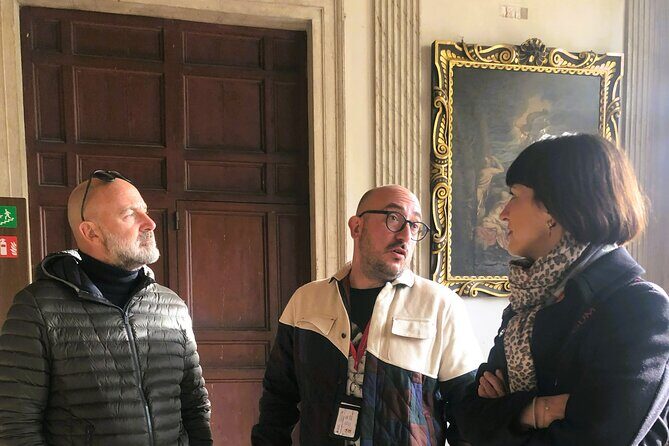
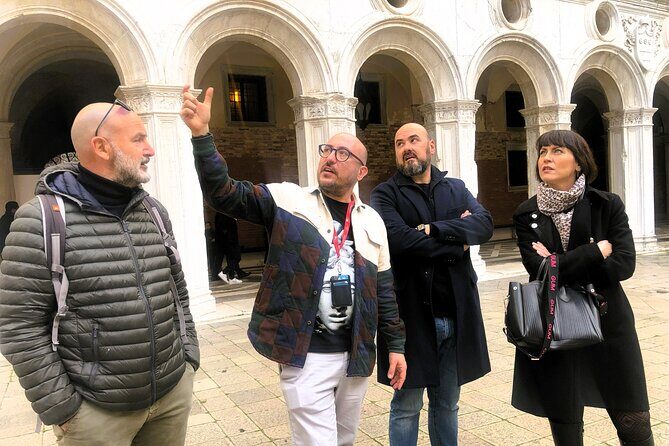
In English, with a licensed guide (Valerio is named in the experience), you can expect explanations that adapt to your group—adults, or kids with specific interests like mythology. Just be aware this is about 2 hours, so if you’re the type who wants to linger for an hour in one room, you’ll need to choose your favorites.
In This Review
- Key things you’ll notice on this Doge’s Palace tour
- Why Doge’s Palace feels different with a private, fast-start approach
- Meeting at Caffè Florian: how the timing and flow works
- Piazza San Marco sets the story before you enter Palazzo Ducale
- Scala dei Giganti di Palazzo Ducale: the staircase that signals power
- Loggia views from Palazzo Ducale: the palace as a stage
- Scala d’Oro (Golden Staircase): opulence with a job to do
- Atrio Quadrato and the daily rhythm inside power
- Sala delle Quattro Porte: politics, decisions, and messages
- Sala dell’Anticollegio: art meets republican governance
- Sala del Collegio and the Council Chamber: where the big calls happened
- Senato and the chambers of structure
- Sala della Bussola (Compass Room): anonymous accusations and justice by design
- Armeria and military power: the Republic’s backup plan
- Sala della Quarantia Civil Vecchia: justice rooms that made decisions final
- Sala del Guariento and the palace as a canvas
- Sala del Maggior Consiglio: the largest chamber and the idea of assembly
- Sala dello Scrutinio: elections, voting, and political process
- Quadreria picture gallery: art collection as part of the official world
- Ponte dei Sospiri: the bridge that carries the palace’s consequences
- Prigioni Nuove (New Prisons): Venice’s darker afterword
- Price and value: is $185.43 per person a fair deal?
- What kind of traveler should book this tour?
- Should you book this Doge’s Palace private tour?
- FAQ
- Where do we meet for the tour?
- How long is the Doge’s Palace private tour?
- Is this tour private?
- What language is the tour offered in?
- Is skip-the-line entry included?
- Are entrance tickets to the Doge’s Palace included?
- What’s included in the tour price?
- Are service animals allowed?
Key things you’ll notice on this Doge’s Palace tour
- Fast-track entry right away so you can start before the crowds build.
- A tailored route where your interests can shape how the guide emphasizes each room.
- Stunning “power stairs” and palace viewpoints like the Scala dei Giganti and the Loggia.
- Secret-in-feel spaces tied to justice and political control, including the Compass Room.
- Bridge of Sighs plus New Prisons to finish the story, not just take photos from outside.
- Valerio Coppo’s style: precise, animated, and able to shift explanations for children and adults.
Why Doge’s Palace feels different with a private, fast-start approach
Most Doge’s Palace tours can feel like sprinting through marble rooms: one famous painting, one famous staircase, then you’re hurried along. This one keeps the pace brisk, but the guide connects the dots. You’ll leave understanding how Venice governed itself—and why the building screams authority.
The big value is the how, not only the what. With fast-track entry and a private group, you’re not stuck waiting behind the slowest-moving line. And because your itinerary is tailored, you can steer the attention toward art, politics, architecture, or the darker justice side of the Republic.
You can also read our reviews of more private tours in Venice
Meeting at Caffè Florian: how the timing and flow works
You meet at Caffè Florian right on Piazza San Marco (P.za San Marco, 57). That location matters. You’re starting in the symbolic center of Venice, so when the tour pivots indoors, the palace doesn’t feel like a random museum stop.
The tour runs about 2 hours and loops back to the meeting point at the end. The pace is structured room-to-room, with short stops where your guide explains key meaning while you’re still fresh, not half-lost in a maze of corridors.
Piazza San Marco sets the story before you enter Palazzo Ducale
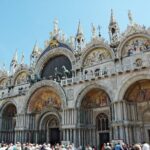
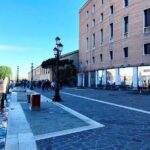
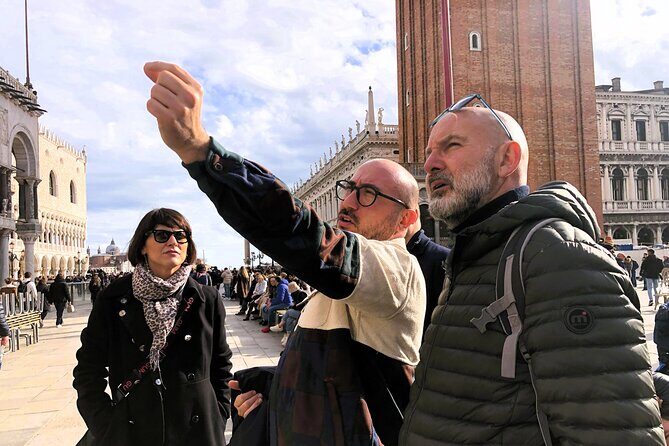
The first stop is Piazza San Marco. Your guide frames what this square meant to the Republic of Venice: the development of the area, key architectural landmarks, and major cultural events that played out there over centuries.
This is more than a warm-up. If you don’t understand the “outside world” of Venice’s power, Palazzo Ducale can feel like a decorative palace. Starting here helps you see the palace as the engine behind public life.
Scala dei Giganti di Palazzo Ducale: the staircase that signals power
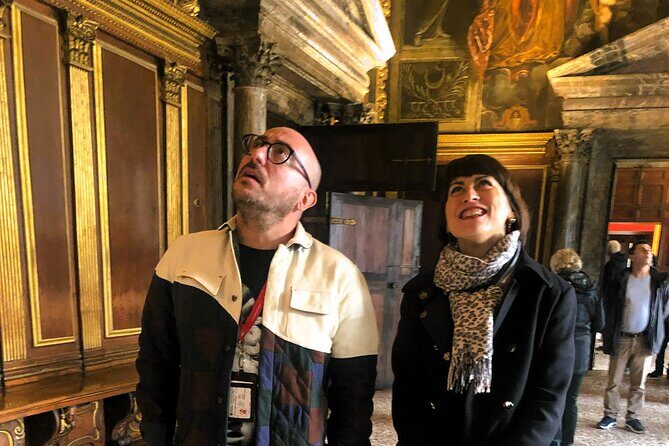
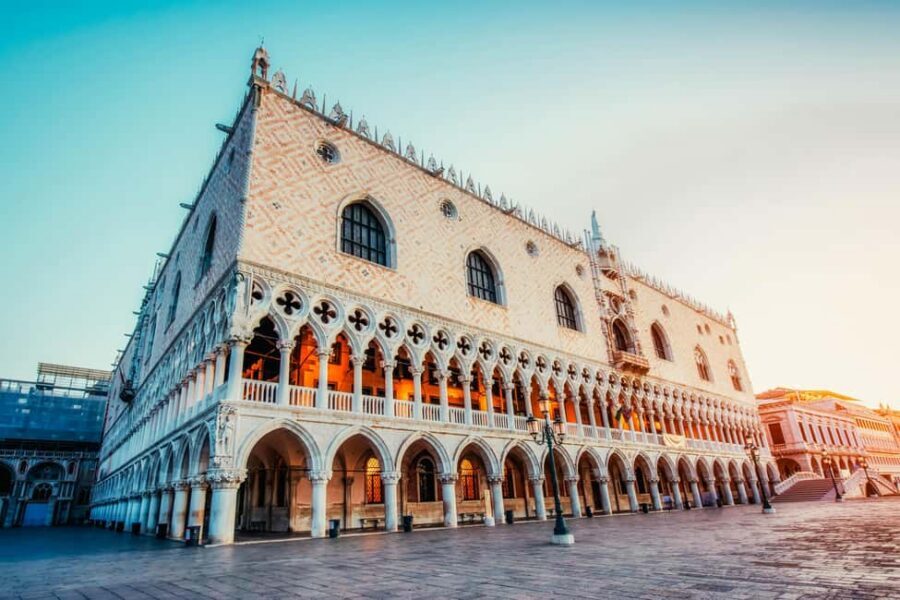
Next you enter the Doge’s Palace complex and head toward the Scala dei Giganti. The internal courtyard view sets a dramatic tone—big stone, big symbolism, and the sense that authority is built into every surface.
You’ll spend time on the staircase’s imposing presence and the sculptural details and symbols. It’s the kind of stop that’s easy to miss if you rush, because the meaning hides in the carvings. A private guide helps you “read” what you’re looking at instead of just seeing something tall and ornate.
Possible drawback: you’ll be on your feet. You can’t do this tour sitting down, and the stairs are part of the experience.
Loggia views from Palazzo Ducale: the palace as a stage
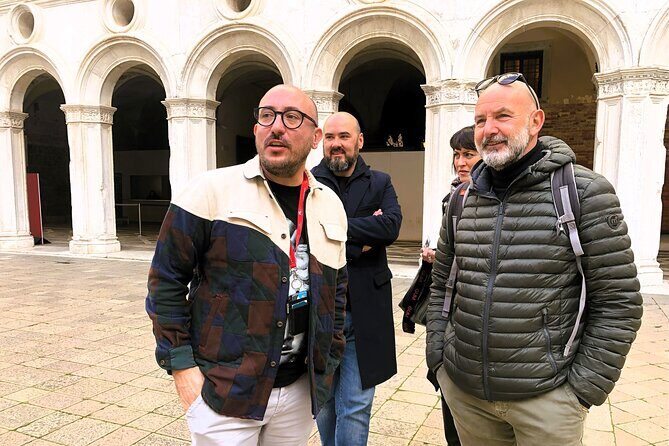
Then you move to the Loggia, an open gallery with arches and breathtaking views over St. Mark’s Basilica and the square below. This is where the palace stops being abstract. The architecture shows how the rulers faced the public—and how power was displayed in daylight.
Your guide explains why this architectural gem matters and what it meant in public life. It’s a useful reminder that Venice’s ruling class wasn’t hiding away. They were always in view.

Scala d’Oro (Golden Staircase): opulence with a job to do
After that, you ascend the Scala d’Oro, or Golden Staircase. The name fits the mood: this is a showpiece of wealth and prestige, built to impress.
Your guide points out the artistic and historical elements tied to the Doge’s rank. Even if you’re not the “history person,” you’ll understand the basic idea fast: this staircase is theatre for leadership.
Atrio Quadrato and the daily rhythm inside power
You then enter the Atrio Quadrato, a square-shaped atrium surrounded by striking architecture. It’s not just a pretty room. Your guide covers what purpose this space served and how it fit into the daily life of the Doge’s Palace.
This stop is a good palate cleanser after the loud drama of staircases. It helps you shift from “wow” to “how did the system actually function?”
Sala delle Quattro Porte: politics, decisions, and messages
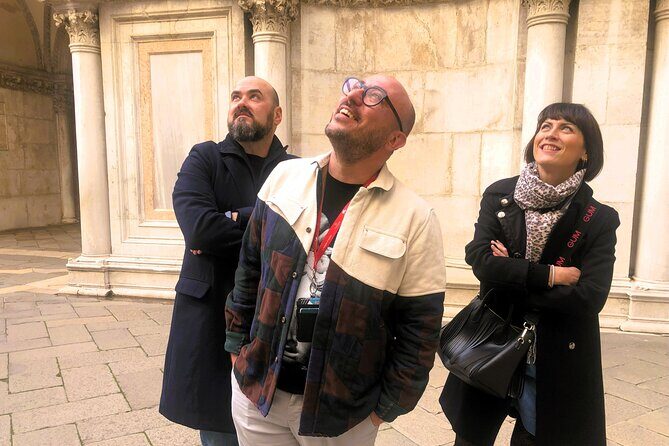
From there you go to the four doors room, the Sala delle Quattro Porte. Expect political storytelling and lots of attention to intricate details and artwork.
This room helps you grasp how Venice handled decision-making and diplomacy. It’s a reminder that government is also communication: messages, negotiations, and careful positioning all leave fingerprints in these rooms.
Sala dell’Anticollegio: art meets republican governance
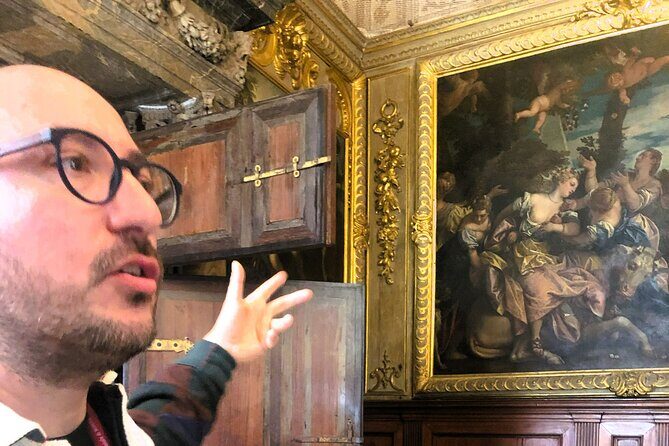
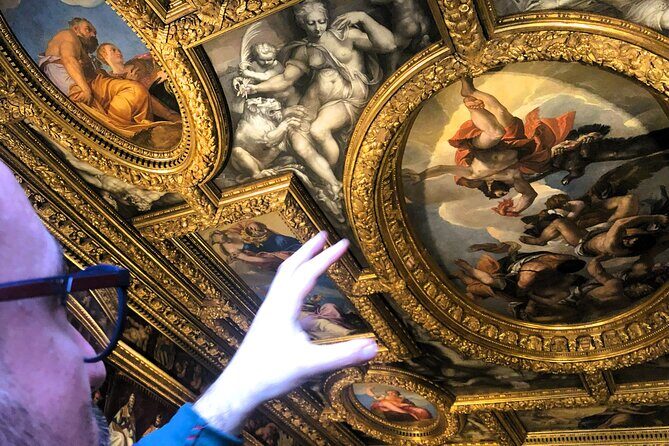
Next comes the Sala dell’Anticollegio, an antechamber with masterpieces by artists including Tintoretto and Veronese. Your guide uses the art to explain cultural life during the Republic, showing how politics and artistic talent weren’t separate worlds.
I like this stop because it makes the palace feel human. It’s not only laws and councils. It’s also the look and spirit of Venice—painted right into the corridors where decisions were made.
Sala del Collegio and the Council Chamber: where the big calls happened
Then you reach the Sala del Collegio, the heart of political decision-making. This is one of the “you’re in the middle of it” moments, because it’s framed as the core of how the Republic shaped its direction.
Your guide walks through the political drama that played out in this hall, and you’ll start to see patterns: who had influence, how stability was protected, and why public power needed rituals.
Senato and the chambers of structure
After the Council Chamber, you visit the Senato, where senators convened to discuss matters of state. Your guide explains the political structure of the Venetian Republic and what kind of decisions shaped the city.
Then you move into another layer of governance: the Chamber of the Council of Ten (Consiglio dei Dieci). This council focused on maintaining political stability and order. The story here often feels tense—because control is never passive.
Sala della Bussola (Compass Room): anonymous accusations and justice by design
One of the most memorable stops is the Sala della Bussola. This room connects to justice and espionage, named for a small window where anonymous accusations were submitted.
Your guide explains the system behind secret denunciations and how citizens could report suspicious activities anonymously. That’s the key tension of Venice’s governance: protection of the state versus the cost to ordinary lives.
It’s also a room where the guide’s narration matters. Without interpretation, you might read it as an odd historical anecdote. With context, it feels like a real mechanism—built into the palace’s physical design.
Armeria and military power: the Republic’s backup plan
Then you continue to the armory (Armeria). Here, the conversation shifts from paperwork to force. Your guide narrates tales of battles, strategic alliances, and the importance of maritime defense.
This is a helpful balance. Venice’s reputation is often told as art and lagoon romance. The armory reminds you it was also a state built around ships, trade security, and conflict readiness.
Sala della Quarantia Civil Vecchia: justice rooms that made decisions final
Next you step into the Chamber of the Quarantia Civil Vecchia (Sala della Quarantia Civil Vecchia). Your guide connects it to Venice’s legal framework and the role of justice in keeping order.
It’s another “system” room, not a decorative one. If you want the Republic’s mechanics, this is where you’ll feel it the most.
Sala del Guariento and the palace as a canvas
After justice, you see the Sala del Guariento. The focus here is artwork that adds cultural depth, paired with insight into Venetian achievement during its golden age.
If you like art history, this stop will give you a thread to pull: how Venice used painting and decoration to tell its story about itself—while running a complicated political machine.
Sala del Maggior Consiglio: the largest chamber and the idea of assembly
You enter the Chamber of the Great Council, the Sala del Maggior Consiglio. Your guide notes that it’s the largest chamber in the palace, and you’ll learn how grand assemblies worked here.
This is where you’ll understand Venetian governance as something performed in public space—big meetings, big symbols, and a sense that the Republic ran on formal structure.
Possible drawback: the room scale can be overwhelming if you’re not getting explanation. That’s why a private guide is worth it here: you don’t need to guess what to look at first.
Sala dello Scrutinio: elections, voting, and political process
Next comes the Sala dello Scrutinio. This room is tied to elections and voting processes, with stories about how the Venetian electoral system worked.
If you’re even slightly curious about how governments actually select leaders, this stop can be a highlight. It turns the palace from an art stop into a civics lesson—Venice’s version.
Quadreria picture gallery: art collection as part of the official world
Then you visit the Picture Gallery (Quadreria). The tour frames it as the palace’s cultural layer—masterpieces that help complete the picture of Venice’s artistic and political life.
This is the “slow down a bit” moment. After councils and justice rooms, it feels good to focus on paintings and what they signaled about authority, identity, and taste.
Ponte dei Sospiri: the bridge that carries the palace’s consequences
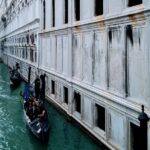
After the galleries, you cross the Bridge of Sighs (Ponte dei Sospiri). Your guide tells the stories connected to prisoners who crossed it—romantic legends on one side, historical reality on the other.
This stop lands emotionally because it connects politics to outcomes. It’s not just governance; it’s punishment, confinement, and fear—built into the palace’s layout.
Prigioni Nuove (New Prisons): Venice’s darker afterword
Finally, you explore the Prigioni Nuove, the New Prisons. Your guide explains the prison system, prisoners, and judicial processes of the time.
This ending matters. If you only tour the decorative parts of Palazzo Ducale, you miss the full logic of the building. Finishing here makes the palace feel like one continuous story: power, law, and the consequence chain.
Price and value: is $185.43 per person a fair deal?
At $185.43 per person for about 2 hours, you’re paying for more than access. You’re paying for a licensed guide, private group time, and a tailored route that helps you understand the meaning of each room—especially the “less famous but more important” spaces like the Compass Room and the voting-related chambers.
The main value trade-off is that Doge’s Palace entrance tickets are not included. Your guide assists with purchasing skip-the-line tickets at the best possible rate, but you should still budget for the palace admission separately. If you’re traveling with someone who loves logistics headaches (they don’t exist), this is where a guide saves time.
If you’re the type who would otherwise wander and miss context, private time is one of the most cost-effective ways to see Venice’s big-ticket sites without leaving puzzled.
What kind of traveler should book this tour?
Book this if you want:
- A clear story through the palace’s politics, justice, and art
- A route that can flex for your interests
- Less crowd pressure at the start, because you want to actually look at details
You might choose a different format if you:
- Want unlimited time in each room (this is timed to fit many stops)
- Prefer a self-paced museum visit with minimal narration
- Are traveling with someone who doesn’t like stairs and crowded indoor paths
Should you book this Doge’s Palace private tour?
Yes, if you want the Doge’s Palace to make sense. The palace is too big and too symbolic to treat like a photo scavenger hunt. With fast-track entry and a guide who connects rooms to how the Republic worked, you get a bigger payoff than the typical “see everything famous” run.
If you’re also hoping to understand the darker side—anonymous accusations in the Compass Room, the Bridge of Sighs, and the New Prisons—this tour’s route is built for that. It doesn’t stop at prettiness. It finishes the story.
FAQ
Where do we meet for the tour?
You meet at Caffè Florian, Piazza San Marco 57, 30124 Venice, Italy.
How long is the Doge’s Palace private tour?
It lasts about 2 hours.
Is this tour private?
Yes. It’s a private tour/activity, and only your group participates.
What language is the tour offered in?
The tour is offered in English.
Is skip-the-line entry included?
You’ll have fast-track entry, and the guide provides assistance purchasing skip-the-line tickets at the best possible rate. However, Doge’s Palace entrance tickets are not included in the tour price.
Are entrance tickets to the Doge’s Palace included?
No. Entrance tickets to the Doge’s Palace are not included, and special fares may apply for families, seniors, youth, and students.
What’s included in the tour price?
A local top-rated licensed guide, flexible customization based on your preferences, and assistance in purchasing skip-the-line tickets at the best possible rate.
Are service animals allowed?
Yes, service animals are allowed.
If you want, tell me when you’re going (month and time of day) and who’s in your group, and I’ll suggest the best way to pair this with the rest of your Venice day.