Venice can feel like sensory overload.
This short tour is a smart way to get your bearings fast, without trying to do everything on your own. I like that it strings together Venice’s best-known icons (St Mark’s Square and Rialto) with two spots that help you see a different side of the city (Teatro La Fenice and the Scala Contarini del Bovolo). It also runs in English and uses a mobile ticket, which keeps the start simple.
What I like most is the pacing and the guide. You get around 30 minutes at Piazza San Marco, then quick hits at Rialto, La Fenice, and the spiral staircase, so you’re not stuck in one place too long. The guides named in past outings—Suzanne and Elisabetta—are described as engaging, and the tour style sounds flexible enough to fit real people (even a teen).
One possible drawback: a couple of the big sights here usually require their own tickets. The tour focuses on seeing and understanding the places, not full interior visits, so if you want to go inside St Mark’s Basilica or other venues, you’ll need to plan that separately.
In This Review
- Key points before you go
- First-Time Venice: Why This Two-Hour Walk Works
- Piazza San Marco: 30 Minutes in Venice’s Main Square
- Rialto Bridge: Oldest Crossing, Grand Canal Views
- Teatro La Fenice: A Theatre Landmark You Can Spot Fast
- Scala Contarini del Bovolo: The Spiral Staircase Stop Most People Skip
- Guides Make It Personal: What to Look For
- Tickets and the St Mark’s Reality Check
- Price and Value: Is $141.95 a Good Deal?
- Getting There: Where to Meet in Piazza San Marco
- Venice Access Fee on Certain Dates: Don’t Get Surprised
- Should You Book This Venice Tour?
- FAQ
- How long is the Venice tour?
- Where do I meet the guide?
- Is pickup offered?
- Is this tour private?
- What language is the tour in?
- Are admission tickets included?
- Is there a Venice access fee on some days?
- What sights are included?
- Is free cancellation available?
- Is the tour suitable for most people?
Key points before you go
- St Mark’s Square first: start at the center of it all, so everything else makes sense.
- A quick, efficient route: designed for first-timers with a 2-hour total time window.
- Rialto Bridge the practical way: you get the icon, plus the context of why it matters.
- La Fenice in a short stop: you see the theatre landmark without getting stuck in ticket lines.
- Scala Contarini del Bovolo’s spiral staircase: a memorable detail many visitors miss on a first walk.
First-Time Venice: Why This Two-Hour Walk Works
If it’s your first time in Venice, you need two things: orientation and context. This tour gives you both, in a tight time box. You begin in Piazza San Marco, where the city’s main civic and religious energy is on display. From there, you connect the dots to Rialto Bridge and then swing toward quieter-but-still-famous landmarks like Teatro La Fenice and the Scala Contarini del Bovolo.
The format is also built for comfort. It’s private, meaning it’s only your group, not a huge crowd shuffle. You’ll still be walking (Venice is Venice), but the experience should feel more like a guided stroll than a cattle-line sightseeing route.
Who is this best for? First-timers who want the headline sights, couples, families with teens who don’t want to burn half a day, and anyone who values an efficient overview before they choose where to go deeper later.
You can also read our reviews of more tours and experiences in Venice.



Piazza San Marco: 30 Minutes in Venice’s Main Square
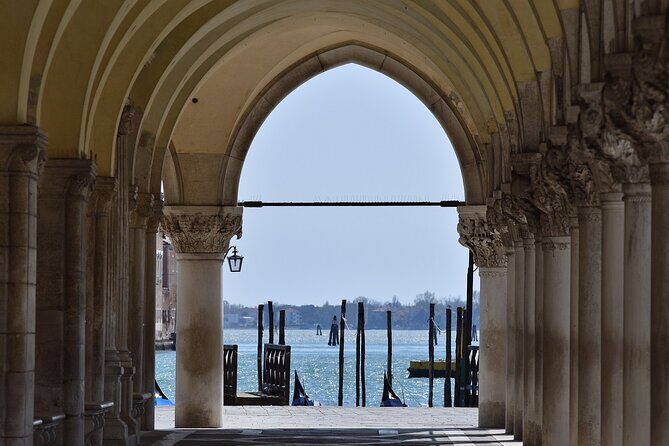
Piazza San Marco is the kind of place that looks staged—until you realize it’s real. This stop is scheduled for 30 minutes, and that’s a good length for first-time orientation. You’re placed in the heart of the action, surrounded by Venice’s signature landmarks: St Mark’s Basilica, the Campanile (bell tower), and the Doges Palace, once the administrative center of the city.
Here’s how to make the most of your time at the square:
- Start by looking outward first. Try to take in the whole composition—basilica, tower, and palace fronts—before focusing on smaller details.
- Then pick one feature to study for a minute or two. The square can be visually loud, and focusing helps you actually remember what you saw.
- If you’re hoping for interior visits, treat this as the exterior and context stop. The tour doesn’t include admissions.
The reality check: the square is iconic, but it can be crowded. Even with a guided stop, expect that you’ll be sharing space with others. The upside is that you’re there early enough in a route like this to start understanding where everything is located.
Rialto Bridge: Oldest Crossing, Grand Canal Views
Next comes Rialto Bridge, one of Venice’s top visual anchors. It’s a stone arch bridge over the Grand Canal, and it’s described as the oldest bridge in Venice. Even if you’ve seen photos, the scale hits harder in person. The bridge is close enough to feel like you’re in the middle of the city’s postcard story, not just watching it from afar.
This is a good stop for first-timers because Rialto helps you grasp two important ideas:
- Venice is organized around waterways, not just streets.
- Big landmarks weren’t built just to look pretty—they were built to connect activity.
Timing note: your tour is short overall, so don’t expect a long linger. Use the stop to get your bearings. If you want more time at Rialto later, that’s where you can come back on your own for a longer walk along the canal edges.
Teatro La Fenice: A Theatre Landmark You Can Spot Fast
Then you hit Teatro La Fenice, listed as one of Italy’s most famous theatre landmarks. You get about 10 minutes, and that tells you how the tour is meant to function: quick stops that add cultural texture without draining your day.
How to enjoy a 10-minute theatre stop:
- Look at the building as a landmark first, not just a name.
- Take in what you can from the outside, since the stop doesn’t include admission.
- Let the guide’s explanation do the heavy lifting. A good guide connects the theatre to Venice’s broader character—style, performance, and status—so it doesn’t feel like a random building in a photo queue.
The value here is that you’re not only seeing “what everyone takes a picture of.” You’re seeing something that reveals how Venice has long treated culture as part of civic life.
Scala Contarini del Bovolo: The Spiral Staircase Stop Most People Skip
This is the most fun kind of stop: a detail that many first-time visitors miss unless someone points it out. The Scala Contarini del Bovolo is a spiraling “snail” staircase that winds up the tower-like facade of a historic palazzo.
You’ll get around 5 minutes, which sounds short, but it’s enough to recognize what makes it special: it’s unique enough that it helped name both the palazzo it’s attached to and the Contarini noble family branch that lived there.
How to get the most out of this stop in just a few minutes:
- Use your time to understand the shape. Don’t rush past it looking for a single perfect angle.
- Take one slow look, then one quick look from a different perspective. The staircase reads differently when you change your angle even slightly.
- Let the guide connect the staircase to its era. The fact that it dates to the late 15th century is part of the story—Venice has long been creative with space and design.
The practical upside: because it’s a small stop, it won’t stall your whole tour. It’s the kind of moment that makes the full walk feel more like a curated route than a list.





Guides Make It Personal: What to Look For
In Venice, the difference between an okay walk and a great one is often the guide. Past experiences with guides tied to this tour—like Suzanne and Elisabetta—highlight how important personality and flexibility can be. The descriptions focus on engaging explanations and the ability to adjust so the group stays comfortable and interested.
Here’s what you should expect from a strong guide on this specific route:
- Clear storytelling at each stop, especially at St Mark’s Square where everything feels connected.
- A pace that respects the short duration. You shouldn’t feel like you’re sprinting, and you shouldn’t feel like you’re waiting.
- Small adaptability. One reason people seem to enjoy this tour style is that it doesn’t sound rigid. If a shop catches your eye or someone wants a quick moment to look closer, the guide can often help.
A quick practical tip: if you have strong interests—architecture, theatre, or Venetian noble families—tell your guide at the start. With a short tour, that little bit of direction can shape what you notice and remember.
Tickets and the St Mark’s Reality Check
A key detail: admission tickets are not included in the tour. That matters most at Piazza San Marco, but it also applies to the other landmarks. You’re getting a guided sightseeing experience with time to see the places and learn the meaning behind them, not a package that guarantees you can walk inside every site.
So, what should you do with this info?
- If your priority is interiors (and the big ticket museums), plan those separately.
- If your priority is first-time orientation and understanding what you’re looking at, this works well as a foundation.
- Consider pairing this with one or two targeted ticketed visits after. That way you don’t pay for admissions you won’t use.
Also pay attention to your expectations on that day. If you want a tour that includes full entrance time everywhere, this isn’t built that way. If you want a guided overview that helps you decide where to go next, it fits perfectly.
Price and Value: Is $141.95 a Good Deal?
At $141.95 per person for roughly two hours, this tour isn’t the cheapest way to see Venice—but it’s also not trying to be. The value comes from a few things you can feel during the experience.
First, it’s a private tour for your group. In a city where crowds can turn even a good plan into a miserable one, private time is a real perk.
Second, it includes pickup offered and uses a mobile ticket, so the start shouldn’t require extra effort from you. (The exact meeting point is Piazza San Marco, between the two columns, but pickup can also be offered depending on your arrangement.)
Third, it focuses your time. Venice can waste your day if you wander without a game plan. This route gives you a structure: major icons plus one design detail most people miss.
Who might feel it’s overpriced? If you already know Venice well and you’re confident navigating from place to place with no need for a guide’s context, then you may not get enough added value. But for a first visit, where orientation and story do a lot of work, the cost starts to make sense.
Getting There: Where to Meet in Piazza San Marco
The meeting point is Piazza San Marco, and pickup details say between the two columns. That’s a common challenge in Venice—Piazza San Marco is big, and finding a precise spot matters.
My practical advice:
- Arrive a few minutes early. Venice timing can be a little unpredictable with walking lanes and crowds.
- If you’re unsure where “between the two columns” is at street level, ask at the spot right away. Don’t wait until the exact minute.
- Keep your phone ready for your mobile ticket.
This is also near public transportation, which helps if you’re not staying within easy walking distance.
Venice Access Fee on Certain Dates: Don’t Get Surprised
There’s one extra thing to know if you’re doing Venice as a day trip. On certain dates, people staying outside of Venice who plan to visit may need to pay a €5 access fee. The guidance points you to the city site for dates and exemptions.
How to handle it:
- Check the Venice access fee calendar before you lock your plans.
- If you fall under the day-visitor category, factor this into your budget.
- If you’re exempt, still double-check, so you’re not guessing.
This isn’t a small detail in Venice. It can affect your day even if the tour itself is straightforward.
Should You Book This Venice Tour?
Book it if you’re in Venice for the first time and want a guided “best of” that doesn’t eat your entire day. The route is short, structured, and designed to give you quick wins: St Mark’s Square for orientation, Rialto Bridge for a classic Venice anchor, Teatro La Fenice for cultural depth, and the Scala Contarini del Bovolo for a memorable design detail you can brag about later.
Skip it if you already have a tight plan for ticketed interior visits and you’d rather spend your time standing inside specific venues. Since admissions aren’t included, you may end up doing extra planning anyway.
If you’re the type who likes knowing what you’re looking at, this tour is a strong way to start your Venice stay. You’ll finish with a clearer map in your head and a better sense of where to go next on your own.
FAQ
How long is the Venice tour?
It runs for about 2 hours.
Where do I meet the guide?
The meeting point is Piazza San Marco, at P.za San Marco, 30124 Venezia VE, Italy, between the two columns.
Is pickup offered?
Pickup is offered, based on the tour details provided.
Is this tour private?
Yes. It’s private, so only your group participates.
What language is the tour in?
The tour is offered in English.
Are admission tickets included?
No. The tour states admission tickets are not included for the stops.
Is there a Venice access fee on some days?
On certain dates, people staying outside of Venice who plan to visit for the day may need to pay a €5 access fee. Details and exemptions are provided on the city website listed in the tour information.
What sights are included?
You’ll visit Piazza San Marco, Rialto Bridge, Teatro La Fenice, and the Scala Contarini del Bovolo.
Is free cancellation available?
Yes. You can cancel up to 24 hours in advance for a full refund, and the tour states free cancellation.
Is the tour suitable for most people?
Most travelers can participate, and service animals are allowed. It’s also near public transportation.
If you’d like, tell me your travel dates and whether you’re staying in Venice or doing a day trip. I can help you time your visits around the access fee days and ticketed highlights.