REVIEW · VENICE
Lido Bike Tour: With a Local on the Island of Cinema
Book on Viator →Operated by deTourist Venice Valerio Coppo · Bookable on Viator
Venice gets a breather on two wheels. I love the shortcut to Lido highlights you get with a local guide, and I like how the ride connects film-festival history to real lagoon life, not just postcard stops. You also get a smart rhythm: pedal, pause, listen, then roll on before the crowds fully arrive.
One thing to factor in: this is a bike route on a real island with some rougher patches and a few sandy sections. The good news is that you can choose an e-bike or a wider-tire option (if available) to make the ride feel easier.
In This Review
- Key things I’d bank on before you go
- Lido by bike: why 4.5 hours can feel like a reset
- Meeting Santa Maria Elisabetta and choosing your bike setup
- Jewish cemetery gate to the Sea’s tradition mass
- Faro di San Nicolò and the film festival edges you can actually see
- Murazzi breakwater ride to Alberoni dunes and a quiet beach mood
- Malamocco fishing village: canals, calli, and a smaller Venice
- Poveglia and Lazzaretto Vecchio: lagoon islands with heavy legends
- San Lazzaro degli Armeni and Ausonia & Hungaria’s ceramic tiles
- Price and value: what 203.50 buys you (and what it doesn’t)
- Should you book this Lido Bike Tour?
- FAQ
- How long is the Lido Bike Tour?
- What does the tour cost?
- Is the tour offered in English?
- How many people are on the tour?
- Where do we meet?
- Do I need to rent a bike?
- What bike types are available and what do they cost?
- What is included in the price besides the tour guide?
- Are entrance fees included for the stops?
- What if the weather is bad?
- Should you book this tour
Key things I’d bank on before you go
- Local-led route that gets you past the obvious bits and into quieter Lido corners
- Film-festival connections you can spot in real buildings, including spots tied to Mostra del Cinema
- A mix of sites and nature, from the Jewish cemetery to breakwaters, dunes, and beaches
- Lagoon viewpoint time that frames islands like Poveglia from the shore
- Small group size (max 10), so questions and pacing stay practical
- Bike choice matters, especially if you hit any sandy or bumpy paths
Lido by bike: why 4.5 hours can feel like a reset
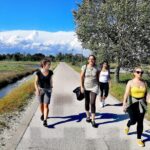
Lido di Venezia is Venice without the constant boat engine noise and without the same level of foot traffic. On a bike tour, you move at a pace where you can actually see details: seawalls, canal edges, old hotel façades, and the texture of the sand-and-pineneedle landscape near the coast.
What makes this tour click is the structure. You’re not bouncing from one far-flung landmark to another; you’re following a route that stays readable for your brain. That means you come away with a sense of how Lido works as a long, narrow island between the lagoon and the sea.
You can also read our reviews of more cycling tours in Venice


Meeting Santa Maria Elisabetta and choosing your bike setup
You start at Santa Maria Elisabetta on Lido. It’s a straightforward meet point near the water area, which matters because Venice logistics can be a time-waster when you’re already carrying bags or trying to align with vaporetto schedules.
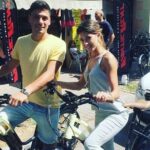
Your bike plan is part of the experience. The tour provides bike-rental organization, and you choose from several types: city bike (10 €), tandem (20 €), e-bike (20 €), fat bike (18 €), and e-fat bike (30 €). Since the route includes some uneven and sandy bits, this choice is not just comfort—it can decide whether the ride feels smooth or fiddly.
This also helps explain why the tour works for a wider range of visitors. A less athletic pace is manageable when you can swap to an e-bike or wider tires for extra grip and cushioning. If you’re the type who worries about “will I make it,” this is the right place to plan for that.
Jewish cemetery gate to the Sea’s tradition mass
Lido has older layers that most people skip because they focus only on Venice’s main islands. Early on, you visit the Cimitero Ebraico, a quiet garden that was Venice’s main Jewish cemetery from 1386 until the 18th century. Even from the entrance, the tomb styles are a lesson in how far Venice’s connections reached—ranging from Venetian gothic to tomb designs with distinctly Ottoman influences.
You also get context for what you’re seeing. Instead of treating the cemetery like a quick photo stop, the guide frames it so the designs and the setting make sense. That turns a short visit into something you remember when you’re back on the main islands.
Then you head to Chiesa Di San Nicolo Al Lido, tied to a ceremony called Sposalizio del Mare, the Marriage of the Sea. This is the kind of tradition that explains why Venice obsessed over maritime power. Even if you’re not seeing the ceremony in action, you still leave with a clearer story about what the church represented for the city’s identity.
Practical note: both of these stops are free for admission as listed, so you’re not stuck doing constant ticket math. That keeps your time focused on walking, biking, and learning rather than budgeting.
Faro di San Nicolò and the film festival edges you can actually see
Next comes coastal perspective. At Faro di San Nicolò, you get beyond the idea of Lido as a beach strip. This is where the route shifts into a protected natural zone, then moves along an old pier between the sea and the harbor mouth until you reach the lighthouse.
This segment is great because it balances views with motion. You’re pedaling, but you’re also able to clock the coastline and spot familiar silhouettes tied to Lido’s luxury beachfront era.
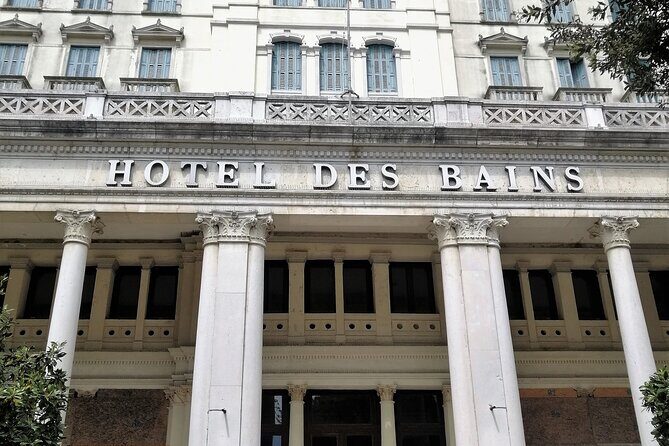
From there, you connect those views to buildings that shaped the film mythology of the island. Grand Hotel des Bains, built in 1900, is one of the iconic names here. It’s remembered for Thomas Mann’s stay in 1911, and for film scenes shot there, including Visconti’s Death in Venice (1971) and The English Patient (1996). The detail that matters for you is this: the movies didn’t just borrow a location. They borrowed a whole atmosphere—light, architecture, and that sense of grand leisure.
Then you reach Ristorante Mostra Del Cinema, which sits in the orbit of Mostra del Cinema, described as the oldest film festival in the world. Screenings run in late August or early September at the historic Palazzo del Cinema. The still-running Art Nouveau Hotel Excelsior (1908) often hosts producers and actors during the festival, so the guide can connect what you’re seeing on Lido to who the island draws at that time of year.
If you’re a movie person, this route gives you a practical way to “tour the inspiration.” If you’re not, it still works because the buildings are part of Lido’s identity, and the guide ties them to real Venetian power and tourism history.
Murazzi breakwater ride to Alberoni dunes and a quiet beach mood
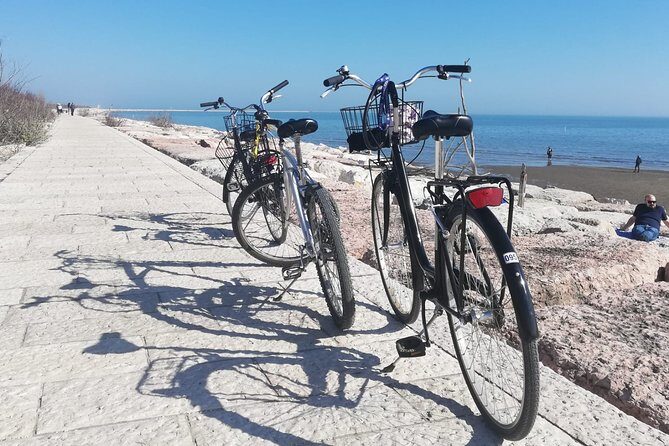
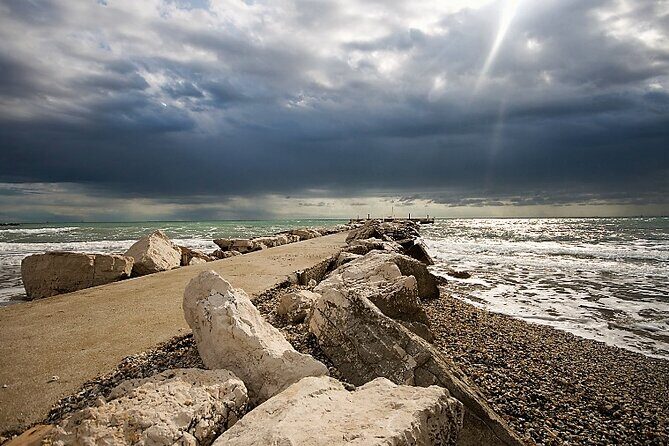
This is the part where the tour feels like a real escape from Venice. The route follows the Murazzi, a scenic stretch alongside the Adriatic sea built as an 18th-century engineering work to protect the lagoon from high seas. It’s the rare sight where you can actually understand infrastructure as scenery.
And it’s not just “look at a wall.” The guide explains how it functioned, which makes the long breakwater feel like more than a backdrop. You see the relationship between sea pressure and how the lagoon stayed livable for centuries.
After that, you head to L’Oasi delle Dune Alberoni. Here the atmosphere shifts to pine forest slopes down toward Lido’s wilder beaches and dune fields. You’ll get the feeling that you’re seeing Lido in its less managed mode—more birds, more wind, and often fewer people once you get off the more common tracks.
There’s also a practical payoff for choosing the right bike. Reviews and route conditions point out that some areas can involve sandy paths or rougher segments. If you’re unsure, a fat bike or e-fat bike choice (when available) can reduce the stress. Even on a calm day, the sand can make skinny tires feel like a chore.


Malamocco fishing village: canals, calli, and a smaller Venice
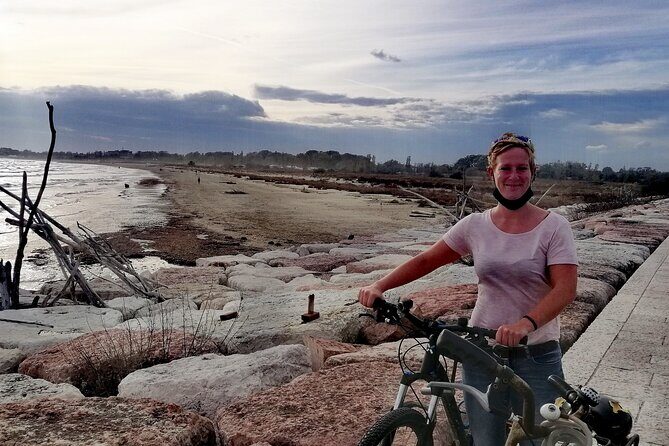
Then you ride into Malamocco, a small fisherman village. This stop is a useful counterpoint to the high-gloss hotel and film-festival imagery earlier in the tour.
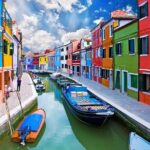
You go over Ponte di Borgo to enter the village, and you’ll explore canals and calli at a slower, more local scale. The vibe is different: fewer grand façades, more practical waterfront life. The tour frames Malamocco as a kind of miniature Venice, which is a great way to understand why this island matters historically.
If you’re the type who gets bored when every stop is a “monument,” Malamocco usually fixes that. It gives you everyday texture—water, homes, small lanes—and lets the rest of the lagoon story land.
Poveglia and Lazzaretto Vecchio: lagoon islands with heavy legends
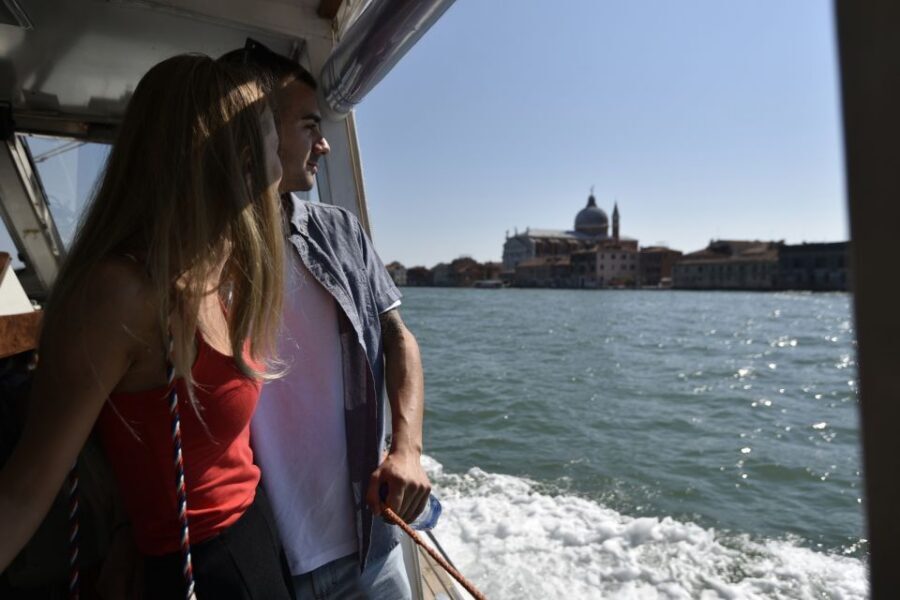
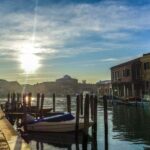
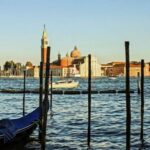
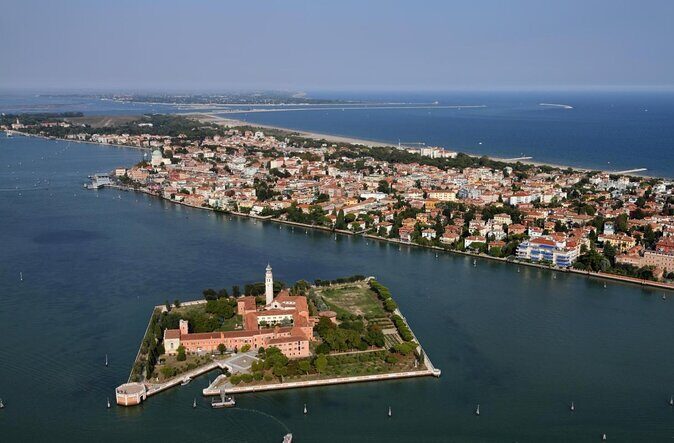
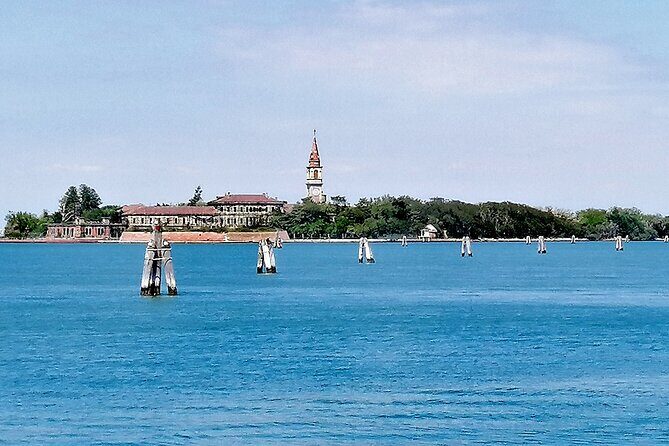
Once you head along the lagoon side, the tour becomes more atmospheric. You’ll be riding where you can take in views of islands such as Poveglia and Lazzaretto Vecchio from the shore.
Poveglia has a story that’s hard to shake. From 1776 it was used as a quarantine station for people suffering the plague and other diseases. Later, it became a mental hospital, then closed in 1968. Because of that history, it shows up frequently in paranormal shows, and you’ll hear how those myths grew from real events.
Lazzaretto Vecchio has its own grim timeline. It housed a hospital caring for people during plague epidemics from 1403 to 1630. It was also used as a leprosarium, and later served as a military post. Even though you’re not stepping onto the island here, the views matter. They turn “paranormal folklore” into something anchored in public-health history.
This section is less about sightseeing and more about perspective. You start to see how Venice and its lagoon managed disease, trade, and fear over centuries, using islands as tools—sometimes merciless tools.
San Lazzaro degli Armeni and Ausonia & Hungaria’s ceramic tiles
The tour continues along the lagoon side with views of San Lazzaro degli Armeni. This island has been home to the monastery of the Mekhitarists, an Armenian Catholic congregation, since 1717. It’s a reminder that the Venetian Lagoon wasn’t only about Italians and Italians abroad—it was also a crossroads for different communities over time.
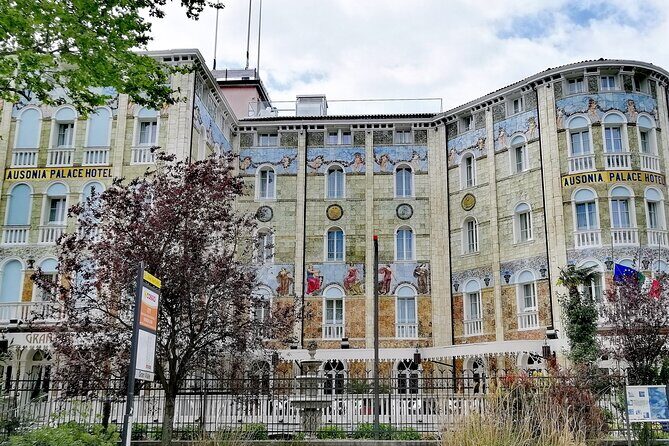
After the heavier lagoon chapters, you get a lighter visual moment with Grande Albergo Ausonia Hungaria, also known as Hotel Ausonia & Hungaria (1913). This hotel is known for its ceramic tile façade, recently renovated. It’s another example of how Lido developed as a luxury island, and how that luxury language still shows on walls and corners even when the surrounding beaches feel casual.
This combination is smart. You leave with the sense that Lido is not one thing. It’s cemetery gardens, lighthouse piers, film festival routes, breakwaters, dunes, fishing canals, quarantine islands, and tile-front luxury—all on the same narrow ribbon of land.
Price and value: what 203.50 buys you (and what it doesn’t)
The tour price is 203.50 per person for about 4 hours and 30 minutes. That number covers more than “a guide walking beside you.” You’re paying for a nature and interpretive guide, a tour leader, and the organization and booking of your bike rental if needed.
What’s not included is the use of bicycle. Bike rental is optional but central to the experience, with prices ranging from 10 € for a city bike to 30 € for an e-fat bike. If you’re comparing total cost, think of the base price as your guided, interpretive route, and the bike rental as the tool that lets you take it at the right comfort level.
Admissions are listed as free for the stops included, so you’re not stacking site fees on top of the tour. That’s a quiet value point. In Venice, where ticketing adds up fast, “free admission” at multiple stops helps you keep control over your budget while still seeing a broad set of sights.
Finally, there’s the small-group angle. With a maximum of 10 travelers, you’re less likely to feel rushed or lost. That’s part of why the tour works even when you’re not the most confident cyclist.
Should you book this Lido Bike Tour?
Book it if you want a Venice-side experience that actually moves. I’d choose this tour when you want film-festival references that live in real buildings, plus nature breaks with beaches, dunes, and a breakwater that explains why the lagoon survived rough seas.
It’s also a good pick if you like learning from a guide you can ask questions of, not just following a checklist. Valerio Coppo, the guide associated with this tour, is repeatedly described as attentive and able to adjust pacing for different riders, with a strong sense of humor that makes the tour feel less like a lecture.
Skip it if you’re unwilling to bike on uneven ground, or if you expect smooth, flat paths the whole time. This route can include rougher spots and sandy segments, so plan your bike choice seriously. If you’re on the fence, the e-bike or wider-tire options are your friend.
FAQ
How long is the Lido Bike Tour?
It’s about 4 hours and 30 minutes.
What does the tour cost?
The price is 203.50 per person.
Is the tour offered in English?
Yes, it’s offered in English.
How many people are on the tour?
The maximum group size is 10 travelers.
Where do we meet?
You meet at Santa Maria Elisabetta, 30126 Venice, Metropolitan City of Venice, Italy.
Do I need to rent a bike?
Bike use is not included. The tour can organize rental bikes, and you choose the type and pay the rental fee.
What bike types are available and what do they cost?
City bike is 10 €, tandem is 20 €, e-bike is 20 €, fat bike is 18 €, and e-fat bike is 30 €.
What is included in the price besides the tour guide?
You get a nature and interpretive guide/tour leader, plus the organization and booking of rental bikes if needed. You also receive a mobile ticket.
Are entrance fees included for the stops?
Admission tickets are listed as free for the sights included on this tour.
What if the weather is bad?
This experience requires good weather. If it’s canceled due to poor weather, you’ll be offered a different date or a full refund. It can also be canceled if the minimum number of travelers isn’t met, with the same options.
Should you book this tour
If your ideal Venice day includes history, film connections, and real lagoon nature without being stuck in queues, this is a strong choice. I’d book it early since it’s often reserved far ahead, and I’d also pick your bike type based on how you feel about rough or sandy patches. With a max of 10 riders and a guide who adapts the pace, it’s one of the better ways to see Lido as its own place, not just a stop on your way back to Venice.