REVIEW · VENICE
Secrets of Venice Carnival and Life of Casanova Tour
Book on GetYourGuide →Operated by Venice Events srl · Bookable on GetYourGuide
Casanova and Carnival collide on a Venice walk. This tour turns the city’s 18th-century party spirit into a guided story, with your guide in period costume, starting at the famous Teatro La Fenice. You’ll follow the trail of Giacomo Casanova through narrow calle (alleys), carnival traditions, and the social scenes that made Venice feel like theater.
I especially like the Casanova route through places tied to his life, including the area of San Samuele and the stops connected to his worldly connections. I also enjoy that the tour doesn’t stop at costumes: you learn why masks mattered and how they were traditionally made, then you end with a proper Carnival treat.
One thing to consider: if your group is large or weather turns rainy, it can get harder to hear your guide clearly in busy streets, especially if people spread out.
In This Review
- Key things I’d focus on
- What This Casanova Carnival Walk Actually Gives You
- Starting at Teatro La Fenice: The Right Place to Kick Off
- Casanova Through San Samuele: Backstreets With a Purpose
- How Carnival Masks Worked (And Why You’ll See Them Differently Now)
- Palazzo Contarini del Bovolo: A Stop That Feels Like a Set
- Campo Santo Stefano: Where the Stories Sit With You
- Ridotto, Grand Balls, and the Social Scene Behind the Flirting
- Meeting Different Guides, Getting the Same Core Experience
- The Ending at Le Café Venezia: Cappuccino and Carnival Frittelle
- Price and Value: Is $88 Worth It in Venice
- Practical Tips So You Hear Everything (Even in the Rain)
- Who This Tour Is Best For
- Should You Book the Secrets of Venice Carnival and Life of Casanova Tour?
- FAQ
- How long is the Secrets of Venice Carnival and Life of Casanova Tour?
- Where do I meet for the tour?
- What’s included in the price?
- What is not included?
- Is the tour wheelchair accessible?
- Can I cancel for a full refund?
- Can I pay later?
- Can I wear a Carnival costume or mask?
Key things I’d focus on
- Casanova’s story mapped onto real Venice streets, not just vague background
- Mask traditions and how masks are made, with explanation you can actually remember
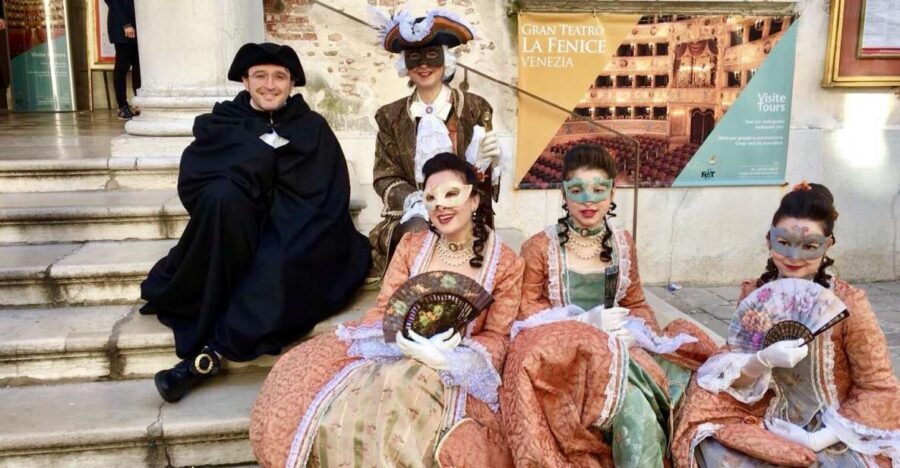
- La Fenice start and period-costume guiding to set the right mood fast
- Stops like Palazzo Contarini del Bovolo and Campo Santo Stefano during the walk
- A warm finish at Le Café Venezia with cappuccino and Carnival frittelle
- Group management matters in crowded lanes, so stay close to hear every detail
What This Casanova Carnival Walk Actually Gives You
This is a themed walking tour with a clear purpose: connect Venice’s Carnival world to the real person people still associate with wit, risk-taking, and romance—Giacomo Casanova. You’re not spending the time in one big museum room. Instead, you’re moving through the streets where the stories would make sense, with your guide guiding you like you’re part of the masquerade.
The value is in the mix. You get social history (Casanova’s circle, the Ridotto casino concept, and courtesans’ role in Venice’s lively reputation), plus practical culture (why masks hid identities and how they were made). And you get a food stop that feels like it belongs to the season, not a generic souvenir-cafe routine.
You can also read our reviews of more tours and experiences in Venice.

Starting at Teatro La Fenice: The Right Place to Kick Off
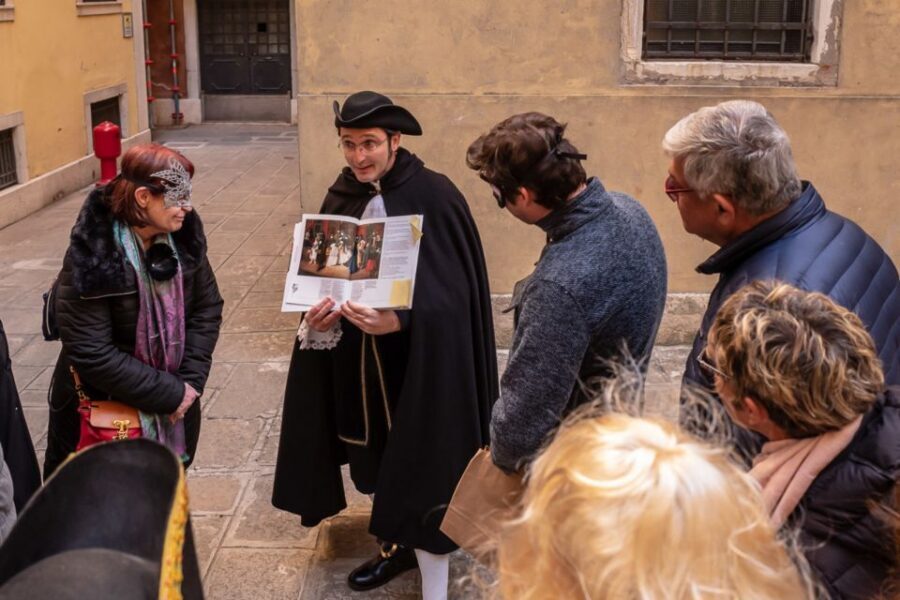
You meet in front of Teatro la Fenice opera house at Campo della Fenice, and that matters. It’s a recognizable landmark that helps you orient quickly, and it sets the tone: Carnival is spectacle, so starting at an opera stage feels logical.
There’s also a small convenience built in: the activity notes a skip-the-ticket-line element. Even if you’re not obsessed with opera, it helps your tour move without getting stuck at the busiest moment.
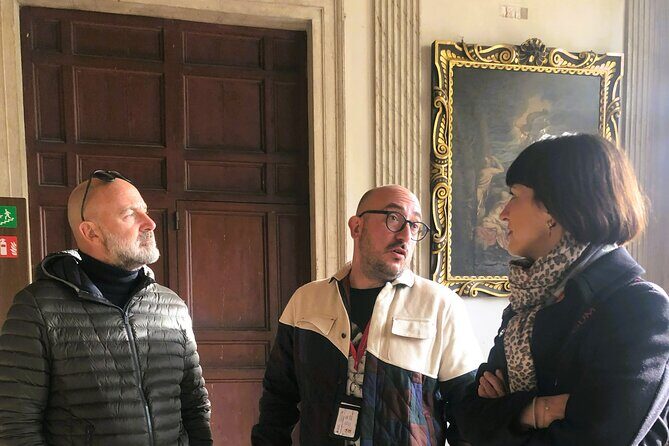
Your guide is English-speaking and dressed in traditional Venetian Carnival costume. That detail isn’t fluff. It helps the tour feel like a performance with a point, and it makes the walking feel more like a guided night at the Carnival court than a lecture on a street corner.
Casanova Through San Samuele: Backstreets With a Purpose
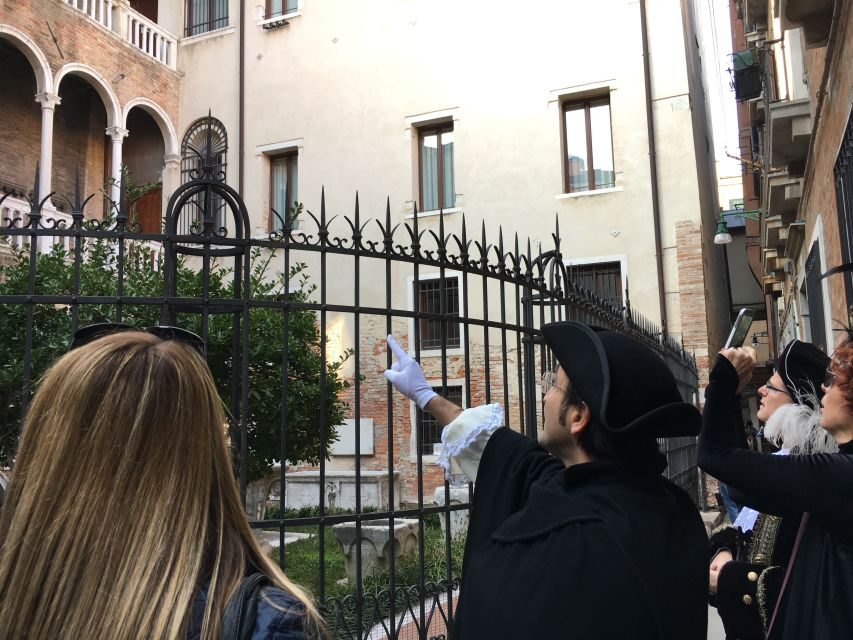
The heart of the tour is the Casanova walk itself—following his life story through Venice’s narrow lanes. You’ll hear how Casanova was born in Venice, grew up around San Samuele, and how his personality shows up in different parts of the city.
A key moment is passing places tied to Casanova’s circle, including his house and the home of the poet Giorgio Baffo, a connection that shaped Casanova’s early turn toward worldly pleasures. Instead of learning names in isolation, you learn them next to the physical setting they belong to.
The tour also brings in a few Casanova labels—lover, adventurer, extravagant figure, Freemason, and someone described as a servant of the establishment. You don’t need to agree with every headline about him. You just get a fuller portrait of a man who lived like Venice itself wanted to be seen during Carnival.
How Carnival Masks Worked (And Why You’ll See Them Differently Now)
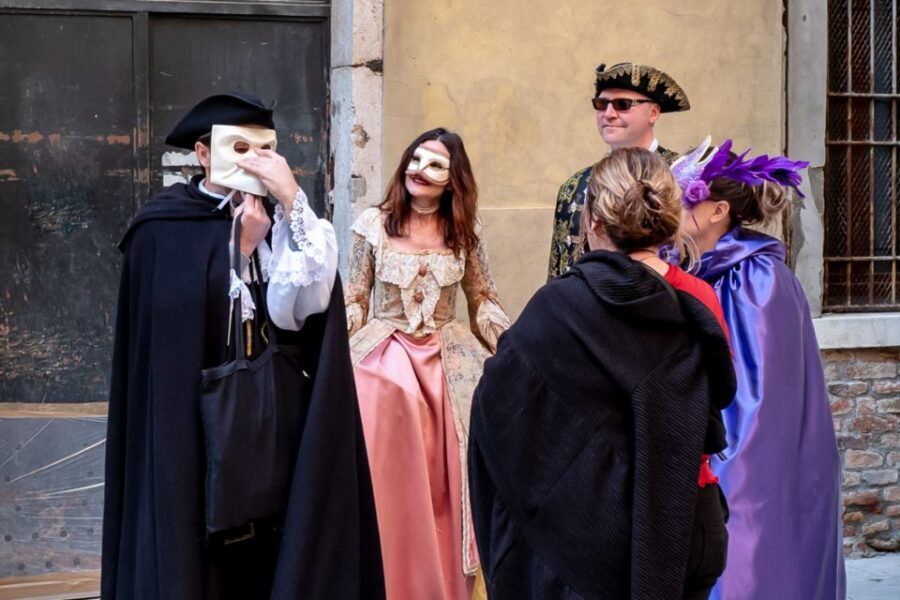
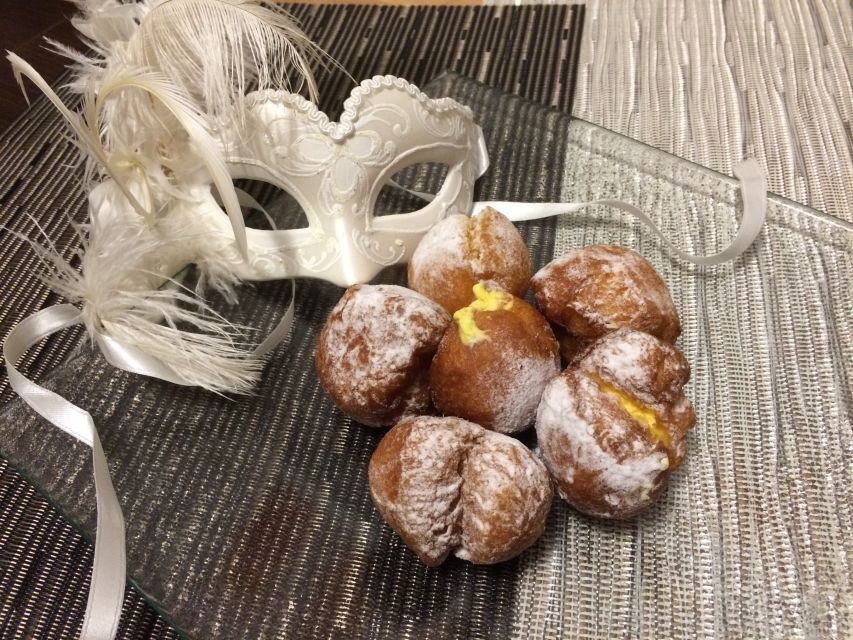
Carnival masks weren’t just decoration. They were social tools. The tour explains how masks were used to hide the wearer’s identity, which is a huge part of why Carnival turned into a playground for reinvention, flirtation, and risk.
You also get the “how” behind the look. The tour includes information about traditional mask-making, so you understand the craftsmanship side—not only the symbolism. That makes it easier to appreciate the modern Carnival masks you might see later, because you’ll know what used to be functional and what was style.
If you like photography, this is one of the most satisfying segments. You’ll be thinking about what the mask did for the person wearing it, not just what it looks like for the camera.
Palazzo Contarini del Bovolo: A Stop That Feels Like a Set
One of the itinerary stops is Palazzo Contarini del Bovolo. Even if you only pass by as part of the walk, the name usually gets your attention because of what the area is known for: it’s associated with the famous spiral-staircase style that makes the building feel theatrical.
This is where the tour’s rhythm changes slightly. You’re not just hearing about people and parties—you’re getting architecture that matches the mood. Carnival is about display and drama, and this kind of setting keeps the stories grounded in real Venetian design.
If it’s rainy, you might appreciate that the tour includes structured stops rather than pure street pacing the entire time. Just keep your timing flexible, because Venice weather can change how long you’ll want to stand and look.



Campo Santo Stefano: Where the Stories Sit With You
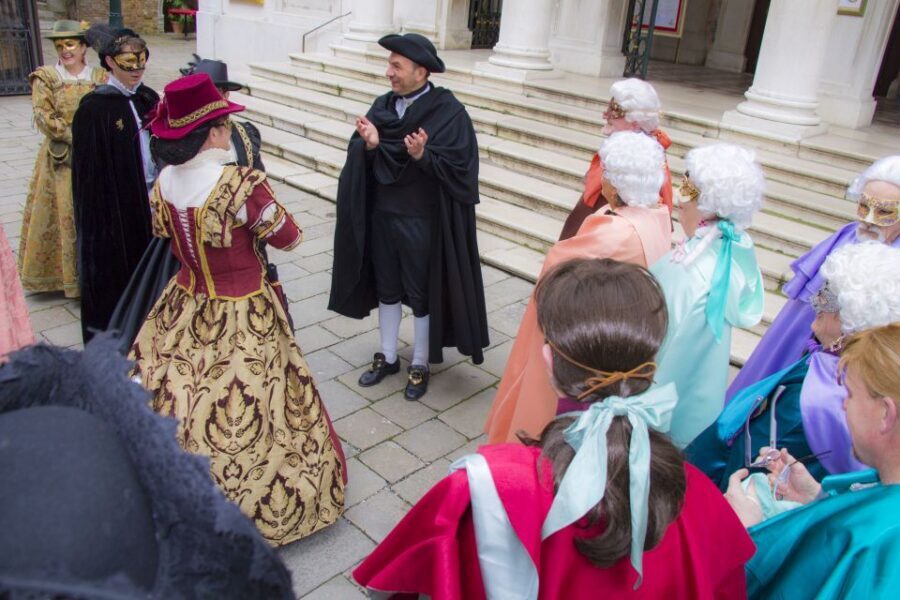
Another stop is Campo Santo Stefano, a Venice square that helps you breathe for a moment during the walk. Squares like this are important in a tour like this because they break up the tight claustrophobia of alleys and give you a chance to reset your ears and attention.
This is often the point in a themed walk where the guide’s storytelling lands. The mention of courtesans and the social machinery around Carnival makes more sense once you’ve paused in a public square rather than hearing it all as background while moving.
It’s also a good place to notice how Venice’s street layout shapes movement. You can see why hiding and revealing mattered, and you can feel how quickly you can turn from a private-world moment to a public-world moment.
Ridotto, Grand Balls, and the Social Scene Behind the Flirting
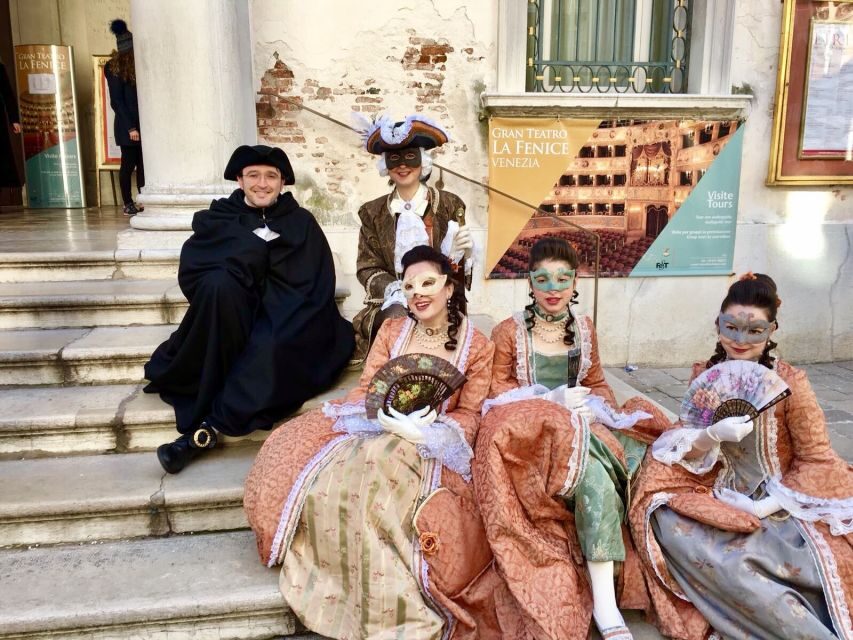
The tour talks about the Ridotto, described as the first casino in Venice where Casanova met Venetian aristocracy. That single reference is a shortcut to understanding why Venice’s Carnival wasn’t only about masks and music. It was also about networks—people meeting people, power mixing with pleasure, and rules bending for a season.
You’ll also hear about Grand Balls in private palaces, where people wear luxurious costumes for events tied to the Carnival calendar. The guide’s job here is to connect the spectacle you see on the street to the private rooms where the social game gets serious.
Courtesans are part of this story too. The tour includes explanations of how courtesans helped keep the city’s atmosphere active and attractive. You don’t need to treat that as gossip. You can treat it as an ingredient in Venice’s economy of attention—art, performance, and social life pulling together.
Meeting Different Guides, Getting the Same Core Experience
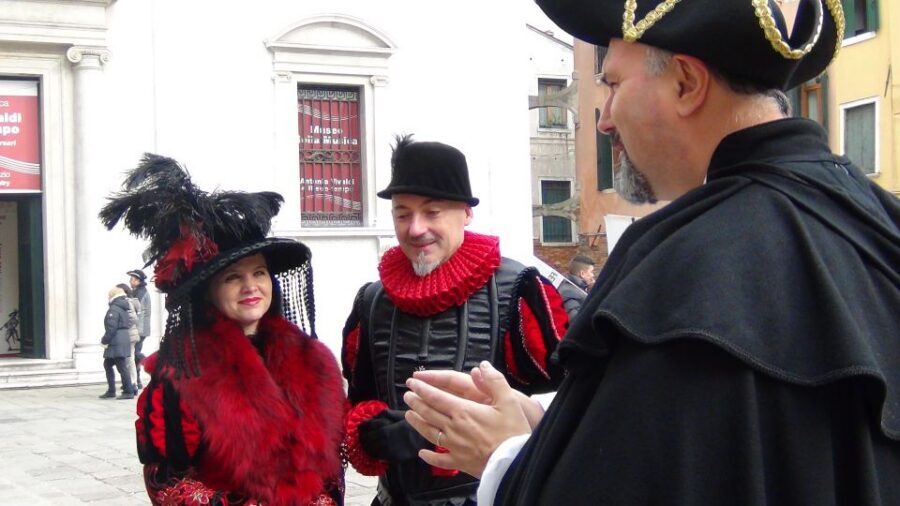
From the tour’s past experiences shared here, one thing stands out: guides like Sergio (also mentioned as The Swiss), Dennis, and Lorenzo tend to earn praise for keeping attention and turning history into something you can follow minute to minute. That matters because a walk like this lives or dies on narration quality.
Still, a practical reality: in a crowd, even the best guide can sound distant if the group stretches out. If you’re the type who drifts to look at shop windows, consciously stay close. You’ll get the full thread instead of only fragments.
The Ending at Le Café Venezia: Cappuccino and Carnival Frittelle
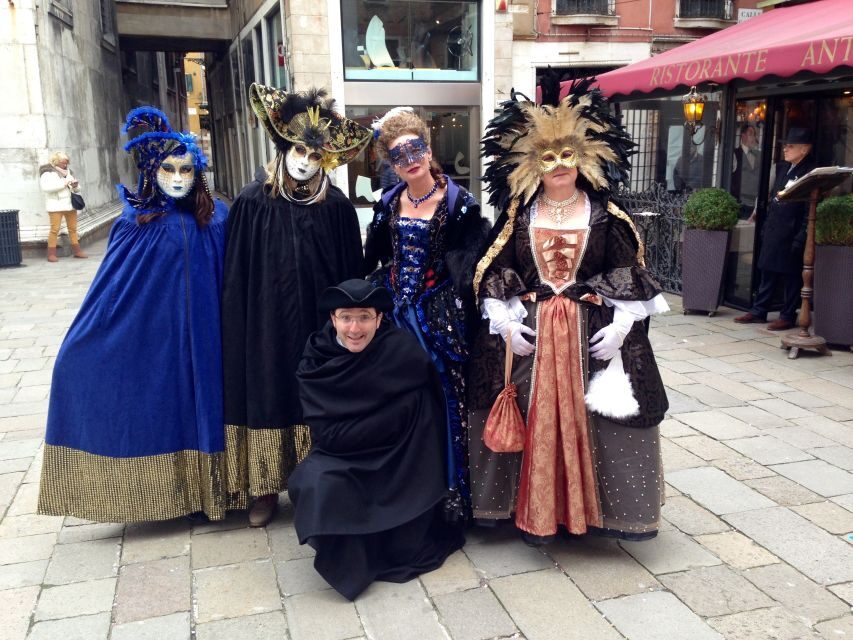
The tour wraps near St Mark’s Square with a hot break at Le Café Venezia. The activity notes it’s about a 10-minute walk from St Mark’s, so you’re not stuck far from your next stop.
What you get is specific and seasonal: a hot cappuccino plus Venetian Carnival cake called frittelle, made only during the Carnival period. That detail is the kind that makes an ending feel earned. You don’t just collect food. You collect a small sensory souvenir of the season.
This finish also gives you a social landing zone. If you want to ask your guide questions after the tour ends, you’ll have a chance to do that in a less frantic setting than the streets.
Price and Value: Is $88 Worth It in Venice
At $88 per person for a roughly 2-hour experience, the price makes sense because you’re buying three things that cost money in Venice: an English-speaking guide, guided time through multiple key areas, and a paid-included food/drink stop (cappuccino plus frittelle).
If you’re visiting during Carnival season, prices for experiences can climb fast, especially when you add themed guiding and a structured walk that starts at a major landmark like La Fenice. Here, you’re not just paying for walking. You’re paying for a narrative that ties masks, Casanova, and Venice’s social life into one route.
Just remember what isn’t included: extra food and drinks. So if you like to linger with something beyond the included cappuccino, budget for it at the cafe.
Practical Tips So You Hear Everything (Even in the Rain)
This is a walking tour in Venice at Carnival time, which means you should plan like a local: short steps, warm layers, and a plan for weather. One past issue described was rain and cold making it harder to hear the guide when people used umbrellas. If you’re sensitive to audio in crowds, bring a warm layer with a hood or a compact rain setup that doesn’t block the view or force you to talk over others.
Also, keep an eye on where your group is. Some comments pointed to people wandering off or the tour ending without returning to the exact expected point for every participant. If you want a smooth experience, stay close during the walk and confirm the end location with your guide at the start.
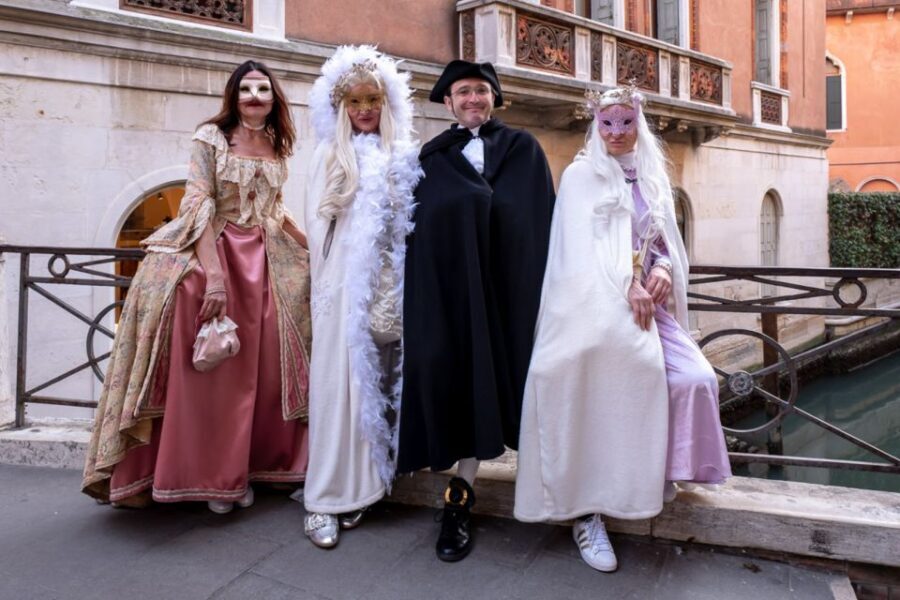
And finally, Carnival outfit is encouraged. You can come in Carnival costume, or bring a cape with a mask. It’s fun for photos, and it helps you feel like part of the story rather than watching it from the sidewalk.
Who This Tour Is Best For
I’d point you toward this tour if you:
- like Casanova as a character and want real Venice locations tied to him
- enjoy Carnival culture beyond photos, especially masks and traditions
- want an easy way to see parts of the city that don’t revolve only around the main sights
- like your history with storytelling energy, costumes, and a clear ending
I’d skip it if you need wheelchair access, since it’s not suitable for wheelchair users. Also avoid oversize luggage, since the activity lists it as not allowed.
Should You Book the Secrets of Venice Carnival and Life of Casanova Tour?
If you want a Carnival experience with structure—mask traditions, Casanova’s Venice, and a proper seasonal snack—this tour is a strong match. The included cappuccino and frittelle at the end make it feel complete, and the La Fenice start gives you a clean kickoff point.
Book it if you’ll stay with the group and you’re comfortable navigating narrow streets for a couple of hours. If you’re worried about audio in rain, bring warm layers and plan to keep your position close to your guide.
If that sounds like you, go ahead and reserve your spot. It’s one of those Venice experiences where the theme matters, and the city finally feels like it’s acting out the story you came for.
FAQ
How long is the Secrets of Venice Carnival and Life of Casanova Tour?
It lasts about 2 hours, with the guided portion described as about 1.5 hours, then finishing at a café.
Where do I meet for the tour?
You meet at Campo della Fenice, in front of Teatro la Fenice opera house. The guide will be looking for you with a sign showing the tour name.
What’s included in the price?
An English-speaking guide (dressed in Carnival costume) is included, along with a hot cappuccino and a Venetian Carnival cake called frittelle at the end.
What is not included?
Hotel pick-up and drop-off are not included, and extra food and drinks are also not included.
Is the tour wheelchair accessible?
No. The tour is listed as not suitable for wheelchair users.
Can I cancel for a full refund?
Yes. The activity offers free cancellation up to 24 hours in advance for a full refund.
Can I pay later?
Yes. The listing offers a reserve now & pay later option.
Can I wear a Carnival costume or mask?
Yes. You’re encouraged to come in Carnival costume, or bring a cape with a mask for fun and photos.