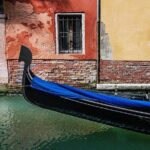
REVIEW · VENICE
The Dark Side of Venice: Mysteries and Legends
Book on Viator →Operated by Private Tours of Venice · Bookable on Viator
Venice is famous for romance, not mayhem. This private, evening walking tour trades the biggest crowds for canal-side stories about plague, crime, and the stuff Venice never puts on postcards. You’ll hear legends tied to specific corners—then you’ll connect them to what you can actually see in Dorsoduro and along the Zattere.
Two things I really like: the tour is truly off-crowd (you’re not just herded with everyone else), and the guide brings the details to life with a personal tone. In particular, native guides like Annalisa, and others such as Desi and Bianca in recent experiences, make the stories feel grounded in everyday Venice, not just spooky theatre.
One possible drawback: part of the fun is the “dark side” theme, but if you want lots of actual creepy sites you can enter, don’t expect that. A couple of stops are closed to the public or have sights you can only view from the outside, and some admissions are not included.
In This Review
- Key highlights to expect
- A 6 pm walk that swaps crowds for canal-side stories
- Start at Campo Santo Stefano, end at Punta della Dogana
- Stop 1: Ponte delle Meraviglie and the legend of the Seven Sisters
- Stop 2: Squero di San Trovaso, Venice’s gondola shipyard
- Stop 3: Zattere pavement, moonlight, and the Hospital for the Incurable
- Stop 4: Palazzo Dario, the palace that kills
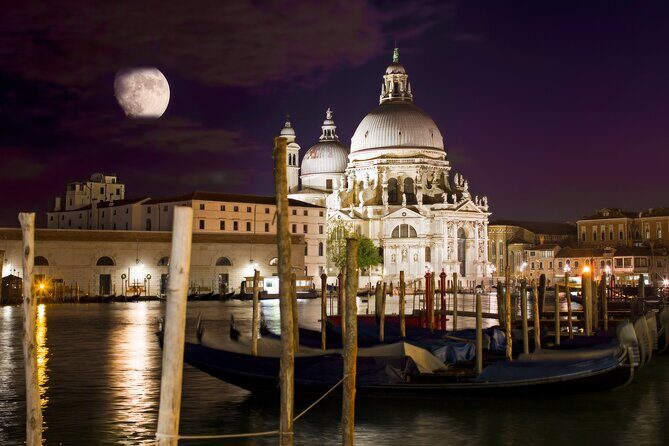
- Stop 5: Basilica di Santa Maria della Salute and its city-wide dome
- Stop 6: Punta della Dogana for the ship-bow panoramic finale
- Guides make the difference: Annalisa, Desi, Bianca, and the tone balance
- Price and value: what $226.37 is really paying for
- Who should book this tour, and who might feel it’s the wrong fit
- Should you book The Dark Side of Venice?
- FAQ
- FAQ
- How long is the tour?
- What time does the tour start?
- Where does the tour start and end?
- Is this tour private?
- What language is the tour offered in?
- Are tickets included for each stop?
- Is hotel pickup included?
- Is there an access fee for some dates?
- What happens if the weather is bad?
- Can I cancel, and do I get a refund?
Key highlights to expect
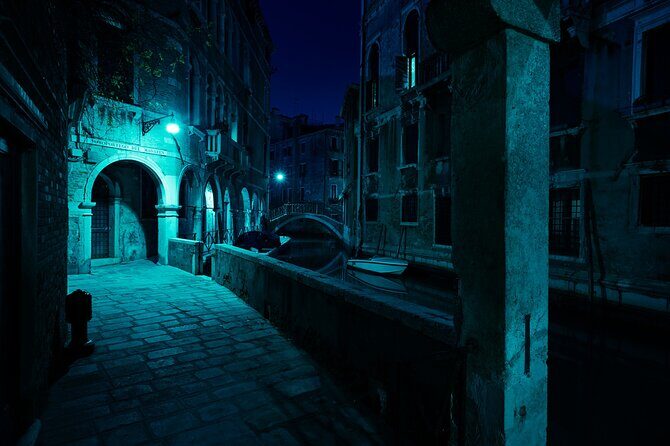
- Your own guide in a private group, keeping the pace human and the questions welcome
- Evening timing at 6:00 pm, which suits the mood and often makes the walk feel calmer
- Gondola craft at Squero di San Trovaso, where boats were built and repaired in classic wood traditions
- The Zattere and the Hospital for the Incurable, tied to the city’s historic approach to what was then called the French disease
- Punta della Dogana ship-bow views, finishing with panoramic City views from a standout angle
- Stories that mix legends with real civic life, from old myths to more modern issues like over-tourism
A 6 pm walk that swaps crowds for canal-side stories
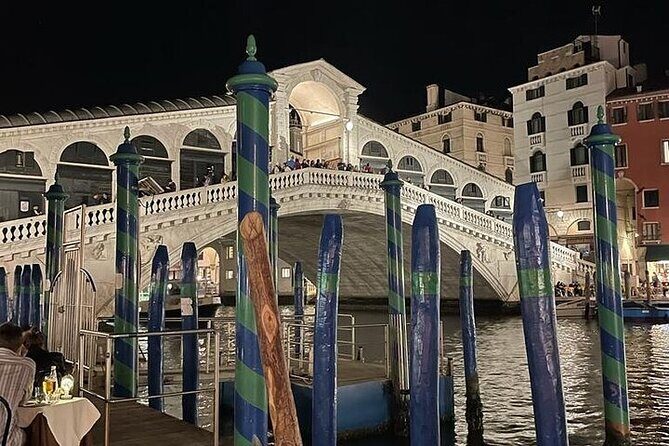
This is a 2-hour private tour that starts at 6:00 pm, which matters in Venice. In the evening, streets and bridges feel less like a conveyor belt and more like a city you can actually read. And since this route focuses on Dorsoduro and the Zattere area, you get a Venice that feels lived-in rather than postcard-perfect.
The big pitch here is the “dark side” angle: mysteries, legends, and darker episodes mixed into the geography. I like that the guide doesn’t treat the past like a museum label. You’re walking, pointing, and hearing why certain places carry a reputation.
Also, it’s offered in English with a local English-speaking guide. You’ll get a pick-up from the designed meeting point (not hotel pickup), and you’ll finish at Punta della Dogana – Pinault Collection. That end location is a nice reward, because you can linger for views without needing to bolt back to the main tourist spine.
You can also read our reviews of more tours and experiences in Venice.

Start at Campo Santo Stefano, end at Punta della Dogana
You begin at Campo Santo Stefano, 30124 Venezia VE, and the tour ends at Punta della Dogana – Pinault Collection, Dorsoduro, 2, 30123 Venezia VE. The route is a sequence of short walks with stops that last about 20 minutes each—so it stays moving, not exhausting.
A couple practical notes help you enjoy it more:
- You’ll want comfy shoes. Venice is Venice: stone, bridges, and uneven spots.
- The tour is marked as near public transportation, so it’s easier to reach the start area even if you’re not staying right there.
- Admission isn’t included for every stop. Some places are outside or closed, and for others you may need to plan for tickets on your own.
One more key detail: the tour requires good weather. If conditions are poor, the operator will offer a different date or a full refund. That’s the right approach in a city where rain can turn a “short stroll” into a long soggy scramble.
Stop 1: Ponte delle Meraviglie and the legend of the Seven Sisters
Your first stop is in the Dorsoduro / Accademia area, very close to the Academia galleries, with a bridge moment at Ponte delle Meraviglie—the Bridge of Wonders. This is the kind of Venice stop that’s easy to pass without noticing, unless someone points you to the story behind it.
The legend is about the 7 sisters who lived there long ago. What I find valuable is how the guide uses the legend to help you “map” Venice in your head. Instead of just hearing a tale, you connect it to the exact spot you’re standing on, and suddenly the city feels more like a connected puzzle than separate sights.
Admission is listed as free at this stop, with an entry ticket noted as free. That’s a small win: you can focus on the walk and the story without worrying about another purchase right away.
Possible consideration: if you’re expecting jump-scare spooky, this one may feel more myth-forward than horror-forward. The tone tends to blend legend with real Venice context.
Stop 2: Squero di San Trovaso, Venice’s gondola shipyard
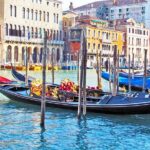
Next comes Squero di San Trovaso, a classic wooden shipyard where gondolas were built and repaired. This is one of those places that makes Venice make sense. People love gondolas for their romance, but the “how it’s made” angle gives you a different kind of respect for the craft.
The tour keeps it practical: you’re learning about the gondola-building tradition, right where that tradition historically worked. Even if you’ve heard gondola facts before, seeing it in context changes the way the city feels. It stops being a theme park and becomes a working craft tradition.
Admission here is listed as not included. That doesn’t mean you can’t enjoy the stop—it just means you should be ready to pay separately if you want full access inside.
Who this stop is for: if your Venice interests include artisan work, boat culture, or the nuts-and-bolts side of the city, this is a strong anchor in the tour.
Stop 3: Zattere pavement, moonlight, and the Hospital for the Incurable
Then you shift to Fondamenta Zattere, walking along the Zattere pavement. The route heads toward the Hospital for the Incurable, known historically for hospitality to people suffering from what was then called the French disease: syphilis. Today, that same complex hosts the Academy of Fine Arts.
This stop is where the tour name earns its “dark side.” You’re confronted with how Venice managed illness and how institutions evolved over time. It also shows you something important: old buildings often carry layers. The same structure that once served a grim purpose can later become a place of art.
This stop is free in terms of admission (listed as free). You can focus on the story and the architecture without budgeting extra tickets right at this moment.
A small drawback to note: the subject matter isn’t light. If you prefer purely romantic Venice with legends and ghosts-as-folklore, you might find this one heavier. If you’re okay with that, it’s also one of the most meaningful moments of the whole tour.

Stop 4: Palazzo Dario, the palace that kills
Your fourth stop is Palazzo Dario, described as the “palace that kills.” It’s currently closed to the public, so you’re not going to roam inside. But you still get the context: the palace is tied to unpleasant events connected to its first owner and those who came after.
This is a classic Venice lesson: not every important story comes from a museum door. Sometimes the “site” is the exterior, the placement, the aura. You’ll likely feel the guide working hard to make the building’s reputation understandable from the street.
Admission is listed as not included. Since it’s closed, it’s also a reminder to hold your expectations steady. Think “story and viewpoint” more than “tour inside the building.”
Why it’s worth it anyway: even viewed from outside, palazzos in Venice are loaded with status, power, and consequence. The guide helps you see the architecture as part of the social story, not just pretty stone.
Stop 5: Basilica di Santa Maria della Salute and its city-wide dome
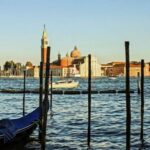
Next is Basilica di Santa Maria della Salute. This is a top-tier Venice church, and the tour frames it with a specific detail you can’t miss: its dome is visible from all over the city.
That dome visibility detail is useful because it turns the church from a single stop into a city reference point. When you see the dome later on your own walks, you’ll know you’re looking at a landmark that once mattered to Venice’s skyline planning and identity.
Admission is listed as not included for this stop. The tour is timed so you get the right amount of time at the basilica without forcing everyone into a longer church visit. If you want extra time inside, you can follow up later when you’re not locked to the group pace.
Consideration: since tickets aren’t included, plan for optional spending only if you decide you want more than the exterior and the guide’s explanation.
Stop 6: Punta della Dogana for the ship-bow panoramic finale
The final stop is Punta della Dogana, famous for its singular pointed shape that looks like the bow of ships. The ending point is chosen for views: you get one of the City’s most “how is this even possible” perspectives, especially as you wrap up a walking tour.
This last stretch is free in terms of admission (listed as free). That’s a nice finish because you can enjoy the viewpoint without worrying about one more ticket.
If you’re photographing, this is where you’ll appreciate the tour timing. Evening light can make stone, water, and skyline feel extra cinematic. Just be aware that this area can still be breezy, and you’ll be done walking, so it can feel colder than you expect if you’re wearing light summer clothes.
Guides make the difference: Annalisa, Desi, Bianca, and the tone balance
What really elevates this tour is the guide’s voice and how they decide what to emphasize. In recent experiences, Annalisa was praised for bringing no-sugarcoated stories—plague, murders, infanticide, haunted-house vibes, and the practical reality of Venice life. That same approach can also connect older legends to more modern themes, like the way Venice is changing under the weight of tourism.
Desi earned strong marks for being easy to ask questions of, and for making the explanations clear and responsive. Some people expected a darker vibe only; what they got was a smart blend of legends plus everyday Venice history. That balance can be a plus. It means you leave understanding not just the scary bits, but how people actually lived.
Bianca was noted for delivering spooky history while also adding small real-life extras, like pointing people toward gelato. That tells you something: the guide is allowed to adjust the flow based on the group.
Bottom line: you’re not just hearing memorized lines. The guide is reading the moment, then shaping the stories to your interests.
Price and value: what $226.37 is really paying for
At $226.37 per person, this isn’t a budget walking tour. But it is a private tour, with an English-speaking local guide and a route that focuses on the quieter side of Venice rather than the most common parade paths.
Here’s how I’d judge the value:
- You’re paying for the human part: a dedicated guide and private pacing.
- You’re paying for the time: about two hours, starting at 6:00 pm, when the city feels different.
- You’re not paying for every admission: some stops are free, while others are not included (including at least Squero di San Trovaso and stops like Palazzo Dario and Santa Maria della Salute).
If you like Venice stories, this can be a great match. If you only want famous landmarks with low-cost entries, you might question the spend. But if you want a guided “Venice has secrets” framework and you’d rather see the city through a thematic lens than through a checklist, the price starts to make sense fast.
A smart way to make it feel more worth it: go with at least one person who enjoys history, myths, or darker folklore. Then the guide’s storytelling style becomes shared entertainment, not a solo lecture.
Who should book this tour, and who might feel it’s the wrong fit
I think this tour suits you if:
- You want Venice that feels specific and story-driven, not generic.
- You enjoy legends with context, including the darker episodes tied to particular places.
- You’re okay with a theme that leans more historical than full-on haunted-tour theatrics.
I’d skip or reconsider if:
- You want multiple closed-door sites where you’ll enter buildings and see artifacts. A couple stops are listed as not included or closed.
- You expect the tour to be purely spooky. The emphasis often turns toward history and Venice life, with the legends as flavor.
It also works for families who want intrigue without constant sprinting. One experience highlighted that the guide delivered spooky history in a way kids enjoyed, while still keeping it age-appropriate and moving.
Should you book The Dark Side of Venice?
If you’re the type of person who can’t stop asking why a building looks the way it does, book it. This tour is built around place-based stories: bridges, shipyards, hospitals repurposed into art schools, and viewpoints that give you a strong ending.
If you’re unsure, here’s the quick test: do you prefer a guided narrative over a self-guided checklist? If yes, this tour is a solid fit. Add to that the private format and evening timing, and you get a more personal Venice experience without spending the whole day in crowds.
FAQ
FAQ
How long is the tour?
The tour lasts about 2 hours.
What time does the tour start?
It starts at 6:00 pm.
Where does the tour start and end?
It starts at Campo Santo Stefano, 30124 Venezia VE, Italy. It ends at Punta della Dogana – Pinault Collection (Dorsoduro, 2, 30123 Venezia VE, Italy).
Is this tour private?
Yes. It’s listed as private, so only your group participates.
What language is the tour offered in?
The tour is offered in English.
Are tickets included for each stop?
Some are included and some are not. Admission is listed as free at Ponte delle Meraviglie / Dorsoduro area, Fondamenta Zattere, and Punta della Dogana. Admission is listed as not included at Squero di San Trovaso, Palazzo Dario, and Basilica di Santa Maria della Salute.
Is hotel pickup included?
Hotel pick up and drop off are not included. You’ll be picked up from a designed meeting point.
Is there an access fee for some dates?
On certain dates, visitors staying outside Venice who plan to visit for the day may need to pay a €5 access fee. The operator directs you to https://cda.ve.it for details and exemptions.
What happens if the weather is bad?
The experience requires good weather. If it’s canceled due to poor weather, you’ll be offered a different date or a full refund.
Can I cancel, and do I get a refund?
Yes, you can cancel for free. The policy states you can cancel up to 24 hours in advance for a full refund. If you cancel less than 24 hours before the start time, the amount paid is not refunded.