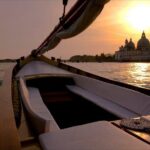
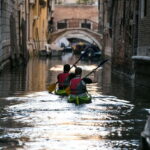
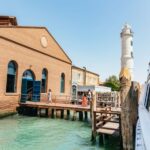
Venice looks different after dark. This Venice by Night tour strings together well-lit churches, grand palaces, and quiet canals on a route that’s timed for calmer streets. I especially love the mix of big-name sights and side streets, and I love that it stays moving in a small group (up to 15) so you actually get through a lot in 1 hour 30 minutes. One drawback to flag: you’ll walk on old, uneven stone, so comfy shoes matter.
What makes it feel real is the guide’s storytelling. You’ll follow licensed local guide Valerio Coppo, learning the legends behind what you see and getting useful tips for navigating Venice at night—plus a final stroll into Piazza San Marco when it’s serene instead of mobbed. Just note the tour ends in a different place than where it starts, so plan your next stop accordingly.
In This Review
- Key highlights worth planning around
- Why this night walk feels like Venice instead of just sightseeing
- Meeting Valerio Coppo and setting yourself up for an easy start
- Stop 1: Chiesa di Santa Maria Assunta ai Gesuiti in Baroque overdrive
- Cannaregio at night: narrow streets, quiet squares, and a real sense of direction
- Stop 3: The Scuola Grande di San Marco façade and the hospital that still matters
- Stop 4: Colleoni’s equestrian statue, plus the history behind the bronze
- Stop 5: Libreria Acqua alta and Ponte dei Colafelzi for canal calm and good photos
- Stop 6: Basilica Dei Santi Giovanni e Paolo (San Zanipolo) and the Doge tombs
- Stop 7: Campo Santa Maria Formosa and the Spider-Man filming spot
- Stop 8: Piazza San Marco at night, when the square actually feels livable
- 19:30 vs 21:30: how the route variation changes the experience
- Price and value: what $93.12 buys you in Venice time
- Who should book this Venice by Night tour (and who might not)
- Should you book Venice by Night?
- FAQ
- What is the duration of the Venice by Night tour?
- How much does the tour cost?
- What time does the tour run, and where does it end?
- Is there hotel pickup included?
- Are any of the stops free to enter?
- Is this tour weather-dependent?
Key highlights worth planning around
- Night-timed route that starts after attractions close for more breathing room
- Valerio Coppo leads the way, mixing history, legends, and practical street knowledge
- Free-admission stops listed throughout the walk, including major façades and monuments
- Photo-friendly lighting on Baroque façades, marble details, and canal views
- Two possible evening routes (19:30 to St. Mark’s, or 21:30 toward Rialto)
Why this night walk feels like Venice instead of just sightseeing
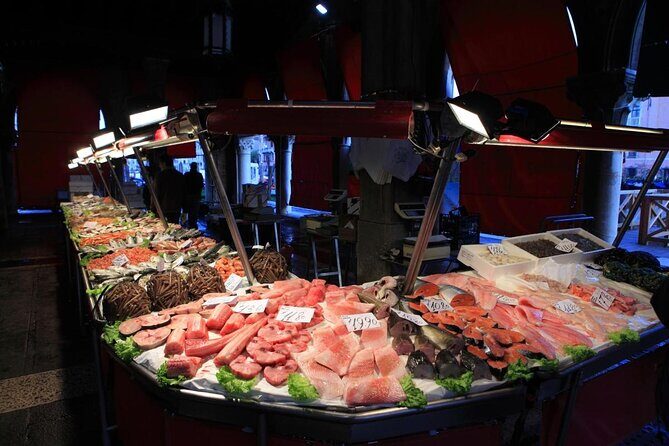
Venice is easy to do wrong. In daylight, it can feel like you’re watching people watch people. This tour leans into the exact opposite: soft nighttime lighting, fewer crowds, and that slightly cinematic feeling you get when domes and façades glow against the dark.
You’re also not stuck in one place waiting for the sun to move. The schedule is built around shorter stops (most are about 5–15 minutes), which means you get quick moments of wonder without losing the thread. And because the group tops out at 15, it doesn’t turn into a slow shuffle through alleys.
I also like the way it treats walking as the point, not the downside. The route uses Venice’s maze-like layout on purpose. When you turn a corner and a church façade suddenly appears, you understand why Venetian streets were made for wandering—at least when you’re not surrounded by a tour bus.
Practical thing: this is still Venice, so plan for uneven ground. The payoff is worth it, but you should go prepared.
You can also read our reviews of more evening experiences in Venice

Meeting Valerio Coppo and setting yourself up for an easy start
The tour is designed to be simple to join, and it uses a mobile ticket. Confirmation is sent at booking time, and the tour runs in English with a licensed guide.
Two details matter for a smooth start:
- You’ll meet at a specified general meeting point unless it’s a private tour. For shared tours, hotel pickup isn’t included; for private groups, pickup can be arranged within the historical center.
- The tour ends in a different location depending on the route. That’s not a problem, but it means you shouldn’t book a tight reservation right after.
From the feedback I saw, the most common issue isn’t the tour itself—it’s people arriving at the wrong meeting spot at the wrong time. I’d handle that like a pro: when you get meeting instructions (often by message), double-check the exact words for the meeting area and arrival time.
Once you’re with Valerio Coppo, the tone shifts quickly into friendly, story-driven walking. You’re not just looking at stone—you’re learning why it was built, who paid for it, and what people believed at the time.
Stop 1: Chiesa di Santa Maria Assunta ai Gesuiti in Baroque overdrive
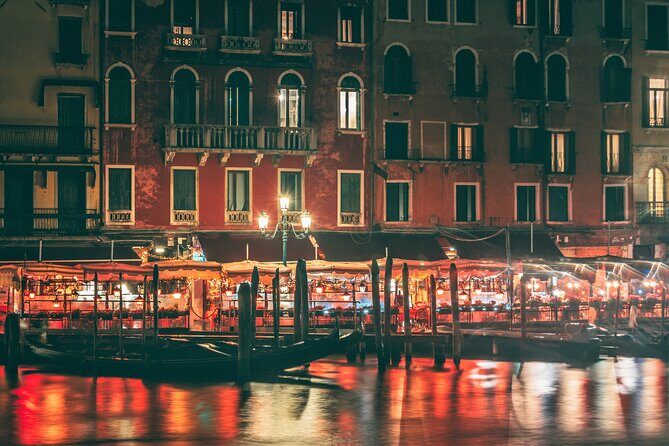
The tour kicks off near Combo, the former Convento dei Gesuiti, and you step out to admire the façade of the Church of the Jesuits.
This is a great first stop because it shows what “Venice at night” means: dramatic light on elaborate detail. The church is an 18th-century Baroque masterpiece, and the façade is so busy with carvings and ornament that it’s hard to capture it in one photo—exactly the point. Up close, your brain starts tracking patterns instead of just chasing a skyline shot.
What I like here: you get a sense of scale and confidence early on. Baroque Venice feels theatrical, and nighttime makes it feel even more intentional.
Possible consideration: if you’re hoping for a quick look and immediate onward, this is a full-on façade moment. Give it a few minutes and let your eyes adjust.
Cannaregio at night: narrow streets, quiet squares, and a real sense of direction
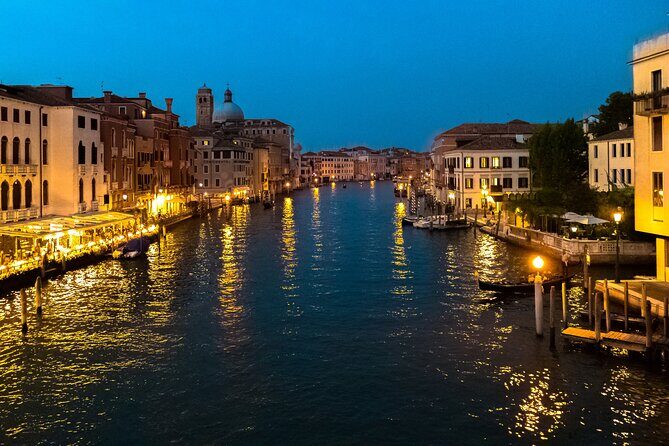
Next you head into Cannaregio, Venice’s maze-like neighborhood. The point here isn’t “a landmark you can point at.” It’s the walking itself—the way narrow streets open into small squares, the way the crowd thins out, and the way Venice can suddenly feel like a neighborhood again.
This is where the tour earns its title. Night changes behavior. Instead of the usual day surge, you get the quieter rhythm: smaller groups, fewer stops for crowds, and more space to notice how locals move through streets.
If you enjoy photographs, this is also where you’ll get scenes with less background noise. The city’s unpredictability is part of the magic, and having a guide helps you keep that magic while still learning what you’re seeing.
Downside to expect: Cannaregio is still Venice streets. They’re narrow and sometimes dark, so you’ll want your phone flashlight ready, or at least your eyes up. Let the guide set the pace.
Stop 3: The Scuola Grande di San Marco façade and the hospital that still matters
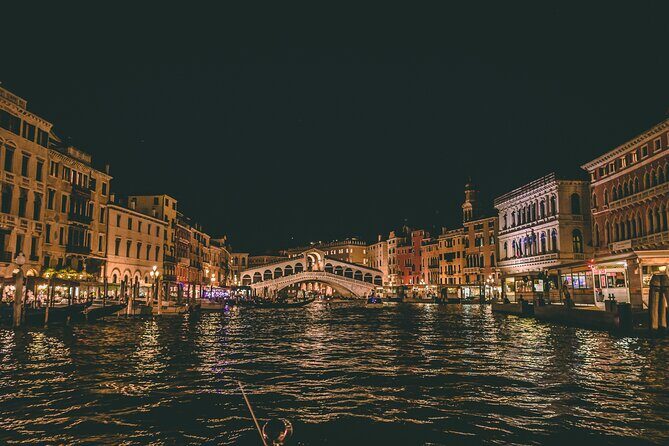
One of the most interesting parts of this tour comes with the Scuola Grande di San Marco area, often described as a high-reaching masterpiece. The walk-by façade you’ll see is tied to the Ospedale di San Giovanni e Paolo (the public hospital continues to operate today).
You’ll hear about the creators—Pietro Lombardo and his sons for the sculptural work, and Mauro Codussi for the completion of this striking high Renaissance façade. The detail is what slows you down: polychrome marble, trompe l’oeil effects, and the lions of St. Mark guarding the entrance.
What I love about this stop: it’s not just pretty. It’s a reminder that Venice’s art wasn’t only for rich palaces. It also shaped public spaces and social institutions, and that connection hits harder at night when the façade looks almost unreal.
Potential drawback: you’re not going to spend a long time inside buildings on a 1 hour 30 minute route. If you want a deep interior visit, this is more about the exterior and the story behind it.

Stop 4: Colleoni’s equestrian statue, plus the history behind the bronze
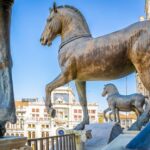
Then it’s over to the Equestrian Statue of Bartolomeo Colleoni. This monument is one of only two public equestrian statues in Venice, which makes it worth seeking out even if you’ve seen plenty of other statues in Italy.
The story is the hook: Bartolomeo Colleoni was a loyal mercenary commander serving the Republic of Venice from 1448—though he didn’t always stay put when dissatisfaction with pay or promotions crept in. The statue captures power, but the legend adds the human part.
At night, bronze behaves differently. It doesn’t just look like a sculpture; it starts to look like a piece of the city’s political theater.
Photo tip: position yourself carefully and wait for a clean angle. Street lighting can create glare on metal surfaces, so take a moment before you shoot.
Stop 5: Libreria Acqua alta and Ponte dei Colafelzi for canal calm and good photos
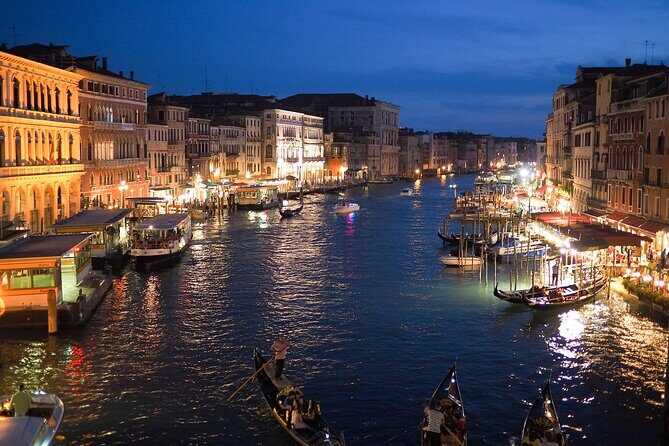
You’ll get a quieter pause with Libreria Acqua alta and the nearby Ponte dei Colafelzi. This is a good time to slow down and let Venice’s water world come into focus.
The canal view here is the whole point: a peaceful spot to stop, look across the water, and enjoy the way the city reflects light after the crowds disappear. It also gives you a break from pure church façades and sculptures.
Why this matters: if your Venice trip is mostly about must-see monuments, a calm water stop gives your eyes a reset. It keeps the rest of the evening from feeling like nonstop information.
Bring patience for photos. Night shots are harder than daytime. Give yourself a minute, try one steady stance, then adjust.
Stop 6: Basilica Dei Santi Giovanni e Paolo (San Zanipolo) and the Doge tombs
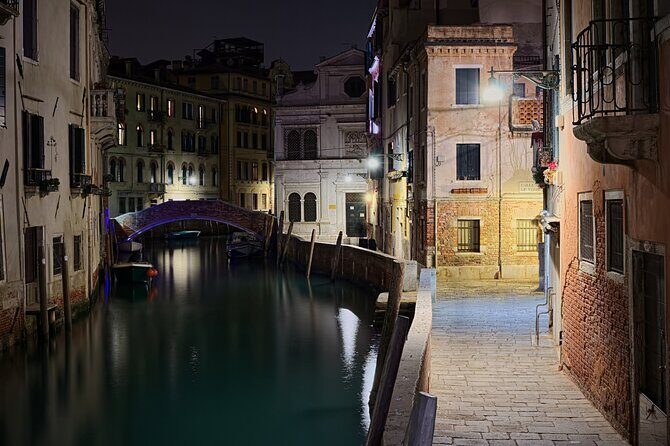
The next big landmark is Basilica Dei Santi Giovanni e Paolo, known in Venetian dialect as San Zanipolo. This is one of those churches that’s built to inspire awe, and the route uses night to make that effect feel even bigger.
Why it’s important: for centuries, it served as the final resting place for Venice’s rulers. You’ll hear about the stained glass—15th-century—and the 25 Doge tombs that make the basilica more than just a beautiful room.
Inside or at least partially viewed, the church becomes a history lesson you can walk through. At night, you’ll also feel the shift from postcard Venice into political Venice—the part of the city that organized itself around power and memory.
Practical consideration: this is a stop you’ll want to enter with your expectations tuned. It’s impressive because of scale and symbolism, not because it’s designed to be photographed at every angle.
Stop 7: Campo Santa Maria Formosa and the Spider-Man filming spot
Next comes Campo Santa Maria Formosa, a campo that marks a boundary between Venice’s heavy tourist zones and more local spaces. It’s a relief to step into an open square after a run of narrow lanes.
There’s also a fun pop-culture note: this area appears in Spider-Man: Far From Home, where the superhero saves the bell tower from destruction. Even if you’re not chasing movie trivia, the point is that this campo gives you a real sense of how Venice functions—daily life, not set design.
What I like about this stop: it’s a mental reset. You get wider space and better sightlines, and it helps you understand where the tour is taking you next.
Stop 8: Piazza San Marco at night, when the square actually feels livable
The tour ends with Piazza San Marco at night, and that’s the payoff. The square is described as serene and almost empty compared to daytime crowds, lit softly by café lights and the basilica.
This is the moment when Venice finally feels like it belongs to people again. You can look up, take in the basilica setting, and enjoy the quiet without constant jostling.
If you’re the type who always finds St. Mark’s area overwhelming in the daytime, this is your chance to see the rhythm under calmer conditions. You’re not just seeing the monument—you’re seeing how the square looks when it’s not acting as a magnet for the whole world.
Photo tip: shoot wide for the ambience, then slow down for details. Night lighting makes stone edges sharper, and you’ll notice carvings you miss in daylight.
19:30 vs 21:30: how the route variation changes the experience
The tour can run with different timing and route direction, and that changes what you experience.
- The 19:30 tour starts at Combo in Campo dei Gesuiti and ends at St. Mark’s Square.
- The 21:30 tour starts near St. Mark’s Square and ends near Rialto, following a reverse itinerary.
If you’re trying to end near a specific area for dinner, this is a big deal. If you want a smooth finish at the most famous spot, pick the 19:30 option. If you want to head toward Rialto afterward, the later start may make more sense.
For private tours, pickup and drop-off within the historical center can be included, and the route can be customized. That’s useful if you have specific priorities like photo stops, architecture focus, or avoiding certain areas.
Price and value: what $93.12 buys you in Venice time
At $93.12 per person, this isn’t a budget activity. But Venice isn’t cheap, and a licensed guide matters—especially at night when streets are harder to read and navigation mistakes cost time.
Here’s where the value comes from:
- Time efficiency: you cover a lot of visually strong stops in about 1 hour 30 minutes.
- Quality of stops: the route targets major façades and powerful monuments, not only street wandering.
- Short, purposeful stops: you get just enough time at each location to appreciate it without losing the pace.
- Free-admission tickets noted for each stop: many locations listed on the route include free admission tickets, which reduces your extra costs.
So the real question isn’t just whether it’s expensive. It’s whether you want a guide to connect all the details—legends, architecture, and why the city’s layout matters—while you’re walking on your own.
If you’re happy wandering without context, you can DIY Venice. If you want the city’s stories tied to the exact spots you see, the price starts to make sense.
Who should book this Venice by Night tour (and who might not)
This tour is a strong fit if:
- You want night views and calmer streets.
- You like architectural stories and want to understand what you’re seeing.
- You prefer a small-group walk rather than a big bus tour.
- You’re planning a first visit and want fast orientation with meaningful stops.
It may be less ideal if:
- You’re sensitive to walking on uneven surfaces.
- You need long interior visits at multiple major sites. This is timed for exterior highlights and short stops.
- You dislike any chance of confusion around meeting points. Double-check the exact meeting area instructions you receive.
Also: it’s set up for most travelers, service animals are allowed, and it’s offered in English. The tour requires good weather, so keep a backup plan for rain.
Should you book Venice by Night?
If you’re planning a short trip and you want Venice to feel like a city again—not a line of people—this is an excellent choice. I’d book it if your priorities include architecture, street-level orientation, and an ending at Piazza San Marco when it’s finally quiet.
My advice: commit to it, but walk smart. Bring good shoes, keep an eye on meeting-point directions, and give the night lighting time to work on you. Valerio Coppo’s style turns the evening into more than a list of stops—it becomes a guided way to understand why Venice looks so different after dark.
FAQ
What is the duration of the Venice by Night tour?
The tour lasts about 1 hour 30 minutes.
How much does the tour cost?
The price is $93.12 per person.
What time does the tour run, and where does it end?
There are route variations. The 19:30 tour starts at Combo in Campo dei Gesuiti and ends at St. Mark’s Square. The 21:30 tour starts near St. Mark’s Square and ends near Rialto.
Is there hotel pickup included?
Hotel pickup is offered only for private tours. For shared tours, you meet the guide at the general meeting point.
Are any of the stops free to enter?
The tour info lists admission ticket free for the listed stops along the route.
Is this tour weather-dependent?
Yes. It requires good weather, and if it’s canceled due to poor weather, you’ll be offered a different date or a full refund.