REVIEW · BURANO
Venice Explorer Pass: Gondolas, Museums & Island Tours
Book on Viator →Operated by Turbopass GmbH · Bookable on Viator
Venice packs in fast. This pass strings together Doge’s Palace skip-the-line entry, a classic gondola ride, and a full lagoon island day, so you spend less time figuring out tickets and more time moving through Venice. I like that you get major anchors plus a stack of museums and churches, including the National Archaeological Museum and Marciana Library, without needing to juggle separate bookings all day. One drawback to plan for: not every stop is guaranteed skip-the-line, and some big-sounding add-ons (like St. Mark’s areas) can cost extra if they aren’t specifically included in your selection.
You also get the kind of schedule that suits short trips: most museum stops are listed as 1–2 hours, while the gondola is a quick 20 minutes and the Murano–Burano–Torcello outing runs about 5 hours. That format helps when you’re trying to see the highlights in a tight window, and the group size is capped at 10 travelers, which keeps the experience from turning into a stampede.
If you love structure, this works well. If you’re the kind of traveler who wants to linger in one neighborhood for half a day, you might feel rushed—think of it as a highlights-focused pass with plenty of fascinating detours.
In This Review
- Key highlights at a glance
- Doge’s Palace skip-the-line: gothic Venice and the thrill of power
- Museum-and-library day: archaeology, Marciana maps, and interactive da Vinci
- Churches, confraternities, and paintings in ordinary rooms
- Ca’ Rezzonico and Ca’ Pesaro: Venetian painting meets modern art
- Gondola ride: a short, shared canal view from the Piazza San Marco side
- Murano, Burano, Torcello: glass, lace, and an island pace change
- Art in palaces beyond the classics: Fortuny, Goldoni, fabrics, and perfume
- The pass itself: what you should double-check before you go
- Price and value: when $102 feels fair
- Who should buy this Venice Explorer Pass
- Should you book it?
- FAQ
- How much is the Venice Explorer Pass per person?
- How long does the pass last?
- Is the experience offered in English?
- What major activities are included?
- Are the museum and church visits included, or do I pay extra?
- Do I need to buy public transport separately?
- Is free cancellation available?
Key highlights at a glance
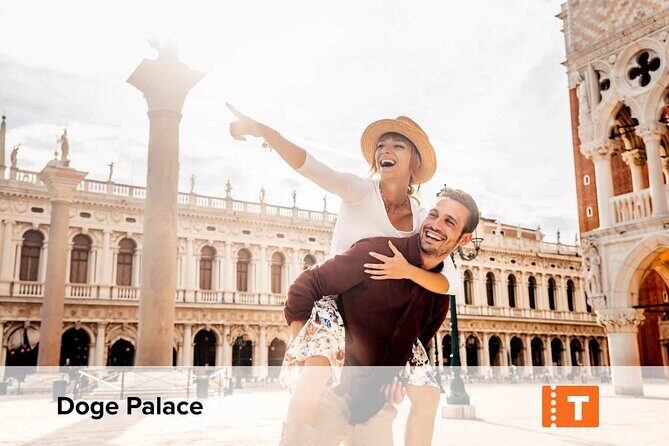
- Doge’s Palace included, with skip-the-line access built in
- Gondola ride on Venice’s canals, focused around the Canal Grande and the Piazza San Marco area
- Murano–Burano–Torcello island tour (~5 hours) with glass and lace stops
- Da Vinci Interactive Museum included, an easy win if you like hands-on exhibits
- Bonus art and architecture stops like Scuola buildings and the Scala Contarini del Bovolo
- Small group cap (max 10), helpful for pacing in a crowded city
Doge’s Palace skip-the-line: gothic Venice and the thrill of power

Start with Doge’s Palace. This is the former residence of Venetian dukes, so even if you don’t go deep into politics, you can feel the weight of it in the gothic architecture and the way the building is designed for authority. You’re set for about 2 hours, which is a good amount of time to see the major highlights without rushing.
Skip-the-line matters here. Venice loves lines. Doge’s Palace is one of the busiest sites in town, and getting around the slow parts is one of the best ways to protect your energy. The value is simple: if you’re only doing one “big ticket” sight, this is the one that pays off the most.
You can also read our reviews of more tours and experiences in Burano.


Museum-and-library day: archaeology, Marciana maps, and interactive da Vinci
After Doge’s Palace, you’re set up for a full-on culture streak in the city center.
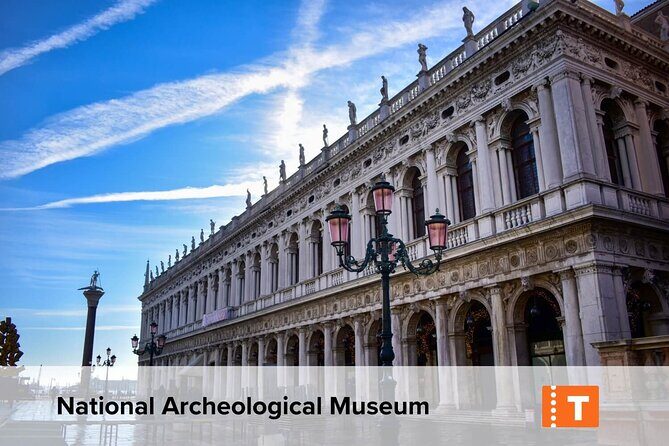
At the National Archaeological Museum, you’ll find ancient Greek and Roman sculptures, and the details matter. Many pieces are noted as coming from private collections of Venetian aristocrats, which helps you understand a key Venice angle: the city didn’t just live in the Renaissance—it curated the ancient world too. Plan about 2 hours so you can actually walk through the galleries instead of skimming.
Then comes Biblioteca Nazionale Marciana. This library is listed as holding important collections of Greek, Latin, and Oriental works, with special focus on Venetian history, classical linguistics, and ancient geography map material. If you like maps, scholarship, and how knowledge was gathered and preserved, this is a great stop. If you prefer visual art over documents, you might find it slower, but it’s still a distinctive Venice experience.
The da Vinci stop is the curveball in the best way: the Museo Leonardo da Vinci is described as interactive and focused on da Vinci’s life and masterpieces, with about 2 hours allocated. It’s one of those museums that works well even if you’re not a “science museum” person, because interactive exhibits tend to keep you moving.
Churches, confraternities, and paintings in ordinary rooms
One of Venice’s secrets is how much it spreads across buildings that don’t look like the big-name attractions. This pass leans into that, especially with the Scuole.
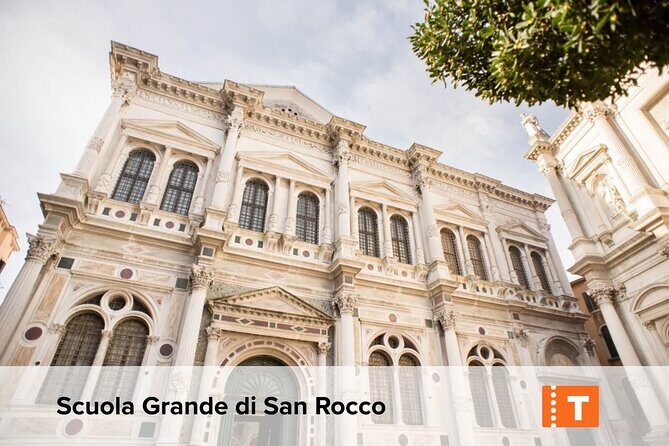
Scuola Grande di San Rocco is included for about 2 hours and is tied to the religious and communal life of Venice as a large confraternity founded in the 13th century. These Scuole spaces can feel like art museums even when you’re technically in a religious brotherhood building, so you’re often walking into a gallery without the usual museum crowds.
Museo Correr is another good “Venice life” stop. It’s centered on the life and culture of the Venetian Republic, and it includes bronze statues, paintings, and books. It’s listed as free (with admission included) for about 2 hours, which makes it a strong value add if you want more context around what you’re seeing in Doge’s Palace.
If you like architecture quirks, Scala Contarini del Bovolo is worth a detour. The spiral staircase attached to Palazzo Contarini del Bovolo gets attention for its unusual construction. You’ll typically see it as a short-but-memorable stop in about 2 hours total, but expect stairs and narrow space—Venice does not do wide and slow.
Ca’ Rezzonico and Ca’ Pesaro: Venetian painting meets modern art
If you’re planning a longer visit, you’ll appreciate the palaces that give you two different artistic vibes.
Ca’ Rezzonico is about Venice’s 18th-century upper class. It houses Museo del Settecento Veneziano and is described as showing late Baroque, Rococo, and early Classicism periods, with named artists including Pietro Longhi, Canaletto, Francesco Guardi, and the father-and-son Tiepolo. It’s listed as about 1 hour, and it works well if you want a compact hit of major Venetian names plus interior decorations and furnishings.
Ca’ Pesaro, by contrast, is International Gallery of Modern Art in a monumental palace. You’ll see 19th- and 20th-century collections, including Gustav Klimt and Auguste Rodin, and also a selection of Italian artists such as Medardo Rosso, Adolfo Wildt, and Giacomo Balla. You also get an oriental art section on the third floor. This one is listed as about 1 hour, which is tight but useful if you’re trying to keep your day from ballooning.
Gondola ride: a short, shared canal view from the Piazza San Marco side
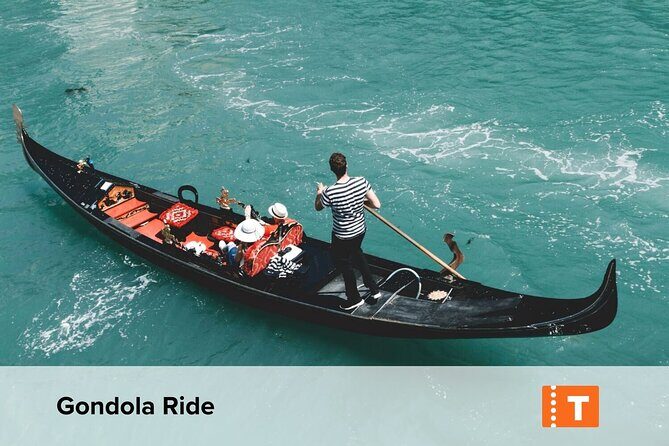
The gondola ride is included and clocks in at 20 minutes. That’s short, but it’s also realistic: gondola rides are more about seeing how Venice looks from the water than about getting a narrated history tour.
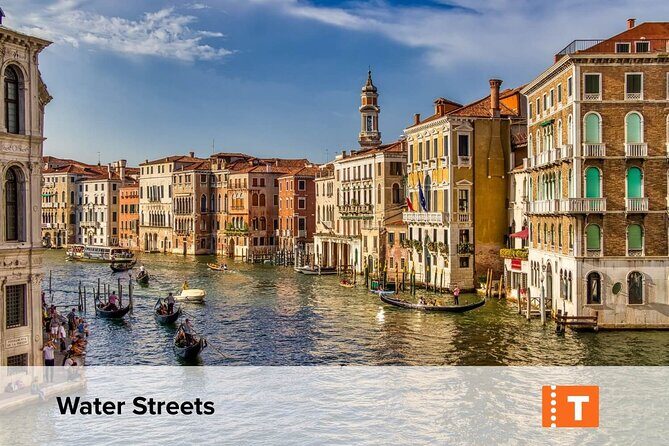
The ride is described as letting you see Venice through the Canal Grande and smaller canals around the Piazza San Marco area. That gives you a strong “postcard but from inside it” perspective, and it’s a smart way to cut through the land-based crowd problem. When you’re walking all day, being on the water for a bit resets your brain.
The big consideration: this is typically not a private gondola experience. You share, and the time is limited, so manage expectations. If you dream of a long, slow drift with deep commentary, you might feel the clock. If you want one iconic Venice moment without the stress of arranging it on your own, it’s a solid included activity.
Murano, Burano, Torcello: glass, lace, and an island pace change
One of the strongest parts of this pass is the island day. You get a Murano–Burano–Torcello tour of about 5 hours, and it’s designed to do three distinct things rather than just ferry you around.
Murano is famous for handmade glass. The tour description even notes you can visit a glassblowing workshop, which is exactly the kind of “see how it’s made” experience you can’t get from photos. After that, you’re set up for the Glass Museum in Murano, listed as about 1 hour and described as one of the most extensive glass collections, arranged in seven chronological sections from antiquity to the present. The late sections focus on the rebirth of Murano glass, including classical and Art Nouveau pieces, plus modern and contemporary works.
Then you go to Burano. Burano is all about color and craft. The tour description highlights the vibrant colors of the fisheries and points you toward bobbin lacework. There’s also a lace museum stop—Museo del Merletto di Burano—listed as about 1 hour, tied to the Burano Lace School (1872 to 1970). If you like textiles, it’s a meaningful stop. If you’re not into lace, it still gives you a window into lagoon life and why these islands built their reputations.
Finally, Torcello. This island is described as home to ancient St. Maria Assunta Cathedral and the St. Forsa Church, created in the 11th and 12th centuries. That makes it the “quiet, old world” contrast to Burano’s bright streets and Murano’s glass energy.
Art in palaces beyond the classics: Fortuny, Goldoni, fabrics, and perfume
Venice can be art museums and theater houses and clothing archives all in one day. This pass leans into that, and I like that it doesn’t assume you want only paintings.
Casa di Carlo Goldoni is included (about 1 hour) and is tied to the playwright and librettist Carlo Goldoni, including the fact that his palace is his childhood home. The museum today includes an institute for theatre studies, so it’s a cultural stop that’s more than just a memorial. If you’ve ever enjoyed Italian theater, this adds a different angle to Venetian culture.
Museo di Palazzo Fortuny (about 1 hour) is another culture twist. The description emphasizes Mariano Fortuny’s work as an artist and set-designer and the way he created lighting for art and performances. The museum is laid out with paintings, photographs, and fabrics arranged according to Fortuny’s “perfect lighting” vision. Even if you’re not chasing design nerd points, this is still a cool way to see how Venice thinks about light.
Palazzo Mocenigo is included for about 1 hour and is built around fabrics, clothes, and even perfume. It’s described as a study center for the history of fabrics, costumes, and fashion, and the rooms evoke a Venetian nobleman’s life between the 17th and 18th centuries. If you enjoy costume history (or you just like things that smell good and look complicated), this is a strong stop.
The pass itself: what you should double-check before you go
Here’s the practical truth. A pass can be a time-saver, but only if your voucher language matches the real world. Some entries in this kind of product are listed as included, while others may depend on what you select, which can affect skip-the-line timing.
So, before you commit your day, I strongly suggest you do two checks:
- Match each attraction name on your voucher to the exact venue you’ll show up at.
- Pay attention to whether an attraction says skip-the-line versus standard entry.
Also remember that you’re moving between a lot of sites, and Venice is built for walking but not for rushing. If you end up having to locate a ticket counter or deal with an extra entry step at one stop, it can throw off your rhythm. The good news: the pass is built around keeping you from booking everything separately.
Price and value: when $102 feels fair
At about $102 per person, this pass can be a good value—if you plan to use multiple included sights rather than just pick one or two. The value math is strongest when you take the bigger ticket anchor: Doge’s Palace with skip-the-line access, the gondola ride, and the island tour. Those three alone are the most “expensive per hour” experiences for many first-time visitors.
Then you stack in the museum-and-church support cast: the National Archaeological Museum, Marciana Library, Museo Leonardo da Vinci, Scuole stops, Correr, plus palace museums like Ca’ Rezzonico and Ca’ Pesaro. A pass like this makes the most sense when you’re trying to cover ground efficiently.
If you only care about a couple of headline attractions, or if you’re expecting skip-the-line for every single site without checking details, you may feel shortchanged. In that case, buying fewer, targeted tickets directly can sometimes work out better.
Who should buy this Venice Explorer Pass
This pass fits best if you:
- have one to a few days in Venice and want a structured highlights plan
- like museums, churches, palaces, and architecture (not just one lane like walking around St. Mark’s only)
- want a gondola moment plus a lagoon island day without managing multiple bookings
- prefer a smaller group setting (max 10)
It may be less ideal if you:
- hate ticket/entry complexity and want everything guaranteed without any potential extra steps
- expect the gondola or museum time windows to feel like a private, slow experience
- are only interested in one or two sites and will skip most of the included stops
Should you book it?
I’d book this if your goal is to see a broad slice of Venice—power (Doge’s Palace), art (Ca’ Rezzonico and Ca’ Pesaro), hands-on culture (da Vinci interactive), and the lagoon’s signature experiences (gondola plus Murano–Burano–Torcello). The price feels reasonable when you actually use the included anchors and several of the free-admission stops.
Don’t book it on autopilot. Read the voucher carefully so you’re not surprised by skip-the-line coverage. If you want specific add-ons (especially around St. Mark’s), make sure they’re included in your exact selection before you arrive.
If you do that, you can turn a limited trip into a well-rounded Venice “greatest hits” visit without living on the edge of online ticket stress.
FAQ
How much is the Venice Explorer Pass per person?
It costs $102.01 per person.
How long does the pass last?
It’s listed for 1 to 5 days (approximately).
Is the experience offered in English?
Yes, it is offered in English.
What major activities are included?
The pass includes Doge’s Palace admission (with skip-the-line access), a gondola ride, a guided walking tour, and an island tour to Murano, Burano, and Torcello. It also includes the Da Vinci Interactive Museum.
Are the museum and church visits included, or do I pay extra?
Many stops are listed as admission included or free, including several museums and churches such as Scuola di San Rocco, Museo Correr, Scala Contarini del Bovolo, and multiple palace museums. Public transport is not included unless you select it.
Do I need to buy public transport separately?
Yes. Public transport is not included unless you select the optional public transportation ticket.
Is free cancellation available?
Yes. You can cancel up to 24 hours in advance for a full refund.