REVIEW · VENICE
Venice: Leonardo Da Vinci Museum Entrance Ticket
Book on GetYourGuide →Operated by Leonardo da Vinci Museum - Venice · Bookable on GetYourGuide
Leonardo’s ideas are touchable in Venice. With an entrance ticket to the Leonardo da Vinci Interactive Museum, you move through four themed rooms—Earth, Water, Fire, and Air—while machines and models bring his concepts to life. It’s a clever way to see a different side of Venice, away from canal selfies and toward 1500s engineering thinking.
I love the working, hands-on models built according to Da Vinci’s designs, plus the chance to see how his ideas link art and science. I also like the mirror room experiences and the puzzle-style activities that keep both kids and adults busy without feeling like a classroom.
One possible drawback: it’s a smaller, self-paced museum. If you’re expecting a huge, spend-the-entire-day exhibition, plan for a shorter visit.
In This Review
- Quick Highlights to Pin to Your Day
- Leonardo da Vinci Interactive Museum: a Ticket That Actually Changes Your Pace
- Where to Go: Campo San Rocco Meeting Point (How Not to Wander)
- What the Museum Feels Like Inside: Small, Interactive, and Built for Hands-On Learning
- Earth, Water, Fire, Air: How the Four Sections Shape What You Notice
- Working Machines and Puzzle Stations: Why This Museum Gets People Talking
- Art and Anatomy Together: Painting Replicas and the Human Body Studies
- Languages, Multimedia, and Photo Time: Practical Details That Change Your Visit
- Tickets, Price, and Value: Why $10 Can Feel Like a Win
- Best Time to Go: Pair It With Your Venice Day (and Avoid a Slog)
- Who This Is For: Families, Art Lovers, and Curious Adults
- Gift Shop and Souvenirs: Take Home Something Da Vinci-Related
- Should You Book the Leonardo da Vinci Museum Ticket?
- FAQ
- How long does a visit take?
- Is this a guided tour?
- Where exactly is the museum entrance?
- What are the four sections of the museum?
- Can I take photos inside the museum?
- What languages are available in the museum?
- Are the inventions interactive, or are they just displays?
- Is it suitable for kids?
- When is the last entrance?
- Is there a shop discount?
Quick Highlights to Pin to Your Day
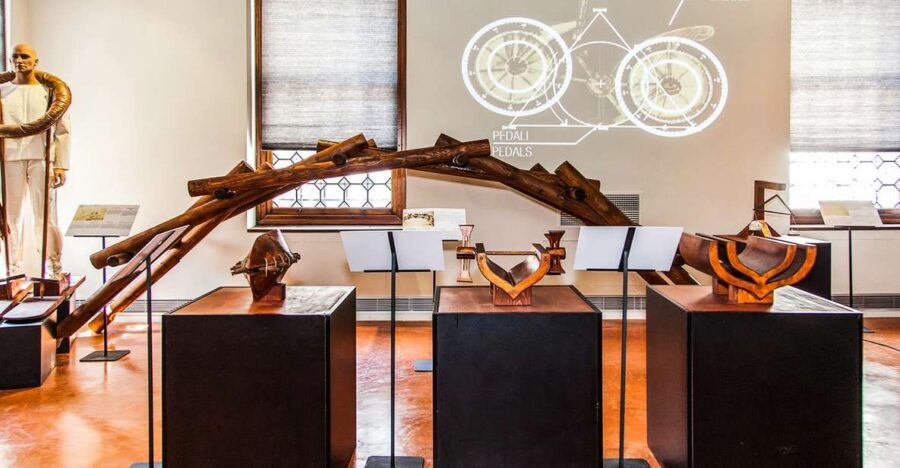
- Four elements layout: Earth, Water, Fire, and Air sections guide you through the inventions in a logical flow.
- Faithful reproductions with context: many displays are rebuilt from Da Vinci’s original designs, with notes when proportions needed adjusting.
- Mirror box and mirror room moments: a 360-degree mirror setup (and a mirror box) is the wow factor.
- Puzzles that need teamwork: a wood bridge puzzle is set up so having an extra person helps.
- Art meets anatomy: high-resolution backlit painting replicas plus explanations of his human anatomy studies.
- Photo-friendly stop: you can take photos inside, which is rare for interactive spaces.
Leonardo da Vinci Interactive Museum: a Ticket That Actually Changes Your Pace
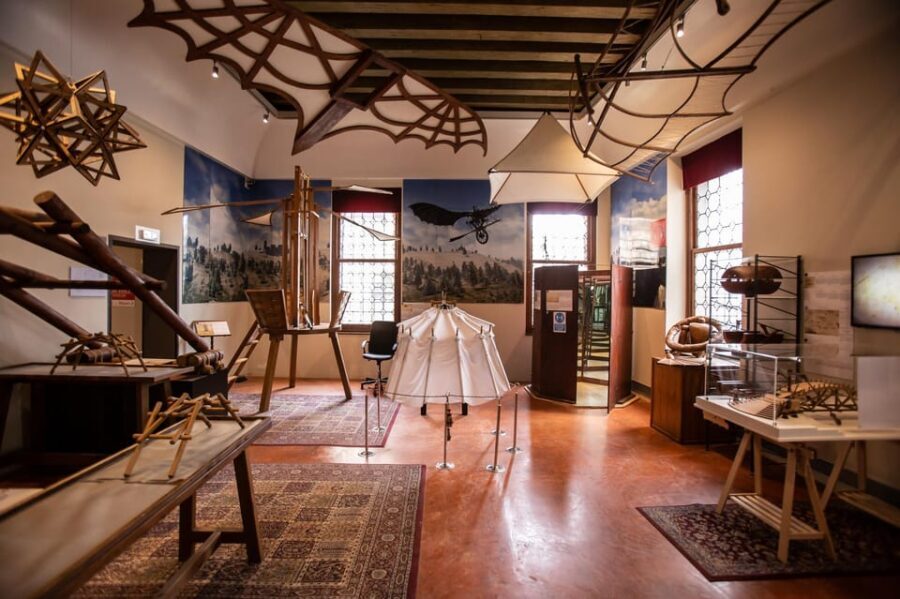
This is one of those Venice activities that feels like a break from the usual rhythm. You trade crowds and street-hopping for a calmer indoor museum where you can slow down and follow a theme. The big selling point is that Da Vinci isn’t presented as just a painter. He’s shown as an inventor and observer of how bodies work.
The four-element design matters more than it sounds. It gives you a path through the inventions instead of a random grab-bag of gadgets. You walk in expecting art history, and you leave thinking like a maker—how would this work, what problem is it solving, what happens if the proportions change?
At $10 per person, the value is about what you get for the time you spend. This isn’t a half-day show where you pay more for the venue than the content. It’s a compact museum with lots of stations you can try. If you plan your visit right, it can feel like a full hour-plus of meaningful fun.
You can also read our reviews of more tours and experiences in Venice



Where to Go: Campo San Rocco Meeting Point (How Not to Wander)
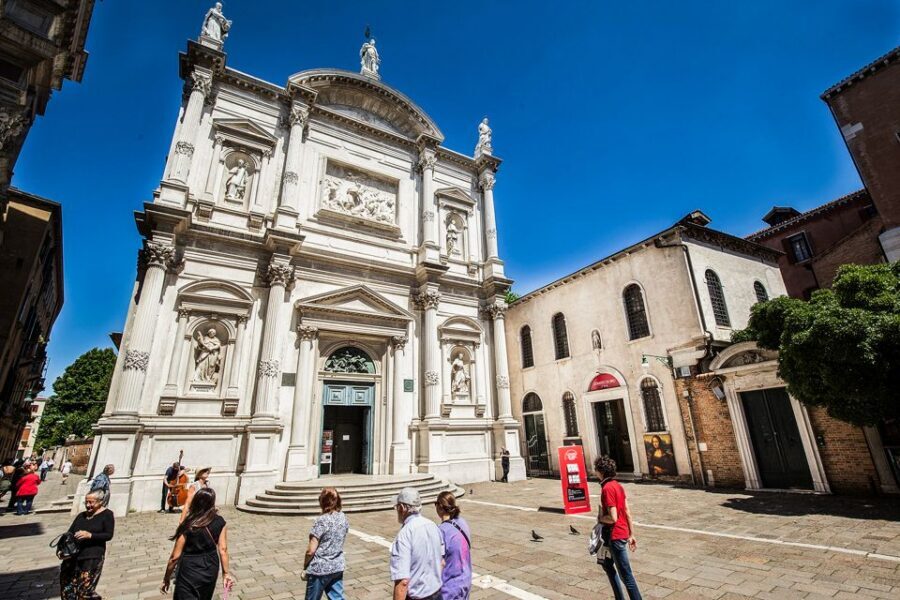
Your ticket is for the Leonardo da Vinci Interactive Museum at CAMPO SAN ROCCO, 3052 Venezia, inside the Edificio Scoletto di San Rocco. The directions are pretty specific: it’s in front of the Scuola Grande di San Rocco and behind the Church of Frari.
Here’s the practical trick I’d use: once you’re in the Frari area, look for the Scoleta di San Rocco building first. Then orient yourself relative to Scuola Grande di San Rocco. The museum is easy to spot once you lock onto that landmark pair.
Also, don’t overthink the “meeting point” idea. For this experience, you go to the museum, show your ticket to the reception staff, and enter. There’s no guided person waiting at a separate spot.
What the Museum Feels Like Inside: Small, Interactive, and Built for Hands-On Learning
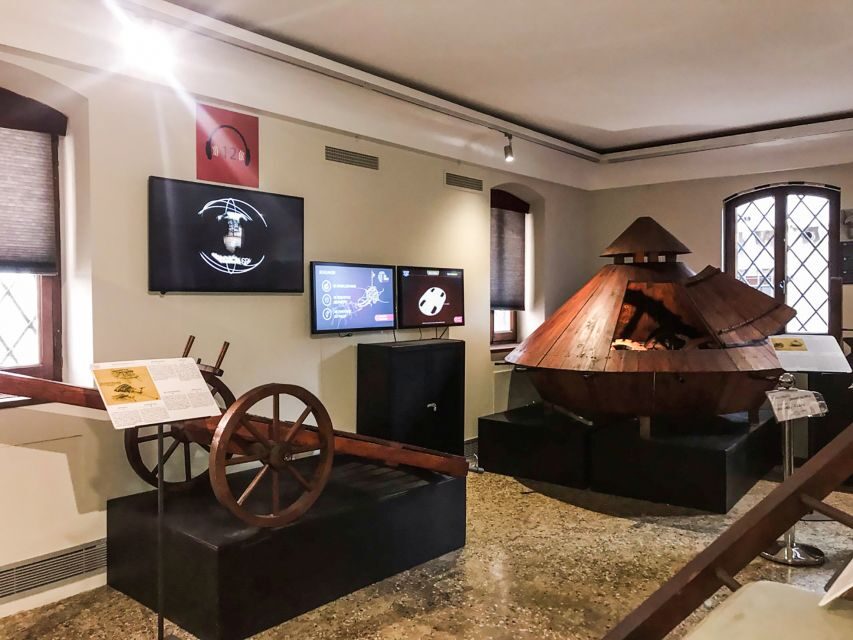
The museum is laid out in a way that keeps you moving. You’ll pass through several rooms and stations across the ground level and upper level. Some sections are more hands-on, while others are more about reading and watching multimedia explanations.
From a planning perspective, it helps to know the size. Many people treat it as either a fast visit (around 30 to 60 minutes) or a more relaxed one (closer to 1.5 hours). That flexibility is part of the value: you can fit it into a busy Venice itinerary without losing your whole afternoon.
It’s also family-friendly in a practical way. The activities are not just passive displays behind glass. You’ll find setups meant for touching, operating, and experimenting, so the museum works for a wide range of ages.
One useful note: you may see signs that point you to extra audio support. One tip from a visitor is to scan a QR code in the front shop area for an audio guide, rather than assuming it’s automatically available everywhere.
Earth, Water, Fire, Air: How the Four Sections Shape What You Notice
The museum is organized around the four elements: Earth, Water, Air, and Fire. That structure turns the visit into a guided way of thinking. Instead of asking What inventions do they have? you start asking What does Da Vinci study when the theme is Earth?
This matters because Da Vinci’s curiosity jumps across disciplines. The museum’s theme choices help you catch those connections. As you move from section to section, you’ll notice how engineering ideas can show up as practical mechanisms, scientific observations, and even artistic thinking.
Earth and Water sections tend to feel more grounded in physical systems. Air and Fire can feel more surprising because they shift your mindset toward force, movement, and transformation. Even if you don’t memorize every model, the overall experience gives you a sense of how his thinking was organized.
Working Machines and Puzzle Stations: Why This Museum Gets People Talking
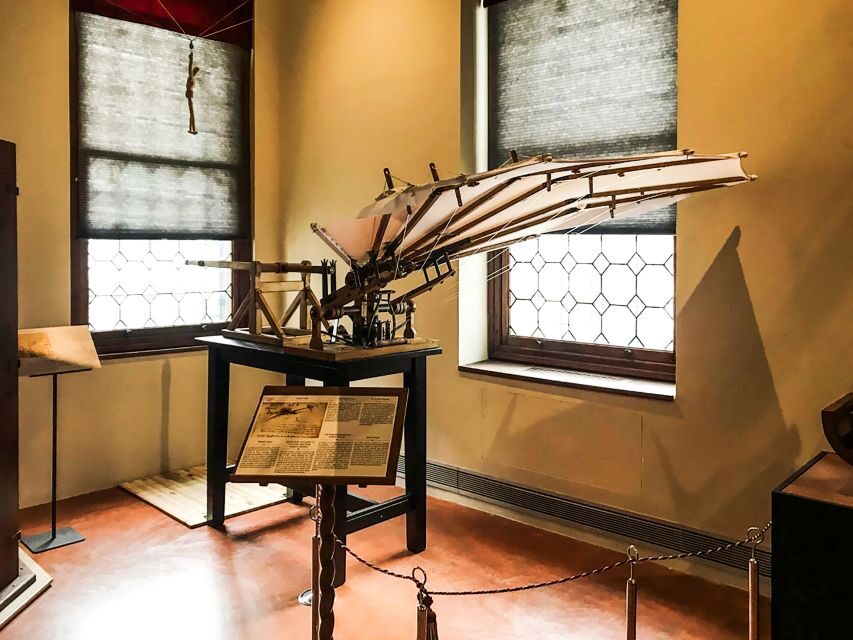
The heart of this ticket is the chance to interact with models. The machines are rebuilt according to Da Vinci’s designs, with adjustments when exact proportions had to change. That’s an important detail, because it signals the museum is aiming for accuracy instead of just producing generic replicas.
Several experiences are designed to get you involved fast. One fan-favorite moment is the 360-degree mirror room. It’s the kind of exhibit that makes you stop, look up, and then look again, because your perspective shifts with where you stand.
On the upper level, there’s also a wood bridge puzzle. It’s not one of those “you can do it alone” setups. Having a second person helps, and it turns the whole station into a mini team challenge. If you’re visiting with a partner, sibling, or child, that’s an easy win.
Across the museum, you’ll also see puzzles and hands-on elements that reward curiosity. If you like learning by doing, this place is a good match. If you prefer quiet reading, you can still get value, but you’ll have to slow down and actually spend time with the labels and multimedia.
You can also read our reviews of more museum experiences in Venice






Art and Anatomy Together: Painting Replicas and the Human Body Studies
A big reason this museum works even if you’re not a hardcore Da Vinci fan is the mix. You don’t just see inventions. You also see evidence of his medical and artistic work in the same flow.
In the art section, there are high-resolution backlit replicas of major paintings. Backlighting helps because the detail is easier to see than in typical flat reproductions. It also makes the painting experience feel less like a poster and more like an object you’re studying.
For anatomy, the museum highlights his major studies of the human body. This is where you start to understand why his thinking looks so modern. He wasn’t treating art as separate from science. He was using observation, structure, and careful study to understand both body and image.
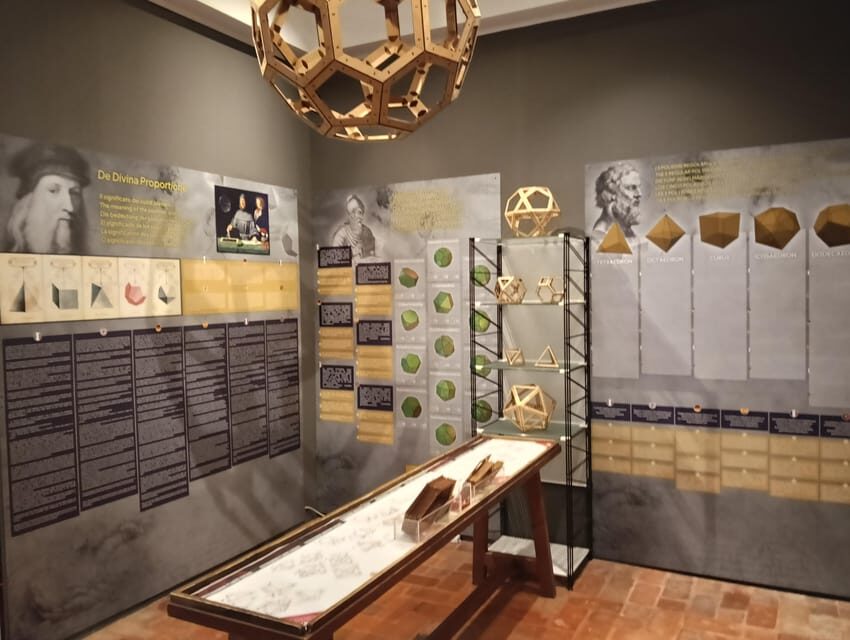
The museum uses multimedia displays along with text descriptions in multiple languages. If you’re traveling with someone who reads slowly, that’s good news. You can switch formats and still follow along.
Languages, Multimedia, and Photo Time: Practical Details That Change Your Visit
Good museums tell you what matters. This one does it through a combination of labels and multimedia. Descriptions are offered in Italian, English, French, German, Spanish, and Russian, so it’s easier to keep up without hunting for a translation device.
You can also take photos inside. That’s a practical perk because you’ll want to remember the working models, not just the overall room. Bring your phone fully charged. Some rooms are visually busy, and photos help you compare details later when you’re walking around Venice.
There’s also a video or film-style explanation included that gives background on Da Vinci’s life and work. It’s short enough that it doesn’t hijack the visit, but it helps you connect the inventions to the person behind them.
One small planning point: if you arrive and realize you want the audio guide, don’t panic. The shop area is where a visitor recommends scanning the QR code.
Tickets, Price, and Value: Why $10 Can Feel Like a Win
The ticket price is $10 per person, and that’s the first clue this experience is built for everyday affordability. In Venice, that matters. Many museum tickets are priced like they’re competing with major landmarks. Here, the cost lines up more closely with a compact, interactive exhibit.
The value comes from two things:
- You’re paying for interaction, not just viewing.
- The museum is small enough that you’re not “stuck” for hours, even when you’re trying everything.
You also get a discount at the book shop: 10% off on purchases. If you’re the kind of person who likes a souvenir that feels related to the visit (instead of just another magnet), that discount can help make the ticket feel even more reasonable.
A key detail: it’s not a guided tour. That keeps the cost down and gives you control over pacing. If you’re comfortable reading and exploring at your own speed, you’ll get more value.
Best Time to Go: Pair It With Your Venice Day (and Avoid a Slog)
Because you enter on a schedule and the museum uses timed availability, timing helps. This isn’t a giant crowd machine. Still, Venice has peak hours, and you want to avoid walking into a packed indoor stop if you can.
A practical strategy is to schedule it during a break from outdoor sightseeing. Many people use it as a way to get out of heat and noise. Indoors, you can focus on learning and touching exhibits without the constant navigation stress.
Also pay attention to the rule about last entry. The last entrance is 1 hour before closing. If you want enough time for photos and puzzles, don’t roll up at the last possible minute. Give yourself slack.
Who This Is For: Families, Art Lovers, and Curious Adults
This museum shines for families because it’s built around interaction. There’s plenty that kids can do, and the hands-on stations don’t feel like they’re only for toddlers. It’s also enjoyable for adults who like thinking like an engineer or studying how ideas turn into mechanisms.
It’s a good fit for people who:
- want an indoor activity that breaks up Venice walking
- like touching exhibits and solving small puzzles
- want a quick, meaningful explanation of Da Vinci beyond his paintings
If you’re a serious art historian chasing famous masterpieces, you might want to pair this with bigger museums. But even then, the mix of art replicas and anatomy studies gives it a broader angle.
For anyone traveling with limited time, the compact size is helpful. You can get a solid visit in without making it your whole day.
Gift Shop and Souvenirs: Take Home Something Da Vinci-Related
The museum has a book shop with Leonardo-themed gifts and souvenirs. If you’re buying something small, the 10% discount helps. It’s also one of the best places to grab a printed takeaway if you want to remember specific inventions after you leave.
Think of it as your follow-up step. The museum can be hands-on and fast. A book or themed gift lets you reconnect to what you saw while you’re still in Venice mode.
Should You Book the Leonardo da Vinci Museum Ticket?
Book it if you want a short, high-interest indoor stop that’s built around interaction. The four-element layout, the working models, and the mix of art and anatomy make it feel more complete than a typical small museum.
Skip it (or temper expectations) if you need a huge, multi-gallery museum experience or you expect a guided tour. This is self-paced. You’ll get the most out of it when you’re willing to spend time at stations, read labels, and try the puzzles.
If you’re in Venice for a couple days and you want something different from churches and canals, this ticket is an easy yes.
FAQ
How long does a visit take?
Most people plan for about 1 to 1.5 hours. Some visits feel quick at around 30 to 60 minutes, depending on how many interactive stations you try.
Is this a guided tour?
No. The ticket is for entry only, and there is no guided tour included.
Where exactly is the museum entrance?
Leonardo da Vinci Interactive Museum is at CAMPO SAN ROCCO, 3052 Venezia, inside the Edificio Scoletto di San Rocco. It is in front of the Scuola Grande di San Rocco and behind the Church of Frari.
What are the four sections of the museum?
The museum is organized into four themed areas: Earth, Water, Fire, and Air.
Can I take photos inside the museum?
Yes. The ticket includes the opportunity to take photos inside.
What languages are available in the museum?
Descriptions and support are available in Italian, English, French, German, Spanish, and Russian.
Are the inventions interactive, or are they just displays?
You can operate and interact with machines rebuilt according to Da Vinci’s original designs (with some necessary changes for proportions).
Is it suitable for kids?
Yes, it’s family-friendly. Children under 3 years old enter for free, and children under 15 must be accompanied by an adult.
When is the last entrance?
Last entrance is 1 hour before closing time.
Is there a shop discount?
Yes. You get a 10% discount on purchases in the book shop.