REVIEW · VENICE
Venice Tour by High-Speed train from Florence
Book on Viator →Operated by EUROLINKWORLDWIDE · Bookable on Viator
Venice in a single, well-paced day. You take the high-speed train from Florence, then spend hours with a private guide threading together the big-name stops and the smaller, more local-feeling places (from San Rocco’s plague-era story to Titian’s art). I especially like how you get both famous Venice (Piazza San Marco) and quieter Venice (churches that don’t feel like a stage set). I also like the flexibility of upgrading to a gondola ride without turning the day into a scavenger hunt. One possible drawback: you’ll walk a lot, deal with stairs, and in bad weather it can get hard to hear the guide unless you’ve got your own plan for listening.
The day is built around a train day rhythm, starting at Venezia Santa Lucia. You’ll have a mobile ticket, and the group discount setup can make the per-person price feel less painful than doing this all on your own. If you’re staying outside Venice, check the city’s day-tripper rules too, because on certain dates there can be a €5 access fee.
In This Review
- Key points that make this trip worth your time
- High-speed rail from Firenze S.M.N to Venice Santa Lucia
- Comfort and pace: stairs, walking time, and rain-day listening tips
- San Rocco: starting with St. Roch and Venice’s plague-era story
- Frari and San Polo churches: Titian and St. Paul on one route
- Rialto market and the 1588–1591 bridge: where Venice traded
- Scala Contarini del Bovolo: the snail staircase in San Marco
- Piazza San Marco plan and your optional gondola ride
- The gondola upgrade: how to make it fit your day
- Strada Nova to the train: shopping lanes and an easy exit to Firenze
- Price, what’s included, and how to decide if it fits your day
- Should you book this Florence-to-Venice day trip?
- FAQ
- How long is the Venice tour from Florence?
- What time do you depart from Florence?
- Is the tour private?
- Are tickets included for the stops in Venice?
- Is there a Venice access fee on the day trip?
- What happens if the weather is poor?
- Can I change or get a refund if I cancel?
Key points that make this trip worth your time
- High-speed rail day trip: Florence to Venice on a set train schedule, with about 4 hours total train time for the return leg
- Private guide, private group: you’re not merging into a giant cattle line
- Major icons plus lesser-visited stops: Rialto, St. Mark’s Square, plus places like the Scala Contarini del Bovolo
- Free admission for the listed sights: churches and key viewpoints are set up so you’re not constantly paying small ticket fees
- Optional gondola upgrade: add the Venetian signature without derailing the walk-heavy day
- Venice is weather-dependent: the experience requires good weather, so plan for a rain jacket mindset
High-speed rail from Firenze S.M.N to Venice Santa Lucia
If your goal is a true Venice “hits-and-stories” day, the train is doing the heavy lifting. You depart from Firenze S.M.N at 8:20 AM, then return so your trip still feels like a day trip—not a whole vacation. The total train time back is about 4 hours, and the full experience runs roughly 8 to 10 hours from start to finish.
Why this matters: Venice is not built for time-wasters. Streets twist, bridges hop over water, and delays add up fast. The schedule-driven train approach keeps you from burning your day on transit decisions. Plus, the tour frames rail travel as quicker, greener, and cheaper than a private car, which is exactly what you want when you’re paying for sightseeing time, not traffic and parking headaches.
Also, you start and end at the same place: Venezia Santa Lucia (30121 Venice). That’s a gift. When your tour finishes, you’re already at the station area, so getting back to where you’re staying doesn’t turn into an extra mini-adventure.
Practical move: plan to arrive at Firenze S.M.N early. Even if you’re traveling light, you’ll want a few minutes to settle and avoid last-minute stress.
You can also read our reviews of more tours and experiences in Venice.

Comfort and pace: stairs, walking time, and rain-day listening tips
This tour is built as a walking experience with multiple church stops and a few architectural surprises. The upside is you see a lot in one day. The catch is physical pace.
Expect:
- Lots of walking and stairs, especially around older churches and viewpoints.
- Better results when your group can handle short bursts of effort several times during the day.
A review highlight from a rainy day: if it’s pouring, the group will feel it—sound carries differently outdoors, and wet streets can make your brain switch into “survive mode.” If you want to catch every detail, bring a good listening setup. A simple headset plan (if you have one) can help when you’re part of a group and the guide’s voice has to cut through the weather.
And one more practical note: you’ll move between places that are free to enter, which is great—but it doesn’t mean you’ll always have long sit-down breaks. This is a “see it, understand it, keep going” style day.
San Rocco: starting with St. Roch and Venice’s plague-era story
Your tour starts at Chiesa di San Rocco, and it’s a smart opening. Instead of beginning at the postcard front door, you start at a church rooted in Venetian identity. Originally built in 1508, the church is dedicated to St. Roch, a patron saint tied to cities around the region and especially connected with the plague era—when Venice faced its darkest days.
What I like about starting here: you get context early, before you start chasing images. Venice isn’t just canals and architecture—it’s also fear, survival, and a city that learned how to rebuild. San Rocco helps you read the rest of the day with better instincts. When you later stand near famous public spaces, you understand the stakes and the mindset that shaped what you’re seeing.
Inside, the church mixes centuries-old architecture with art pieces that connect religion and local history. The stop is about 30 minutes, with admission noted as free. That time length is enough to get oriented without feeling trapped in a museum pace.
If your group loves story-based tours, this opening does real work. If you’re the type who wants to photograph first and learn later, you can still do both here—San Rocco sets a steady tone.
Frari and San Polo churches: Titian and St. Paul on one route
From San Rocco, you head into the church-and-art backbone of Venice with two major stops.
First up: Basilica di Santa Maria Gloriosa dei Frari. Established in 1231, it’s gothic architecture in brick form, simple outside but loaded with art inside. One highlight is Titian’s Assumption of the Virgin. Even if you don’t know Titian by name, you’ll recognize the “this is the real deal” energy of a major artist still anchoring a place centuries later.
Then you move to Chiesa Rettoriale di San Polo, a smaller gothic church dedicated to St. Paul. This is where the tour feels like it shifts gear—from famous museum-like moments to quieter, more intimate art viewing. The church is described with specific works tied to Paul and major Christian themes, including pieces such as:
- The Last Supper
- St. Silvester baptizes Emperor Constantine
- St Paul Preaching
- Marriage of the Virgin
- St Peter and the Keys
For you, here’s the practical advantage: when your day includes both a big basilica and a smaller church, you avoid the “same flavor, different room” problem. You feel variety. And both stops are listed at around 30 minutes each, with free admission for these visits.
A small drawback to plan for: church interiors can be cooler and dimmer than you expect. Bring a jacket if you run cold, and wear shoes you can trust—Venice churches are not the time for slippery soles.
Rialto market and the 1588–1591 bridge: where Venice traded
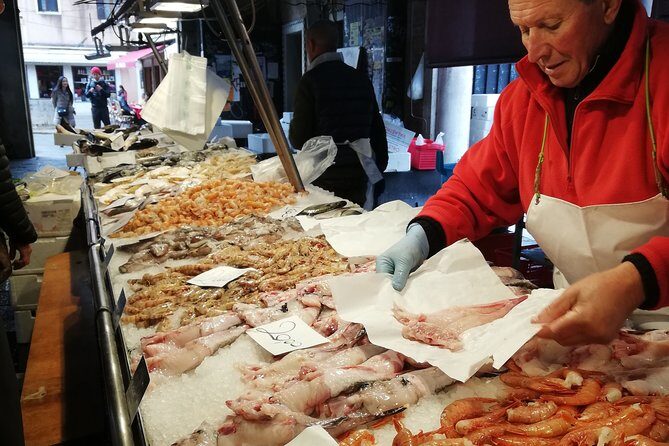
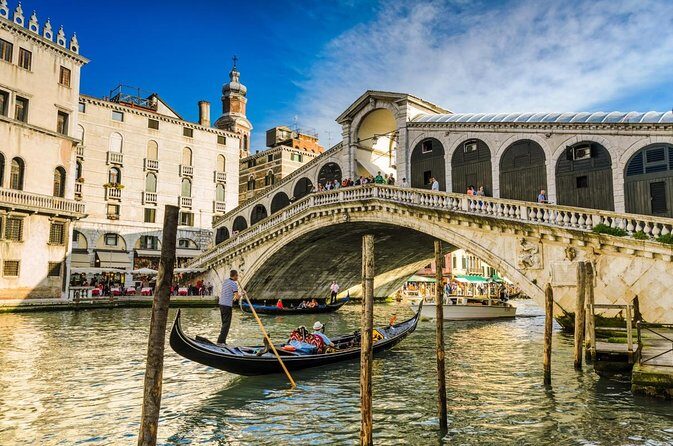
Next comes Mercati di Rialto, right by the arched Rialto Bridge. This is one of the easiest ways to feel Venice’s daily pulse without needing a private boat. It’s described as one of the busiest commercial areas of the city, shared by both locals and international visitors.
What makes it useful on a guided day: the market area isn’t only for browsing snacks or shopping. It’s also a living reminder that Venice has always been about trade and movement. You’ll likely pass through, look around, and get a sense of how a place like this supported the city’s survival and prosperity.
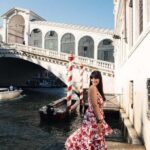
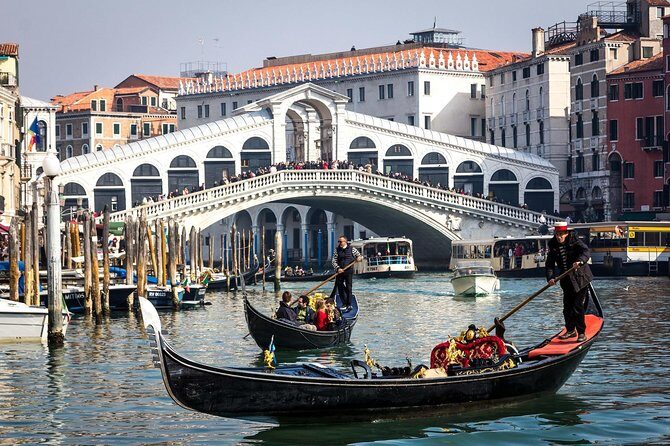
Then the tour lands on the Ponte di Rialto, with a bunch of very specific details that make it more than a photo stop. The bridge was built between 1588 and 1591 and remained the only way to cross the Grand Canal on foot until late 1854. You also get the structural story: a 24-foot arch supported on about 12,000 wooden pilings, with the bridge still standing more than 400 years later.
The time block is about 30 minutes, with free admission noted for these stops. That’s enough time to understand why the bridge mattered, without getting stuck in a long loop of crowd avoidance.
Two practical tips:
- If you’re sensitive to crowds, go in with the mindset of a quick hit here. This area can be busy because it’s central.
- If you want photos, position yourself early and don’t wait until the last minute—people move in waves around the bridge.

Scala Contarini del Bovolo: the snail staircase in San Marco
One of the smartest moves in this day is the Scala Contarini del Bovolo stop. You get an architectural treat in a place many visitors overlook.
It’s described as a spiraling “snail” staircase made to showcase the wealth of the Contarini family, located in San Marco. The best part for me is that it’s not the same “big square, big view” routine. This is Venice’s vertical creativity—stonework that looks playful and strategic at the same time.
You spend about 30 minutes here, and entry is listed as free. This is the kind of stop that pays off if you like details: the staircase gives you something to look at that isn’t just a canal scene.
Consideration: it’s a staircase. So even though it’s short compared to a full climb, it still counts for your legs in a day that already includes plenty of steps. If you’re traveling with older family members, it can help to go slowly and take breaks rather than pushing pace.
Piazza San Marco plan and your optional gondola ride
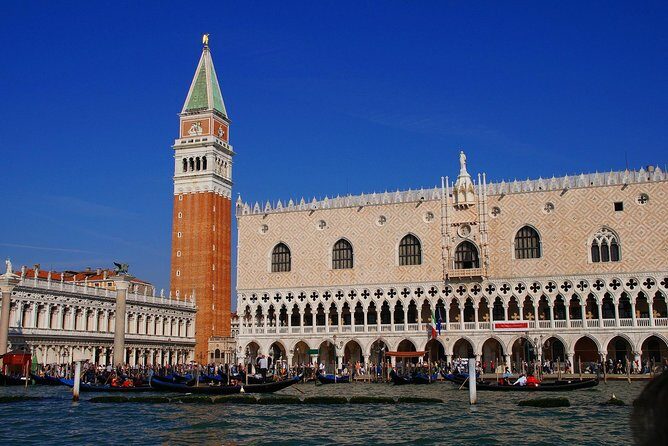
No Venice day trip is complete without Piazza San Marco. Here the tour keeps it real: you’re given the iconic overview—St. Mark’s Square, bordered by St. Mark’s Basilica on one side and opening toward the sea on another. It’s described as Napoleon’s drawing room of Europe, and the vibe is accurate: it’s the kind of place where you can feel the city’s power and pageantry at once.
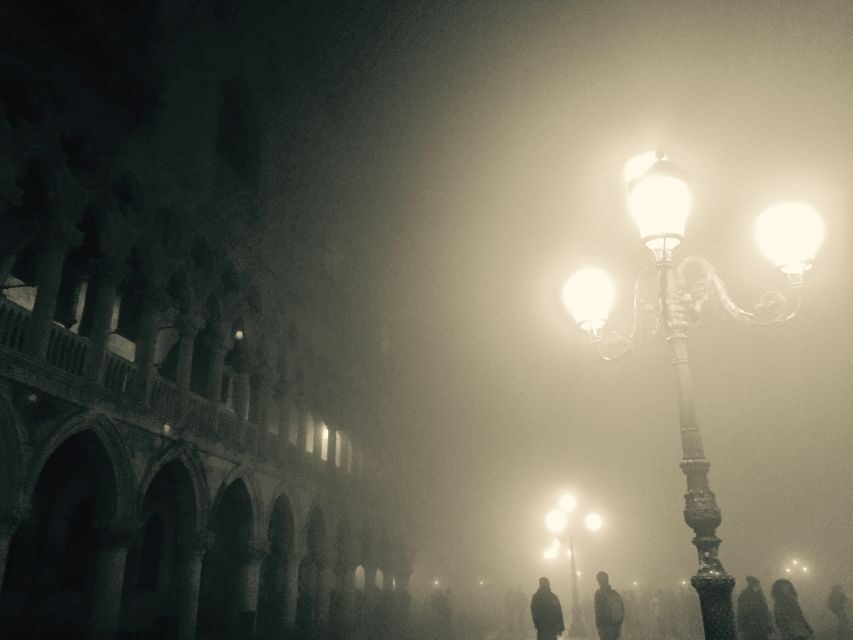
Timing matters. The day’s pacing is designed so you reach the square as a highlight. You’ll also learn about how the square changes with high tide at night—one of those Venice details that makes the place feel alive rather than fixed.
This stop is again around 30 minutes, with free admission noted.
The gondola upgrade: how to make it fit your day
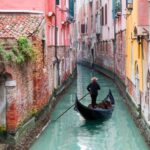
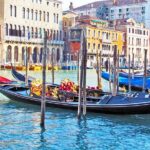
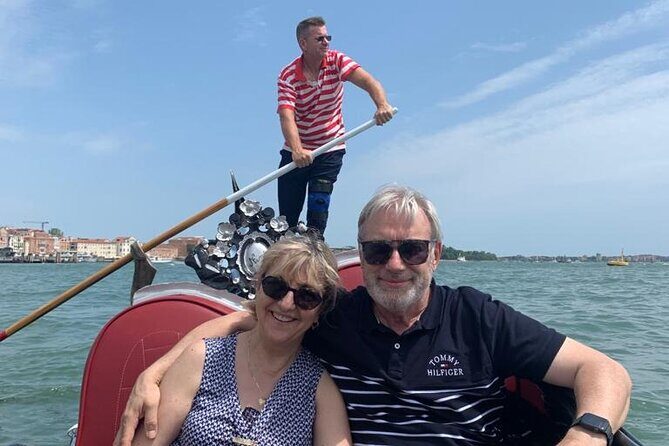
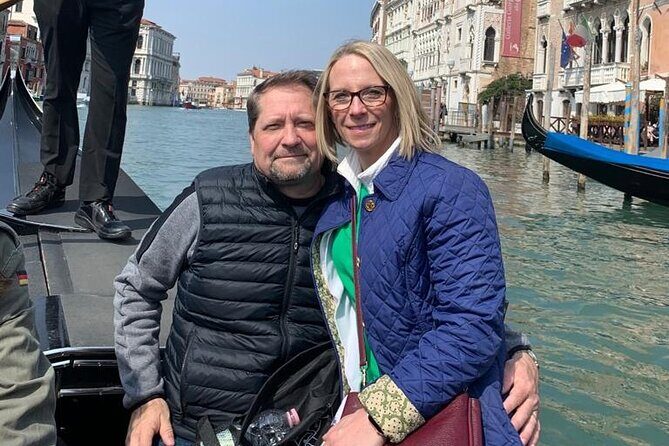
The tour also offers an upgrade for a gondola ride. It’s positioned as a Venetian signature, and the description notes an optional all-inclusive gondola tour of San Marco square.
Is it worth it? For many people, yes—because it’s hard to add gondola time on your own without lining up, coordinating meeting points, and hoping the water situation plays nice. Having the tour’s structure manage the time helps you avoid losing hours.
One caution: in a mixed group, gondola logistics can be a little “wait and see.” In at least one case, locating the gondolier was a minor hiccup. It wasn’t framed as a fault of the guide—just a reminder that Venice runs on people and water, not apps. Build in patience.
If you’re a first-time Venice visitor, the gondola upgrade is a good way to trade some walking for a slower perspective. If you already plan to gondola later at night, you may skip the upgrade and save your energy for the church and street portions.
Strada Nova to the train: shopping lanes and an easy exit to Firenze
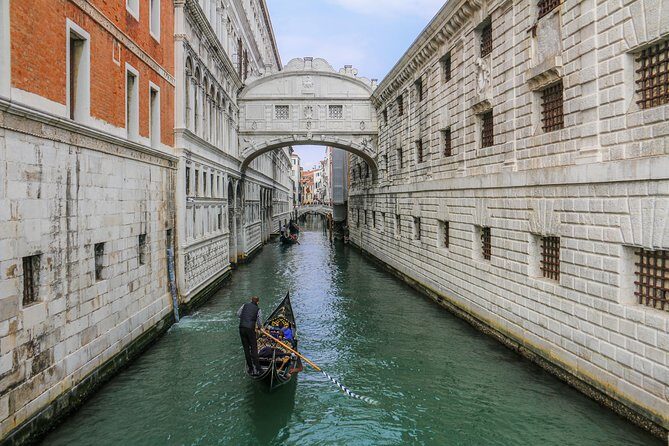
Your final stretch includes Strada Nova, a name used for a chain of shopping streets running through Venice. The tour describes it as a walk-through before reaching Venice Station.
This part matters because it acts like a landing strip. You’re not suddenly dropped into a chaotic plan at the end. You move toward the station with the day’s momentum still intact. It’s also a chance to pick up small items you actually want while you’re still fresh and not exhausted in the late afternoon.
This stop is about 1 hour, and admission is listed as free (no tickets required for the streets). You’ll likely use this time to:
- regroup after Rialto and the square
- take quick photos where you haven’t yet
- buy a small souvenir without trying to guess what you’ll regret later
Then you return to the meeting point area near Venezia Santa Lucia—and your day trip transitions back into train mode.
Price, what’s included, and how to decide if it fits your day
At $565.36 per person, this is not a budget option. But for Venice, it’s also not automatically overpriced—because you’re buying a bundle, not a scavenger list.
Here’s what you’re paying for (based on what’s provided):
- High-speed train travel between Florence and Venice
- Private group touring with a guide in English
- A structured route that includes big sights plus smaller art stops
- Free admission indicated for the listed church and key stops
- Mobile ticket and group discount setup
So when is it good value?
- If you want a guided day that reduces guesswork and keeps the schedule moving.
- If your group includes different interests—major landmarks and quieter churches.
- If you’d otherwise need to coordinate several tickets and meeting points on your own.
When I’d pause:
- If you’re the type who enjoys slow wandering with no plan at all, you might get similar satisfaction from a self-guided route and save money.
- If your party has mobility limits, the walking and stairs could make the tour feel tiring instead of rewarding.
The best “value hack” is to treat the gondola upgrade as optional, not mandatory. If you’re excited to do it, lean in. If you’d rather spend money elsewhere, keep the day focused on the guided walking and the architecture you’ll only get by being in the right places at the right time.
Should you book this Florence-to-Venice day trip?
Book it if you want Venice in one day with a guide who balances the famous and the overlooked, and if train timing works for your schedule. The route makes sense: you start with context at San Rocco, get art hits at Frari and San Polo, learn the Rialto story, then land at Piazza San Marco and finish with a smooth walk toward the station.
I’d think twice if you hate stairs, dislike walking-heavy days, or want a totally free-form Venice experience. Also, remember the day requires good weather. If your dates are fragile, you’ll want a plan for rain.
If you do book, go in prepared: comfortable shoes, a rain layer, and a listening plan. Then you’ll get the most out of a day that’s clearly designed to show you Venice, not just take you past it.
FAQ
How long is the Venice tour from Florence?
The experience runs about 8 to 10 hours.
What time do you depart from Florence?
The departure train leaves Firenze S.M.N at 8:20 AM.
Is the tour private?
Yes. It’s private, and only your group participates.
Are tickets included for the stops in Venice?
For the listed sightseeing stops (churches and the main sights on the route), admission tickets are indicated as free.
Is there a Venice access fee on the day trip?
On certain dates, many visitors staying outside Venice may need to pay a €5 access fee. Check the rules and exemptions at https://cda.ve.it.
What happens if the weather is poor?
The experience requires good weather. If it’s canceled due to poor weather, you’ll be offered a different date or a full refund.
Can I change or get a refund if I cancel?
No. The experience is non-refundable and cannot be changed for any reason.