REVIEW · VENICE
Another Side of the City: Discovering Authentic Venice
Book on Viator →Operated by Elisabetta Amadi · Bookable on Viator
Venice has a quieter side most people miss. This 2-hour private walk helps you see the real patterns of the city, not just the postcard stops. You move through lesser-known neighborhoods, small churches, and historic spots, with stories from a local guide like Elisabetta Amadi (and, on some bookings, other local guides such as Martina or Denise may lead).
I like the way this tour is built around “pause and look” moments—especially the canal-side craft and the campos where daily life still happens. I also love the timing: starting at 4:00 pm often feels easier than midday crowd-chasing, and it gives you a calmer Venice pace.
One thing to plan for: this is still Venice on foot. Expect uneven pavement, bridges, and a moderate walking level, so it’s not the best pick if you want minimal steps.
In This Review
- Key highlights at a glance
- A private 4:00 pm walk that feels like Venice, not a checklist
- Start at Gallerie dell’Accademia: paintings outside, context inside
- Santa Maria della Salute: plague-era Venice in stone
- Fondamenta Zattere: the calm Venetian promenade
- Squero di San Trovaso: see how gondolas were (and still are) made
- Campo San Barnaba: Dorsoduro’s picturesque calm
- Campo Santa Margherita: where local life keeps moving
- Food, drink, and practical Venice tips you can use immediately
- What the private-group format changes (for the better)
- Price and value: what you’re really paying for
- Practical tips so you enjoy it instead of just surviving it
- Should you book this Venice locals tour?
- FAQ
- How long is the tour?
- Is this tour private?
- Where do we meet?
- What language is the tour offered in?
- Do I need to pay admission for the stops?
- Are there any extra access fees or rules?
Key highlights at a glance
- Private and personal: only your group, so your guide can match the route to your interests
- Crowd-avoidance by design: you’re pushed toward quieter streets and residential corners
- Santa Maria della Salute story stop: the church ties directly to Venice’s end-of-plague history
- Gondola craftsmanship at Squero di San Trovaso: a living shipyard you can spot across the canal
- Local promenade time at Fondamenta Zattere: a relaxing waterfront feel that Venetians use
- Campo life in Dorsoduro: Campo San Barnaba and Campo Santa Margherita show the city’s everyday rhythm
A private 4:00 pm walk that feels like Venice, not a checklist
This tour works because it respects how Venice actually lives. Instead of sprinting from famous landmark to famous landmark, you’re guided into smaller passages—places that help you understand the city’s layout, old trades, and neighborhood culture.
The “private” part matters more than it sounds. With only your group, it’s easier to ask questions without feeling rushed, and it’s simpler for the guide to slow down at the spots you care about most (church stories, street details, or practical Venice life tips).
And yes, you still get major sights—just not in the loud, hurried way that most people do. You’ll be walking through areas like Dorsoduro, plus canal-side viewpoints that make the city feel intimate instead of overwhelming.
You can also read our reviews of more city tours in Venice

Start at Gallerie dell’Accademia: paintings outside, context inside
The meeting point is at Gallerie dell’Accademia, Calle della Carità 1050, 30123 Venezia. Starting here is smart because you’re already in the part of Venice where grand culture meets local neighborhood streets.
One of the first stops is an incredible painting collection from the 1200 to 1900 range, but you’ll see it outside only. That might sound like a letdown if you were hoping for an inside museum visit. For many people, though, it’s a good trade: it gives you the historical “why” around art in Venice without turning the afternoon into a long ticket line.
Instead, the guide uses this as a springboard into the bigger Venice story—how art, trade, and faith all shaped the same streets. You’ll get your bearings fast, and then you’ll move into the religious and canal world where Venice’s history feels much more physical.
Santa Maria della Salute: plague-era Venice in stone
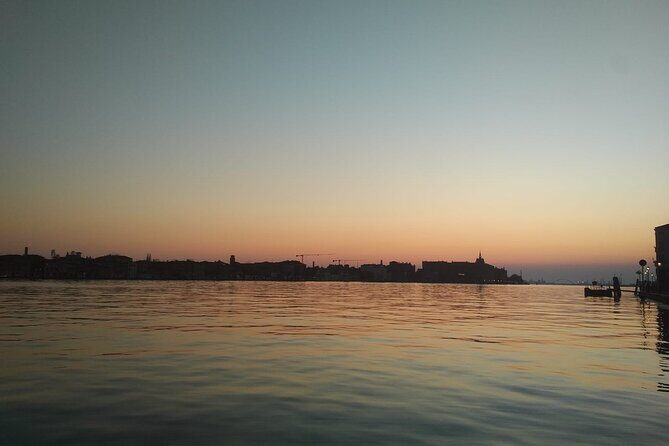
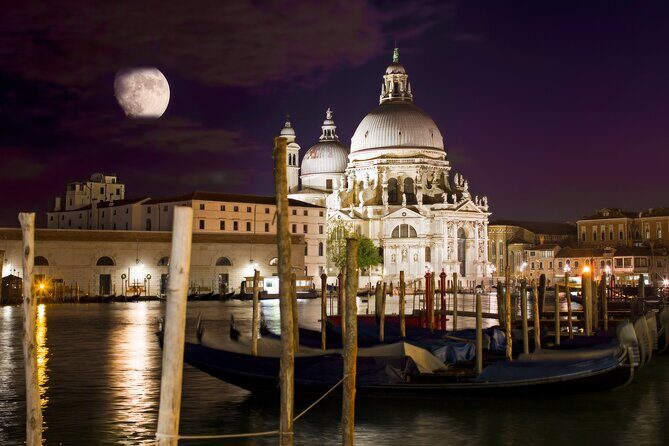
Next up is Basilica di Santa Maria della Salute (about 20 minutes, and admission ticket free). This stop is famous for a reason, but what makes it work on this tour is the framing: the basilica was built at the end of one of the last plagues.
That timing changes how you look at the building. You’re not just ticking off a pretty church. You’re seeing a city responding to crisis—using architecture, faith, and public ritual to mark survival. Even if you’ve seen photos of the basilica before, it hits differently when your guide explains why it exists and what it meant for Venetians after the darkest seasons.
Possible drawback: churches can still be crowded at times. But because your tour is built around a quieter route, you’re more likely to experience it at a calmer tempo than a typical mass group schedule.
Fondamenta Zattere: the calm Venetian promenade
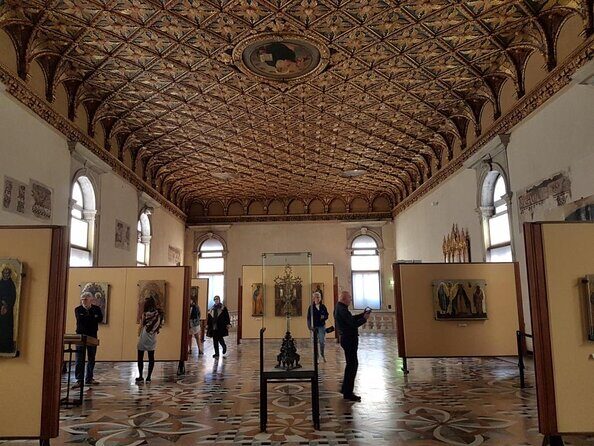
After the basilica, you head to Fondamenta Zattere (around 30 minutes, free). This is a promenade where Venetians come to relax, catch sun, and slow down.
This stop is one of the best examples of how the tour thinks like a local. A “sight” isn’t always a building. Sometimes it’s a waterfront stretch where daily life continues—walking, watching the canal traffic, and resting your feet for a bit.
There may be a stop at Nico’s, depending on the day and the flow of the tour. Don’t plan on this as a guaranteed included refreshment, but it’s a sign that your guide is paying attention to how real people spend time here—snack, sip, and conversation.
If you want a Venice moment that isn’t about taking photos for social media, this is it. It’s quiet, practical, and restful in a city where “rest” is a skill.
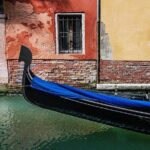
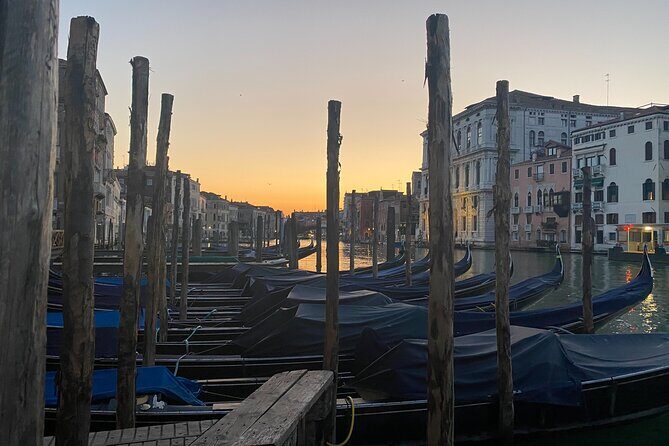
Squero di San Trovaso: see how gondolas were (and still are) made
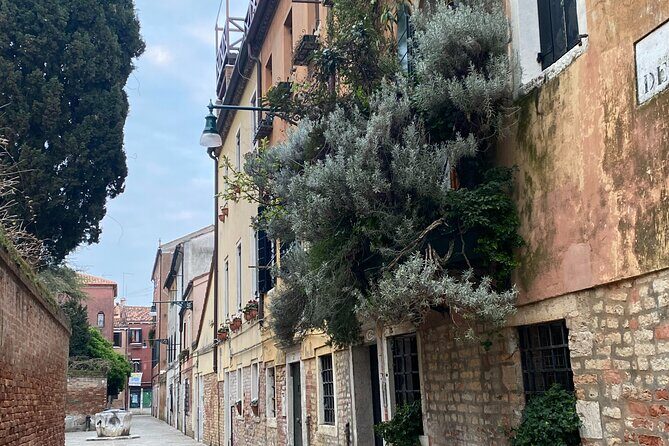
Now you get into workshop Venice. The tour stops at Squero di San Trovaso (about 20 minutes, free), described as the shipyard where gondolas are still made.
The best part: you can see it from across the canal. That’s useful because Venice is full of hard-to-access corners, and a viewpoint across the water keeps things efficient while still letting you get the “this is real” feeling.
Your guide may also point out a well-known bacaro nearby: Ai gia Schiavi. Even if you don’t stop there during the tour, it helps you understand the canal-side pattern—craft happens here, and food and drink culture is never far away.
Practical note: expect some looking time from viewpoints and canal edges. If you’re sensitive to uneven paths or low bridges, tell your guide early so you can be routed accordingly.

Campo San Barnaba: Dorsoduro’s picturesque calm
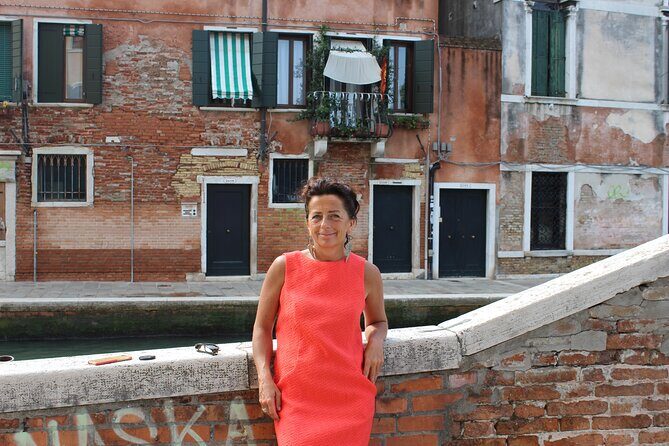
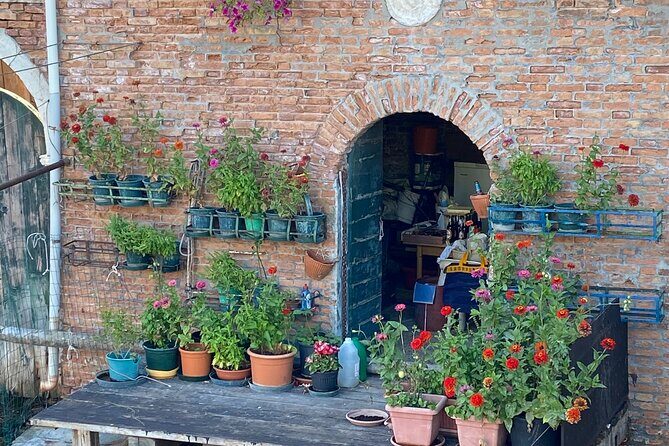
Next is Campo San Barnaba (about 10 minutes, free), one of the most picturesque areas of Dorsoduro. Compared to the mega-famous zones, Dorsoduro tends to feel more lived-in and less staged.
This stop works well after the canal shipyard. It shifts you from trade and work to neighborhood space—squares where people actually meet, chat, and pass time. Even in a short 10 minutes, a good guide can make the campo feel like a room in the city’s house, not just another square with buildings.
The drawback is also simple: since the time here is short, you won’t linger as long as you might in a place you discover on your own. But as part of a 2-hour loop, it keeps the pacing tight and prevents the tour from turning into a slow crawl.
Campo Santa Margherita: where local life keeps moving
You’ll finish with Campo Santa Margherita (about 30 minutes, free). This is a well-known campo with some inhabitants, which matters because it’s not only a scenic stop—it’s a living one.
This is where you can feel the neighborhood rhythm. In Venice, campos can change moods depending on time of day. A late afternoon walk is ideal because you’re likely catching the city transitioning from work mode into evening life.
The tour also gives you a smart flexibility option: you might choose to stop at the end for a drink or dinner. Your guide can steer you toward options nearby, which is a big value-add in Venice where wandering “without a plan” can lead to either tourist traps or painfully long detours.
Food, drink, and practical Venice tips you can use immediately
A big reason this tour earns top marks is how often the guide turns information into real choices. You’re not only learning stories about buildings—you’re learning how Venice functions day to day.
From what I’ve seen in this kind of local-guided approach, the guide often shares recommendations for shops and food, plus cultural norms that help you move through the city smoothly. Some guides also bring practical warnings, like how scams and pickpocketing commonly work in tourist areas, and how to spot trouble early. That kind of heads-up is worth more than another photo stop because it protects your time.
You might also hear ideas for treats such as gelato or cicchetti, depending on what fits your interests and the walk flow. I like this style because it makes your next hours easier. After the tour, you’re not stuck asking where to go next—you have a local starting point.
What the private-group format changes (for the better)
Private tours aren’t automatically better. But in Venice, they often are, because you’re dealing with narrow streets, canal crossings, and a route that’s more about placement than big-ticket attractions.
With only your group, your guide can:
- slow down when you want details (church history, canal life, craftsmanship)
- move faster when you prefer to keep momentum
- adjust the walk to how you’re feeling, as long as it still fits the overall route
This also helps if you’re traveling with people who have different interests. One person wants to talk architecture; another wants the best field for a relaxed break. The guide can work around that.
One more value: communication. Some guides in this experience type are known for sending messages ahead of time (for example through WhatsApp) and keeping it easy to find the meeting point. That reduces stress in a city where streets can confuse even the most confident map user.
Price and value: what you’re really paying for
At $102.58 per person for about 2 hours, the price isn’t “budget,” but it also isn’t just for walking around. You’re paying for concentrated local context, a carefully chosen route, and the ability to ask questions without feeling like you’re in a cattle herd.
Here’s why the value can be strong:
- Most stops are free admission (including Basilica di Santa Maria della Salute)
- You get a route designed to reduce crowd friction
- You’re learning “what it means,” not only “what it is”
- It’s private, so your guide time is truly yours
A hidden value is also time saved. In Venice, one bad self-guided detour can cost you an hour. A local guide prevents that. You’re not just seeing places—you’re learning how to interpret them.
Tip: this tour is often booked about 64 days in advance on average, which usually means it’s popular. If you’re going in peak season or on a limited schedule, book earlier rather than later.
Practical tips so you enjoy it instead of just surviving it
Venice rewards good footwear. Even on a short walk, you’ll face uneven paving and lots of turning and stopping. If you have moderate mobility, go slow and keep an eye on where you place your feet—especially around corners and near canal edges.
Bring a light layer. Late afternoon can change quickly, and even if the day is warm, canal breezes can surprise you. Also, consider water for the back half of the walk. This isn’t a “sit and sip for two hours” itinerary; it’s a moving route.
Finally, do a quick check on the extra €5 access fee rule. On certain dates, people staying outside Venice who are visiting for the day may need to pay it. You can check details and exemptions at the city link provided by the tour operator.
Should you book this Venice locals tour?
Book it if you want:
- a quieter Venice route instead of the same headline sights
- a guide who can explain why places exist (like Santa Maria della Salute after the plague)
- craft-and-neighborhood stops, including Squero di San Trovaso and Dorsoduro campos
- a private format where you can ask questions and get useful food/area pointers
Skip it (or consider another style of tour) if:
- you want only inside museum time and big ticket attractions
- walking bridges and uneven pavement could be a problem for you
- you prefer a self-paced itinerary where you control every stop without guidance
If you’re there for the first time and you want to get your bearings the Venice way, this is a smart early move. It helps you understand what you’re seeing—so the rest of your days feel easier and more meaningful.
FAQ
How long is the tour?
It runs for about 2 hours.
Is this tour private?
Yes. It’s a private experience, and only your group participates.
Where do we meet?
The tour starts at Gallerie dell’Accademia, Calle della Carità, 1050, 30123 Venezia VE, Italy.
What language is the tour offered in?
The tour is offered in English.
Do I need to pay admission for the stops?
The Basilica di Santa Maria della Salute stop lists free admission, and the rest of the listed stops are shown as free as well. The painting collection portion is outside only.
Are there any extra access fees or rules?
On certain dates, day visitors who are staying outside Venice may need to pay a €5 access fee. You can check applicable dates and exemptions at https://cda.ve.it. The experience also requires good weather.