REVIEW · VICENZA
Cittadella Card
Book on Viator →Operated by Mura di Cittadella by Historia Travel · Bookable on Viator
Walking Cittadella’s walls feels like a shortcut to the past.
This Cittadella Card centers on the Camminamento di Ronda parapet walkway, set about 15 meters above the town, with big sweeping views from towers and terraces. I really like how the route is practical—almost two kilometers you can pace at an easy tempo—and how the scenery covers everything from the Euganean Hills to the Berici mountains. One thing to consider: the rest of the stops are intentionally short, so if you want to linger for a long museum session, this card may feel a bit fast.
I also like that the pace keeps you moving through real civic spaces, not just a wall walk. You’ll step into frescoed halls in Palazzo Pretorio, then pop into the neoclassical Teatro Sociale, where you can spot art tied to famous names. The group stays small (up to 15 people), and the experience is offered in English.
The value is strong for the price because your ticket includes access to the walkway, while several major sights on the route don’t require extra admission. A quick heads-up: the last entrance to the walkway is one hour before closing since the visit lasts about an hour.
In This Review
- Key things to know before you go
- The Camminamento di Ronda: your main reason to buy the Cittadella Card
- Torre di Malta and the Belvedere: when the views get serious
- Museo del Duomo di Cittadella: art on the move (with Jacopo Bassano)
- Palazzo Pretorio: frescoed power and old prisons
- Teatro Sociale: neoclassical facade and frescoes tied to Venice
- Villa Ca’ Nave and the Oratorio del Salvatore: brief, Baroque, and art-focused
- How long it really takes and how to pace it without stress
- Value and price: what $15.52 buys you in the real world
- Who this is best for (and who should consider something else)
- A practical note on your day in Vicenza’s neighborhood
- Should you book the Cittadella Card?
- FAQ
- What is included with the Cittadella Card?
- How long does the experience take?
- Is the parapet walkway visit timed?
- What are the main stops on the route?
- Is the tour offered in English?
- Can I cancel for a full refund?
Key things to know before you go
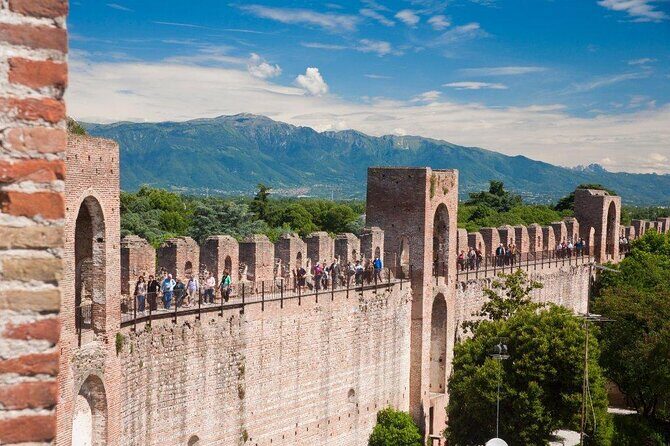
- Camminamento di Ronda is the star: an elevated defensive walkway you can actually walk today, with a timed visit.
- Torre di Malta adds height and museums: you can reach a high Belvedere and visit the Siege Museum and Civic Archaeological Museum.
- You get multiple Cittadella highlights in one card: Duomo museum art, Palazzo Pretorio frescoes and old prisons, plus Teatro Sociale.
- Views are wide and specific: Euganean Hills, Berici mountains, walled towns like Marostica and Asolo, and Mt. Grappa.
- Most stops are short: great for a first look, less ideal if you want long sits and deep museum time.
- Small group energy: maximum 15 travelers, with English offered.
The Camminamento di Ronda: your main reason to buy the Cittadella Card
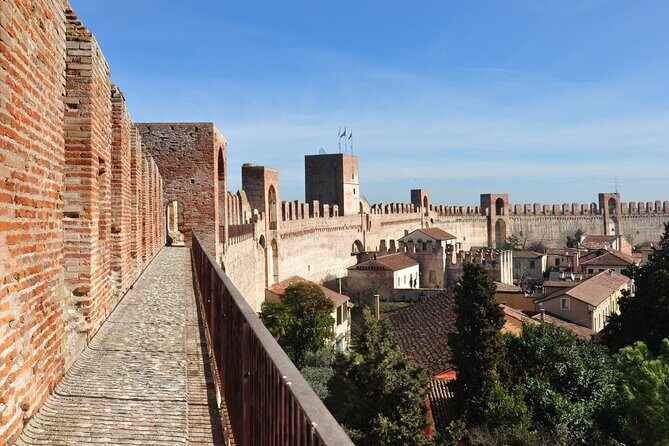
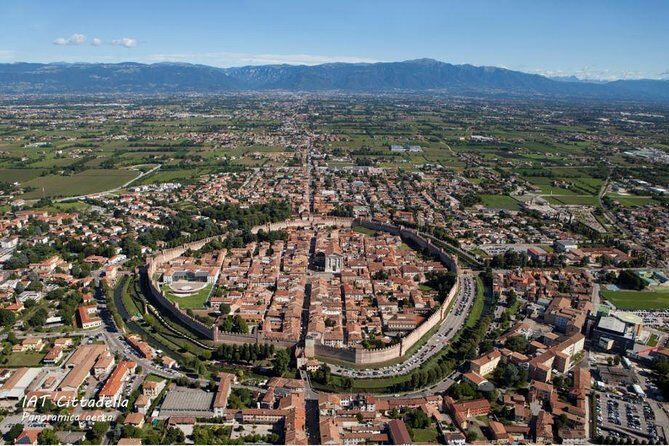
If you only do one thing in Cittadella, make it the parapet walkway. The Camminamento di Ronda runs along the defensive wall circuit in a way that’s easy to picture: it was built for guarding from above during attacks, and today the same elevated path gives you a completely new way to read the town. You walk on a medieval defensive route that sits roughly 15 meters above the walls, so the height does the heavy lifting.
The visitor route is nearly two kilometers, and the timing works well for most people because you’re not doing one long endurance slog. The visit also has a history-and-exhibits feel as you go, not just scenery. Along the walkway you may be able to explore medieval museum rooms and re-enactment spaces housed in the Captain’s house, which helps turn the walls from a view into a story you can walk through.
Here’s what I find most useful for planning: you’re not locked into one view. The route naturally gives you a sequence of look angles—over rooftops, across the historic center, and out into the countryside. That matters because Cittadella isn’t flat and blank; it’s layered, and the walkway is literally built to reveal layers.
You can also read our reviews of more tours and experiences in Vicenza.


Torre di Malta and the Belvedere: when the views get serious
One of the best moments is inside the Torre di Malta. This is where you get vertical payoff: the tower’s Belvedere is almost 30 meters high. That height changes everything. From ground level, you see a town wall. From the Belvedere, you start seeing the wider region that Cittadella historically controlled.
Along with the Belvedere, the tower area includes the Siege Museum and the Civic Archaeological Museum. Even if you keep your visit light (the overall card is designed for about 1 to 2 hours), this stop adds variety. You’re shifting from defensive architecture to objects and interpretations connected to the town’s past.
Then there’s the view list, which is exactly the kind of detail that helps you aim your phone camera without guessing what you’re looking at. On a clear day, you can see the countryside around town including the Euganean Hills and the Berici mountains. The wider view can extend toward the Alpine foothills, with walled towns like Marostica and Asolo, plus Mt. Grappa.
Practical note: these names are most meaningful if you pause. Don’t rush. Take 2 minutes to look, then move. That small rhythm makes the whole experience feel less like walking and more like viewing with purpose.
Museo del Duomo di Cittadella: art on the move (with Jacopo Bassano)
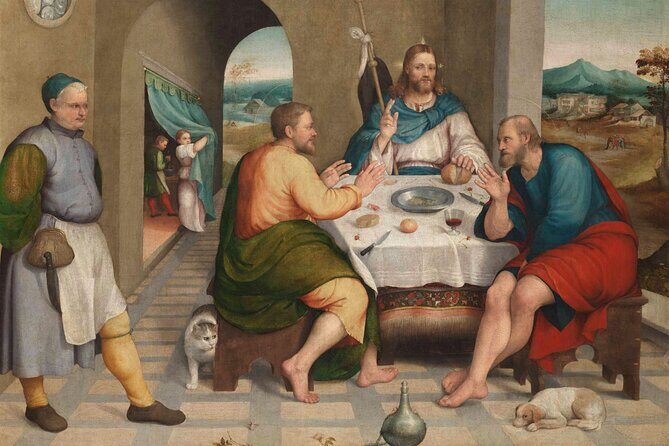
After the walls, the card pivots from defense to art and civic identity. The Museo del Duomo di Cittadella is where you’ll find an art gallery and an attention-grabbing highlight: Supper at Emmaus, a Renaissance masterpiece by Jacopo Bassano.
This stop is shorter, so it’s not a slow museum afternoon. But that can actually work to your advantage. Instead of trying to cover everything, you get a focused slice: paintings, sculptures, and applied arts spanning historical periods starting from the fourteenth century. In other words, you can walk in, see a major work, and still keep energy for the later buildings.
What I like here is the contrast. The parapet walkway gives you movement and scale. This museum gives you surfaces—brushwork, forms, and materials—and a sense that Cittadella wasn’t just walls and gates. It was a place with artistic life and institutions.
Palazzo Pretorio: frescoed power and old prisons
Palazzo Pretorio is one of the most atmospheric stops on the card because it mixes official civic power with darker remnants of justice. Historically, it served as the seat of the Podesta during the time of the Venetian Republic, the Serenissima. That Venetian connection is useful context: it helps explain why you see Renaissance-era decorative ambitions layered over older town realities.
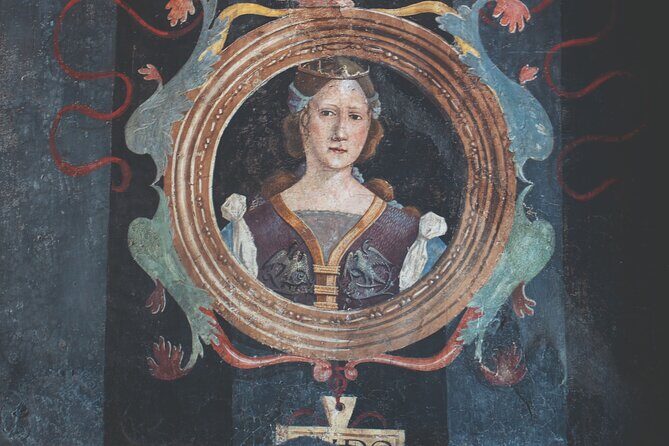
Inside, look for frescoes of fake tapestry with vertical bands, polychrome friezes, and circles and medallions with portraits of illustrious figures from the past. The style matters because it’s decorative, but it also signals authority. These are rooms meant to impress—status made visible on walls.
And then the building shifts mood. You can also see ancient prisons of the Magistrates’ Court. This adds a grounded edge to the visit. You’re not just touring pretty rooms; you’re walking through a place that handled real consequences.
A tip for timing: since your card keeps the stop around 15 minutes, use that time to choose. Decide you’ll either (1) focus on the fresco program and faces, or (2) focus on the prison spaces. Trying to do both at full attention in a short slot can feel rushed.
Teatro Sociale: neoclassical facade and frescoes tied to Venice
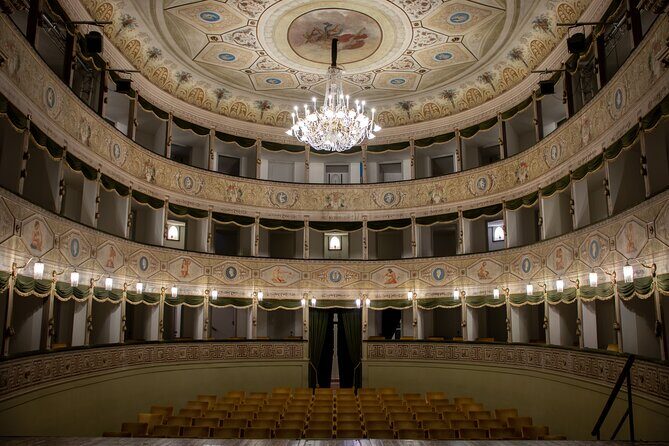
Next comes Teatro Sociale, another stop that feels like a change of gear. The exterior is neoclassical and is attributed to Giuseppe Jappelli, who also authored the famous Caffè Pedrocchi in Padua. If you know that building, you can start to connect architectural fingerprints across northern Italy.
Then step inside for the frescoes in the room. They were created by Francesco Bagnara, who also decorated La Fenice theatre in Venice. That connection is a neat way to understand why Cittadella feels more connected than it first appears. Small towns still traveled cultural ideas and hired artists with serious track records.
The big practical takeaway: the stop is brief (about 10 minutes), so don’t expect a full stage-and-backstage guided narrative. Expect a quick chance to see how the theatre interior was made to feel special—painted space, not just a bare hall.
If you love architecture and painted interiors, this is exactly the kind of quick stop that keeps your travel day from turning into a single-note wall tour.

Villa Ca’ Nave and the Oratorio del Salvatore: brief, Baroque, and art-focused
The last stop you’ll likely appreciate most if you like small, specific places with a strong artistic angle. Villa Ca’ Nave e L’Oratorio del Salvatore is described as Baroque, and you enter the Savior Oratory—while the villa itself isn’t open to the public.
Inside, the focus is on artwork attributed to Louis Dorigny and Giusto Le Court. Dorigny and Le Court are names that suggest you’re seeing more than local decoration. Even with limited time, this oratory stop gives you a different flavor than the civic buildings and the theatre.
Because this portion is about 10 minutes, keep expectations aligned. You’re not going to read every label slowly here. You’re getting a taste of a particular artistic corner of the town’s spiritual life.
How long it really takes and how to pace it without stress
The card is designed for a short, efficient visit, typically 1 to 2 hours. The main activity—the parapet walkway—is timed to about an hour on-site, and the last entrance is one hour before closure. That detail is easy to miss if you plan casually, so plan forward.
In real life, the pacing makes sense: a long-ish wall walk first, then short art and architecture stops. This keeps you from burning out halfway. It also means you can pair the card with other Cittadella exploration without feeling trapped.
If you want to make it feel like a full experience (not a checklist), build in micro-pauses:
- Pause at scenic points on the walls before you move on.
- Choose what to prioritize in faster indoor stops like Palazzo Pretorio.
- Keep water handy even though food and drinks aren’t included. You can always grab something outside the monuments.
Value and price: what $15.52 buys you in the real world
At $15.52 per person, the pricing is easiest to judge by what’s included. Your card includes the entrance ticket to the Cittadella parapet walkway. That’s the main cost driver, because the walkway visit is a dedicated experience.
Then you also get access to multiple sights where admission is free in this card format: Museo del Duomo di Cittadella, Palazzo Pretorio, Teatro Sociale, and the Oratorio del Salvatore. Put differently, you’re paying mainly for the wall access, while the rest turns into low-cost add-ons that stack up fast.
This is why the card works as a value pick for a first trip. You can get a sense of the town’s character—defensive architecture, civic authority, artistic interiors, and scenic views—without paying separate entry tickets for every step.
It’s also a good buy if you travel light. There’s no hotel pickup included, and you’ll be walking through the main sights yourself, so the card’s value is tied directly to your time on-site rather than to a big bus-and-guide day.
Who this is best for (and who should consider something else)
This card is ideal if you:
- Want medieval walls that you can actually walk, not just photograph from the street.
- Like scenic viewpoints with named regions you can recognize (Euganean Hills, Berici mountains, Marostica, Asolo, Mt. Grappa).
- Prefer a compact plan that still includes art and civic buildings.
- Enjoy walking at a steady, moderate pace and don’t need every museum room opened for long.
It’s less ideal if you:
- Want deep time inside museums and want to linger for an hour-plus at each indoor stop.
- Plan to visit very late in the day and risk missing the last entrance window for the walkway.
If you’re traveling as a couple, solo, or with friends who want a shared “wow” moment early (the walls), this is a strong fit. It also suits families in the sense that children just need an adult with them.
A practical note on your day in Vicenza’s neighborhood
Cittadella is a fortified town in the broader Vicenza area, and it feels pleasantly removed from heavy crowds when you choose timing carefully. Even without guessing exact crowd levels, you can plan your approach: arrive early enough to start the walkway with calm energy, and you’ll be more likely to enjoy the interiors rather than just rushing between doors.
If parking is part of your plan, it tends to be straightforward and easy to manage according to recent visitor experience. Still, give yourself time around the center, because medieval towns can be slower than they look on a map.
Also, the card is offered in English. If you prefer languages other than English, you’ll want to confirm options before you commit, since this specific card is listed as English.
Should you book the Cittadella Card?
Yes—if you want the best of Cittadella in a short window, and the idea of walking the Camminamento di Ronda appeals to you. The value is driven by the included walkway ticket, and the rest of the card keeps adding quality stops without making your day feel long.
Book it if you care about viewpoints, defensive architecture, and indoor art moments tied to recognizable creators like Jacopo Bassano, Giuseppe Jappelli, and Francesco Bagnara. If you’re the type who needs long museum time in one place, you might find the quick stops a bit limiting. For a fast, memorable taste of Cittadella’s fortified soul, the card is an easy yes.
FAQ
What is included with the Cittadella Card?
The card includes the entrance ticket to the Cittadella parapet walkway, plus entry as listed for the stops on the route (with admission ticket marked free for several monuments and museums).
How long does the experience take?
Plan for about 1 to 2 hours.
Is the parapet walkway visit timed?
Yes. The time of the walkway visit lasts about 1 hour, and the last entrance to the walkway is one hour before closing.
What are the main stops on the route?
The route includes the Camminamento di Ronda walkway (with access to the Torre di Malta area), Museo del Duomo di Cittadella, Palazzo Pretorio, Teatro Sociale, and entry to the Oratorio del Salvatore at Villa Ca’ Nave.
Is the tour offered in English?
Yes, it is offered in English.
Can I cancel for a full refund?
You can cancel up to 24 hours in advance for a full refund. If you cancel less than 24 hours before the start time, the amount you paid will not be refunded.