REVIEW · VICENZA
The story of Vicenza: Guided Half-Day E-Bike sightseeing Tour
Book on Viator →Operated by Palladian Routes · Bookable on Viator
Palladio’s story moves fast on an e-bike. This half-day ride in Vicenza strings together the city’s big architectural names with a simple goal: help you see how Andrea Palladio’s ideas became real places you can stand in and picture. Your guide, Manuel, uses narration from a Cicero Palladiano style voice to connect sites into one continuous arc, from early influences to the masterpieces visitors travel for.
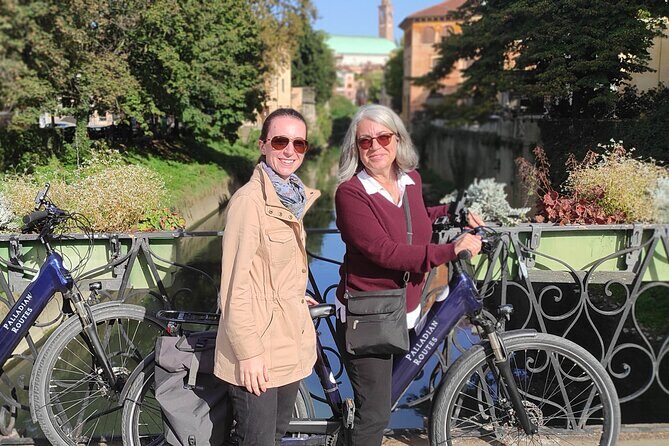
I love the way the tour handles the practical side. You get state-of-the-art e-bikes and clear first-time coaching, so the ride feels manageable even if you’re new to electric bikes. I also love the pacing and storytelling: stops are well spaced, and Manuel makes the architecture feel like a language you can actually read as you ride.
One thing to consider: this is an outdoor route with a moderate-physical-fitness expectation. If you’re not comfortable riding for stretches of time, you may want to slow your own pace and lean into the shorter stops rather than trying to “speed-run” the landmarks.
In This Review
- Key Things That Make This Tour Worth Your Time
- Kicking Off at Palazzo Valmarana Braga and Getting Rolling
- Corso Fogazzaro to Ponte Furo: Where Palladio’s World Begins
- Roman Theater and Arco delle Scalette: The City’s Earlier Layers
- Villa La Rotonda: The Palladian Moment Everyone Talks About
- Palazzo Chiericati and Teatro Olimpico: Civic Power Meets Performance
- Santa Corona to Piazza Biade/Erbe: From Secrets to the Main Stage
- Basilica Palladiana and the Big Palaces: Watching Civic Pride Face Civic Pride
- Bottega Pedemuro and Villa Thiene: Where Stone People Learn the Trade
- Salvi Gardens, Loggia Valmarana, and the Last Ride Back to the Palazzo
- Should You Book the Vicenza Palladian E-Bike Tour?
- FAQ
- How long is the Vicenza Palladian e-bike sightseeing tour?
- Where does the tour start and end?
- What time does the tour begin?
- Is the tour offered in English?
- What is included in the price?
- Are tickets for specific attractions included?
- Do I need to have e-bike experience?
- What level of physical fitness is needed?
- Are there height or age limits for children?
- What is the cancellation policy?
Key Things That Make This Tour Worth Your Time
- Manuel’s storytelling ties palaces, churches, and viewpoints into one Palladio-focused narrative.
- Easy e-bike handling with solid instruction, so first-timers don’t feel stuck.
- A tight 2 hours 45 minutes that fits busy schedules while still covering major sites.
- UNESCO-linked stops built by or connected to Palladio’s world (palaces and villas included).
- You see the city layers: Renaissance ambition, plus a Roman Theater you can’t really spot on your own.
- Included time inside Palazzo Valmarana Braga at the start (and again near the end), not just roadside photos.
Kicking Off at Palazzo Valmarana Braga and Getting Rolling
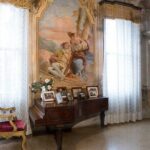
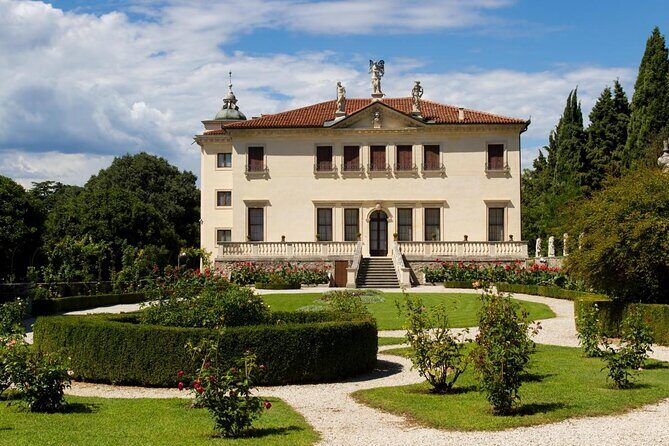
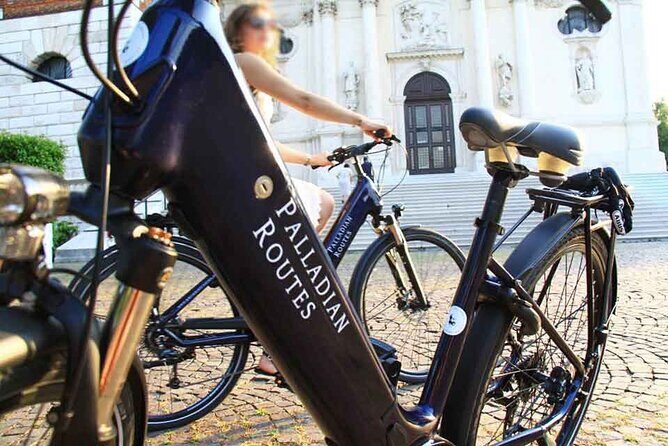
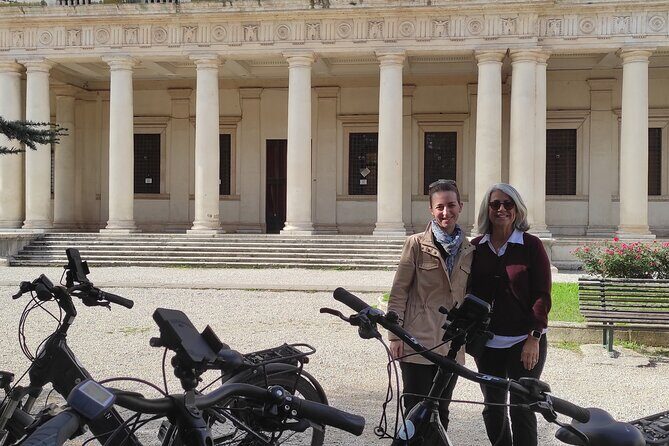
Your tour starts and ends at Palazzo Valmarana Braga in the historic center of Vicenza. You’ll pick up your Palladian e-bike here and meet your guide, Cicero Palladiano (the tour’s narrator style), with Manuel handling the real-world pacing and explanations.
The big value of this start point is simple: it drops you into Palladio-land immediately. You’re not cycling in “general Vicenza mode” for the first hour; you’re already in the orbit of one of the private palaces associated with the architect’s legacy. There’s an admission ticket included for your time at the Palazzo at the beginning, and again near the finish.
Practical note: this is a 2 hours 45 minutes tour, and start time is 10:00 am. For best comfort, I recommend showing up ready to ride with water—especially in warm months, when you’ll be out in the open for much of the route.
You can also read our reviews of more cycling tours in Vicenza
Corso Fogazzaro to Ponte Furo: Where Palladio’s World Begins
After leaving the Palazzo, you ride into Vicenza’s core storytelling zone: the places tied to Palladio’s early network. Corso Fogazzaro is your next stop, and it’s where the tour connects Vicenza’s present to Renaissance mentorship.
You’ll hear how Giangiorgio Trissino recognized Palladio’s genius and pulled him toward the kind of elite circles that could fund architectural ambition. This part matters because it shows you that the masterpieces weren’t only built by talent; they were built by relationships.
From there, you continue to Palazzo Civena, described as Palladio’s first Renaissance palace work in the city and his early private effort. The payoff here is seeing how young Palladio’s abilities already show up before he reaches full “icon” status.
Then comes Ponte Furo, a viewpoint that acts like a scene change. The tour uses the bridge area to explain how the myth of Palladio took shape—how his ideas were presented to early clients, and how support helped turn clever plans into major projects. Even if you only pause for a moment, this stop helps you read the city as a system, not a random set of monuments.
Roman Theater and Arco delle Scalette: The City’s Earlier Layers
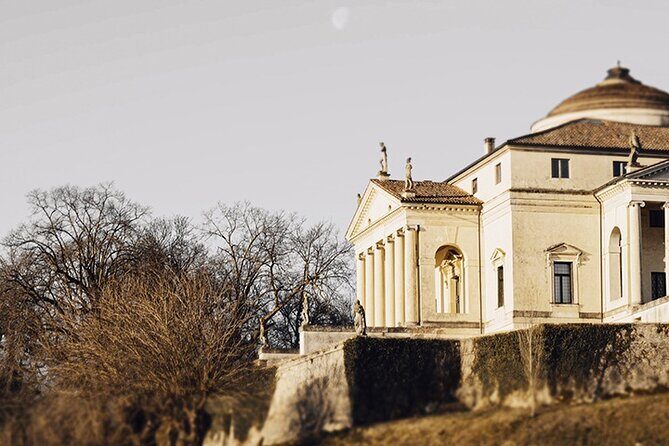
One of the tour’s smartest moves is letting you zoom out from Renaissance fame and back into Roman Vicenza. From Ponte Furo, you’ll ride to a less obvious site: the Roman Theater from the first century B.C., designed for around 5,000 spectators.
This is one of those moments where an e-bike changes everything. On foot, it’s easy to miss why the site matters; from the guided approach, it becomes clear how Palladio studied Roman mastery and used that learning in later work. You’ll retrace steps and explore the archaeological remains that are partly hidden by later buildings, which explains why the location feels easy to overlook when you’re on your own.
Next, you pass Arco delle Scalette on the way toward the Rotonda area. This arch is tied to Palladio’s influence, but the attribution is uncertain—partly his style, partly local tradition, and partly “maybe later than he lived.” I like that the tour doesn’t force everything into a neat answer. It gives you a sense of how attribution and storytelling work around historic architecture.
Villa La Rotonda: The Palladian Moment Everyone Talks About
Villa La Rotonda is the centerpiece that almost every architecture fan hopes to reach. The tour treats it as Palladio’s greatest masterpiece and focuses on the idea of a near-perfect “pure work,” designed with philosophical conversation in mind.
You’ll also understand the client and the freedom behind the design, which makes the building feel less like a static photo and more like a human project with the right conditions. Even if you’ve seen pictures before, the key is that this stop is timed as part of a narrative arc, so you’re not just staring at a villa—you’re tracking how ideas became form.
After La Rotonda, the route continues outside the city briefly to Villa Valmarana ai Nani, a later jewel connected to the Palladian legacy. The tour mentions frescoes by Tiepolo at the height of his career, which helps you shift from architecture-only to the broader Renaissance art ecosystem.
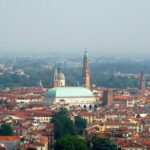
Then you ride to Santuario della Madonna di Monte Berico, for a view from above Vicenza. This is the “reset your brain” moment. You’ll get a bird’s-eye sense of the ordered city grid and how the Palladian monuments sit in relation to each other, like a map that finally makes sense.
Palazzo Chiericati and Teatro Olimpico: Civic Power Meets Performance
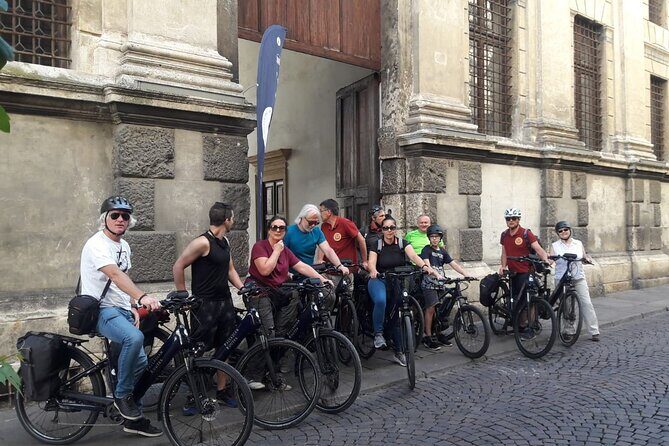
Back in the city center, the tour leans into Palladio’s civic side. Palazzo Chiericati is linked to early supporters of Palladio, and the tour points out that the palace testifies to a gratitude-and-friendship relationship that helped shape major public work.
Inside the civic museum, the tour notes Venetian art—names like Tintoretto and Veronese come up. You’re not meant to treat this as a full museum day, but it helps you understand why Vicenza’s public and private architecture belong to the same cultural world.
The next stop, Teatro Olimpico, is the big emotional payoff for many people. The tour frames it as Palladio’s final act: a stable, covered theatre project built near the end of his life, built with brilliant scenic and architectural solutions. Even at a short stop length, the effect is strong because you can sense the illusion the theatre creates and why Palladio’s theatre dream mattered beyond entertainment.
From there, you move through additional story stops that connect design to the political and religious currents of the Renaissance. Palazzo Angaran and Chiesa di Santa Maria in Araceli are linked to a Reformation-era storyline, including references to Bianca Nievo Angaran and Palladio’s early architectural books. This is where Manuel’s narration becomes extra useful. Complex topics are easier to follow when you’re moving and seeing the physical context around you.
You can also read our reviews of more guided tours in Vicenza
Santa Corona to Piazza Biade/Erbe: From Secrets to the Main Stage
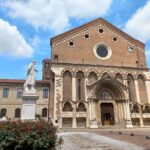
The tour then shifts into church art and then into the urban “front door” spaces of Vicenza. Santa Corona is presented as a treasure chest of history and art, including the Bellini altarpiece and a Naturalistic and Archaeological Museum. It’s also described as part of Palladio’s epilogue through the way the temple relates to the city’s elite families.
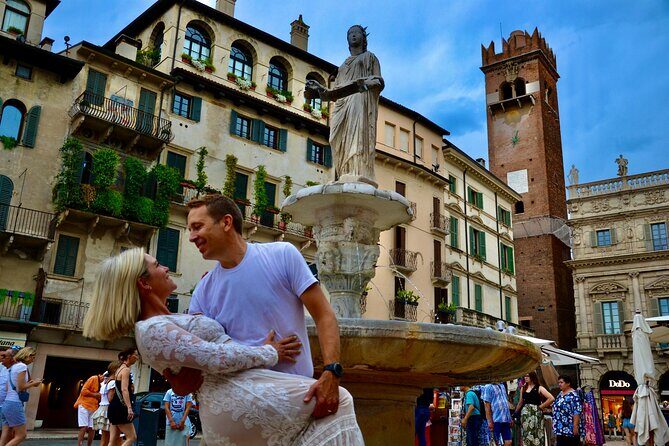
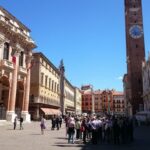
Then you get to the Piazza area, and the tour uses clever naming to teach you something most casual walkers miss. Piazza della Biade is mentioned as the western name beyond the two columns of Piazza dei Signori. The tour points out it was a key official entrance coming from Venice, which helps you understand why the square feels like a “gateway” even when you’re just passing through.
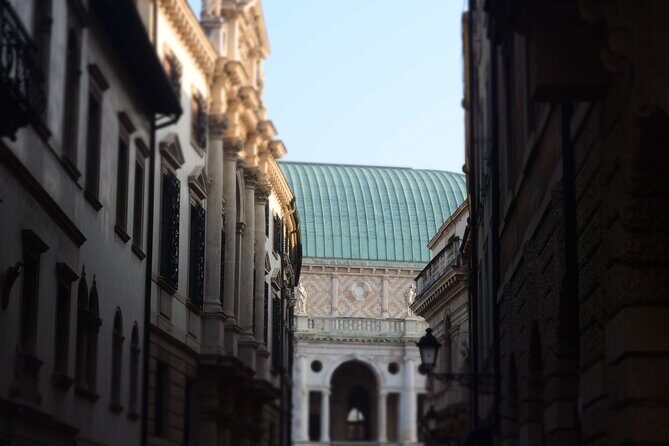
Piazza delle Erbe comes next, with an emphasis on what you can see: the view toward Palladian Basilica and the Torre del Tormento story. This section is also where you’re given practical freedom. You’ll have a chance to look at spots where you might grab an aperitif later, because this tour is structured to end back at the meeting point with time to continue your day.
Basilica Palladiana and the Big Palaces: Watching Civic Pride Face Civic Pride
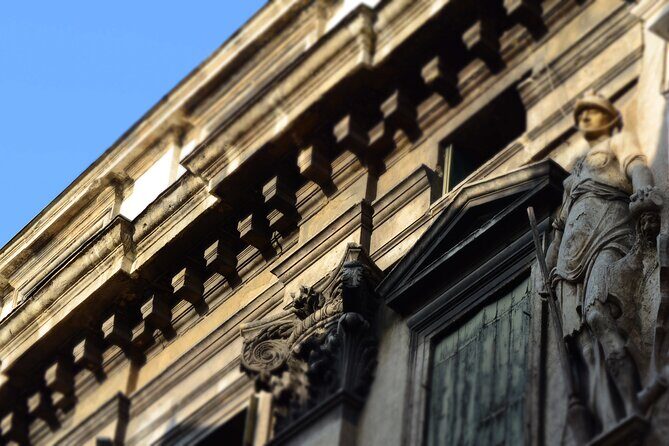
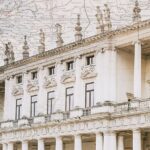
Once you enter Piazza dei Signori, the tour becomes very “look up.” The Basilica Palladiana faces the square in a way that makes the architecture feel like a civic statement. The tour explains the Basilica as one of Palladio’s key public works and connects it back to friendships and collaborations with figures like Alvise Valmarana and Giangiorgio Trissino.
The tour also uses the Basilica construction and nearby commissions to show Palladio’s relationship to Venice’s political presence. That matters because it reframes the building from a standalone sight into a piece of diplomacy.
Next, you visit Palazzo Thiene, tied to the Thiene family’s role in bringing Vicenza into Venice’s orbit. This is also where the tour hints at Palladio’s career growth—starting with a “novice yet already ambitious” phase—showing you how patronage and reputation accelerate.
Then comes Palazzo Barbaran da Porto, noted as the only Palladio palace he saw completed. The tour mentions Count Montano Barbarano and the family’s financial struggle that forced children to sell soon after, which adds a human, less glamorous dimension to the beauty you’re seeing today. You also get the note that the building houses the Palladio Museum in Vicenza.
Finally in this sequence, Palazzo Iseppo Porto Festa and Contrà dei Porti connect design to family alliances and even accusations of heresy that had earlier led to friends being jailed. It’s a reminder that the Renaissance wasn’t just about art and patronage; it also involved risk, politics, and conflict.
Bottega Pedemuro and Villa Thiene: Where Stone People Learn the Trade
As you head away from the most obvious monument clusters, you get a more working-world feel. Contrada Pedemuro San Biagio points to Bottega dei Pedemuro, where Andrea di Pietro della Gondola (Palladio’s later name) began as an apprentice and eventually as a stonemason.
This stop can feel small in time, but it’s huge in meaning. If you’ve ever wondered why Palladio’s buildings look so “built right,” this gives you a plausible origin: he wasn’t only an idea person, he was also trained in the craft that makes stone behave.
Nearby, you’ll see Villa Thiene, Valmarana, described as a villa designed by Giulio Romano, where Palladio was involved as a works director early in his career. The tour also mentions a practical building approach—showing masons how to use terracotta in parts where it reduced reliance on stone. That detail helps you see Palladio’s architecture as both high-concept and grounded in construction reality.
Salvi Gardens, Loggia Valmarana, and the Last Ride Back to the Palazzo
Your final city-to-nature loop brings you through Parco Querini, linked to earlier ownership and even a mulberry plantation that fueled Vicenza’s silk trade. The tour’s point isn’t to turn this into a business history lecture; it’s to show why Vicenza had the wealth and connections to support major building projects for centuries.
Then you make the connection back to Palladio’s influence with Loggia Valmarana. The tour highlights a loggia reflected in double symmetry in the water created for Leonardo, son of Giovanni Alvise (a friend of Palladio). Whether you see it as directly Palladian or simply “alla Palladia” style, the effect is that idea and materials meet in a visually controlled way—something Palladio followers imitated while he was still alive.
After all these architectural scenes, you return to Palazzo Valmarana Braga for the finish. There’s time noted to visit the shop and to ask staff for advice from the info point, so you can plan what to do next without guessing.
If you have energy, I recommend keeping your next stop close. Vicenza’s Palladian highlights reward a second pass, but you’ll get more out of it if you’ve had time to rest your legs and reset your eyes after the e-bike.
Should You Book the Vicenza Palladian E-Bike Tour?
Book it if you want a fast, smart way to understand Palladio without drowning in guidebook pages. The 2 hours 45 minutes structure is a real benefit for tight schedules, and the e-bike makes it possible to connect scattered sites into one story.
You should also book it if you care about how architecture connects to people—mentors, patrons, artists, and religious/political tension. Manuel’s narration style is a major part of the value, especially if you find buildings more interesting when someone explains what to look for.
Skip it only if you know you’ll struggle with a mostly outdoor ride and short walking segments. This isn’t a sit-and-watch museum tour. It’s a ride-through-the-city experience where movement and stories work together.
FAQ
How long is the Vicenza Palladian e-bike sightseeing tour?
The tour runs about 2 hours 45 minutes.
Where does the tour start and end?
It starts at Palazzo Valmarana Braga, Corso Antonio Fogazzaro, 16, Vicenza, Italy, and ends back at the same meeting point.
What time does the tour begin?
The start time listed is 10:00 am.
Is the tour offered in English?
Yes, it’s offered in English.
What is included in the price?
The price includes the Palladian e-bike and narration by Cicero Palladiano. An admission ticket is included for the time at Palazzo Valmarana Braga at the start (and also included at the end with 15 minutes).
Are tickets for specific attractions included?
No. Entrance to individual attractions is generally not included, and the tour is described as outdoor-only. Some stops are listed as free or as having admission included for the Palazzo Valmarana Braga time, but you should expect most other entries to be excluded.
Do I need to have e-bike experience?
No experience is stated as required. The tour includes guidance on using the bikes, and it’s designed for travelers with moderate physical fitness.
What level of physical fitness is needed?
The tour notes moderate physical fitness is recommended because it’s an outdoor ride with walking between stops.
Are there height or age limits for children?
Yes. Children can only enjoy the tour with a minimum height of 1.50 meters. Child seats are available only for children up to 3 years old.
What is the cancellation policy?
The experience is non-refundable and cannot be changed for any reason; if you cancel, the amount paid isn’t refunded.