REVIEW · VENICE
Class Mask Workshop – Create our Mask in paper mache
Book on Viator →Operated by SOGNO VENEZIANO ATELIER di Russolo Giulia · Bookable on Viator
Forget queues; make something real.
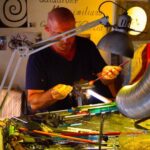
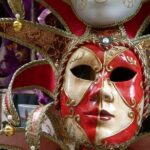
This class is a break from the crowd energy of Venice. You’ll work on a Venetian mask using paper mache shaped in ancient stone molds, then return to decorate it with materials that can look straight out of a carnival outfit. It’s creative, guided, and hands-on in the way you want when you’re tired of museum-on-museum.
Two things I really like: the workshop is taught in a way that’s easy to follow, with an expert craftsman (you’ll spend time with Igor and his team) who helps you turn simple pieces of paper into a finished mask. And it’s not a generic souvenir—your decoration choices (think colors, crystals, gold leaf, and feathers) mean the result is truly yours to keep.
One consideration: the making and the decorating happen in two separate sessions across two days, so you need to plan at least one extra day in your Venice schedule.
In This Review
- Key highlights to know before you go
- Venice, but quieter: a private-feeling mask workshop near St. Mark’s
- What “private” means here in real life
- Entering the craft: the paper mache mask base in ancient molds
- Timing: why the base session matters
- Decorating like a Venetian: crystals, gold leaf, feathers, and choice
- Real talk about decorating
- What you take home: a one-of-a-kind souvenir you made
- Price and value: what you’re really paying for
- Location and meeting point: how to show up without stress
- What to do before you arrive
- Who should book this mask workshop (and who might not)
- Quick heads-ups that help your experience go smoothly
- Should you book this Venice mask workshop?
- FAQ
- How long is the Class Mask Workshop?
- Is the mask made in one day?
- Where does the workshop start?
- Where do we end after the workshop?
- What language is the workshop offered in?
- How big is the group?
- What materials can I use to decorate the mask?
- Is there an access fee for some visitors?
- Can I cancel and get a full refund?
- Are service animals allowed?
Key highlights to know before you go
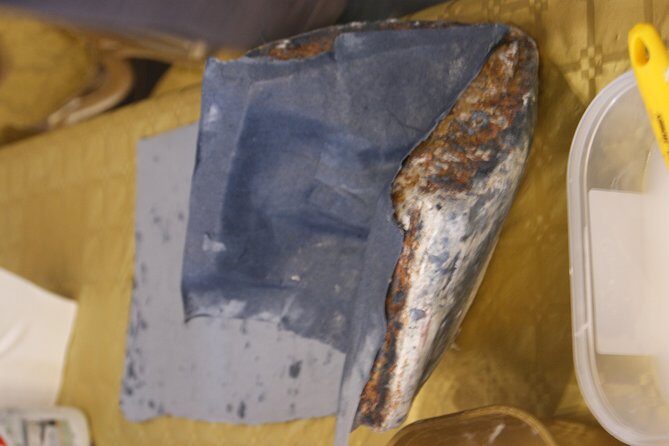
- Ancient stone molds for paper mache: your base is shaped in a traditional way, not on a generic form
- Small group, max 5 people: it feels personal and you get time for questions
- Two-stage mask making: mold first, decorate second, so you’re not rushing the craft
- Carnival-ready materials: you can use colors, crystals, gold leaf, and feathers
- Close to St. Mark’s Square: you’re not crossing the whole city to get to class
Venice, but quieter: a private-feeling mask workshop near St. Mark’s
Venice has a way of flattening your attention. You blink and you’re surrounded again. This workshop cuts through that. Instead of spending your morning dodging elbows, you’ll sit down and make something with your hands.
The setting is right where you want to be if you’re staying central: the meeting point is Calle de le Erbe, 6423A (near St. Mark’s Square by a short walk). That matters. If you’re only in Venice for a day or two, you don’t want your “experience” to turn into a transportation puzzle.
Price-wise, this isn’t cheap, but it’s not random either. You’re paying for a real craft session with tools, materials, and expert guidance. Also, you’re limited to a maximum group size of 5, which changes the feel. In a small class, you’re not waiting for someone to notice you need help cutting paper or smoothing edges.
The overall vibe is practical and friendly. The workshop is offered in English, and the instructions are described as clear and easy to follow. That’s a big deal in art classes, where one unclear step can derail your whole mask.
You can also read our reviews of more tours and experiences in Venice

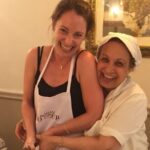
What “private” means here in real life
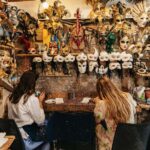
There’s no way to guarantee you’ll get a truly private lesson in every circumstance, but with up to 5 travelers, you get the benefit of attention. You can slow down when you’re shaping the mask and still get feedback. It’s the opposite of a crowded workshop where you have to keep moving whether you’re ready or not.
Entering the craft: the paper mache mask base in ancient molds
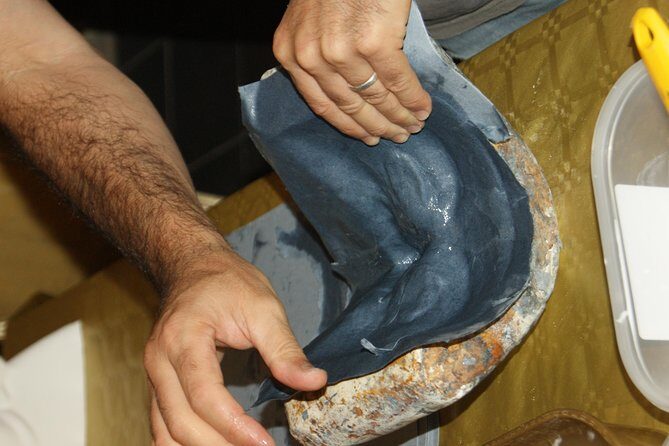
Your first creative step is the molding phase—turning paper into a strong base using traditional stone molds. That’s not just a cute detail. Stone molds help explain why Venetian masks have that specific look: a repeatable form, with enough tradition baked in to feel authentic.
This is also where paper mache does its magic. Paper is cut and shaped, then built up into something that can hold a recognizable silhouette. If you’ve only seen paper mache as a kid’s project, this will reset your expectations. The charm is in the process: layers, pressure, shaping, then waiting for the base to become solid enough for decoration later.
You’ll work with an expert craftsman who guides the process and helps you “get it” as you go. Based on the feedback, the guidance is patient—exactly what you want when you’re working with your hands and you’re not sure how much force to use.
This phase is also about learning. Even if you end up adding a very dramatic design later, you still get the core skills: how to form the mask’s shape, how to keep edges clean, and how to make the surface ready for decoration. That’s what makes the finished product feel earned.
Timing: why the base session matters
Your creation happens across two days. The first day is about 2 hours of molding and creating the mask in the workshop, then the next day you decorate for another 2 hours. The reason I like this structure is simple: you don’t have to do everything at once while your base is still in that “not quite ready” stage.
So if you like arts-and-crafts where you can actually think instead of rushing, this schedule supports that.
Decorating like a Venetian: crystals, gold leaf, feathers, and choice
The second day is where the workshop becomes carnival-level fun. This is the decorating session, and it’s built around the idea that you’ll design your own mask—not just fill in a pre-made template.
You’ll learn and use the same techniques and materials the workshop uses. The material list includes colors, crystals, gold leaf, and feathers. That mix is what makes Venetian masks feel theatrical. Gold leaf especially adds texture and light in a way that photographs well and looks impressive in person. Crystals add sparkle, and feathers bring that classic “mask as character” energy.
From the way the class is described, the guidance is set up so you can choose. You’re not stuck doing one look for the whole group. Options are said to be endless, which is exactly what you hope for in a personal craft souvenir.



Real talk about decorating
Decorating can be messy, especially with glue, fine materials, and layering details. But the mess is part of the experience. If you’re worried about ruining clothes, bring something you’re comfortable getting slightly dirty. You’re making a mask you want to keep, not a delicate museum object.
Also, don’t expect a “perfect symmetry” result on the first attempt. Handcrafted masks have character. The workshop structure helps you get a polished look anyway, but it won’t feel like machine production. If you’re after that, this class might not be your match.
What you take home: a one-of-a-kind souvenir you made
You’ll leave with the mask you created. That’s the core value here. Venice is full of souvenirs that look nice but don’t mean much. A handmade mask means something different.
This workshop emphasizes the satisfaction of saying you made it—because you truly do. You start with paper and a mold, then build up a base, then finish with decoration. It’s the full arc, not a quick kit.
And because you’re in a small group and encouraged to personalize, your mask won’t feel like it came out of the same factory as everyone else’s. The materials you use and the choices you make are visible. Even if two people pick similar colors, the result will diverge.
If you’re looking for a take-home item that can hang on a wall, sit on a shelf, or become part of a costume drawer, this is exactly that kind of souvenir.
Price and value: what you’re really paying for
At $312.76 per person, this isn’t a budget activity. The best way to judge it is to ask: are you paying for a craft experience that uses real materials and real instruction?
Here’s what the price covers, based on the facts you get:
- A small group size (max 5), so you get attention
- English instruction
- A guided molding session (paper mache into a mask base)
- A guided decoration session with higher-end materials like gold leaf and crystals
- A finished mask you can take home
- A workshop held in central Venice, near St. Mark’s Square
If you compare it to “DIY tourist craft” options, the materials alone push this into a different category. Gold leaf and feathers aren’t usually part of a cheap workshop kit. Also, the fact that it’s split into two sessions on two days adds value—your mask has time to become the right base for decoration.
The price also becomes easier to swallow if you travel with someone. In small workshops, you often get more back-and-forth from the instructor when the group is small, which tends to improve the final result.
If your Venice priorities are bargain-only and you’re already planning to do free wandering and paid attractions, this one may feel like a splurge. But if you want a true craft memory, it’s a strong value.
Location and meeting point: how to show up without stress
Meeting point: Calle de le Erbe, 6423A, 30121 Venezia VE, Italy. The activity ends back at the meeting point.
That matters in Venice. The city is easy to get around slowly, but it’s annoying when you’re late. A central meeting point makes it easier to plan meals and transport.
Also, you’ll receive a mobile ticket. That’s practical because you don’t have to hunt for paper confirmations. Just keep your phone handy.
The location being near public transportation is another quiet convenience. Venice can be chaotic when you’re switching modes (vaporetto, walking, crossing canals). Being near transit helps you stay flexible if plans change.
What to do before you arrive
This is a hands-on workshop, so plan your day around it. Don’t stack it right after a long museum circuit. Give yourself time to calm down and focus on the craft. Venice can drain you with constant stimuli. This class rewards people who arrive ready to sit, create, and learn.
Who should book this mask workshop (and who might not)
This class is best for you if:
- you like hands-on activities and want a real souvenir
- you’re curious about Venetian mask traditions and want to make one yourself
- you enjoy small-group learning and clear instruction
- you want an activity that’s close to St. Mark’s Square (so you’re not commuting across Venice)
It might not be your top pick if:
- you can’t spare two days for the base and decoration sessions
- you dislike craft work or you hate getting a little messy
- you want a quick one-hour, see-and-go type experience
Good news: most travelers can participate, and service animals are allowed. If you’re generally comfortable participating in a creative class, you’re likely fine.
Quick heads-ups that help your experience go smoothly
Because you’re creating in two stages, you should plan your Venice days with that in mind. Also, you might run into Venice access fees on certain dates for visitors who are staying outside Venice and doing a day trip. The fee is described as a €5 access fee on certain dates, with exemptions listed on the city page linked in the experience info.
These aren’t deal-breakers. They’re just the kind of practical detail that prevents a surprise expense.
Should you book this Venice mask workshop?
If you want a Venice memory with weight—something you can hold, display, and remember—you should strongly consider booking. The small group size (max 5), the hands-on process using paper mache in traditional molds, and the chance to decorate with materials like gold leaf and crystals create a high “this is mine” factor.
The only real reason to skip is scheduling. If you can’t handle the two-day format, look elsewhere. If you can, this is one of the more satisfying ways to experience Venice without getting worn out by crowds.
FAQ
How long is the Class Mask Workshop?
It lasts about 4 hours total, split into two sessions of around 2 hours each.
Is the mask made in one day?
No. The creation is done in two days: one day to create the mask base, and another day to decorate it.
Where does the workshop start?
The meeting point is Calle de le Erbe, 6423A, 30121 Venezia VE, Italy.
Where do we end after the workshop?
The activity ends back at the meeting point.
What language is the workshop offered in?
The workshop is offered in English.
How big is the group?
The workshop has a maximum of 5 travelers.
What materials can I use to decorate the mask?
You’ll decorate your mask using techniques and materials that include colors, crystals, gold leaf, and feathers.
Is there an access fee for some visitors?
On certain dates, visitors planning to visit for the day who are staying outside Venice may be required to pay a €5 access fee. Exemptions and applicable days are listed on the city website linked in the experience information.
Can I cancel and get a full refund?
Yes. Free cancellation is available up to 24 hours in advance of the experience for a full refund.
Are service animals allowed?
Yes. Service animals are allowed.