REVIEW · VENICE
From Venice: Day Trip to Verona by Train with Guided Tour
Book on GetYourGuide →Operated by Amigo Tours Spain · Bookable on GetYourGuide
Verona is the perfect day off from Venice. This train-led outing trades canal scenes for Verona’s old streets and a guided walk through the city’s best-known sights, from ancient Roman remains to medieval corners. I like that the route is structured—you’re not just dropped in the center and left to guess where to go.
I also like the mix of guided time and your own time. You get a professional guide with live English and Spanish commentary, plus a chance to wander for about 2.5 hours on your own for photos, churches, and a bite to eat.
One consideration: you’ll be doing a walking tour on cobblestones, and this one isn’t suitable for wheelchair users or people with reduced mobility. If your feet get angry fast, plan for it with supportive shoes and a sensible pace.
In This Review
- Key highlights worth your time
- Getting going from Santa Lucia: the coffee-and-train start
- The Venice-to-Verona train ride (and why it’s the smart move)
- Verona by foot with a real walking plan
- Ponte Pietra and the Adige: the bridge that sets the scene
- The Roman amphitheater in Piazza Bra (Verona Arena)
- Porta dei Borsari: a gate with a strong sense of time
- Lamberti Tower and the Piazza delle Erbe vibe check
- Churches and palaces you’ll actually remember
- Your 2.5 hours to wander: how to use it well
- Return to Venice: wrap-up without rushing your feet
- What you’ll really pay for (and where the value comes from)
- Footwear and pace: small details that make a big difference
- Who this Verona day trip fits best
- Should you book this Verona day trip?
- FAQ
- How long is the day trip from Venice to Verona?
- Where do I meet the guide in Venice?
- What’s included in the price?
- Are monument tickets included?
- What do we see during the guided walking tour?
- Is there free time in Verona?
- Can I visit Juliette’s Mouse during the free time?
- How do we return to Venice?
- What language is the tour guide using?
- Is the tour wheelchair accessible?
- Do I need comfortable shoes?
- Is there a cancellation option?
Key highlights worth your time
- Bilingual guided walking tour: live English and Spanish commentary as you move between major landmarks.
- Roman proof in Piazza Bra: you’ll see the Verona Arena, described as one of the best-preserved Roman amphitheaters.
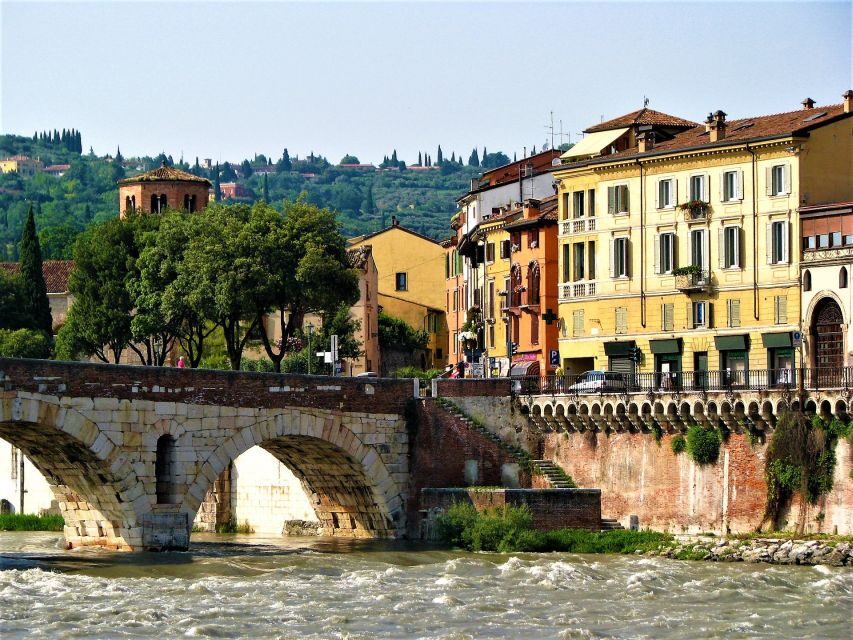
- Iconic views from the river: Ponte Pietra over the Adige is a big visual anchor for the day.
- Historic center under UNESCO: you’ll cover a lot of what makes Verona feel layered across Roman, Renaissance, and medieval eras.
- A real free-time window: roughly 2.5 hours to explore independently, including Juliette’s Mouse if you want it.
- Train travel with scenery: you’ll have time on the rails in both directions, with landscape views noted during the journey.
Getting going from Santa Lucia: the coffee-and-train start
Your day starts at Santa Lucia Station in Venice, inside the station area near the Relaxation & Coffee shop. The guide meets you there holding a sign that reads Amigo Tours. It’s a straightforward setup, and it matters because Venice days can get messy if you’re trying to find a meeting point while herding luggage and getting turned around.
This first stop is basically about two things: getting organized and getting a quick reset before the ride. Even if you’re not grabbing a full breakfast, it’s useful to fuel up and meet your guide so the rest of the day runs on rails—literally.
You can also read our reviews of more guided tours in Venice

The Venice-to-Verona train ride (and why it’s the smart move)
The train portion runs about 1.5 hours each way. For many visitors, this is the heart of the “easy win”: you skip the stress of driving in unfamiliar territory and you get a comfortable, predictable connection between two cities.
The tour also notes that you’ll enjoy views during the journey. That sounds small, but it’s part of the value—your day isn’t only walking and lines. You’re traveling in a way that feels like you’re stepping out of Venice rather than escaping it.
Practical tip: keep your essentials easy to reach. You’ll want water, a light layer, and your phone charged for photos when the train drops you into Verona’s historic center.
Verona by foot with a real walking plan
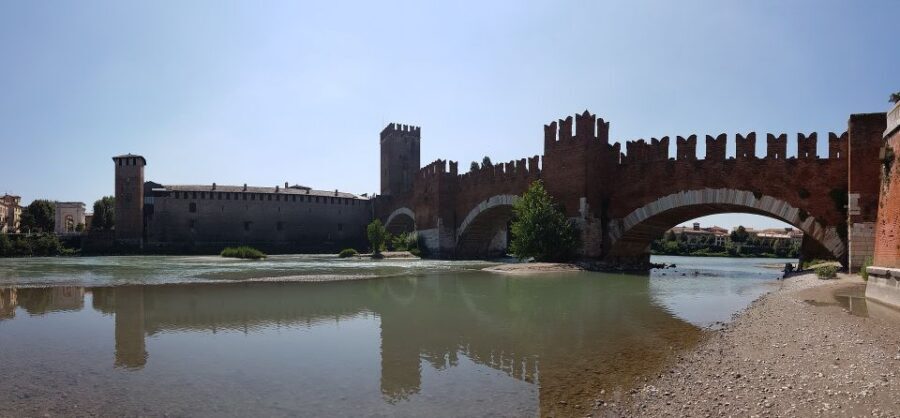
Once you arrive, you’ll join your guided route and spend time walking through Verona’s major sights. The guiding idea is to show how the city’s look and layout reflect different time periods—Roman, Renaissance, and medieval—without making it feel like a history lecture.
The walk focuses on landmark clusters so you can see the transitions. You’ll be moving through old squares and ancient bridges, then into areas where you get the feel of daily life on cobbled streets. That’s where Verona earns its reputation as a city you can actually enjoy, not just check off.
Also, your guide shares little anecdotes along the way. Those are the details that make pictures more than just postcards, especially around iconic buildings where everyone photographs the same angle. Expect tips on what to notice as you pass landmarks like a local would: proportions, materials, and little quirks.
Ponte Pietra and the Adige: the bridge that sets the scene
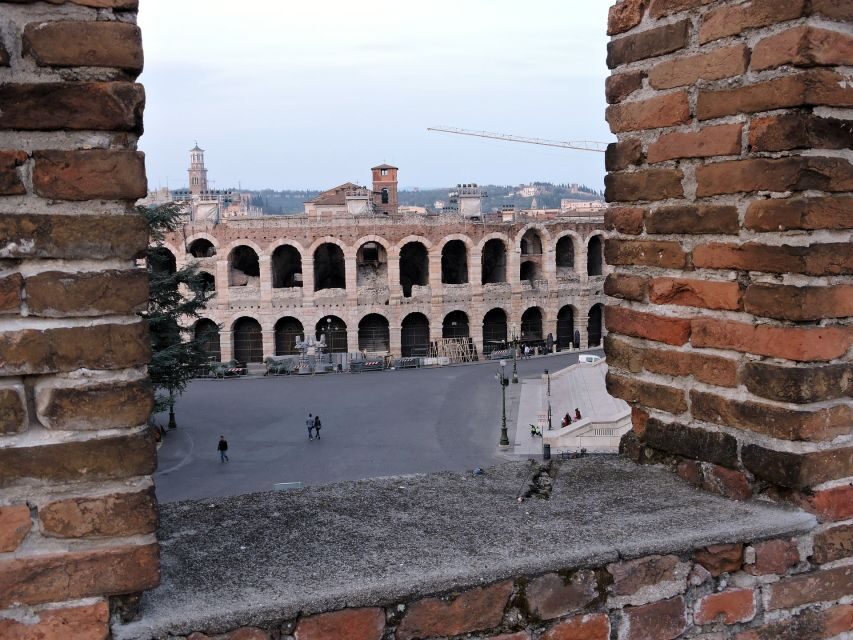
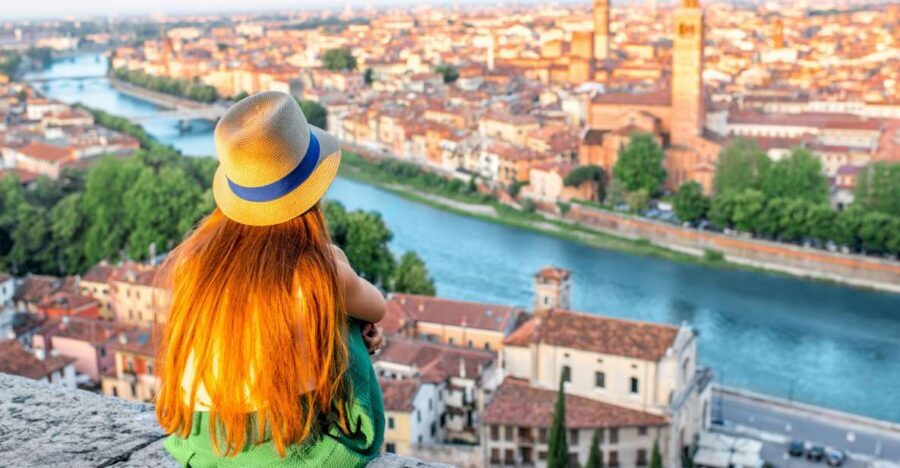
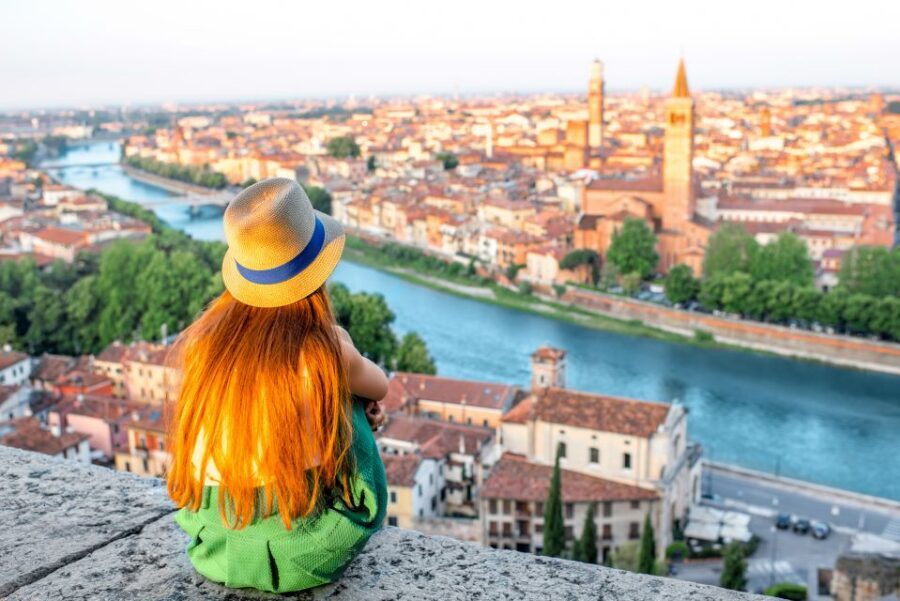
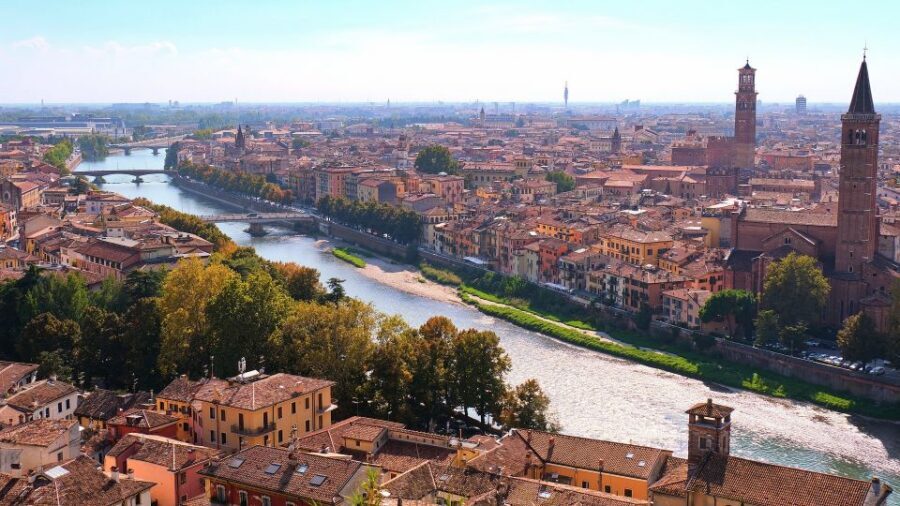
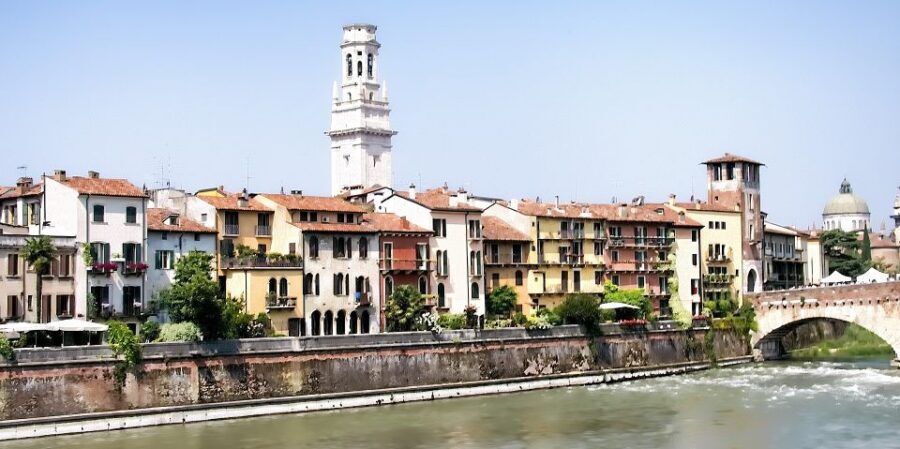
One of the first big “arrive in Verona” moments is Ponte Pietra over the Adige River. The bridge is a natural starting point because the river shapes the city. You’ll see how the historic core lines up around the water, and that makes the rest of the walk feel more coherent.
What I like about a stop here is that it gives you context. It’s not only a famous view—it’s a way to understand why the city developed where it did, and why so many sights feel tightly connected rather than scattered across town.
If you’re into photography, this is one of the best places to take a breath and frame the day. The lighting and angles can be forgiving, and the river backdrop helps even when the streets get busy later.
The Roman amphitheater in Piazza Bra (Verona Arena)
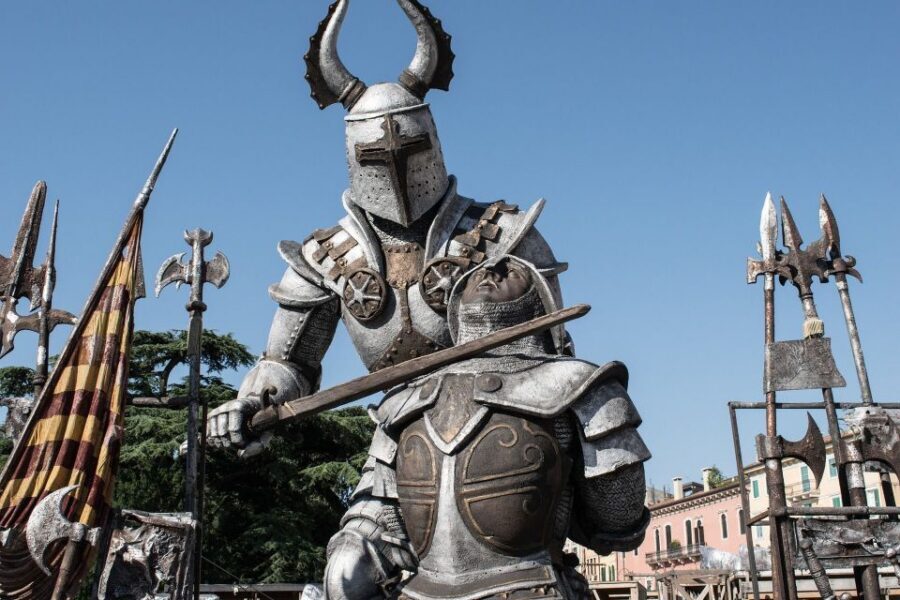
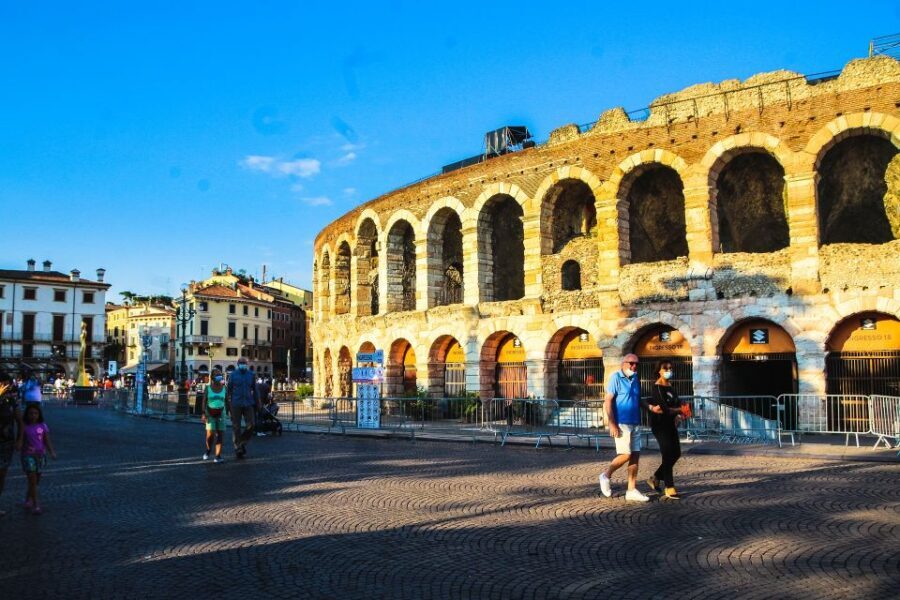
You’ll also see the Verona Arena in Piazza Bra. This is the star attraction for many people, and the tour highlights it as one of the best-preserved Roman amphitheaters.
Even if you only know it from photos, being there changes the experience. You can better understand the scale of Roman engineering, and you’ll feel how Verona makes room for ancient structures in a working modern city. The square placement matters too: it gives you a wide open space to take in the building without immediately getting swallowed by narrow lanes.
When you’re planning your day, treat the Arena area as a “stay a minute longer” stop. Don’t rush through it just to keep the schedule. Even a few extra minutes help you absorb what you’re seeing.
You can also read our reviews of more tours and experiences in Venice


Porta dei Borsari: a gate with a strong sense of time
As you walk, you’ll pass Porta dei Borsari, another major piece of Verona’s historic fabric. Roman-era city gates tend to feel like leftover architecture, but here the impression is more immediate: it’s a doorway into the layers of the city.
This is one of those stops that benefits from a guide. Without commentary, you might see “a gate” and move on. With it, you’re more likely to notice why it’s significant and what it signals about Verona’s older urban layout.
Lamberti Tower and the Piazza delle Erbe vibe check
Your guided route also includes Lamberti Tower and Piazza delle Erbe. These are the kinds of places where you instantly get the Verona mood: stone, windows, daily movement, and that sense of a city square acting as a social center.
Piazza delle Erbe is especially useful because it’s a hub, not a dead-end. Even during the guided portion, it works as an orientation point. You can look around and feel where the “center of gravity” is, so your later free time feels easier to navigate.
Lamberti Tower adds a vertical marker. It’s helpful on a walking day because you can use it as a visual reference when you’re moving between areas. When you spend hours on foot, that kind of mental map matters.
Churches and palaces you’ll actually remember
The walking tour isn’t limited to one landmark type. You’ll pass churches, palaces, and other notable stops tied to the UNESCO-listed historic center. That variety matters because Verona doesn’t read like just one era.
If you like the way cities layer influences—Roman bones, Renaissance refinements, medieval street patterns—this is where you get that payoff. You’re seeing the city as an environment, not as a single “must-see” building.
One more subtle benefit: the guide can steer your attention. Even if you’ve seen Italian church facades before, commentary can help you notice what’s unique here, rather than treating everything as the same.
Your 2.5 hours to wander: how to use it well
After the guided walking segment ends, you get about 2.5 hours of free time to explore on your own. This is a key part of the day, and it’s where you can tailor Verona to your style.
Here are smart ways to spend that window:
- Walk along the riverbank and take photos of the streets with color and character.
- Plan a simple meal or a snack in the center. The tour experience explicitly suggests Italian food during free time.
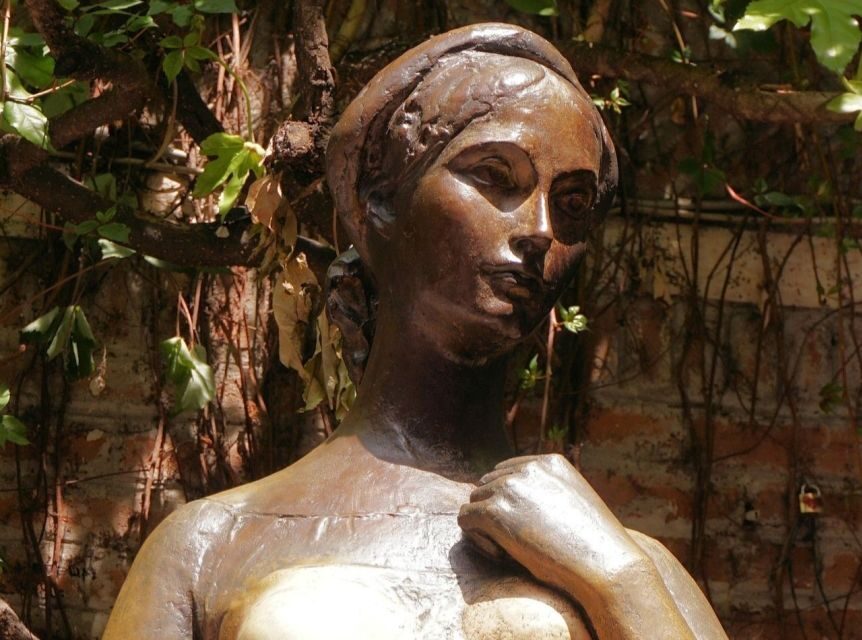
- If you want one famous Juliet-related stop, you can visit Mouse of Juliette. It’s popular, so it’s recommended that you buy tickets online to make sure you have enough time.
If you’re short on energy, you don’t have to sprint. Verona is the kind of place where stopping for a view counts. Choose one or two “I want this” targets, then allow time for wandering between them.
Return to Venice: wrap-up without rushing your feet
The return train ride is again about 1.5 hours, taking you back to Venice. The tour ends back at the same meeting point area near the Relaxation & Coffee shop in Santa Lucia.
This matters for planning dinner. You’re back in Venice with time to eat without needing to immediately solve logistics like finding a new pickup location. Just remember: after a walking day, your legs may request an early night, not a late wander.
What you’ll really pay for (and where the value comes from)
The price is $96.29 per person for a day trip lasting about 7 hours total. That total includes round-trip train transportation plus a professional guide with live bilingual commentary (English and Spanish).
The value comes from two things:
- Guided structure: you’re getting a walking plan across multiple iconic sites, including the Arena and major central landmarks like Piazza delle Erbe and Ponte Pietra. That saves time and helps you see more than you’d likely manage alone in one day.
- Not just transportation: the train is part of it, but the guided time is the main ingredient. You’re paying for someone to connect the dots between Roman, Renaissance, and medieval Verona.
The one thing not included: tickets to monuments. That’s important because you’ll want to budget for any paid entry you choose during the day—especially if you’re trying to include the Mouse of Juliette. If you’re the type who wants every paid sight, check what you’re most interested in before you go so you’re not surprised on the ground.
Footwear and pace: small details that make a big difference
This is a cobblestone-heavy walking experience. The tour itself flags comfortable shoes as the big must-have, and I agree. Even when the route is well planned, cobblestones can wear down your feet faster than you expect.
Also, this tour is not suitable for wheelchair users or people with reduced mobility. If that applies to you, you’ll want to look for an alternative Verona plan with less walking and more accessible transport.
Finally, come prepared for a day with movement on a schedule: train out, guided walk, free time, train back. That rhythm is great when you like structure. It’s less great if you want complete spontaneity from start to finish.
Who this Verona day trip fits best
I think this tour is a strong match if you:
- Want a simple, low-stress day trip from Venice with train transport handled for you.
- Like seeing major sites with context, especially Roman and medieval remnants.
- Prefer to have a guide do the heavy lifting early, then enjoy free time afterward.
It’s also a good option if you’re traveling with mixed interests. One person can focus on the Arena and Roman pieces; another can enjoy squares, churches, and the square-life vibe; both can still enjoy the same walk.
It may be less ideal if you:
- Have mobility limitations or need wheelchair-accessible routing.
- Hate walking on uneven pavement.
- Want lots of museum time or long interior visits, because you’re mainly on a guided walk plus a limited free-time window.
Should you book this Verona day trip?
Book it if you want a classic Verona experience in one day and you value convenience plus a guide who can explain what you’re looking at while you walk. The combination of train ease, a well-chosen route through Verona’s main landmarks, and a meaningful free-time block makes it a practical way to see a lot without burning your whole day.
Skip (or look for another option) if your priority is long, slow sightseeing inside many attractions, or if the cobblestone walking won’t work for your body. Also, if you’re only interested in one or two paid sights, you might prefer a less guided approach—because this one’s best when you’re happy using the full walking route and then deciding what to add during free time.
If you can do a solid walk and you like the idea of Roman-to-medieval Verona in a single day, this is a very reasonable way to spend your time away from Venice.
FAQ
How long is the day trip from Venice to Verona?
The total duration is listed as 7 hours. The train ride times are about 1.5 hours each way, with free time in Verona after the guided walk.
Where do I meet the guide in Venice?
Meet your guide inside Santa Lucia Station, by the Relaxation & Coffee shop. The guide will be holding a sign saying Amigo Tours.
What’s included in the price?
The tour includes round-trip train transportation, a professional guide, and live bilingual commentary in English and Spanish.
Are monument tickets included?
No. Tickets to monuments are not included.
What do we see during the guided walking tour?
The guided route covers Verona’s main attractions, including Ponte Pietra, the Roman amphitheater (Verona Arena), Lamberti Tower, Piazza delle Erbe, Porta dei Borsari, Porta dei Borsari, and Verona Arena in Piazza Bra, plus churches and palaces in the historic center.
Is there free time in Verona?
Yes. After the guided walking tour, you’ll have about 2.5 hours of free time to explore at your own pace.
Can I visit Juliette’s Mouse during the free time?
Yes, it’s offered as an optional visit during free time. The tour recommends buying tickets online because demand can be high.
How do we return to Venice?
At the end of the tour, you’ll take the return train back to Venice. The activity ends back at the meeting point near Santa Lucia Station.
What language is the tour guide using?
The tour provides live bilingual commentary simultaneously in English and Spanish.
Is the tour wheelchair accessible?
No. It’s not suitable for wheelchair users or people with reduced mobility.
Do I need comfortable shoes?
Yes. Comfortable shoes are strongly recommended because the experience includes walking on cobbled streets in Verona.
Is there a cancellation option?
The tour includes free cancellation up to 24 hours in advance for a full refund.