REVIEW · VENICE
Morning Magic: Venice City Walk and Gondola Tour
Book on Viator →Operated by MOVE VENEZIA · Bookable on Viator
A gondola ride and streets in one morning. This tour strings together St. Mark’s Square with quieter lanes in Castello, plus time around classic viewpoints like Rialto and the Grand Canal. I especially like the personal audio system (headphones) because it keeps the narration clear while you’re threading through narrow calli and turning corners at the right moments. I also like that you’re not stuck in museums; you’re out in Venice watching real life unfold.
One drawback to plan for: the pacing and logistics can make or break the experience. If you’re easy to lose in a group, pay extra attention at the start because you enter the Aliguna Ticket Office with your WhatsApp voucher, and if you miss the meeting window, you forfeit the tour.
In This Review
- Key things that make this Venice morning tour worth your time
- St. Mark’s to Castello: a practical Venice orientation walk
- The gondola piece: Grand Canal glide without the private-boat price
- Walking route: what you’ll actually see at each stop
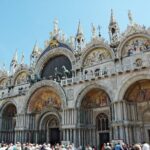
- Stop: Piazza San Marco / St. Mark’s area and the quieter approach
- Stop: Campo Santa Maria Formosa and the church façade
- Stop: Ponte di Rialto for the iconic bridge views
- Stop: Canal Grande section for palaces-from-the-water context
- Stop: Teatro La Fenice and the complicated theater story
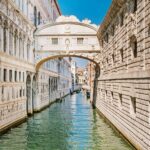
- Stop: Ponte de le Ostreghe and Venice place-name clues
- Headphones, group limits, and the biggest pacing risk
- Price and value: is $162.21 fair for this Venice package?
- How to show up: meeting point timing and the Aliguna ticket desk
- Who this tour suits (and who might prefer something else)
- Should you book this Venice City Walk and Gondola Tour?
Key things that make this Venice morning tour worth your time
- Top guides were praised by name (Elizabeth and Rosana), with a focus on explaining details in the small lanes.
- Headphones with personal audio help you follow the story even when the streets get chaotic.
- Walking stays mostly outside—no museum visits, so you gain orientation and viewpoints fast.
- Shared gondola, small capacity (max 5 per gondola) keeps the ride intimate enough to feel personal.
- Grand Canal time is built in alongside minor canals, so you get both “main character” and quieter water views.
- You must arrive early (about 20 minutes) to exchange your voucher and get tickets.
St. Mark’s to Castello: a practical Venice orientation walk
This is a morning tour designed to help you get your bearings fast. You start near St. Mark’s Square, then move through the Castello area where the streets feel less like a parade route and more like real neighborhood Venice.
The walking portion runs about 2 hours 50 minutes total for the full experience, but the rhythm matters. You’re not doing a sprint from landmark to landmark. The route includes bridges, campi (squares), and a few major “stop to look, then move on” moments—useful if it’s your first day and you want context before you start picking restaurants and side streets.
Two real strengths jump out. First, you get live guided narration with headphones, which is a big deal in Venice where voices get lost fast. Second, the tour connects big names (St. Mark’s, Rialto, the Grand Canal) with the less “postcard-famous” streets that actually make Venice feel like Venice.
You can also read our reviews of more walking tours in Venice

The gondola piece: Grand Canal glide without the private-boat price
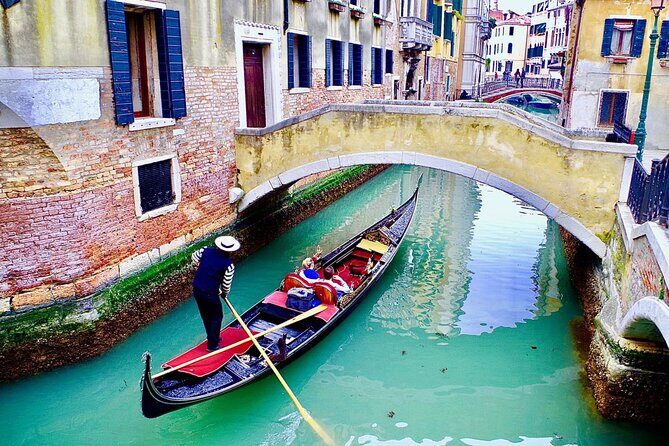
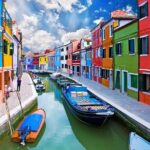
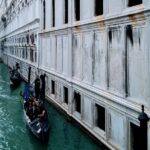
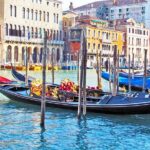
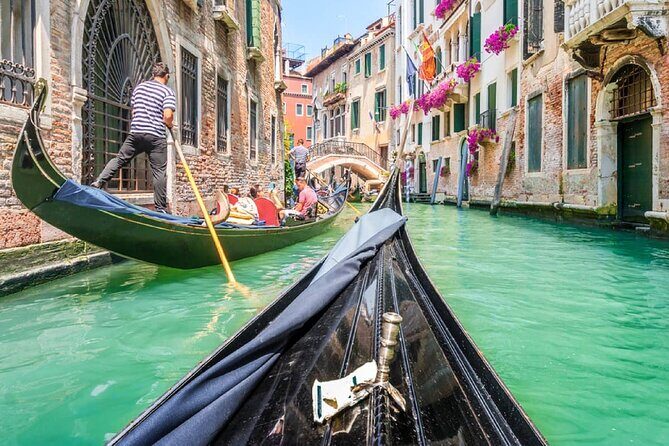
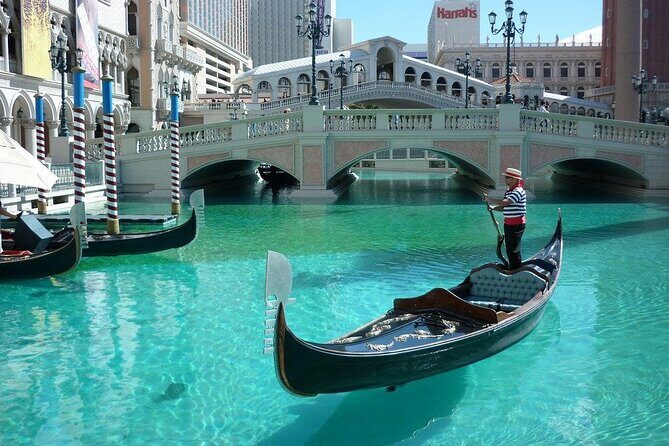
After the walking, you ride a gondola departing from Campo San Moisè. The gondola ride covers the Grand Canal and also minor canals, which is a smart mix. The Grand Canal gives you that wide, iconic waterway moment; the side canals slow everything down and make it feel more intimate.
A big note: the gondola ride is not guided. That’s not bad—it just means your guide’s commentary ends with the walking part, and you experience the ride on your own. If you’re the type who likes quiet, you’ll probably enjoy this. If you want full narration on the boat, you may wish you had a different add-on.
This is also a shared gondola. Each gondola holds up to 5 individuals, and you cannot choose your seat—the gondolier assigns it. If you’re traveling with someone you want seated next to, keep expectations flexible.
Walking route: what you’ll actually see at each stop
The walking portion is focused on landmarks and viewpoints, not museum interiors. That means you’ll get great exterior views and plenty of story, but if your dream is to enter places like basilicas or palaces, you’ll need a separate ticket.
Also, the walking tour ends back at the meeting point (near where you start), after passing through the lively shopping area of Mercerie. That’s handy: it drops you back into a zone where it’s easy to continue exploring or grab a coffee.
Stop: Piazza San Marco / St. Mark’s area and the quieter approach
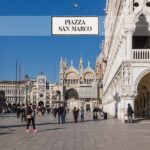
You begin around Piazza San Marco and the route is built to help you move off the busiest center lines. The tour highlights campi and narrow alleys between St. Mark’s Square and the Rialto Bridge, with an emphasis on language and local stories.
This is also where you’ll likely notice big performance landmarks from outside—like La Fenice opera house—and architectural details such as the Bovolo Staircase (a famous Renaissance-style stairway that’s easy to miss if you’re wandering without a plan). These are the kinds of details that become much more meaningful once someone puts the pieces together for you.
What to watch for: St. Mark’s can feel overwhelming even in the morning. The headphones help, but you still need to stay close during the turns. If your group leader loses focus for a moment, you’ll feel it here first.
Stop: Campo Santa Maria Formosa and the church façade
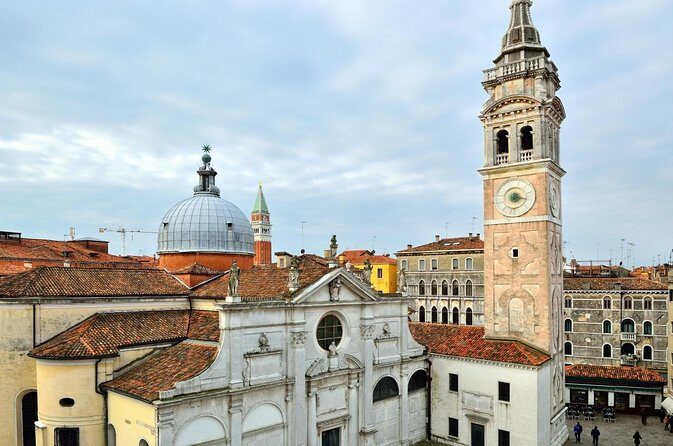
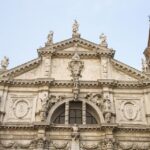
Next is Campo Santa Maria Formosa, centered on Santa Maria Formosa Church. The key detail here is the church’s façade style—a mix of Byzantine and Renaissance elements dating back to the 15th century. It’s a great stop because it feels calmer than the biggest tourist magnets, while still giving you a real architectural story.
This square also works as a palate cleanser. After the heavy hitters of St. Mark’s, you get a more human scale of Venice: smaller streets, relaxed corners, and a church that becomes a visual anchor for the neighborhood.
Possible drawback: because this is a walking-and-looking route (no museum-style ticketing included), you’ll mostly get what you can see from the outside and the immediate square area. If you were hoping for extended interior time, you won’t get it on this tour.
You can also read our reviews of more city tours in Venice

Stop: Ponte di Rialto for the iconic bridge views
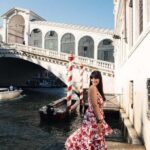
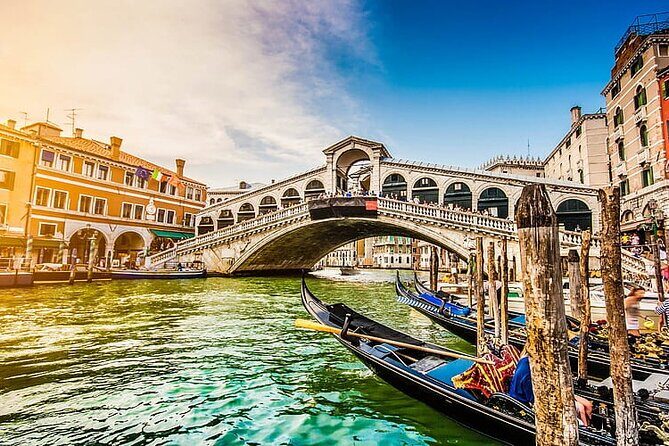
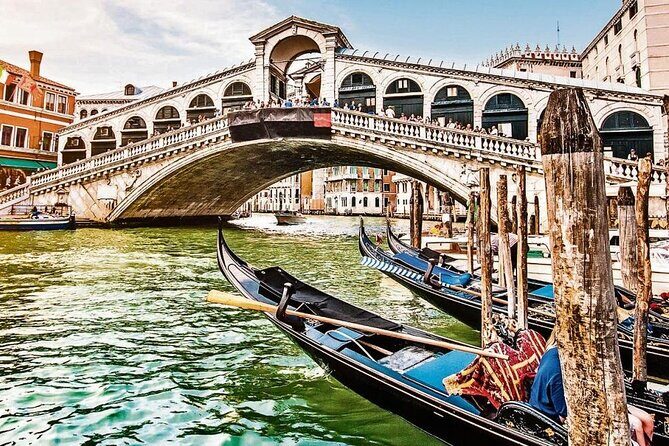
Then you come to Ponte di Rialto, spanning the Grand Canal and connecting San Marco and San Polo. You’ll get the classic “look down the canal” moment, with gondolas and boats moving through the scene—especially satisfying in the morning when the light is kinder.
The bridge dates to the 16th century, and it’s lined with shops. Even if you don’t shop, it’s worth pausing here because Rialto gives you one of the best quick “Venice map in your head” moments.
What I like about including Rialto on a guided walk: it helps you understand where all the foot traffic funnels and why the city’s geography feels like it does. You start to see Venice as a set of linked neighborhoods rather than one giant sightseeing cluster.
Stop: Canal Grande section for palaces-from-the-water context
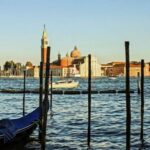
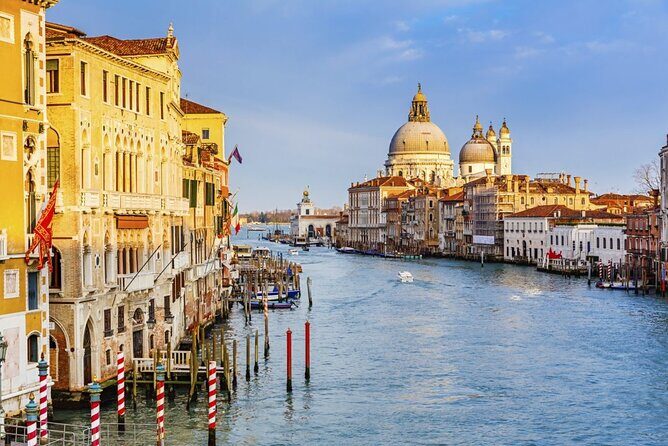
The tour includes time at the Canal Grande, described as over 2 miles long and shaped like an S. This matters because the Grand Canal isn’t just scenic—it’s the city’s main “spine” for moving people and goods.
As you pass or pause near views, you’ll notice how palaces, churches, and buildings line the banks. The key value here is perspective: from a waterway viewpoint, Venice looks planned and intentional, not random.
Small caution: because Venice streets and bridges can change your walking angles, your best views depend on where the group stops. Stay alert when crossing and pause when your guide asks you to, even if you think you already have the view.
Stop: Teatro La Fenice and the complicated theater story
One of the more interesting stops on the walk is tied to Teatro La Fenice. The tour’s narration includes details about Venice’s theater world in the late 1700s, and it connects dots through the story of theater groups and changes around 1755 and 1787.
Even if you’re not a theater person, this stop is useful because it explains how Venice used performance, patronage, and politics as a kind of public identity. It’s not just “there’s an opera house”—it’s why opera mattered in this city.
Possible drawback: like the other stops, this is mostly an outside viewing moment. You won’t be touring stage rooms or museums on this itinerary.
Stop: Ponte de le Ostreghe and Venice place-name clues
Finally, you’ll hit Ponte de le Ostreghe, and this is where the tour gets more playful. The narration ties place names to older activities—like plant-related terms and seafood trade in the lagoon.
You’ll hear how references show up in records: Rio dell’Alboro appears in 1696, and Rio de le Ostreghe shows up later. The story points toward sellers trading oysters in the area and notes that lagoon seafood cultivation grew significantly in the early 19th century.
I like this stop because it turns the city’s signage and street names into clues. Venice becomes more like a puzzle with answers, not just a list of monuments.
Headphones, group limits, and the biggest pacing risk
This tour uses a personal audio system and headphones, so you’re not constantly asking someone what the guide is saying. That’s a big practical win on day trips when audio can get lost in crowds.
Group size is also managed, which affects your experience. The walking tour is up to 15 people, while the gondola ride is up to 5 people per gondola. Smaller gondolas help, because you can actually see the canal without someone blocking your view the entire time.
Now the reality check from feedback: a few people reported issues with how the guide kept the group together—moving too fast, talking too quickly, and at least one instance of the guide walking ahead without realizing no one was behind. Another complaint was about losing the guide because there wasn’t clear group identification. That’s why you should treat the first 10 minutes like the “golden minutes.”
My practical advice: when you arrive, find your guide fast and stick close at every bridge crossing. If you’re hard of hearing or you know you struggle in noisy environments, bring the effort—but also ask questions early so you’re not playing catch-up later.
Price and value: is $162.21 fair for this Venice package?
At $162.21 per person, you’re paying for three things: (1) guided walking time through key areas, (2) the gondola ride, and (3) the audio system that makes the guide’s talk usable.
Is the gondola “private”? No. It’s shared, and seats are assigned. That keeps the cost down compared with private boats. But it still gives you the Grand Canal experience that many self-guided visitors skip because it’s hard to coordinate on your own.
What makes the value feel stronger is the mix of viewpoints. You don’t only get big names like St. Mark’s and Rialto. You also get neighborhood-style squares like Campo Santa Maria Formosa and the place-name explanation at Ponte de le Ostreghe. That turns the walk into more than just scenery.
One caution for value-seekers: this tour does not include museum or attraction entrances. If you’re hoping it will replace tickets for major interiors, you’ll likely find it less cost-effective.
How to show up: meeting point timing and the Aliguna ticket desk
Start time is 9:00 am, and you should plan to arrive about 20 minutes early. You’ll need to enter the Aliguna Ticket Office, show your voucher, and receive the tickets.
Your voucher comes via WhatsApp, and you need to present it on the day of the tour. If you’re coming from elsewhere in Venice, that’s workable. But if you’re coming from the train station, take one smart tip from earlier visitors: don’t blindly trust sat-nav. One traveler suggested routing toward Accademia first to avoid ending up on the wrong ferry connection.
If the weather turns, the itinerary can change due to inclement weather, so it’s worth keeping an eye on conditions that morning. Also, the tour is not private and has a maximum of 5 travelers, so it’s a smaller-group experience—but still shared.
Who this tour suits (and who might prefer something else)
This works best if you want a guided on-ramp to Venice. If it’s your first morning and you want to understand where St. Mark’s, Castello, Rialto, and the Grand Canal fit together, the structure is made for you.
It’s also a good choice if you prefer walking with narration rather than paying for museum time. You’ll get plenty of “look, learn, move” moments without long indoor waits.
You might want to skip or pair it with another plan if:
- you’re hoping for museum entrances or long interior visits (this doesn’t include those)
- you’re sensitive to walking pace and want a very slow, stop-everywhere experience
- you expect the gondola itself to include live narration (it’s not guided)
Should you book this Venice City Walk and Gondola Tour?
If you want the classic Venice combo—a structured morning walk plus a gondola ride—this is a strong way to start. The best version of this experience comes down to two things: staying close to the guide and arriving early enough to get tickets smoothly.
I’d book it if you’ll appreciate the neighborhood details as much as the postcard stops, and if you’re happy that the gondola ride is shared and unguided. I’d reconsider if you need guaranteed slow pacing, or if interior ticket access is a must-have for your Venice trip.