REVIEW · VENICE
San Polo, Rialto & Frari: 2-Hour Private Walking Tour in Venice
Book on Viator →Operated by Venice Events srl · Bookable on Viator
Rialto without the rush feels real. This private walk is a smart way to see Venice’s San Polo side, where daily life still happens in narrow lanes, old shopfronts, and local campos. You start near Ponte di Rialto, then move through a neighborhood shaped by trade, markets, and big church art.
I especially liked two things. First, the guide’s narration makes small sights feel connected, from the famous bridge area to the quieter details around San Polo. Second, the private format keeps the pace human, with a guide who can flex if you want more time at one stop or want to shift the focus.
One drawback to plan for: at $322.58 per person, it’s not the cheapest way to tour Venice. Also, entry to Frari Basilica is not included, so you’ll want to budget for that if you plan to step inside.
In This Review
- Key highlights in plain terms
- San Polo and Rialto: The side of Venice most people skip
- Starting near Campo San Bortolomio: fast orientation before you wander
- Rialto Bridge to Il Gobbo: small stops with big meaning
- Mercati di Rialto: seeing the market without getting lost
- Campo San Polo: where living streets meet church power
- Frari Basilica inside: Titian and Bellini in one stop
- How much time you really get in two hours
- Price and value: what $322.58 per person is buying
- Who should book this San Polo, Rialto & Frari walk
- Should you book it?
- FAQ
- How long is the private walking tour?
- Where do we meet, and where does the tour end?
- Is pickup available?
- What’s included in the tour price?
- Are entrance fees included for Frari Basilica?
- Which languages are available for the guide?
- Is this tour private?
- Do I need tickets for the Rialto Bridge and market stops?
- What happens if we’re late or we don’t show up?
- Can I cancel for a full refund?
Key highlights in plain terms
- Private pace through San Polo, so you’re not stuck in a camera herd
- Rialto Bridge to Rialto market area in one smooth walk
- Trade-focused stories about silk, spices, precious metals, and exotic woods
- Il Gobbo di San Giacomo statue stop for a fun, unexpected detour
- Frari Basilica interior time to see major Renaissance works by Titian and Bellini
- Most stops are free to view from the street, with church entry as the main paid add-on
San Polo and Rialto: The side of Venice most people skip
Most first-time Venice plans over-focus on the headline spots. This route gives you something different: a neighborhood feel, not just postcard views. San Polo sits close to the busy center but it moves at a more local rhythm, especially around the markets and the older church district.
The big win here is how the tour links everyday places to the reasons Venice got rich in the first place. You’ll hear about the flow of goods that once moved through these streets, from luxury items like silk and precious metals to everyday temptations like spices and exotic woods. When a guide frames the neighborhood this way, you start noticing the logic behind the layout.
You can also read our reviews of more walking tours in Venice

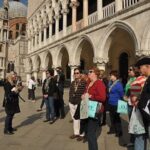
Starting near Campo San Bortolomio: fast orientation before you wander
You meet at Campo San Bortolomio, a good launching pad for the Rialto area. If you’re staying around Rialto, optional hotel pickup is available with the guide, which helps a lot when you’re carrying bags or you’re trying to beat the first crush of the day.
This start matters because Venice is easy to get turned around in. Within the first minutes, you learn the walking rhythm: which lanes funnel toward canals, where campos act like hubs, and how the Rialto area “feeds” into San Polo. It’s the kind of orientation you can reuse later when you go off on your own.
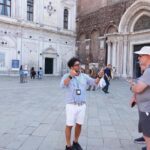
Also, you’re not stuck with a rigid script. One guide named Marco stood out for mixing clear explanations with practical storytelling, and he was flexible when the group’s interests overlapped with what he had planned. That flexibility is a real quality-of-life feature in a place where one detour can change your whole afternoon.
Rialto Bridge to Il Gobbo: small stops with big meaning
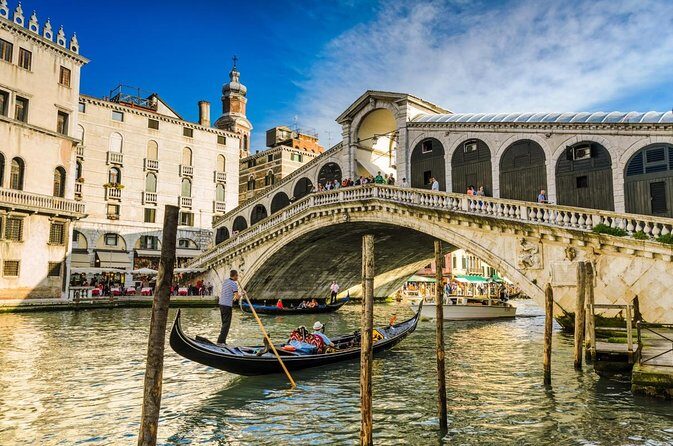
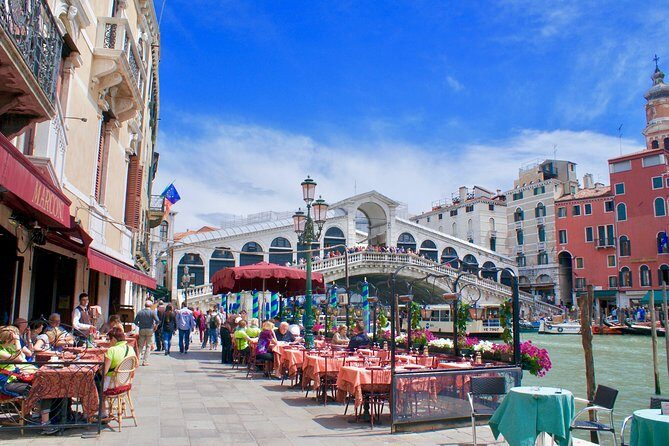
The tour begins with Ponte di Rialto, which you’ll view without needing tickets. It’s famous for a reason, but the guide helps you see it differently by pointing out why this location mattered for Venice’s trade routes. The bridge isn’t just a photo stop here. It’s your anchor point for understanding how merchants moved people and goods.
Next comes Il Gobbo di Rialto, the statue tied to Il Gobbo di San Giacomo. This is the sort of detail most visitors walk past without clocking what it is. Here, it becomes a reminder that Venice is full of character objects and local legends tucked into the everyday streetscape.
A short move after that brings you to the market area. The order is smart: you go from symbol (the bridge) to personality (the statue) to commerce (the market). By the time you reach the market zone, you’re already primed to look for the human side of trade—who gathered, what they bought, and how the neighborhood functioned.
Mercati di Rialto: seeing the market without getting lost
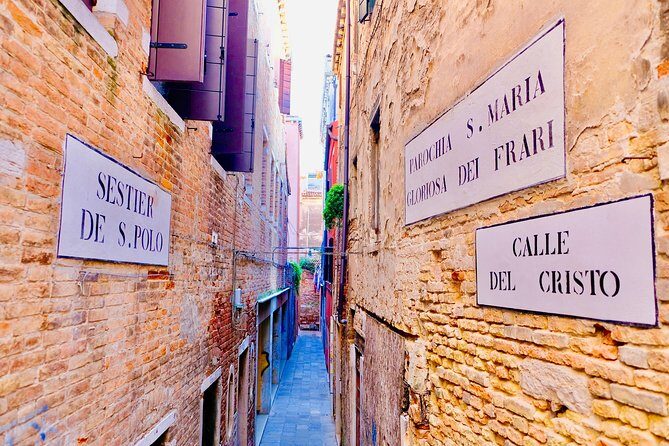
Mercati di Rialto is one of those Venice places that can feel chaotic if you don’t know where to look. The advantage of a guide is not that they “fix” the chaos. It’s that they help you interpret it.
You’ll get the story behind why these markets mattered, with a focus on the brisk trade in items like silk, spices, precious metals, and exotic woods. Even if you’re not shopping, that context turns the market into a living historical map. Instead of just seeing stalls, you start imagining supply chains, visiting merchants, and the kind of wealth Venice pulled toward itself.
This stop also gives you a practical benefit. You’ll learn how to move through the market area at walking speed, what streets connect to the wider San Polo grid, and how to avoid the most time-wasting detours when you later explore on your own.
Campo San Polo: where living streets meet church power
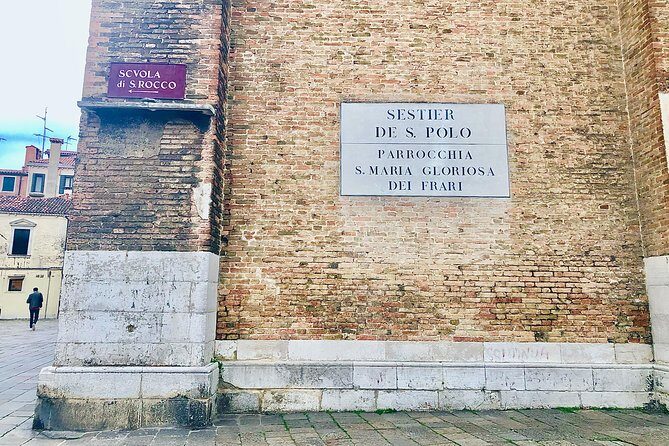
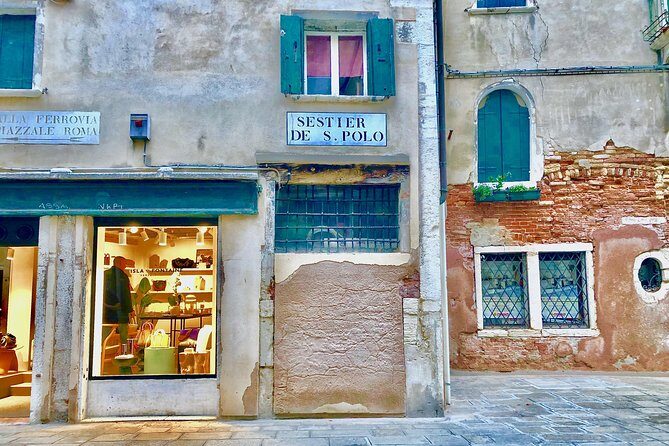
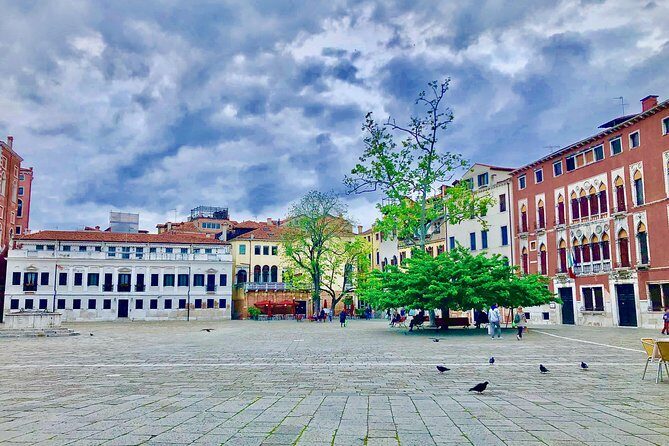
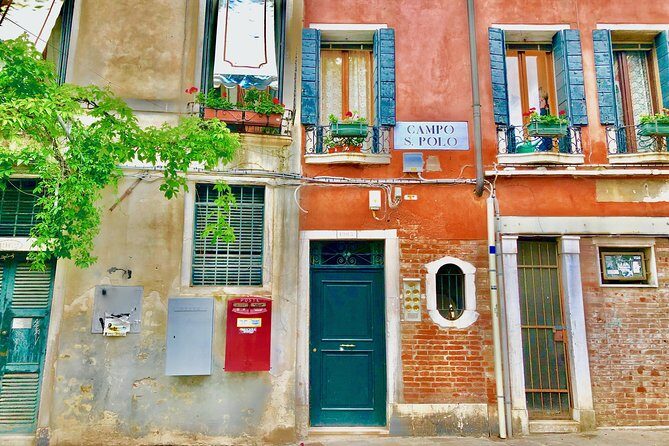
After the market zone, you head into San Polo, including time at Campo San Polo. This is where the tour shifts from commerce to community. You’ll walk among historic shops and living quarters, which is one of the best ways to understand Venice beyond its monuments.
Campos here are not just open squares. They’re meeting points—places where people linger, kids play, neighbors chat, and the neighborhood maintains its own rhythm. With a guide’s narration, you start to see how the architecture supports that rhythm: narrow frontages, tucked-in doorways, and the way streets funnel toward canals.
This is also a moment to soak up the contrast. Venice’s churches are the big artistic statements, but San Polo’s daily lanes show the human scale. You’re getting both in a compact walk: the market engine and the neighborhood life that grew around it.
If your group is the type that likes to stop and talk, this part works well. You can ask questions about trade, buildings, or why certain spots were important. The private format helps here, because your guide isn’t juggling multiple groups with different needs.
You can also read our reviews of more private tours in Venice

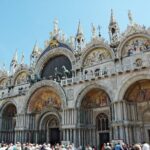

Frari Basilica inside: Titian and Bellini in one stop
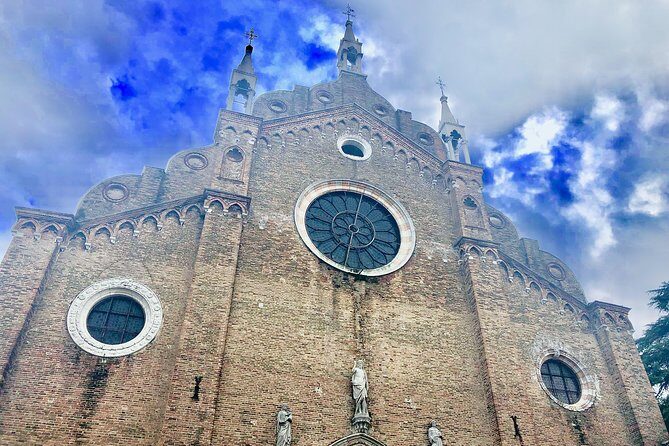
The final major highlight is Basilica di Santa Maria Gloriosa dei Frari. It’s an imposing church, and the tour gives you enough time to take in the structure and then step inside.
Two things make the Frari visit especially valuable. First, it’s a major church that connects with Renaissance art in a way you can actually experience in person, not just read about. Second, you’re not arriving cold. The walk has already built context about Venice as a commercial city that funneled money into art, chapels, and major commissions.
Inside, you’ll see splendid statuary and major Renaissance works associated with Titian and Bellini. This is one of those moments where having a guide saves time and guesswork. You get pointed toward what’s worth your attention and how the art relates to the church space.
Important practical note: entrance fees to churches are not included. Plan for that so you’re not stuck at the door with time running out. If you’re on a tight schedule, decide ahead of time that you truly want interior time, because it’s the main paid-add on.
How much time you really get in two hours
A two-hour private walk sounds short, but the route is designed to pack meaning into a compact loop. Many stops are free to view from the street (bridge, statue, and market area), which keeps you moving without constant ticket checks.
You’ll spend the most time where it counts:
- a decent chunk at the market area for atmosphere and context
- time at Campo San Polo to absorb the neighborhood texture
- and the final visit to Frari Basilica for interior art
The pacing tends to feel efficient rather than rushed. Still, keep one thing in mind: Venice is Venice. Even with a private guide, you can hit crowds near Rialto at peak hours. The upside of being private is that your guide can steer your timing and route choices so you’re not trapped waiting as long.
If you want a calmer experience, pick your tour time strategically. A morning slot can feel easier on the legs and eyes. An afternoon slot can work too, but expect more photo pressure around Rialto.
Price and value: what $322.58 per person is buying
At $322.58 per person, this isn’t a “cheap add-on” tour. You’re paying for a professional guide, a private experience, and the time to focus on San Polo’s specifics rather than generic highlights.
So when does it feel like good value? If you like walking tours but hate feeling herded, the private element is the core benefit. The guide can also adapt to your interests. One standout detail from real experience: a guide like Marco was flexible when overlap happened with another tour plan and added extra sights outside the usual flow. That ability to adjust can make a pricey tour feel less like a set product and more like a tailored evening of Venice stories.
If you’re traveling solo or as a couple, the cost may feel steep compared to group tours. If you’re two or more and want a customized guide who talks through what you’re seeing, the price starts to make sense.
Who should book this San Polo, Rialto & Frari walk
This tour fits best if you want more than a checklist. It’s ideal for travelers who like:
- neighborhood walking with real local street energy
- market context, not just architecture photos
- a church visit where Renaissance art is explained in practical terms
It also works well as an introduction to Venice. Starting near Rialto so early in your trip helps you build a mental map, and finishing in San Polo puts you in a good position to keep exploring independently afterward.
It may be less ideal if you only want the biggest, most famous views with minimal walking and no discussion. This one rewards curiosity.
One more plus: the guide is available in English, French, German, Spanish, or Italian, so you can choose the language that keeps the stories sharp and easy to follow.
Should you book it?
If you want a smart Venice orientation that goes beyond the usual tourist lanes, I think this is a strong choice. The route hits major anchors—Rialto Bridge and Frari Basilica—but the real value is the San Polo neighborhood feel and the trade-and-art stories that make the sights connect.
Book it if you’ll use a guide for context and you care about seeing more than the obvious. Skip it only if you’re trying to minimize cost or you’d rather tour churches on your own with a guidebook.
FAQ
How long is the private walking tour?
The tour runs for about 2 hours.
Where do we meet, and where does the tour end?
You start at Campo San Bortolomio (30124 Venezia) and the tour ends at Basilica S. Maria Gloriosa dei Frari (San Polo, 30125 Venezia).
Is pickup available?
Pickup is optional if your hotel is in the Rialto area. Otherwise, you’ll meet at Campo San Bortolomio.
What’s included in the tour price?
The price includes a professional English-language guide (also available in French, German, Spanish, or Italian) and the private 2-hour walking tour itself.
Are entrance fees included for Frari Basilica?
No. Entrance fees to churches or museums are not included, so you should plan for Frari.
Which languages are available for the guide?
The guide is offered in English, French, German, Spanish, or Italian.
Is this tour private?
Yes. It’s private, so only your group participates.
Do I need tickets for the Rialto Bridge and market stops?
The stops at Rialto Bridge, Il Gobbo di Rialto, and Mercati di Rialto are listed as free to view.
What happens if we’re late or we don’t show up?
For all late arrivals or no show, there is no refund.
Can I cancel for a full refund?
Yes, you can cancel for a full refund if you cancel at least 24 hours before the experience’s start time. Cancellation less than 24 hours before start is not refunded.