REVIEW · VENICE
The Heart of Venice: A Self-Guided Audio Tour
Book on Viator →Operated by VoiceMap Audio Tours · Bookable on Viator
Venice talks to you as you walk. This self-guided VoiceMap route turns major landmarks into a story-by-story experience, with audio that cues you when you arrive at each stop. It’s built for independent exploring, so you can pause, look around, and move on when you feel like it.
I love the offline access to audio, maps, and geodata, so you are not hunting for signal in a maze of canals and streets. I also love that the audio plays automatically at each location, which makes the whole thing feel guided without waiting for anyone.
One possible drawback: you need your own smartphone to run the VoiceMap app, and you’ll want a charged battery for the full walk.
In This Review
- Key highlights at a glance
- How the Heart of Venice audio tour works (and why that matters)
- Piazza San Marco: the Venice most people mean
- Campo San Salvador and the marble revolt column
- Carlo Goldoni’s theatre and the opera connection at La Fenice
- Palazzo Cavalli and the Tide Center: Venice’s acqua alta through the eyes of data
- Rialto Bridge: from old bascules to the crossing you see now
- Price and value: $11.99 for a guided-feeling walk
- What the tour is best at (and what it is not)
- Getting started smoothly: timing and practical habits
- Should you book the Heart of Venice audio tour?
- FAQ
- How long is The Heart of Venice self-guided audio tour?
- What language is the audio tour offered in?
- How much does it cost?
- Do I need data or Wi‑Fi to use it?
- What app do I use for the tour?
- Do I need to bring a smartphone?
- Where does the tour start and end?
- Will the audio play automatically?
- Is there any special fee on some dates?
- Is it a private experience?
Key highlights at a glance
- Auto-play audio that starts when you reach each spot, not when you press buttons
- Offline audio, maps, and geodata, so you can explore without data
- About 1 hour of concentrated Venice highlights, from San Marco to Rialto
- English narration designed for easy following as you walk
- Private experience for your group, not a large mixed tour crowd
How the Heart of Venice audio tour works (and why that matters)
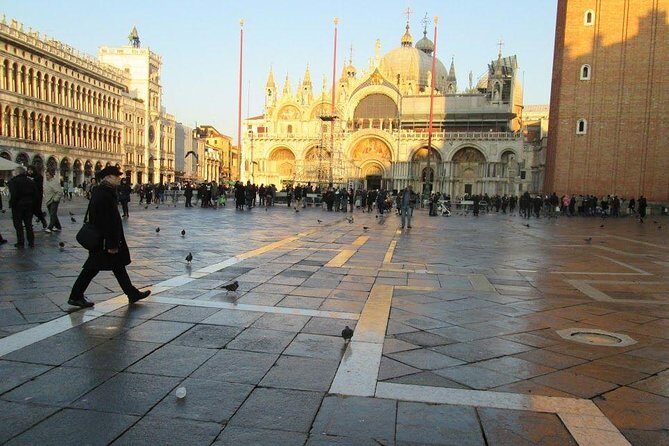
This is a self-guided GPS audio tour using the VoiceMap application. You download what you need for offline use, then follow directions to the starting point at P.za San Marco, 328, 30124 Venezia VE, Italy. Once you are at each featured location, the audio plays automatically—so you are not stuck trying to line up a map pin while holding your phone at arm’s length.
The smart part here is the rhythm: you move on your terms, and the tour still keeps you from getting lost in the details. Instead of reading plaques at every corner, you get a short narrative at the right place, which makes it easier to connect what you see with what you are hearing.
The route is designed to be compact—about 1 hour—so it works well as a first-or-second activity when you want the big impressions without committing to a full day tour. It is also priced at $11.99 per person, which is a big deal in Venice, where guided options can multiply fast once you add extras.
Tip: since the tour is driven by your phone, treat it like a camera moment. Keep it in your hand only as needed, and check your battery before you start.
You can also read our reviews of more guided tours in Venice



Piazza San Marco: the Venice most people mean
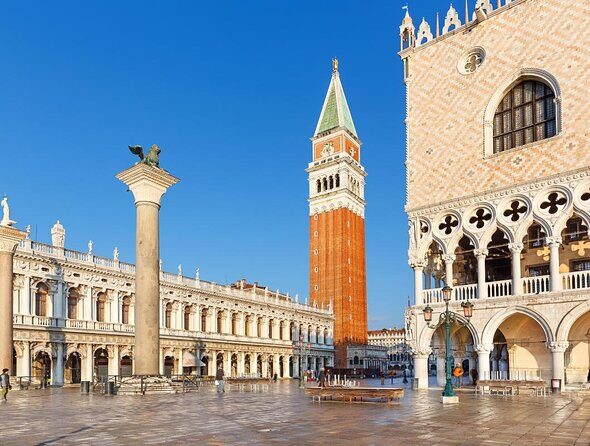
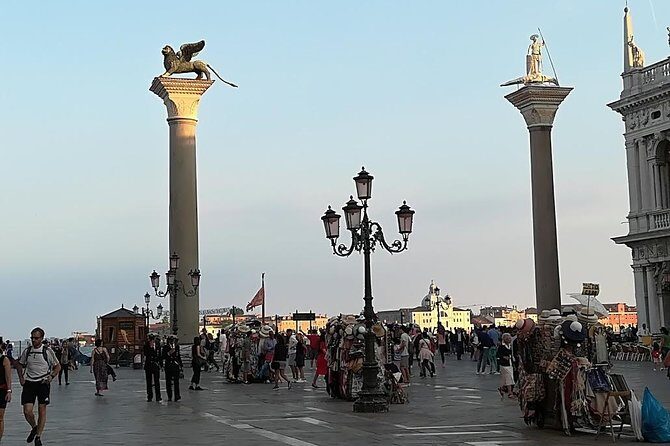
Your walk begins in Piazza San Marco, the central, famous heart of Venice. The narration frames it as a place that has hosted major public moments for roughly a thousand years, including state visits by popes and emperors, religious processions, public executions, and Carnival. In other words, you are not just looking at a pretty square—you are standing in a stage where Venice acted out big, public drama.
One of the best things about starting here is the way it sets expectations. The audio gives you a context anchor right away, so later stops feel more connected instead of feeling like random buildings.
What to watch for at this stop: the tour’s story is tied to how people have used the Piazza over centuries. So keep your ears open even if you are not taking in every detail with your eyes at once. Also, this is the type of landmark where foot traffic is constant, so you may want to stand slightly to the side when the audio plays so you can actually hear it.
A consideration: Piazza San Marco can be visually overwhelming in the moment. The audio helps, but you may still want to give yourself time to look up and around between track segments so you do not feel like you are rushing through a postcard.
Campo San Salvador and the marble revolt column
From the big stage of San Marco, you move to Campo San Salvador, where the standout is a tall marble column in the middle of the square. The tour explains that the column was set up in 1898 to commemorate the 17-month Venetian revolt against Austrian occupation in 1848 and 1849.
This stop is a good reminder that Venice is not only about romance and canals—it is also about political identity and local resistance. Listening here adds meaning to an element you could easily walk past without thinking.
Practical tip: columns and memorials can be tough to interpret if you stand in the wrong spot. When the audio kicks in, shift your position so the column is in your line of sight. That way you connect the story to the object instead of trying to listen to history while looking around for what it refers to.
Possible drawback: because it is a square, you may have to share space with passersby. If you want a quiet listening moment, plan to pause briefly and keep your volume controlled so you do not compete with street noise.
Carlo Goldoni’s theatre and the opera connection at La Fenice
Next up are two cultural stops that tie Venice’s storytelling to performance: Teatro Comunale Carlo Goldoni and La Fenice.
At the Teatro Comunale Carlo Goldoni, the narration points to the theatre’s name: Carlo Goldoni, a Venetian playwright from the 1700s. You hear about how he wrote comedies in the Venetian dialect and how his approach was considered revolutionary for its time—because it made characters feel like real people, highlighting the quirks of ordinary Venetians.
Even if you do not plan to see a show, this stop helps you understand the Venice voice. It is not only about grandeur; it is also about everyday personality and local speech—something you will feel throughout the city once you know to look for it.
Then the tour shifts to La Fenice, Venice’s major opera house. Here, the audio highlights that famous operas premiered there, including Rigoletto and La Traviata. It also notes that La Fenice is still one of Italy’s most important opera houses.
Why these two stops work back-to-back: the same city that stages history in public squares also stages stories on stage. Listening to Goldoni first gives you a lens for what makes Venetian drama feel like it belongs to real people, and then La Fenice brings the big-name opera legacy into the picture.
Consideration: theatres and opera houses often have a “view from outside” feel unless you are specifically attending an event. The tour still makes the exterior stops meaningful through story, but if you expect a full inside visit, you might want to plan separate tickets or a separate stop.
Palazzo Cavalli and the Tide Center: Venice’s acqua alta through the eyes of data

One of the most surprising stops in the route is Palazzo Cavalli, because it connects Venice’s landmarks to the practical reality of water levels. The narration explains that this is where civil marriage services are conducted. And it also houses the offices of the Centro Maree, or Tide Center.
This is the science wing of Venice. The tour tells you that this is where data concerning tides and weather is monitored, and where the daily predictions of the tide are made—especially regarding high tide, known as acqua alta.
I like this stop because it breaks the usual tourist script. Venice can feel like a museum of beauty, but acqua alta is part of daily life. Hearing it tied to the Tide Center makes the city’s water reality feel less random and more managed.
What to do at this stop: listen closely to the idea of prediction and monitoring. Even if you are not checking daily tide levels, you start thinking about why Venice looks the way it does and why certain spaces matter during high water.
Possible drawback: because this is about monitoring and prediction, it can feel more “information heavy” than the more dramatic story stops. If you are the type who likes action and anecdotes, try to treat this as your brain break: stand still for the audio, then enjoy the surrounding streets afterward.
You can also read our reviews of more tours and experiences in Venice






Rialto Bridge: from old bascules to the crossing you see now
Your final featured stop is Rialto Bridge. The tour explains that it is the third bridge of its kind at this location. It also provides the key historical detail that earlier Rialto bridges were wooden bascule bridges, where the center could be raised to let ships with masts pass through.
That one detail changes how you look at the bridge. Instead of seeing only stone and traffic, you are reminded that Venice needed bridges to work with boats. The city’s design has always been a negotiation between pedestrians and water traffic.
Practical tip: plan a little extra time to position yourself so you can see the bridge and also hear the audio clearly. With bridges, wind and echoes can make audio harder to catch, especially if you are moving fast.
Consideration: this is a famous stop, so the area may feel busy. If you want to absorb the audio without distraction, step to a safer listening spot near the edges while you let the narration play.
Price and value: $11.99 for a guided-feeling walk
At $11.99 per person, this tour sits in the low-to-mid range for Venice audio options, and it feels like good value because you get a bundle that normally costs extra when you piece it together:
- Offline audio, maps, and geodata, which protects you from data problems
- Automatic playback, so you do not waste time fiddling with menus
- A tight, landmark-focused route that covers several Venice icons in around 1 hour
The biggest value isn’t just the price tag—it is the pacing. You get just enough story to make the landmarks stick, but not so much that the walk turns into a lecture. That is why the tour can work even if you are tired from museum days or you are arriving in Venice and want an immediate orientation.
Another bonus for budgeting: there’s nothing in the included package that pushes you toward added paid activities. You are taking in the sights you can already reach, with the app doing the interpretation.
What the tour is best at (and what it is not)
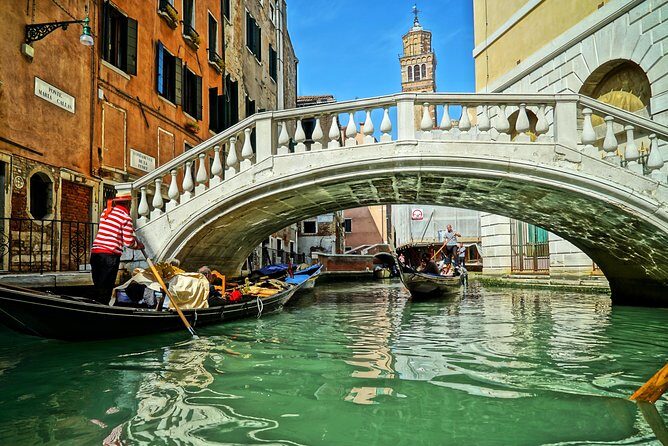
This experience is built for people who want a self-guided GPS tour that still feels structured. If you like knowing you are moving along a meaningful route, but you do not want to keep up with a group timetable, this fits well.
It also suits you if you want to get more out of Venice’s core sights without paying for multiple guided tours. One hour can be enough time to leave with a clearer mental map of how San Marco, opera culture, memorial history, water monitoring, and Rialto tie together.
What it is not: it is not a live guide walking beside you. There is no improvisation, and you are listening to a set narration at each stop. If you prefer deep back-and-forth questions, you will need a traditional tour for that.
Getting started smoothly: timing and practical habits
The tour is active Monday to Sunday, with opening hours listed as 12:00 AM to 11:59 PM for the date range provided. In real terms, I’d think of it as a flexible, “walk whenever you want” type of activity—especially because it is not tied to a specific time slot once you are on the route.
Because it is offline-enabled, you can plan around daylight or evening crowds without worrying as much about cellular coverage. Still, it helps to start when you can hear yourself think and take short pauses.
Two small habits that make this work better:
- Keep your phone charged before you reach the first stop.
- When the audio plays, stop moving for a moment so you actually catch the key points.
Should you book the Heart of Venice audio tour?
Yes—if you want a low-pressure, story-focused Venice walk with offline backup and simple navigation. I’d especially recommend it as a first taste of Venice’s center because the route hits high-impact landmarks—San Marco, Goldoni’s theatre, La Fenice, the Tide Center connection at Palazzo Cavalli, and Rialto—in about an hour.
Skip it if you do not want to rely on your smartphone, or if you are looking for a fully interactive, answer-anything guide experience. Also, if you are sensitive to crowds at major landmarks, plan your listening spots and slow down where the route gets most popular.
If that sounds like you, this is a straightforward way to turn a familiar map into something you can actually remember.
FAQ
How long is The Heart of Venice self-guided audio tour?
It’s approximately 1 hour.
What language is the audio tour offered in?
The tour is offered in English.
How much does it cost?
It costs $11.99 per person.
Do I need data or Wi‑Fi to use it?
No. It includes offline access to audio, maps, and geodata, so you do not need data.
What app do I use for the tour?
You use the VoiceMap application.
Do I need to bring a smartphone?
Yes. A smartphone is not included.
Where does the tour start and end?
It starts at P.za San Marco, 328, 30124 Venezia VE, Italy, and ends at Rialto Bridge, Ponte de Rialto, 30100 Venezia VE, Italy.
Will the audio play automatically?
Yes. The audio plays automatically when you reach each spot.
Is there any special fee on some dates?
On certain dates, day visitors who are staying outside Venice may be required to pay a €5 access fee. For details and exemptions, check https://cda.ve.it
Is it a private experience?
Yes. It is a private tour/activity, and only your group participates.