REVIEW · VENICE
The Heart of Venice: Discover the City on Foot.
Book on Viator →Operated by Star Europe Tours · Bookable on Viator
Venice makes more sense on foot. This guided route ties together Piazza San Marco, Doge’s Palace, and the Rialto area without you getting lost in dead-end alleys. I especially like the radio system for crisp commentary, and the fact that the guide handles navigation so you can focus on what you’re seeing. One thing to plan for: most of the tour happens outside the major sights, and entrance tickets aren’t included.
A big reason this works well is the human touch. In past tours I’ve read about, guides like Rossella and Claudia share a Venice that feels personal—history plus how the city has changed over the years. The group stays small (up to 18), and the pacing fits a simple goal: get your bearings fast and leave wanting more.
If you hate rushing, the 1 hour 30 minutes may still feel quick, because the route hits several iconic stops. Add that you need good weather, and you’ll want to show up on time—arrive late and you won’t be able to join.
In This Review
- Key highlights worth your attention
- The Heart of Venice: why 90 minutes hits the sweet spot
- Meeting point near Calle larga de l’Ascension (and how the tour ends)
- Clear commentary matters: the radio system advantage
- Stop 1: Piazza San Marco and St. Mark’s Basilica’s sparkle (with no ticket pressure)
- Stop 2: Doge’s Palace Gothic drama—and what to do about the Campanile
- Stop 3: Campo Santi Giovanni e Paolo, Bridge of Sighs energy, and big-school architecture
- Stop 4: Marco Polo’s house area, Mercerie commerce streets, and city rhythm
- Stop 5: Rialto trade symbolism, Teatro La Fenice, and Scala Contarini del Bovolo
- Price and value: what you pay for (and what costs extra)
- Who this tour suits best (and who should look elsewhere)
- Practical tips that save time (and keep the day calm)
- Should you book The Heart of Venice: Discover the City on Foot?
- FAQ
- How long is The Heart of Venice: Discover the City on Foot?
- What language is the tour offered in?
- Do I get a mobile ticket?
- Are entrance tickets included for the sights?
- Where does the tour start?
- What’s the group size limit?
- Is there an extra access fee when visiting from outside Venice?
- What happens if the weather is bad or the tour is canceled?
Key highlights worth your attention
- Radio system so you can actually hear the guide from wherever you end up standing
- No-map navigation through the maze, with someone else steering you
- Top Venice sights in a tight route (San Marco to Rialto and beyond)
- Outside viewing focus with entrances not included, so costs stay predictable
- Small group size (max 18) for a smoother walk and easier questions
- Local-route storytelling around Venetian power, Marco Polo, and commerce streets
The Heart of Venice: why 90 minutes hits the sweet spot
Venice can feel like two cities at once: the famous postcard stops, and the city in between them where the real atmosphere lives. This tour’s format is built for the in-between part. In about 1 hour 30 minutes, you get a guided walk that connects key landmarks into a single story, rather than treating each site like an isolated photo stop.
You’ll move at a pace that’s practical—enough time at each stop to hear context and look around, not enough time to wear out your feet. That balance matters in Venice, where the ground is uneven and the turns are frequent. You’re not trying to conquer the whole city. You’re trying to understand it.
I also like that the tour is aimed at people who do not want to do homework. The guide gives you the who, what, and why, so you spend less time figuring out the order of sights and more time seeing details: architecture lines, how buildings relate to each other, and why certain spots became important.
You can also read our reviews of more city tours in Venice


Meeting point near Calle larga de l’Ascension (and how the tour ends)
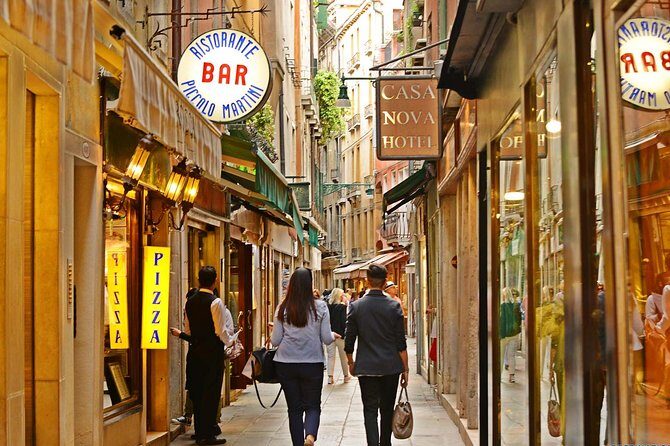
The meeting point is Calle larga de l’Ascension, 1257, 30124 Venezia VE. It’s the kind of central start that makes sense if you’re staying in the San Marco area or anywhere walkable nearby.
Your tour ends back at the same meeting point, which is handy. You don’t have to plan your return from a different neighborhood. You can also pivot right into your next plan—wander, grab food, or continue exploring on your own—without the stress of a late pickup.
Two small timing notes from the rules: you’ll receive confirmation at booking, and if you arrive after the tour starts, you won’t be able to join and won’t get a refund or reschedule. That’s standard for walking tours, but it’s worth respecting here.
Clear commentary matters: the radio system advantage
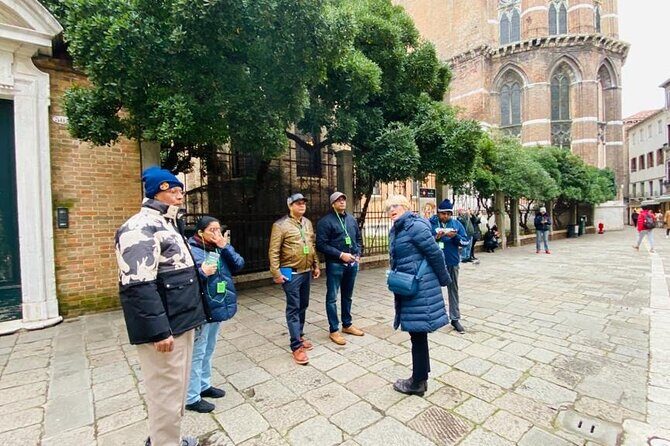
Here’s the practical win: the tour includes a radio system, so you can hear the guide clearly even when the group spreads out slightly. In Venice, that makes a real difference. You may stand near a railing, pause for photos, or get shifted by crowds, and without a sound system, commentary gets swallowed by noise.
With the radio, you’re not constantly turning your head to find the guide’s voice. You can listen while you look, which is exactly how you want to experience Venice—your eyes and ears working together.
This also helps if you’re in a mixed-age group. One review mentioned Rossella doing a great job involving kids (ages 9 and 11). Clear audio makes it easier for children to stay engaged instead of tuning out.
Stop 1: Piazza San Marco and St. Mark’s Basilica’s sparkle (with no ticket pressure)
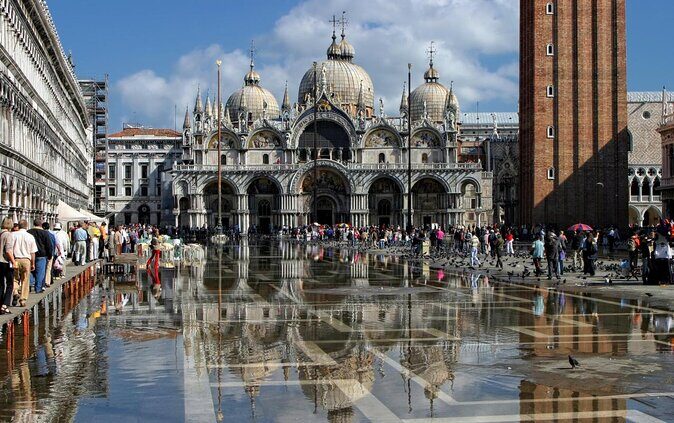
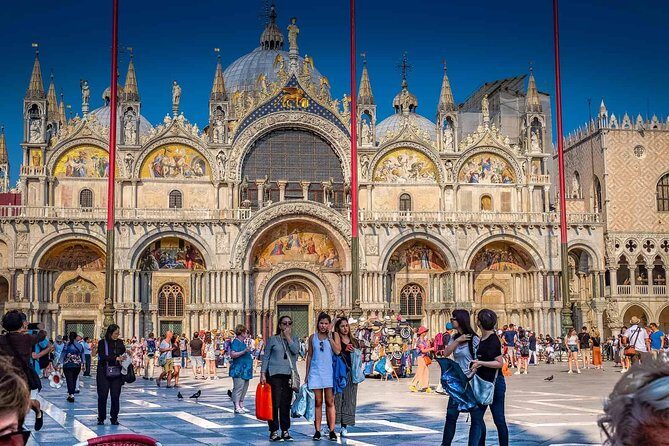
The tour begins in Piazza San Marco, the public “front room” of Venice. Your guide sets the stage with the history of the Venetian Republic—including its rise as a maritime power. It’s useful context, because once you understand Venice’s sea-based wealth and politics, the architecture starts making more sense.
Then you’ll look at St. Mark’s Basilica and its famous visual cues: mosaics and the golden horses. Even if you’re not going inside on this walk, seeing the exterior and being pointed toward what to notice can make your later visit smoother.
Time is about 15 minutes at this stop, and the tour indicates admission tickets are not included. So think of this part as orientation plus visual education, not a full interior visit. If you want the inside, you’ll need to plan that separately.
Stop 2: Doge’s Palace Gothic drama—and what to do about the Campanile
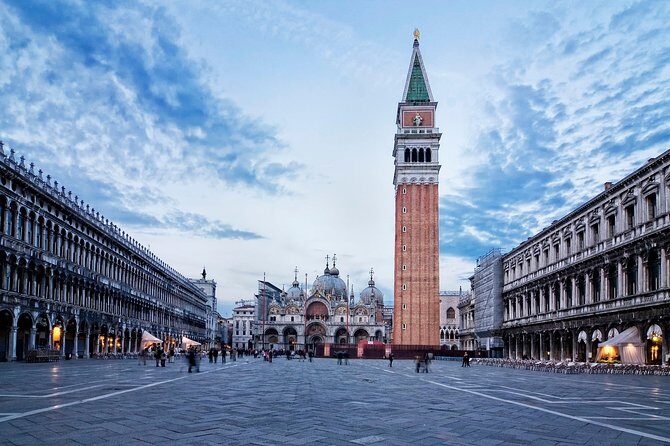
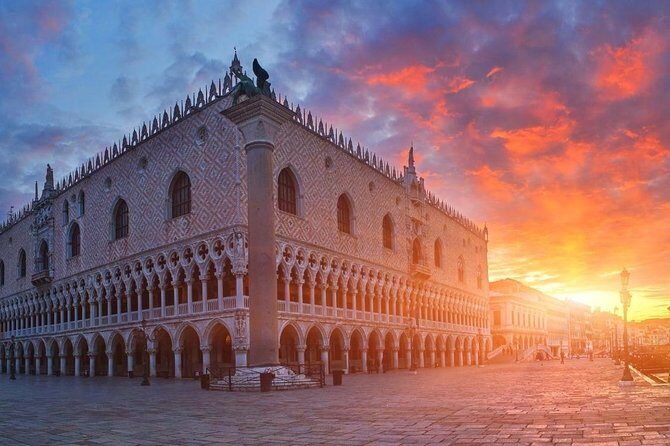
A short stroll takes you to Doge’s Palace, one of the city’s most dramatic buildings. Expect a focus on its Gothic architecture and its history—from its glorious past to a devastating fire. The palace connects Venice’s power to daily governance, and hearing that story while you’re standing in the space helps the building feel less like a random monument.
This stop is also where you’ll hear about the Campanile, traditionally seen as a lighthouse for sailors. The big idea here is how Venice’s landmarks served navigation and identity, not just aesthetics.
Here’s the consideration for your planning: the tour operates outside attractions, and entrance tickets are not included. So if you’re hoping to go up for views, treat that as a separate decision. The description and pacing are designed for people who want to see and understand first, then choose whether to add paid access.
If you’re the type who likes options, this is a good approach. You’re not forced into expensive entrances you might not care about. You learn enough to decide.






Stop 3: Campo Santi Giovanni e Paolo, Bridge of Sighs energy, and big-school architecture
Next comes Campo Santi Giovanni e Paolo, anchored by Scuola Grande di San Marco and the area around the massive SS. Giovanni e Paolo church, described as the largest church. The tour uses this stop to expand the Venice story beyond the most famous cluster near the basilica.
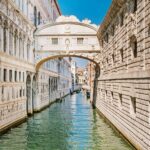
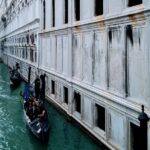
You’ll also cross the Bridge of Sighs. Even as an outdoor crossing, it’s one of those places where context changes the experience. The bridge has a strong reputation, and your guide’s explanation gives you a reason to look more closely instead of just walking through for the picture.
Around 15 minutes here keeps things focused: enough time to understand the role of the institutions in the square, without turning the stop into an all-day church visit. Again, entrance tickets are not included, so expect exterior-focused learning and photo time.
Stop 4: Marco Polo’s house area, Mercerie commerce streets, and city rhythm
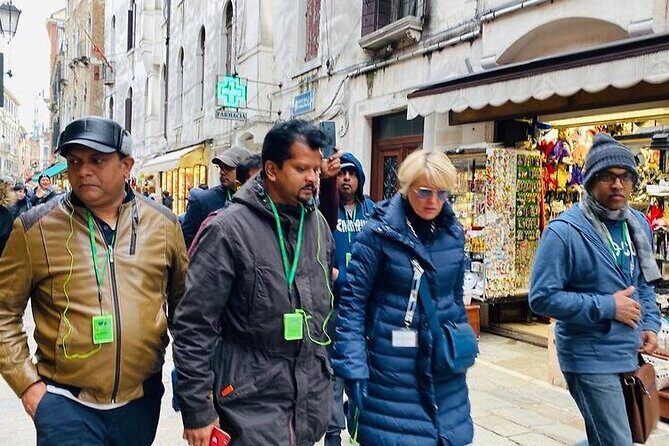
Then you shift from the grand civic buildings to the people-and-business Venice side of the equation.
The tour points out Marco Polo’s house area and ties it to the legendary explorer who once called Venice home. Even if you already know his name, hearing how Venice fit into his story can make the city feel more connected—less like “a place with history” and more like “a place where people lived history.”
You’ll also walk through Mercerie, described as the historic heart of Venetian commerce. This is a big deal for how you experience Venice. The city isn’t only art and palaces. It’s money, shipping, and the streets built around trade.
This stop is still about 15 minutes, which means you’re getting the flavor of the neighborhood without losing the tour momentum. If you love shopping streets and street-level life, you’ll likely want to extend this area after the tour.
Stop 5: Rialto trade symbolism, Teatro La Fenice, and Scala Contarini del Bovolo
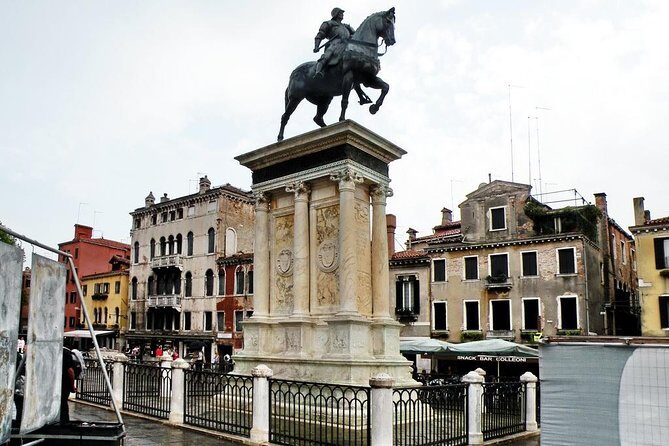
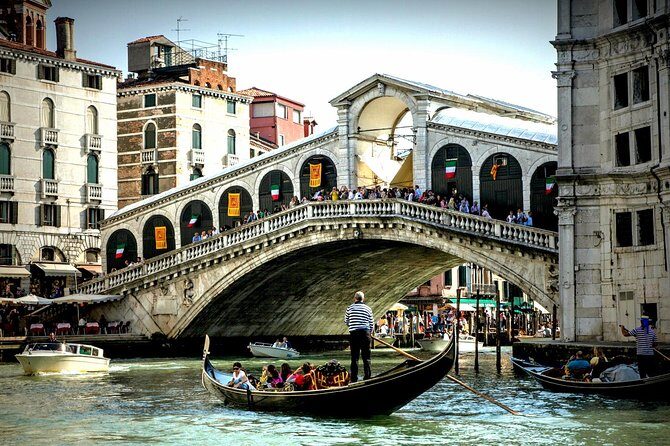
The final stretch moves toward Ponte di Rialto, with the bridge presented as a symbol of Venetian trade. Rialto is one of the most photographed spots in Venice, but on this tour it’s also a story piece. You’re seeing how the city’s economic engine shaped the places locals relied on.
From there, you’ll be taken toward Teatro La Fenice, described as a phoenix that rose from the ashes. That line hints at the theatre’s reputation and the idea of rebuilding after disaster—another theme in Venice’s long history.
The walk concludes with a stop for Scala Contarini del Bovolo, a unique Gothic spiral staircase. Even if you only get a short look, the architecture stands out because it’s such a specific solution to space and structure. It’s exactly the kind of detail that you might miss on your own.
This last stop ties the tour together: power (palaces), faith (churches), trade (Rialto and Mercerie), and culture (La Fenice). In about 90 minutes, you’ve seen Venice as a working system, not just a list of famous names.
Price and value: what you pay for (and what costs extra)
The price is $51.63 per person for about 1 hour 30 minutes. For that, you get:
- an official certified guide
- a radio system so you can hear clearly
- a guided city walking tour in Venice
What’s not included:
- entrance tickets to attractions
- food and drinks
- hotel pickup/drop-off
- transportation to/from the sights
So the value equation is simple. If you mainly want the story, the route, and clear commentary—this is strong value. If you want to go inside St. Mark’s Basilica, Doge’s Palace, or other interiors, you’ll pay those tickets separately, because the tour focuses on outside viewing.
Also factor in the size cap. A maximum of 18 travelers means you’re less likely to get stuck at the back of a line with no chance to ask questions. That kind of small-group feel helps you get more out of every stop.
Who this tour suits best (and who should look elsewhere)
This is a great fit if you:
- are visiting Venice for the first time and want a quick orientation
- prefer a guided plan over map-chasing through tiny streets
- want a smooth experience with clear audio
- travel with kids and appreciate a guide who can keep them involved (one review specifically praised this with ages 9 and 11)
It may be less ideal if you:
- want a ticket-included sightseeing package with lots of interior time
- plan to arrive late and hope to catch up
- dislike outdoor walking, especially if weather turns
The tour also requires a minimum of two guests to run. That’s good for you as a solo traveler, because it suggests they won’t automatically run with one person, but it also means there’s a small chance of cancellation if demand is low.
Practical tips that save time (and keep the day calm)
A few habits make this tour feel easy instead of chaotic:
- Wear comfortable shoes. Venice sidewalks are not forgiving.
- Use the meeting point location as your anchor and arrive early. Late arrival means no join and no refund.
- Bring a plan for entrances: since ticketing isn’t included, decide in advance whether you’ll add interior visits before or after the tour.
- If you’re visiting as a day trip, pay attention to the possible €5 access fee on certain dates for people staying outside Venice. The tour notes that exemptions may apply, so it’s worth checking details before you go.
- Keep an eye on weather. The tour depends on favorable conditions, and you’ll get an option of an alternative date or a full refund if it’s canceled for poor weather.
And if you’re thinking about audio: the radio system is one of the best parts, but it only works if you’re close enough to hear your guide without turning your body away all the time.
Should you book The Heart of Venice: Discover the City on Foot?
If your goal is to get oriented and understand Venice in a single 90-minute walk, I’d book it. The guide + radio system combination is exactly what you want when the streets are winding and the famous sights blur together. You’ll see major landmarks—St. Mark’s area, Doge’s Palace, Campo Santi Giovanni e Paolo, Rialto, La Fenice, and Scala Contarini del Bovolo—and you’ll leave with a clearer sense of how trade, politics, and culture connect.
Skip it only if you want a tour that includes lots of interior access and tickets as part of the price. This is a smart “outside + storytelling” approach, not a full museum day.
If you book, go in with this mindset: you’re buying time with a guide and a route through the city’s big themes. The sights are famous. The real value is how they’re explained while you’re standing there.
FAQ
How long is The Heart of Venice: Discover the City on Foot?
It runs for about 1 hour 30 minutes.
What language is the tour offered in?
The tour is offered in English.
Do I get a mobile ticket?
Yes, this experience uses a mobile ticket.
Are entrance tickets included for the sights?
No. The tour notes admission/entrance tickets are not included, and it only operates outside each attraction and entrance.
Where does the tour start?
The tour starts at Calle larga de l’Ascension, 1257, 30124 Venezia VE, Italy.
What’s the group size limit?
The tour has a maximum of 18 travelers.
Is there an extra access fee when visiting from outside Venice?
On certain dates, visitors planning to visit for the day from outside Venice may need to pay a €5 access fee. Details and exemptions are mentioned, so check the applicable dates before you go.
What happens if the weather is bad or the tour is canceled?
If canceled due to poor weather, you’re offered an alternative date or a full refund. The tour is also subject to a minimum number of two guests to run.