Treviso rewards slow looking, and this walk is made for it. You’ll move through the historic center with a licensed local guide, stopping for stories about legends, symbols, and overlooked details that you’d likely miss on your own. I especially like the mix of famous landmarks with weird little side corners, and the way the canals and arcades turn ordinary streets into photo-ready scenes.
There’s one catch: this is an outdoor, walking-first experience. If you hate walking on cobblestones or you need lots of indoor breaks, plan around that with comfortable shoes and water.
In This Review
- Key highlights you’ll feel on the ground
- Starting at Ponte dell’Università: where the tour clicks into place
- Lodge of Knights to Canale dei Buranelli: Treviso’s elegant bones
- Piazza San Vito and Piazza dei Signori: the squares that shape the day
- Fontana Delle Tette and Treviso Cathedral: details you can’t fake
- Porta San Tomaso to Isola della Pescheria: walls, water, and old working life
- Ponte Dante and the last detours: finishing with the right kind of view
- What makes this small-group Treviso walk worth your $58
- Best for: your travel style if you like stories and photos
- Quick practical tips before you go
- Should you book this Treviso walking tour?
- FAQ
- Where do I meet for the Treviso walking tour?
- How long is the tour?
- What’s included in the price?
- What languages are available?
- What should I bring?
- Is the tour outdoors?
- Do I need to pay for the tour guide’s tip?
Key highlights you’ll feel on the ground
- Licensed local guide who explains what you’re seeing, not just where it is
- Legends and curiosities tied to buildings, symbols, and eccentric characters
- Canal and fountain photo stops that make the best angles easy
- A short break by Canale dei Buranelli to reset your legs and camera
- Classic squares plus city-wall views, including charming water reflections
Starting at Ponte dell’Università: where the tour clicks into place
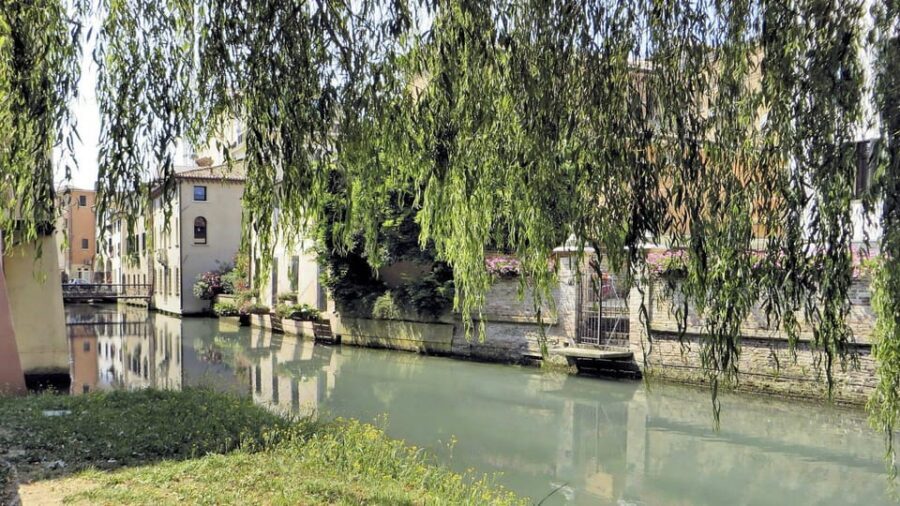
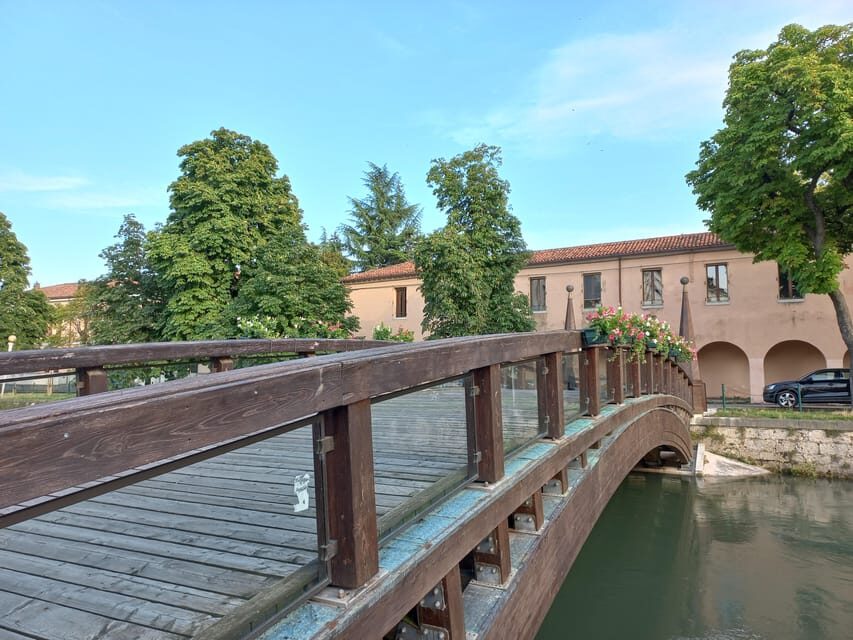
Your walk begins on Ponte dell’Università, near Riviera Garibaldi. This is a smart setup because you’re already in the middle of Treviso’s old-core flow, with water nearby and the historic streets close by. The guide meets you holding a Beescover sign, and you’ll spot them by the identification badge issued by the Italian Ministry of Tourism.
Right away, you get the vibe: this isn’t a rush-through “hit everything” tour. It’s paced for conversation and seeing details. And since the tour is offered in English, Spanish, and Italian, you’ll get the same storytelling no matter which language you choose.
You can also read our reviews of more walking tours in Treviso
Lodge of Knights to Canale dei Buranelli: Treviso’s elegant bones
Early on, you stop at the Lodge of Knights. Even if you’re not a history-nerd, this kind of place works on the eye first: stone, arches, and that sense that the city was built for walking and meeting. The guide then frames it with context, so the architecture feels connected to Treviso’s life over time.
From there, expect a rhythm of short visits and quick photo detours. The tour includes small “hidden” and “secret” stops where the guide points out things that sound like fun stories but also teach you how to read a city. You might hear about mysterious symbols, quirky building touches, and places tied to eccentric personalities or ghost legends. Even when you can’t pinpoint the exact detail from a distance, you’ll learn what to look for next time you’re in Italy.
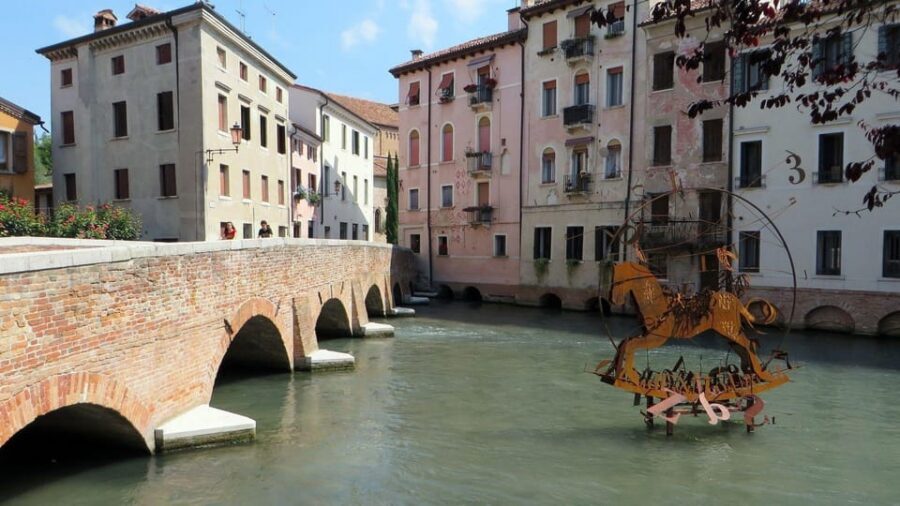
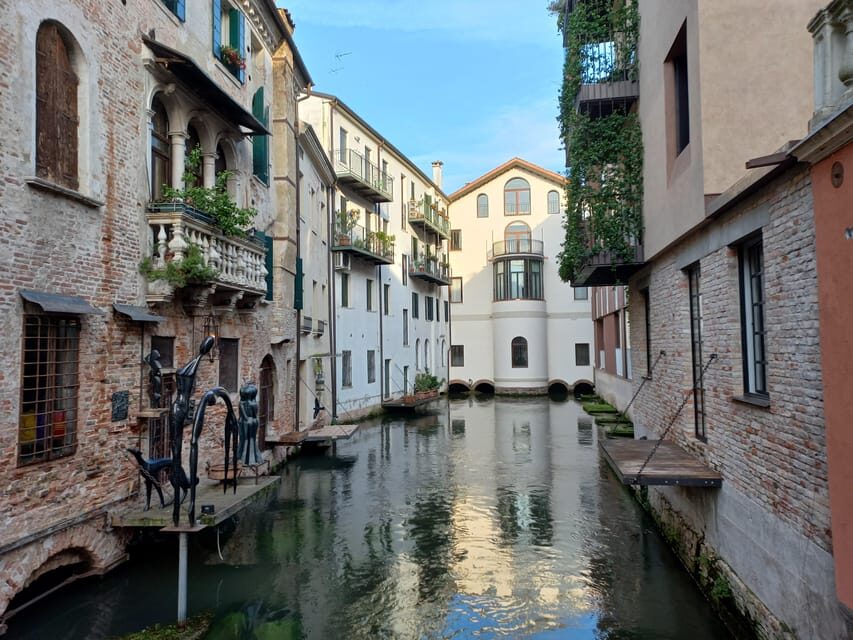
Then comes Canale dei Buranelli, one of the best places on this walk for atmosphere. You’ll take a break here, plus a photo stop. This is where the canal-city mix really clicks: calm water reflections, narrow waterways, and the feeling that Treviso has been doing its own slow thing for a long time. If you’re the kind of traveler who likes to stop and actually look (not just snap and move), this part will be your favorite.
Piazza San Vito and Piazza dei Signori: the squares that shape the day
You’ll roll from the canal world into the square world with a visit to Piazza San Vito. Squares in northern Italian towns are more than open space. They’re social stages—where locals once discussed business, politics, and life in general. On this walk, the guide’s commentary helps you connect the geometry of the place to how people used it.
Next is Piazza dei Signori, with another photo stop built into the flow. This is the kind of square where your camera ends up working overtime because everything feels made to be framed: facades, lines of perspective, and that classic blend of elegant design and everyday street energy. The photo stop isn’t about forcing you to pose. It’s about giving you a moment to step into the angle you’d probably only find by accident.
A practical note: squares often mean more open space and wind. If you’re doing this seasonally, dress smart and keep water handy.
Fontana Delle Tette and Treviso Cathedral: details you can’t fake
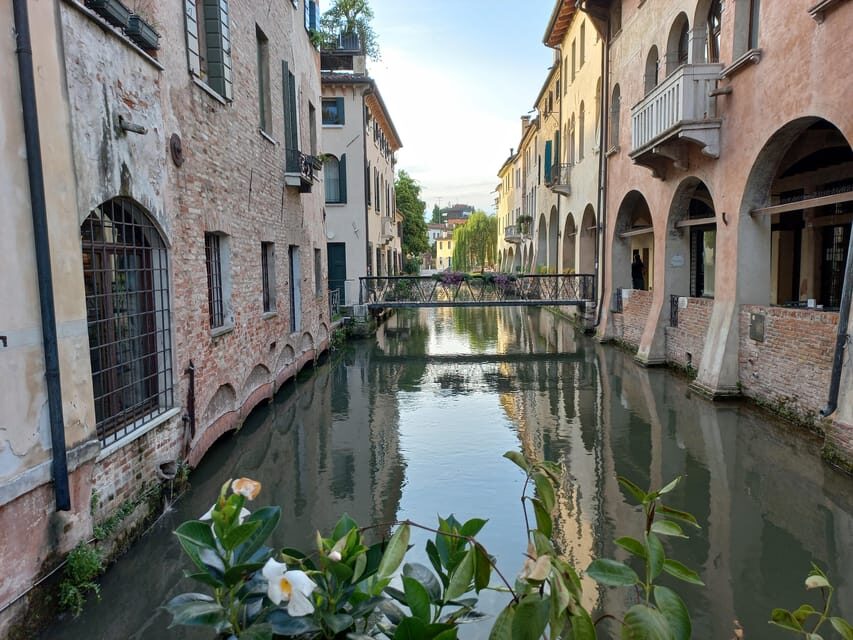
One of the most fun stops on the route is Fontana Delle Tette. I’m not going to pretend the name is subtle, but that’s part of the charm. This is exactly the kind of spot where a guide earns their keep: you’re shown what to notice and you get the context behind why a fountain like this exists and how it fits into Treviso’s character.
After that, you’ll reach Treviso Cathedral. You’ll have a sightseeing photo stop, and the guide ties it back into the bigger story of the city—how events, art, and culture shaped what you see today. Even without going inside (this tour is mainly outdoors), the cathedral works because it anchors the whole walk. You’ll understand why the surrounding streets and squares feel the way they do.
If you’re worried about “tourist cathedral fatigue,” don’t be. The way this route is paced means you’re not stuck staring at one big landmark for too long. You keep moving, but you never feel swept along.
Porta San Tomaso to Isola della Pescheria: walls, water, and old working life
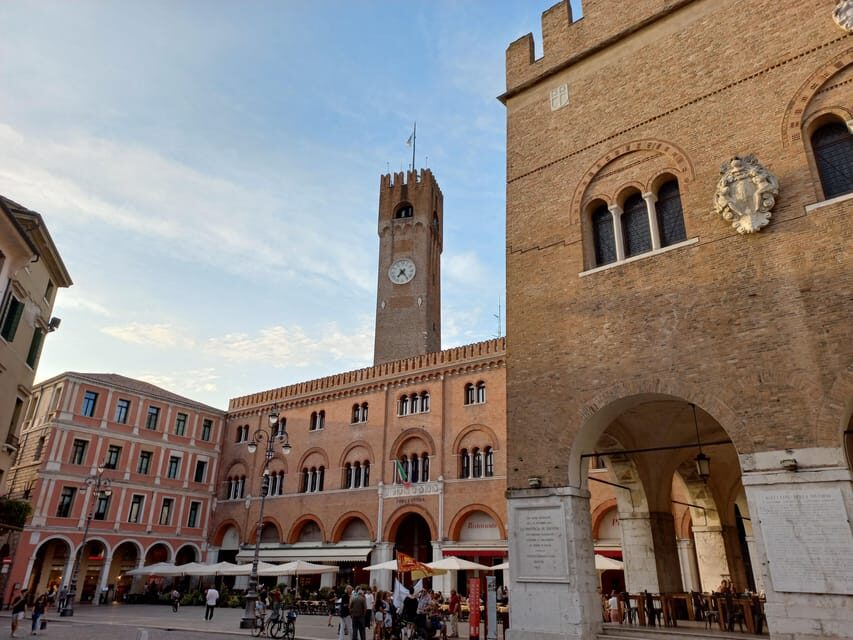
As you continue, the tour brings you to Porta San Tomaso. City gates can feel like leftover scenery, but on a walking tour like this, they become a window into how Treviso defended itself and organized space. The guide’s stories help you picture how people moved through these boundaries—then and now.
Then you get to Isola della Pescheria. This is another high-reward area for both photos and atmosphere. You’ll have a photo stop and a visit, with the focus on how Treviso’s waterfront life shaped the city. The tour also mentions old mill wheels that once animated city life. You might not get a technical lecture on machinery, but you’ll come away understanding how water wasn’t just decoration—it powered daily rhythms.
This is a great section if you like the “how did people live” side of travel. It’s also where the walk feels most distinctly Treviso. In many Italian cities, the water is background. Here, it’s part of the city’s identity.






Ponte Dante and the last detours: finishing with the right kind of view
Near the end, you’ll cross Ponte Dante for a photo stop and a final stretch of the route back toward your starting point. The bridge area is a classic place to slow down because the view naturally gives you depth: water, old buildings, and the sense that the center is all connected.
Between Porta San Tomaso and Ponte Dante, the tour includes additional lesser-known photo stops. Since those exact spots vary by day and path, the best way to think about them is as deliberate “pause points” for the guide’s favorite details—symbols on stone, small architectural quirks, and stories that make the city feel alive rather than static.
You finish back at Ponte dell’Università, where you started. Ending where you began is oddly satisfying because your brain can finally connect the walk into one clear mental map.
What makes this small-group Treviso walk worth your $58
Let’s talk value, because price is always the real question.
At $58 per person for about 2.5 hours, you’re paying for three things: a licensed guide, a focused walking route, and time-efficient storytelling that adds meaning fast. If you’d otherwise do this self-guided, you’d likely spend time searching for the best angles and guessing which details matter. Here, the guide chooses the stops and explains why they’re worth your attention.
The small-group format also matters. You don’t feel like you’re shouting over a crowd, and the guide can adjust pace for questions. That’s where the tour earns its top marks. Recent bookings praise the guides for being prepared and for keeping the walk engaging, not boring. One commonly mentioned guide name is Giulia, highlighted for being competent and helpful in more than one topic area.
Also, this walk is built around outdoor time and photo moments rather than long museum segments. That’s a good value trade if you want to see Treviso as a living city—streets, canals, and squares—rather than as a checklist of indoor stops.
Best for: your travel style if you like stories and photos
This tour fits you if:
- You enjoy learning through real street details, not just big monuments
- You want a guided walk that includes canals, fountains, squares, and city-gate views
- You like photography but don’t want to waste time hunting for the perfect angle
It’s also a strong choice if you’re visiting Treviso for the first time and want a route that helps you understand the city’s layout quickly. Starting near Riviera Garibaldi and ending back at Ponte dell’Università keeps the loop compact and memorable.
If you’re traveling with kids, or if you’re limited by mobility, you’ll need to consider the fact that it’s an outdoor walking tour. The tour data calls for comfortable shoes, which tells you it’s not a sit-and-smile experience.
Quick practical tips before you go

A few simple things make a big difference:
- Wear comfortable shoes for cobbles and uneven historic surfaces
- Bring water, since the walk is outdoors
- Plan to be outside for the full flow—short detours are part of the design
Language is covered too: you can join in English, Spanish, or Italian, with a live guide. The guide will wear the Italian Ministry of Tourism identification badge, and you’ll also see the Beescover flyer/sign at meeting time.
Should you book this Treviso walking tour?
If you want Treviso to feel personal and specific—canals with meaning, fountains with context, and small detours full of stories—this is a solid booking. The route is short enough to fit into a day, but long enough to leave you with a real sense of place. With a licensed guide and repeated praise for an engaging, not-stuffy style, it’s a good value way to see the center without getting lost in it.
I’d book it if you like walking, photography, and learning from street-level clues. I’d think twice if you strongly prefer indoor attractions or you need lots of quiet time off your feet.
FAQ
Where do I meet for the Treviso walking tour?
Meet on Ponte dell’Università near street Riviera Garibaldi in Treviso. The guide will be showing a Beescover sign.
How long is the tour?
The tour lasts about 2.5 hours.
What’s included in the price?
The price includes a licensed tour guide and an outdoor walking tour.
What languages are available?
The live guide offers the tour in English, Spanish, and Italian.
What should I bring?
Bring comfortable shoes and water.
Is the tour outdoors?
Yes, it’s an outdoor walking tour.
Do I need to pay for the tour guide’s tip?
Tips are not included in the price, so you’ll decide whether to tip.