Treviso has a way of rewarding slow walking. This small-group route gives you a fast, friendly way to connect the big landmarks with the legends and little side streets that make the city feel lived-in. What I like most is the guide-led pacing through major squares and historic structures without turning it into a checklist.
I also like that the stops are practical and close together, so you’re not stuck transferring every few minutes. Expect a route that includes Ponte dell’Università, Piazza dei Signori, the Cathedral of San Pietro Apostolo, and a Dante-related stele. The main drawback to plan for: it runs outdoors and depends on good weather, so have a backup mindset if skies don’t cooperate.
In This Review
- Key highlights you will feel right away
- Getting your bearings fast in Treviso’s old center
- Your meeting point: Ponte dell’Università and your guide’s approach
- Stop-by-stop: what each landmark teaches you (and why it’s worth your time)
- 1) Ponte dell’Università: the bridge that starts the stories
- 2) Loggia dei Cavalieri: history plus legend, not just architecture
- 3) Via Buranelli: secret streets where Treviso slows down
- 4) Piazza San Vito: a square with a legend tied to a Treviso specialty
- 5) Piazza dei Signori: monuments, plus the “curiosities behind them”
- 6) Fontana delle Tette: an iconic symbol with history and legend
- 7) Cattedrale di San Pietro Apostolo: a church stop with a hidden detail
- 8) Porta San Tomaso: ancient walls and a personality-linked curiosity
- 9) Isola della Pescheria: anecdotes tied to markets and local specialties
- 10) La Memoria di Dante – Stele Lapidea Sul Ponte Dante: the Dante connection
- Price and value: why $58.38 can make sense here
- What the small-group format does for you in practice
- Who this Treviso walk fits best
- Should you book this Treviso Small-Group Walking Tour?
- FAQ
- How long is the Treviso walking tour?
- Is the tour offered in English?
- Where does the tour start and end?
- How big is the group?
- Do I get a ticket on my phone?
- What if the weather is bad or I need to cancel?
Key highlights you will feel right away
- Small group (max 15 people), so questions and back-and-forth make sense
- English tour with a licensed guide, with stories that connect landmarks to legends
- Free-entry stop format across the scheduled sights, so you’re paying mainly for the walk and interpretation
- Secret streets time on Via Buranelli, where Treviso’s character shows up fast
- Dante connection at La Memoria di Dante – Stele Lapidea Sul Ponte Dante, tied to the writer’s fame
- All anchored at the same meeting point (Ponte dell’Università), so you don’t play navigation games
Getting your bearings fast in Treviso’s old center
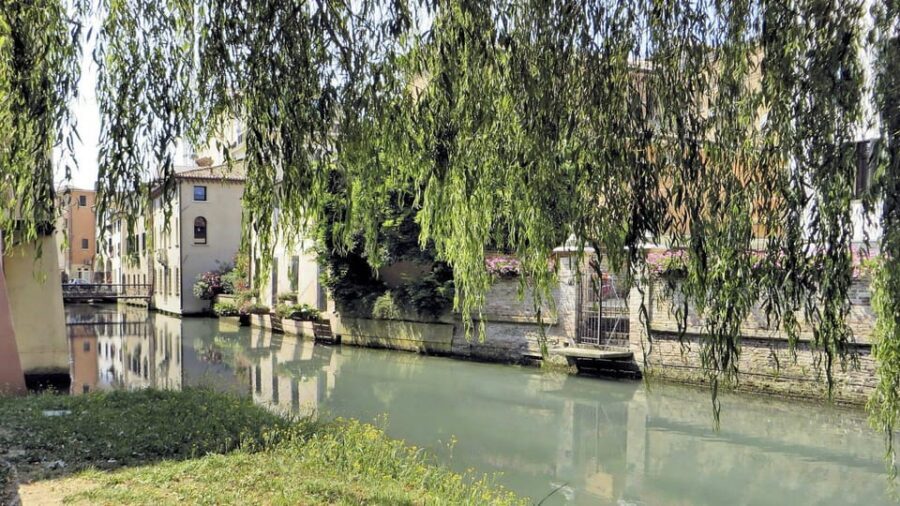
This tour is built for people who want Treviso to click quickly. In about 2 hours 30 minutes, you’ll move through a compact slice of the historic core and learn how the places relate: bridges link districts, squares act like story stages, and even city walls have personality.
What makes it work well is the balance. You get the headline sights you’d expect in Treviso, then you also get “why this place is talked about” details—legends, local stories, and symbolic references. You’re not just looking at stone; you’re hearing what locals have been repeating for generations.
The group size helps too. With a maximum of 15 people, it’s easier to keep up at a walking pace that still leaves room for photos, quick questions, and brief pauses when the guide wants you to notice something specific.
You can also read our reviews of more walking tours in Treviso
Your meeting point: Ponte dell’Università and your guide’s approach
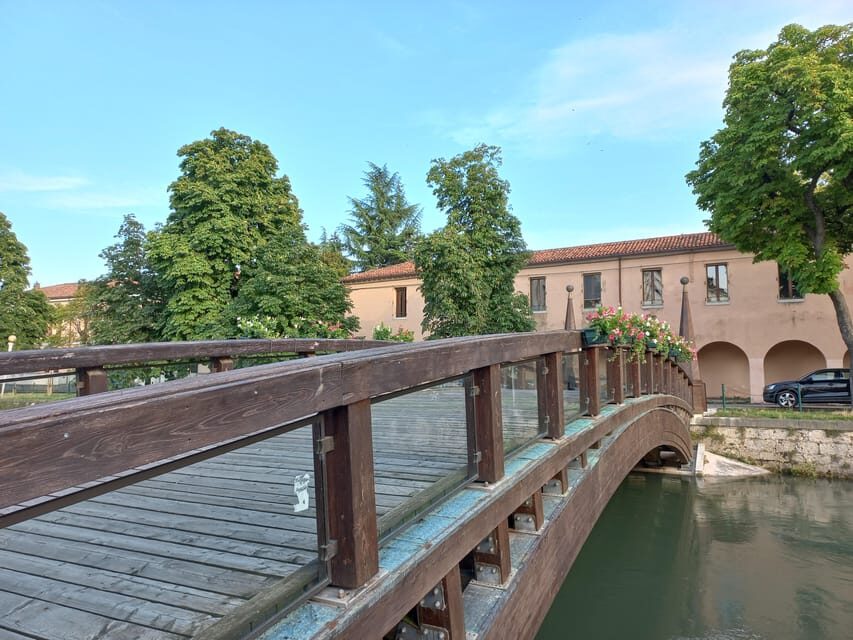
You’ll start at Ponte dell’Università on Riviera Garibaldi (31100 Treviso TV). The tour ends back at the same spot, so you don’t have to wonder how you’ll get home or whether the route drifts away from transit.
Your guide—Giulia or Giacomo—wears the identification badge issued by the Italian Ministry of Tourism. That matters more than it sounds. It signals you’re with a properly registered professional, and it adds confidence in a city where it’s easy to mix up informal meetups with legitimate tours.
Also, you’ll see a Beescover flyer mentioned with the guide. Think of it as a small extra clue that the tour is organized and official, not a last-minute “we’ll see what happens” arrangement.
Stop-by-stop: what each landmark teaches you (and why it’s worth your time)
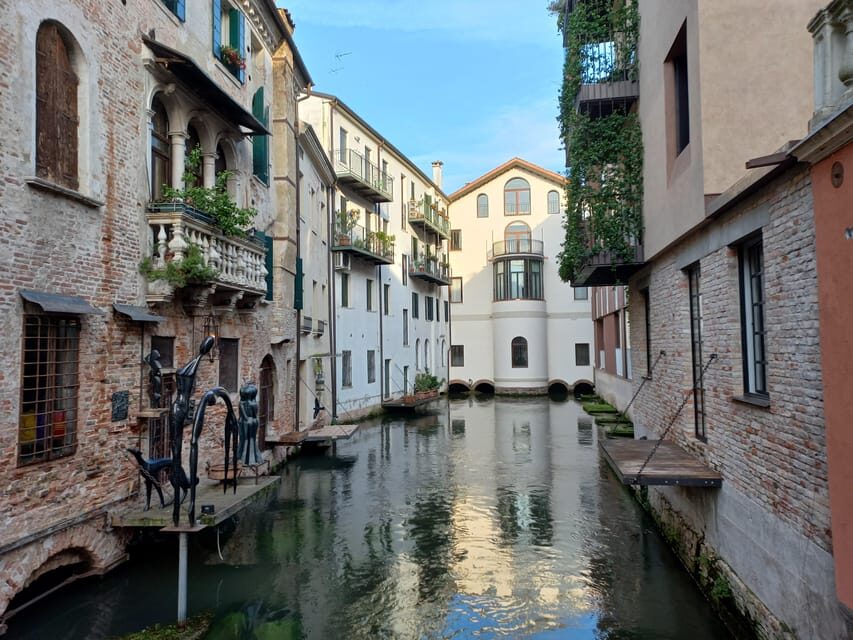
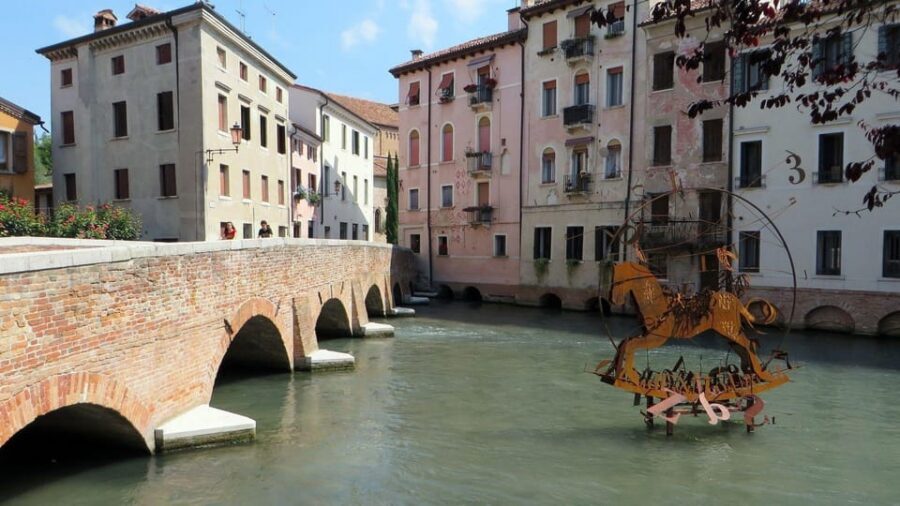
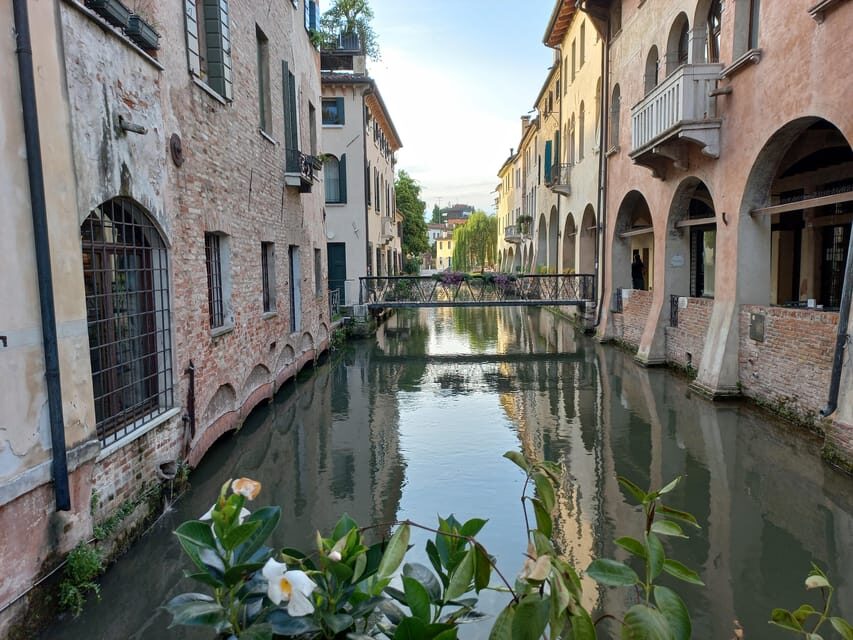
1) Ponte dell’Università: the bridge that starts the stories
You begin right on the water at Ponte dell’Università. Bridges are perfect for an intro walk because they give you a natural “orientation view” of the city and the flow of foot traffic.
From the first minutes, your guide sets the tone: this is not only about where to stand for a photo. You’ll start picking up how Treviso’s history and folklore show up in everyday places, even at a simple crossing.
Practical tip: wear comfortable shoes here. Bridges don’t look like “long walking,” but Treviso’s center rewards steady steps and quick turns, and you’ll want your feet to cooperate.
2) Loggia dei Cavalieri: history plus legend, not just architecture
Next comes the Loggia dei Cavalieri. This stop is framed around the history and legends surrounding the place, which is exactly the kind of storytelling that makes buildings feel human.
The value for you is simple: you’ll learn context that would take you much longer to piece together on your own. Even if you don’t catch every detail, you’ll leave knowing what people connect to this spot and why.
If you prefer “tell me the story behind the façade,” this is one of your best stops.






3) Via Buranelli: secret streets where Treviso slows down
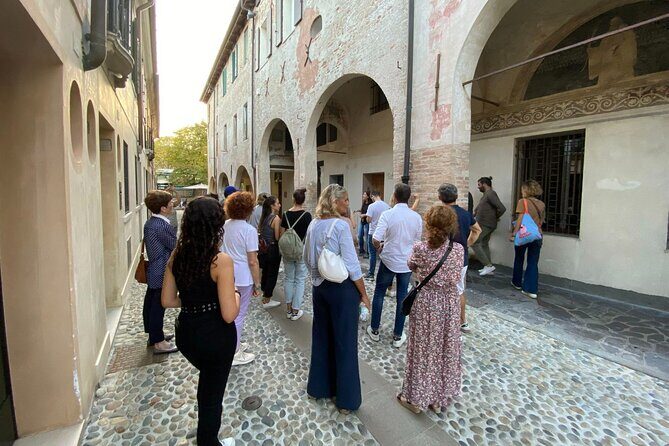
Then you shift from big landmarks to secret streets and charming corners on Via Buranelli. This part is all about atmosphere. Expect narrow passages, small viewpoints, and the kind of street texture you miss when you rush from one square to the next.
This is where the tour earns its name as both sights and hidden moments. You’re not going far off the beaten path—you’re just moving in the way locals actually experience the city: by turning down the next small street and seeing what changes.
Practical note: these lanes can be tight. Stay close to the group and avoid stopping too long in chokepoints, especially if you want the guide to keep moving at a comfortable pace.
4) Piazza San Vito: a square with a legend tied to a Treviso specialty
Piazza San Vito is next, and it’s taught through the square’s history and a legend connected to a traditional Treviso specialty. This is a classic trick of effective touring: instead of only describing stone, it links the place to what people eat, celebrate, and repeat.
For you, it’s a chance to connect your future meal plans with what you’re learning now. If you like food-related context, this stop makes Treviso feel like a place with memory, not only monuments.
If you’re less interested in folklore and more focused on photos, you’ll still get a strong sense of the square’s role in the city’s flow.
5) Piazza dei Signori: monuments, plus the “curiosities behind them”
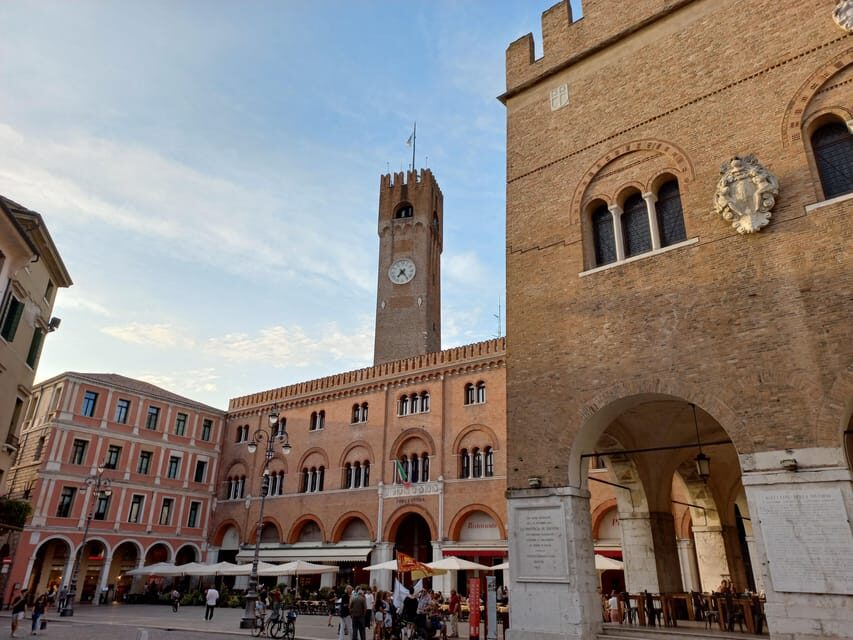
Piazza dei Signori is one of the main squares you should expect on any Treviso overview. Here, you’ll admire the main attractions and hear curiosities and secrets about the monuments.
This is where the guide’s storytelling really matters. Squares like this can feel intimidating if you’re just standing there reading plaques. With a guide, you get a clearer sense of what to look for and what to ignore.
If you like “okay, I get why this matters,” this stop is a strong payoff. It’s also a great moment to pause for photos because the sightlines in the square are usually easy to capture without fighting crowds at every angle.
6) Fontana delle Tette: an iconic symbol with history and legend
Then you’ll reach Fontana delle Tette, a Treviso symbol you’d probably notice even without a tour. But what makes this stop worthwhile is that you’ll get the history and legends behind it.
This is one of those places where the first reaction is often surprise, and the second reaction is curiosity once you know what story the community associates with it. You don’t need to be an art historian to enjoy this. You just need the guide’s frame.
If you’re traveling with friends who think they already know everything, this fountain often flips the script. It’s a fun, memorable stop without being a time-sink.
7) Cattedrale di San Pietro Apostolo: a church stop with a hidden detail
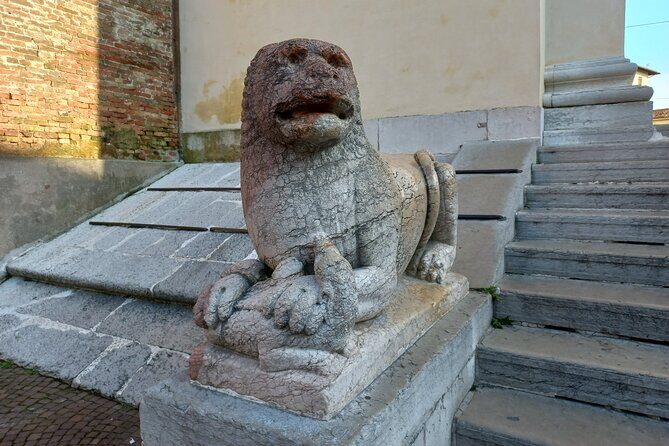
Next is the Cathedral of San Pietro Apostolo. The tour focuses on the church’s history and then points out a hidden detail linked to a cruel figure.
That “cruel figure” detail is the kind of story that transforms a stop from passive sightseeing into active noticing. You’ll be taught what to look for, so you’re not just walking into a big building and guessing what matters.
Practical thought: cathedrals can have specific lighting and interior rules. Keep an easy pace, be mindful of quiet areas, and don’t block where other people need to move.
8) Porta San Tomaso: ancient walls and a personality-linked curiosity
You’ll then visit Porta San Tomaso, tied to the ancient city walls. The tour includes the history of the walls and a curious detail linked to a unique personality.
This stop works well if you like when tourism isn’t only about grand halls and statues. City gates and walls explain the city’s shape—how Treviso protected itself and how people entered and exited.
Even if you only remember one thing here, it’s usually the idea that walls aren’t just defensive structures. They also become part of the stories a city tells about itself.
9) Isola della Pescheria: anecdotes tied to markets and local specialties
Now you move into Isola della Pescheria, where you’ll hear anecdotes related to Treviso’s traditional markets and local specialties. Markets have a distinct rhythm: they’re social, practical, and connected to daily life.
This stop is valuable because it shifts the tour from “old stone” to “old habits.” It helps you understand why certain foods and specialties are treated like local identity, not only like tourist attractions.
If you want a walking tour that doesn’t forget the everyday city, this is one of the better stops to justify the time.
10) La Memoria di Dante – Stele Lapidea Sul Ponte Dante: the Dante connection
You finish with La Memoria di Dante – Stele Lapidea Sul Ponte Dante, a bridge-related stop famous through the renowned writer. The tour gives you the history and legend of the bridge made famous by Dante.
This is a strong closer because it ties Treviso to a bigger cultural thread. And it also gives you something to talk about later when you compare what you learned to what you’ve seen in other Italian cities.
If you’re a literature fan, you’ll likely enjoy the narrative payoff. If you’re not, you can still treat it as a “Treviso talks to the world” moment.
Price and value: why $58.38 can make sense here
At $58.38 per person for roughly 2 hours 30 minutes, you’re paying for more than walking. You’re paying for a licensed guide, a licensed operator, and a route designed to keep interpretation tightly linked to the places you’re seeing.
It also matters that the tour schedule lists each stop as admission ticket free. That means your cost is mostly guide time and storytelling, not a chain of separate paid entries.
The small-group cap (up to 15 people) helps with value too. You’re less likely to feel like a number, and you’re more likely to actually absorb the connections the guide is making—especially at stops like the cathedral detail or the symbolic fountain.
For budget planning, I’d treat this as a good “orientation + interpretation” expense. If you do only one guided experience in Treviso, this kind of route often gives you the most useful context for what you’ll explore after.
What the small-group format does for you in practice
A max group size of 15 changes the whole feel of the tour. You’ll have fewer delays, more room to ask questions, and better chances of hearing the guide without straining.
It also means the tour is better for people who don’t want a loud, chaotic city scramble. You still walk, you still cover a lot, but you do it in a calmer way.
One small consideration: with a route that includes several stops and brief time at each one (about 15 minutes per stop), you’ll want to be ready to move when the guide says move. If you like to linger for 30+ minutes in one place, you may feel a bit “timed.” The good news is that you’ll know exactly where you might want to return later on your own.
Who this Treviso walk fits best

This tour is a strong fit if you want:
- A first trip to Treviso and you need context fast
- Stories and local legends alongside the main sights
- An English guide who can explain why places matter, not only what they are
It also suits people who like a structured route with a clear start and end at Ponte dell’Università. If you’re pairing this with other plans the same day, you’ll appreciate the predictability.
If your ideal tour is strictly art-historical with lots of technical details, you might want to balance it with self-guided time for slow reading. But if you want meaning, you’re in the right place.
Should you book this Treviso Small-Group Walking Tour?
I’d book it if you want Treviso to make sense quickly. The biggest reason is the combination of licensed guide storytelling and a route that connects squares, bridges, and gates to legends and local references you can actually remember.
I’d skip it only if you hate outdoor walking or you know you’ll want lots of long stops. The pacing is efficient, and it’s weather-dependent. But if you can handle a brisk, friendly walk, this is a practical way to see the city’s core and leave with stories you can carry to dinner.
FAQ
How long is the Treviso walking tour?
It runs for about 2 hours 30 minutes.
Is the tour offered in English?
Yes, it is offered in English.
Where does the tour start and end?
It starts at Ponte dell’Università on Riviera Garibaldi, Treviso, and it ends back at the same meeting point.
How big is the group?
The tour has a maximum of 15 people.
Do I get a ticket on my phone?
Yes, the tour uses a mobile ticket.
What if the weather is bad or I need to cancel?
The experience requires good weather. If it’s canceled due to poor weather, you’ll be offered a different date or a full refund. You can also cancel for a full refund up to 24 hours in advance.