REVIEW · VENICE
Venice: 1.5-Hour Walking Tour
Book on GetYourGuide →Operated by Venice Events srl · Bookable on GetYourGuide
Venice can feel like a maze. This tour turns that maze into an easy, guided walk through real Venice. You start in the big postcard zone of St. Mark’s Square, then your guide leads you away from the heaviest foot traffic into Castello’s quieter streets, calli, bridges, and small public squares.
I especially like two things here. First, you get a live local guide plus a personal audio system, so you can actually follow the story without craning your neck in the crowd. Second, the route focuses on everyday Venice in Castello, including stops at campo Santa Maria Formosa and campo San Giovanni & Paolo, where the Doges were buried.
One consideration: this is an external walking tour only. It does not include museum or attraction entry, so if you want to go inside major sites, you’ll need separate plans.
In This Review
- Key things to know before you go
- From St. Mark’s Square to Castello: a smarter first walk in Venice
- Starting in St. Mark’s Square: what you’ll get before you leave
- The Castello shift: calli, canals, bridges, and real neighborhood rhythm
- Campo Santa Maria Formosa: why this square matters
- Campo San Giovanni & Paolo: Doge burials, political power, and a quieter view
- On the move: how the live audio makes a real difference
- The wrap-up back at San Marco via Mercerie
- Price and value: what $37 buys you in real Venice time
- Best-fit moments: who should book this walk
- Should you book this Venice walking tour?
- FAQ
- How long is the Venice 1.5-Hour Walking Tour?
- Where does the tour start?
- What’s included in the tour?
- Is museum or attraction entry included?
- What languages are offered?
- Is the tour wheelchair accessible?
- What should I bring or prepare for?
- How does cancellation work?
- Is it okay to bring children?
Key things to know before you go
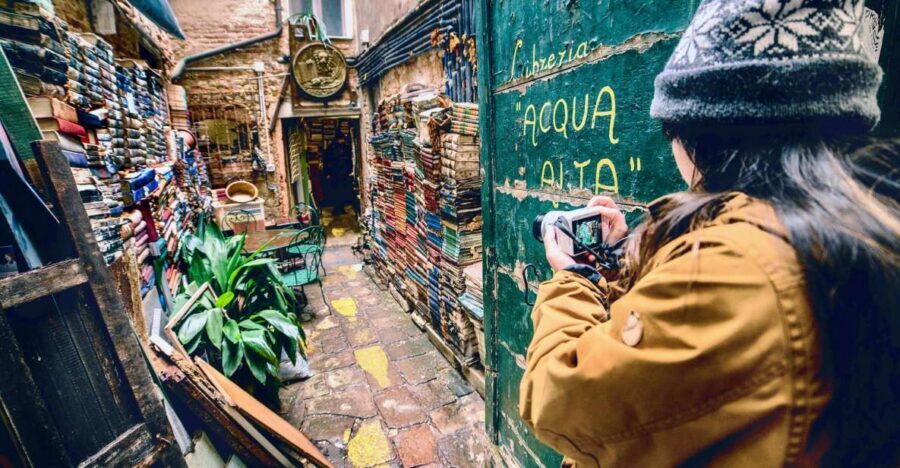
- Escaping St. Mark’s crowds: the walk shifts quickly into the less busy Castello area behind San Marco.
- Campi and churches, not just streets: you’ll spend time in real squares like Santa Maria Formosa and San Giovanni & Paolo.
- Audio headsets for clear commentary: you don’t have to shout over other groups.
- St. Mark’s Square context first: the tour builds a foundation before you move into residential Venice.
- Multilingual live narration: English, French, German, Spanish, and Italian are covered (depending on the tour option).
- Back to San Marco via Mercerie: you finish near the shopping corridor between Rialto and San Marco.
From St. Mark’s Square to Castello: a smarter first walk in Venice
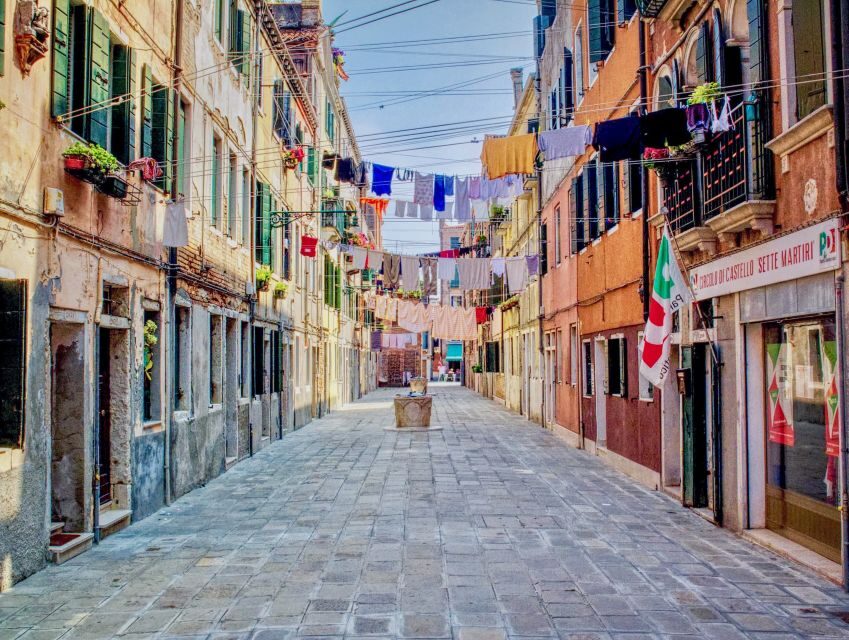
If you’re doing Venice for the first time, your biggest challenge is orientation. Streets twist. Bridges appear out of nowhere. Landmarks crowd your view in St. Mark’s area, but that doesn’t teach you how Venice actually works day to day.
This 1.5-hour walking tour is designed for that exact moment. It gives you an ordered path: start with the famous square, learn what you’re looking at, then move into Castello where you’ll see a different side of the city. One review praised the experience for living history you won’t get from a map alone, and that tracks with how the tour is structured: it’s a story you walk through, not a checklist.
And yes, guides matter. A couple of comments highlight the guide quality, including Rosanna, who was described as highly knowledgeable about both ancient Venice and contemporary life, and Elisabeth, noted as friendly and able to explain things you won’t usually see in guidebooks.
You can also read our reviews of more walking tours in Venice

Starting in St. Mark’s Square: what you’ll get before you leave
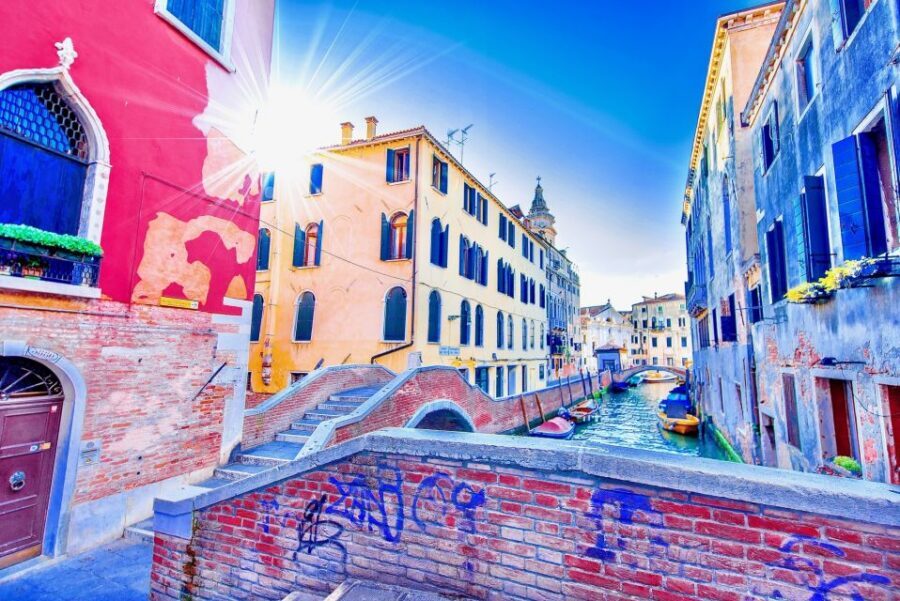
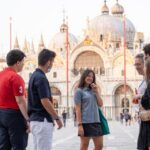
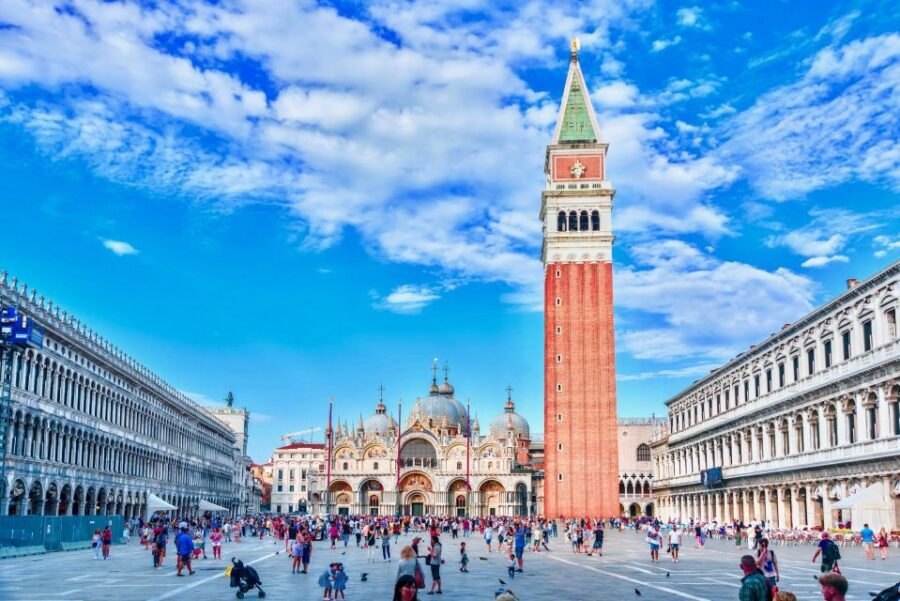
You meet about 15 minutes early at Calle larga de l’Ascension, behind the Correr museum area and on the side opposite St. Mark’s Basilica. Look for the TURIVE assistant next to the post office San Marco. Then the tour starts with St. Mark’s Square itself.
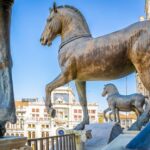
Why this opening works: St. Mark’s Square is visually loud. It’s hard to understand what you’re seeing if you don’t have a thread. The tour gives you that thread right away with a historical introduction and architectural context tied to the major sights you’ll notice around you.
Here’s what the narration is set up to cover as you stand in the square:
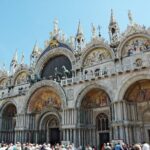
- St. Mark’s Basilica and what it represents
- Doge’s Palace, once the seat of power of the Republic of Venice
- The Renaissance clock tower, with its standout presence in the square
The point isn’t to sprint past landmarks. It’s to help you connect symbols and layout to meaning, so when you later walk Venice’s quieter side, it doesn’t feel like random alleys. If you like history, you’ll appreciate the way the guide connects past authority and present-day city life. If you don’t usually care about history, you still benefit because it turns confusing scenery into something you can follow.
The Castello shift: calli, canals, bridges, and real neighborhood rhythm
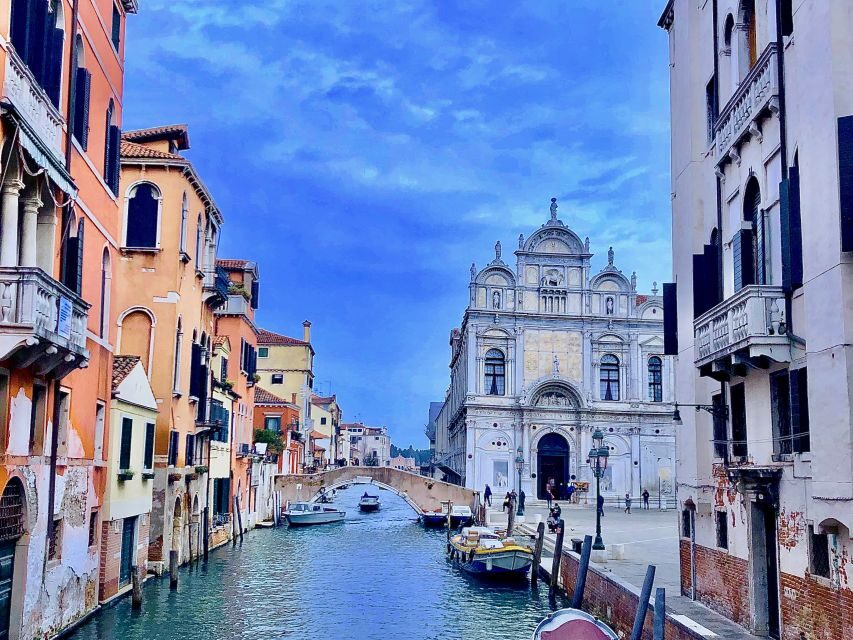
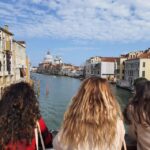
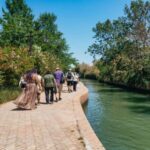
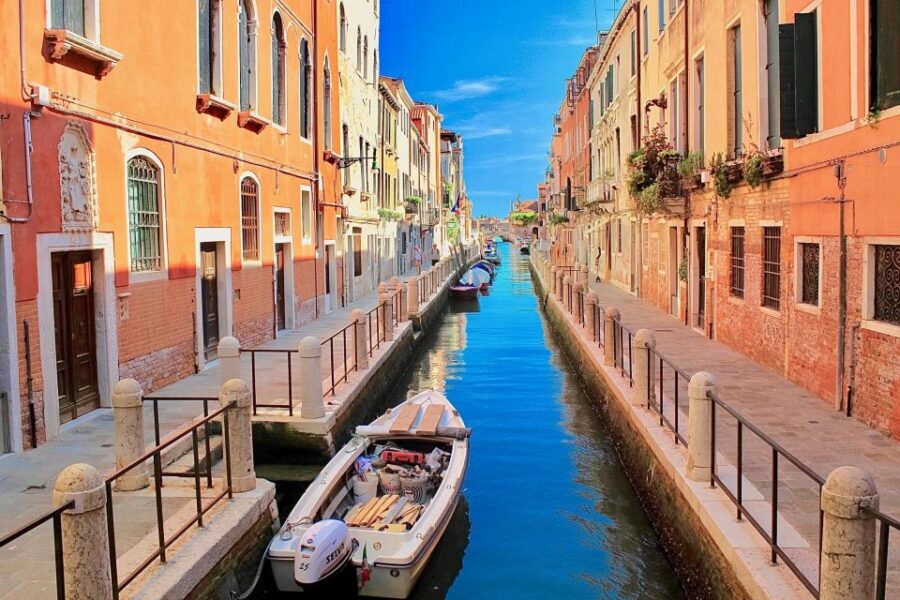
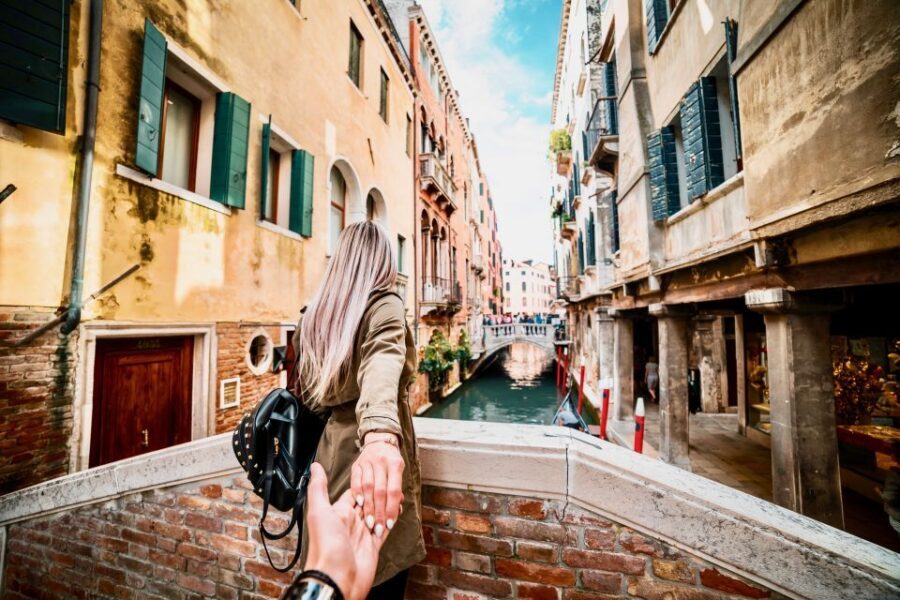
Once you leave the square, the atmosphere changes fast. The tour heads into Castello, a more residential part of Venice where you’ll walk through the city’s smaller-scale fabric: narrow alleys (calli), bridges over canals, winding water routes, and open squares (campi) that feel more like places people actually use.
This is where you get the tour’s main value: you’re escaping the heaviest congestion without sacrificing the sense that you’re seeing authentic Venice. One review summed it up as an experience that stays away from the biggest crowds, and that’s exactly the intention behind moving away from San Marco and into Castello.
As you walk, the guide explains origins, symbols, traditions, architecture, and daily life themes in present-day Venice. You won’t spend your time just trying to take photos. You’ll understand why certain streets curve, why squares matter, and what buildings and spaces are doing in the city’s social system.
A practical tip for you: wear comfortable walking shoes. Venice ground can be uneven, and the tour is rain or shine, so plan for slippery patches after wet weather. This tour keeps moving, so good footwear helps you stay present instead of thinking about your feet.
Campo Santa Maria Formosa: why this square matters
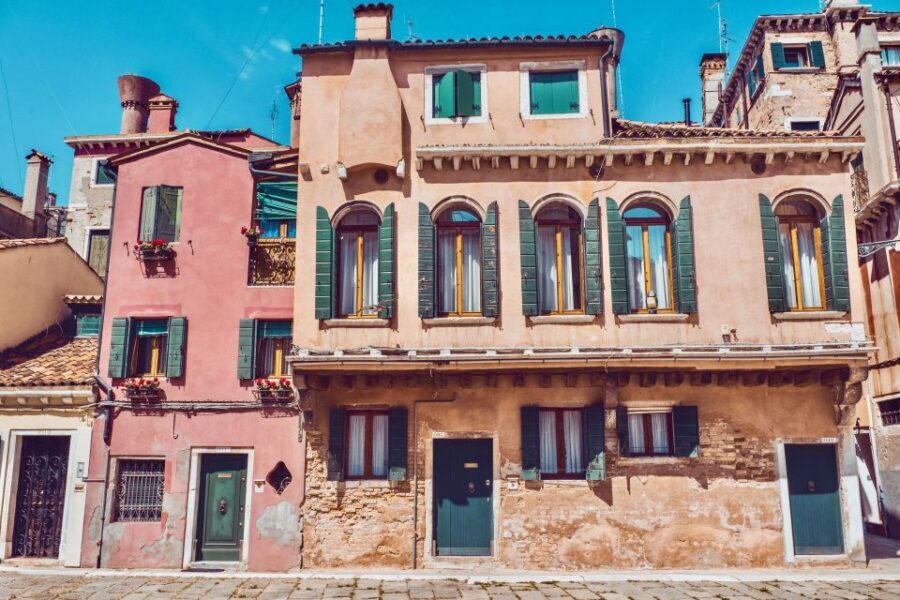
In Castello, you’ll stop at campo Santa Maria Formosa. Squares like this are key to understanding Venice because they’re the city’s “breathing spaces.” Streets bring you in; campi give you room to pause, look around, and see how buildings face the public realm.
Even if you don’t go inside any attractions, a guided stop in a square gives you context: the guide can point out relationships between nearby architecture and the way Venice organizes community life. You get a break from the corridor feel of calli, but you don’t lose the thread of the walking story.
If you’re the type who usually skips “just a square,” I’d still recommend paying attention here. In Venice, squares are never purely decorative. They often act as orientation points, and your guide uses them to show how the city’s layout connects neighborhood identity and daily movement.
Campo San Giovanni & Paolo: Doge burials, political power, and a quieter view
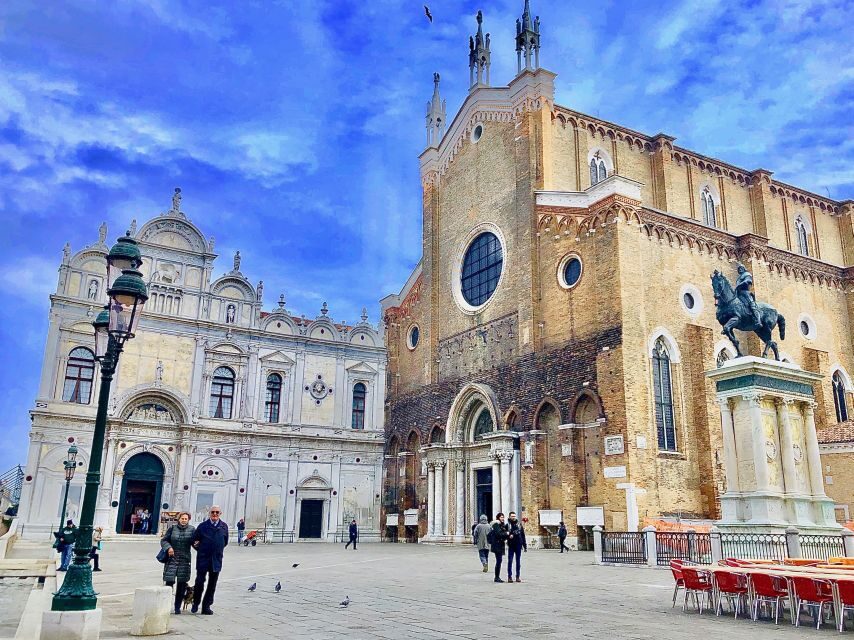
Next up is campo San Giovanni & Paolo, home to a major basilica in this area. This stop is especially meaningful because the tour specifically highlights that the Doges of Venice were buried there.
That detail matters because it ties two parts of the tour together:
- The opening in St. Mark’s Square frames Doge’s authority through major public power sites.
- The Castello walk then shows that political gravity isn’t locked away in one monumental building. It’s part of the city’s sacred and civic landscape.
One of the most practical effects of this kind of storytelling is that it makes Venice feel less like separate “zones.” You start seeing links. You’ll likely recognize the difference in scale too: St. Mark’s is monumental and intense. San Giovanni & Paolo’s area gives you a more grounded sense of how Venice structured reverence and governance.
And because this is a walking tour without museum entry, you get this context without the time cost of lines and ticketed sites.




On the move: how the live audio makes a real difference
One thing that’s unusually useful here is the inclusion of a personal audio system and headset. Venice is noisy in a specific way: not just sounds, but overlapping groups, traffic near major zones, footsteps, and constant visual distractions.
With the headset, you don’t have to keep searching for your guide’s voice. You can actually listen to explanations while you look at the space around you. That’s a big deal on a city walk where the goal is understanding, not just sight-seeing from one angle.
This matters even more because the tour offers multiple languages. Live commentary is available in English, French, German, Spanish, and Italian (depending on the language option you book). So if you’re traveling as a group with mixed language needs, this structure can help everyone stay included.
Group size can vary. One review mentioned it felt smaller and more personal with Elisabeth, while another comment suggested it wasn’t as small as expected. Either way, the headset reduces the usual downside of larger groups: you can keep up without constantly repositioning.
The wrap-up back at San Marco via Mercerie

By the end of the walking tour, you return to San Marco’s Square and pass through Mercerie, the shopping connection street between Rialto and San Marco.
Ending this way is smart because it sets you up for your next move. If you’re planning to wander on your own afterward, Mercerie acts like a practical spine through the middle of the action. You’re not suddenly deposited in the middle of nowhere; you’re returned to a recognizable route that connects you to the rest of your day.
Also, having already walked Calli and campi in Castello, the Mercerie feel different. You’ll notice the contrast between Venice as a daily neighborhood system and Venice as a main corridor for shopping and foot traffic.
Price and value: what $37 buys you in real Venice time
At $37 per person for about 1.5 hours, this isn’t a bargain-price “quick glance” tour. But it also isn’t a high-cost museum day. The value comes from three things you actually use:
- A fully qualified local guide delivering historical and cultural context
- The headset system, which makes the information usable in real conditions
- A route that includes multiple meaningful public spaces (St. Mark’s Square, Castello’s campi, and the return through Mercerie)
So you’re paying for interpretation plus logistics. You’re not paying for attraction tickets, and that’s part of why the cost stays reasonable. If you already plan to visit major interiors separately (and you’re okay with walking rather than entering), this tour works as a great first-day orientation.
If you’re hoping the tour itself includes museum or attraction entry, that’s not what you’re booking. It’s an outside route. I’d treat it like a guided “how to see Venice” class that happens at street level.
Best-fit moments: who should book this walk
This tour fits you best if:
- You want a structured first walk that helps you understand what you’re seeing around St. Mark’s Square
- You’d rather spend time in Castello’s quieter residential streets than only in the most crowded lanes
- You like history, but you also want it tied to place, squares, and everyday city design
- You prefer a tour with live commentary you can hear clearly, especially with the headset system
It might feel less ideal if:
- You want a deep museum visit or timed entries inside big sights
- You need wheelchair access (this tour isn’t wheelchair accessible)
- You dislike walking in uneven historic streets, even with comfortable shoes
Should you book this Venice walking tour?
I’d book it if you’re planning a short Venice trip and want your first 90 minutes to do heavy lifting for orientation. The combination of St. Mark’s context, then a move into Castello’s calmer neighborhood geometry, gives you contrast without extra transport or ticket hassle. Add the headset system and the chance to hear a guide well in your chosen language, and the tour starts to feel like a smart use of time rather than just another walking loop.
Skip it only if your priority is getting inside major attractions during this time window. For external viewing and explanation, this is a strong match.
FAQ
How long is the Venice 1.5-Hour Walking Tour?
It lasts 1.5 hours.
Where does the tour start?
The tour starts in St. Mark’s Square area. The meeting point is Calle larga de l’Ascension – 30124, behind the Correr museum area, on the opposite side of St. Mark’s Basilica.
What’s included in the tour?
You get a guided walk between St. Mark’s Square and Castello, plus a personal audio system and headset for the commentary.
Is museum or attraction entry included?
No. This tour is an external walking tour only and it does not include access to museums or attractions.
What languages are offered?
Live tour commentary is available in English, French, German, Spanish, and Italian (depending on the option).
Is the tour wheelchair accessible?
No. It is not wheelchair accessible.
What should I bring or prepare for?
Wear comfortable walking shoes. The walk happens rain or shine.
How does cancellation work?
You can cancel up to 24 hours in advance for a full refund.
Is it okay to bring children?
Children are free up to 5 years old. From 6 years old, they pay the full ticket price, and ID is required.
If you tell me your travel month and whether you plan to visit any interiors (basilica, palace, or museums) on the same trip, I can suggest the best order for your day.