REVIEW · VENICE
Venice: 1.5-Hour Wandering Around the City
Book on GetYourGuide →Operated by Venice Boat Experience · Bookable on GetYourGuide
Venice, explained in 90 minutes. This 1.5-hour walking tour strings together some of the Serenissima Republic’s most recognizable addresses, from St. Mark’s Square to Campo SS. Giovanni e Paolo, with a licensed guide who turns landmark names into a simple walking story. I love that the route feels efficient: you see the political heart, then you shift to less-obvious squares where the city’s life still shows through. I also like that the walk ends with Mercerie—the main connection between Rialto and San Marco—so the tour doubles as a practical way to orient yourself on foot. One thing to consider: it’s a moderate walk on Venice sidewalks and bridges, and you’ll want shoes that handle uneven stone.
You’ll meet near St. Mark’s at Calle Larga de l’Ascension, in front of the TURIVE kiosk, and you should aim to arrive 15 minutes early so you don’t start sprinting in that way only Venice can force. The tour runs with live guides in German, English, Spanish, and French, and it includes an optional visit to a glass furnace at the end for a craft-minded moment. One note from real life: a guide named Silvana was described as very information-heavy but not super performance-driven—so expect facts and context, not a theatrical show.
In This Review
- Key highlights worth your attention
- Your 90-minute Venice plan: what this walk covers
- St. Mark’s Square: the “why” behind the postcards
- Santa Maria Formosa Square: a calmer corner with sharper stories
- Campo SS. Giovanni e Paolo: Doge’s Pantheon and civic Venice
- Marco Polo’s House and Malibran Theatre: culture, not only stone
- Mercerie and the Rialto connection: walking the city’s main thread
- Optional glass furnace: add one craft stop
- Price and value: is $41 worth 1.5 hours in Venice?
- Meeting point and timing: how to avoid the Venice scramble
- Who should book this tour (and who should not)
- Should you book this 1.5-hour Venice wandering tour?
- FAQ
- What is the duration of the Venice walking tour?
- Where is the tour located?
- How much does the tour cost?
- Where do I meet the guide?
- How early should I arrive?
- Is the tour mostly walking?
- What languages are available for the live guide?
- Is there an optional stop in the tour?
- Who can join based on ticket type?
- Is it refundable if I cancel?
Key highlights worth your attention
- A tight loop through Venice’s power spots: St. Mark’s Square, Santa Maria Formosa Square, and Campo SS. Giovanni e Paolo
- Monuments you can actually orient to: Basilica San Marco, Palazzo Ducale, Bell Tower, Clock Tower, and Procuratie
- Doge’s Pantheon focus at Campo SS. Giovanni e Paolo, plus the Great School of Charity and Captains of Fortune
- Marco Polo’s House and Malibran Theatre stop for stories that link past and more recent Venice
- Mercerie as the walking spine between Rialto and San Marco, plus shopping streets energy
- Optional glass furnace visit for a Venetian art/craft angle
Your 90-minute Venice plan: what this walk covers
This is the kind of Venice tour that works when you want the big picture without spending your whole day in a line. In about 1.5 hours, you cover a sequence of classic places that help you understand why Venice mattered for centuries—and how that history still shapes the city’s layout and mood.
The itinerary hits a recognizable trio of zones:
- St. Mark’s Square (the ceremonial center)
- Santa Maria Formosa Square and Campo SS. Giovanni e Paolo (where you feel Venice’s civic and religious identity in a more walkable way)
- The route back through Mercerie toward the Rialto area
And sprinkled in are two cultural anchors that make the walk feel more than just monuments: Marco Polo’s House and Malibran Theatre. That combination is exactly why this tour is useful for first-timers—or anyone who’s only got a short window between boat rides and meals.
You can also read our reviews of more city tours in Venice


St. Mark’s Square: the “why” behind the postcards
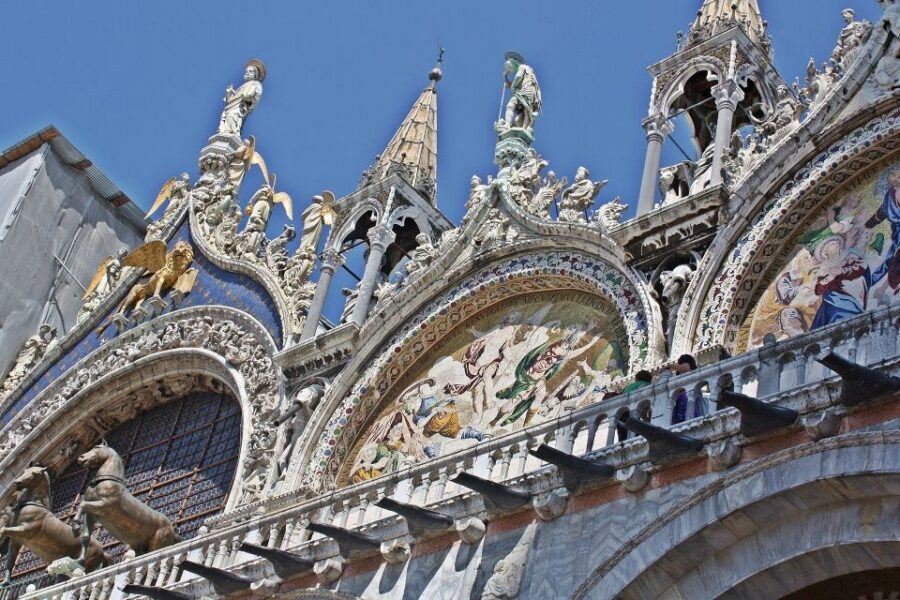
You’ll start at Piazza San Marco and get oriented around what the tour calls the origins, history, and descriptions of the main monuments there. Even if you’ve seen photos already, being guided through the square helps you connect the dots: not just what’s there, but why it’s there and what it meant to the Serenissima Republic.
As you walk, the guide points out the major set pieces you’ll hear named:
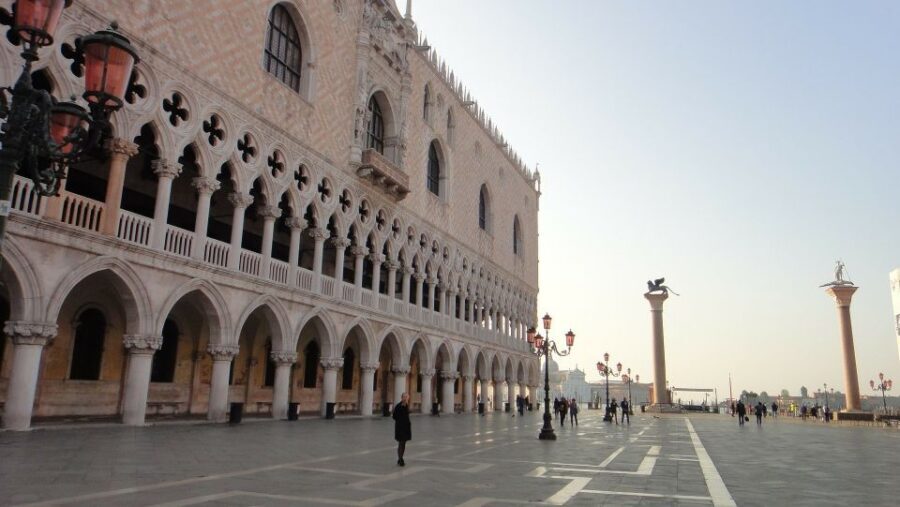
- Basilica San Marco
- Palazzo Ducale
- Bell Tower and Clock Tower
- Procuratie
Here’s the practical value: when you know what those places represent, you stop treating the square like a single dramatic scene and start reading it like a system. The buildings aren’t random beauty; they’re part of the city’s organization of power, ceremony, and public identity. That makes the rest of your Venice time easier, because you’ll recognize connections when you wander on your own afterward.
What I like most about this start: St. Mark’s is huge in reputation, but in a short walk you can still focus. You’re not just staring. You’re learning how to look—then moving on before the square swallows your energy.
Santa Maria Formosa Square: a calmer corner with sharper stories
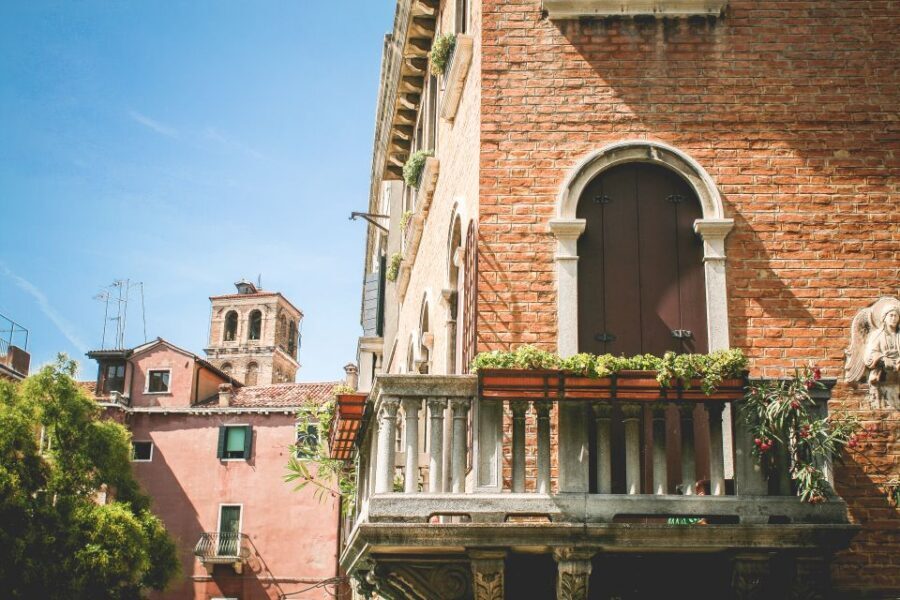
After St. Mark’s, you shift to Santa Maria Formosa Square. The tour frames it as a characteristic square with history and anecdotes. That word matters, because in Venice the difference between “saw a place” and “got it” is often the story the guide attaches to it.
What you’ll learn around here is tied to nearby stops mentioned in the route, especially:
- Campo SS. Giovanni e Paolo
- The Great School of Charity
- Captains of Fortune
Even if you don’t spend ages at each address, the guide’s focus helps you understand that this part of the city wasn’t just scenic. It was organized around public life—religious, civic, and economic. And that’s a big part of why Venice still feels like a city with rules, not just a museum.
Possible drawback: Santa Maria Formosa and the surrounding streets can feel less “must-see-famous” than St. Mark’s, so if you’re only in Venice for the loudest sights, you might need the guide’s context to make it land. If you enjoy learning while walking, it’s a strong payoff.
Campo SS. Giovanni e Paolo: Doge’s Pantheon and civic Venice
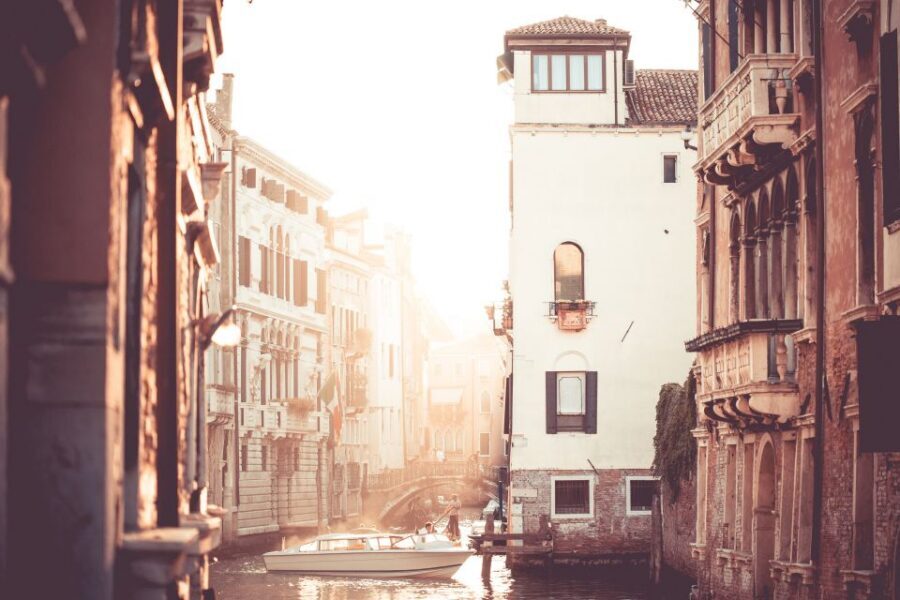
The tour brings you to Campo SS. Giovanni e Paolo, described as the Doge’s Pantheon—plus it connects the area to institutions like the Great School of Charity and the Captains of Fortune.
This is where the walk gets especially meaningful. St. Mark’s often feels like Venice’s stage set. Campo SS. Giovanni e Paolo feels like the city’s ledger. You’re hearing how Venice arranged honor, faith, and civic identity in the same neighborhood pattern.
If you’re the type who wants to understand Venice as a functioning republic, not just a set of buildings, this is one of the best stops on the route. You don’t need extra hours here because the tour is structured to give you the key names and the story thread.
Tip for your eyes: while the guide talks, don’t just listen—also glance around the square and think: who would gather here, and what would they talk about? That simple question turns the stop from a checklist into a sense of real place.
Marco Polo’s House and Malibran Theatre: culture, not only stone
Then you move into a corner where Marco Polo’s House and the Malibran Theatre sit close enough that they make sense as one narrative unit on a short tour.
What’s included here is mainly the human side: anecdotes about the past and recent history, tied to those landmarks. Marco Polo’s name brings the long-distance imagination, while Malibran Theatre anchors Venice in arts and performance—two sides of the same idea: Venice wanted to be known, and it wanted to entertain.
This is a helpful contrast after the civic weight of the previous squares. If you’re doing a day of museums and churches, this stop gives your brain a small breather without losing historical context.
What to expect in tone: based on how the tour is described and how guides can vary, you’ll likely get a mix of facts and story-driven context rather than a dramatic narration style.






Mercerie and the Rialto connection: walking the city’s main thread
After the squares and landmarks, you return toward St. Mark’s via Mercerie. This is described as a vital connection between Rialto and San Marco and also Venice’s main shopping street.
This section is underrated. A lot of Venice tours end after you see the big monuments. This one uses Mercerie as a practical corridor, so you feel the city’s everyday motion. You’re learning the geography while also passing through the street that connects two of Venice’s most famous areas.
Why you’ll appreciate this later: once you’ve walked Mercerie with context, you can navigate more confidently the rest of your trip. Even if you don’t shop, you’ll know where you are and how that street fits into the city’s layout.
It also keeps the tour from feeling like only “standing still.” You’re moving, crossing small stretches, turning corners, and gradually building a mental map.
Optional glass furnace: add one craft stop
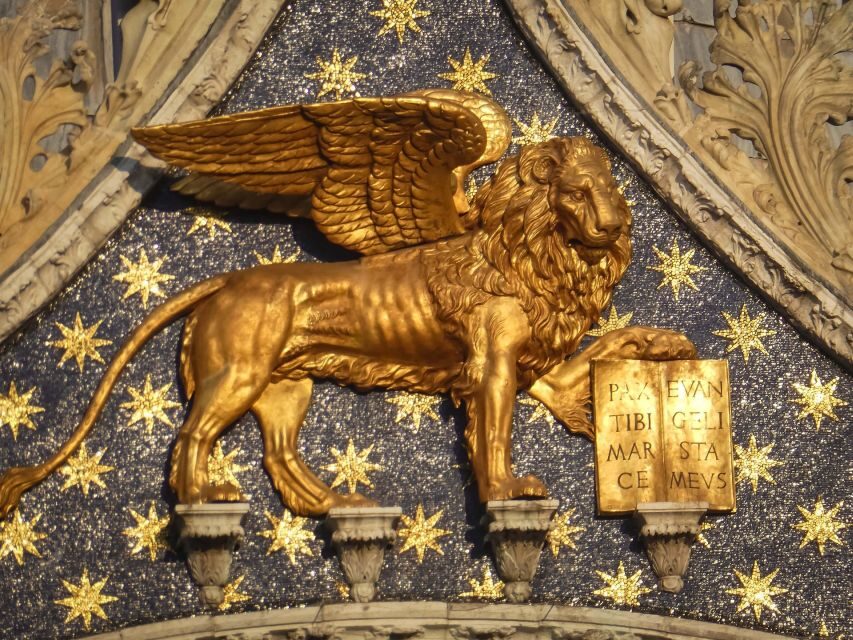
At the end, the tour includes an optional visit to a glass furnace—a touch of Venetian art. This is the kind of add-on that works well because it shifts your perspective from politics and monuments to craft and making.
I like optional stops because you can decide based on your day:
- If you’re curious about the materials behind Venice’s famous glass, this is a natural follow-up.
- If you’re tired and want to head straight to dinner, you can skip without feeling like you missed the main storyline.
Just know it’s “optional,” so plan your energy accordingly.
Price and value: is $41 worth 1.5 hours in Venice?
$41 for a 1.5-hour guided walking tour is a reasonable price for what you get here: a licensed guide, a focused route through major areas, and a clear structure that covers multiple landmark clusters without wasting time.
Here’s how to judge value in plain terms:
- You’re paying for interpretation, not just walking. The guide ties together names like Basilica San Marco, Palazzo Ducale, and the Doge’s Pantheon area so your visit makes sense faster.
- You’re buying efficiency. In a short window, this tour helps you see more of Venice’s “big idea” than you could comfortably piece together alone.
- The route includes many named stops, plus optional glass. That variety makes it more than a single-square experience.
Is it worth it if you’re a solo wanderer with great guide instincts? Maybe not. But if you’d rather not spend your first day figuring out what matters, this is a solid way to get your footing.
Also, because the tour is short, you’re not committing an entire afternoon. That’s a big deal in Venice, where time can vanish between bridges and snack breaks.
Meeting point and timing: how to avoid the Venice scramble
The meeting point is Calle Larga de l’Ascension, in front of the TURIVE kiosk near St. Mark’s Square. You’ll want to be there about 15 minutes before departure.
Practical advice: Venice streets can make even experienced travelers lose track of time. Give yourself buffer. If you arrive early, you’ll start the tour calm, not annoyed. And calm is a better sightseeing tool.
Who should book this tour (and who should not)
This 1.5-hour walking tour is a great fit if:
- You’re short on time but want a guided orientation to Venice’s main story
- You like learning while walking rather than doing one long museum session
- You want to connect St. Mark’s with the route toward Rialto via Mercerie
- You prefer a route that hits multiple key landmarks without overcommitting
You might skip it if:
- You hate moderate walking on uneven surfaces
- You want only deep, slow stops where you can linger and read everything yourself
- You’re expecting a long, detailed museum-style visit. This is a structured stroll, not a full “every room” day
Should you book this 1.5-hour Venice wandering tour?
I’d book it if you want your first Venice day to feel organized and meaningful. The route covers the kind of landmarks that shape Venice’s reputation—St. Mark’s Square, Doge’s Pantheon area at Campo SS. Giovanni e Paolo, Marco Polo’s House, Malibran Theatre—and it threads them together with enough time to also walk Mercerie toward the Rialto connection.
Keep your expectations aligned with the format: it’s a guided walk with a moderate pace, not a deep, all-day immersion. If that matches your style, you’ll likely come away with a much clearer sense of how Venice works—then you can wander the rest of the city with confidence.
FAQ
What is the duration of the Venice walking tour?
It lasts 1.5 hours.
Where is the tour located?
It takes place in Veneto, Italy, around central Venice near St. Mark’s.
How much does the tour cost?
The price is $41 per person.
Where do I meet the guide?
Meet at Calle Larga de l’Ascension, in front of the TURIVE kiosk near St. Mark’s Square.
How early should I arrive?
Arrive 15 minutes prior to the scheduled departure time.
Is the tour mostly walking?
Yes. A moderate amount of walking is involved.
What languages are available for the live guide?
You can choose a guide in German, English, Spanish, or French.
Is there an optional stop in the tour?
Yes. An optional visit to a glass furnace is included at the end.
Who can join based on ticket type?
Adult pricing applies to all travelers.
Is it refundable if I cancel?
Free cancellation is available up to 24 hours in advance for a full refund.