REVIEW · VENICE
Venice Film Tour: Explore Iconic Movie Locations
Book on Viator →Operated by deTourist Venice Valerio Coppo · Bookable on Viator
Venice turns cinematic on this walking route. This Venice Film Tour follows movie locations across town so you see familiar landmarks in a new way, with guide stories that connect scenes to specific spots. You’ll hear how filmmakers used the Floating City long before it became a selfie backdrop, from early cinema moments to James Bond-style drama.
I especially love two things: first, the guide’s movie references actually help you notice details you’d otherwise miss. Second, you get a focused route with off-the-beaten-path corners worked in, not just the postcard hits. In one tour day, I also like how the pacing can feel tailored when the group is small.
One consideration: this is a tight, outdoor route with lots of short stops, so if you’re hoping for long museum time or slow wandering, you might feel a bit rushed. Also, the experience depends on good weather, so plan to dress for sun (and be ready to move quickly).
In This Review
- Key things you’ll notice on the Venice Film Tour
- A 2-hour Venice Film Tour with Valerio Coppo: price and value that makes sense
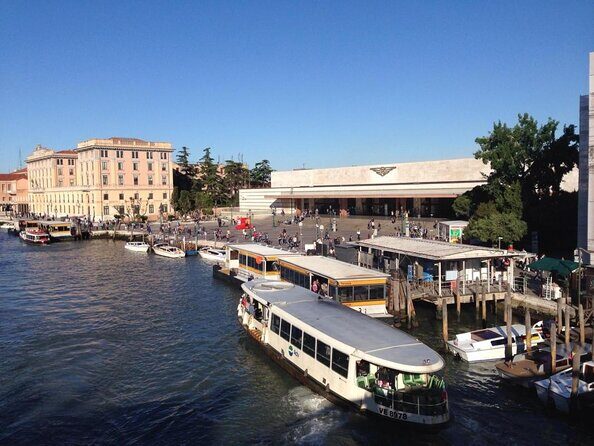
- Getting your bearings at the railway station: where cinema loves to start
- Campo del Ghetto and Chiesa di San Stae: Venice gets emotional fast
- Grand Canal and Mercati di Rialto: the waterline and the market stage
- Santa Maria dei Miracoli, Scuola Grande di San Marco, and Ca’ Rezzonico: art, rules, and plot
- Teatro La Fenice, Scala Contarini del Bovolo, and Campo Santa Maria Formosa: fire, legend, and comic-book destruction
- San Barnaba, Gritti Palace, and the James Bond orbit: movie transport meets real stone
- Basilica di Santa Maria della Salute, Piscina Sant’Agnese, and Hotel Danieli scenes
- Doge’s Palace and San Marco Square set pieces: the final big-scene payoff
- What you should expect from the guide and the route
- Who this tour is for (and who might want a different plan)
- Should you book the Venice Film Tour?
- FAQ
- How long is the Venice Film Tour?
- How much does the tour cost?
- Is the tour offered in English?
- Is pickup available?
- Is this a private tour?
- Are admission tickets included for the stops?
- Is there an extra access fee in Venice on some dates?
- What happens if the weather is bad?
- What’s the cancellation window for a full refund?
Key things you’ll notice on the Venice Film Tour
- Valerio Coppo runs the tour and connects film trivia to real streets and buildings in a friendly, practical way
- Movie clips on the spot can be used to match the filming location to the scene you’re imagining
- Short, efficient stops (often 10–15 minutes) let you see major landmarks in about two hours
- Route choices aim to reduce time on the most crowded paths, so you actually enjoy the walk
- Big-cinema variety spans decades, including Senso, Don’t Look Back Now, Moonraker, Othello, and Spiderman: Far From Home
A 2-hour Venice Film Tour with Valerio Coppo: price and value that makes sense
For about two hours, you’re paying around $185.43 per person for a guided, location-based walk. That price can feel high at first, until you notice what you’re buying: a licensed guide who knows how to read Venice like a film set—plus a route that compresses a lot of landmarks into a short window.
The tour also offers pickup, group discounts, and a mobile ticket. If your Venice plan is “see a lot, but don’t waste time,” those details matter. And since the experience is designed for your group only, it’s easier to keep the conversation moving and ask questions without feeling like you’re shouting over a busload.
One more practical note: it’s often booked about 56 days in advance, so if you want a specific time slot, don’t wait until the last minute. And if you’re coming on a day visit from outside Venice, check whether a €5 access fee applies on your date at cda.ve.it.
You can also read our reviews of more tours and experiences in Venice.

Getting your bearings at the railway station: where cinema loves to start
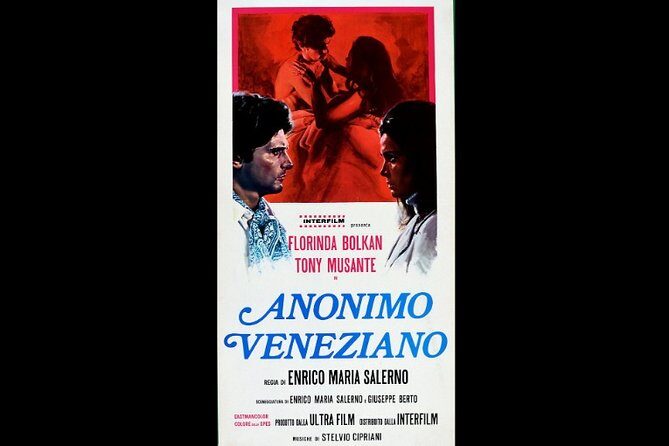
The tour begins at the railway station area, a spot that shows up in several films. It’s especially memorable because it anchors scenes tied to The Anonymous Venetian (1970) and the lighter, tourist-hustle vibe of Venice, the Moon and You (1958), with Alberto Sordi.
Why this matters for you: starting here helps you understand Venice as filmmakers see it—arrivals, departures, and the moment visitors realize the city is a stage. It also sets the tone for the rest of the walk: you’re not just collecting “pretty places,” you’re learning the city’s visual logic.
The drawback is simple: the opening moment is fast. If you hate being on your feet right away, arrive early, be ready, and let the guide get you oriented.
Campo del Ghetto and Chiesa di San Stae: Venice gets emotional fast
Next you head into Campo del ghetto, connected to Luchino Visconti’s Senso (1954). This is where the story’s passion begins between Countess Livia Serpieri and Austrian Lieutenant Franz Mahler—small space, big feelings, and very cinematic tension in a real neighborhood setting.
Then you stop at Chiesa di San Stae (Eustachio), a church used as a backdrop for Don’t Look Back Now (1973). The key detail here is the funeral boats in the final scenes, shown as they moored in front of the church with a view toward the Grand Canal.
What I like about these stops is how they show Venice as more than scenery. They make you pay attention to lines of sight and water angles—how film uses one building to frame a whole mood.
The consideration: churches are quiet places. Keep voices low, and treat this like a short viewing moment rather than a long exploration.
Grand Canal and Mercati di Rialto: the waterline and the market stage
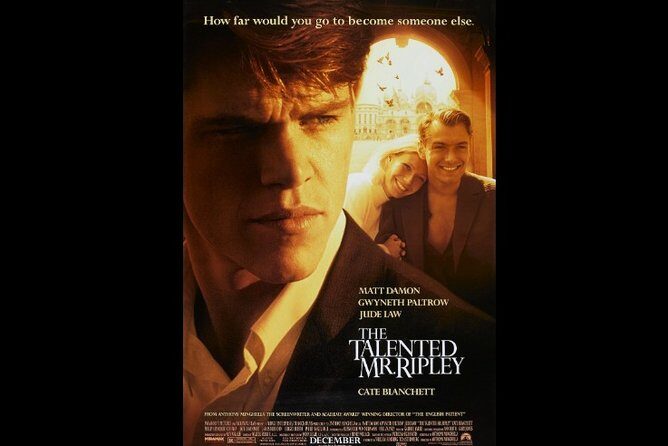
At the Grand Canal, you’ll connect Venice to early film history. Alexandre Promio boarded a gondola in 1896 and made the first rundown in cinema history—filming boats and men at work. Since then, the Grand Canal’s 170+ buildings have appeared in many productions, including The Talented Mr. Ripley (1999) and The Merchant of Venice (2004).
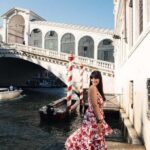
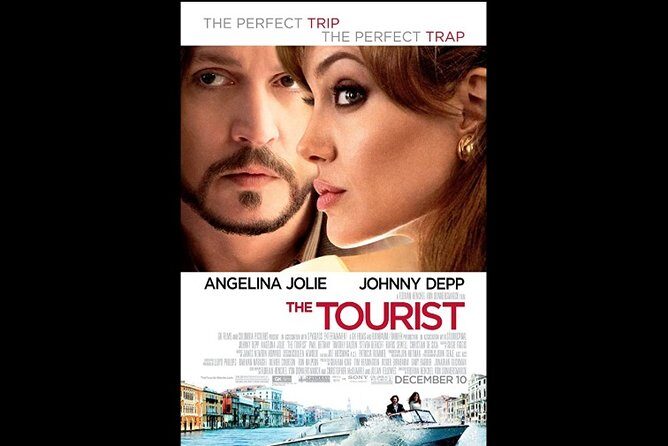
Then comes Mercati di Rialto, where The Tourist (2010) uses the Rialto fish market area for Johnny Depp’s dramatic jump from a terrace onto a stall. Across the canal, you’ll also hear how a palace collapse moment was filmed for Casino Royale (2006)—with the important reminder that movies often turn real structures into fiction.
This section is valuable because it balances scale with texture. The Grand Canal gives you the “Venice is a movie” feeling. Rialto gives you the working-city feel—water, commerce, and street-level action.
The drawback: Rialto is popular. Even if the route helps you avoid the worst crowd crush, expect a bit of hustle in this zone, and don’t count on quiet photos every time.
Santa Maria dei Miracoli, Scuola Grande di San Marco, and Ca’ Rezzonico: art, rules, and plot
You’ll pause at Chiesa di Santa Maria dei Miracoli, a small but stunning church decorated with polychrome marble. Orson Welles chose it for Othello (1952), specifically for the wedding of Otello and Desdemona. There’s also a storytelling connection here to Bread and Tulips (1999), where a flower shop scene is linked to a nearby campo.
From there, the tour moves to Scuola Grande di San Marco, connected to The New Pope (2019), directed by Paolo Sorrentino and starring Jude Law. This is the kind of setting Sorrentino loves: formal spaces that look made for tension and big dialogue.
Then you stop at Ca’ Rezzonico, currently a civic museum, but used as the fictional Drax office in Moonraker (1979). This is a good moment for film nerds because it shows how productions borrow “real prestige” and repaint it for the plot.
Why you’ll enjoy this portion: you’ll get reminders that movie locations aren’t only about dramatic moments. They’re also about architecture—materials, symmetry, and the feel of a room before anyone even starts talking.
What to watch for: these are short stops. You’ll likely see the key exterior or the most recognizable angle, not a full sit-down museum experience.
Teatro La Fenice, Scala Contarini del Bovolo, and Campo Santa Maria Formosa: fire, legend, and comic-book destruction
At Teatro La Fenice, the tour links cinema to live performance history. In Senso (1954), the story begins during a performance of Il Trovatore staged at La Fenice, before the devastating 1996 fire. The rebuilt theater reopened in 2003, and the name La Fenice (the phoenix) ties into the earlier fire damage too—1836, then “rising” again.
Next you head to Scala Contarini del Bovolo, where a legend says it’s Desdemona’s house. In Othello (1952), Orson Welles selected this palace and renewed its popularity—again showing Venice’s role as a stage for classic storytelling.
Finally, you’ll visit Campo Santa Maria Formosa, a setting that was made to look destroyed in Spiderman: Far From Home (2019), starring Tom Holland. Don’t worry: the devastation is fictional, and you’ll see the original corner of Venice as it is.
This trio is a nice mix: one stop is about theaters and real-world disasters, another is about legend and storytelling choices, and the last is about modern pop culture making Venice look “bigger” than life.
The main consideration here: the pacing stays brisk. If you want to linger, bring your curiosity and take one extra minute to reframe photos from a couple different angles.
San Barnaba, Gritti Palace, and the James Bond orbit: movie transport meets real stone
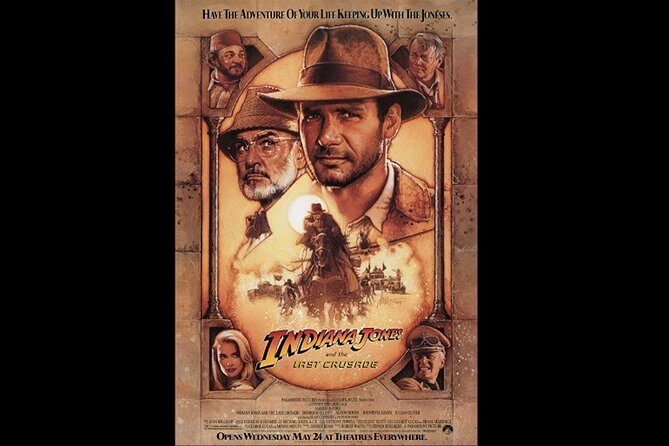
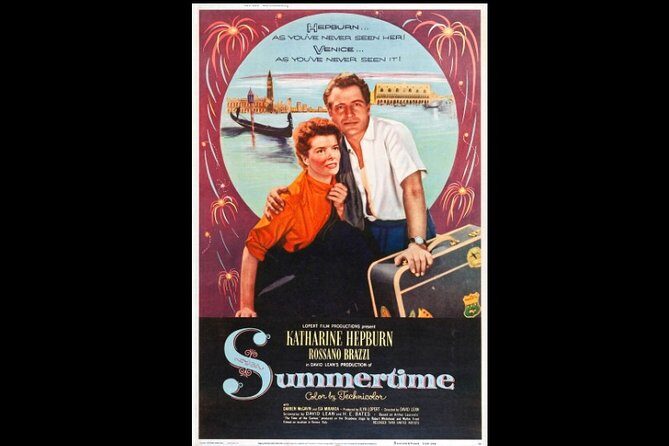
At Campo San Barnaba, the stop connects to Indiana Jones and the Last Crusade (1989), where Indiana Jones finds the X that never indicates where to dig. You’ll also hear about Summer Time (1955), with Katharine Hepburn’s American tourist Jane Hudson accidentally falling into the San Barnaba canal area. The location also appears for the remake of The Italian Job (2003).
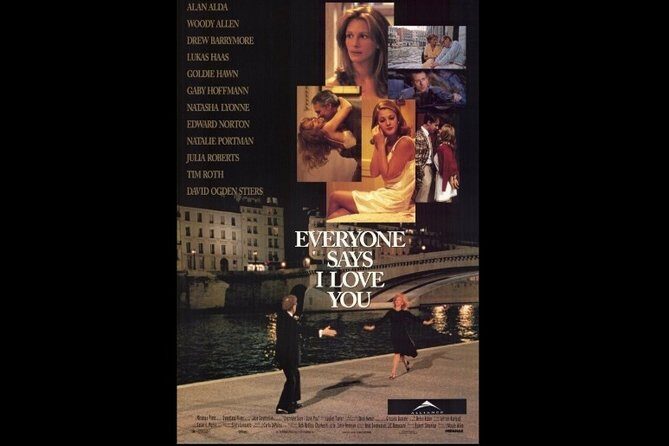
Then you reach The Gritti Palace, a Luxury Collection Hotel. It was a Doge’s family palace and hosted Vatican ambassadors in earlier eras, and the tour ties it to a later layer of movie glamour through Woody Allen’s Everyone Says I Love You (1996).
This is one of the most fun segments for me, because you see how film uses high-status buildings as shortcuts to mood: wealth, romance, and “this is where something important happens.”
The consideration: places tied to luxury can be busy around viewpoints and entrances. Be mindful, keep the line moving, and use the guide’s timing.
Basilica di Santa Maria della Salute, Piscina Sant’Agnese, and Hotel Danieli scenes
At Basilica di Santa Maria della Salute, you’ll hear a pop-culture connection to Lara Croft: Tomb Raider (2001)—with a key twist that the visible room wasn’t actually filmed there. You’ll also connect it to The Talented Mr. Ripley (1999), where the conversation includes a view toward the terrace of the Hotel Westin Europa & Regina across the canal.
Then comes Piscina Sant’Agnese, linked to on-screen jogging and romance vibes in Everyone Says I Love You (1996) and Summer Time (1955) with Katherine Hepburn freshening up in Venice.
Finally, you visit Hotel Danieli, a very storied luxury hotel. The tour connects it to Vittorio de Sica’s The Journey (1974) starring Sophia Loren and Richard Burton. It’s also tied to Moonraker (1979) as the hotel of Holly Goodhead, plus Viaggi di Nozze (1995), with a first wedding-night scene.
This stretch is valuable because it shows Venice as a “lived-in” movie set, not only a tourist postcard. Pools, terraces, and hotels are where films often stage the quiet moments—romance, waiting, and sudden plot turns.
The drawback: this section is still walking-heavy. If you’re sensitive to heat, slow down at the right moments and use the short stops to rest your feet.
Doge’s Palace and San Marco Square set pieces: the final big-scene payoff
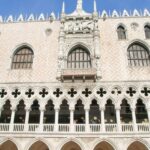
The last major stop is Doge’s Palace, tied to multiple big-screen moments. The tour connects this area to Bond-style transport in Moonraker (1979) and also to Casino Royale (2006), where Bond’s hotel has a view onto San Marco square. There’s also an Orson Welles connection with a dramatic dialogue chosen for the side facade south of the basilica in Othello (1952).
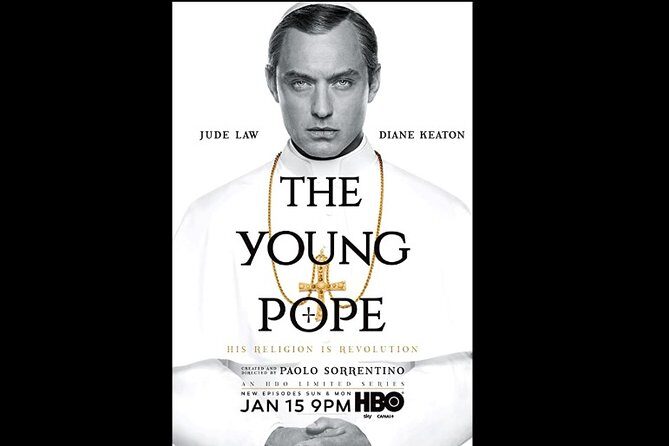
You’ll also connect The Talented Mr. Ripley (1999) to the tables of a cafe in the Piazza, plus filming connections to Paolo Sorrentino’s The Young Pope, with Jude Law and Diane Keaton.
Why it works as a finale: Doge’s Palace and the surrounding square are already iconic, so the film references give you a clear “memory hook.” You finish the tour feeling like you now understand how filmmakers built scenes using the city’s most powerful visual anchors.
The practical consideration: this area can get crowded, especially if you’re there near peak hours. Let the guide handle the positioning, and focus on your angles rather than chasing distant views.
What you should expect from the guide and the route
A big reason this tour performs well is how the guide turns trivia into place-reading. Based on the guide style associated with Valerio Coppo, you’ll get more than titles and dates. You’ll get route choices that help you actually enjoy Venice, with less time trapped in bottlenecks and more time in calm corners.
In at least some formats, you can also match the current street view to a movie moment using clips on a tablet. That’s helpful because it removes the guesswork. You’re not stuck imagining the scene; you’re seeing it line up.
Also, don’t be shy about asking for practical help. One review specifically suggested asking for recommendations for good local restaurants, and that kind of question is exactly what makes a guide valuable beyond the script.
The main drawback is that it’s a concentrated walk. Expect short stops, lots of changing viewpoints, and constant moving. It’s ideal for people who want a “see the city through a film fan lens” experience without spending the whole day in transit.
Who this tour is for (and who might want a different plan)
This works best if you’re one of these:
- A movie fan who likes classic European cinema as much as modern blockbusters
- A first-time Venice visitor who wants an efficient route that covers multiple neighborhoods and landmark types
- A family or group that enjoys recognizable scenes and variety in tone (from drama to action)
It might not be the best match if:
- You want long museum visits or long indoor stays
- You don’t like brisk walking or prefer self-guided wandering with lots of free time
- You’re going on a day where weather looks iffy, since the experience is weather-dependent
Should you book the Venice Film Tour?
Yes—if your Venice “must-do” list includes landmarks and you like the idea of understanding how films use real streets and buildings, this tour gives you that mix in a tight, two-hour format. The guide-led approach, the route choices, and the film-to-location connections (especially with Valerio Coppo) make the city feel smarter and more fun at the same time.
Book it sooner rather than later since it’s commonly reserved ahead of time. And pack like you’re walking Venice for two hours straight: comfortable shoes, water, and a plan for crowds near the big stops.
FAQ
How long is the Venice Film Tour?
The tour lasts about 2 hours.
How much does the tour cost?
The price is $185.43 per person.
Is the tour offered in English?
Yes, it is offered in English.
Is pickup available?
Pickup is offered.
Is this a private tour?
Yes. Only your group will participate.
Are admission tickets included for the stops?
The stops listed on the tour plan are marked admission ticket free.
Is there an extra access fee in Venice on some dates?
On certain dates, most day visitors staying outside Venice may need to pay a €5 access fee. Check cda.ve.it for details and exemptions.
What happens if the weather is bad?
The experience requires good weather. If it’s canceled due to poor weather, you’ll be offered a different date or a full refund.
What’s the cancellation window for a full refund?
You can cancel up to 24 hours in advance for a full refund.