REVIEW · VENICE
Venice Palazzo Mocenigo: History of Textile, Costume and Perfume
Book on Viator →Operated by Weekend in Italy · Bookable on Viator
Venice smells different inside Palazzo Mocenigo. This is a small, themed museum that tracks how Venetians dressed and scented their lives over time, in a palazzo setting near San Stae. With a pre-booked ticket, you should skip the ticket-window wait and move at your own pace during flexible entry times.
I particularly love the textiles and costumes focus, from older standout pieces (including Baroque-era material) to memorable garments like 18th-century waistcoats. I’m also a fan of the perfume experience here: you learn about scents, sample them, and there’s a hands-on perfume-making element in the museum’s perfumer-themed space.
One thing to consider: if you’re expecting a giant fashion museum packed with fully labeled outfits everywhere, you might find parts of the display feel light on written explanations. Some signage info leans on QR-code scanning, which can be awkward if you’d rather read at a glance.
In This Review
- Quick hits before you buy Palazzo Mocenigo tickets
- Why Palazzo Mocenigo is a smart Venice stop
- Getting in fast: timed entry and a self-guided visit
- Palazzo Mocenigo’s textile and costume collection: what you’ll actually see
- Costumes and labels: how to get the most from the rooms
- Venice perfume history: scent education and making your own
- The palazzo setting in San Croce: quiet, room-by-room pacing
- How long should you plan? (And what to do in 60, 90, or 180 minutes)
- Price and value: is $18.52 worth your time?
- Who should book this ticket—and who might not love it
- Should you book Palazzo Mocenigo tickets?
- FAQ
- How long does the Palazzo Mocenigo museum visit take?
- Is this a guided tour or self-guided?
- What’s included with the ticket?
- Can I choose an entry time?
- Is there a day-trip access fee for people staying outside Venice?
- Is the ticket refundable?
- How fast will I get confirmation after booking?
Quick hits before you buy Palazzo Mocenigo tickets
- Pre-booked entry saves time so you can start exploring without standing around.
- Textiles and costume collections let you see how Venetian clothing styles evolved over centuries.
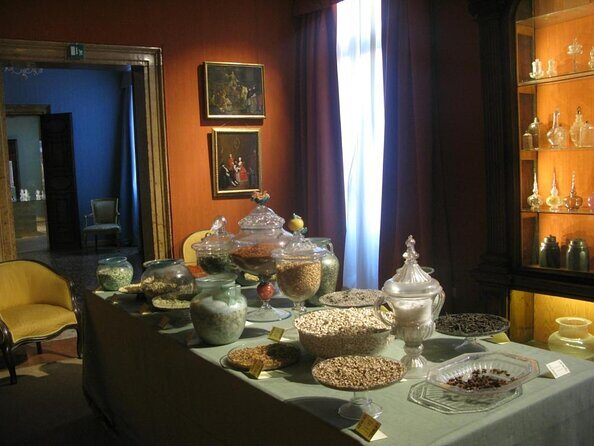
- Perfume history is a main event, including scent learning and a perfume-making activity.
- Quiet pace and room layouts make it easier to linger (not a rushed “hit-and-run” museum).
- Temporary displays can add extra interest—some visitors cite standout 18th-century waistcoat displays.
- A note on labels: information may be less about wall text and more about QR-code scanning.
Why Palazzo Mocenigo is a smart Venice stop
If you’re tired of Venice museums that feel like they’re competing for attention with the street noise, this one has a different rhythm. Palazzo Mocenigo is built around three connected ideas: textiles, costume, and perfume—how people looked and how they smelled, and how both mattered in Venetian life.
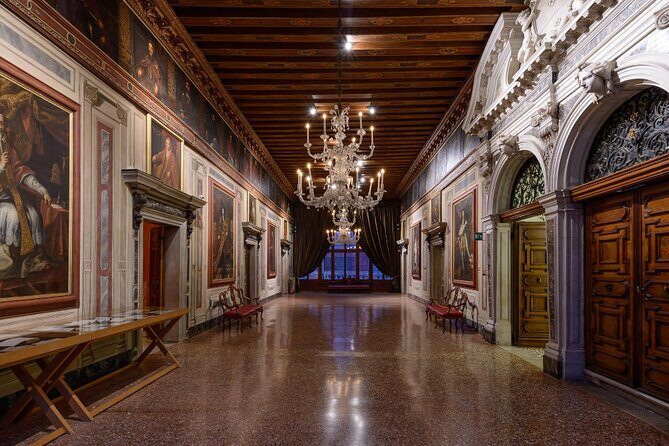
The setting helps. You’re in a palazzo house museum in Venice’s Santa Croce area, along the salizada of San Stae (so not in the thickest crush near the major landmarks). That location tends to make the visit feel more grounded. You’re not just walking through objects—you’re moving through rooms designed to help you connect clothing details with the broader culture.
You also get an academic backbone behind the scenes. The museum is tied to serious study: it has an important specialized library for this field, and the broader textile collection is largely available to scholars. Translation for you: what you’ll see on display is curated enough to be fun and readable, without pretending you’re touring an endless storage warehouse.
This is a great match if you like arts and design, and if you’d enjoy a museum where the “story” is in fabric, cut, and scent—not just dates and names.
You can also read our reviews of more historical tours in Venice



Getting in fast: timed entry and a self-guided visit
This ticket is built for efficiency. Since it’s pre-booked, the point is simple: get into the museum without wasting time at the ticket window. It also comes with a choice of entry times, which matters in Venice where your sightseeing plan can change hour to hour.
Once you’re inside, it’s self-guided. That’s a big deal for a museum like this because your interest level will vary. If you’re a fabric person, you’ll linger over textures and garment construction. If you’re more into fragrance, you’ll drift toward the perfume portion first (then circle back). Either way, you control the order.
Timing-wise, the experience usually lands in the 1 to 3 hours range. That’s a sweet spot: long enough to take it in calmly, short enough that you’re not sacrificing an entire afternoon.
Practical tip for the day: keep your phone charged and your confirmation details accessible. There’s at least one real-world caution from past experiences—if scanning at the entrance fails, you want to be able to show your booking information immediately.
Palazzo Mocenigo’s textile and costume collection: what you’ll actually see
The museum is dedicated to the study of the history of textiles, costume, and perfume, and the display centers on rare materials and important garments. The collection includes textiles and costumes that reach back to earlier periods (including Baroque-era dating), with additional focus on notable costume pieces—people often mention especially striking 18th-century items like waistcoats.
Here’s what makes the costume section work well for everyday visitors: it’s not trying to be an encyclopedia. It gives you visual anchors—fabric types, garment shapes, and period styling—so you can actually look and learn without feeling like you need a course in fashion history first.
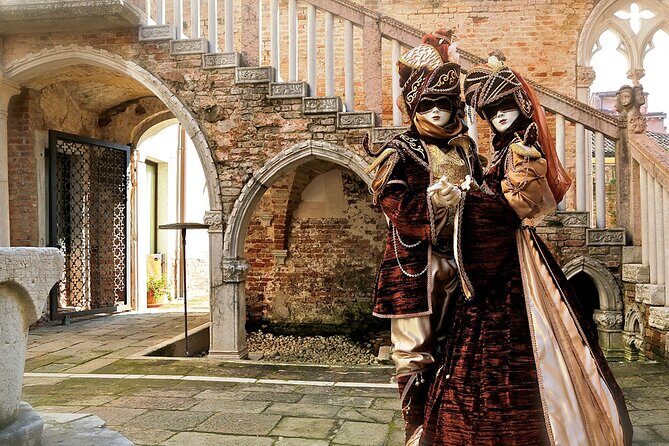
Also, the museum is housed in a palazzo with period interiors and decorative elements, so the clothes don’t float in a sterile modern gallery. You tend to notice the contrast between everyday modern clothing and the structured elegance of older styles. When you’re standing in the rooms, it’s easier to understand that clothing in Venice wasn’t just practical. It was also identity—social signaling, craftsmanship, and sometimes even a performance.
One more thoughtful detail: the museum’s overall focus isn’t limited to clothing silhouettes. It’s about how fabric and costume sit in the Venetian world. That’s where textiles come in, letting you connect “what people wore” with “what people made” and how materials mattered.
Costumes and labels: how to get the most from the rooms
Let’s talk about the main snag some people report: information access. Instead of lots of printed explanatory sheets at every garment, some explanations may use QR codes you scan on your phone. That can be fine if you like reading on-screen. It’s less ideal if you want instant context without hunting for your brightness settings in Venice light.
So I’d plan around this. If you know you want more written detail, download what you need ahead of time (or at least be ready to use your phone comfortably). Also, don’t feel like you have to read every single label. Pick a few garments that catch your eye, and let your curiosity guide you.
What to focus on so the visit feels worth your time:
- The garment cut and structure: how sleeves, collars, and waistlines are shaped.
- Fabric cues: sheen, weave, and how material changes the look.
- Accessories like waistcoat details: these are often the “spotlight” pieces.
- Room-to-room changes: costumes aren’t just displayed; they’re staged in ways that help you see style progression.
If your expectation is lots of fully explained outfits with heavy wall text, you might feel shortchanged. If you’re happy to connect the dots with what’s in front of you—and use your phone for extra detail when needed—you’ll probably enjoy the flow more.
Venice perfume history: scent education and making your own
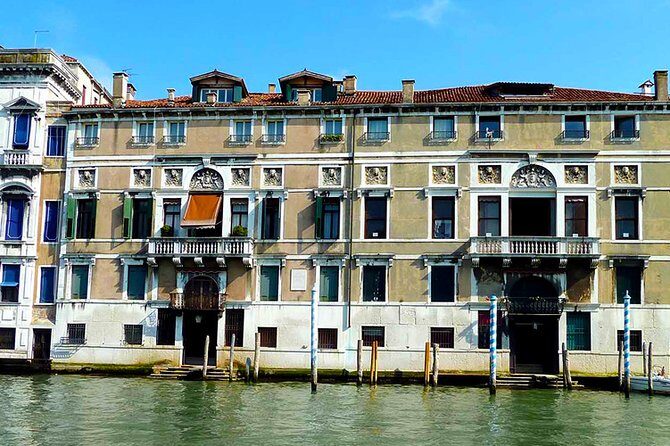
Perfume isn’t an add-on here. The museum is set up so fragrance is part of the main story of Venice—how scents mattered, and why they belonged in the city’s identity.
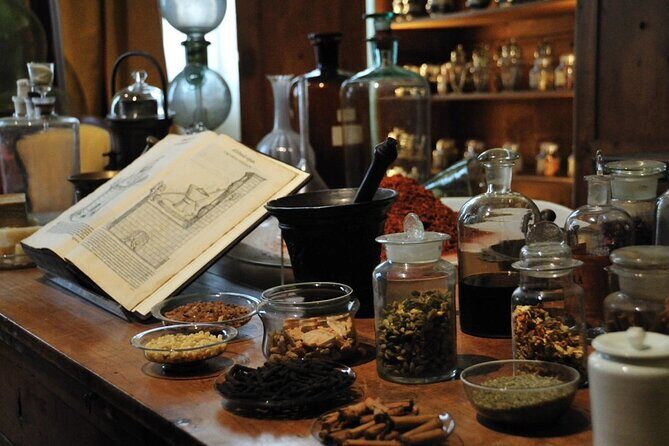
You’ll encounter perfume-related exhibits and learn about the history of scent in a Venetian context. And there’s also a practical, sensory side: the experience is built so you can smell different scents and connect those aromas to the story you’re hearing. Some descriptions of the experience emphasize an activity where you can make your own perfume after scent learning.
That’s the key value of this portion. You’re not just looking at bottles behind glass and calling it education. You’re matching smell to concept, which sticks in your memory far better than facts alone.
A fun angle: perfume fits naturally with Venice’s textile and costume themes. Fragrance and clothing work together. Older clothing was often layered and textured; scent played a role in how someone felt and how they were perceived. So the museum’s structure—clothes first, perfume woven in—makes sense.
If you’re sensitive to strong smells, give yourself space during the perfume part. The museum atmosphere can be calm, but fragrance is still fragrance.






The palazzo setting in San Croce: quiet, room-by-room pacing
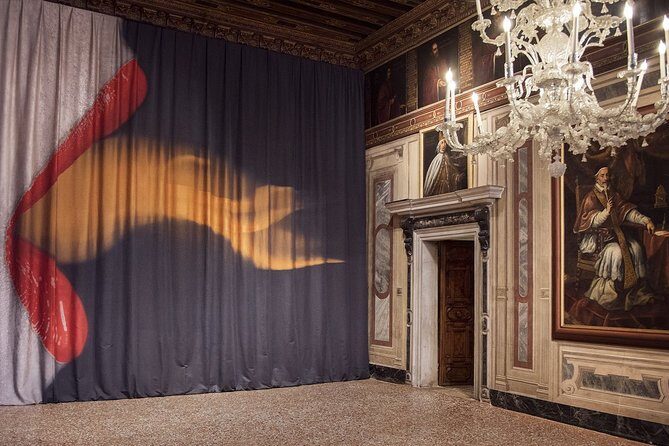
Palazzo Mocenigo isn’t marketed as a loud, fast museum. It’s more about the room experience—walking through spaces in a Venetian palazzo and letting the displays guide you.
People describe the museum as quiet and unassuming, which I see as a practical advantage. When a museum has a calmer pace, you can actually look at details like stitching, garment shapes, and how the display lighting changes the feel of the fabric.
The room layouts matter too. If the displays are arranged in a way that feels logical, you can move naturally without feeling like you’re wandering. And because it’s self-guided, you can pause as long as you want in the sections that grab you.
One more note from how the museum is described: the interior setting and decorative elements are part of the atmosphere, including references to Murano-style pieces in the overall presentation. Even if you’re focused on textiles and perfume, this helps make the visit feel like you stepped into a real Venetian home-culture space.
How long should you plan? (And what to do in 60, 90, or 180 minutes)
With a 1 to 3 hour typical window, you have options. Here’s how I’d pace it so you don’t feel like you’re rushing.
If you’ve got 60 minutes:
- Enter, do a quick orientation sweep.
- Spend the majority of the time on costume highlights (like the 18th-century waistcoat-type displays).
- Save perfume for the last 15–25 minutes so you’re not exhausted before the sensory part.
If you’ve got 90 minutes:
- Give textiles and costumes a full pass with a few “deep looks.”
- Add time for perfume reading and scent sampling.
- End with whatever temporary displays are currently on view, since those are often where extra interest appears.
If you’ve got the full 180 minutes:
- Take your time with garment details you care about.
- Use the perfume section as a slower, reflective stop rather than a quick glance.
- If you’re a photo person, step back occasionally; period fabric looks best when you take a moment to adjust how the light hits it.
Regardless of your timing, keep in mind that the museum’s value is in looking closely. A rushed visit can make it feel smaller than it is.
Price and value: is $18.52 worth your time?
At $18.52 per person, you’re paying for admission to a very specific, themed collection: textiles and costume history paired with perfume culture. The value depends on what kind of visitor you are.
For you, it’s usually a good deal if:
- You like design details: fabric, garment shape, and how styling changed over time.
- You enjoy sensory experiences, not just visual ones.
- You prefer smaller, calmer museums where you can linger without the pressure of long lines.
It may feel less worth it if:
- Your expectation is a large costume museum with lots of fully displayed garments and heavy printed explanations everywhere.
- You want deep written context for every object and dislike QR-code-style reading.
- You’re going strictly for “lots of original historical clothing” and don’t care about perfume.
Also watch for the Venice day-trip factor. On some dates, people staying outside Venice who visit for the day may need to pay a €5 access fee, with details and exemptions handled by the city’s system (check CDA.ve.it). That’s not included in the ticket price, so it can affect the total cost.
Bottom line: the ticket is priced like a focused museum stop. If you match its theme, it usually works out.
Who should book this ticket—and who might not love it
Book Palazzo Mocenigo if you want something different from the usual Venice sights. This is a museum for people who like:
- Costume history and textile craft
- Perfume as culture, not just fragrance
- Quiet indoor time that still feels Venetian
It’s also a strong choice if you’re traveling as a family. One highlight you’ll see in the way the experience is described is the appeal of the scent part—especially for kids—because it turns learning into smell-and-make activity.
Skip or reconsider if:
- You’re expecting a huge range of clothing with tons of wall text and extensive labeling.
- You strongly dislike QR-code based information.
- You’re short on time and want a landmark-level attraction. (This is more “small museum with focus” than “major site.”)
Should you book Palazzo Mocenigo tickets?
I’d book this if you’re curious about how Venice expressed itself through what people wore and how they smelled. The combination of costume/textile displays plus the perfume history and scent element is what makes it feel more memorable than a standard fashion exhibit.
If you’re on the fence, decide based on your mood: this is the right choice when you want a calmer, detail-driven museum with an actual sensory payoff.
FAQ
How long does the Palazzo Mocenigo museum visit take?
The visit typically takes about 1 to 3 hours.
Is this a guided tour or self-guided?
It’s self-guided, so you can linger and explore at your own pace inside the museum.
What’s included with the ticket?
Your ticket includes entrance to the Museum of Palazzo Mocenigo: Center of the Study of the History of Textile, Costume and Perfume.
Can I choose an entry time?
Yes. There’s a choice of entry times to match your sightseeing schedule in Venice.
Is there a day-trip access fee for people staying outside Venice?
On certain dates, people staying outside Venice who are planning to visit for the day may need to pay a €5 access fee. Check CDA.ve.it for applicable days and exemptions.
Is the ticket refundable?
No. The experience is non-refundable and cannot be changed for any reason.
How fast will I get confirmation after booking?
You should receive confirmation within 48 hours of booking, subject to availability.