REVIEW · VENICE
Venice: Sightseeing Tour with a Local expert
Book on GetYourGuide →Operated by Raphael Tours & Events · Bookable on GetYourGuide
Venice can feel like a maze on day one. This 2-hour English walking tour gives you the map, the stories, and the key sights in a manageable route.
I especially like the focus on Rialto–San Marco–Cannaregio-style neighborhoods (without forcing you into a single landmark line), and the chance to stop at major sites like the Basilica dei Frari and end in St. Mark’s Square. Guides such as Valentina, Denise, and Donata are praised for turning street corners and architecture into clear, human stories.
One drawback to note: it’s an outdoor walking tour with no entrances included, so if you were hoping to go inside churches or the Doge’s Palace, plan separate timed tickets.
In This Review
- Key takeaways before you go
- Starting at Campiello dei Squelini: your “Venice orientation” launchpad
- Campo San Pantalon and Campo San Rocco: why these “small squares” matter
- San Polo: the trade-center story you can actually visualize
- Basilica dei Frari: Titian’s burial place and why it’s more than a name
- Rialto Bridge crossing: the Grand Canal moment you’ll remember
- Campo San Polo: the narrow square pause that changes the tempo
- Basilica di San Giovanni e Paolo: doges, power, and a very specific kind of quiet
- Finishing in St. Mark’s Square: St. Mark’s Basilica and the Doge’s Palace frontage
- What the 2 hours actually feels like (and how to pace yourself)
- English-only guiding: why it’s a big deal in Venice
- Price and value: is $41 fair for what you get?
- Who should book this tour, and who should skip it
- Should you book this Venice sightseeing tour?
- FAQ
- Where is the meeting point?
- How long is the tour?
- Is the tour offered in English?
- Does the tour include entry tickets to monuments or churches?
- Is pickup included?
- What should I bring or wear?
Key takeaways before you go
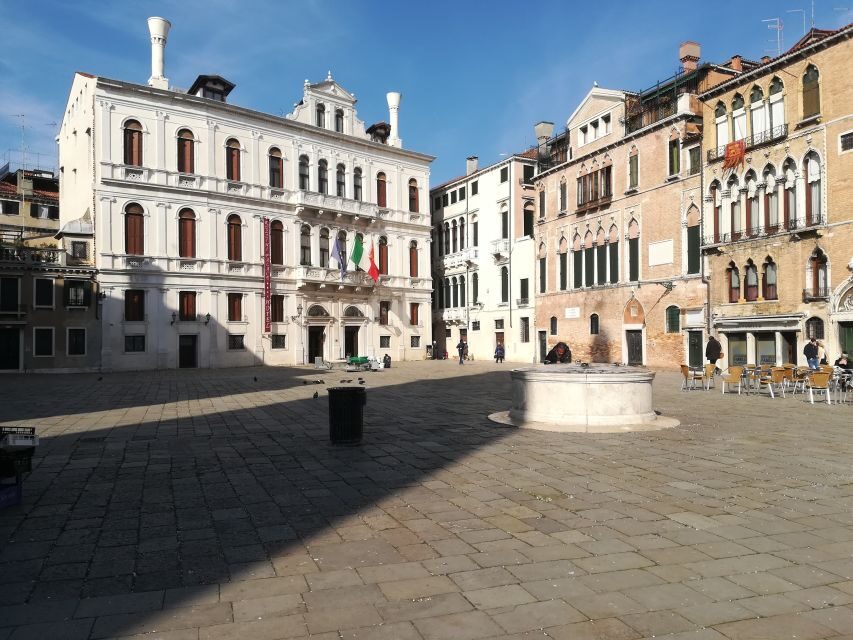
- Campiello dei Squelini start point near Ca’ Foscari University makes it feel local, not like a factory tour.
- Grand Canal crossing via the Rialto Bridge without the usual tourist-rush chaos.
- Titian’s burial site at Basilica dei Frari is a big historical anchor on a short walk.
- You’ll hit doge-era power at San Giovanni e Paolo, where multiple doges are buried.
- Small-group feel and English-only guiding keep the pace friendly and the explanations clear.
- It’s structured with short stops so you still have energy left to explore afterward.
Starting at Campiello dei Squelini: your “Venice orientation” launchpad
The tour starts at Campiello dei Squelini, near Ca’ Foscari University in the Dorsoduro area. Look for the meeting point by the coloured wall. This matters more than it sounds: you’re beginning away from the tightest crush of St. Mark’s, which makes your first few minutes calmer.
You’ll want to be there early. They ask you to arrive 10 minutes ahead, and they can’t wait more than 5 minutes, plus you won’t be able to join once the group has started. In Venice, being late can snowball fast because streets braid into each other and ferries make timing tricky.
The vibe here is also practical. This isn’t a sit-and-listen tour. It’s walking plus explanations, with enough stops to connect the dots between neighborhoods.
You can also read our reviews of more tours and experiences in Venice.



Campo San Pantalon and Campo San Rocco: why these “small squares” matter
From the meeting point, the walk moves through areas like Campo San Pantalon and Campo San Rocco. These aren’t famous because of a single blockbuster monument. They’re famous because they show you how Venetians actually move through the city: small squares, narrow lanes, and everyday details that tell you what kind of place you’re in.
I like this approach for two reasons. First, it helps your brain stop treating Venice as one big postcard. Second, it primes you for what comes next: when you reach the bigger names, you understand how the city’s pieces connect.
If you’re worried about “getting tired before the highlights,” don’t. The tour uses short guided segments, so you get story-time without a long slog. That rhythm is one reason people describe the tour as easy to follow even in a city that loves confusing you.
San Polo: the trade-center story you can actually visualize
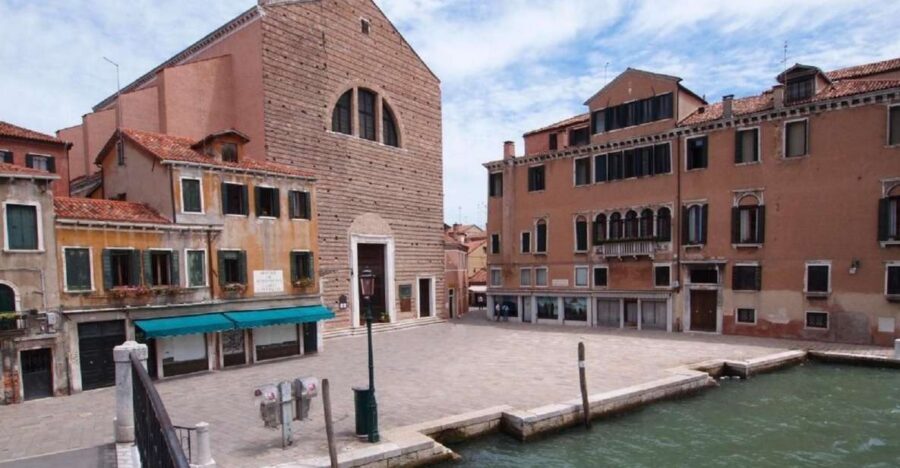
Next up is San Polo. This district is tied to the old trade center days of the Venetian Empire, and the guide’s job is to help you picture what that meant in real life. It’s one thing to hear Venice was powerful. It’s another to understand why—and how commerce shaped streets, bridges, and the way people interacted.
In practical terms, San Polo also sets you up for the Rialto Bridge crossing. The city’s canal network can look random until someone shows you the logic behind the shortcuts and crossings. You’ll start noticing how the urban plan funnels you through certain paths.
A local guide also tends to bring out the quirks you wouldn’t find on your own. In the feedback you can see patterns: guides like Jon Marco and Valentina are praised for pointing out details that feel obvious only after someone points them out.
Basilica dei Frari: Titian’s burial place and why it’s more than a name
Then comes one of the strongest “stop-and-remember” moments: Basilica dei Frari. This is where the tour leans hard into art history, including the fact that Titian is buried here.
Why I like this as a tour anchor: it gives your walk a gravity. Venice has so many churches that you can lose track of why any particular one matters. By tying this stop to a major figure like Titian, the guide helps you connect the building to the big artistic story of Venice.
Also, this is a great moment to slow your pace. Even though the tour doesn’t include entrances, you can still take in the scale and façade details. Your guide can explain the context so what you see outside makes sense, not just looks pretty.
If you’re the type who enjoys architecture and who wants a reason behind the sight, this is the part that usually clicks.
Rialto Bridge crossing: the Grand Canal moment you’ll remember
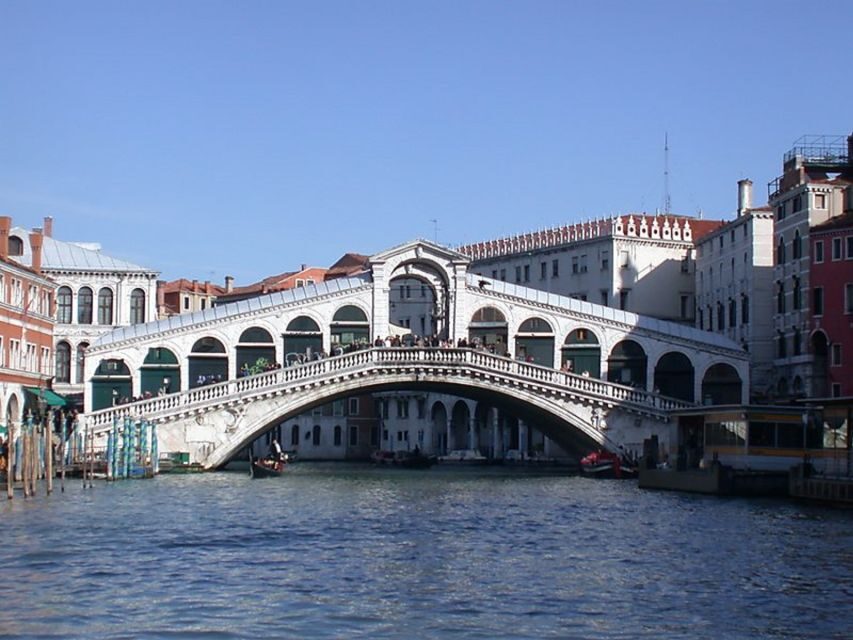
Crossing the Grand Canal on the Rialto Bridge is the tour’s headline visual. You’ll do it while moving with a group and a guide, which helps because the area around Rialto can be crowded and chaotic on your own.
This stop is valuable for orientation. The Rialto area is a knot of lanes, bridges, and viewpoints. After you’ve crossed once with context, future walks make more sense. You’ll start reading the city like a map instead of a maze.
There’s also a psychological benefit. Staring at the Grand Canal from the shore is one thing. Crossing it turns it into a journey, and Venice suddenly feels connected in a way you can remember.
If you’re planning to take photos, do it, but don’t forget to look away from your phone. The best part is usually the way the guide ties what you’re seeing to how Venice worked—trade, politics, and daily movement.





Campo San Polo: the narrow square pause that changes the tempo
After Rialto, the tour continues into Campo San Polo, described as a narrow square. This sounds modest compared to the major basilicas, but it’s exactly the kind of place that helps Venice stop being abstract.
In a city like this, the “in between” spaces are where you get a sense of scale and life. Campo San Polo gives you that pause point. The guide’s storytelling here helps you understand how these areas weren’t built for tourists—they were built for people.
You’ll likely feel the pacing shift. Instead of big spectacle, it becomes about texture: lanes, corners, and the city’s human scale.
Basilica di San Giovanni e Paolo: doges, power, and a very specific kind of quiet
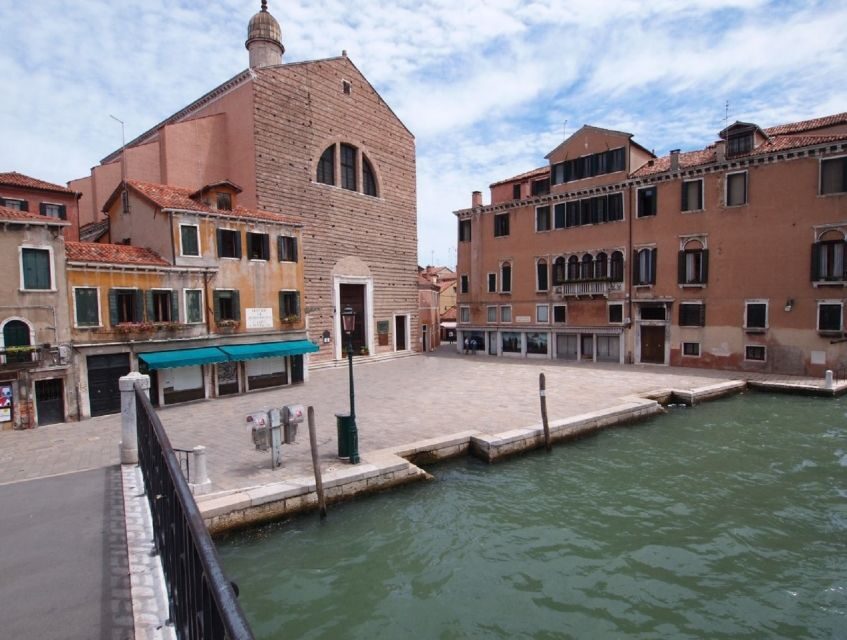
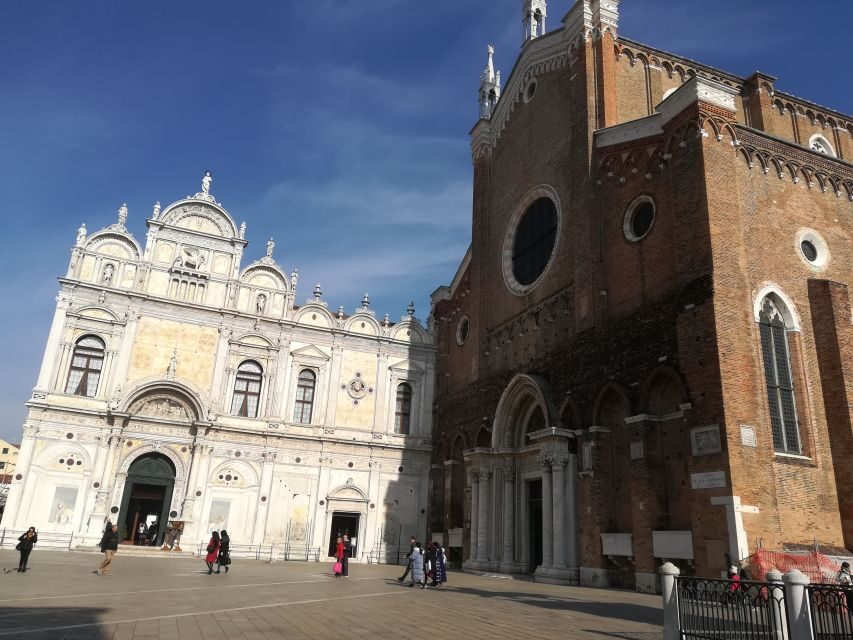
The next major highlight is Basilica di San Giovanni e Paolo, where 25 of the doges are buried. That number alone gives you an idea of why this place matters. Venice wasn’t just art and romance; it was also governance, family power, and long-running political symbolism.
Even without entering, you’ll get the point. A good guide makes the city’s power structure legible. You begin to see St. Mark’s Square not as a standalone monument, but as part of a bigger chain of civic and religious meaning.
This is also a solid stop for anyone who feels overwhelmed by Venice’s sheer volume of churches. Instead of trying to “collect” everything, you learn to focus on the sites that explain how the city functioned.
Finishing in St. Mark’s Square: St. Mark’s Basilica and the Doge’s Palace frontage
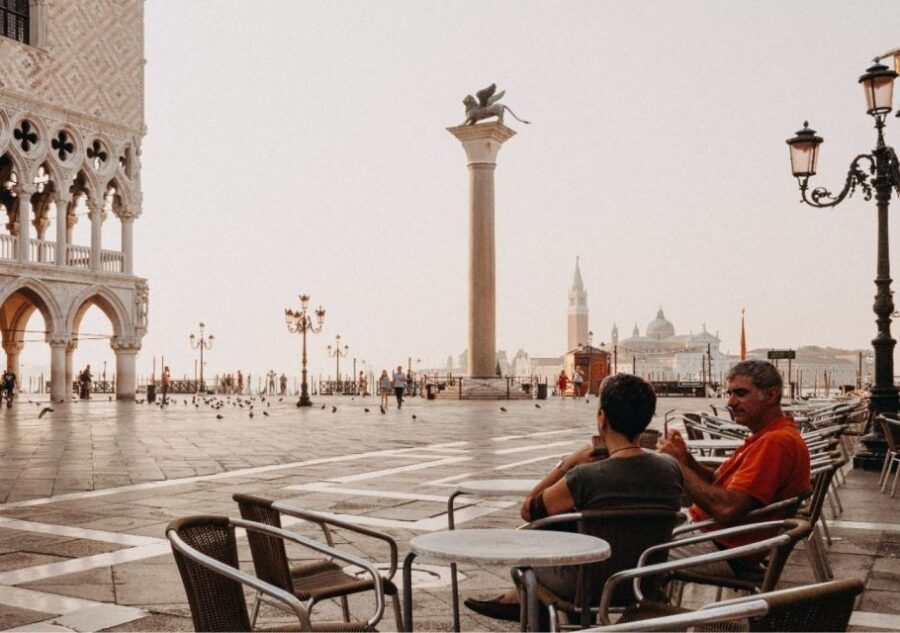
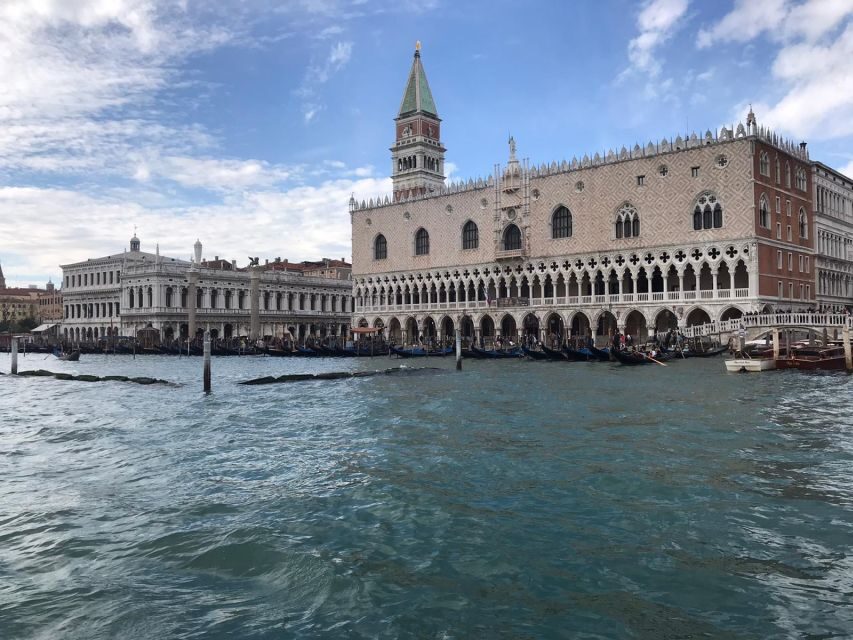
The tour ends at Piazza San Marco. From here, you’ll admire St. Mark’s Basilica and the Doge’s Palace. Since entrances aren’t included, think of this as a sight-and-story conclusion rather than a museum day.
Still, the ending works. St. Mark’s Square is where Venice goes theatrical. And if you’ve walked through other districts first, the square doesn’t feel like a random ending—it feels like a payoff.
It’s also a smart time to reset. Your guide’s stories have given you a framework, so you can walk back through the square afterward and notice details with better context. People often return to these areas later in the day, and you’ll be ready to do it with less confusion.
What the 2 hours actually feels like (and how to pace yourself)
Two hours in Venice sounds short. In practice, it’s a good length because the tour uses a tight sequence of stops, with guided segments that don’t drag. You get enough time to absorb stories, then you’re free to keep exploring.
What you should plan around:
- Comfortable shoes are non-negotiable. Venice punishes sloppy footwear.
- Bring water, because the tour doesn’t add stops.
- Expect it to be outdoor walking the whole way, so dress for weather.
This tour is also listed as small-group, which matters in Venice. Big groups can stretch your attention span. Small groups keep the guide able to manage flow in tight lanes and busy areas.
Some guides are also praised for using remote earpieces, which helps you follow the narration without straining in noisy spots. You might get that setup depending on the operator’s approach that day.
English-only guiding: why it’s a big deal in Venice
The tour is English language only, and that’s a real quality-of-life feature here. Venice isn’t short on signage, but the meaning behind architecture, symbolism, and civic history can be buried unless someone translates it clearly.
You’ll see the effect in the guide praise: people call out guides like Denise, Donata, Valentina, Flavia, Irena, Olga, and Gianmarco for friendly energy and for answering questions. When the language matches your comfort level, you spend less time decoding and more time enjoying the city.
It’s also a good fit if you want to ask things like:
- Why this basilica matters beyond looks
- How the doges connect to what you see
- What the neighborhoods had to do with Venice’s power
Even if you don’t ask questions, explanations land better when you can relax and listen.
Price and value: is $41 fair for what you get?
At $41 per person for 2 hours, this tour is priced like a strong orientation activity rather than a ticket-heavy day. The value is in the combination of:
- Local expert guidance
- Small-group pacing
- A route that links major landmarks across multiple districts
- Ending in St. Mark’s Square, where you already know what you’re looking at
Also, it includes pickup and drop-off from the designated meeting point. That’s different from hotel pickup, so you should still plan to get yourself to Campiello dei Squelini on time. But once you’re there, the tour handles the flow.
What you should compare when deciding: this isn’t a full-entrance or museum ticket tour. It’s a walking narrative that sets you up to make smarter choices for what to enter later.
For many first-timers, that’s the best kind of value in Venice.
Who should book this tour, and who should skip it
This tour is a good match if:
- It’s your first time in Venice and you want a quick framework
- You like city walks with story stops, not just photos
- You want to see Rialto Bridge, Frari, San Giovanni e Paolo, and the St. Mark’s finale in a single outing
- You appreciate guides who explain how Venice worked, not just what to look at
It’s not a great match if:
- You can’t do much walking. It’s not suitable for wheelchair users
- You want building interiors. No entrances are included
- You’re the type who needs frequent sit-down breaks. This is continuous outdoor walking with planned stops.
Should you book this Venice sightseeing tour?
If you want a smart first-day plan that helps Venice click, I’d say yes. The route hits major anchors—Rialto Bridge, Basilica dei Frari (Titian), and San Giovanni e Paolo (doges)—and it ends exactly where most people end up anyway: St. Mark’s Square.
Book it especially if you’ll otherwise spend your time wandering and guessing. With an English-only guide, you walk away with context, not just locations.
Skip it only if you’re set on doing interiors during this same time window, or if walking for two hours (outdoors, on uneven paths) is a problem. In that case, you’ll want a different style of tour.
FAQ
Where is the meeting point?
The meeting point is Campiello dei Squelini, near Ca’ Foscari University, in the Dorsoduro district, by the coloured wall.
How long is the tour?
The tour lasts 2 hours.
Is the tour offered in English?
Yes. The tour is only in English.
Does the tour include entry tickets to monuments or churches?
No. It’s an outdoor walking tour, and no entrances are included.
Is pickup included?
There is pickup and drop-off from the designated meeting point, but hotel pickup is not included.
What should I bring or wear?
Wear comfortable shoes and it’s recommended to bring a bottle of water, since the tour does not include additional stops.