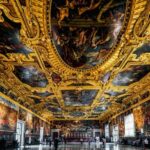
REVIEW · VENICE
Venice: Ticket to Scuola Grande San Giovanni Evangelista
Book on GetYourGuide →Operated by Scuola Grande San Giovanni Evangelista · Bookable on GetYourGuide
Venice has another kind of museum experience.
A ticket to Scuola Grande San Giovanni Evangelista lets you step into an ancient lay brotherhood (1261) and move through Gothic, Renaissance, and Baroque rooms in one visit.
What I like most is how the building does the storytelling for you—marble, stone, and painting that change as you go upstairs. The second big win is Mauro Codussi’s monumental staircase, a Renaissance moment that feels almost cinematic when you’re inside. One thing to consider: there’s no guide included, so you’ll get the best experience if you’re willing to read a bit and take your time in each hall.
In This Review
- The Best Things to Know Before You Go
- Stepping Into Venice’s Scuola World (Founded in 1261)
- Gothic Columns Hall: Marble, Purpose, and Quiet Power
- The Marble Septum: A Small Detail That Changes the Visit
- Ascending Mauro Codussi’s Staircase (Added in 1498)
- Chapter Hall: Where Gothic Moves Into Baroque Splendor
- Oratory Hall and the True Cross Relic (1369)
- Art Appreciation Without a Guide: How to Get More From Less
- Price and Value: A $9 Ticket That Punches Above Its Weight
- Timing Tips for a One-Day Visit That Doesn’t Feel Rushed
- Who Should Book This Scuola Grande Ticket
- Should You Book the Scuola Grande San Giovanni Evangelista Ticket?
- FAQ
- FAQ
- What does the ticket include?
- Is a guide included?
- How long is the experience valid?
- Where do I show my ticket?
- What can I see inside?
- Which artists are associated with the art you’ll see?
- What languages are available?
- Can I cancel for a refund?
- Is there a reserve and pay later option?
The Best Things to Know Before You Go
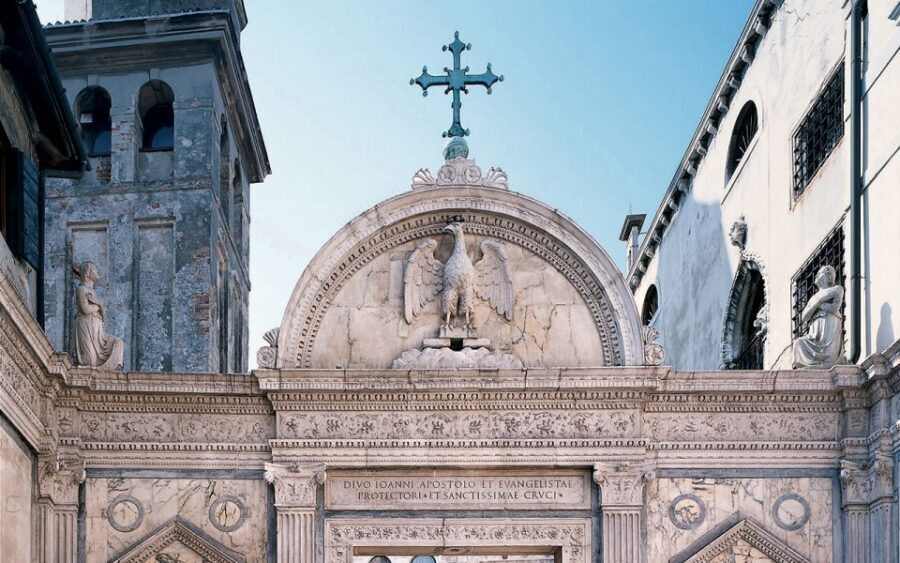
- A rare Venice stop: the Scuola Grande San Giovanni Evangelista dates to 1261 and is among the oldest scuole.
- Big art names in a calmer setting: you’ll see works tied to painters like Domenico Tintoretto and Giandomenico Tiepolo.
- Codussi’s staircase: the Renaissance staircase added in 1498 is a must-see architectural highlight.
- Three-style journey: Gothic Columns Hall, then Renaissance movement upstairs, then Baroque splendor.
- A powerful religious centerpiece: the relic of the true cross, with the Cycle on the Miracles of the Cross.
- Staff help when you need it: the welcome desk is described as serious, courteous, and useful.
Stepping Into Venice’s Scuola World (Founded in 1261)
This ticket gets you into a scuola grande, the kind of lay brotherhood building that Venice made into a public monument—part civic pride, part spiritual life, part art collection. The Scuola Grande San Giovanni Evangelista was founded in 1261, and it’s often noted as the second oldest scuola in Venice. That age matters: you’re not just looking at pretty rooms, you’re seeing how tastes and beliefs shifted over centuries.
I especially like that this feels like a place with purpose, not a showroom. You’ll walk through spaces that were designed for brothers and pilgrims—so the scale and layout make emotional sense, even if you don’t know the whole backstory.
And yes, it’s less famous than the headline Venice sites. That can be a feature, not a bug. If you want something meaningful without a constant crowd shuffle, this fits well.
You can also read our reviews of more tours and experiences in Venice


Gothic Columns Hall: Marble, Purpose, and Quiet Power
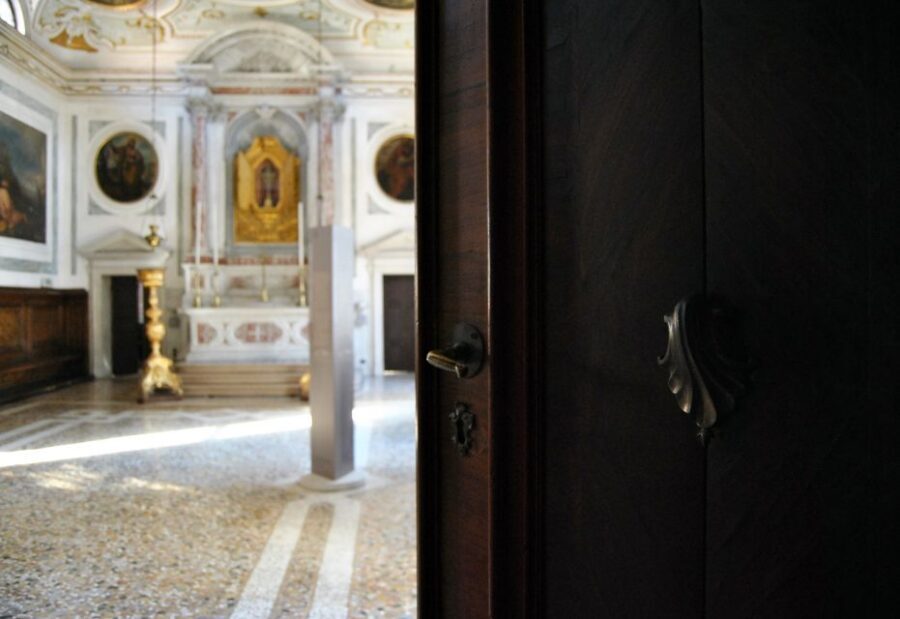
Your visit starts by entering the Scuola’s interior spaces, including the Gothic Columns Hall. Gothic architecture isn’t just pointed arches and drama here—it’s a whole design system for gathering people. This hall was intended for welcoming assemblies of the brothers and pilgrims, so it’s built around procession, arrival, and standing together.
Look for how the hall frames movement. The marble and the columned layout guide your line of sight, and you can feel how social life shaped the architecture. This is a good stop for slow looking, because the space does a lot of work even before you focus on specific artworks.
One practical point: Gothic rooms can feel visually busy in photos, but in person they read clearly. Take a minute, find your “center,” then let your eyes adjust. The payoff is you’ll understand why Venetian scuole look the way they do—functional, public, and proud.
The Marble Septum: A Small Detail That Changes the Visit
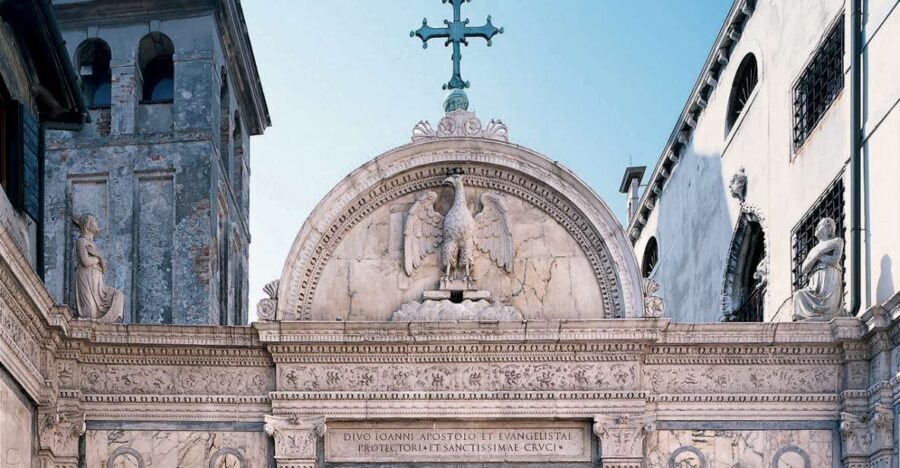
Before you reach the main halls, you’ll encounter the marble septum, an extraordinary architectural element that helps define sacred space. The septum acts like a boundary and a focus point. It’s the kind of object that’s easy to skip if you rush, yet it’s exactly the sort of thing that makes a historical interior feel real.
What you get from this moment is context. It helps you understand why the Scuola invested in art and ornament at all. This wasn’t decoration for decoration’s sake; it was part of how people experienced faith and community in everyday life.
If you’re visiting without a guide, this is one of your best “self-explainer” stops. Even without deep background, you’ll grasp that you’re in a place built for ceremonies and meaning.
Ascending Mauro Codussi’s Staircase (Added in 1498)
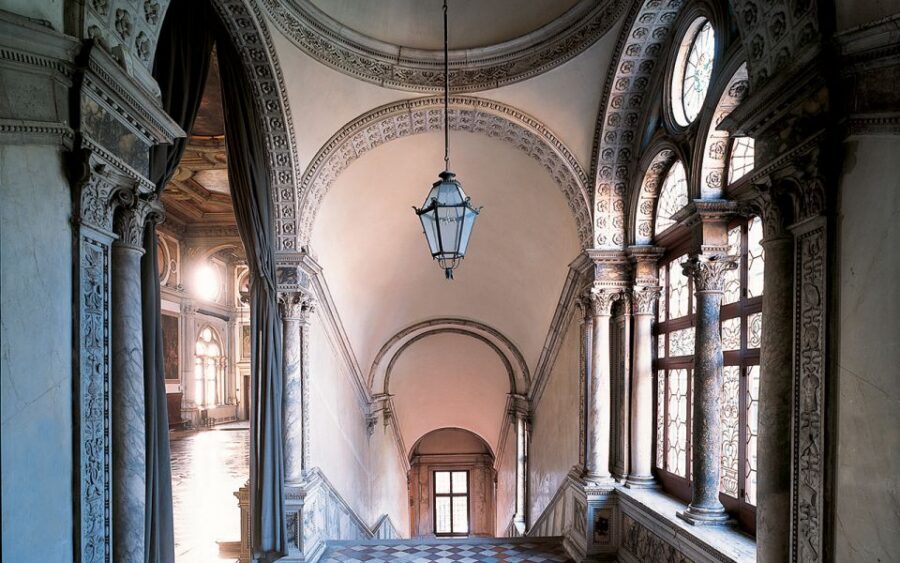
Then comes the big architectural highlight: you’ll move upstairs on Mauro Codussi’s monumental Renaissance staircase. The staircase was added in 1498, and it marks a clear shift in style and mindset. Renaissance design tends to feel more structured and monumental, and Codussi’s staircase delivers that effect quickly once you’re inside.
I like this part because it changes your relationship to the building. You’re no longer just walking through rooms—you’re climbing through time. As you ascend, you can feel how the Scuola evolved, adding new layers as Venice’s art and architecture moved forward.
Take your time here. This isn’t a “snap a photo and go” staircase. Pause on the steps, look around from the landing, and pay attention to the way your viewpoint widens. Even if you’re not an architecture nerd, you’ll feel why people remember this moment.
A consideration: if you’re traveling with tight time limits, plan your pace so the staircase doesn’t become a quick sprint. This is one of the places where slow is the whole point.
Chapter Hall: Where Gothic Moves Into Baroque Splendor
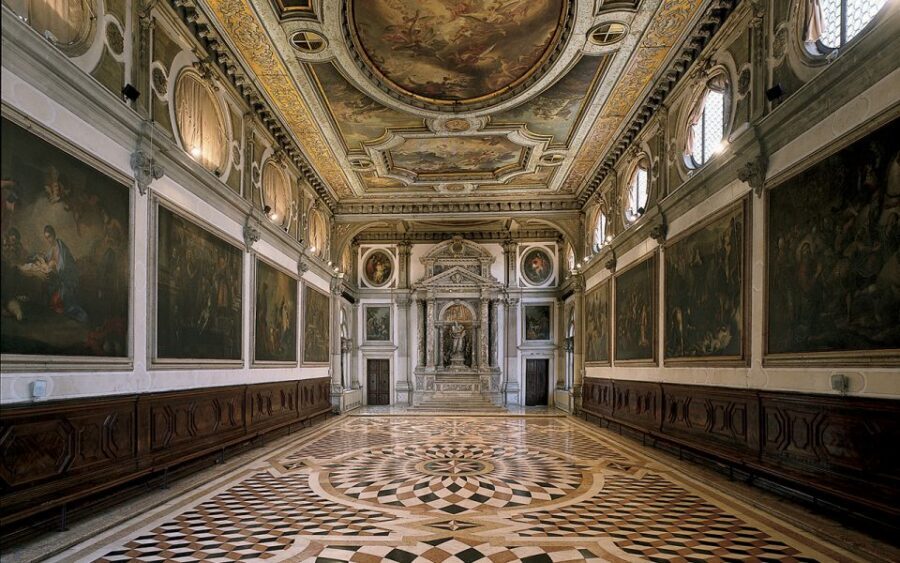
After the staircase, you’ll reach the Chapter Hall. This is where the visit ramps up visually, because the Scuola’s artistic focus leans into the Baroque side of things. You’ll encounter religious works and dramatic style choices associated with painters like Domenico Tintoretto, Giandomenico Tiepolo, and Jacopo Marieschi.
The Chapter Hall helps you see how Baroque art worked as communication. Baroque pieces often aim for emotional clarity—strong contrasts, expressive figures, and storytelling that feels direct. In a place like this, that storytelling feels more intense, because you’re still in a brotherhood setting, not a neutral gallery.
Here’s a practical way to enjoy this hall without getting lost: pick one artwork and trace its “center of action.” Then look at the surrounding works and how they relate. You’ll start to notice patterns instead of feeling overwhelmed by names and dates.
If you love religious art, this is a standout. If you’re more casual about art, this hall is still worth your attention because the architecture and placement help you read the mood.






Oratory Hall and the True Cross Relic (1369)
The visit culminates in the Oratory Hall, where you’ll see a major spiritual centerpiece: the relic of the true cross dated to 1369. Even if you’re not traveling for religious reasons, this object changes the atmosphere of the rooms around it. It’s not abstract—people believed in it, honored it, and built artistic programs around it.
You’ll also find that it inspired the Cycle on the Miracles of the Cross. That matters because it turns a single relic into an artistic theme that can be experienced through multiple works. In other words, you’re not just seeing one famous item. You’re seeing how belief shaped a whole visual program.
I like that this part of the visit gives you a clear “why.” A lot of museums show you art. This shows you why specific art existed here, in this building, for these people.
If you tend to get tired by long museum routes, this is also a good mental reset. The Oratory Hall is your moment of focus. Give it attention, then let the rest of the visit feel lighter.
Art Appreciation Without a Guide: How to Get More From Less
This ticket includes admission, but it does not include a guide. That’s not automatically a drawback, as long as you know what kind of visitor you are. If you like to wander, read at your own speed, and make connections, this setup can work great.
Here’s how to make it click:
- Spend extra time in the Gothic Columns Hall to understand the building’s social function.
- Use the staircase as your “style change” marker, not just a photo stop.
- In the Chapter Hall, pick one artist name you recognize, then branch out.
- End with the relic so the meaning sticks.
The good news? The experience is designed so you don’t need a lecture to enjoy it. The architecture is your guide most of the time. And if you have questions, the on-site welcome staff are described as serious, courteous, and helpful—so you’re not totally on your own.
Also, don’t underestimate what this visit offers if you’ve done the big Venice circuit already. Some people focus so hard on the famous sites that they miss this kind of place entirely. If you want a more personal, less crowded art-and-architecture stop, this is one of your best choices in the city.
Price and Value: A $9 Ticket That Punches Above Its Weight
The price is about $9 per person, and for Venice, that’s genuinely reasonable. The value isn’t just cost—it’s range. In one ticket you get a long timeline (from the 1200s through later additions), multiple architectural styles, and art tied to major Venetian names.
When you’re budgeting in Venice, it’s easy to spend big and still feel like you saw only one slice of the city. This ticket gives you multiple slices: Gothic gathering space, Renaissance movement through Codussi, and Baroque storytelling in the Chapter Hall, capped by a powerful relic experience in the Oratory Hall.
Also, this is a solid “fill time well” option. If you have only one day and want something that feels authentically Venetian but not tourist-stamped, you’ll likely feel your money went where it should: into a real historical place.
Timing Tips for a One-Day Visit That Doesn’t Feel Rushed
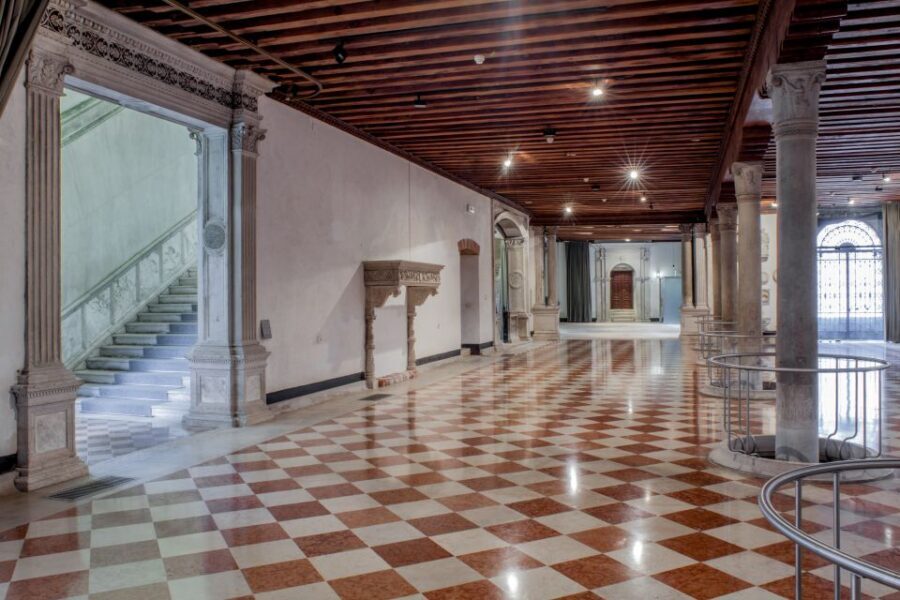
The ticket is valid for 1 day, and you’ll want to check available starting times. Since the duration is listed as 1 day, plan to set aside a chunk of time for wandering between halls.
A good approach:
- Start strong with the Gothic and architectural elements.
- Let the staircase slow you down for a moment of appreciation.
- Save your energy for the Oratory Hall at the end, because the relic and the miracle cycle are the emotional peak.
If you’re visiting on a day when you’ve walked a lot already, pace yourself. Venice interiors can be cool and quiet, which helps, but the experience still rewards a calm rhythm. This is not the best choice if you’re trying to sprint between ten sites.
Who Should Book This Scuola Grande Ticket
I think this visit suits a few types of travelers best:
- You want Venetian art and architecture without the biggest crowds.
- You like history that’s built into the room design, not just displayed on walls.
- You care about religious art and symbolism, especially where a relic drives a whole theme.
- You’re curious about how Venice’s lay brotherhood culture shaped public spaces.
If you’re traveling with teenagers who only want outdoor sights, you might need to frame it as a “see three styles in one place” challenge. For art fans, architecture lovers, and anyone who likes places with meaning, this ticket is a strong fit.
Should You Book the Scuola Grande San Giovanni Evangelista Ticket?
Yes—if you want a high-value Venice experience that’s not just another famous landmark. The combination of historic age (1261), architectural variety, a memorable Renaissance climb via Mauro Codussi’s staircase, and the spiritual centerpiece in the Oratory Hall makes this ticket feel like more than the sum of its parts.
Book it if you’re open to slowing down and reading the rooms. Skip it only if you’re looking for a guided, narration-heavy experience, because this ticket is admission, not a tour with a guide.
FAQ
FAQ
What does the ticket include?
It includes admission to the Scuola Grande San Giovanni Evangelista.
Is a guide included?
No. A guide is not included.
How long is the experience valid?
The ticket is valid for 1 day.
Where do I show my ticket?
Show your ticket at Scuola Grande San Giovanni Evangelista di Venezia.
What can I see inside?
You can see architecture and art across Gothic, Renaissance, and Baroque spaces, including the Gothic Columns Hall, the Renaissance staircase by Mauro Codussi, the Chapter Hall, and the Oratory Hall with the relic of the true cross.
Which artists are associated with the art you’ll see?
The experience highlights artists including Domenico Tintoretto, Giandomenico Tiepolo, and Jacopo Marieschi.
What languages are available?
Italian and English.
Can I cancel for a refund?
Yes. Free cancellation is available up to 24 hours in advance for a full refund.
Is there a reserve and pay later option?
Yes. You can reserve now and pay later.
If you want, tell me your travel dates and what else you’re pairing with this in Venice, and I’ll suggest a smart route so you don’t waste time crisscrossing the city.