REVIEW · VENICE
Venice Walking Tour and Gondola Ride
Book on Viator →Operated by ROMAETRAVEL · Bookable on Viator
Venice can feel like a maze. This tour gives you an easy path through the best-known spots and the canals that connect them. I like that you get both a guided walk and a traditional gondola ride, so the time doesn’t end with just photos. I also like the small-group feel (listed up to 14, with some departures capped at 8), which helps you actually hear the guide. One thing to watch: the tour pace can be fast, and a couple of past departures had issues getting everyone to the gondola on time.
You’ll start near Venezia Santa Lucia and move through Venice’s “great hits” in about three hours. You’ll also see several sites where entry tickets are not included (St Mark’s Basilica area, Clock Tower, Doge’s Palace, and La Fenice), so build a little extra budget if you want to go inside. Bring good shoes—you’re walking on cobblestones.
In This Review
- Key Things You’ll Notice on This Tour
- Price and Time: What $185.38 Buys You
- Starting at Venezia Santa Lucia: Easy to Find, Easy to Misread
- Grand Canal Stop: The City’s “Main Street” Moment
- Piazza San Marco: Where Venice Turns Into Theater
- St Mark’s Area: Basilica Exterior Views Without the Extra Ticket Stress
- Torre dell’Orologio: Quick Stop, Big Sense of Place
- Bridge of Sighs: A Short Walk That Hits Emotion
- Rialto Bridge: The Most Practical Icon on Foot
- Doge’s Palace: Worth It, But Tickets Cost
- La Fenice: The Opera House Stop You Can Skip or Savor
- The Gondola Ride: The Tradition Part That Makes It Feel Complete
- Pace and Group Size: The Main Trade-Off
- Should You Book This Venice Walking Tour Plus Gondola?
- FAQ
- How long is the Venice Walking Tour and Gondola Ride?
- What does the tour cost?
- Is the gondola ride included?
- Is the tour a small group?
- Where is the meeting point?
- What is not included in the ticket price?
- Are tickets mobile?
- Do I need to pay an access fee on some days?
- Is confirmation provided after booking?
- Is free cancellation available?
Key Things You’ll Notice on This Tour
- Small-group guidance that’s designed for hearing the stories while you move through the streets
- Grand Canal orientation early on, so the city’s layout clicks fast
- St Mark’s Square focus with stops at major landmarks around la Piazza and the Piazzetta area
- Iconic bridges in a logical route, including Bridge of Sighs and Rialto
- Gondola ride included, with some variation in what the ride experience feels like depending on the gondolier
Price and Time: What $185.38 Buys You
At $185.38 per person for an experience listed around 3 hours, you’re paying for two things at once: a guided walk and a gondola. In Venice, a gondola alone can be a budget line item, so the main value here is that the gondola isn’t hanging out alone as a separate booking.
That said, not every stop here includes admission. Tickets are listed as not included for the Basilica area, the Clock Tower, Doge’s Palace, and La Fenice. So if you want “inside” time at multiple places, you’ll likely spend more once you’re on the ground.
It’s also worth knowing the tour uses a mobile ticket, which is handy when you’re juggling transit and crowds. The route ends back where you start, so you don’t need to figure out a second drop-off point.
You can also read our reviews of more walking tours in Venice


Starting at Venezia Santa Lucia: Easy to Find, Easy to Misread
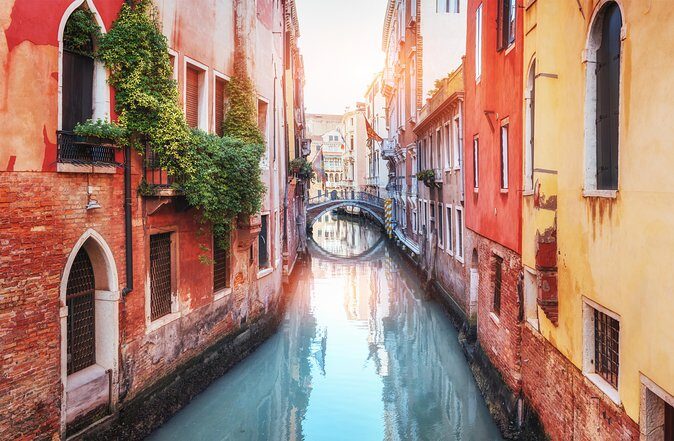
Your meeting point is Stazione di Venezia Santa Lucia, which is one of the most practical start locations in the city. It’s near public transportation, so if you’re arriving by train, you can get set without complicated transfers.
The practical tip: Venice is crowded, and meeting points can get lost in the noise. One review specifically warned to make sure you have the right meeting spot details from the confirmation materials. So I’d treat that email or message as your “source of truth” the day before.
Once you’re matched up with your guide, the tour is designed to start giving you context fast—what the Grand Canal is, why it divides the city, and how the landmark route ties together.
Grand Canal Stop: The City’s “Main Street” Moment
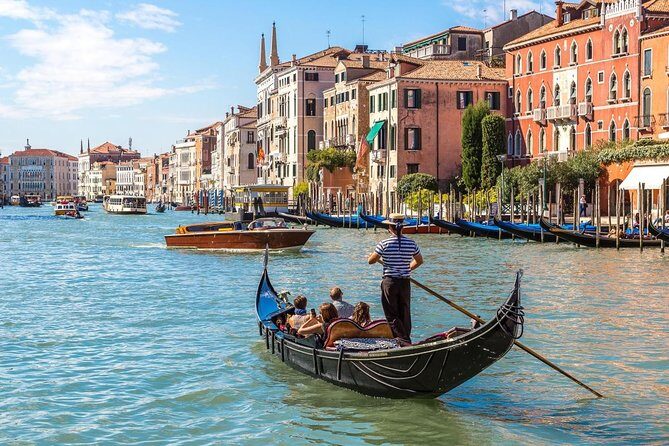
You’ll begin with the Canal Grande. This matters more than it sounds. The Grand Canal is the big navigational spine of Venice, the “street” you can follow by water. It also acts like a divider for the central districts (sestieri), so getting this explained early helps you understand why the rest of your walking route feels the way it does.
Key details that make this stop useful:
- The Grand Canal runs roughly 3.8 km (2.4 mi) long and cuts through the core districts.
- It connects toward the lagoon side near Santa Lucia and toward the San Marco basin end.
- Its shape is described as a kind of reverse “S,” which is why directions in Venice can feel weird until someone explains the flow.
In plain terms: you’re learning how Venice moves before you start moving on foot.
Piazza San Marco: Where Venice Turns Into Theater
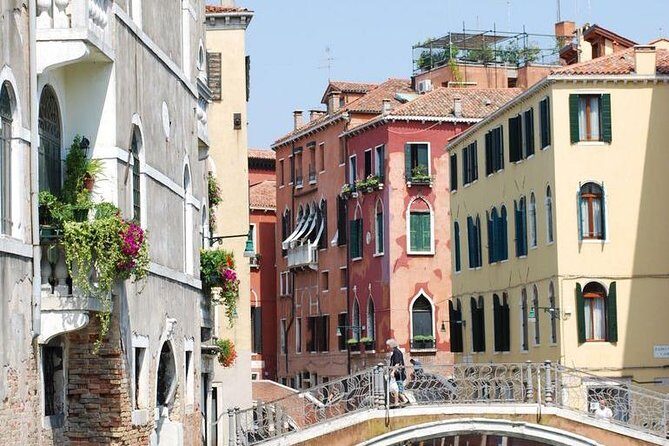
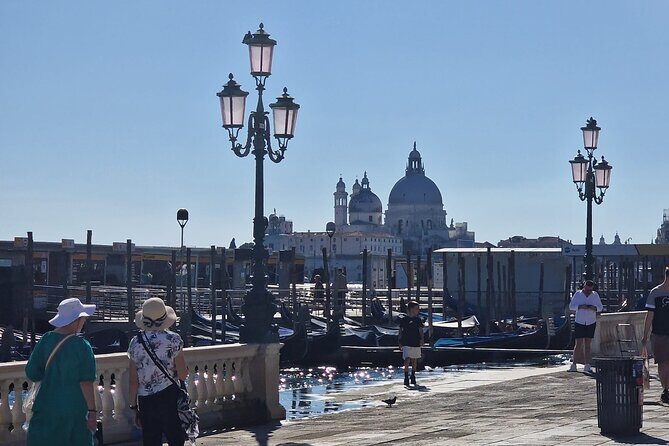
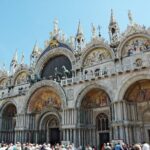
Next up is Piazza San Marco (St Mark’s Square). This is Venice’s principal public square—what la Piazza means when you hear people talk about the heart of the city.
This stop is free to access, and that’s great because it lets you spend more time just soaking in the geometry and energy of the space. The tour also helps you understand the language of Venice’s public areas: most open spaces are called campi, while the square system is split with Piazzetta as an extension toward the lagoon.
What I’d watch for here:
- Crowds. You’ll be near the biggest icon zones, so your best move is to stay close to the guide when they’re explaining things.
- Your pace. If your group is moving quickly (and a couple of past experiences mentioned that), you may want to speak up immediately if you need a slower beat.
St Mark’s Area: Basilica Exterior Views Without the Extra Ticket Stress
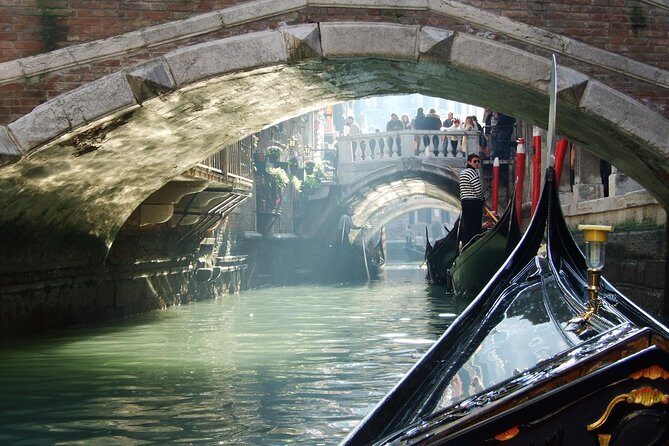
You’ll have a stop connected with the Basilica di San Marco area and nearby structures. The description highlights the Basilica as a central cathedral church in Venice, with structure dating back to the later part of the 11th century, plus a famous Gothic-leaning façade roofline.
Here’s the key value: even without paying for interiors on this stop, you get the “why this building is here” context before you go hunting for photos.
The practical drawback is also clear:
- Admission for this stop is not included.
So if you want inside views, don’t assume the tour has covered tickets. Plan on additional time and cost if you decide it’s worth it for you.






Torre dell’Orologio: Quick Stop, Big Sense of Place
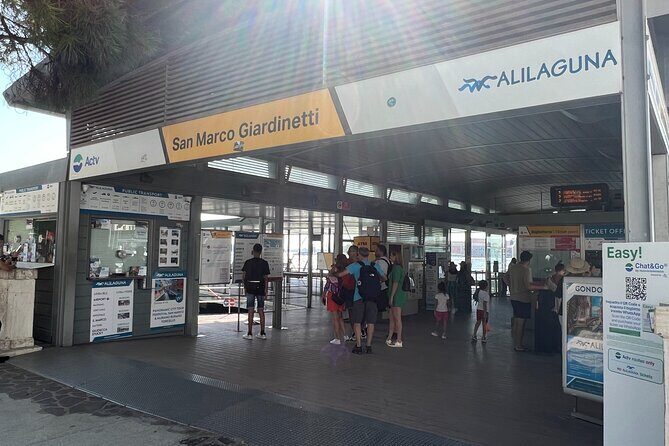
The Clock Tower (Torre dell’Orologio) is a short stop on the north side of Piazza San Marco. It’s described as an early Renaissance building at the entrance to the Merceria, and it includes the tower with the clock plus lower buildings on each side.
This stop works well if you like “details that make landmarks feel real.” It’s not a long museum moment; it’s more like a punctuation mark in the middle of the San Marco cluster. And because this is another stop where admission isn’t included, you can keep it simple: look, listen, move on.
If you’re the type who wants to slow down at each landmark, note that this tour’s overall length is fixed, so “slow” may mean you catch fewer sites up close.
Bridge of Sighs: A Short Walk That Hits Emotion
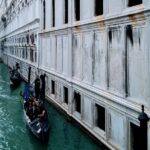
The Ponte dei Sospiri is one of those Venice bridges that makes you stop without being told to. It’s built from white Istrian stone and was built in 1602 to connect Palazzo Ducale to the prisons (Prigioni Nuove). The most distinctive feature is that it’s described as being entirely covered, formed by two wall-separated corridors leading to and from prison.
Even if you don’t picture the route in your head, the tour’s framing helps. You’re seeing a bridge that isn’t just pretty—it’s part of how the Venetian state moved people through power, law, and confinement.
This stop is listed as free, and that’s a plus because you can spend a little longer taking photos without feeling like you’re spending money again.
Rialto Bridge: The Most Practical Icon on Foot
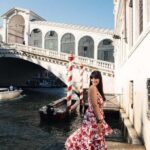
Then comes Ponte di Rialto, the oldest of the four Grand Canal bridges mentioned here. It connects San Marco and San Polo and has been rebuilt several times over the centuries.
What’s useful for first-timers is the “why it survived” story:
- The earliest versions used old ships and then shifted to wooden structures.
- The last reconstruction mentioned here is dated to 1591, matching what you see today.
The tour gives you a chance to orient yourself again after the San Marco area. Rialto is a classic pivot point—once you understand how you’re supposed to move from there, you’re better set for the rest of Venice on your own.
Doge’s Palace: Worth It, But Tickets Cost
Next is Doge’s Palace (Palazzo Ducale). It’s a Venetian Gothic landmark and was the residence of the Doge, the supreme authority of the old Venetian Republic. It opened as a museum in 1923 and is run by the Fondazione Musei Civici di Venezia.
Here’s the deal for your planning:
- Admission here is not included.
- Your stop time is listed as about 30 minutes, which may be enough for exterior context and key areas you can see without full museum coverage, depending on what your guide does during your visit.
If you’re the type who likes political history and art, you’ll probably want to add a ticket. If you’re more here for the walking and gondola, you can still enjoy the landmark feel without turning this into a full-day museum commitment.
La Fenice: The Opera House Stop You Can Skip or Savor
You’ll also see Teatro La Fenice, one of Italy’s most famous opera houses. The provided info mentions major bel canto-era composers and that La Fenice was the site of many famous premieres in the 19th century.
Admission isn’t included for this stop, and the time listed is short (about 10 minutes). That makes it more of a landmark nod than a full opera deep dive.
Still, it’s valuable because it rounds out the feeling of Venice. The city isn’t only palaces and prisons. It’s also stagecraft, music, and the kind of public drama that the Venetians took seriously.
The Gondola Ride: The Tradition Part That Makes It Feel Complete
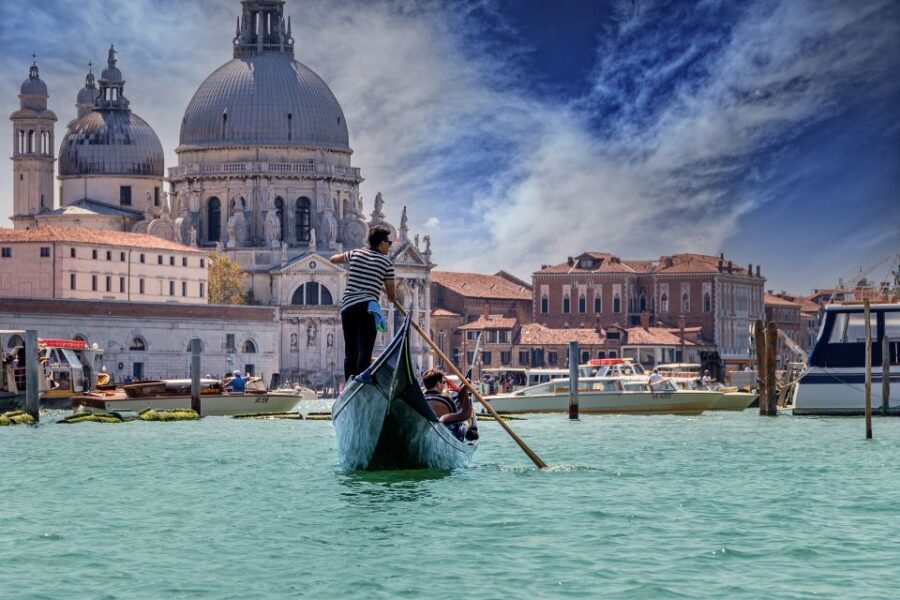
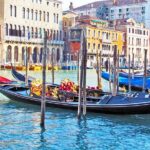
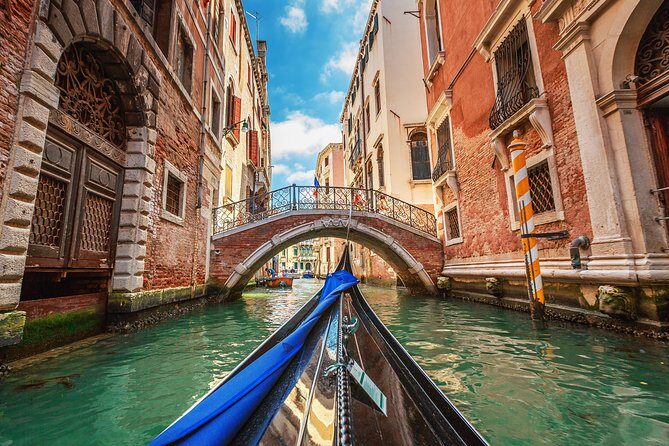
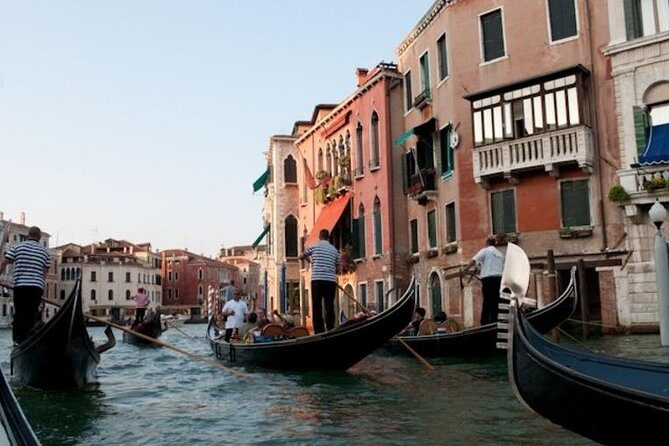
A gondola ride is included, and that’s the biggest “yes” for many first-timers. This is the city’s famous, 1,500-year-old tradition in the sense that Venice’s gondola system is a long-standing part of the city’s identity.
A couple of practical notes from real experiences:
- The guide is expected to make sure you get to the gondola and then back to finish the tour. One guide named Julian was praised for doing exactly that, including helping with getting on a water taxi and to the people mover afterward.
- One review mentioned the gondola ride wasn’t available on a specific departure, and another noted a gondola without the singing element.
So my advice is simple: treat the gondola as included, but stay flexible about the style of ride experience. If you have strong expectations (like music), ask your guide what you should expect for your specific ride when you arrive.
Also, gondola time is where you slow down and let the city “work.” When you’re in a gondola, you finally stop looking at bridges as obstacles and start seeing them as scenic connectors.
Pace and Group Size: The Main Trade-Off
This tour is designed for a complete circuit in about three hours, and that naturally means a bit of pace. Some feedback points to a running feel at times, with groups needing to keep up. That’s the main consideration.
Here’s how to handle it:
- Wear comfortable shoes (you’ll be on cobblestones).
- If you need breaks, tell your guide early. It’s easier to slow the pace than to catch up later.
- Remember that you’re in a small group. If the guide is moving briskly, there’s less room for everyone to drift without affecting the schedule.
On a good day, the guide can make it feel smooth and personal. One reviewer specifically praised Julian for being engaged and knowledgeable, speaking well, and keeping everyone on track to reach the gondola. Another praised Elisabeth as a wonderful guide who explained Venice clearly.
That mix is what you’re buying: city facts plus on-the-ground navigation.
Should You Book This Venice Walking Tour Plus Gondola?
Book it if:
- You want a fast, high-impact orientation to Venice’s big landmarks in about three hours.
- You prefer a guided route over trying to stitch together St Mark’s, Rialto, and the bridges on your own.
- You like the idea of an included gondola rather than spending extra time booking it separately.
Skip or think twice if:
- You need a slow, sit-down pace. This route is short, and some past tours were described as moving very quickly.
- You expect every stop to include museum-style admission. Several key sites have admission not included, including Doge’s Palace and the Basilica area.
- You’re arriving without time buffers. Meeting up in crowded Venice is doable, but you’ll want to confirm the exact meeting details you receive.
If you’re a first-timer who wants to see the icons and still get a gondola moment without extra logistics, this is a strong value structure—just go in knowing that a few stops are sightseeing from the outside unless you pay tickets on site.
FAQ
How long is the Venice Walking Tour and Gondola Ride?
It’s listed as about 3 hours.
What does the tour cost?
The price is $185.38 per person.
Is the gondola ride included?
Yes, a traditional gondola ride is included.
Is the tour a small group?
Yes. It’s listed as limited to a maximum of 14 people, and there’s also a maximum listed as 8 travelers for this activity.
Where is the meeting point?
The start point is Stazione di Venezia Santa Lucia, 30121 Venice. The tour ends back at the meeting point.
What is not included in the ticket price?
Food and drinks, personal purchases, and tips are not included. Also, admission is listed as not included for certain sights like St Mark’s Basilica area, Torre dell’Orologio, Doge’s Palace, and Teatro La Fenice.
Are tickets mobile?
Yes. It’s listed as a mobile ticket.
Do I need to pay an access fee on some days?
Some dates may require a €5 access fee for visitors staying outside Venice for the day. The info points to https://cda.ve.it for details and exemptions.
Is confirmation provided after booking?
Yes, confirmation is received at the time of booking.
Is free cancellation available?
Yes, you can cancel for a full refund up to 24 hours in advance of the start time.