REVIEW · VENICE
Verona Guided Tour from Venice by Train
Book on Viator →Operated by Amigo Tours Spain · Bookable on Viator
Verona hits your itinerary fast. This day trip pairs a smooth train ride with a guided walk that covers the city’s big Roman and medieval stops, plus the Romeo and Juliet vibe. I like the setup because you get a guided overview (so you’re not hunting for the meaning of everything), and you don’t spend your morning figuring out transit. The main drawback to plan around is the early start and the fact that after the guided portion, you’ll have to make the most of limited free time.
You’ll meet at Stazione di Santa Lucia in Venice at 6:45am and return to the same spot. The tour runs with a small group (up to 30) and a guide speaking English and Spanish, using mobile tickets for less fuss—just show up, get on the train, and start seeing. Also note: on some dates there can be a €5 access fee for day visitors (especially if you’re staying outside Venice), so check the official Venice access info link before you go.
In This Review
- Key highlights at a glance
- Why a Verona train day from Venice is such a smart move
- The logistics that reduce stress: Santa Lucia to Porta Nuova
- Porta Borsari and the Roman gate story you’ll actually remember
- Ponte Pietra: seeing Verona’s Roman bridge still in use
- The Roman Amphitheater area: Arena di Verona without the confusion
- Piazza Bra: Verona’s large centerpiece and where you’ll feel the city’s pulse
- Piazza delle Erbe: Roman forum traces under mixed architecture
- Using your free time well after the guided walk
- Price and what you’re really paying for
- Languages, group size, and the difference a guide makes
- Who should book this Verona train-and-walk day trip
- Quick decision: should you book this Verona day trip?
- FAQ
- Where do we meet for the tour in Venice?
- What time does the Verona day trip begin?
- How long is the full experience?
- How do you get from Venice to Verona?
- What’s the first stop once you arrive in Verona?
- Is the guide available in English and Spanish?
- Does the tour include monument entrance fees?
- Is there a city access fee for day trips from Venice?
- Can I cancel and still get a full refund?
Key highlights at a glance
- Round-trip trains included, so you’re not reverse-engineering schedules on travel day
- Porta Borsari, Ponte Pietra, and Roman Amphitheater area stops give you instant context for what you’re seeing
- Piazza Bra and the Opera/concert setting help you understand why Verona is so central today
- Piazza delle Erbe ties together Roman forum traces with Baroque and medieval buildings
- Up to 30 people keeps the walk manageable in a compact historic center
Why a Verona train day from Venice is such a smart move
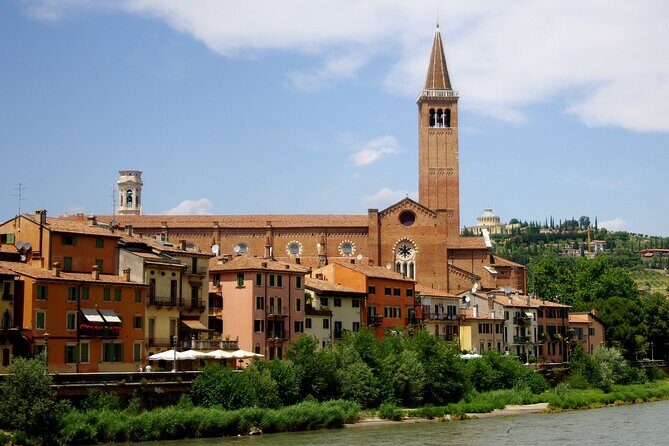
If you’re based in Venice, Verona can feel like the perfect “one more city” add-on. You get a full day that’s structured enough to feel efficient, but not so rigid that you’re stuck indoors. The train-and-walk combo matters here: Verona’s highlights are spread across a walkable core, and having someone point out what you’re looking at makes your time feel longer.
I also like that the day isn’t just sightseeing. You’re given a historical storyline—Roman walls and gates, Roman architecture, and how medieval and later Verona took shape around those old structures. That turns photos into something you actually understand later.
The only real caution is time. You’re moving early, and the guided part is set to a timetable—so if you’re the type who wants to linger for an hour at every stop, you’ll need a plan for your free time.
You can also read our reviews of more guided tours in Venice


The logistics that reduce stress: Santa Lucia to Porta Nuova
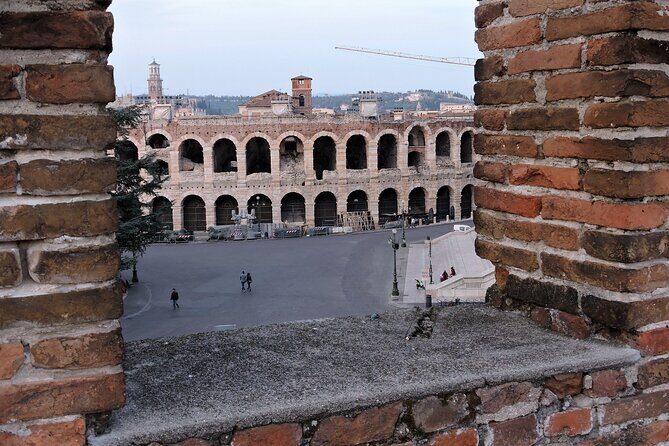
The day starts at Stazione di Santa Lucia in Venice, with the meeting point listed as Relaxation & Coffee right by the station. Start time is 6:45am, which is early enough that you’ll want breakfast pre-planned (or at least caffeine-ready).
From there, you take the train to Verona. The walk portion begins at Stazione Ferroviaria Verona Porta Nuova, the station built between 1914 and 1915 and renovated later. Porta Nuova is a practical starting point because it puts you close to the route the guide will use to reach the historic center.
The big win: trains are included both ways. That means no separate ticket purchases, no “what if the train is full” panic, and no scrambling to re-time your return.
Mobile ticketing is also a plus. On travel days, anything that cuts down on paperwork helps.
Porta Borsari and the Roman gate story you’ll actually remember
Once you’re in Verona, the guided walk focuses on anchoring you with key landmarks. One of the first stops is Porta Borsari, the old gate in the city walls. Its construction dates to the 1st century AD, and the name comes from the soldiers who collected tariffs when people entered the city—those collectors were called borsari.
This is the kind of detail that makes a wall feel less like scenery and more like a place with jobs, rules, and daily life. When you stand there, you’re not just seeing an ancient opening—you’re imagining how commerce and control worked at the city edge.
A practical thought: gates and stonework can look similar if you’re rushing. Let the guide finish the explanation before you speed ahead for pictures. You’ll get more out of the architecture when you know what to look for.
Ponte Pietra: seeing Verona’s Roman bridge still in use
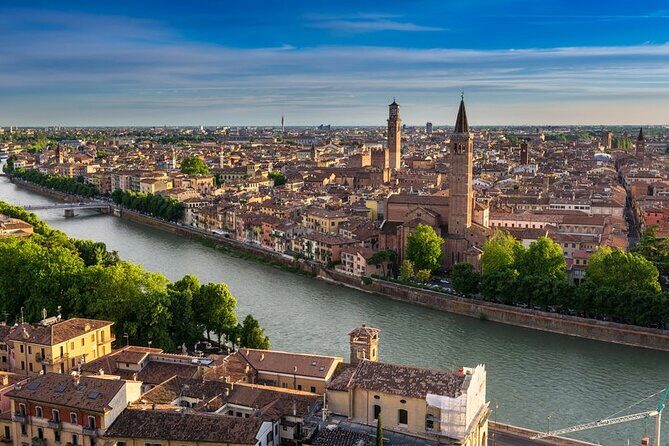
Another highlight on the walk is Ponte Pietra, described as the only Roman bridge left in the city. It has five arches and connects the city center to the riverbank area where the Castle of San Pietro sits.
Even if you don’t tour the castle itself, this stop gives you a useful orientation: Verona isn’t just “around one square.” It has a river spine, and movement across it shapes where people go and what areas feel like.
If you like taking your time with river views, this is a good place to pause—especially because the bridge works as a “reset” point after you’ve been walking through gates and streets.
The Roman Amphitheater area: Arena di Verona without the confusion
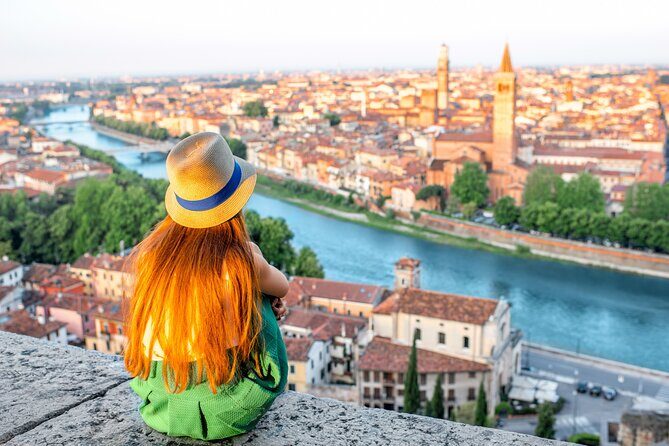
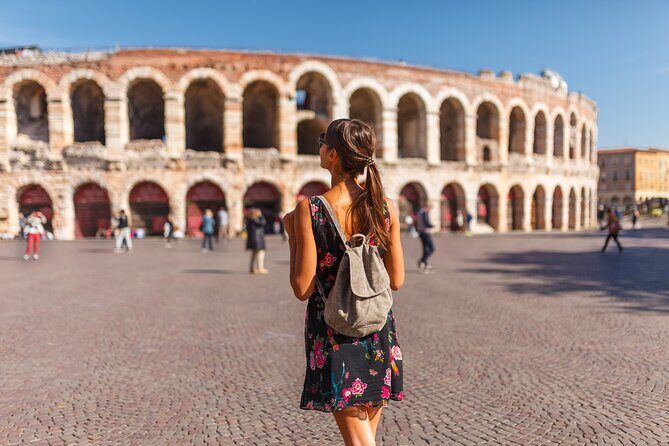
You’ll also reach the site of the ancient Roman Amphitheater, now famously used for operas and concerts. The capacity is listed as 22,000 spectators, which is a striking number when you see the scale in person.
What I like about this stop is that it gives you a clear reason the venue matters. You’re not just looking at ancient ruins; you’re seeing a live cultural machine that still functions—turned toward music, performances, and crowds. That helps you understand why people plan trips around dates when concerts happen.
One note for your expectations: the tour covers the area, but entrances to other monuments are not included. So if you want inside access, plan to handle those tickets separately.
Also, if you’re sensitive to crowds, plan your walking pace around the amphitheater area. It’s a big attraction, and it can get busy in peak visitor hours.

Piazza Bra: Verona’s large centerpiece and where you’ll feel the city’s pulse
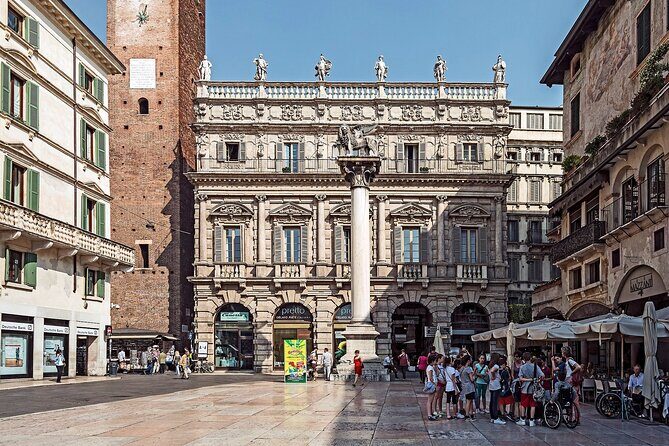
After the amphitheater stop, the tour brings you to Piazza Bra, described as one of Italy’s largest squares and the city’s center today. It wasn’t considered a square until the first half of the 16th century, but now it’s where life gathers—bars and restaurants sit around it, and it functions like Verona’s main social stage.
This is a great “big breath” moment in the day. Up to this point, you’ve been learning the city through Roman-era remnants and structural landmarks. Piazza Bra shifts you into present-day Verona: where locals hang out, where visitors naturally flow, and where you can get your bearings fast for the rest of your time.
If you want a simple strategy, take 20 minutes here to do two things:
- identify your next walk direction (river side vs. inner streets)
- decide where you’ll eat during your free time
That way, your later exploring doesn’t feel like random wandering.
Piazza delle Erbe: Roman forum traces under mixed architecture
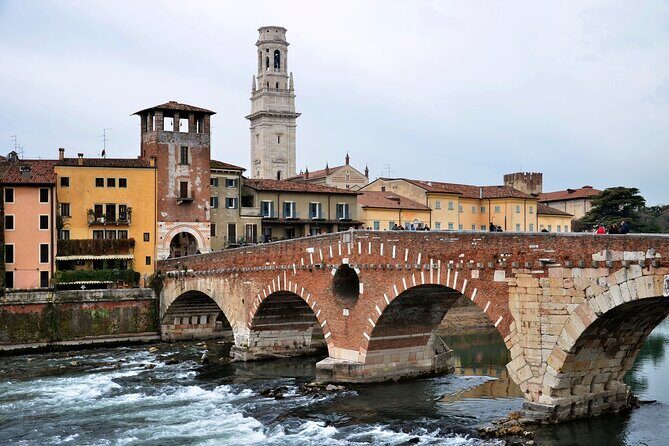
Your tour also includes Piazza delle Erbe, a square with architectural layers from Roman, Baroque, and medieval periods. The Roman forum used to be here, which makes the space feel more meaningful than a standard plaza.
This square is also a strong example of how Verona’s past doesn’t sit neatly in one museum. It overlaps. You get a chance to see how different eras shaped the same location, and it helps you understand why the city feels “stacked” rather than uniform.
Timing matters. The stop is listed at 15 minutes, which is long enough to get the basic feel of the square, but not long enough to become an expert. I’d treat it as a spark: enough time to orient yourself, then you can return during free time if you want a closer look.
Using your free time well after the guided walk
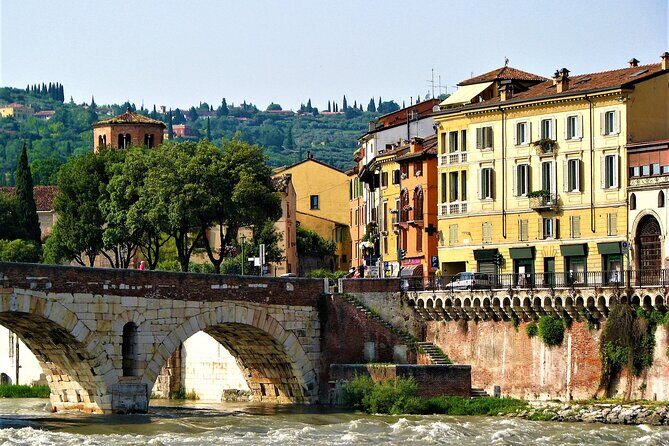
After the station-to-center arrival, the guided portion is described as about 1 hour, followed by free time. The day’s total duration is about 7 hours 30 minutes, so you’ll want to think of free time as a mini self-guided tour, not a pause button.
Here’s how I’d spend it to get the most value:
- Choose one “anchor” (Piazza Bra area, the river/bridge region, or Piazza delle Erbe) and build outward from there
- If you care about photos, prioritize viewpoints that include multiple layers: bridge + old buildings, or square + surrounding facades
- Use the time for a meal where it makes sense for the route you’re already walking
Also, don’t expect entrance tickets to be handled for you. Since entrances to other monuments aren’t included, your decisions for free time should account for that (either sightseeing by walking only, or paying for specific inside visits separately).
Price and what you’re really paying for
The price is listed at $79.79 per person, and the tour includes round-trip train tickets plus a professional guided tour in English and Spanish. For many people, that’s the entire value: the transport is already solved, and the guide gives you a tight storyline across the main sights.
What’s not included is entrances to other monuments. That’s normal for walking tours, but it does mean the final cost can rise if you want inside access to anything beyond the exterior sites and areas.
A quick budgeting tip: decide ahead of time whether you’re doing only street-level sights, or whether you’ll also want to pay for any monument entry. That single choice will shape whether this tour stays a great deal or turns into “half a tour + extra tickets.”
Languages, group size, and the difference a guide makes
This tour runs with English and Spanish interpretation, and the group size is capped at 30 travelers. That matters because a smaller group usually means you can hear the guide more easily and get help if you need it.
You’ll also appreciate the guide style that focuses on meaning, not just movement. One guide name that shows up with positive feedback is Marina, described as kind and providing explanations along the way while checking in to make sure everyone was okay.
That said, walking tours can vary depending on how much narrative time you get at each stop. If you’re someone who learns best through details, don’t be shy about asking a question while you’re near a landmark.
Who should book this Verona train-and-walk day trip
This one fits best if you:
- want a high-efficiency overview of Verona without planning your own route
- like Roman and medieval sites, and enjoy connecting architecture to stories
- are comfortable with an early morning start
- prefer walking with guidance over reading signs alone
It may feel less ideal if you:
- want lots of inside time at monuments (entrances aren’t included)
- hate timed free time and prefer a slower, longer day
- need a very relaxed pace with minimal group movement
Quick decision: should you book this Verona day trip?
I’d book this tour if you want Verona to feel clear fast—Roman gates, the amphitheater area, major squares, and a logical route that helps you understand what you’re seeing. The included train tickets are the biggest practical win from Venice, and the guided walking portion saves you from spending your best energy trying to “figure it out.”
Skip or consider another option if you’re hoping for a deeply detailed monument-by-monument day, because your time in Verona after the guide is limited and inside entries aren’t bundled.
If you’re aiming for a well-run, first-timer-friendly Verona day, this is a strong bet.
FAQ
Where do we meet for the tour in Venice?
The tour starts at Relaxation & Coffee at Stazione di Santa Lucia in Venice (Venezia), near the station.
What time does the Verona day trip begin?
The listed start time is 6:45am.
How long is the full experience?
The total duration is about 7 hours 30 minutes (approx.).
How do you get from Venice to Verona?
You take the train to Verona and back, with train tickets provided.
What’s the first stop once you arrive in Verona?
The walking tour starts at Stazione Ferroviaria Verona Porta Nuova, then you walk up to the city center for the guided portion.
Is the guide available in English and Spanish?
Yes. The guided tour is provided in English and Spanish.
Does the tour include monument entrance fees?
No. Entrances to other monuments are not included.
Is there a city access fee for day trips from Venice?
On certain dates, some day visitors (especially those staying outside Venice) may need to pay a €5 access fee. Check the Venice access information at https://cda.ve.it for exact dates and exemptions.
Can I cancel and still get a full refund?
Yes. You can cancel for a full refund if you cancel at least 24 hours before the experience starts.