REVIEW · PADUA
DA Venezia : Experience Padua like a local
Book on Viator →Operated by Lovivo Tour Experience · Bookable on Viator
Padua has a way of sticking to you.
This 3-hour walk is built around the city’s everyday places: market squares, long-legend cafés, and the big-name sights that pilgrims and students actually use. I particularly like how it pairs architecture with routine life, and I like the stop at Caffè Pedrocchi—the famous mint coffee moment that’s more than a photo. One thing to consider: two major buildings on the route (including Palazzo della Ragione and Palazzo Bo) have admission that isn’t included, so your time and budget may shift depending on whether you choose to go inside.
You’ll start at Stazione FS di Padova and move through the historic center at a steady, not-rushed pace. Expect around 10 stops with quick context at each—enough to understand the layout and what to look for when you wander off later.
And yes, this is a small-group tour (maximum 8 people), which helps the guide keep the story clear even when the streets get busy. If you’re visiting on a day with weather issues, note the tour requires good conditions.
In This Review
- Key things I’d prioritize on this tour
- Starting at Stazione FS di Padova: an easy launch point
- Piazza della Frutta: market square vibes with a big-city centerpiece
- Piazza delle Erbe: where commerce and civic life overlap
- Piazza dei Signori and the Clock Tower: civic drama, not just monuments
- Pedrocchi Café: the café without doors and the mint coffee payoff
- Palazzo della Ragione: medieval scale you can see from the street
- Sotto il Salone covered market: where you practice seeing like a local
- Quartiere dell’Antico Ghetto Ebraico: narrow lanes with a heavy timeline
- Palazzo Bo and the University of Padua: law, students, and an old anatomy theater
- Prato della Valle: statues, space, and the right mid-tour reset
- Basilica of St. Anthony: pilgrimage scale meets city walking pace
- What you really get for $130.18: value check, not just cost
- Who this tour is best for (and who should pick something else)
- Should you book DA Venezia: Experience Padua like a local?
- FAQ
- How long is the Padua walking tour?
- Is the tour in English?
- What food or drink is included?
- How many people are in the group?
- Where does the tour start and end?
- Is admission included for Palazzo della Ragione and Palazzo Bo?
- What if the weather is bad?
Key things I’d prioritize on this tour
- Market squares first: Piazza della Frutta and Piazza delle Erbe teach you how Padua trades, not just how it looks.
- Palazzo power in the middle of the walk: Palazzo della Ragione literally separates squares and frames daily life.
- Caffè Pedrocchi is the “ritual stop”: mint coffee with espresso, cream emulsion, mint syrup, and bitter cocoa—served with local pride.
- Food shopping under one roof: Sotto il Salone covered market is where you’ll recognize Paduan specialties by sight.
- History in small streets: the ancient Jewish ghetto lanes show how the city has changed over centuries.
- Big open space at the right time: Prato della Valle gives you breathing room between churches and university sights.
Starting at Stazione FS di Padova: an easy launch point
If you like tours that don’t waste time, you’ll appreciate this one’s meeting point. You’ll meet at Stazione FS di Padova (Piazzale della Stazione, 1). From there, you’re set up for a compact walking loop that returns to the starting area.
The tour includes roundtrip transportation to the place of departure, so you’re not left figuring out how to get to the meeting spot. And because it ends back where it started, you can keep your plans simple afterward—grab lunch, catch a train, or continue on foot without a logistical puzzle.
The tour also uses a mobile ticket, and you should receive confirmation at booking. If you rely on a phone, make sure you provide a valid contact (the operator confirms meeting/pick-up time a few days before).
You can also read our reviews of more tours and experiences in Padua.



Piazza della Frutta: market square vibes with a big-city centerpiece
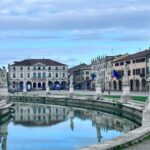
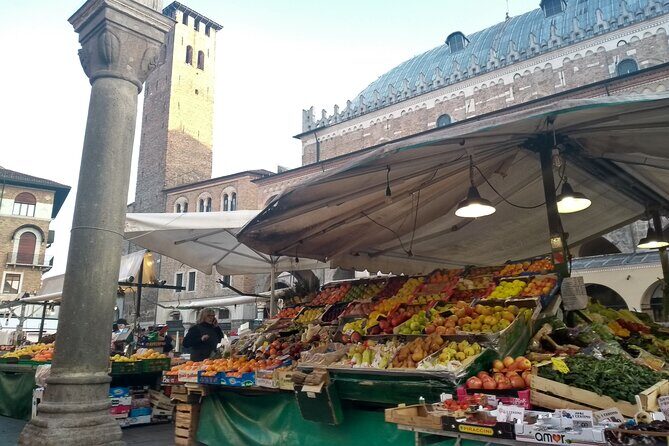
The first stop is Piazza della Frutta, historically also called Piazza del Peronio. This square has long served as a trading hub—its role overlaps with the neighboring commercial energy you’ll see later on.
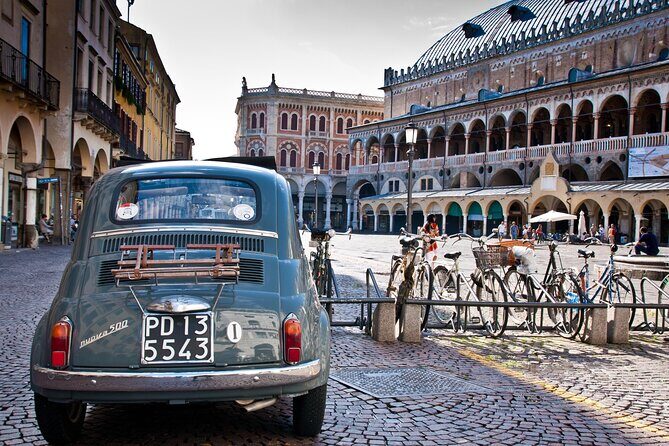
A major reason this stop works on a “local” style tour is that you don’t just glance at buildings. You learn what the square does. And right away, the skyline lesson lands: the square is dominated by Palazzo della Ragione (part of the larger Palazzo Comunale) and the Torre degli Anziani.
You’ll get a quick orientation for walking the historic center. Then you move on, which is the right strategy for Padua—many of the best moments are short visual connections between streets and squares.
Watch for: If you want deep museum-style interior time at each landmark, this pacing may feel too quick. This tour focuses on seeing and understanding the city’s structure.
Piazza delle Erbe: where commerce and civic life overlap
Next is Piazza delle Erbe (also known by older names like piazza delle Biade, piazza del Vino, and even piazza della Giustizia). The key idea: for centuries, this is where business happened. It shares the historic-center market identity with Piazza della Frutta.
The square is dominated again by Palazzo della Ragione, which is a big deal. You start to feel how the palace and the two squares form the city’s commercial “engine”—not separate attractions, but an integrated space.
This stop also comes with a useful city-reading takeaway: the guide frames the difference between the market squares and the more ceremonial spaces like Piazza dei Signori (which you’ll hit next). That helps you later when you’re deciding where to linger on your own.
Practical tip: Take 30 seconds here to look up and scan the facades. It’s easier to connect what you’re seeing to the story once you’ve seen the building’s “frame” twice.
Piazza dei Signori and the Clock Tower: civic drama, not just monuments
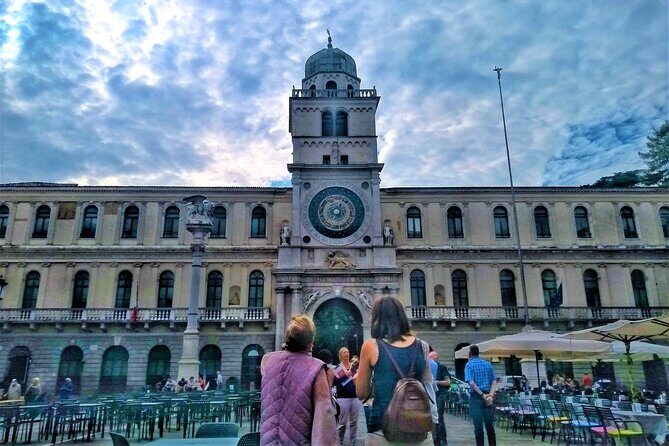
Now you shift to Piazza dei Signori, historically tied to civic celebrations, tournaments, and public life—more representative than the market squares to the north.
Dominating the scene is the Clock Tower. This isn’t just a pretty structure. It’s a visual reminder of how cities organized time, ceremony, and authority. On tours that treat each stop like a random snapshot, this detail gets lost. Here, it feels like the guide is teaching you how Padua “worked” day to day.
If you’re curious about the way public squares shape the personality of a place, this is one of your best mini-lessons on the route.
Consider: If your goal is mostly photography, you’ll get great shots, but the tour’s value is in what the guide says about why this square differs from the commercial ones.
Pedrocchi Café: the café without doors and the mint coffee payoff
Then comes the stop people talk about for one reason: Pedrocchi Café, often called the café without doors. The concept is simple and specific—the café stayed open day and night from its inauguration in 1831 until 1916.
This is where the “local” part turns into a sensory memory. You’ll have a taste of CAFFÈ PEDROCCHI, described as:
- 100% Arabica espresso
- fresh cream emulsion
- mint in syrup
- a sprinkling of bitter cocoa
Even if you’re not a coffee obsessive, the guide’s explanation helps you understand why this drink became the signature. It’s not a random café stop. It’s a historic habit turned into a modern ritual.
Also, it’s included in the tour as the typical Paduan tasting, offered at Caffè Pedrocchi or the Historical Market. So you’re not paying extra for the food moment.
Practical tip: If you don’t normally drink sweet drinks, take a small sip first. This one has a minty sweetness that can surprise you if you’re expecting something only lightly flavored.

Palazzo della Ragione: medieval scale you can see from the street
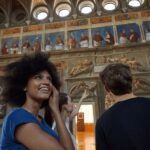
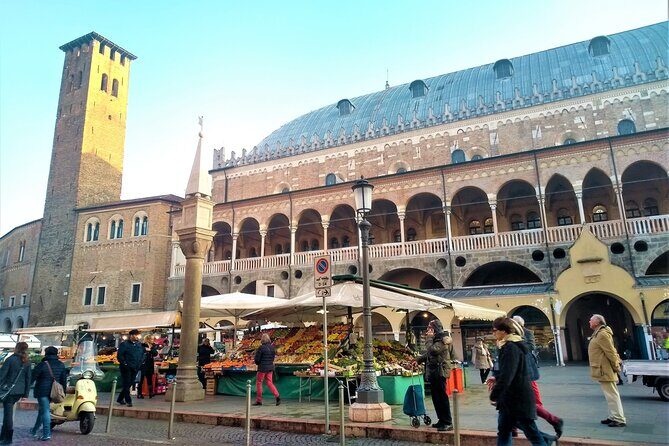
Next up is Palazzo della Ragione, built in 1218. Even if you don’t go inside, it’s hard not to feel the scale. The upper floor, called Il Salone, is a large frescoed hall and one of the biggest medieval halls in the world (as described in the tour).
Here’s the practical value: this palace isn’t tucked away behind museum doors. It’s positioned so it splits and shapes the space between Piazza delle Erbe and Piazza delle Frutti. You’ll literally experience the idea of “centered power” while you walk.
Important note: admission for Palazzo della Ragione is not included. So you’ll decide on the spot whether you want to invest time and ticket cost for interior viewing.
If you want maximum value: consider going in only if the timing lines up with your interests. If you’re short on time, staying focused on the exterior-to-square connections still works.
Sotto il Salone covered market: where you practice seeing like a local
Just below Il Salone is Sotto il Salone, the covered market inside Palazzo della Ragione. This stop is one of the best “local life” lessons because it’s all commerce—today’s version of what the squares were doing for centuries.
Inside, you’ll find specialty shops selling Paduan staples. The tour description highlights all the types of vendors you’d expect in a working market: butchers, fishmongers, greengrocers, plus shops offering oil, meat, cheeses, and more.
You also get another potential option for your included tasting: the tour can offer the typical Paduan tasting at the Historical Market instead of the café.
Practical tip: If your vacation style is more “taste and people-watch” than “museum photos,” this is your moment. Even if you don’t buy anything, it helps you understand how Padua feeds itself.
Quartiere dell’Antico Ghetto Ebraico: narrow lanes with a heavy timeline
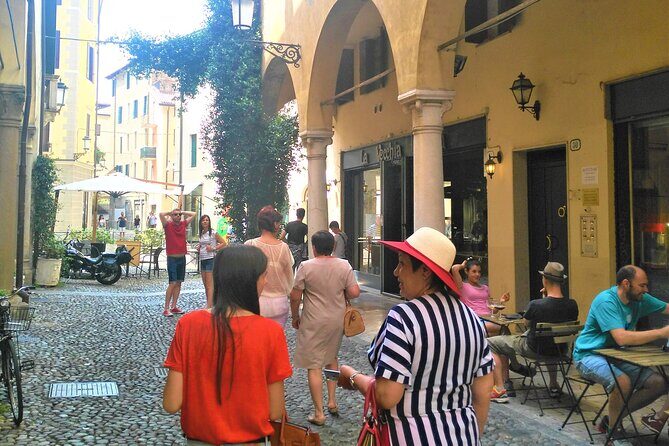
Next, you’ll walk into the Quartiere dell’Antico Ghetto Ebraico, a maze-like set of narrow streets to the south of Piazza delle Erbe.
The key historical point is specific: the Jewish ghetto operated starting in 1603, and it was abolished in 1797 when, under pressure connected with the French Revolution, Jews were declared free and equal.
This stop can feel quieter than the market squares. That contrast is useful. You start to see how the same city has held both daily commerce and constrained community life in different eras.
Consider: Because these are small streets, comfortable shoes matter. Also, keep your expectations realistic—this isn’t a deep museum exhibit. It’s a walking explanation that sets context as you move.
Palazzo Bo and the University of Padua: law, students, and an old anatomy theater
You’ll then reach Palazzo Bo, the historic seat of the University of Padua, founded in 1222. Today it still houses the Rectorate and School of Law.
There’s also a standout detail that makes this stop feel like more than an “old campus building”: Palazzo Bo is the seat of the oldest Anatomical Theater in the world (as described by the tour).
Like Palazzo della Ragione, admission for Palazzo Bo is not included. Still, the stop matters because it connects Padua’s reputation to a real institution that still functions—this isn’t just a relic city. It’s a working academic center.
Practical tip: Even if you don’t enter, pause long enough to notice where students would naturally flow. That helps you picture the building’s daily rhythm.
Prato della Valle: statues, space, and the right mid-tour reset
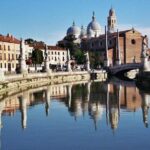
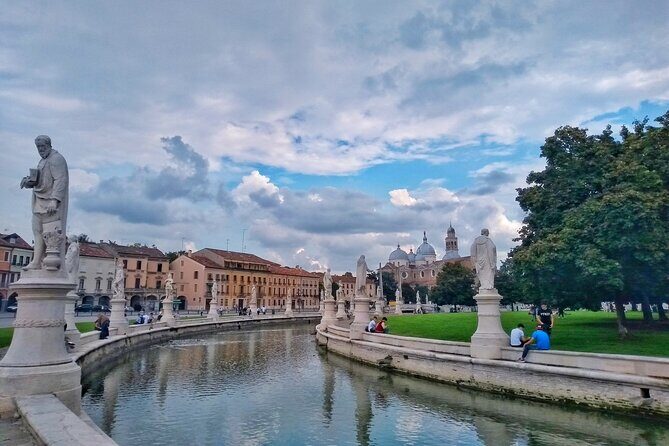
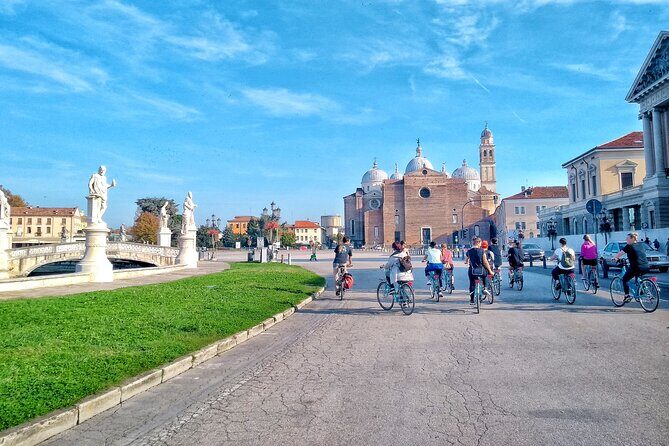
After the university stop, you move into Prato della Valle, described as the largest square in Padua and one of the largest in Europe. It’s known for 78 statues, arranged in a way that feels almost like a visual index of the city’s important figures.
This is one of your best breathing spots in the loop. If the market squares and ghetto lanes feel intense, the open square resets your energy and gives you room to step back and take it in.
Consider: On a hot day, you’ll likely want water. The tour keeps stops short, but Prato della Valle is open and can feel exposed.
Basilica of St. Anthony: pilgrimage scale meets city walking pace
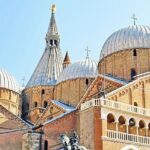
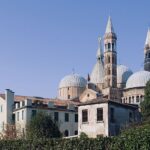
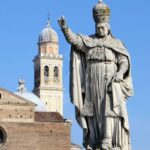
Finally, you reach the Basilica of St. Anthony (Sant’Antonio, often called Il Santo). The tour describes it as the destination of millions of pilgrims every year, and the building is framed as a romantic mix of styles and cultures from all corners of the world.
This last stop works because your earlier points—markets, civic spaces, university, and community history—slowly prepare you for why Padua draws people in the first place. The basilica becomes less of a standalone monument and more of a culmination of what the city means to visitors and locals.
Admission for the basilica isn’t mentioned as included or excluded, but the stop is listed with free admission—so you should be able to enjoy the visit without worrying about extra ticket cost on the tour part.
What you really get for $130.18: value check, not just cost
At $130.18 per person for about 3 hours, this isn’t the cheapest walking tour option. But it may be good value if you care about guided context and at least one included food/drink moment.
Here’s what’s included:
- Accompaniment of a Local Tour Leader
- Walking tour of Padua
- Roundtrip transportation to the place of departure
- Traditional Italian life with your local guide
- Typical Paduan tasting (at Caffè Pedrocchi or at the Historical Market)
- Insurance and technical organization
And what’s not included:
- Any items not specified
- Admission not included for Palazzo della Ragione and Palazzo Bo (so you might pay extra if you want to go inside)
For me, the value hinges on this: you’re paying for someone to connect the dots between squares, palaces, and daily life. If you prefer self-guided wandering with a map, you could do it on your own for less. If you like stories that make places easier to understand, the included guide and tasting can justify the price.
Also, this tour is capped at 8 travelers, which often improves the pacing and Q&A without turning the group into a slow-moving crowd.
Who this tour is best for (and who should pick something else)
This tour fits best if you:
- want a highly guided introduction to Padua without spending your whole day on logistics
- like city walks where markets and institutions both matter
- enjoy a real taste moment at a meaningful stop like Caffè Pedrocchi
- prefer small groups over big coach tours
It might be less ideal if you:
- want long time inside major sites (since two big interiors have admission not included and the pacing is short per stop)
- hate walking in full sun or crowds (Prato della Valle and central squares can get bright and active)
Should you book DA Venezia: Experience Padua like a local?
I think this is a strong choice if your goal is to learn Padua’s layout and daily rhythm fast. The route makes sense: it starts with market life, moves through civic spaces, then adds a food ritual at Pedrocchi Café, follows with the university and ghetto streets, and ends at the basilica and biggest open space.
If you’re the type who wants one “starter day” that sets you up to enjoy the city afterward, booking is an easy yes. If you’re already planning to spend a lot of time inside museums and palaces, you may want a different tour that includes more interior tickets.
One small checklist before you reserve:
- Bring comfortable walking shoes
- Plan to decide on Palazzo della Ragione and Palazzo Bo on the day
- If weather is iffy, be ready for the tour’s weather-dependent schedule
FAQ
How long is the Padua walking tour?
It lasts about 3 hours.
Is the tour in English?
Yes. The experience is offered in English.
What food or drink is included?
You get a typical Paduan tasting, either at Caffè Pedrocchi or at the Historical Market.
How many people are in the group?
The tour has a maximum of 8 travelers.
Where does the tour start and end?
It starts at Stazione FS di Padova, Piazzale della Stazione, 1, 35131 Padova PD, Italy and ends back at the meeting point.
Is admission included for Palazzo della Ragione and Palazzo Bo?
No. Admission for Palazzo della Ragione and Palazzo Bo is listed as not included.
What if the weather is bad?
The tour requires good weather. If it’s canceled due to poor weather, you’ll be offered a different date or a full refund.