REVIEW · VERONA
Dante in Verona: From Inferno to Paradise
Book on Viator →Operated by Slow Travel Italia · Bookable on Viator
Verona turns Dante into walking. In about 90 minutes, you trace how Alighieri’s life and the world of the Divine Comedy map onto real streets, squares, and churches. Verona becomes more than a pretty stop on your itinerary.
I especially like two things: the storytelling that connects daily life to Dante’s lines, and the fact that the main sights along the way have free entry so you can spend your money on the guide instead of tickets.
One thing to consider: this is a short walk, so you get context and photo moments, but not long stays inside any one place.
In This Review
- Why This Dante Walk Works So Well
- Key Highlights to Expect
- Getting Oriented: Meeting at Stradone S. Fermo and Walking to the Duomo
- Stop 1: A Church With the Alighieri Chapel
- Stop 2: From a Defensive Tower to a Tower Clock
- Stop 3: Piazza dei Signori and Dante’s Footsteps
- Stop 4: Via Sottoriva, One of Verona’s Best Preserved Streets
- Stop 5: Arche Scaligere and the Cangrande I Connection
- Stop 6: Duomo di Verona (Santa Maria Matricolare) as a Paradise Ending
- Price and Value: Is $42.05 a Good Deal?
- Pace, Group Size, and Practical Comfort
- The Guides Matter: Storytelling Names You Might Hear
- Who Should Book This Tour
- Practical Tips for Your Walk
- Should You Book Dante in Verona: From Inferno to Paradise?
- FAQ
- How long is the Dante in Verona: From Inferno to Paradise tour?
- How much does the tour cost?
- What language is the tour offered in?
- Do I need a printed ticket?
- Where does the tour start and end?
- Is admission required for the stops?
- How big is the group?
- Can I get a full refund if my plans change?
Why This Dante Walk Works So Well
This tour is built like a guided thought process. You move through Verona, and each stop explains a different layer of Dante’s link to the city: family ties, political rivalries, literature, and then a calmer landing that feels like the end of the journey.
The route is also a smart way to understand Verona fast. Instead of treating the city as a bunch of landmarks, you see how the same spots could mean totally different things depending on the moment in history and the mindset of the person standing there.
And it stays practical. The group stays small (up to 15), the pace is light enough for most visitors, and the experience runs in English. If Dante feels heavy on the page, this turns him into something you can actually picture.
Key Highlights to Expect

- Inferno-to-Paradise structure that shapes how you read each place
- Free entry stops that help the tour feel like good value
- Tombs tied to Cangrande I and Dante’s admiration in the Divine Comedy
- Old streets with hill views in the Via Sottoriva stretch
- A calm Romanesque finish at Santa Maria Matricolare
- Small-group pacing that makes questions and side stories easy
You can also read our reviews of more tours and experiences in Verona.
Getting Oriented: Meeting at Stradone S. Fermo and Walking to the Duomo
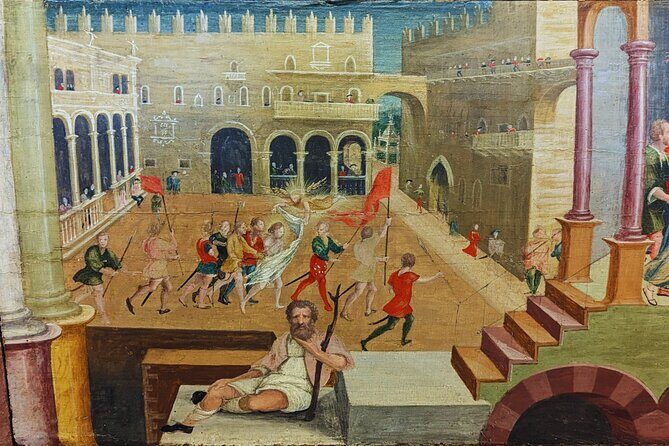
You start at Stradone S. Fermo, 3 (near central Verona). Your walk ends at Cattedrale di Santa Maria Matricolare in Piazza Vescovado. That end-point matters. It’s not a loop back to the same street, so you’ll likely want to plan your next stop nearby rather than far away.
The tour runs about 1 hour 30 minutes, with short stops where the guide sets the scene. In practice, that means you’ll spend more time absorbing the “why” than hunting for the “what.” If you’ve ever felt lost in an Italian city because the map doesn’t explain the symbolism, this format helps.
Also, you’ll get a mobile ticket, which keeps things simple. Confirmation comes at the time of booking, and the whole experience is designed to be easy to join once you’re there.
Stop 1: A Church With the Alighieri Chapel
The first stop is in a church tied to Dante’s world, where you’ll see the chapel built by his family, known as the Alighieri chapel. This is the kind of place that can feel almost invisible at first glance. Churches in Italy often have layers, and the story here is that Dante’s name isn’t just on books—it’s tied to real family presence in Verona.
What I like about this opening is that it reframes Dante from author to person. You start with the family connection, then the guide builds outward into the larger city story. It’s a clean way to get your bearings.
A possible drawback: churches usually require a bit of patience—time standing, looking up, and listening. If you’re someone who hates indoor stillness, bring a little extra tolerance. But for most people, it’s a strong way to start because it sets the emotional tone for the whole walk.
Stop 2: From a Defensive Tower to a Tower Clock
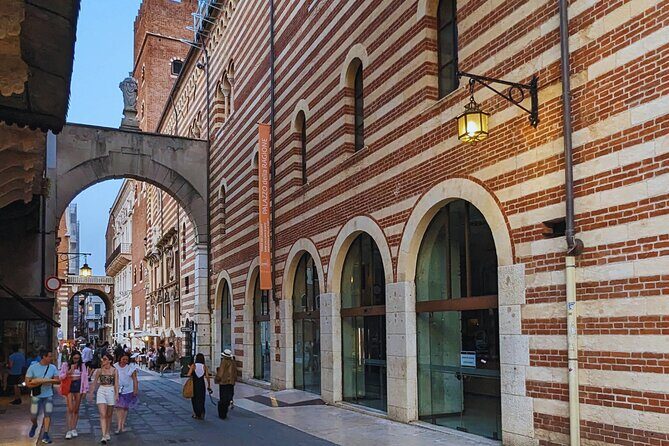
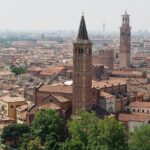
Next comes a piece of urban memory: a tower that looks like a clock today, but used to act as a protective structure for a noble family against rivals. This is one of those Verona details that makes you slow down.
Defensive towers are a reminder that medieval cities were competitive and tense. When you see the modern function (a clock face) layered over an older purpose (safety and control), it’s easier to understand why politics shows up so often in Dante’s writing.
It also teaches you a practical skill for sightseeing in old cities: don’t just look at what’s in front of you. Ask what it used to do. Here, the architecture becomes a timeline.
Stop 3: Piazza dei Signori and Dante’s Footsteps
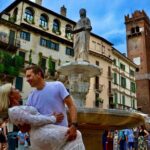
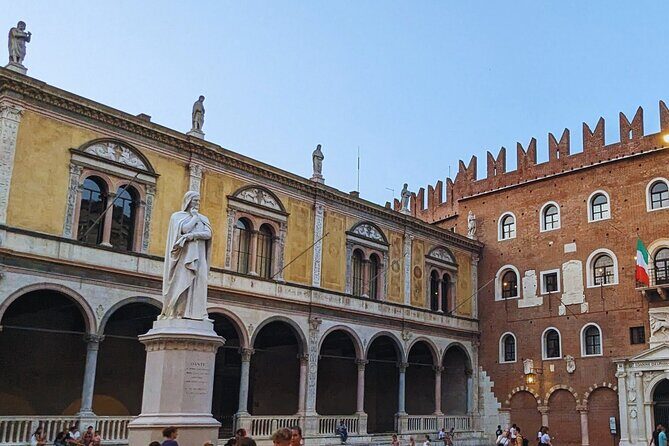
Piazza dei Signori is the kind of square that makes a city feel like it has a spine. Here, the guide connects Dante Alighieri’s life to the square’s role as both a cultural and political center. You also get a Dante statue, plus the guide points you toward cultural spots tied to the Inferno.
This stop is valuable because it links ideas to geography. Dante’s world isn’t floating in midair. It’s tied to places where people met, argued, ruled, and lived their daily lives. When the guide ties Dante’s story to what happened in this square, you start seeing Verona as something more than scenery.
Tip for your own visit: take a second to stand back from the main flow of foot traffic. Give yourself a minute to imagine the medieval square without modern crowds. The tour’s context makes that mental image easier.
The time at this stop is about 15 minutes, and the entry is free. So you get the benefit without it turning into a long detour.

Stop 4: Via Sottoriva, One of Verona’s Best Preserved Streets

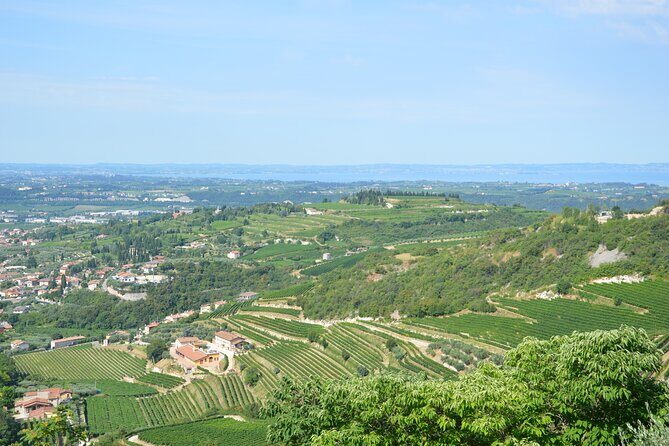
Then you shift from monuments to texture. Via Sottoriva is described as one of the oldest and best preserved streets in Verona, and it overlooks the hills of Torricelle. Even on a short walking tour, this kind of street stop matters.
It gives your brain a break from heavy literary context. You move, you look down the street, and you catch the view over the surrounding hills. That view link helps you understand the city’s shape, too. Verona isn’t flat; the terrain and the hills mattered to where people built, traveled, and defended.
This section also tends to be a favorite because it’s naturally photogenic without needing a “big ticket” viewpoint. About 15 minutes here feels right—enough to enjoy the street and then move on before you tire.
Stop 5: Arche Scaligere and the Cangrande I Connection
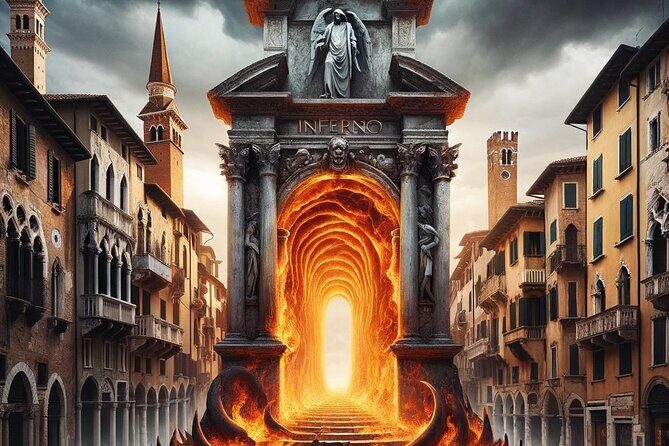
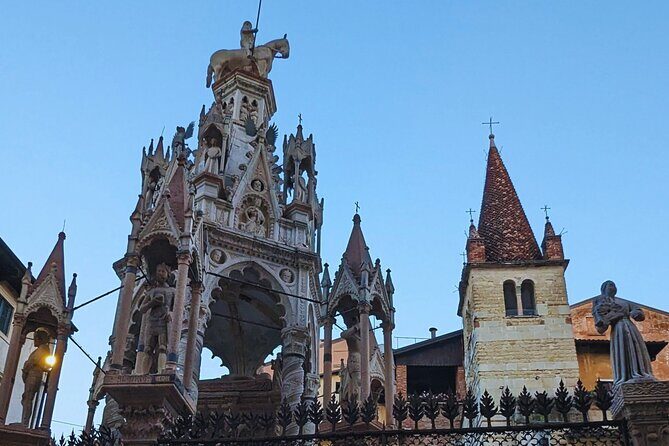
Arche Scaligere are elaborate Gothic tombs, and they’re a major reason this walk earns its Inferno-to-Paradise title in a very Verona way. Among the tombs is the resting place of Cangrande I della Scala, a powerful figure Dante admired and referenced in the Divine Comedy.
This is where the tour gets especially compelling for literature lovers. Dante didn’t write in a vacuum. He responded to leaders, rival families, politics, and moral questions about power. So when you stand among these tombs, the guide’s job is to make that connection feel concrete instead of academic.
If you’re the type who likes to know who someone is before you interpret their work, this stop fits you perfectly. You learn why Cangrande mattered to Dante, and you also see how Verona’s leaders wanted to be remembered. The tombs aren’t just graves; they’re public statements.
The practical upside: the stop is roughly 15 minutes and the sites listed along the walk are free to enter. So you can get the meaning without feeling like you’re losing time and money.
Stop 6: Duomo di Verona (Santa Maria Matricolare) as a Paradise Ending
The final stop is the Duomo di Verona, Cattedrale di Santa Maria Matricolare. The guide frames it as a place where the peace of Paradise lives. It’s a Romanesque church and described as an off-the-beaten-track spot.
This ending is smart. After tombs and political context, you finish with quiet architecture. Romanesque churches tend to feel solid and grounded, and this one is meant to be a slower moment at the end of the story.
Also, ending at a church like this helps you carry the tour’s theme in your head. It’s not just Inferno references and dramatic politics. You get a mental reset—one last signal that Dante’s writing circles back to questions of order, meaning, and hope.
Time here is about 10 minutes. That’s short, but it works since the tour overall is designed to stay compact.
Price and Value: Is $42.05 a Good Deal?
At $42.05 per person, this tour sits in the mid-range for a short guided walk. Here’s why it can still feel like good value:
- You’re paying for interpretation, not just movement. The guide connects Verona’s physical sites to Dante’s life and to the Divine Comedy.
- Stops along the route are listed as admission free for the key sights mentioned, so you aren’t stacking extra costs on top.
- The group size is capped at 15, which usually means you can hear the guide and ask questions without getting swallowed by a crowd.
What you should watch for is your personal preference. If you already know Dante well and want lots of deep texts and extended time in museums, this won’t replace a full-day literary tour. But if you want Dante’s Verona in manageable doses, with context at every step, the price feels fair.
Pace, Group Size, and Practical Comfort
This is built around short blocks of time—roughly 10 to 15 minutes at most places. That’s ideal if you like sightseeing that stays focused. You’ll cover several meaningful stops rather than spending half your day in one location.
It’s also capped at 15 travelers, and the tour runs in English. Near public transportation, too, which helps if you’re mixing it with other parts of the city.
Service animals are allowed, and the tour is described as suitable for most travelers. If you have mobility limitations, you’ll still be walking through streets and standing for brief explanations, so it’s worth considering your comfort with short steady movement.
The Guides Matter: Storytelling Names You Might Hear
From the experience’s guide style to how the stories are told, the tone comes through in the wording people use when they recommend it. Names you might encounter include Leonardo and Giovanni, and one shortened form you could also hear is Leo. The consistent theme is that the guide turns Dante into narrative, not just facts.
You should expect more than dates. You’ll get the kind of explanations that help you see why Dante referenced certain figures and how politics and daily life leak into literature. And the guide’s job is to keep it flowing even when you’re walking in warmer weather.
If you’re picky about guides, look for the ones who can connect a statue, a street, and a tomb to a single line of meaning in the Divine Comedy. That’s the value you’re paying for.
Who Should Book This Tour
I think this is a great fit if:
- You like Dante but don’t want to spend hours reading before you see the places
- You want a compact way to understand Verona beyond the usual postcard stops
- You enjoy walking tours that explain symbolism and context, not just directions
- You’re traveling with someone who enjoys literature and you want them to feel included
It may be less ideal if:
- You want long indoor time at churches or tombs with lots of quiet space
- You prefer self-guided exploring with no group pace at all
Practical Tips for Your Walk
A few things will help you enjoy it more:
- Wear shoes you trust. Old streets and stone surfaces can be slick or uneven.
- Bring water if you’re visiting in warm months. The stops are short, but you’re still walking.
- If you’re photographing, take your shots quickly, then let the guide finish the story. The meaning often lands right after the visual moment.
And since this ends at the cathedral area in Piazza Vescovado, think about what you’ll do next. That’s a good zone to continue exploring on foot.
Should You Book Dante in Verona: From Inferno to Paradise?
I’d book it if you want Dante’s Verona in a focused 90-minute format. The strongest reason is that the guide doesn’t treat the city like a list. You get a theme, a sequence, and explanations that make the sights feel linked.
The value is solid because the walk stays compact, the group is small, and the key stops are described as free-entry. The main trade-off is time: you won’t slow down for deep museum-style visits. But for most people, that’s exactly what makes it work.
If Dante is on your mind and Verona is on your route, this is one of the easiest ways to turn both into a single, coherent experience.
FAQ
How long is the Dante in Verona: From Inferno to Paradise tour?
It lasts about 1 hour 30 minutes.
How much does the tour cost?
The price is $42.05 per person.
What language is the tour offered in?
The tour is offered in English.
Do I need a printed ticket?
No. You get a mobile ticket.
Where does the tour start and end?
The start is Stradone S. Fermo, 3, 37121 Verona VR, Italy. The tour ends at Cattedrale di Santa Maria Matricolare, Piazza Vescovado, 37121 Verona VR, Italy.
Is admission required for the stops?
The stops listed in the walk are marked as admission ticket free.
How big is the group?
The maximum group size is 15 travelers.
Can I get a full refund if my plans change?
Yes. You can cancel up to 24 hours in advance for a full refund.