Verona hits you fast.
This guided walking tour turns the city’s top sights into an easy story you can actually picture, from Roman Verona to the medieval streets that still shape where you walk today. The local guide Fabio Massimo Rapanà is the engine here, linking architecture, street layout, and public buildings into one flowing Verona you can navigate on your own afterward.
What I like most is the focus on usable details: you don’t just see the Arena and the squares—you learn what they were for and why each place matters. Second, the tour is built for comfort and clarity, with a small group (up to 10) and headsets so you can follow the guide even in noisy areas.
One thing to consider: it’s still a walking tour, rain or shine, so you’ll want solid shoes and some stamina for cobblestones and a lot of “stop and look” moments over 2 hours.
In This Review
- Key takeaways
- Piazza Bra to the Arena: the smart starting point for first-timers
- Roman streets and medieval walls: why the city feels older than it looks
- Porta Borsari and Riva San Lorenzo: architecture you can spot with your own eyes
- Castelvecchio and Ponte Scaligero: the river view that changes your mental map
- Piazza delle Erbe: market history plus the kind of details you’d miss
- Piazza dei Signori and the medieval power scene
- Santa Anastasia and the quiet religious layer of Verona
- Juliet’s House, Casa di Romeo, and the Scaligere mausoleums: Shakespeare with context
- Sinagoga di Verona and a side of the city people often skip
- The practical rhythm: what the route feels like in 2 hours
- Why headsets and a small group are a big deal (not just a perk)
- Price and value: $41 for a high-context Verona orientation
- Should you book? My straight answer
- FAQ
- Where do I meet the guide?
- How long is the tour?
- Is the price $41 and what’s included?
- What languages are available?
- What should I bring and will it run in bad weather?
- Is the tour wheelchair accessible?
Key takeaways
- Small group pacing that keeps the tour feeling personal, not herded
- Headsets that make the guide easy to hear, even at busier stops
- Roman-to-medieval route that explains why Verona looks the way it does
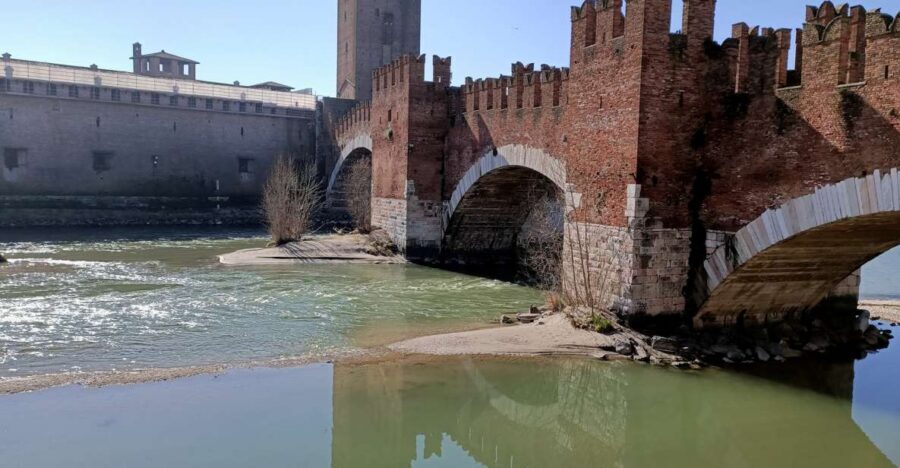
- Adige River viewpoints plus Ponte Scaligero and Castelvecchio photo moments
- Story stops around the Shakespeare trail without losing the real city context
Piazza Bra to the Arena: the smart starting point for first-timers
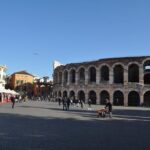
The tour starts at Palazzo Barbieri (Comune di Verona) in Piazza Bra, with the guide standing below the Italian flag. If you’re meeting in the biggest, most obvious square, that’s a good sign. You don’t waste time hunting for a group before you even start learning.
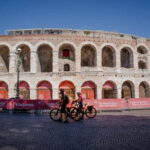
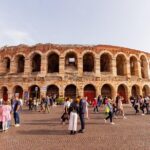
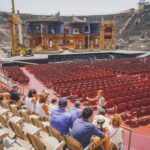
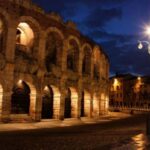
From there, the walk flows toward Verona’s best “anchor” landmark: the Verona Arena. You’ll get a photo stop and a guided explanation of what happened there—especially the gladiator battles—and how the structure reads today. Even if you’ve seen pictures of the Arena before, it lands differently when you know the purpose of the space.
This is also where the tour’s rhythm clicks. The guide doesn’t just talk about one building. He links each stop to the next, so you feel like you’re moving through time rather than hopping between unrelated attractions. It’s the kind of approach that helps you understand Verona’s layout without needing a map that fights you back.
You can also read our reviews of more walking tours in Verona

Roman streets and medieval walls: why the city feels older than it looks
After the Arena, the route follows clues of the early city walls and heads onto Corso, described as one of the oldest streets in Verona. This matters because it’s easy to focus on the famous facades and miss the “bones” of the city. Here, you get small orientation wins—where to expect certain views, and how the streets grew into today’s grid.
One highlight along the way is Porta Jovia, a Roman-era monument you pass as part of the route. You don’t need to be a Roman history nerd to appreciate this moment. A gate like that is more than an old arch—it’s a reminder that Verona was planned to move people and trade through specific chokepoints.
And then you shift toward the medieval vibe, using the foundations and street fabric as your cues. You’ll also see references to major medieval spaces as the walking route “threads” between public buildings and viewpoints.
The takeaway for you: when you walk these streets later on your own, the city stops being just pretty stone. It becomes legible.
Porta Borsari and Riva San Lorenzo: architecture you can spot with your own eyes
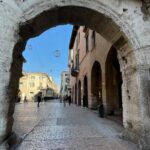
As the tour heads deeper into the historic core, you’ll make a photo stop at Porta Borsari. It’s one of those Verona structures that looks “obvious” once you know it’s there. The guide’s job is to point out why it stands where it does, and how it fits into Verona’s Roman-era narrative.
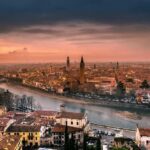
Then you move to Riva San Lorenzo for scenic moments and views. This is a good break in the flow, because the guide uses the sightlines to explain the city’s relationship to the Adige River. Verona’s water setting is part of why so many major sights sit where they do—and why the angles matter for photos.
If you’re the type who wants to understand where the best views come from, you’ll like this portion. You see the river context before you reach the bigger skyline points.
Castelvecchio and Ponte Scaligero: the river view that changes your mental map
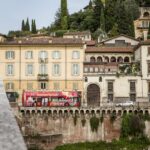
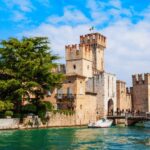
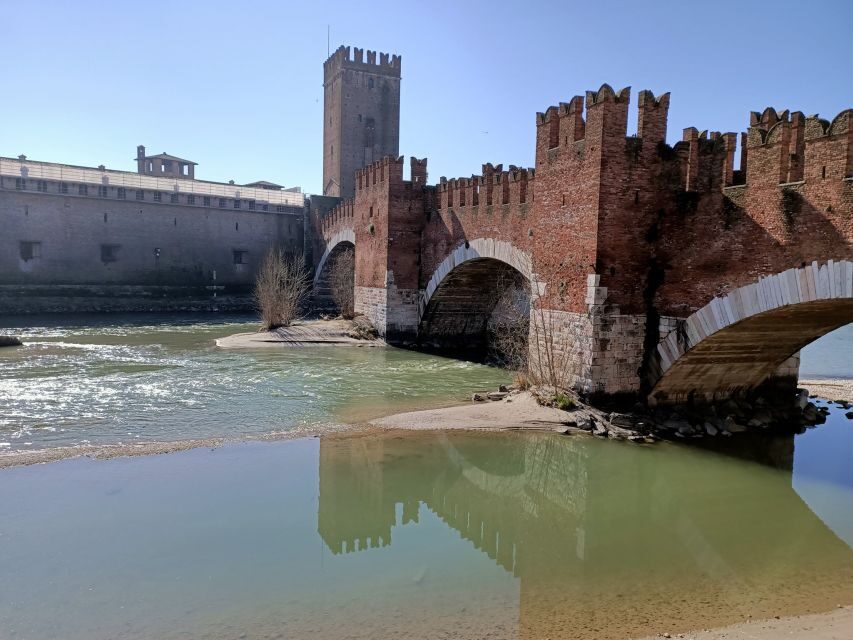
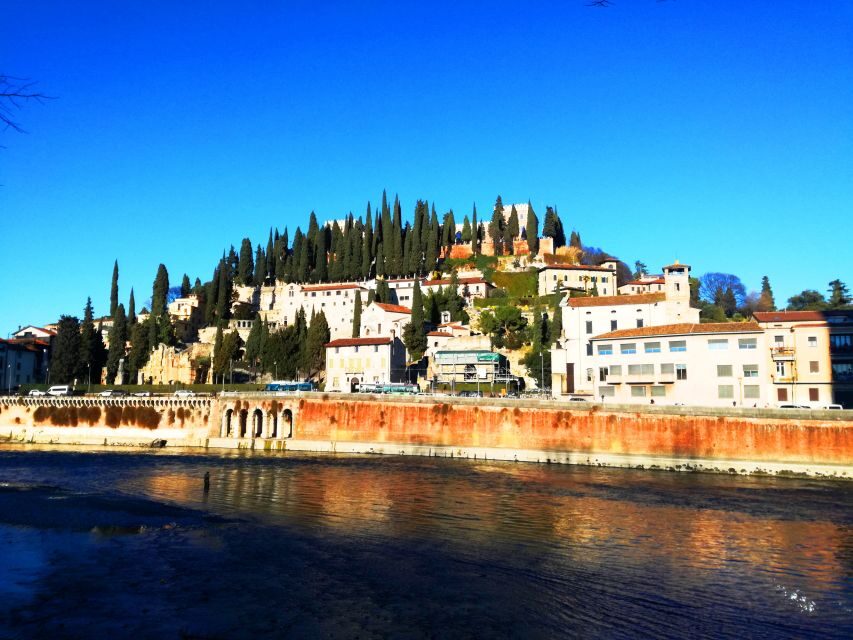
A key part of the tour is the stretch that offers views of Castelvecchio and the Ponte Scaligero over the Adige River. Even though you’re not stopping for long, the guide makes these photo breaks count.
Here’s the practical value: once you’ve seen the river-and-bridge relationship from the right spots, you can better plan the rest of your day. It’s much easier to understand where “across the water” sights are, and how the neighborhoods connect.
Also, this is a great time to take a breath. Verona can feel fast on a first visit. A short scenic pause with context helps you stay energized instead of turning the city into a blur of highlights.
Piazza delle Erbe: market history plus the kind of details you’d miss
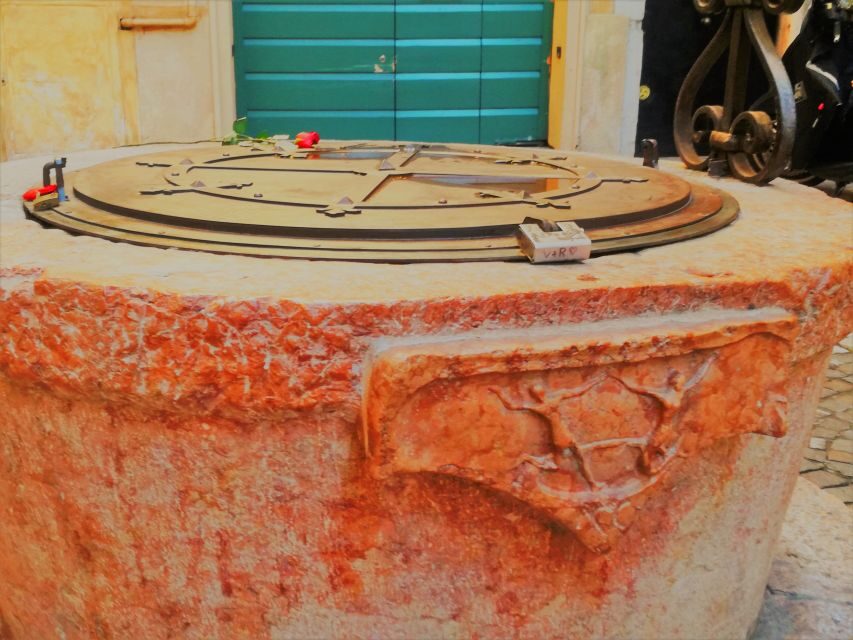
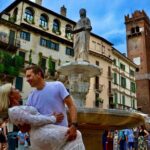
You’ll reach Piazza delle Erbe, with a photo stop and time built in for the square itself. One standout detail is the oldest fountain in the city, which the guide uses to talk about how local life has played out here for centuries.
What you’re really getting at this stop isn’t just the fountain. It’s the story of the market culture—plus the way the square’s surrounding buildings act like a stage for daily life. The guide points out the façades of historic townhouses, and that pushes you to look up rather than just stare straight ahead.
If you like to shop for moments rather than souvenirs, this square is ideal. You’ll notice patterns you might otherwise ignore, like how the street fronts face the square and how the space works as a social hub.
You can also read our reviews of more guided tours in Verona


Piazza dei Signori and the medieval power scene
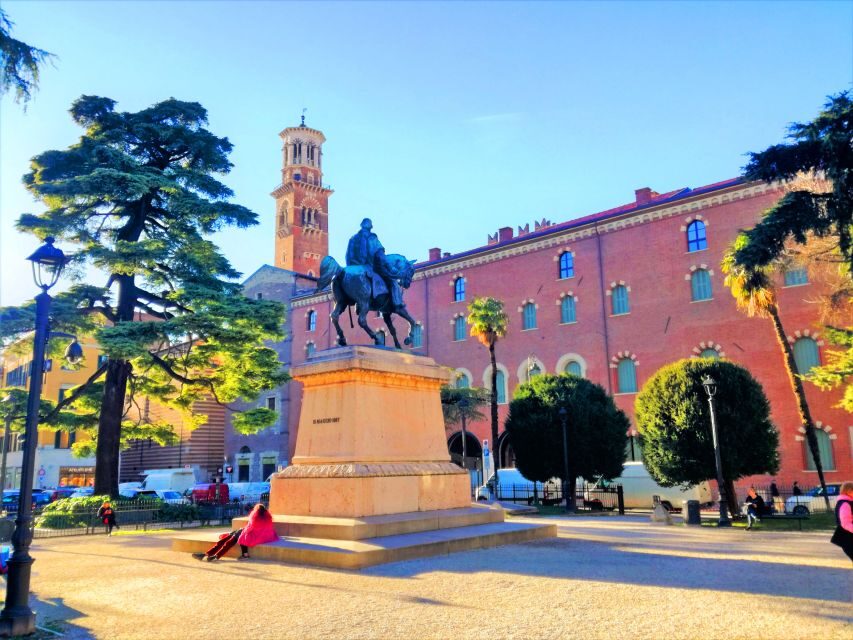
Next up is Piazza dei Signori, a place where Verona’s civic energy shows up in stone. You’ll see public buildings including Palazzo della Ragione, Palazzo Della Scala, and Palazzo del Capitano. The guide ties them to the medieval era so it doesn’t feel like a list of names.
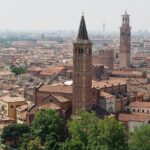
One very specific feature you’ll hear about is the highest tower in the city. Even if you don’t climb it (the tour doesn’t indicate that you will), the explanation gives the tower a job: it signals power, visibility, and control over the city’s view.
This is also where Verona’s “politics in architecture” becomes clear. Instead of only admiring facades, you understand what people wanted to communicate—authority, order, and prestige—through where they built.
Santa Anastasia and the quiet religious layer of Verona
The tour includes a photo stop at Basilica di Santa Anastasia. This is a different kind of Verona than the Roman Arena and marketplace squares. You’ll feel the switch from civic bustle to spiritual space.
Even with a short stop, the guide’s commentary helps you read the building as part of Verona’s long timeline rather than as a standalone postcard. If you’re even slightly interested in how cities evolve over time, this change of pace is useful. It makes the route feel balanced instead of wall-to-wall landmarks.
Juliet’s House, Casa di Romeo, and the Scaligere mausoleums: Shakespeare with context
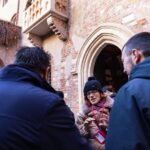
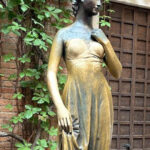
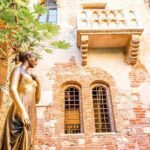
Yes, you’ll see Casa di Romeo and Juliet’s House areas as part of the walking route. But the tour treats the Shakespeare connection as a starting point, not the whole story.
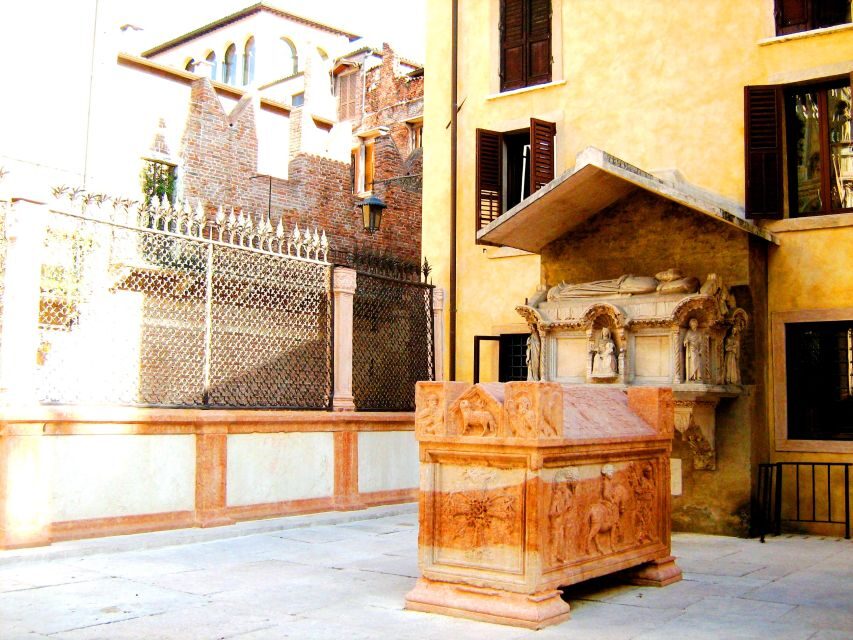
On the way, you’ll also stop for views of the Arche Scaligere mausoleums—the dramatic tombs tied to the Scaligero family. The guide uses this stretch to explain the historical inspiration behind the famous tragedy. The point isn’t just to say, here’s where the story is set. It’s to connect the literary imagination back to real Verona power and memory.
In practical terms, this helps you avoid the “famous name only” feeling that some visitors get. When you know who the Scaligero rulers were and why their monuments matter, Juliet’s balcony becomes more like a cultural echo than a single tourist stop.
Sinagoga di Verona and a side of the city people often skip
Toward the latter part of the tour, you’ll pass Sinagoga di Verona for a photo stop. This is a meaningful shift in angle—showing that Verona’s story isn’t only Roman ruins and medieval towers. It has multiple communities and eras layered into the streets.
You’ll also see a stop for the Convent of Saint Mary ’della Scala’ of the Servants of Mary. Even if you’re not planning to enter buildings, seeing these places on foot helps you understand the broader social geography of the city.
These are the kinds of stops that make the tour feel like it respects Verona beyond the headline sights.
The practical rhythm: what the route feels like in 2 hours
The tour is designed to stay focused without feeling rushed. Expect a lot of short photo stops and pass-by moments where you slow down just enough to learn what you’re looking at.
The route includes quick detours and smaller squares, plus a finish back near where you started—Palazzo Barbieri (Comune di Verona). Along the way, you’ll get multiple chances to look up, look sideways for views over the Adige, and re-orient yourself.
A couple practical notes for your comfort:
- Bring comfortable shoes. Verona’s sidewalks and cobbles don’t care about your plans for the day.
- Bring water. The tour is only 2 hours, but warm weather can hit fast.
- It runs rain or shine, so a light rain layer is smart.
Why headsets and a small group are a big deal (not just a perk)
This is one of the strongest value elements here. The tour caps at 10 participants and uses headsets, so the guide’s voice stays clear. That’s especially important in open squares and busier streets where normal voice projection gets swallowed by noise.
It also changes the feel of the tour. A small group means you’re more likely to get your questions answered and your pace handled. The route is also described as optimized for storytelling, and it shows in how the guide keeps you moving while still giving you time at the right spots.
For anyone who struggles with hearing in crowds, the headset setup is a real quality-of-life win.
Price and value: $41 for a high-context Verona orientation
At $41 per person for a 2-hour guided walk, this is a solid deal—especially because the experience is built around interpretation, not entry tickets. Entries are not included, so you’re mainly paying for the guide, the route logic, and the headset system.
If you plan to hit a bunch of sights independently after, this is the kind of tour that pays you back. You leave with:
- a mental map of where major sights sit in relation to the river and walls
- names and eras you can connect (Roman, medieval, Scaligero, civic spaces)
- better instincts for what’s worth a longer visit later
So if your goal is to understand Verona quickly and then explore at your own pace, this is priced to fit that plan.
Should you book? My straight answer
Book this tour if:
- you want Verona to make sense fast—history, architecture, and street layout
- you appreciate a guide who explains what you’re seeing as you walk
- you’d rather be in a small group with headsets than follow a big flag cluster
Skip it (or swap it for a different format) if:
- you don’t like walking tours or you want long indoor time at ticketed sites
- you’re looking only for quick photo ops with minimal commentary
If you’re visiting Verona for the first time, I’d treat this as your “set your bearings” tour. It’s short enough to fit any schedule, and it gives you the context that makes the rest of your day more fun.
FAQ
Where do I meet the guide?
Meet in Piazza Bra, at Palazzo Barbieri (Comune di Verona), with the guide standing below the Italian flag.
How long is the tour?
The walking tour lasts 2 hours.
Is the price $41 and what’s included?
The price is $41 per person. Included are a professional licensed guide (Fabio Massimo Rapanà), a small group up to 10, route optimized for storytelling, and headsets. Transport and entries are not included, and the tour does not include food or drinks.
What languages are available?
The guide offers the tour in English, German, Italian, and Spanish.
What should I bring and will it run in bad weather?
Bring comfortable shoes and water. The tour runs rain or shine.
Is the tour wheelchair accessible?
Yes, the tour is listed as wheelchair accessible.