REVIEW · VERONA
Fascinating Verona: in the Footprints of Romeo and Juliet
Book on Viator →Operated by Curioseety SRLS · Bookable on Viator
Rome and Juliet meet Roman Verona. This short, small-group walk turns the city into a story you can actually follow on foot. I love how it starts at the Arena amphitheater and builds outward through medieval streets, instead of jumping straight to the usual photo stops.
Two things really make this one worth your time: first, the guides are praised for energetic, clear storytelling (names like Frank, Maria, Francesco, and Andrea pop up again and again). Second, you get more than the balcony moment—you also learn how trade, power, and architecture shaped Verona. One drawback to note: the Romeo and Juliet theme is strongest near the start of the Juliet stop, but the tour is still mostly about Verona’s layered past.
You’ll be walking at an easy-to-moderate pace for about 1.5 hours to 2 hours, and it runs rain or shine, so plan for weather and comfortable shoes. The big win is timing: even if you only have a few hours in town, you’ll leave with a clear map in your head.
In This Review
- Key highlights at a glance
- Entering Verona from the Arena: ancient Rome before the romance
- Juliet’s House and the Romeo-and-Juliet moment (with clear expectations)
- Herbs Square: markets, palaces, and merchant-guild details that change the feel of town
- Signori Square: an architecture mix that shows Verona’s timeline fast
- Courtyards, backstreets, and the Scala family tombs: power and scandal at street level
- Timing, pace, and what your body needs to handle
- Price and value: is $83.45 worth it for 90 minutes?
- Rain or shine: how to dress and what to do about tickets
- Should you book this Verona Romeo-and-Juliet walking tour?
- FAQ
- How long is the Fascinating Verona tour?
- Where does the tour start and where does it end?
- Are the tickets for Juliet’s House included?
- Does the tour run in bad weather?
- What group size should I expect?
- What is the cancellation policy for a full refund?
Key highlights at a glance
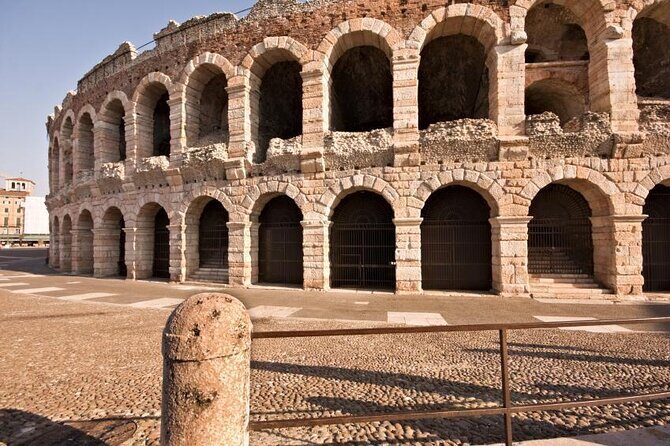
- Arena amphitheater first: Start with an ancient Roman monument that predates the Colosseum.
- Juliet’s balcony stop: You’ll see Juliet’s House, including the famous balcony and statue, but Shakespeare facts come with caveats.
- Herbs Square and trade history: Expect a market setting tied to old merchant life and the Domus Mercatorum.
- Signori Square architecture mix: Roman, Romanesque, Gothic, Renaissance, and modern styles show up in one compact area.
- Scala family tombs at the end: You finish with the 13th- and 14th-century ruling family’s memorials and intrigue.
Entering Verona from the Arena: ancient Rome before the romance
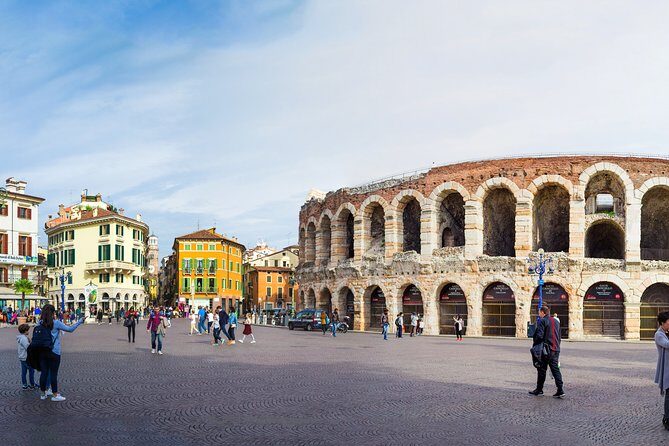
The meeting point is Piazza Bra, and the tour begins at the Arena amphitheater. This matters because it flips the usual order. Instead of starting at romantic rooftops and working backward, you start with Roman engineering and civic life—so later medieval details feel connected, not random.
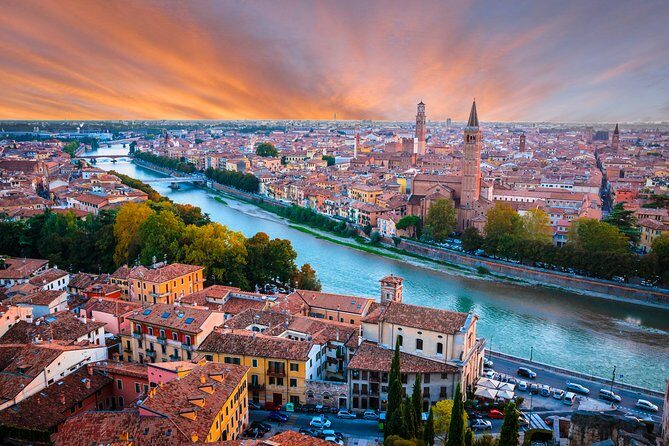
You’ll learn how this Arena was built before Rome’s Colosseum and has been used for more than 2,000 years. That long use is the theme here: Verona keeps reusing and reshaping the same urban bones. As you walk away, you’ll notice how quickly the city shifts from Roman scale to medieval street tightness.
The guides tend to bring the story alive fast. Reviews mention guides like Frank and Maria for making history feel like scenes, not just dates. Even on a hot afternoon, the energy helps you keep your attention while you’re moving.
Practical tip: since the walk is mostly outside, dress for sun and wind. Verona afternoons can feel sticky, and you’ll be on your feet. If you tend to run cold, bring a light layer for shade.
You can also read our reviews of more tours and experiences in Verona.

Juliet’s House and the Romeo-and-Juliet moment (with clear expectations)

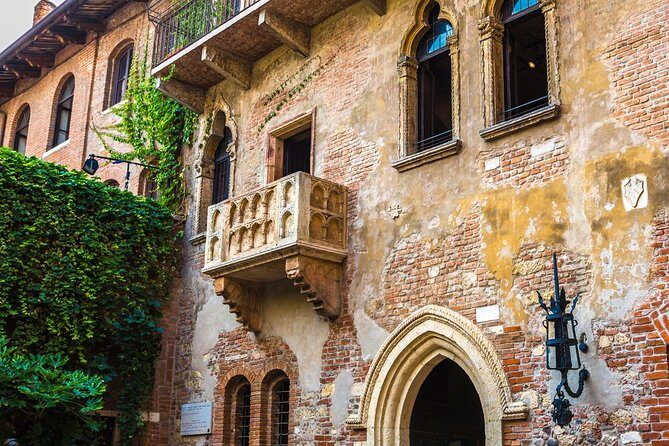
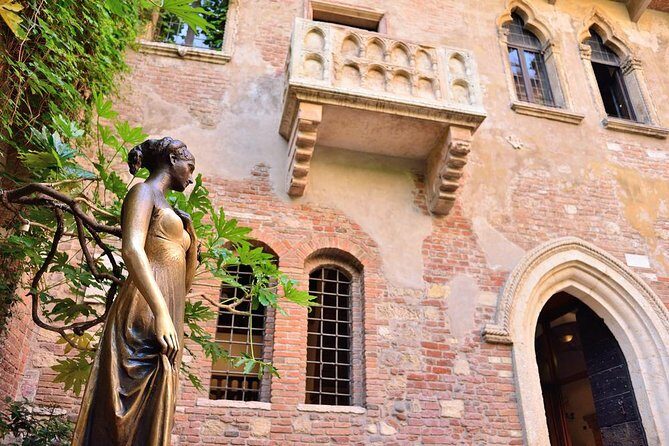
At some point on the walk, you’ll head to Casa di Giulietta to see Juliet’s House, including the famous balcony and the Juliet statue. This is the most obvious “Romeo and Juliet” stop, and it’s what most people picture when they book.
But here’s the honest expectation-setting: the tour name promises Shakespeare footprints, yet the Juliet stop is just one part of a larger Verona story. One of the strongest pieces of feedback is that the balcony is not the whole show, and that’s not a bad thing. If your goal is city context—why Verona feels dramatic, political, and theatrical—this tour delivers that outside the single famous photo spot.
You’ll also hear what’s real versus what’s been layered on later. The tour notes that Shakespeare connections here are dubious, and that’s exactly why the storytelling works. You’re not being sold a fairy tale. You’re learning how legend gets attached to places, and how Verona’s real past can be just as dramatic as the fiction.
If you want the balcony experience, go with the mindset of short-and-sweet: quick views, a good explanation, then back out into the streets to see how the rest of the city explains the mood.
Herbs Square: markets, palaces, and merchant-guild details that change the feel of town
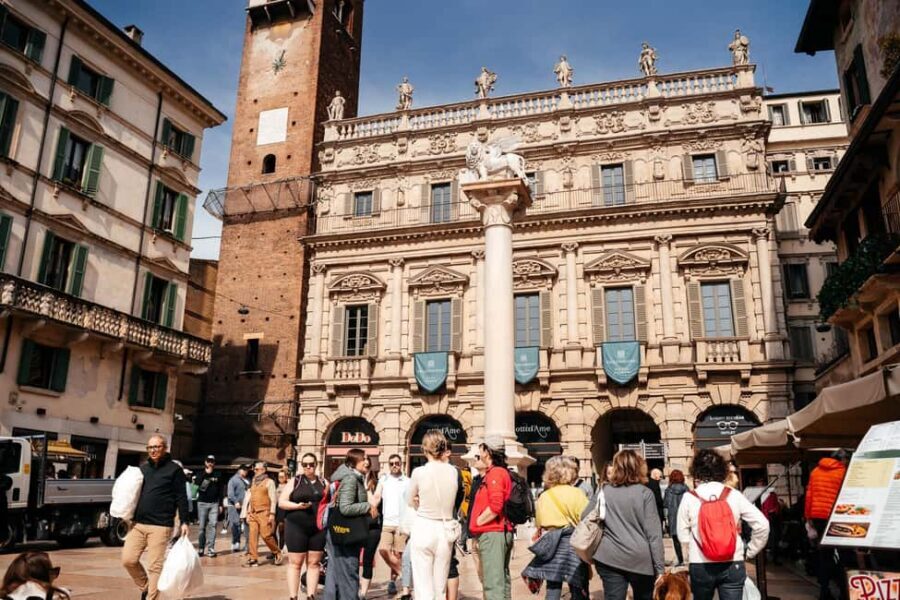
From Juliet, the route takes you through Herbs Square, a lively market area lined with stately buildings. This stop is more than a pretty square. It’s where you start learning the economic engine behind city power.
You’ll hear about landmarks including Lamberti Tower and the Domus Mercatorum, which was connected to the merchant guild. That’s a key to understanding Verona’s personality. When you learn that merchants and guilds helped shape civic life, the architecture around you stops being background. It becomes evidence.
This is also a good moment to slow down and watch. Even if you don’t buy anything, seeing how modern market life overlaps with older structures makes the past feel less museum-like. Verona can look like postcard history, but the feel here is still practical and everyday.
The guides often connect the square to larger themes: who had influence, how money and status worked, and why certain buildings stayed central. If you like learning how cities run, Herbs Square is one of the most satisfying stops on the walk.
Signori Square: an architecture mix that shows Verona’s timeline fast
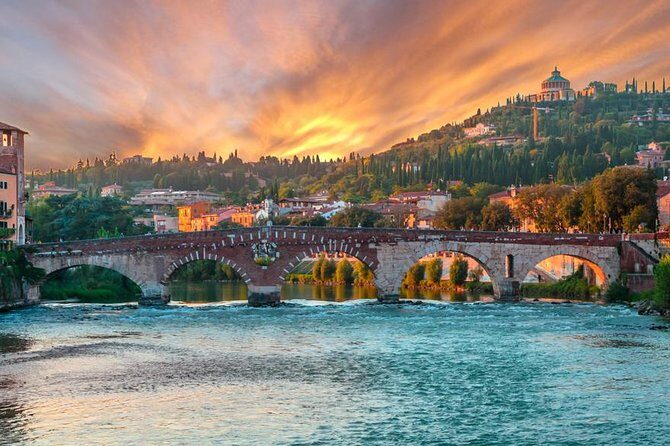
Signori Square is where Verona’s past becomes visible in one view. Roman, Romanesque, Gothic, Renaissance, and modern architecture converge here, and you’ll get an explanation of what you’re seeing as you move through the area.
This is the “wow, I get it now” stop for many people. The city stops being a list of sights and turns into a timeline you can walk. You’ll learn what each style says about the moment it arrived—how tastes changed, how power shifted, and how rebuilding created new layers instead of erasing old ones.
One landmark you may hear called out is the Madonna Verona fountain. This adds a human scale too: not every detail is about stone types and centuries. You’ll also hear how the square functions as a civic stage, not just a backdrop.
If you’re the type who likes architecture but hates long lectures, this is a good fit. The explanations are tied to what you can point at right away. The group format helps too; you’re not stuck in a classroom mood.
If you’re traveling with someone who only cares about the famous story, Signori Square is where you can win them over. It gives Verona a plot of its own—built into streets and facades.
Courtyards, backstreets, and the Scala family tombs: power and scandal at street level
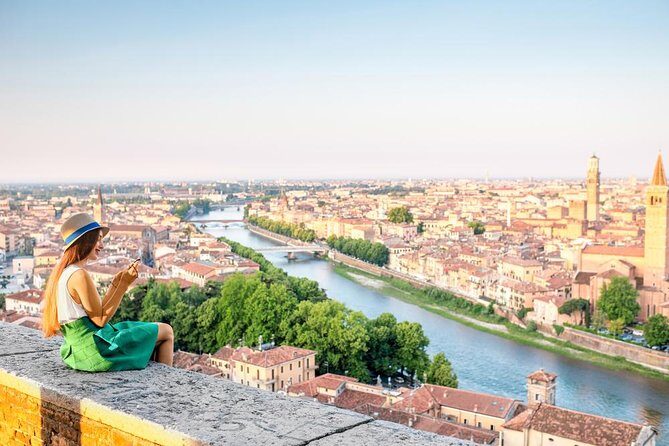
The last major part of the walk heads through quiet courtyards and backstreets to the tombs of the Scala family. These were the ruling clan of the 13th and 14th centuries, and the tour frames their scandals and power struggles as a cousin to the tangled drama vibe of Romeo and Juliet.
Even though the Shakespeare link is thematic, the actual setting feels suitably intense. Tombs aren’t light. They make you slow down. And since the route uses smaller streets and courtyard passages, the mood shifts from public squares to more private, reflective spaces.
This stop works well because it pulls you away from the busiest areas right as you’re wrapping up. You end with an image of Verona that doesn’t rely on crowds or souvenirs. It’s a reminder that the city’s drama isn’t only literary. Real power moves left real marks.
It also helps you understand why Shakespeare-like tragedy can feel believable in Verona. The city’s story isn’t one straight line—it’s factions, families, reinvention, and old disputes that echo through stone.



Timing, pace, and what your body needs to handle
The tour runs about 1 hour 30 minutes on average, and the walk experience is described as roughly 2 hours with a 1.5-hour stroll through the medieval core. Either way, plan on a short commitment and a solid walk.
The physical demand is listed as moderate. That usually means you can keep up if you’re comfortable with steady walking and a few turns on uneven pavement. Because it’s outdoors and rain or shine, I recommend wearing grippy shoes. Verona sidewalks can be slick when wet.
Also plan around the tour’s end point: it finishes at Casa di Giulietta on Via Cappello (so you’re not far from the center of the Romeo-and-Juliet buzz). If you’re connecting to lunch or your next activity, leaving a buffer of at least 30 minutes after the end time is smart, especially on busy afternoons.
Group size stays small—maximum of 15 travelers. That keeps the pacing more humane and makes it easier to hear the guide without fighting the crowd.
Price and value: is $83.45 worth it for 90 minutes?
At $83.45 per person, this is not the cheapest thing you can do in Verona. But it’s also not priced like a private driver-and-guide package. The value comes from three places.
First, you’re paying for a local professional guide who can connect architecture, street layout, and legend into one clear story. This isn’t just wandering with a map; it’s guided interpretation—Arena to Juliet to market square to architecture hub to Scala tombs.
Second, you’re buying time. If you only have part of a day, this tour gives you a structured way to see major areas without guessing. The reviews strongly emphasize that people learned a lot in a short amount of time, and that the guides make history feel fun instead of heavy.
Third, it’s small-group focused (max 15), so you get a better chance of real questions and a guide who can adjust the flow. Several reviews mention guides customizing based on interests, which is exactly what you want from a short tour.
What you should budget for: Giulietta Home tickets and entrance fees are not included, and tips are not included. In other words, you’re paying for the walking tour and explanations, not the museum admissions. That can still be a good deal if you planned to visit Juliet anyway.
Rain or shine: how to dress and what to do about tickets
The experience proceeds rain or shine. That’s useful because Verona weather can change fast, and you don’t want your plans derailed. Bring a light rain layer or compact umbrella, and keep your phone protected. If it’s sunny, bring water—one of the guides mentioned in feedback even helped with water during a hot day.
Mobile ticketing is part of the experience, and you’ll also want to confirm what you’ll need on-site for the Juliet area since specific Giulietta Home tickets are not included. The tour ends at Casa di Giulietta, so it’s easy to follow up, but you may need to plan for any entry costs separately.
Also pay attention to timing. The guide waits up to 10 minutes from departure time, and a delay of 15 minutes can be accepted; arriving later can mean you miss the tour. That’s one reason I like tours with clear meeting points: you can actually show up, not chase people through side streets.
One more practical note: it’s offered in English, so if you’re traveling with someone who needs another language, check that availability before you book.
Should you book this Verona Romeo-and-Juliet walking tour?
Book it if you want a short Verona orientation with a story thread that makes the streets easier to understand. This is best for first-time visitors who love architecture, enjoy light romance themes, and want to see more than just one postcard stop.
Skip or reconsider if you’re coming mainly for a deep Romeo-and-Juliet experience. Juliet’s balcony is included, but the tour also spends serious time on squares, merchant history, and the Scala family tombs. In other words, the fiction is a doorway, not the whole house.
If your goal is to leave with a mental map—Arena to Juliet to Herbs Square to Signori Square—you’ll get that. And if you pick a day when you can walk comfortably in the weather, this one is a strong value for its price point.
FAQ
How long is the Fascinating Verona tour?
The tour is listed at about 1 hour 30 minutes (approx.), with the guided walk described as around 1.5 hours and also referred to as a 2-hour guided tour depending on pacing.
Where does the tour start and where does it end?
It starts at Piazza Bra (P.za Bra, Verona VR, Italy) and ends at Casa di Giulietta (Via Cappello, 23, 37121 Verona VR, Italy).
Are the tickets for Juliet’s House included?
No. Giulietta Home tickets and entrance fees are not included.
Does the tour run in bad weather?
Yes. The experience proceeds rain or shine.
What group size should I expect?
The maximum group size is 15 travelers.
What is the cancellation policy for a full refund?
Free cancellation is available. You can cancel up to 24 hours in advance of the experience start time for a full refund, and cancellations within 24 hours are not refunded.