REVIEW · VENICE
Molten glass magic – Glassblowing class – PRIVATE
Book on Viator →Operated by VIP Service Italia · Bookable on Viator
Hot glass and cooler memories.
This private class in Venice is built around hands-on Murano glassblowing with a master who guides you step-by-step, not just watches you try. You’ll start with a welcome drink, meet the glass team at the factory, watch a demonstration, then get time to make your own piece under constant supervision. I especially like the fact that it’s private (your group only, so you get real attention), and that the transport is handled with a private boat taxi so you don’t spend your morning playing Venice logistics roulette. One thing to think about: making glass is fast in the moment, but the important part happens after—your piece needs time to cool, and what you take home is not always as straightforward as the idea of a souvenir sounds.
You’re paying a premium, and you should expect a premium-style experience. The good news is that you’ll get a safety-focused workshop, a showroom at the end, and a certificate that feels like a real milestone—not a quick stop-and-go demo. The possible drawback is the cost versus takeaway: at least some guests report that pieces must cool for about 24 hours and that shipping may depend on whether the item survives the process (and communication about shipping can be hit-or-miss).
In This Review
- Key points before you book
- Why this private Murano glassblowing feels different
- The flow of your 10:00am class (what happens when)
- 1) Pickup and private boat taxi to the glass area
- 2) Welcome drink and meeting the glass master
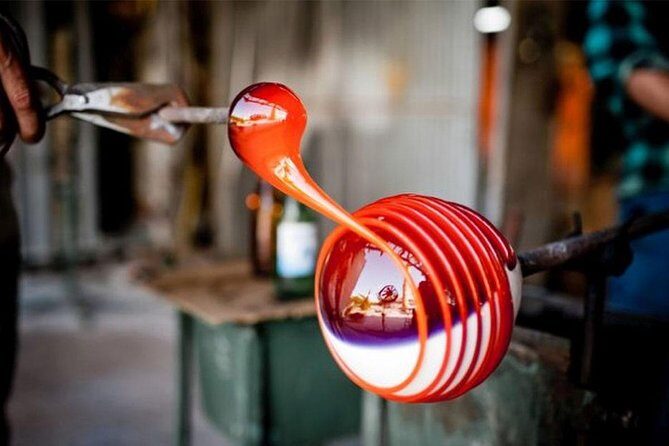
- 3) The master demonstration: how hot glass really behaves
- 4) Your hands-on turn: making your own object
- 5) Showroom/gallery visit while your piece cools
- 6) Certificate at the end
- Transport and timing: the practical advantages
- The biggest value question: do you really take it home?
- Classroom style: limited freedom, strong coaching
- The showroom and shop stop: what to expect (and how to handle it)
- Family fit and who this is best for
- Price and value: is $1,774.39 per group “fair”?
- Should you book Molten glass magic in Venice?
- FAQ
- Is this a private class for my group?
- How long is the glassblowing class?
- What time does the experience start?
- Is the class in English?
- What’s included with the price?
- Do you get to keep what you make right away?
Key points before you book
- Private door-to-furnace transport: a private boat taxi gets you to the furnace area without crowds or public-water-taxi stress.
- Master glass artist, close guidance: you work while someone corrects your hands and timing in real time.
- Demo first, then you take over: you’ll see how the hot glass moves before you’re asked to do it.
- Factory showroom time: after cooling work begins, you see finished pieces in the gallery/showroom area.
- Souvenir reality check: glass must cool (often cited as ~24 hours), so you may not leave immediately with your finished item in hand.
- A sales stop at the end: there’s a shop/gallery push at the factory, so go in with your budget and expectations lined up.
Why this private Murano glassblowing feels different
This isn’t a basic factory peek. The structure matters: you go straight to the furnace, you meet the people who actually work the material, you get a demonstration, and then you’re the one manipulating the molten glass—with a master coaching you constantly.
That makes the experience feel like skill-building, not entertainment. One guest described the teacher as guiding their hands so they could learn how the glass moves. Another highlighted the one-on-one attention as the part that sticks with you long after you’re back on terra firma. Even the safety emphasis is part of why it feels more serious and less touristy: hot glass work isn’t casual, and that shows in how the workshop is run.
And because it’s private for up to four people, your group gets fewer delays and more direct help. In a city where schedules can slip, that one factor alone can make the whole morning feel smoother.
You can also read our reviews of more private tours in Venice


The flow of your 10:00am class (what happens when)
Your class starts at 10:00am and runs about 1 hour 30 minutes. Here’s how the timeline typically feels, based on how the workshop is described.
1) Pickup and private boat taxi to the glass area
You’ll be picked up with pickup offered, then taken to a private water taxi/boat route toward the glass island/factory area. This is one of the best-value parts of the package because it saves you from figuring out boats, lines, and walking in Venice.
Think of it as a built-in “quiet buffer.” You don’t have to scramble after breakfast. You also avoid the crowded waterway experience that can drain energy before you even touch the glass.
2) Welcome drink and meeting the glass master
Once you arrive, you’ll be greeted and offered a welcome cocktail or coffee. That’s not just a nice touch—it’s useful time. It gives you a moment to settle in, meet your guide, and get oriented before the heat and focus kick in.
This is also when you meet the glass master and get introduced to the tools and process. You’ll typically be told how the day works, what you’ll be allowed to do, and what safety rules matter most.
Some classes connect you with named guides in the process—for example, guests reported being met by people like Simone (for pickup) and later working with masters named Giovanni, with an additional internal guide (like Tomasso) supporting the flow.
3) The master demonstration: how hot glass really behaves
Before you start, you’ll watch the glassblower do a short demonstration of how the glass is worked. This matters more than you’d think. Cold-glass crafts can trick your brain. Hot glass has motion, sag, and timing. A good demo teaches you the rhythm you need before you try.
In the workshop descriptions and guest feedback, safety and technique are stressed, so the demo isn’t just flashy. It’s practical: you’re being trained to understand what the glass is doing.
You can also read our reviews of more tours and experiences in Venice



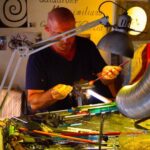


4) Your hands-on turn: making your own object
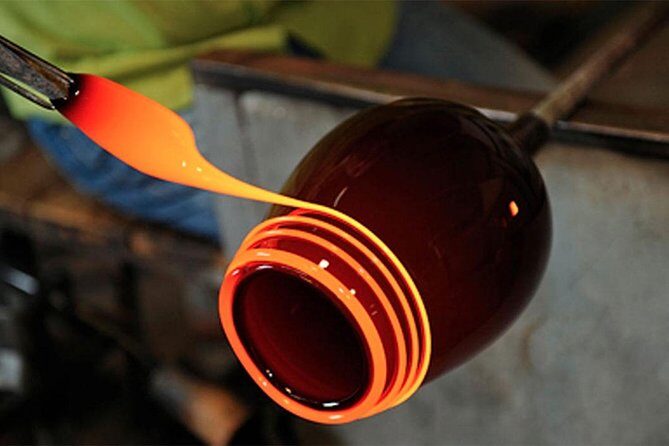
After the demo, you take over. You’ll create something of your own under constant guidance. For many people, this is the emotional high point—because glassblowing is harder than it looks on videos.
More than one guest noted that turning glass into art requires patience and precision. In one case, the group made a colored vase together, with each person taking turns. Another guest described making smaller pieces with assistance, pulling glass and blowing one piece as part of the process.
One important reality check: what you can make may depend on what’s feasible within the lesson structure and what the master decides you’ll be able to complete safely. One review explicitly said freedom to make exactly whatever you want was limited by the teacher’s discretion.
So if your ideal souvenir is very specific—like a particular shape or design—go in flexible. Think of it as learning to blow glass and finishing an object within a guided lesson, rather than full customization.
5) Showroom/gallery visit while your piece cools
While your creation is cooling (glass needs time to cool properly), you visit the glass showroom. You’ll see finished work on display—pieces that show how your guided lesson fits into the larger craft.
This is a good moment to switch gears from doing to appreciating. You also get context for what you’re seeing at the shop later.
6) Certificate at the end
You’ll receive a certificate for joining the class. It sounds small, but it’s a real souvenir of the experience and can be nice for families and anyone who likes documenting skills they learned on the trip.
Transport and timing: the practical advantages
A lot of Venice experiences fall apart in logistics. This one avoids some of that.
- Private boat taxi included: you don’t have to coordinate public boats with a tight schedule.
- Morning start time: 10:00am tends to be a manageable point—early enough to beat the day’s peak crowds, but late enough for breakfast and getting ready.
- You’re not waiting around: the class moves through demo, hands-on time, showroom, and wrap-up within the 1.5-hour window.
If you’re visiting Murano as a day trip, this approach saves energy. Your time goes to learning and watching the craft up close, not to getting lost with a phone map while carrying warm-weather bags.
The biggest value question: do you really take it home?
Here’s the part you should plan around.
The experience is positioned as creating a souvenir, and that’s exciting. But glassblowing has a cooling period, and at least some guests reported that you do not necessarily leave with your piece in hand right away.
One guest described that pieces have to cool for about 24 hours and that the studio claims they will ship creations if they make it. In that case, the guest said they never received their items or any follow-up communication.
Another comment also pointed out a mismatch between the idea that you could take your creation and the reality that they could not. At the same time, other guests seemed to view the lesson as a memorable activity regardless, and some purchased items from the shop afterward.
So what should you do with this information?
- If taking your finished glass home immediately is a must, ask questions before booking about whether you leave with the piece or only receive it later.
- If you’re okay with the process being “create now, receive later if it survives,” this can still be a very rewarding lesson.
- If you strongly care about the shipping outcome, treat it like any fragile purchase: be cautious and plan for the possibility that communication may not be instant.
Honestly, the safest way to judge value is to see this class as paying for training, coaching, and the glassmaking experience—not just as a guaranteed physical take-home product.
Classroom style: limited freedom, strong coaching
Let’s talk about the teaching approach.
The workshops described here focus on safety and technique. You’ll be coached closely, with guidance like adjusting hand position and understanding how the molten glass behaves.
That coaching is the reason it gets high marks. Guests wrote that they felt the glass move under their control with the teacher’s support. Another praised how the workshop was fun and informative, while emphasizing safety throughout.
But coaching can come with guardrails. One guest said the final piece was not fully up to them; the outcome depended on the teacher’s discretion and what could be produced within the lesson.
If you prefer structured learning—where you get the right steps and don’t have to invent everything yourself—you’ll probably enjoy the dynamic. If you want total artistic freedom, you may feel constrained.
The showroom and shop stop: what to expect (and how to handle it)
After the hands-on session, you’ll see the showroom display and then you’ll head through the factory gallery/shop area. This is common for Murano glass factories because that’s how the artists sustain the craft.
Several guests noted that there is a push to purchase. The key is not to mistake that for rudeness. It’s business. If you don’t want to be pressured, go in with a clear plan: either set a budget for a purchase or decide upfront that you’ll just browse and keep moving.
Also, the showroom visit is useful even if you don’t buy. It helps you see what “good” looks like once the craft is done by people who do it every day.
Family fit and who this is best for
This is a private activity, and that makes it easier for families and small groups to manage attention and pacing. Most people can participate, and service animals are allowed.
It’s especially a good match if you:
- Want a memorable Murano craft experience without sharing it with strangers
- Like hands-on learning more than just watching
- Prefer guided instruction and safety-focused teaching
- Are okay with structured outcomes and the glass cooling reality
It may be less ideal if:
- You need to take your piece home immediately in your luggage
- You’re very price-sensitive and expect a guaranteed take-home souvenir for the full cost
- You want a fully customized design you choose from start to finish
Price and value: is $1,774.39 per group “fair”?
At $1,774.39 per group (up to 4), this is not a budget class. But value here isn’t only the object you might end up with—it’s the combination.
You’re paying for:
- Private format (not rotating through a crowd)
- Private boat taxi included (Venice transportation costs time and energy)
- Hands-on coaching from experienced glassblowers
- Demo + workshop flow + showroom time
- Certificate and a full “experience” arc
However, value can drop hard if your expectation is that you will always take home your finished piece without complication. If shipping is involved and you don’t get updates, that swings the cost-to-reward ratio.
So I’d frame it like this: if your priority is learning from a master in a private setting, the price can make sense. If your priority is a guaranteed, secure take-home glass item, you need to confirm the takeaway terms before you pay.
Should you book Molten glass magic in Venice?
I’d book it if you want a real Murano glass lesson with close guidance and private transport, and you’re flexible about how glass souvenirs are handled after the cooling period. The best part of this experience is the teaching—having a master glass artist guide your hands while you learn how difficult hot glass work truly is.
Skip or reassess if you specifically need to leave with your finished piece in hand the same day, or if the idea of shipping fragile items with uncertain timelines would stress you out.
If you go in with the right expectations—training first, souvenir second—you’re likely to walk away with a story you can’t get from a museum shop.
FAQ
Is this a private class for my group?
Yes. It’s listed as a private tour/activity, and only your group will participate (up to 4).
How long is the glassblowing class?
It runs about 1 hour 30 minutes.
What time does the experience start?
The start time is 10:00am.
Is the class in English?
Yes, it’s offered in English.
What’s included with the price?
The class includes a private taxi/private boat taxi and a welcome cocktail or coffee.
Do you get to keep what you make right away?
The process includes cooling time for glass (about 24 hours is mentioned in feedback), and there can be uncertainty about whether pieces are shipped afterward if they make it. If taking the finished piece home the same day is important to you, it’s worth asking how takeaway/shipping works before booking.