REVIEW · VERONA
My Granny’s secrets: Making pasta in the heart of Verona
Book on Viator →Operated by Vallì Homemade · Bookable on Viator
Verona has a pasta lesson worth your time. In this class, you roll up your sleeves with fresh egg pasta dough in an apartment setting, learning classic cuts and even decorated or colored pasta. The best part is you eat what you make at the end, in a three-course family-style dinner with wine from the region.
One thing to factor in: the apartment has cats. If you have cat allergy, message ahead before you book so the host can advise.
In This Review
- Key things to know before you go
- Where you start in Verona, and why this location matters
- Meet Valli and Dave in a home where pasta is the point
- Making egg pasta dough from scratch: the skill behind the magic
- The pasta shapes you’ll work on (and what each one teaches)
- Ravioli night: filling, folding, and getting that fresh-pasta feel
- The meal: three courses, family-style serving, and regional wine
- Price, group size, and time: what you’re really paying for
- Cat factor, dietary needs, and other real-world considerations
- Who this class suits best in Verona
- Should you book My Granny’s secrets in Verona?
- FAQ
- How long is the pasta class dinner?
- Where do we meet in Verona?
- Is the class offered in English?
- What pasta will I learn to make?
- What’s included in the meal?
- Are there dietary options or allergies accommodations?
- What’s the group size?
- Can I cancel for a full refund?
Key things to know before you go
- Small group, up to 12 people: it stays personal, not chaotic.
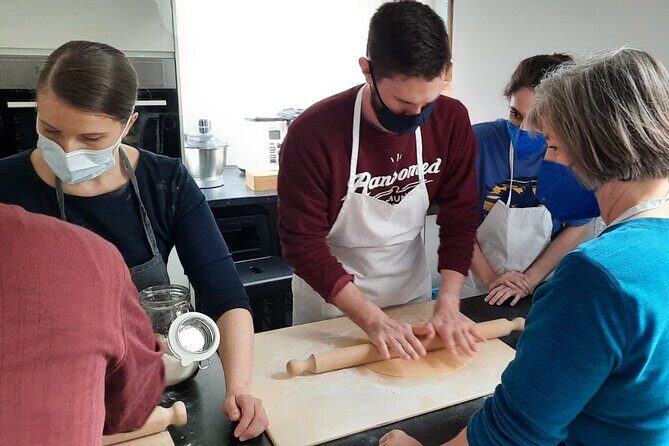
- Hands-on dough work: you learn how to manage texture, moisture, and thickness so the pasta turns out right.
- More shapes than the basics: tagliolini, pappardelle, tagliatelle, farfalle, maltagliati, plus decorated and colored pasta.
- Ravioli included: you’ll practice fresh ravioli, not just watch someone else do it.
- Three-course family-style meal: tagliatelle, ravioli, and a surprise dessert, plus a regional wine.
- Low/no salt and sugar approach: you taste the pasta and ingredients as they are, not masked.
Where you start in Verona, and why this location matters
You’ll meet at Vicolo S. Domenico, 18 in Verona, starting at 4:00 pm. The experience runs about 4 hours 15 minutes, and it ends back at the meeting point. That timing is nice because you’re not fighting Verona’s midday crowds, and you finish while the evening is just getting going.
The address matters because this isn’t a big studio with churn and fluorescent lighting. It’s a real home setup, which is why the whole evening feels like dinner with people who actually cook. Also, the class is English-speaking and includes a mobile ticket, so it’s straightforward once you’re at the right door.
One practical note: it’s near public transportation, which helps if you’re staying outside the center. And with a max group size of 12 travelers, you’re unlikely to get lost in the shuffle.
You can also read our reviews of more tours and experiences in Verona.
Meet Valli and Dave in a home where pasta is the point
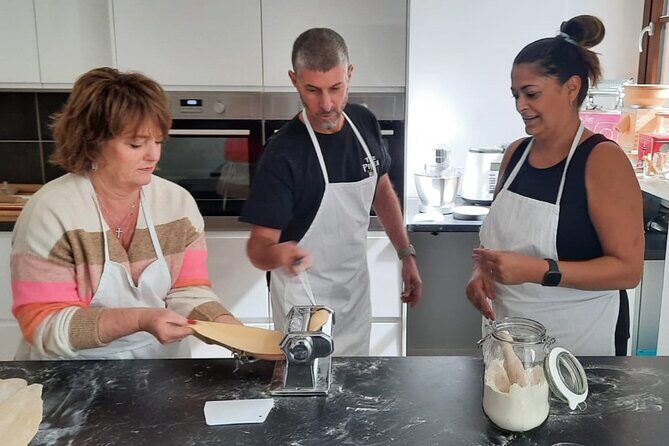
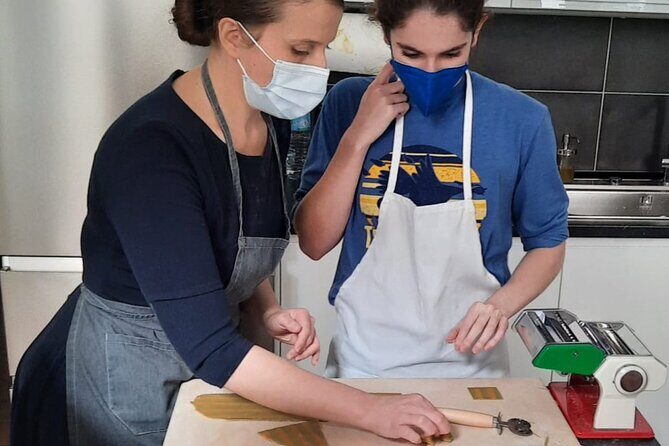
The hosts are Valentina (Valli) and Dave, and they run the night like a mix of class and family meal. Reviews (and the general vibe of the format) point to a comfortable style: hands-on teaching, lots of interaction, and a pace that doesn’t rush you through the hard parts.
You’re not just learning names of shapes. You’re learning the logic of the dough and the cuts—why pasta behaves one way one day and differently another day. That’s the kind of instruction you can bring home and use again when you’re making pasta at your own kitchen counter.
It also helps that the group is small enough for the host to notice how your dough is acting. If your sheet feels too dry or too wet, you can usually get a quick fix before it turns into frustration. That’s a big deal, because fresh pasta is unforgiving in a gentle way: it rewards attention, but it won’t save you if you ignore the texture.
And yes, there are cats in the apartment. They’re part of the home atmosphere, but they’re also something to plan around if you’re sensitive.
Making egg pasta dough from scratch: the skill behind the magic
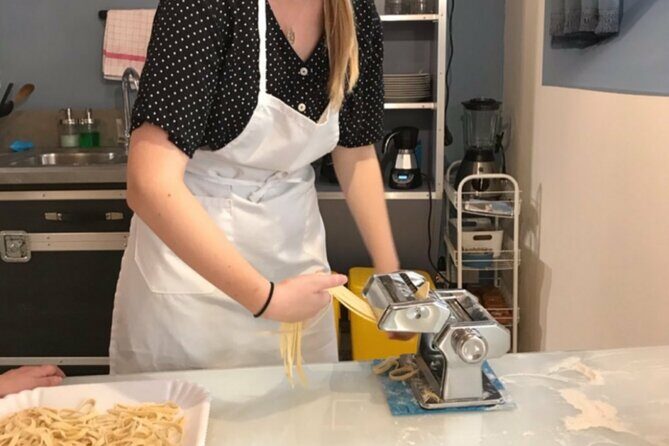
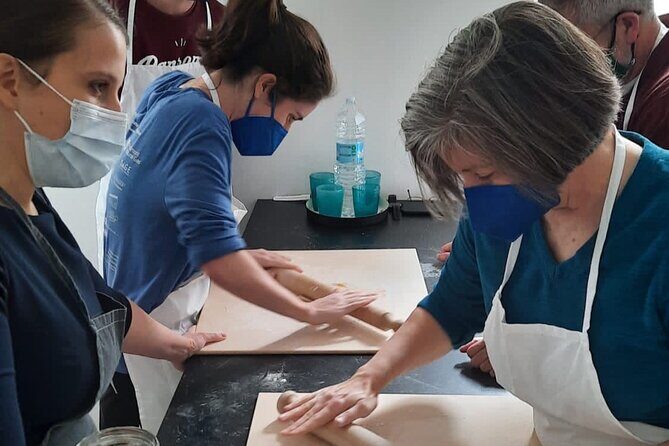
This experience starts with the foundation: making fresh egg pasta dough from scratch. You’ll learn how to handle the dough so it stretches and cuts cleanly, rather than tearing or turning gummy. The teaching focuses on practical cues—how the dough looks, how it feels, and what you should adjust.
Why this is valuable: most pasta classes teach you the shapes and skip the part that actually controls success. Here, the goal is that you leave knowing what to check and what to change.
You’ll also get guidance on rolling and forming, including how to think about thickness and moisture level. Those are the two factors that can make an amateur pasta night taste like restaurant pasta—or like a sad science project.
Even if you’ve made pasta before, you might find yourself picking up better habits. Fresh pasta is simple, but it’s also fussy. Learning how to aim for the right texture makes everything else easier, including ravioli.
The pasta shapes you’ll work on (and what each one teaches)
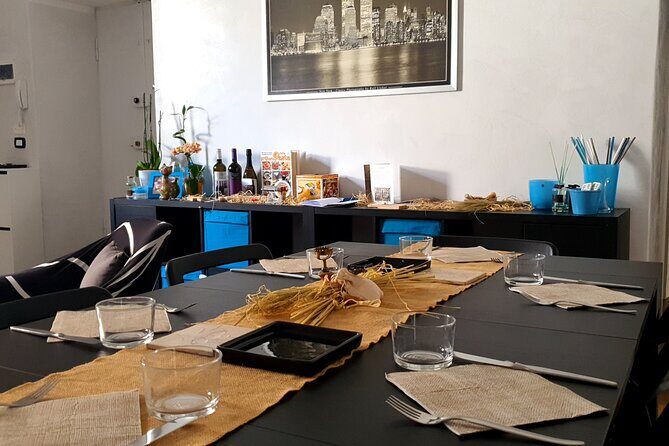
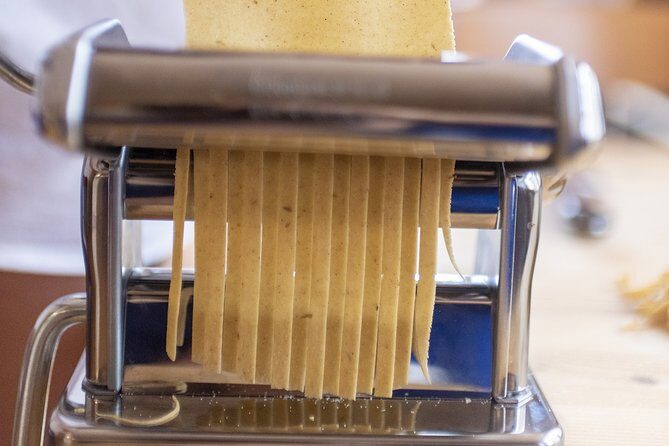
This class covers the classic cuts, plus a few fun variations that help you understand dough in different ways. You’ll get hands-on practice with shapes like tagliolini, pappardelle, tagliatelle, farfalle, and maltagliati. You’ll also learn about decorated pasta and colored pasta, which is less about impressing people and more about how extra ingredients affect dough behavior.
Here’s how the shapes help you learn:
- Tagliatelle and tagliolini train you on even rolling and consistent cut widths, so the final result cooks evenly.
- Farfalle teaches you about folding and shaping pieces so the pasta holds texture during cooking.
- Pappardelle asks for controlled thickness and width, so you get tender ribbons rather than chewy strands.
- Maltagliati is where small imperfections can become charm. It helps you learn that not every cut has to be machine-perfect, as long as the cooking time makes sense for the size.
- Decorated and colored pasta show you the relationship between dough composition and workability. If you want to make pasta for special occasions, this part gives you a mental map.
I like that the class gives you more than one style, because it turns pasta from a single dish into a toolkit. You can bring the technique home and then choose shapes based on what kind of sauce you want to serve.
Ravioli night: filling, folding, and getting that fresh-pasta feel
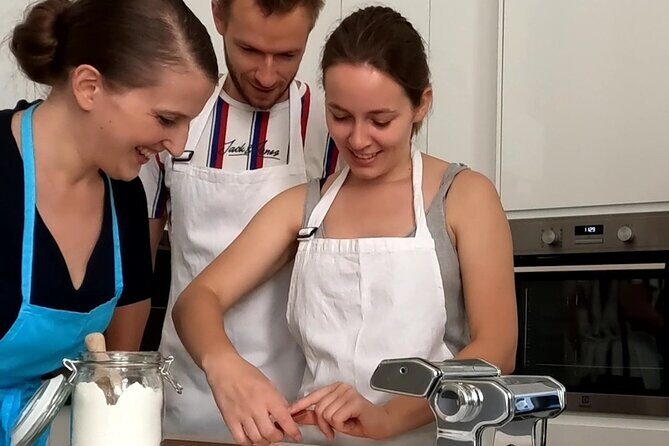
Ravioli is the centerpiece for many Italian pasta lovers, and this class includes fresh ravioli training. You’re not just tasting it—you’re making it as part of the evening plan.
Fresh ravioli is a skill with two jobs: create a good pasta envelope and make sure the filling stays where it belongs. The host guidance helps you learn how to handle the dough so it seals and cooks without bursting. That’s where the earlier dough lessons pay off.
One of the real benefits here is that you’re working under instruction, not guessing. If your dough sheet is too dry or too thick, ravioli can feel tougher to fold and seal. If it’s too wet, it can get messy. With step-by-step coaching, you’re more likely to land in that sweet spot.
Then, of course, you get to eat the results. The tasting portion is a big motivator, and it’s also where you start to understand how the texture you made translates to flavor and bite.

The meal: three courses, family-style serving, and regional wine
After you’ve made your pasta, you sit down for a three-course dinner. Based on the sample menu, you’ll have tagliatelle, ravioli, and a surprise of the day dessert. It’s family-style, meaning you’re eating like a real meal, not in separate plates-with-no-conversation mode.
You also get wine produced in the region. That matters for value because it turns the class into a full evening, not a snack-and-leave situation.
A detail I appreciate: the meal is served with low/no salt and sugar to taste. That approach makes you focus on the pasta and ingredient quality, not on heavy seasoning. It’s also a reminder that Italian cooking often starts with technique and ingredient restraint, then lets flavor build from there.
And because it’s family-style, the meal becomes part of the learning. You see how other people in the group shaped their pasta, you get comfortable asking questions, and you learn in a relaxed way that doesn’t feel like homework.
Price, group size, and time: what you’re really paying for
At $114.89 per person, it’s not a budget activity. But it also isn’t overpriced for what you get if you look at the full package: hands-on instruction, multiple pasta shapes, and then a three-course dinner with wine.
The math works better than it looks because you’re buying something you can’t replicate easily at home without practice. The class gives you coaching on thickness, moisture, and dough handling—those are the variables that separate great homemade pasta from average homemade pasta.
The small group size (maximum 12 travelers) also helps the value. With fewer people, you’re more likely to get quick adjustments when something goes off. That kind of attention is hard to get in large group cooking demos.
Duration matters too. 4 hours 15 minutes gives enough time to actually make dough, cut and shape multiple pastas, learn ravioli technique, and still sit down to eat without it feeling like a factory line.
If you’re comparing to other Verona activities, I’d treat this as an evening meal plus a serious skill lesson. If pasta is even a little interesting to you, it’s a strong use of time.
Cat factor, dietary needs, and other real-world considerations
Two things can affect your experience beyond the cooking:
First, the cats. The apartment has two cats, and you should let the host know if you have an allergy. This is one of those issues that’s easy to fix before you go, but hard to fix once you’ve arrived.
Second, dietary needs and allergies. The host asks you to contact them in advance via message so they can try to find a solution. That’s important here because fresh pasta is usually built around specific ingredients, and small changes can be tricky.
Also, the class is in English and is set up for hands-on learning. That usually means you don’t need to be a pasta expert, but you do need to be willing to get a little flour on your clothes. That’s the whole point.
Who this class suits best in Verona
This is ideal if you want an evening that combines culture, food, and skill-building in one place. It’s great for couples, friends, and even families, especially if you want something where everyone can participate rather than just watch.
If you’re the kind of traveler who likes making a souvenir you can eat later, this wins. You leave with practical pasta knowledge, and you also leave full.
It’s also a good fit if you’ve tried pasta at restaurants and want to understand why it tastes the way it does. Once you’ve worked with the dough texture and cutting decisions, restaurant pasta becomes easier to interpret.
And if you’ve made pasta before, you might still enjoy it. A few people in similar classes have come away with new techniques and better habits, because the host feedback helps refine what you already know.
Should you book My Granny’s secrets in Verona?
I’d book it if you want a small-group, hands-on pasta evening in a real home setting. You’re paying for the full arc: dough skills, multiple pasta shapes (including ravioli), then a three-course family-style dinner with regional wine. For the time and effort, the value is solid.
I’d think twice only if cats are a deal-breaker for you, or if you’re not comfortable with hands-on cooking. Also, if you’re looking for a quick activity, this isn’t short. It’s a real night with flour, shaping, and a sit-down meal at the end.
If you want Verona beyond the big sights, and you like the idea of taking home a skill you can repeat, this is the kind of experience you’ll remember for years.
FAQ
How long is the pasta class dinner?
It lasts about 4 hours 15 minutes.
Where do we meet in Verona?
You start at Vicolo S. Domenico, 18, 37122 Verona VR, Italy, and the activity ends back at the meeting point.
Is the class offered in English?
Yes, it’s offered in English.
What pasta will I learn to make?
You’ll make fresh egg pasta dough and learn classic cuts such as tagliolini, pappardelle, tagliatelle, farfalle, and maltagliati, plus decorated and colored pasta. You’ll also learn to make fresh ravioli.
What’s included in the meal?
You’ll eat a three-course dinner of what you prepared: tagliatelle, ravioli, and a surprise dessert of the day. It’s accompanied by a regional wine. The meal is served with low/no salt and sugar to taste.
Are there dietary options or allergies accommodations?
If you have allergies or dietary requirements, contact the host via message before you book so they can do their best to find a solution. They also note that there are cats in the apartment, so cat allergy should be flagged ahead of time.
What’s the group size?
The class has a maximum of 12 travelers.
Can I cancel for a full refund?
Yes. You can cancel up to 24 hours in advance for a full refund.