REVIEW · VENICE
Venice Sightseeing Small Group Walking Tour with a Local Guide
Book on Viator →Operated by Raphael Tours & Events · Bookable on Viator
Venice can swallow your schedule. This 2-hour small-group walk helps you understand the city fast, and you get hit with great highlights like Rialto Bridge and St. Mark’s Square without feeling trapped in a huge crowd. I also like that you leave with a sense of direction and practical ideas on where to eat. One thing to plan for: it is steady walking, with stairs and bridges, and there is usually no sit-down break built in.
What makes this tour especially useful is that it moves beyond the postcard route. You’ll cross footbridges between Venice’s islands, pass through historic quarters tied to Venice’s maritime power, and hear how places like the Marco Polo area and the Doge-era sites fit together. The walking is short enough to do on arrival day, and you can usually choose the morning or afternoon itinerary depending on heat and your plans.
In This Review
- Key highlights you’ll feel on the street
- A 2-hour Venice walk that actually gives you bearings
- Meeting near Dorsoduro and ending at St. Mark’s
- How the route moves from Campo San Pantalon to Scuola Grande di San Rocco
- Ponte di Rialto: the place where Venice’s money rhythm shows up
- Casa di Marco Polo: turning a famous name into place knowledge
- San Zanipolo and the Doge-era footprint (plus Titian at Frari)
- Scuola Grande di San Rocco and Campo stops that keep things human
- Finishing at St. Mark’s Square: what you do next matters
- What you’ll actually experience on the ground (heat, stairs, and sound)
- Choosing between small group and private tour
- Price and value: why $48.37 can be a smart move
- Who this tour is for (and who should rethink it)
- Should you book this Venice walking tour?
- FAQ
- How long is the Venice Sightseeing Small Group Walking Tour?
- What’s the group size?
- Where do we meet, and where does the tour end?
- Is the tour offered in English only?
- Is hotel pickup or drop-off included?
- What should I wear?
- Is there a Venice access fee?
- What’s the cancellation policy?
- Is the tour dependent on weather?
Key highlights you’ll feel on the street
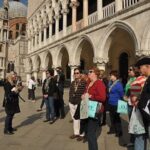
- Max 15 people means you actually hear and see your guide’s point of view
- Rialto Bridge + St. Mark’s Square anchor the walk around the city’s biggest landmarks
- Quieter districts (like the Cannaregio area) add texture beyond the main square
- Maritime republic context helps you connect buildings, bridges, and squares into one story
- Strong guide rapport: names like Valentina, Flavia, Julia, Irene, Daisy, Anna, and Gianmarco show up in standout guides
- Local food/time tips at the end make your next hours in Venice feel smarter
A 2-hour Venice walk that actually gives you bearings
Venice is not a city where you just wander and instantly understand what you’re looking at. You’ll see streets, squares (campi), and canals, but you may miss why they matter. This tour’s main value is that it gives you a mental map—where you are in the city’s geography, and how the old maritime republic shaped daily life.
I like the “fast orientation” angle. In about two hours, you get the big visual anchors plus a logic for navigating between them. That matters because Venice can feel like you’re looping. With a guide’s route, you learn shortcuts in a way that only walking can teach.
The pacing is also the right kind of brisk for a first visit. It is not trying to be a full-day marathon, and you still get plenty of time afterward to choose what to revisit or explore on your own.
You can also read our reviews of more walking tours in Venice

Meeting near Dorsoduro and ending at St. Mark’s
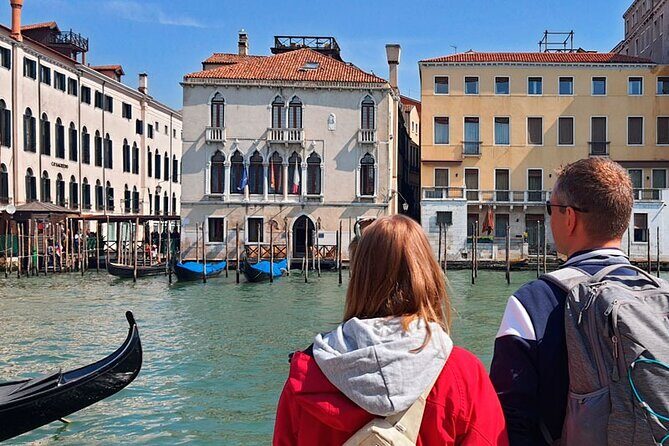
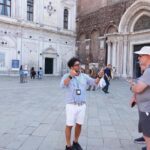
You start at Campiello dei Squelini, in the Sestiere Dorsoduro area (Dorsoduro 2766). That’s handy because Dorsoduro sits on the “side” of Venice many first-timers overlook when they’re laser-focused on San Marco. Ending at Piazza San Marco (St. Mark’s Square) is a smart finish line. Once you reach the square, you can peel off for museums, a slow gelato break, or a proper evening plan.
There’s no hotel pickup, so you’ll walk or take public transport to the meeting point. If your hotel is outside the city center, I’d plan extra time to get there anyway, since Venice doesn’t have car access the way you might expect.
Also note the tour is near public transportation. That sounds boring, but it’s practical. It means you can fit this into arrival-day logistics without building your whole day around a pickup window.
How the route moves from Campo San Pantalon to Scuola Grande di San Rocco
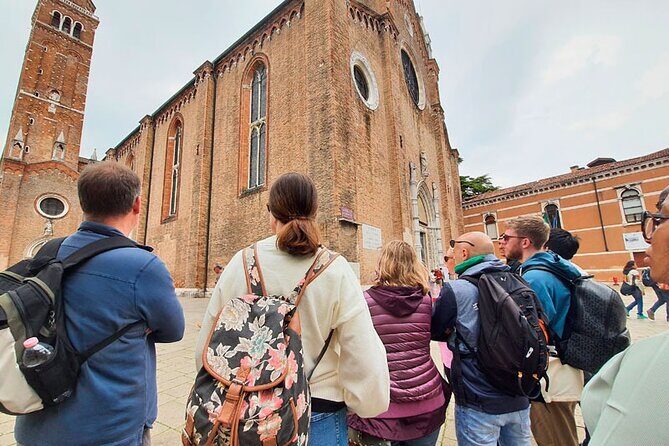
The tour starts in a local-feeling pocket near Campo San Pantalon. From there, you head into the part of Venice where the city’s economy and culture start to make sense. Campo areas are where Venetian life “turns.” They are open enough to breathe, and the surrounding streets feed into them like veins.
Then you visit Scuola Grande di San Rocco as one of your early stops. This is a big cultural signal. It points you toward Venice’s religious and civic traditions that went beyond simple churches. You’re also learning a timeline—how Venice’s wealth and identity expressed itself through art, institutions, and faith.
A practical reality: this type of walking tour generally shows you the sights from outside and in the flow of the neighborhood. You’ll want to plan at least one later visit if you care about interiors. A guide can point you toward what to look for, but you won’t get a full museum-style experience in a short walk.
What you’ll likely enjoy most here is the way the guide ties the buildings to geography. A facade stops being random when you know what kind of power or patronage supported it.
Ponte di Rialto: the place where Venice’s money rhythm shows up
You reach Ponte di Rialto during the walk, and it works as a turning point. It is one of the places where Venice feels instantly legendary. Bridges are the city’s joints, and Rialto is the joint everyone talks about.
Here’s what makes this stop valuable on a tour: you’re not just standing in a crowd taking photos. You’re learning why this location mattered when Venice was a trade engine. The surrounding area is tied to finance and commerce—the sort of wealth that shaped streets, laws, and the kinds of buildings you pass later.
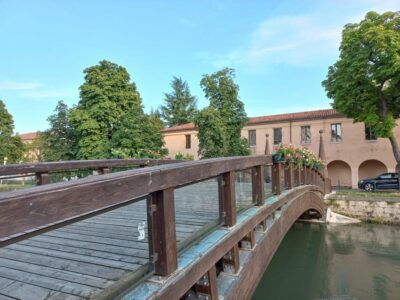
You’ll also cross footbridges along the way, which helps you understand Venice as a “network of islands” instead of a single flat map. Once you feel that rhythm under your feet, navigation gets easier later. You start recognizing where you are by bridge connections and water crossings.
If you’re prone to photo overload, pace yourself around Rialto. It can be busy, and it’s easy to burn time. Use the guide’s timing to get your main views, then let yourself move on before the square swells.
Casa di Marco Polo: turning a famous name into place knowledge
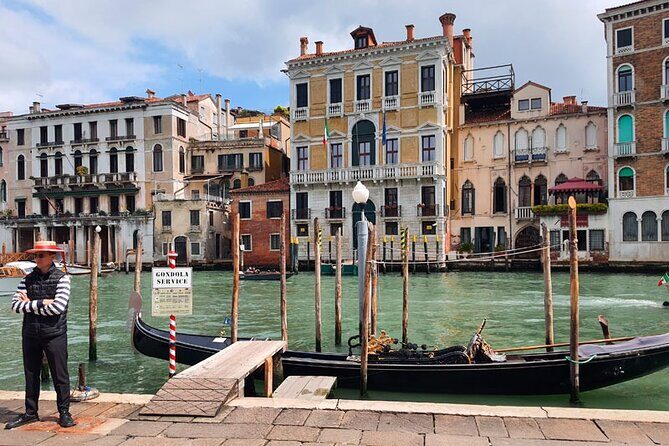
One of the most fun stops is near Casa di Marco Polo. The city loves legends, but a good guide makes that legend feel tied to actual streets. Marco Polo’s story becomes less like trivia and more like a way to read Venice’s global connections.
This is also where the tour’s “maritime republic” theme pays off. You begin to see Venice as outward-looking—built for trade routes, ships, and long-distance curiosity. That theme threads through the walk so that later stops feel connected, not random.
The best part is that you learn how to spot details without needing expert architecture knowledge. You’ll pick up cues about where the city’s identity sits: money, seafaring, art patronage, and governance.
If you’re the type who likes history but doesn’t want a lecture, this portion is a good balance. You get enough facts to make the sights mean something, but not so many dates that you’ll forget them by dinner.
You can also read our reviews of more guided tours in Venice




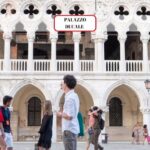
San Zanipolo and the Doge-era footprint (plus Titian at Frari)
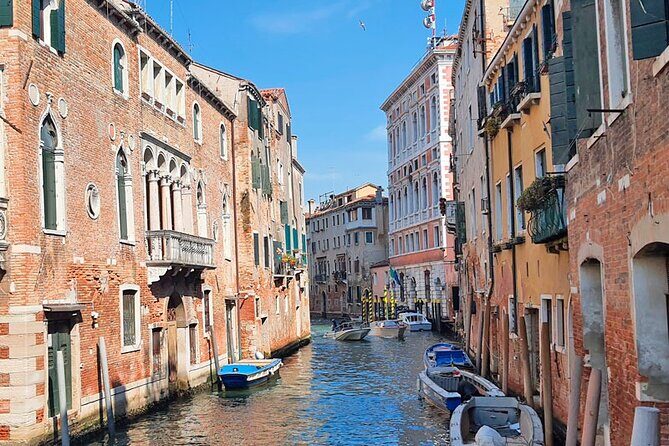
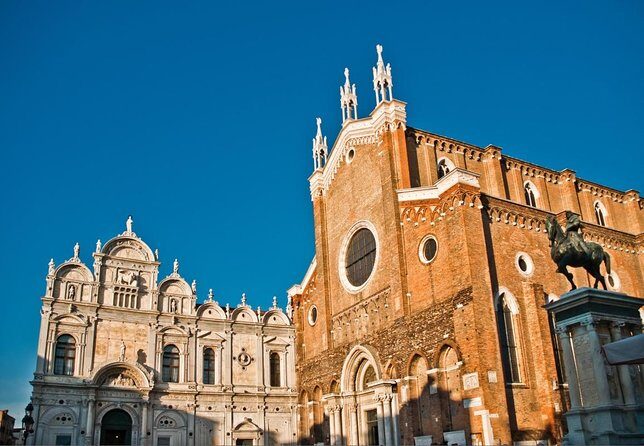
Later on, you reach the area around Basilica dei Santi Giovanni e Paolo—often called San Zanipolo. This stop matters because it anchors Venice’s political story in stone. The church is tied to the resting place of many Doge leaders, so it becomes a walk-through lesson in how the city remembered power.
In the general route, you’ll also encounter references to Titian’s burial at the Basilica di Santa Maria Gloriosa dei Frari. Even if you’re not inside each building, the guide’s pointing helps you connect Venice’s artistic reputation to the same civic world that built its government identity.
Here’s the drawback to keep in mind: this is still a walking tour with steps and uneven surfaces. Some people can handle it easily; others will feel it. If you know you struggle with stairs, I’d treat this as a “comfortable shoes + slow pace” situation, not a casual stroll.
Still, the payoff is real. These stops help you see that Venice wasn’t only romance and canals. It was also systems, leaders, and public memory.
Scuola Grande di San Rocco and Campo stops that keep things human
Between the major landmarks, you move through campi like Campo San Bartolomeo and areas such as Campo Santa Margherita. That’s a smart choice because it keeps the walk from becoming purely sightseeing monuments. Campi are where the city breathes, and they help you understand Venice as a place where people still live, not just a stage set.
You’ll also see the city’s layout—how squares connect to narrow streets, and how bridges interrupt your line of sight. That matters because Venice navigation is visual. Once you’ve walked it once with a guide, returning later feels less stressful.
This “human” pacing is why the tour works well even for people who don’t want nonstop talking. You’ll get stories, but you’ll also get real street time: shadows, corners, and the little surprises that only show up when you’re walking and slowing down at the right places.
Finishing at St. Mark’s Square: what you do next matters
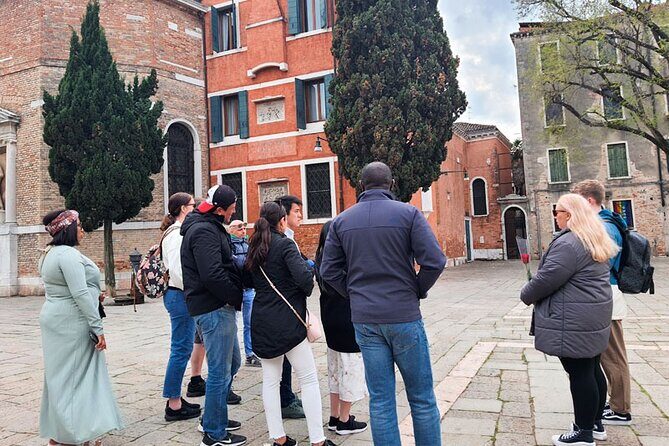
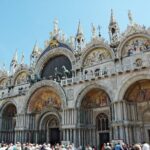
You finish at Piazza San Marco at the end of the walk. Ending here is useful because you land in the center of Venice’s visitor universe, but with context. St. Mark’s Square looks even more meaningful when you’ve heard how Venice’s power, trade, and identity shaped the city’s layout.
This is also when your guide’s practical tips really help. You’ll get recommendations for where to eat and how to spend your free time in Venice. That’s worth something because St. Mark’s can be overwhelming if you go in cold. With a guide’s advice, you can pick a plan that matches your energy and budget.
One more note: St. Mark’s is a huge walking destination. If you want photos with less stress, you’ll benefit from having already learned where to go next during the tour’s final stretch.
What you’ll actually experience on the ground (heat, stairs, and sound)
This tour is built for good walking days. You’ll move continuously, and you should expect stairs and bridge crossings. The tour description says most travelers can participate, but the reality is Venice is Venice—levels and steps are part of the landscape.
There’s also the question of comfort stops. Don’t count on a planned coffee break during the walk. If you’re heat-sensitive, bring water with you and pace yourself early.
Audio can be a big deal in any guided group. A few guests noted problems hearing through headsets on some days. The fix is simple: if you can’t hear clearly, tell the guide right away so the group can adjust and you don’t waste the tour.
Weather matters too. The experience requires good weather. If it’s canceled for poor weather, you’ll be offered a different date or a full refund, which gives you flexibility.
Choosing between small group and private tour
The default option is a small-group tour with a maximum of 15 travelers. That’s a sweet size for Venice. You still get group energy, but you’re not swallowed by a bus tour.
There’s also a private tour option for just you and your party. If you want more tailored pacing—extra time at one stop or fewer photo interruptions—private makes sense. Language options expand too: private tours can be done in English, Spanish, and German, while the standard format is English.
If you’re traveling as a couple, private can feel like a smart splurge. If you’re solo and want company plus a strong guide, small-group is usually the best fit.
Price and value: why $48.37 can be a smart move
At $48.37 per person, this is priced for what you’re getting: a local guide, a two-hour route with major anchors, and practical navigation value. You’re not paying for bus transport or hotel pickup. That keeps costs reasonable, and it keeps the experience focused on walking and learning.
It’s also a good price point for timing. This tour is often booked about 45 days in advance, which tells you people plan their Venice days carefully. If you want to do this early in your trip—ideally your first half-day—booking ahead usually helps you lock in the slot you want.
One more value lever: you’re not locked into expensive site admissions as part of the experience. The listed stops include items marked as admission ticket free, and the tour is designed around street-level viewing and guidance. That’s helpful if your budget is tighter and you still want high-impact sightseeing.
Compared to paying for multiple confusing self-guided hours, this can save you time and reduce the sense of wandering. You’ll still need to explore on your own afterward—but the guide gives you the map for how to explore.
Who this tour is for (and who should rethink it)
I’d recommend this tour if you want a fast intro to Venice with real context. It’s especially good for first-timers who want to see Rialto Bridge and St. Mark’s Square while also getting a taste of less obvious areas like Cannaregio. It also suits people who like asking questions and enjoy guided explanations that connect streets, canals, and civic power.
It’s also a solid pick for people who hate getting lost. A guide helps you avoid the classic Venice trap of doubling back because you turned the wrong direction at the wrong bridge.
If you’re bringing kids, I’d be cautious. Some guests felt the tour wasn’t a good fit for children, mainly because it’s more facts-and-stops than a playful adventure. If your group loves stories, they’ll probably be fine. If they want nonstop entertainment, you might want a different style of tour.
If stairs are a concern, plan for effort. You’ll cross bridges and likely deal with steps. The route is doable for many people, but it isn’t designed as a flat, fully stroller-friendly stroll.
Should you book this Venice walking tour?
I’d book it if you want the best kind of Venice start: guided, focused, and short enough that you don’t feel trapped. The small-group size and the end at St. Mark’s Square make it a practical way to set up the rest of your trip. Guides like Valentina, Flavia, Julia, Irene, Daisy, Anna, and Gianmarco seem to deliver the most consistent experience, with lots of calm patience for questions.
Skip it or choose private if you hate walking, need frequent breaks, or know you’ll struggle with steps and bridges. Also, if you want a tour that includes lots of indoor time, know that this style is mainly about the walk and the street-level sights.
For most adults doing a first or second Venice visit, it’s a strong use of time. You’ll come away with a map in your head and ideas for what to do next, which is exactly what you want from a 2-hour introduction.
FAQ
How long is the Venice Sightseeing Small Group Walking Tour?
It runs for about 2 hours.
What’s the group size?
The maximum group size is 15 travelers.
Where do we meet, and where does the tour end?
You start at Campiello dei Squelini, Sestiere Dorsoduro, 2766, 12242 Venezia VE, Italy and end at Piazza San Marco, 30124 Venezia VE, Italy.
Is the tour offered in English only?
The standard option is offered in English. The private option can also be done in English, Spanish, and German.
Is hotel pickup or drop-off included?
No, hotel pickup and drop-off are not included.
What should I wear?
Wear comfortable shoes. The route involves walking and includes stairs and bridges.
Is there a Venice access fee?
On certain dates, most travelers staying outside of Venice may need to pay a €5 access fee. Check the official details for which days apply and for possible exemptions.
What’s the cancellation policy?
You can cancel for a full refund up to 24 hours in advance of the experience’s start time.
Is the tour dependent on weather?
Yes. The experience requires good weather. If it’s canceled due to poor weather, you’ll be offered a different date or a full refund.