REVIEW · VENICE
Tour of Venice between Art, History, Legend and Secrets
Book on Viator →Bookable on Viator
Venice, but with answers behind every corner. This tour strings together art, history, legends, and small secrets across some of the city’s most specific stops, with admission tickets built into the visits. I especially like the way the guide can connect the places to real stories, and the art-history focus shows up clearly when the guide is Alessandro. I also like that you get into the sights without the usual scramble, so the time feels well spent.
One thing to plan for: seating is scarce, and the route involves a fair bit of standing and walking. Even though it’s listed as about 2 hours, it can run longer in practice, so wear comfortable shoes and think “slow and steady,” not “race through Venice.”
In This Review
- Key Things to Know Before You Go
- What You’re Really Buying for $83 (and Why It Feels Practical)
- From Campo San Bartolomio to Rialto’s Devil Story
- Chiesa di San Giovanni Crisostomo: Marco Polo’s Family Funding Meets Master Paintings
- Casa di Marco Polo and Corte del Milione: The Explorer’s Two Venetian Chapters
- Campo Santa Maria Formosa: A Big Venetian Field With a War-Episode Behind It
- San Zulian (Giuliano): Gold Works and the Big Names of Venetian Painting
- Piazza San Marco, Doge’s Palace Views, and Ending at the Prison Palace
- Timing, Comfort, and the Day-of Reality in Venice
- Meeting Points, the €5 Access Fee Note, and How to Avoid Waste
- Price Value Check: Does $83 Make Sense?
- Should You Book This Venice Art and History Tour?
- FAQ
- How long is the Venice tour?
- Is the tour in English?
- Where does the tour start and end?
- Are admission tickets included?
- Is this a private tour?
- Do I need to pay an extra fee in Venice?
- What’s the cancellation policy?
- Will I receive confirmation after booking?
Key Things to Know Before You Go
- Ticket-included stops help you spend time looking, not buying.
- Rialto’s Devil legend gives context to a bridge you’ll see in almost every Venice photo.
- Marco Polo-linked sites connect one of Venice’s biggest names to everyday streets.
- Gilded church art at San Zulian adds a different, more ornate mood to the walk.
- Piazza San Marco finale ties the route to the major set pieces, then you finish at the Prison Palace.
What You’re Really Buying for $83 (and Why It Feels Practical)
For $83, you’re not just walking around Venice for general sightseeing. You’re paying for a guided route that targets specific places with stories attached, plus admission included at each stop along the way. That matters because Venice is expensive when you’re constantly paying for tickets one by one. It also matters because time is tight in the city—especially if you’re here for a day trip or you’re balancing multiple plans.
You also get structure. This isn’t “go wherever you want.” It’s a chain of art and history touchpoints that move logically from the Rialto area toward San Marco. That means you spend less time deciding and more time actually absorbing what you’re seeing.
That said, I’d treat this as an active tour, not a sit-down museum day. With no guaranteed places to rest, you’ll enjoy it more if you’re comfortable standing, and if you bring a bottle of water. And if you’re picky about exact timing, remember that Venice can bend schedules due to crowds and slow-moving foot traffic.
You can also read our reviews of more historical tours in Venice


From Campo San Bartolomio to Rialto’s Devil Story
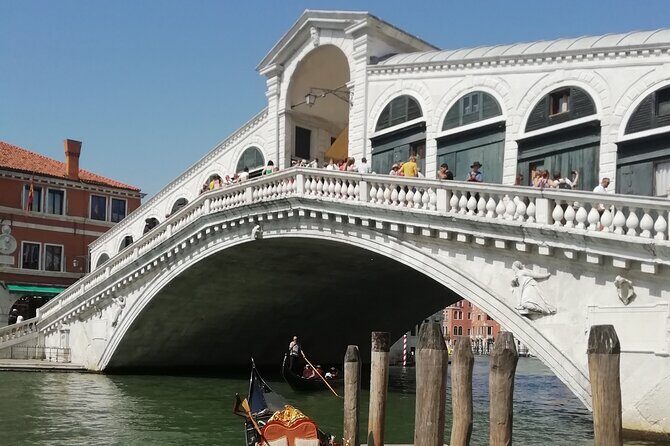
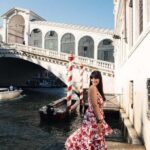
Your tour starts at Campo San Bartolomio, and soon you’re at the Ponte di Rialto—one of the most famous bridges in the world. The legend here is half the fun: you’ll hear that the bridge was built with help from the Devil himself. Whether you take the story as literal or theatrical, it’s a smart hook because it turns a landmark you’ve seen in photos into a place with a personality.
The visit window is short (about 20 minutes), so the goal isn’t a slow stroll across the bridge and a coffee break. Instead, you’ll focus on what makes Rialto special: its role as a visual anchor in the city and the way Venice folk stories attach drama to stone and crowds.
If you’re the type who likes to “understand what you’re looking at,” this is a good start. If you’re only in Venice for postcard shots, you might feel the time is brief. But the payoff is that you’re not stuck here all day—you’re moving to churches and sites that many people skip.
Chiesa di San Giovanni Crisostomo: Marco Polo’s Family Funding Meets Master Paintings
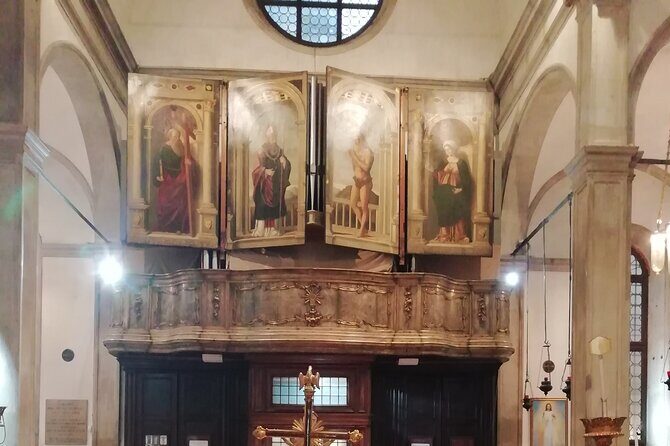
Next is Chiesa di San Giovanni Crisostomo, an ancient church with an unusually specific connection to Marco Polo. The story goes that it was built by architect Codiussi with financial help from Marco Polo’s family. That kind of detail is why I like this tour: it gives you a reason to care about a building beyond its age.
Inside, you’ll be shown priceless works by Giovanni Bellini, and also Tullio Lombardo. Those names are big in Venetian art circles, and even if you’re not an art specialist, it’s still satisfying to see famous artists tied to a real location—rather than just reading labels from a distance.
The practical angle: this stop is around 30 minutes. You’ll likely have enough time to see what’s being pointed out without feeling rushed, but it won’t be a long, quiet chapel experience. Venice churches can be crowded and airflow can be limited, so it helps to be ready for a “look, learn, move on” rhythm.
One more thing: it’s the kind of church visit where you’ll notice how stories travel through a city. Marco Polo isn’t only a book name here—he’s part of the fabric that funded and shaped religious and cultural spaces.
Casa di Marco Polo and Corte del Milione: The Explorer’s Two Venetian Chapters
Then you step into the Casa di Marco Polo, described as the house where Marco Polo was born and lived until he was about 12. The tour connects the dots to his early journey: with his father Niccolò and his uncle Matteo, he later left for Katai. And when he returned, the focus shifts to his later life—ending in Corte del Milione, which you visit as his second home.
What makes this portion valuable is pacing. A lot of “Marco Polo” sightseeing can feel like a single statue moment. Here, you get a timeline: early home life, departure, and the later return. Even if you don’t remember every name, you leave with the sense that Venice shaped the person, not just the legend.
This stop is also about 30 minutes, so you can take it in without burning the whole day. You’ll want to keep your attention on the guide’s story thread, because the value is in how the details are linked, not just in passing rooms.
One consideration: if you’re visiting during peak crowds, expect some slow moments at the entrances and inside. That’s not the tour’s fault—it’s Venice. The good news is that your time is organized, so you’re still covering major ground.
Campo Santa Maria Formosa: A Big Venetian Field With a War-Episode Behind It
After Marco Polo’s connections, you step back into open-air Venice at Campo Santa Maria Formosa, one of the largest fields in the city. The tour frames it as a culturally important center, not just a wide plaza for photos.
You’ll also hear about an important episode connected to this place—one that caused the War against Padua. That’s the kind of historical “why this spot matters” context that turns an open square into something more. You’re not only admiring architecture or canal views. You’re standing where history once played out.
This stop is brief—around 5 minutes—and that’s exactly why it works in a tight route. It gives you a breath of air and a quick reset before the next church, without turning the day into a long lecture.
The drawback is also obvious: if you want to linger here, the tour won’t give you much time. But you can always come back afterward on your own for a longer look once you know what you’re seeing.


San Zulian (Giuliano): Gold Works and the Big Names of Venetian Painting
Next is Chiesa di San Zulian (Giuliano), and the pitch is clear: the church is unique for the richness of its gold works, plus the presence of major painting names. The tour ties together Veronese with Giovanni Bellini and Palma il Giovane.
Even without turning this into an art-history class, it’s a visually motivating stop. Churches with gold detailing change the whole mood of a walk. Instead of thinking only in stone and legends, you start noticing light, ornament, and how wealth was displayed through art.
This is about 15 minutes, so you’ll want to let the guide’s pointing-out do the heavy lifting. In a short visit, you can miss details if you try to look for everything on your own. The best way to enjoy it is to follow the story cues and then take a second pass at what stands out most once the guide has pointed you toward it.
If you love visual drama—church interiors, artistic names, religious art tied to Venice specifically—this is one of the stops that tends to stick in your memory.
Piazza San Marco, Doge’s Palace Views, and Ending at the Prison Palace
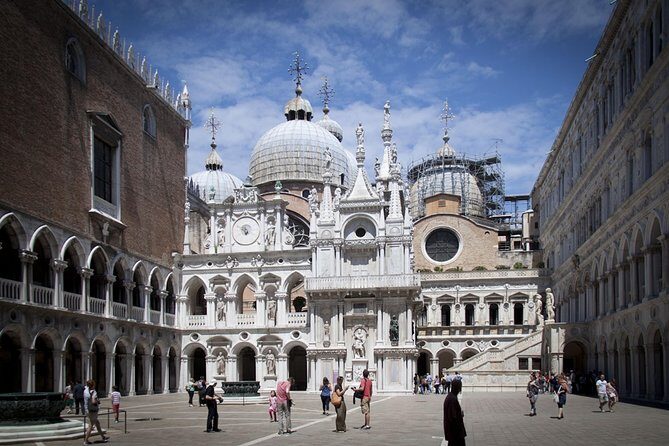
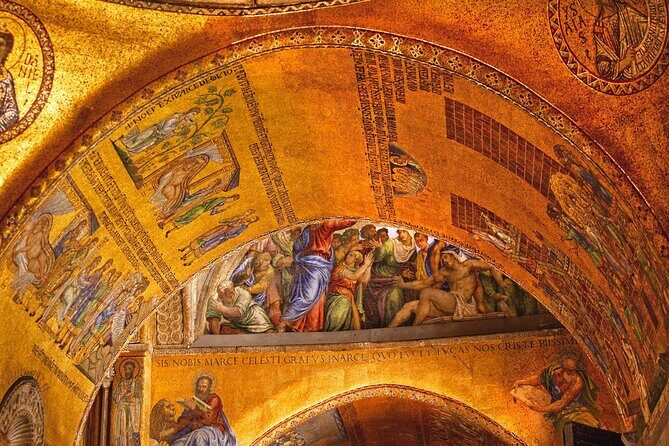
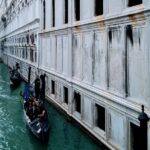
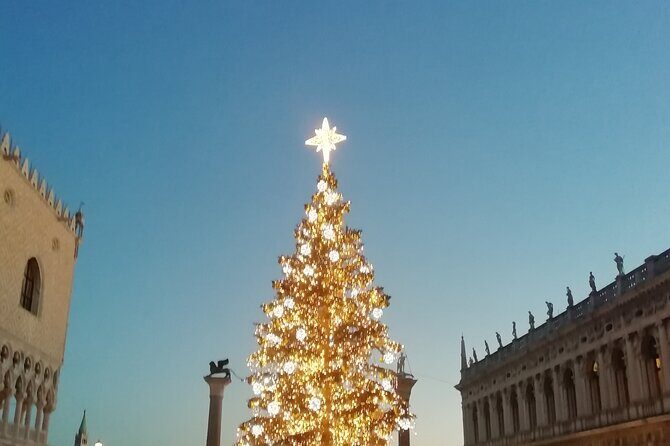
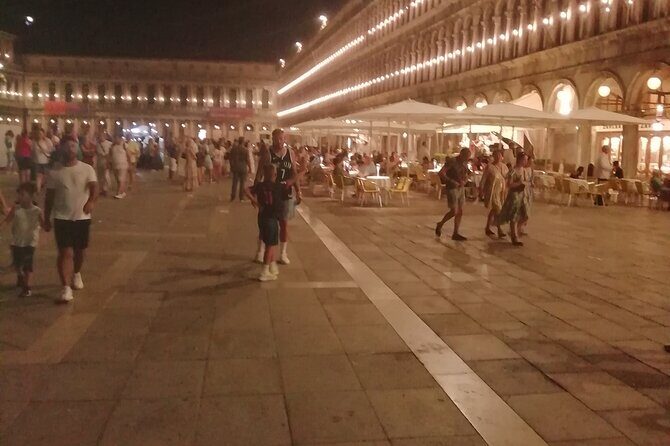
The finale lands at Piazza San Marco, where everything feels louder and more monumental. The tour is designed to show you the key sights from a walking route: the Basilica, the Bell Tower, plus views connected to Doge’s Palace and the Bridge of Sighs. Then it finishes at the Prison Palace.
This part can feel like the best kind of payoff: after learning about smaller churches and Marco Polo’s places, you end at Venice’s grand stage. And because the route ends at a prison site, you get a shift in tone—history here has consequence, not just beauty.
This stop is about 10 minutes, which is short for such a famous place. But the goal isn’t to “do San Marco.” It’s to get you oriented, help you connect the sights, and then move to a specific ending point so the tour has closure.
If you plan to stick around after the tour, I’d recommend building time for San Marco on your own. The square deserves it. The tour gives you the map in your head, not hours of free roaming.
Timing, Comfort, and the Day-of Reality in Venice
On paper, this is about 2 hours. In practice, it can run longer—especially if you get a guide who answers questions and keeps the group moving at a story-friendly pace. I’d plan for about 2–3 hours to be safe, and don’t schedule a tight lunch right before or right after.
Comfort is the other big issue. Venice doesn’t offer lots of easy seating in the middle of sightseeing routes, so your feet do the thinking. Bring water, wear supportive shoes, and expect that you’ll stand in lines or slow bottlenecks briefly. The upside is that the tour keeps moving, so it’s not hours of slow waiting without meaning.
Also, the tour is described as private, meaning it’s only your group. That can make the experience feel more personal, and it often helps with Q&A. Still, Venice crowds don’t care if your group is small, so keep an eye on your guide and the meeting points as you transition between stops.
Meeting Points, the €5 Access Fee Note, and How to Avoid Waste
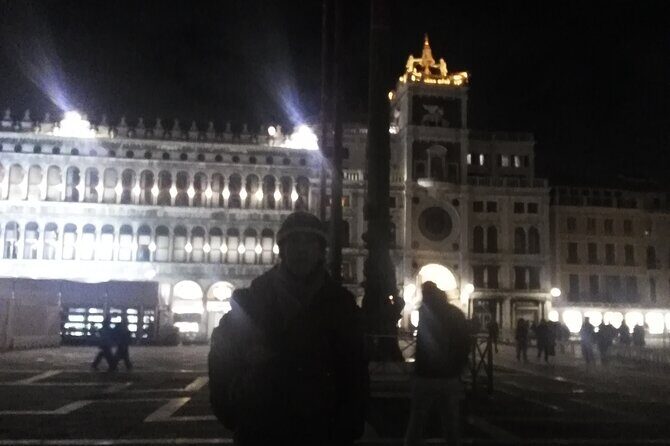
The tour meets at Campo San Bartolomio and ends near Piazza San Marco, specifically around the Clock Tower area. That matters because Venice signage can be tricky when you’re also trying to sync with a guide’s location.
One practical thing to watch: there’s mention of a possible €5 access fee on certain dates for people staying outside Venice who are visiting for the day. It depends on the day, and exemptions may apply. If your plans include visiting San Marco around a busy date, check the relevant city information before you go so you’re not surprised.
You’ll also get a mobile ticket, and confirmation is received at booking. I recommend you keep your confirmation handy offline. Venice Wi-Fi can be patchy, and you don’t want to depend on your phone loading pages at the worst time.
And yes, there have been real issues reported with guides not showing up at the meeting point on some days. You can’t remove risk from Venice logistics, but you can lower it: arrive a little early, keep the operator contact handy, and if you’re waiting too long, don’t just hope. Take action quickly so your day doesn’t get swallowed.
Price Value Check: Does $83 Make Sense?
Let’s talk value. You pay $83 for roughly a two-hour guided walk that includes admission tickets at the stops on the route. That’s a big deal in Venice, where ticketing adds up and lines can steal time. You’re also getting a guided narrative that ties together Rialto, Marco Polo, church art, and San Marco set pieces in one continuous arc.
If you enjoy structure, history tied to real locations, and art names connected to specific buildings, this is a strong fit. If you only want to see the biggest sights with minimal learning, you could argue for a cheaper route or self-guided plan.
But for most first-timers, the value comes from reducing decision fatigue and making sure you hit meaningful places in a short window. Venice rewards attention, and this kind of focused route helps you pay attention where it counts.
Should You Book This Venice Art and History Tour?
I’d book it if you want a guided route that turns major Venice icons into story-based stops. The best part is the balance: Rialto legend, Marco Polo’s homes, church art with names you can recognize, and a smart ending at San Marco with the Prison Palace.
I’d think twice if you’re hoping for lots of sitting time or if you plan to squeeze this tour into a brutally fixed schedule. Also, because meeting-point problems can happen, build in flexibility and have contact info ready on your phone.
If you like the idea of learning what you’re seeing—without spending your whole day in museums—this is a very practical way to get a richer Venice than the standard postcard loop.
FAQ
How long is the Venice tour?
The tour is listed as about 2 hours.
Is the tour in English?
Yes, it’s offered in English.
Where does the tour start and end?
It starts at Campo San Bartolomio, 30124 Venezia VE, Italy. It ends at Piazza San Marco, near the Clock Tower.
Are admission tickets included?
Yes. Each main stop listed on the route includes an admission ticket.
Is this a private tour?
Yes. Only your group participates.
Do I need to pay an extra fee in Venice?
On certain dates, visitors staying outside Venice who are visiting for the day may be required to pay a €5 access fee. The applicable days and any exemptions are listed on the city site.
What’s the cancellation policy?
Free cancellation is available up to 24 hours in advance for a full refund.
Will I receive confirmation after booking?
Yes. Confirmation is received at the time of booking.