REVIEW · VERONA
Walking Tour in Verona: 9+ Landmarks with Live Guide
Book on Viator →Operated by Slow Travel Italia · Bookable on Viator
Verona in 90 minutes makes sense. This express walking tour strings together top sights with a live guide, so you’re not wandering blind or losing half a day in transit. I like that it’s small-group (up to 12) and built for quick orientation.
Two things I’d plan around right away. First, you start in Piazza delle Erbe, where the buildings, the market energy, and the landmarks give you a clean mental map of the city’s center. Second, the route includes Torre dei Lamberti for classic high-up views, plus nearby medieval details that help Verona click. One drawback to consider: several big stops (tower, Duomo, Roman theater) are marked as not including admission, so you’ll likely be seeing exteriors unless you add tickets separately.
In This Review
- Key highlights at a glance
- 90 minutes of Verona: exactly enough time to get oriented
- Small group size (max 12) means you can actually use the guide
- What you learn matters: love, power, and Roman footprints
- Piazza delle Erbe: where the city center tells you how Verona worked
- Torre dei Lamberti and the medieval connection near the square
- Piazza dei Signori: civic life in stone form
- Casa di Giulietta: the famous stop that can still teach you something
- Arche Scaligere: Gothic tombs that explain power after death
- Ponte Pietra over the Adige: Roman engineering in a postcard setting
- Duomo di Verona and Teatro Romano: what’s included vs what you might add
- How to use this tour in your Verona day plan
- Price and value: what $42.17 buys you here
- Should you book this Verona walking tour?
Key highlights at a glance
- Up to 12 people with a live guide, so questions and photo stops stay easy
- A tight 90-minute route that helps you decide what to revisit later
- Piazza delle Erbe as your launch point, with major landmarks close by
- Medieval and Roman storytelling tied directly to what you’re walking past
- Classic Verona views from Torre dei Lamberti and the Adige area at Ponte Pietra
- Tour ends near Verona Cathedral, so it’s simple to roll into your next stop
90 minutes of Verona: exactly enough time to get oriented
This is the kind of tour you do early in your trip—or when you’re short on energy but still want the highlights. Ninety minutes is long enough to build context, but short enough that you don’t feel trapped in a full-day checklist. And because the tour stays outside most of the time, it’s a good fit when you don’t want to fuss with extra entries.
The meeting point is Piazza Erbe (38a), right in the historic core. You’ll finish near Verona Cathedral in the Piazza Vescovado area, which is handy. It means you can end your walk and keep exploring without dragging your legs across town later.
One more practical note I appreciate: the tour uses a mobile ticket, so you’re not hunting for printed passes. Also, since it’s offered in English, you won’t have to work around language barriers to catch the stories.
You can also read our reviews of more walking tours in Verona

Small group size (max 12) means you can actually use the guide
Bigger tours can be efficient, but they can also feel like you’re watching landmarks from inside a human parade. Here, the group is capped at 12, which changes the vibe. You’re close enough to hear the explanations, and the guide can slow down when people want questions or photos.
The guides named in past tours—Carlos, Leonardo (often called Leo), Alessandra, and others—show up in comments as the main reason people rate this so highly. The pattern is consistent: friendly, flexible pacing, and a focus on helping you understand what you’re seeing rather than reciting a script.
You should still expect a walking rhythm. This is sightseeing on foot with stops along the way, not a bus ride with frequent sit-down breaks. If you’re the type who likes to linger, it’s worth knowing the schedule is designed to hit major sites within 1.5 hours.
What you learn matters: love, power, and Roman footprints
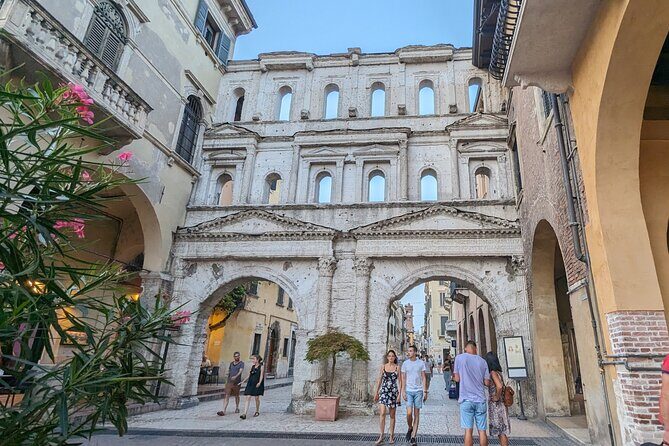
Verona is one of those cities where you can keep seeing the same walls and rooftops, but the meaning changes depending on the era. This tour leans into that. You get stories that connect ancient civilizations, medieval power, and the famous love story culture around Juliet.
I like that the route uses specific places to explain social hierarchy and civic life. For example, there’s a Middle Ages stone staircase near Piazza delle Erbe that historically linked the lower areas of town with upper areas where the ruling class lived. It’s the kind of detail that helps you stop viewing Verona as just postcard scenery and start noticing how the city was organized.
If you want a quick mental timeline—Roman foundations, medieval structures, and later cultural legends—this tour does that in a compact format. It’s also why people often say they come away with “I can navigate now” energy.
Piazza delle Erbe: where the city center tells you how Verona worked
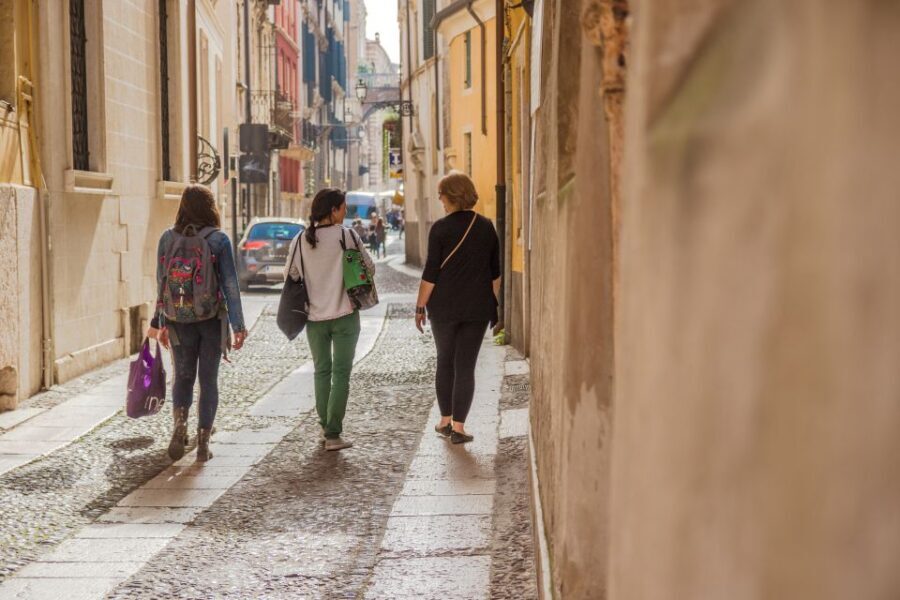
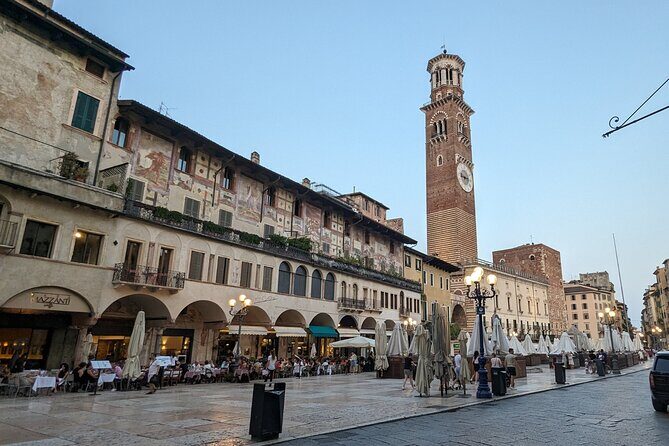
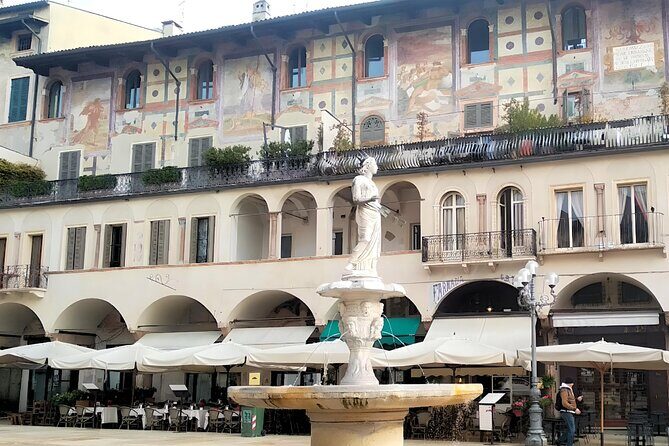
You begin at Piazza Erbe, and that’s smart. It’s not a random stop; it’s a hub. The square is known for its long-running role as a marketplace, with colorful buildings all around and a flow of people that still feels very “Verona.”
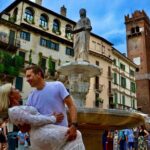
You’ll spend about 10 minutes here, and the guide’s goal is usually to help you read the square. Expect to hear about standout buildings and landmarks framing the area, including the Baroque Palazzo Maffei and the iconic Madonna Verona fountain. These details may look like decoration at first. On the walk, they turn into anchors—things you can point to when you return later.
Small pro tip: if you’re visiting during market hours, watch for the way the square is used day-to-day. Even if you don’t buy anything, it helps you understand why this spot has stayed important for centuries.
Torre dei Lamberti and the medieval connection near the square
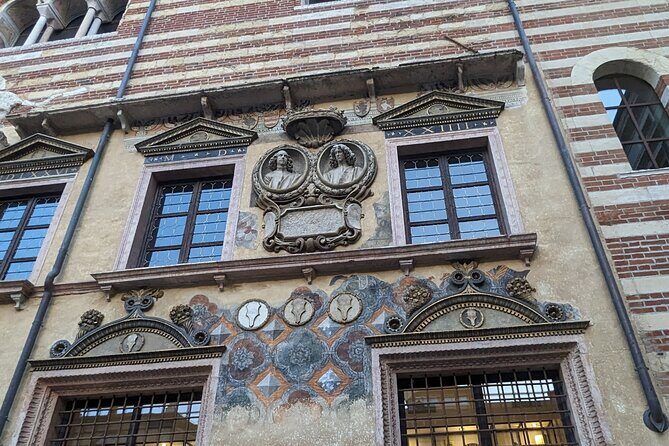
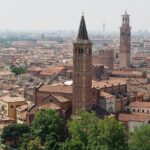
After Piazza Erbe, you’ll head to Torre dei Lamberti. This is a 12th-century medieval tower that dominates the historic center. The tour sets you up with the context, then gives you time to take in the exterior and understand why people climb towers in the first place: the views let you see how Verona’s shape connects.
Tower entry isn’t included, based on the admission notes for this stop. So treat the tour as a “look and orient” visit. If you want to go up inside the tower, you’d need tickets separately.
One of my favorite “don’t skip this” moments in the itinerary is the historic staircase near Piazza delle Erbe—dating to the Middle Ages. It’s a stone link between the lower city and upper areas where the ruling class resided. That detail turns what could be an easy-to-miss alley feature into a lesson about social stratification. You start seeing the city’s layout as a story, not just a map.
You can also read our reviews of more guided tours in Verona


Piazza dei Signori: civic life in stone form
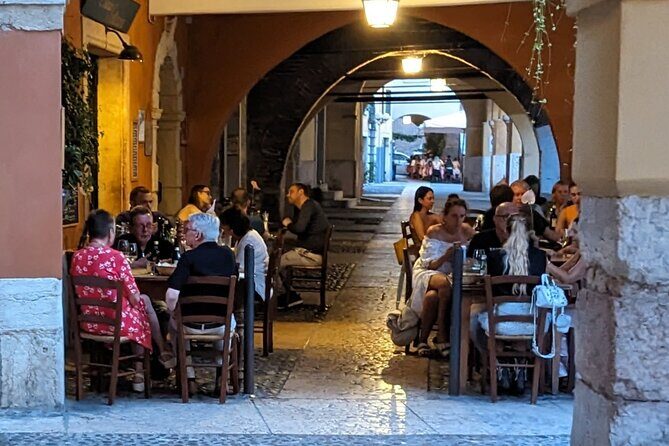
Next up is Piazza dei Signori, a historic square tied to Verona’s civic and political identity. You’ll have about 5 minutes here, which means you won’t get a slow, museum-style experience. Instead, you get a fast reading of what the architecture is telling you.
The square is lined with major buildings such as the Loggia del Consiglio and the Palazzo del Capitano. The guide’s explanations help you understand why these aren’t just pretty facades. They signal who held power, how public life operated, and how the city showcased authority in public space.
Consideration: because it’s a short stop, you’ll get more value if you pay attention to what the guide points out first. If you try to “do everything” with your eyes at the same time (photos, reading plaques, people-watching), you may miss the key details that make this square click.
Casa di Giulietta: the famous stop that can still teach you something
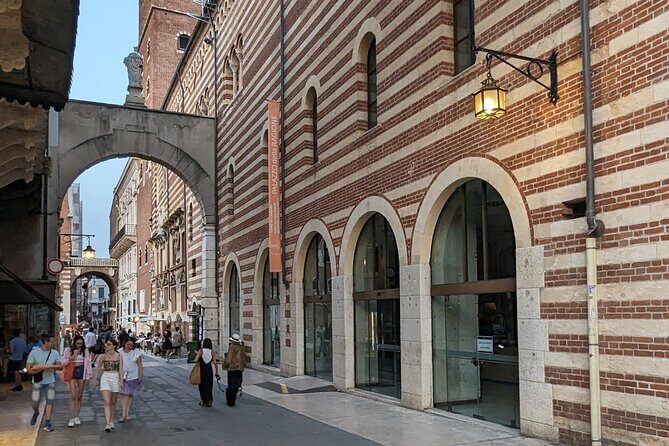
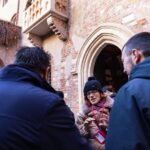
Casa di Giulietta is one of the best-known attractions in Verona. You’ll spend about 10 minutes here, and admission is listed as free for this stop. That usually means you’re seeing what’s available without paying an entry fee during the tour time.
Even if you’ve heard all the romantic chatter about Juliet, this stop is still useful in a practical way. The guide can explain how the legend became part of Verona’s identity—and why this story lingers even for people who don’t know the exact plot.
Reality check: this is a high-demand tourist area, so expect crowds. The value of the guided time is not escaping the crowds; it’s using the time to learn what you’re looking at and deciding whether you want to linger after the tour.
Arche Scaligere: Gothic tombs that explain power after death
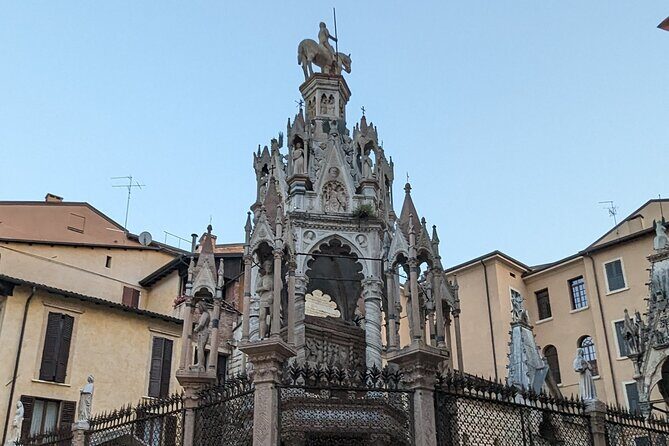
After Juliet’s House, you’ll reach the Arche Scaligere—Gothic funerary monuments linked to the Scaligeri family. This is another short stop (about 5 minutes), but it can hit hard because it’s about legacy.
Think of it like this: medieval rulers didn’t just want to rule while alive. They wanted to be remembered in stone with dramatic style. The Scaligeri influence shows up in the monuments’ presence and design choices, and the guide ties that to the political and cultural weight of the era.
Why it works in a walking tour: you’re not reading a textbook. You’re seeing how a family used art and architecture to broadcast importance. Even if you’re not a tomb-spotter, this stop often becomes one of the “oh, so that’s what this city was doing” moments.
Ponte Pietra over the Adige: Roman engineering in a postcard setting
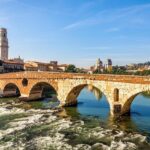
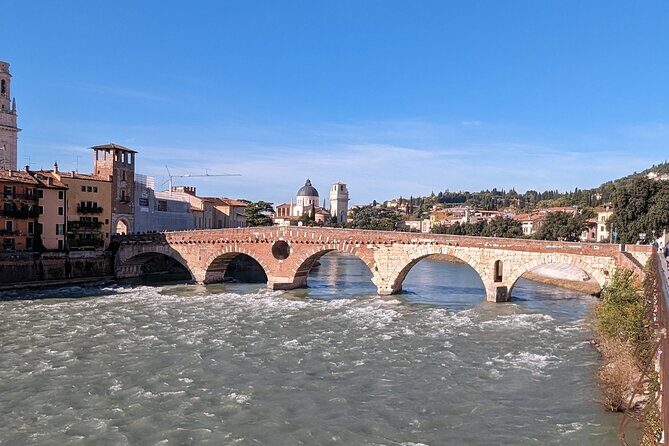
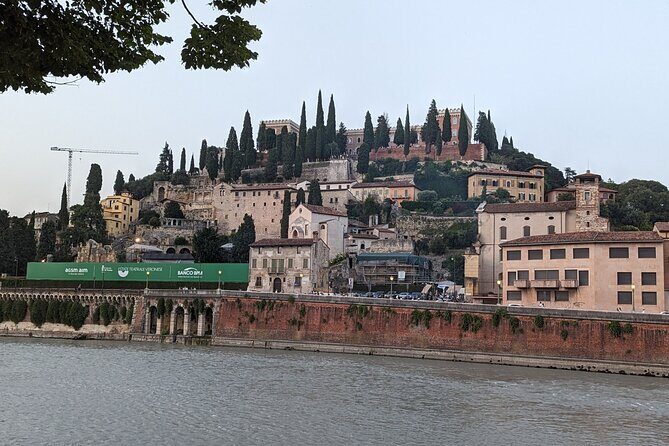
Ponte Pietra is a signature Verona moment. It’s an ancient Roman bridge spanning the Adige River, with origins dating back to the 1st century BC. The exterior views are the point here, and admission isn’t needed for this stop.
This is the kind of landmark that helps you connect Verona to its Roman roots without making you hunt for them. The guide’s storytelling tends to focus on how the bridge functioned and how the river shaped the city’s movement and development.
The setting is also photogenic in a very practical way: you can pause, check your bearings, and then point your day plans from there. If you’re the type who likes to revisit viewpoints later, this is a good place to memorize angles and landmarks.
Duomo di Verona and Teatro Romano: what’s included vs what you might add
The last part of the tour deals with two major “big name” sites: Verona Cathedral (Cattedrale di Santa Maria Matricolare) and the Teatro Romano.
For the Duomo, the tour notes admission as not included. That means you’re likely spending time seeing the Romanesque exterior details—its 12th-century character and carved facade elements—without paying for entry during the guided slot. The cathedral is still a major focal point even from the outside, and it helps Verona’s timeline feel complete: Roman foundations, medieval power, then religious architecture at the center.
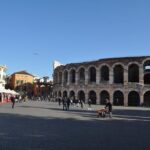
Next is the Teatro Romano, an ancient Roman theater dating to the 1st century AD. Admission is also not included for this stop, so the tour value is mostly in the ruins’ setting and the sense of what the space was built to do. The theater is known for hosting events when conditions allow, but during this tour you’re primarily there to see the archaeological character and hear the story.
My practical advice: if you feel tempted to go inside the tower, cathedral, or theater, plan that as a separate add-on. The walking tour is designed to keep the pace moving and keep you oriented. Adding internal visits can turn your “quick orientation” into a longer day.
How to use this tour in your Verona day plan
This is best used as a first- or second-pass tour. You’ll leave with a strong shortlist of places to return to on your own. In fact, many people love that the tour hits the highlights in a manageable window and then frees up time to explore.
A simple way to plan: do this early so the rest of your day makes sense. Piazza Erbe gives you the center. Torre dei Lamberti and the staircase teach you how the city’s layout relates to power and elevation. Piazza dei Signori and the Scaliger monuments fill in medieval context. Then the Adige bridge and Roman theater anchor the city’s earlier roots. By the time you arrive near Verona Cathedral, you’re not just seeing another building—you’re reading the city.
At the end, you’re near Verona Cathedral in the Piazza Vescovado area, and there’s mention of an old-fashioned bar called Osteria nearby. That’s a very practical “wrap it up with a drink” option if you want to keep things easy right after the walk.
Price and value: what $42.17 buys you here
At about $42.17 per person, you’re paying for a guided route that compresses multiple landmarks into one 1.5-hour experience with a live host. The price isn’t just for “walking past stuff.” It’s for the explanations that connect the places.
What makes it good value is the format:
- Small group (max 12) keeps the guide available and the pace more comfortable.
- No admission fees needed for the walk (since you’re mainly outside), so you’re not forced into extra spending just to get the core sights.
- You get stories—love, power, and political structure—so the landmarks feel more useful than they would on your own.
Where value can slip is if you’re the kind of traveler who wants to go inside every major site. The tower, cathedral, and Roman theater are marked as not including admission. If you want interiors, you’ll be paying extra anyway, and your overall day cost will rise.
Still, for the type of traveler who wants the “best overview fast,” the price is pretty reasonable.
Should you book this Verona walking tour?
Book it if you want:
- A quick, organized way to see major Verona highlights in about 90 minutes
- A small-group experience where you can ask questions and pause for photos
- A guide who connects landmarks to how Verona’s eras shaped the city’s streets and squares
- A route that ends near Verona Cathedral so your next stop is easy
Skip it or plan differently if:
- You want a tour that includes paid entry into the tower, Duomo, or Roman theater (those are marked as not included)
- You prefer long, unhurried wandering with no set route at all
- You’re extremely sensitive to schedule changes. On rare occasions, a guide can miss an appointment and communication can fail. If timing is critical, it’s worth verifying details right around departure time.
If you’re trying to make the most of limited time in Verona, this is one of the smarter ways to get your bearings and your context—without turning the trip into a marathon.