REVIEW · VENICE
Venice: Ghetto Highlights and Cannaregio Walking Tour
Book on GetYourGuide →Operated by Beatrice Baumgartner · Bookable on GetYourGuide
Venice’s Ghetto story hits harder on foot. This walk traces the first ghetto in the world and then shifts into Cannaregio, where Tintoretto ties art, faith, and local legends to the streets you’re standing on. It’s history with real-world directions, not just dates on a sign.
I especially like how the guide, Beatrice Baumgartner, turns big topics into clear moments you can follow—maps, stories, and connections between the Jewish community’s past and the artist’s life. The small group size helps too, so you can ask questions without shouting over the whole street.
One consideration: in the shared 2-hour tour, the Madonna dell’Orto church is viewed only from outside. If entering churches is a must for you, plan around that.
In This Review
- Key tour highlights to know before you go
- Why this Venice walk works: Ghetto past plus Cannaregio details
- Meeting in front of Trattoria alla Palazzina and going small
- The Jewish Ghetto portion: learning the word behind the place
- Casa del Tintoretto: seeing an artist as a real person
- Tintoretto’s resting-place and the Madonna dell’Orto exterior
- The kosher bakery sweet: culture you can taste
- Ponte Chiodo and the boat workshop view: Venice details with a purpose
- Where the tour ends at Campo Santa Sofia (and how to continue)
- Price and value: what $64 buys you in Venice time
- One hour vs two hours: choose based on what you care about
- Who this tour suits best
- Should you book this Venice Ghetto and Cannaregio tour?
- FAQ
- FAQ
- Is the Madonna dell’Orto Church entered during the shared tour?
- Are there different tour lengths?
- What’s included in the price?
- Do I need cash?
- Is this tour suitable for wheelchair users or limited mobility?
- What languages is the guide speaking?
- What should I do after the tour ends?
- Does the tour run in bad weather?
Key tour highlights to know before you go
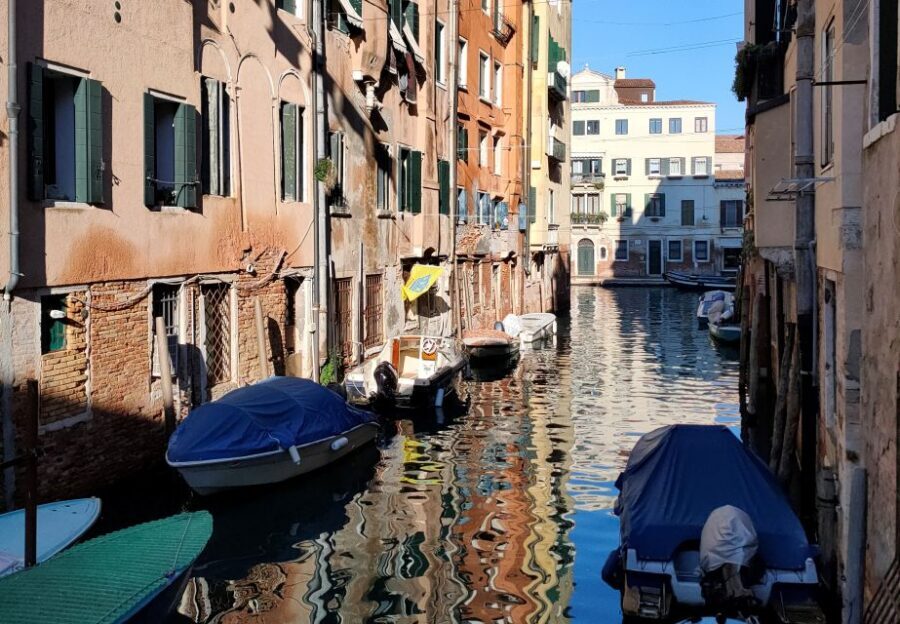
- The first Ghetto in the world, explained right where you’ll be walking in Venice’s older streets
- Tintoretto’s story on location, including his home/workshop area and his last resting-place
- Madonna dell’Orto exterior viewing (inside entry is not part of the shared tour)
- A kosher sweet from a family-run bakery, so you taste the culture, not just hear about it
- Ponte Chiodo and the boat-workshop view, where small details become memorable
- A relaxed ending at Campo Santa Sofia, with easy self-guided options toward Rialto
Why this Venice walk works: Ghetto past plus Cannaregio details
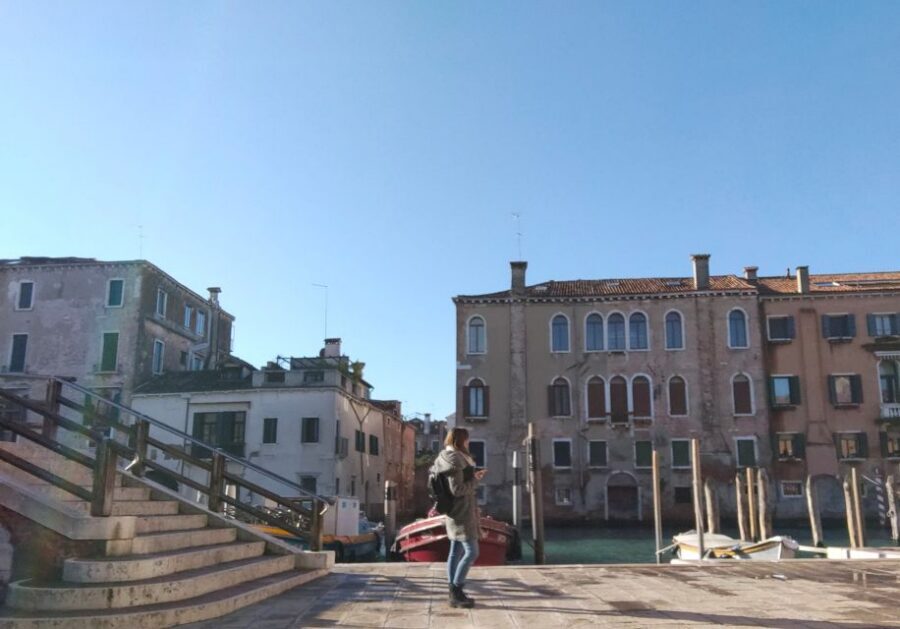
This is one of those Venice tours that earns its time. You start in the part of town where the idea of a Jewish ghetto wasn’t theoretical—it shaped daily life, boundaries, and community survival. Then you move into Cannaregio, where art history and street-level quirks keep the experience from becoming heavy for too long in a row.
The best part is pacing. You don’t sprint from landmark to landmark. You walk, stop, listen, and then look again. In Venice, that matters. A street corner can feel ordinary until someone gives you the right lens—then the place suddenly makes sense.
You can also read our reviews of more walking tours in Venice

Meeting in front of Trattoria alla Palazzina and going small
You’ll meet in front of Trattoria alla Palazzina. From there, the tour keeps a human scale: small group, limited to about 10 participants. That number sounds minor until you’re actually in the crowd of Venice—then it feels like the difference between a guided story and a guided blur.
The guide is German/English, and the tone is practical and friendly. I like that the tour doesn’t talk down to you. You get context, but you also get specifics: where you are, what you’re looking at, and why it matters.
And yes, the tour runs rain or shine. Venice weather can change fast, so wear layers you can handle.
The Jewish Ghetto portion: learning the word behind the place
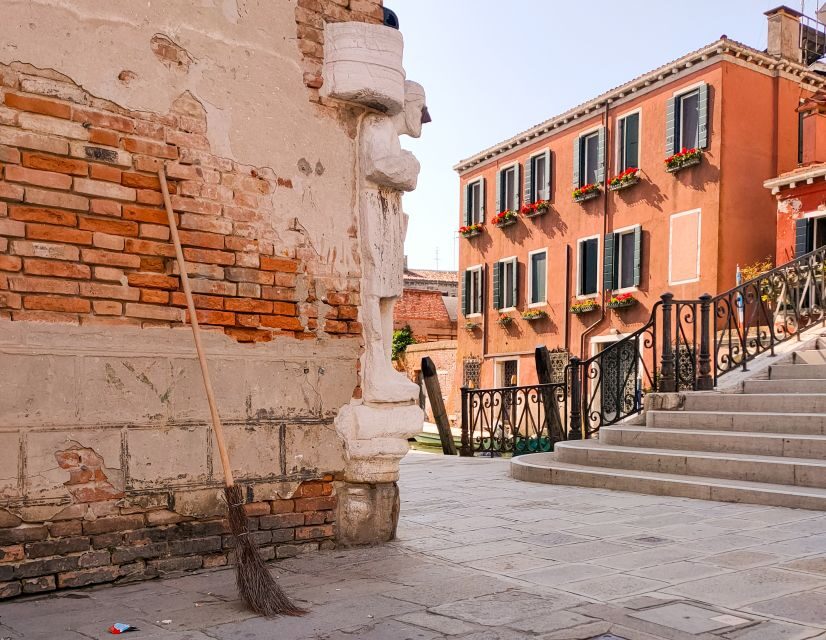
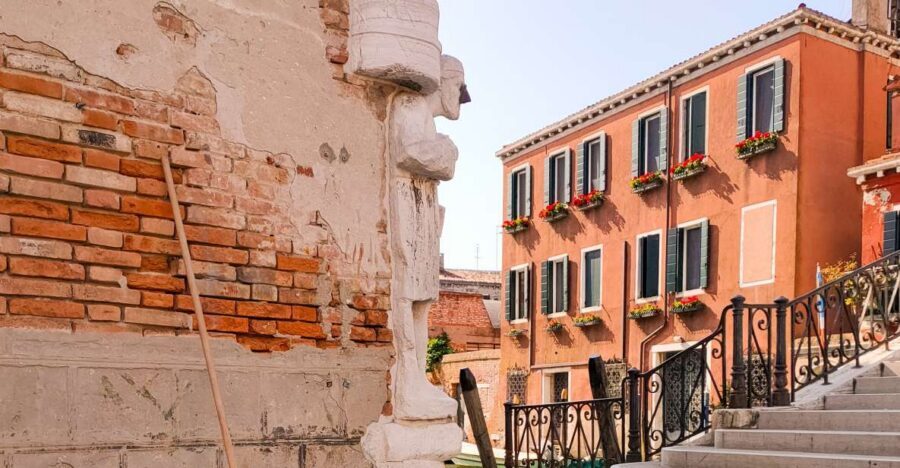
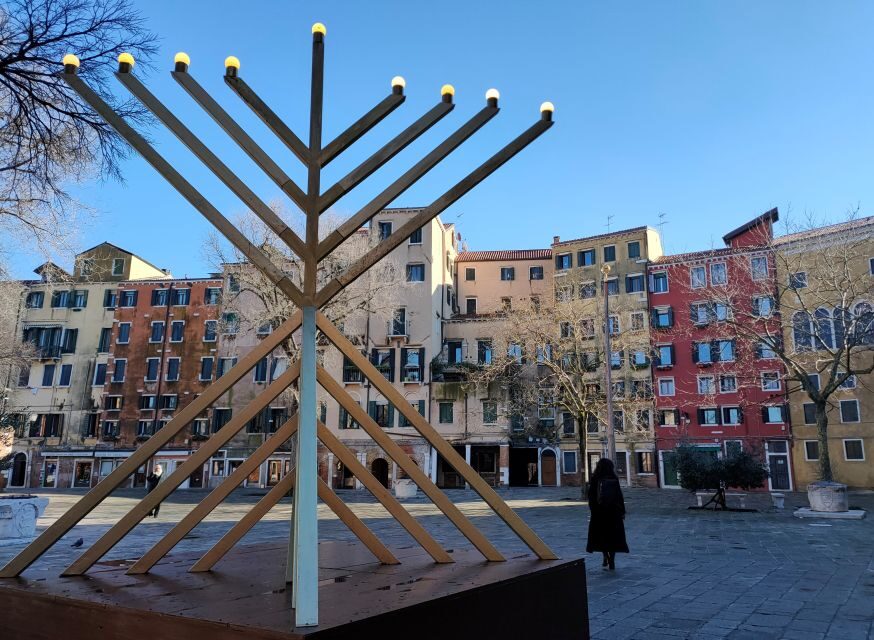
In the Ghetto area, you’ll spend about 40 minutes with a guided walk through the heart of what makes this area historically important. The guide focuses on the meaning of the Ghetto concept and how it played out in Venice—plus how that history still echoes in the neighborhood’s layout and atmosphere today.
What’s especially valuable here is how the stories connect. The tour doesn’t treat the Ghetto as a museum hallway. It frames it as lived space: rules, identity, and the tension between restriction and community life. If you like history that stays grounded, this section does it well.
You’ll also get a sense of how Venice’s neighborhoods overlap. The Ghetto isn’t isolated from the city around it. It’s part of Venice’s daily flow—so by the time you move on, you understand how the area fits into the bigger map.
Casa del Tintoretto: seeing an artist as a real person
After the Ghetto segment, you’ll head into Cannaregio’s calmer lanes and make space for Tintoretto. The tour includes stops that let you connect the Renaissance painter to this neighborhood without turning it into a lecture about paint.
You’ll get to pass by Casa del Tintoretto and learn how his home/workshop context shaped his life. You’ll also hear a Venetian legend connected with him. That kind of storytelling matters because it helps you remember the name later, long after you’ve left.
If you’re an art lover, you’ll probably enjoy the way the tour treats Tintoretto as a person first: where he worked, where he lived, and what his legacy looks like in the streets around you. And if you’re not an art person, it still works because the guide keeps returning to how the city itself carries memory.
Tintoretto’s resting-place and the Madonna dell’Orto exterior
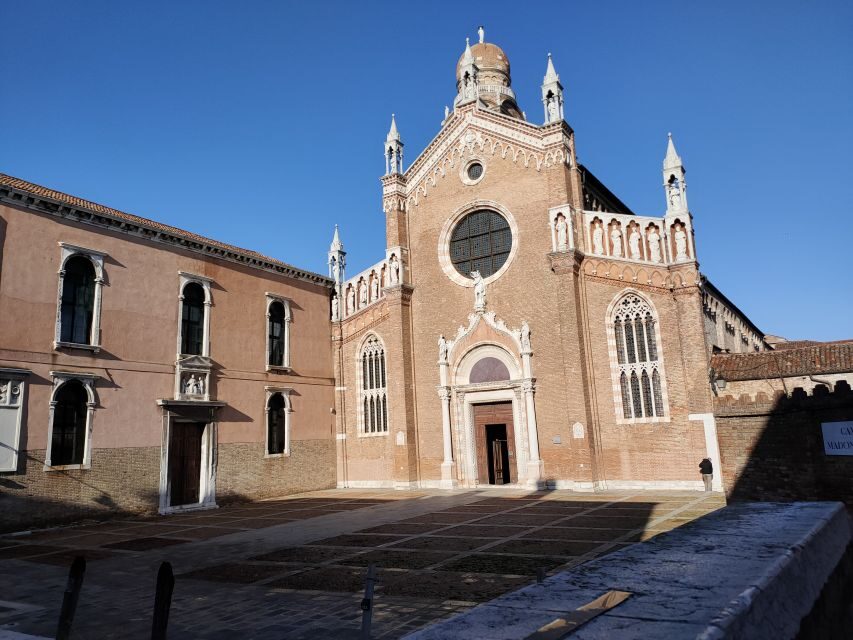
This is the part of the experience that many people come for: the Madonna dell’Orto Church area and Tintoretto’s connection to it.
In the 2-hour shared tour, the church is visited from outside only. You’ll still get Madonna dell’Orto’s Gothic look and the chance to see Tintoretto’s tomb area significance in the setting. You’ll also get explanations and a choice of his more significant artworks, but you’ll view them from outside (not through interior viewing during the shared stop).
Is that disappointing? It depends on what you want from your Venice time. If you’d love the architectural view and the sense of place, the outside stop is enough. If your top goal is interior masterpieces and up-close detail inside churches, you’ll want the private option (where entry can be possible, with a small cash admission fee and proper clothing).
Either way, this stop helps you understand why Tintoretto and this church belong together in Venice’s story.





The kosher bakery sweet: culture you can taste
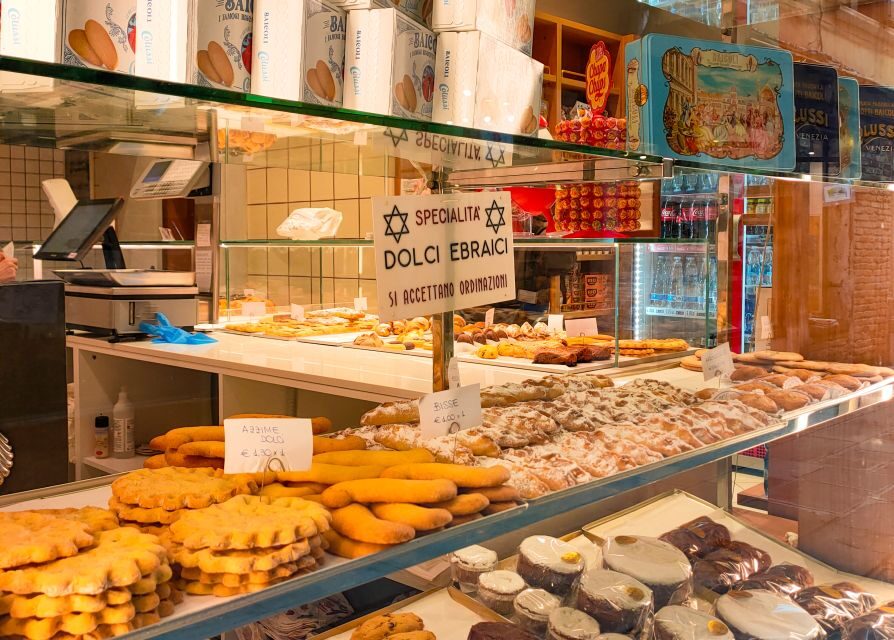
One of the simplest joys on this tour is also one of the most meaningful: the stop at a local kosher family-run bakery. You’ll spend about 10 minutes there, and you’ll get one sweet per person.
This isn’t about food as a checklist. It’s about meeting a working community tradition and recognizing that Venice’s Jewish history isn’t just old stone—it’s also lived culture, food included. The sweet is small, but it gives you a sensory memory you can carry with you.
If you have food questions (ingredients, allergies), the tour data doesn’t mention specifics. So if you’re sensitive, I’d plan to ask the bakery directly when you arrive.
Ponte Chiodo and the boat workshop view: Venice details with a purpose
Venice loves details. Some of them are easy to miss. This tour points you to a few that become memorable.
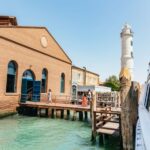
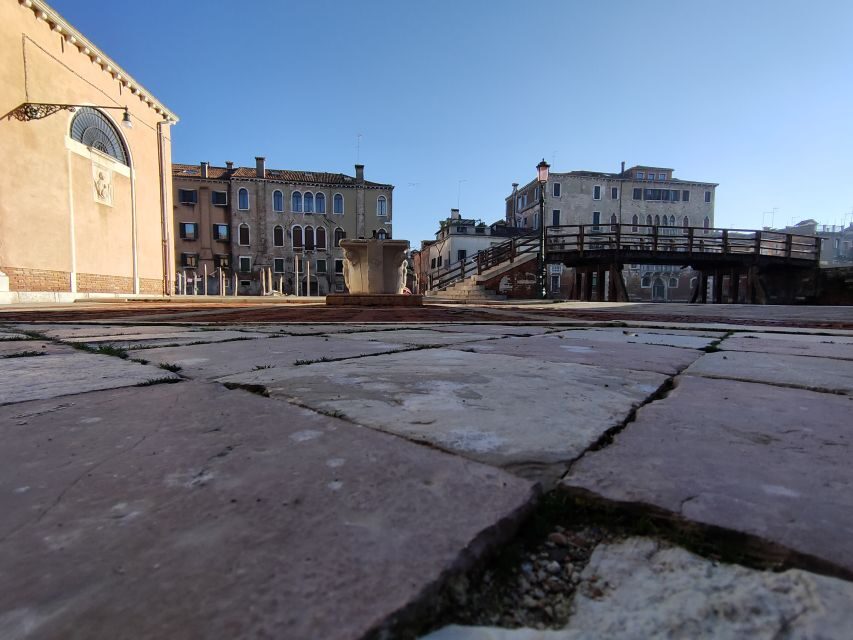
You’ll look at a former boat workshop area view, tying the city’s trade and craft past to the neighborhood. And you’ll also hear about Ponte Chiodo, described as the only bridge without balustrade. It’s one of those trivia-style details that somehow sticks because it’s visual. Once you spot it, it’s hard not to remember it.
These moments keep the tour from turning into a single theme. You get history, art, daily life, and then Venice’s physical quirks that make the city feel unique even when you think you’ve already seen it all.
Where the tour ends at Campo Santa Sofia (and how to continue)
You finish at Campo Santa Sofia. From there, you can continue on your own toward Rialto Bridge and the Rialto fish market by foot, or you can take a traditional gondola ferry for a practical shortcut.
This ending point is smart. It doesn’t dump you back in a chaotic departure area. It leaves you near a useful hub for more exploring, and you can choose your next step based on energy and how the day’s light is shifting.
Price and value: what $64 buys you in Venice time
At $64 per person for a 2-hour guided experience, the value depends on what you want most: interpretation, not just walking.
Here’s what you’re getting beyond directions:
- a licensed guide
- a small group format (limited to 10)
- a kosher sweet included
- outside viewing of Madonna dell’Orto in the 2-hour shared option
- story-based explanations that connect the Ghetto, Tintoretto, and neighborhood details
If you plan to do this on your own, you can absolutely read guidebooks and museum cards. But you’d be missing the “why this corner” layer—the way the guide helps you see connections that don’t jump out naturally when you’re just sightseeing.
Also, Venice gets expensive fast when you add entry fees and multiple paid stops. This tour is mainly walking and storytelling, which tends to feel like better value than trying to stack several paid attractions in a short window.
One hour vs two hours: choose based on what you care about
The tour has a time split that matters:
- 1-hour shared option: you focus on the Ghetto area only.
- 2-hour shared option: you get the Ghetto segment plus the Cannaregio walk, including the Madonna dell’Orto exterior area and Tintoretto’s sights.
If you’re short on time or you want the Ghetto focus only, the 1-hour tour is a clean option. If you want the art layer and the specific street details (including Ponte Chiodo and the boat workshop view), go with the 2-hour.
Who this tour suits best
I’d point you toward this tour if:
- you want Venice history that connects to real places, not just plaques
- you like art stories that don’t require museum tickets
- you enjoy guided walking tours where you stop, look, and ask questions
- you appreciate a small group format
I’d think twice if:
- you need wheelchair accessibility or mobility-friendly routes (the tour is not suitable for mobility impairments or wheelchair users)
- you want to enter Madonna dell’Orto as part of a shared group visit (the shared 2-hour option is outside viewing)
Should you book this Venice Ghetto and Cannaregio tour?
If your ideal Venice day includes meaningful history plus a concrete art connection to the streets around you, I think this is an easy yes. The guide’s storytelling style, the small group size, and the practical details (like the bridge without balustrade and the boat-workshop viewpoint) make it feel worth the walking.
The only real “don’t book” reason is if entering churches is your top priority. If outside viewing works for you, the tour gives you strong value for $64 and a tour structure that leaves room for you to keep exploring after.
FAQ
FAQ
Is the Madonna dell’Orto Church entered during the shared tour?
For the shared 2-hour option, you view Madonna dell’Orto from outside only. The 1-hour shared option does not include Madonna dell’Orto at all.
Are there different tour lengths?
Yes. There is a 1-hour option that covers only the former Jewish Ghetto area, and a 2-hour option that adds Cannaregio highlights such as Madonna dell’Orto exterior viewing and Tintoretto-related stops.
What’s included in the price?
The tour includes a licensed tour guide and 1 sweet per person at a kosher, family-run bakery.
Do I need cash?
Yes. The tour notes that you should bring cash.
Is this tour suitable for wheelchair users or limited mobility?
No. It is not suitable for people with mobility impairments or wheelchair users.
What languages is the guide speaking?
The live tour guide speaks German and English.
What should I do after the tour ends?
The tour ends at Campo Santa Sofia. From there, you can continue on foot to Rialto Bridge and the Rialto fish market, or take a traditional gondola ferry.
Does the tour run in bad weather?
Yes. It takes place rain or shine.