REVIEW · VENICE
Verona City Sightseeing Walking Tour of Must-See Sites with Local Guide
Book on Viator →Operated by Private Tours of Venice · Bookable on Viator
Verona hits you fast, and this 2-hour walking tour is a smart way to get oriented without overthinking routes. You’ll follow a guide through the city’s most famous squares, and you’ll also hear little-known stories that make the stones feel less like a photo and more like a place you can walk through.
What I like most is the format: you’re guided, not left to guess. I also like that you’re working in a small group (up to 10), which keeps the pace manageable and makes it easier to ask real questions. One possible drawback: because it’s a walking tour and not an all-day museum tour, the vibe can feel more story-and-sights than hands-on access—so if you want ticketed interiors, plan to buy those separately.
In This Review
- What you’ll actually see in those two hours
- Key highlights in plain terms
- Piazza Bra: your Verona orientation in the city’s main square
- The amphitheatre story and what you don’t get (and why that’s okay)
- From Austrian Civic Guard roots to today’s Town Hall
- Piazza delle Erbe: where eras collide in one square
- Piazza dei Signori (Dante’s Square): graves, power, and consequence
- The Romeo and Juliet balcony stop: legend with context
- Pace, group size, and how to get your money’s worth
- Price and what’s included for $43.54
- Meeting point reality: where to start and what can trip you up
- Weather and comfort: the small stuff that affects the big picture
- Who should book this Verona walking tour?
- Should you book it?
- FAQ
- How long is the Verona city sightseeing walking tour?
- Is the tour in English?
- Where does the tour start and end?
- Is food included?
- What group size is this tour?
- Can I cancel for free?
What you’ll actually see in those two hours
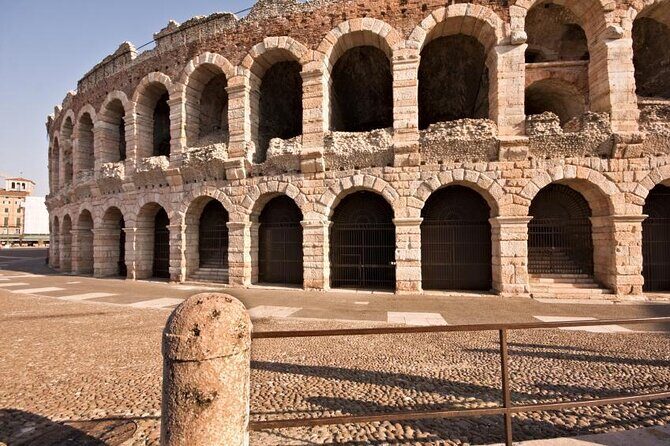
This walk starts at Farmacia Internazionale on Piazza Bra, right in the city core. Expect stops at the Roman-amphitheatre area, a grand plaza packed with architecture from different eras, and a square tied to Dante and the ruling families—plus a stop connected to the Romeo and Juliet balcony legend. It’s offered in English, and it runs outdoors, so good weather really helps.
Key highlights in plain terms
- Piazza Bra first: you get bearings fast in Verona’s main square.
- Amphitheatre views without stress: you see what makes this city famous, without spending hours in lines.
- Piazza delle Erbe’s layered architecture: you’ll spot how eras stack on one another.
- Dante’s Square and the lords’ graves: a darker, more political side of the city.
- Romeo and Juliet balcony stop: a legend stop that adds context, not just a photo.
You can also read our reviews of more walking tours in Venice

Piazza Bra: your Verona orientation in the city’s main square
You start at Farmacia Internazionale on Piazza Bra, and that choice tells you what this tour is trying to do: give you context early. Piazza Bra is the heart of central Verona, so it’s a strong launch point when you’re trying to understand how everything connects.
From here, your guide points out the amphitheatre area—often described as Italy’s largest Roman arena. Even without paying for an indoor visit, you’ll get the scale and setting. Stand where the guide directs you, and you’ll understand why Verona became a must-see city for Roman architecture fans and theater lovers alike. It’s one of those places where the city feels “built around” the monument.
The other bonus at Piazza Bra is atmosphere. You’re walking through a living public space, not a sealed-off attraction zone. That matters, because Verona’s charm is in its streets and squares—so getting the hang of that from minute one pays off for the rest of your trip.
The amphitheatre story and what you don’t get (and why that’s okay)
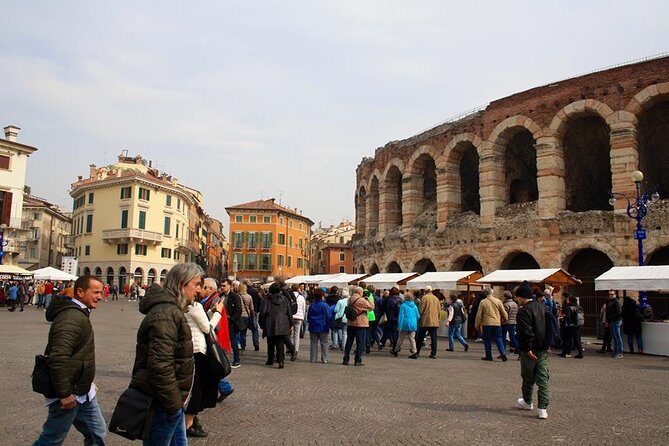
Here’s the practical reality: this is a walking tour with free admission noted for stops, and it’s designed for sightseeing from public viewpoints. That means you should not assume you’ll go inside the arena or access ticket-only areas unless your guide specifically guides you to a place where entry is included (that isn’t stated as part of the tour info you have).
So what you do get is still valuable. You learn what the amphitheatre means in Verona’s timeline and why it’s central to the city’s identity. When you later decide to book a separate arena visit, you’ll know what you’re looking at—and why it mattered historically.
If you’re the type who likes to do “one big paid attraction + good walking orientation,” this format fits nicely. If you were hoping for nonstop entrances and tickets during the full two hours, you might feel like you’re paying mainly for commentary and vantage points. For most first-timers, the tradeoff is worth it.
From Austrian Civic Guard roots to today’s Town Hall
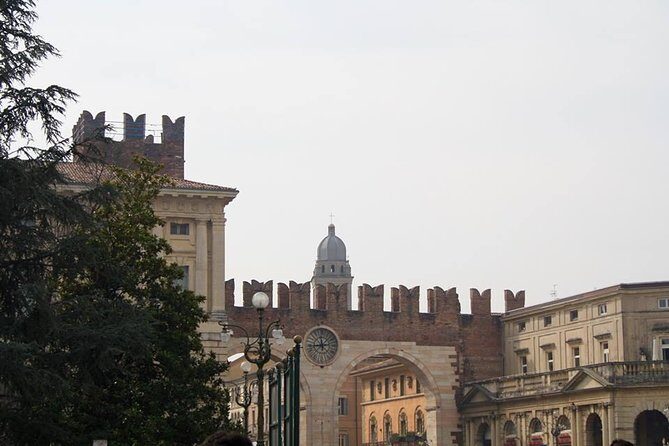
One of the stops near Piazza Bra highlights an ancient palace with a fascinating administrative storyline: it served as the headquarters of the Austrian Civic Guard and is used today as the Town Hall. That kind of continuity is exactly why guided walking tours work better than wandering with a map.
You’re not just seeing architecture. You’re learning how Verona’s power structures changed over time, and how that history left marks in the buildings around you. The guide’s job here is key—pointing out details that you’d otherwise miss if you were simply passing by.
This section is also a good reminder that Verona isn’t only about Romans and legends. The city went through later eras too, and the built environment reflects that. If you enjoy seeing the “why” behind architecture, this stop delivers.
Piazza delle Erbe: where eras collide in one square
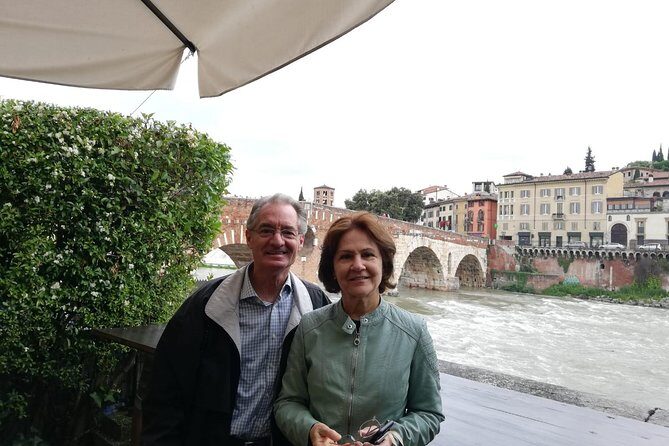
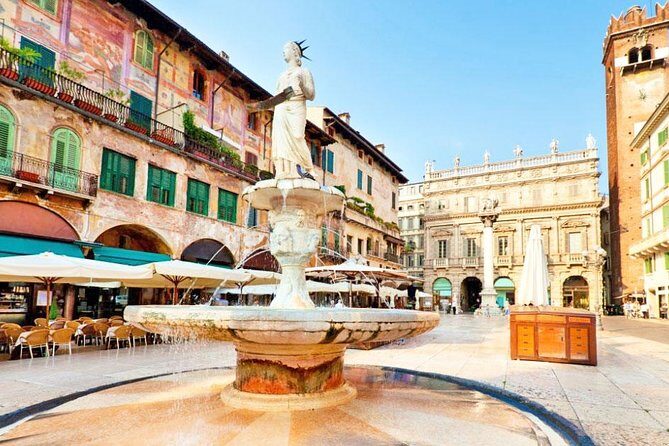
Next you head to Piazza delle Erbe, one of those plazas you can recognize instantly once you’re there. It’s famous for how it layers statues, palaces, and architectural elements from different periods, like a collage built over time. Your guide helps you read that collage instead of treating it as random scenery.
This stop lasts about 30 minutes, which is a nice chunk of time. It gives you room to slow down, look at facades, and listen while the square does its normal day-to-day thing. You’ll also get a feel for why this area is such a natural meeting spot in Verona—because it’s visually interesting even when you’re not searching for a specific monument.
The value here is that the guide turns visual chaos into a simple story. You start noticing which parts look older, which feel more formal, and how the square functions as a civic stage. That makes Piazza delle Erbe more than a photo stop. It becomes a reference point for understanding the city.
You can also read our reviews of more guided tours in Venice






Piazza dei Signori (Dante’s Square): graves, power, and consequence
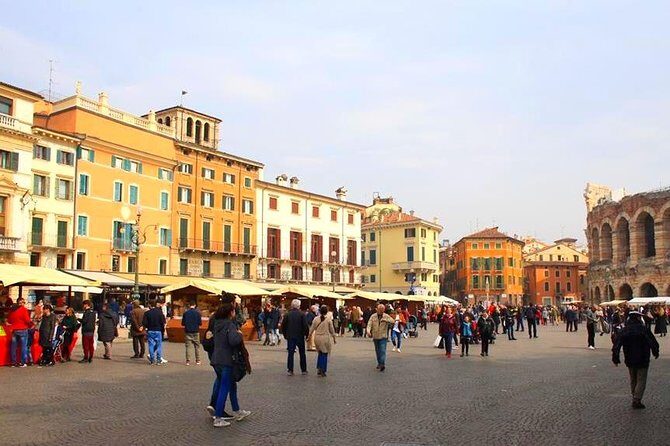
Then comes Piazza dei Signori, also known as Dante’s Square. The nickname matters, because it signals that this isn’t only a pretty backdrop—it’s tied to literary and civic identity in Verona’s story.
Your guide brings you to the area of the graves of the Lords of Verona. That turns the tone a notch darker and more human. It’s easy to forget that famous cities are made from people and politics, not just postcards. This stop nudges you toward the “who ruled here” question, and it adds weight to the walk.
The lesson you’ll carry after this square is that Verona’s major sites often connect back to governance and social life. The squares aren’t neutral. They’re stages where authority showed itself—then faded, leaving behind buildings and names.
The Romeo and Juliet balcony stop: legend with context
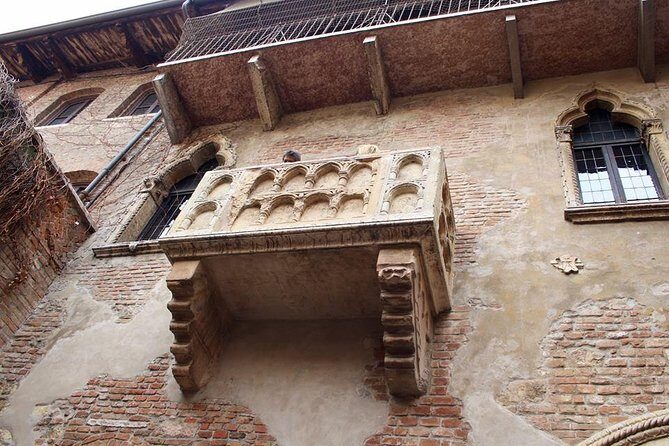
One of the highlights promised for this tour is a visit to the balcony that inspired the Romeo and Juliet story. Even if you’ve seen the legend in books or on screen, the local framing is what makes the stop click.
A good guide does two things with this kind of stop. First, they explain why Verona became linked to the story. Second, they keep it from turning into a one-joke routine. The best versions of this tour use the balcony moment as a bridge: from myth to city identity, from story tourism back to real place history.
If you love literary connections, this is a satisfying payoff after walking through civic squares and Roman settings. If you’re not a Shakespeare fan, it can still be worth it because it helps you understand how tourism shaped what visitors notice in Verona today.
Pace, group size, and how to get your money’s worth
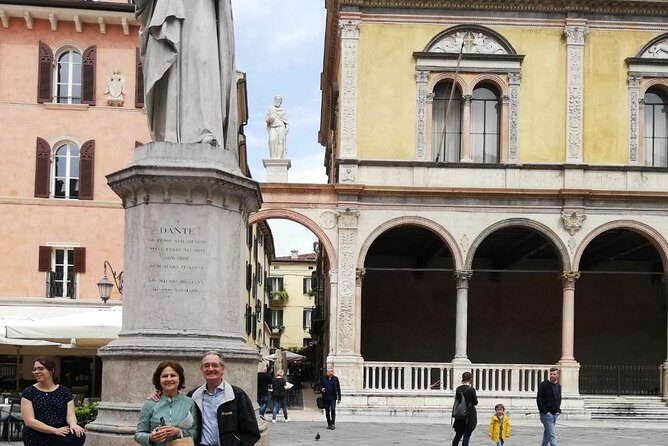
This tour caps at 10 travelers, which is a meaningful advantage. In a smaller group, the guide can keep people moving without feeling frantic, and you’re more likely to get answers to questions instead of being processed like luggage.
The tour runs about two hours, so the pace is steady. It’s the kind of schedule that works well if you have limited time but still want more than a quick drive-by. You’ll cover multiple central zones efficiently, yet you’re still on foot long enough to feel like you’re actually inside the city.
That said, the effectiveness depends on the guide’s communication style. Some people feel the commentary is easy to follow and fun. Others have noted times when the explanation felt hard to hear or the walking got a little too quiet. If you know you need constant narration to stay engaged, you may want to arrive with that expectation: this is a guided walk, but it’s still walking, so there will be moments of silence while you move.
Price and what’s included for $43.54
At $43.54 per person, this is priced like a short, guided, city-center experience. You’re getting a local guide, a professional guide, and pickup and drop-off from designated meeting points, plus an outdoor walking format. You’re also getting a mobile ticket, which is handy if you hate hunting for print-outs.
The big value point is simplicity. Instead of spending your first afternoon figuring out what’s close to what, you follow a pre-planned path built around major squares. In two hours, that saves time and mental effort—especially if you’re new to Verona.
What’s not included is also important. There’s no food or drinks and no lunch. So if you come hungry, you’ll need to plan a snack or dinner stop afterward. The tour also lists admission as free for the stops, which lines up with the idea that this is about seeing and listening, not paying for multiple venue entries.
Meeting point reality: where to start and what can trip you up
You meet at Farmacia Internazionale on Piazza Bra, 28, 37121 Verona VR, Italy, and the tour ends back at the same meeting point. That round-trip setup is convenient. It reduces the risk of ending up lost across town while you’re trying to catch your bearings.
One practical note from how the tour runs: the guide can be a little tricky to spot at the start. If you’re arriving right at the start time, give yourself an extra few minutes to scan for a clearly marked person holding something visible. Once you find the group, everything moves smoothly.
Also, the meeting point is near public transportation. That matters if you’re mixing this tour with museum time or a different neighborhood later.
Weather and comfort: the small stuff that affects the big picture
This is an outdoor walking tour, and it requires good weather. That doesn’t mean you should cancel your day plans for a sunny forecast. It just means you’ll want to check the weather the morning of, and bring something sensible for walking.
Comfort basics matter here:
- Wear shoes you can stand in for a couple of hours.
- Bring water if you tend to get thirsty on foot.
- If you’re sensitive to loud city noise, realize you’ll be outdoors near a busy central area.
Because the group size is limited, you might also notice how the guide manages spacing. If you don’t like tight bunching, you’ll likely be comfortable with this scale—but you’ll still be moving through public spaces with normal pedestrian flow.
Who should book this Verona walking tour?
Book it if you want your first Verona visit to feel organized but not stiff. This tour is ideal when you care about city context: how Roman Verona fits next to later eras, how squares function as civic stages, and why the Romeo and Juliet connection became part of the city’s modern identity.
It’s also a good fit if you like architecture and storytelling in equal measure. The route focuses on major piazzas and the kinds of details most people miss when they travel solo.
Consider a different plan if you’re expecting a ticket-heavy checklist. This one leans toward public-area viewing and guided explanation. You’ll likely get more from it if you’re open to learning the city’s structure first, then choosing any paid attractions later.
Families can join too, as long as children are accompanied by an adult. Service animals are allowed, and most travelers should be able to participate as it’s a standard walking format in central areas.
Should you book it?
Yes, I’d book it for a first or second visit to Verona—especially if you like learning while you walk. The price makes sense when you factor in the guide-led structure, small group size, and time-saving route through the core squares.
I’d be a bit cautious only if your ideal tour is nonstop venue entry. This is about getting your bearings in a short window and leaving with a clearer sense of what matters in Verona—Piazza Bra, Piazza delle Erbe, Dante’s Square, and the Romeo and Juliet balcony legend—all stitched together by a guide who can point out what to notice.
FAQ
How long is the Verona city sightseeing walking tour?
It’s about 2 hours.
Is the tour in English?
Yes, it’s offered in English.
Where does the tour start and end?
It starts at Farmacia Internazionale, Piazza Bra, 28, 37121 Verona VR, Italy, and ends back at the same meeting point.
Is food included?
No. Food and drinks, including lunch, are not included.
What group size is this tour?
It has a maximum of 10 travelers.
Can I cancel for free?
Yes. Free cancellation is available up to 24 hours in advance for a full refund.