REVIEW · VENICE
Welcome! Venice Sightseeing kickstart Tour with local guide, small group
Book on Viator →Operated by Lucia Venice Walks & Tours · Bookable on Viator
Venice makes more sense on foot. This small-group walk with local guide Lucia traces Rialto to Piazza San Marco in about two hours, using street stories, photo moments, and practical answers to big Venice questions. It’s designed to help your eyes and brain line up with the city’s layout fast.
I especially like how Lucia explains what you’re seeing in plain terms, from the medieval role of Rialto to why Venice has the feel it does today. I also love the built-in pacing: photo stops along the Grand Canal and the Rialto bridge, then quieter lanes that help you escape the crush just long enough to notice details.
One possible drawback: a lot of the famous sights at San Marco are viewed from the outside only, so if you’re chasing interior tickets and long museum time, you’ll need a separate plan.
In This Review
- Key highlights worth your time
- From Rialto to San Marco: the smartest 2 hours in Venice
- Meet at Campo San Polo and learn how Venice is organized
- Carampane’s past: the red-light area and the street-name clue
- San Polo and Rialto: how trade shaped the city you see today
- Grand Canal picture time: history in the angles
- Ponte di Rialto from a hidden corner: why it looks the way it does
- The quieter side of San Marco: Scala Contarini del Bovolo and family pride
- Dorsoduro views and the black plague story across the water
- Piazza San Marco outside: what to notice in 20 minutes
- Price and what $81.28 buys you
- Practical expectations: walking, group size, and weather
- Should you book this Rialto-and-San-Marco walk?
- FAQ
- How long is the Venice Sightseeing kickstart Tour?
- What does the tour cost?
- Where does the tour start and end?
- How large is the group?
- Is there a mobile ticket?
- What fitness level do I need?
- Does the tour run in any weather?
- Is there an access fee on some days?
- Can I get a refund if I cancel?
Key highlights worth your time
- Rialto orientation fast: you start in the medieval heart and learn how to read the area
- Real Venice stories: from Carampane’s past to market-life details around Mercati di Rialto
- Guided photo viewpoints: Grand Canal and Ponte di Rialto stops are picked for angles
- San Marco without the overwhelm: the square’s monuments explained from outside
- Small group limit (max 10): enough time for questions without feeling rushed
From Rialto to San Marco: the smartest 2 hours in Venice
If you want to fall for Venice quickly, I like tours that turn confusion into clarity. This one starts you in the historical Rialto area and steadily moves toward Piazza San Marco, so you’re not just ticking off landmarks—you’re learning how the city “works.” It’s a compact route, but it covers the themes that shape Venice: water, trade, politics, and the little everyday details that tourists miss.
The small-group size matters. When you’re with up to 10 people, the guide can actually respond to questions, not just read a script. You also get the chance to slow down at the right places—especially around Rialto, where the streets, campi (squares), and bridges can feel like a maze on day one.
And the timing is friendly. At about two hours, you can still do other plans afterward—boat rides, a gondola later, or simply wandering without feeling lost. For many first-timers, this is the kind of foundation that makes the rest of the trip feel easier.
You can also read our reviews of more guided tours in Venice


Meet at Campo San Polo and learn how Venice is organized
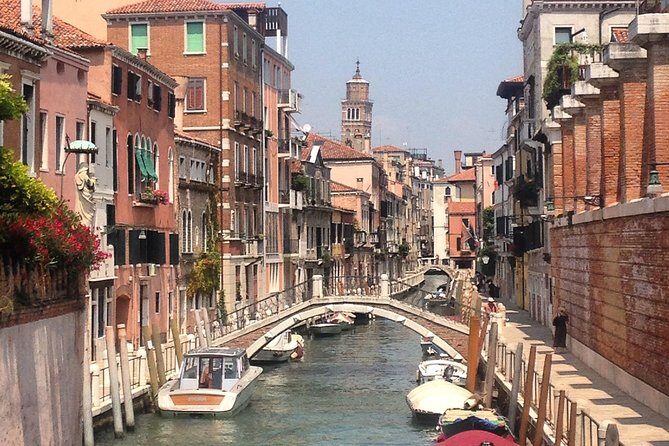
The walk begins at Campo San Polo (Campo San Polo, 30125 Venezia VE). That’s a great choice because Campo San Polo is not just a dot on a map—it’s a real neighborhood square where you can feel how Venice’s sections connect.
A key moment early on is meeting your guide at the well in the middle of the campo. From there, you get the fundamentals that make the city stop feeling random: how Venice is subdivided, where the water supply fits into the picture, and the rules Venice locals expect you to follow to respect the city. It’s practical information, not theory, and it helps you move more confidently as the route threads into tighter lanes.
Then you start easing into the emotional side of Venice too. The guide connects places to meanings—why a bridge or a street name matters, how market activity shaped life, and how “big history” shows up in stone details you can point at with your own eyes.
Carampane’s past: the red-light area and the street-name clue
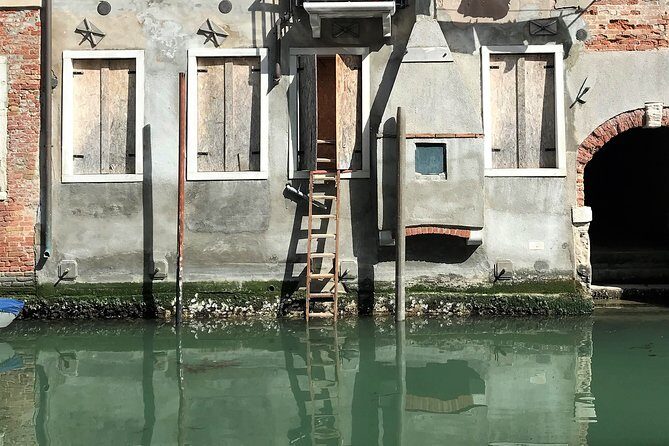
One of the more surprising stops is Rio Terà de le Carampane. This is where you’ll hear about an older Venice that doesn’t get much airtime: during the Serenissima Republic, the area functioned as a red light district. Learning that history changes the way you look at the streets, even if the architecture you see now feels neutral at first.
You’ll also get to pay attention to the “nizioleti” street names—those little street label details that sound minor until a guide explains why they’re there. That’s the kind of storytelling that makes a walking tour worth paying for. Instead of just hearing facts, you learn how to notice things.
The time here is short, but it’s one of those stops that sticks. It gives you context, and context is what makes later parts of Venice feel less like sightseeing and more like understanding.
San Polo and Rialto: how trade shaped the city you see today
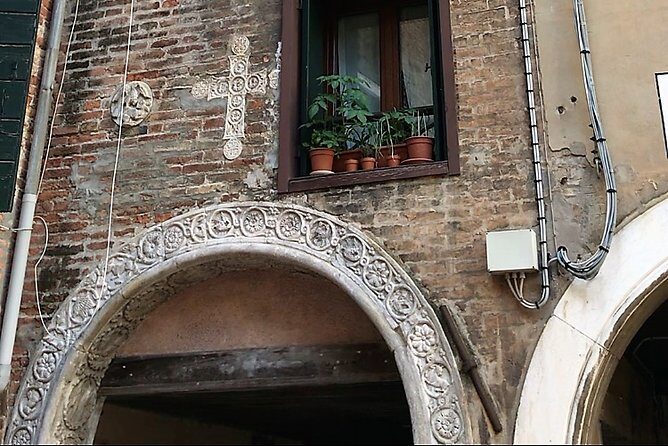
From there, the walk flows through San Polo and into the Rialto zone—an area historians have compared to the Wall Street of Europe in the Middle Ages. That framing isn’t just for drama. It helps you understand why Rialto became such a powerful anchor: commerce, measurement, and organized activity shaped the daily rhythms of the city.
At Mercati di Rialto, you shift from “big idea” history to market-life detail. You’ll see how the market area works and get a look at the ancient system of measurement used for fish. That’s one of those niche topics that sounds oddly specific until you realize it explains a whole culture of trade—how people ran business with standards, not guesses.
You’ll also hear a modern concern tied to the market: the market area is dealing with the low number of Venetians still living on the islands. That’s important context for anyone trying to understand what Venice is becoming, not just what it used to be.
This stop is also a good moment to observe crowds. Even though the tour is designed to take you away from the busiest areas at times, Rialto can still be intense. The guide’s job is to help you look past the surge of bodies so you keep learning instead of just navigating.
Grand Canal picture time: history in the angles
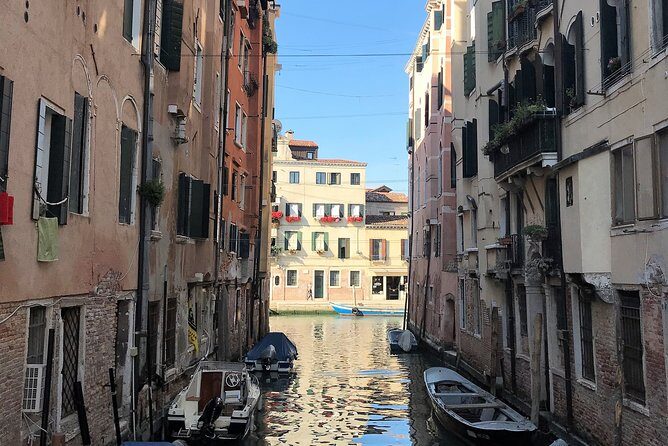
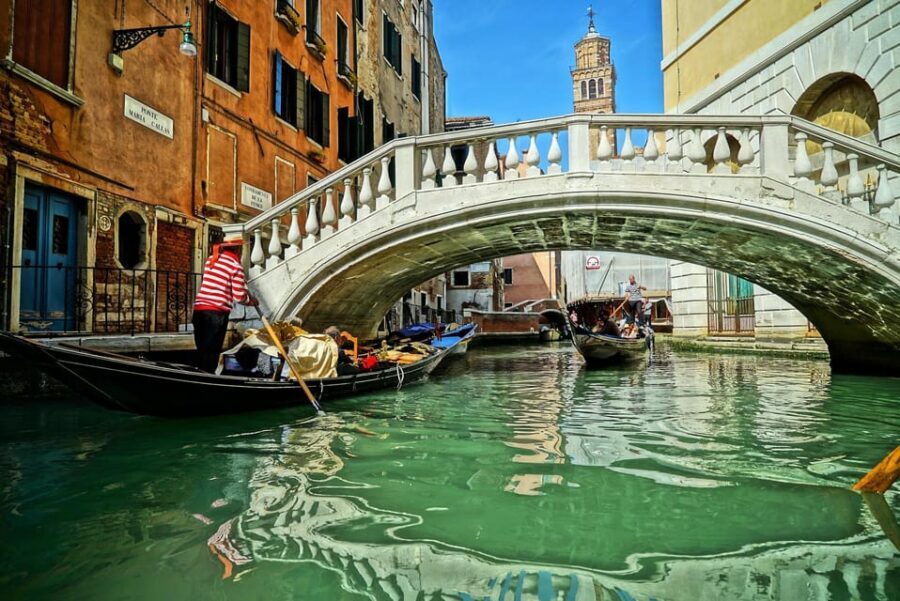
At the Grand Canal photo stop, you get a chance to frame Venice’s most famous waterway the right way. This is one of the “take the photo, then listen” moments. You’ll learn the canal’s history and pick up details you might otherwise miss while you’re busy trying to get a perfect shot.
The Grand Canal is also a useful mental marker. When you understand how it cuts through the city, the rest of your day gets easier. You start to recognize which direction you’re facing, where bridges connect, and why some views feel open while others feel like a corridor.
Here’s my practical take: even if you already planned to visit the Grand Canal on your own, this kind of guided viewpoint saves time. It helps you pick what to prioritize and how to look, which is half the battle in a place as visually busy as Venice.


Ponte di Rialto from a hidden corner: why it looks the way it does

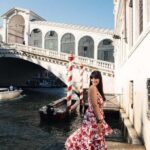
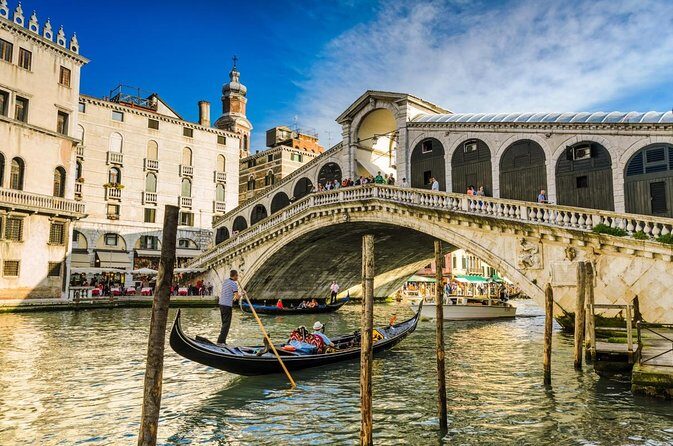
Then you reach the Ponte di Rialto view from a hidden corner. Instead of the obvious camera spot, you get a vantage that reveals secrets about the bridge itself. The guide explains why it was built, when it dates to, where the name comes from, and what makes the decorations worth noticing.
This is one of the tour’s strongest “story + sight” pairings. A bridge can look beautiful without being meaningful. Here, you’re given the why, so your photos feel more informed. You also get a better sense of how the bridge relates to the surrounding lanes and market area.
If you’re the type who likes architecture that has purpose—trade needs, city planning, and status—this stop will land with you. It’s also a solid break for photos before the walk pushes you toward the open sky of San Marco.
The quieter side of San Marco: Scala Contarini del Bovolo and family pride
When the route turns toward San Marco, it doesn’t go straight to the most obvious spot. You’ll see a hidden jewel depending on the day, with one example being scala Contarini del Bovolo. You’ll hear where the name comes from, why the family built it, and why it’s tucked away.
This matters because San Marco can feel like a wall of crowds and grandeur. Learning about a tucked-away staircase gives you a different Venice flavor: the private side of the city’s power and wealth. It also trains your eyes to spot what’s right in front of you but easy to overlook.
Even if you’re not obsessed with stairs (you don’t have to be), the point is the same. Venice rewards attention to small details. A guide helps you build that habit quickly.
Dorsoduro views and the black plague story across the water
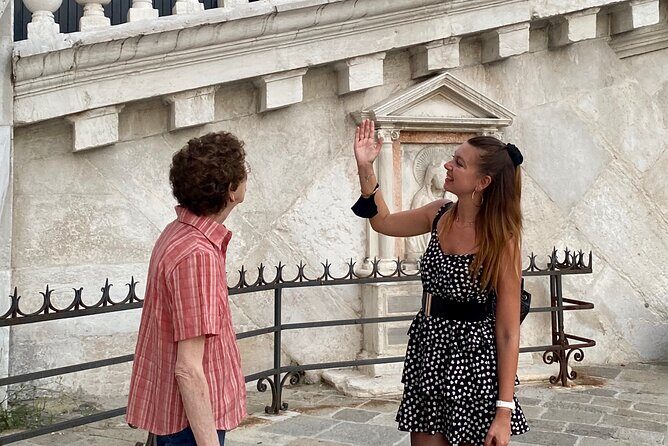
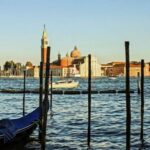
Next you get another Grand Canal moment, this time linked with a view of La Salute Church in Dorsoduro. From there, the guide shares the real story of the black plague—presented in a way that connects place to the people who lived through it.
This stop gives you that “other side of Venice” feeling. You’re not just looking at the famous skyline; you’re seeing how the city’s districts face each other across water, and how major events and religious landmarks shaped the urban picture.
It’s also a smart contrast to Rialto. Rialto is commerce and street logic. Dorsoduro is art-adjacent mood and a different kind of architecture. The tour uses the canal to show you that shift without adding extra transportation or complexity.
Piazza San Marco outside: what to notice in 20 minutes
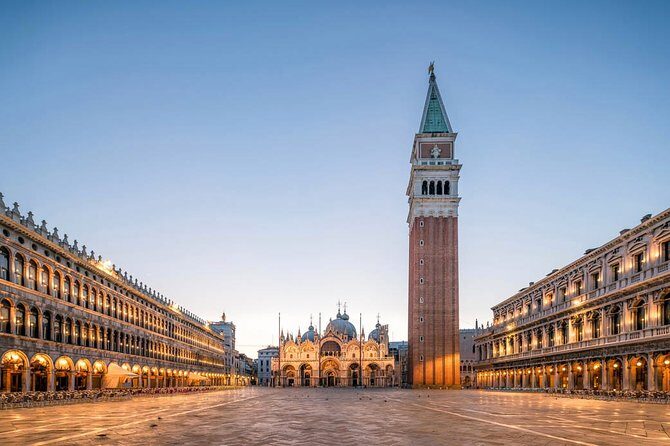
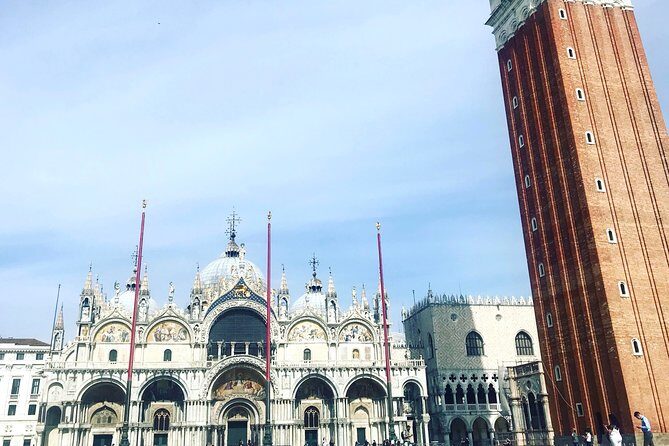
The walk finishes in Piazza San Marco (ending at Piazza San Marco, 30124 Venezia VE). The tour explores the square’s major monuments from outside, with the guide calling out details on Doge’s Palace, San Marco Basilica, the Bridge of Sighs, the Bell Tower, and the Procuratie.
You’ll also notice the clock tower and other landmarks, plus columns with unique decorations. The guide includes secrets and legends tied to what you see—only outside, so you’re not spending the entire time stuck in lines or on interior ticket schedules.
For me, the best part is the wrap-up: the guide gives directions for how to continue your visit. That’s a big deal in Venice. After two hours, you usually want a plan for what to do next, not just more wandering.
If you like to understand what a place means, this ending is a good fit. You leave San Marco with a list of features you can actually point to and explain back later.
Price and what $81.28 buys you
The price is $81.28 per person for about two hours, and the value is mostly about guide time and clarity. You’re paying for more than a walk: you’re paying for context, story structure, and photo viewpoints that save you guesswork.
You also get a mobile ticket, which is convenient when you’re already juggling phone maps in a city that doesn’t forgive wrong turns. Photo stops are included, plus tips and suggestions for your stay in Venice, which is where a lot of value quietly hides.
What you should weigh is your own travel style. If you mainly want to enter museums, skip exterior-only stops, and spend time indoors, this tour may feel too light on ticketed sights. If you want to get your bearings fast and understand Venice through street-level details, it’s a strong use of time.
One more smart planning note: this experience tends to sell out well ahead, with an average booking window of 85 days. If Venice is a fixed date on your calendar, booking earlier is wise.
Practical expectations: walking, group size, and weather
This is a walking tour with a moderate physical fitness level recommended. In Venice, that usually means cobblestones and steady foot time, not a long sit-down experience. The good news is that it’s only about two hours, and the stops are structured so you’re not walking for the whole duration without breaks.
The group size max is 10 travelers, which makes it feel like a real small group rather than a parade. The guide can keep momentum without losing the thread, and you get more chances to ask questions when you run into something confusing.
Weather matters here. The experience requires good weather, and if it doesn’t happen, you’ll be offered a different date or a full refund. That’s important because outdoor walking in Venice can get uncomfortable fast in rain.
Finally, there’s a note about a possible €5 access fee on certain dates for many visitors staying outside Venice who are visiting for the day. If that applies to you, check the linked info so you’re not surprised when you arrive.
Should you book this Rialto-and-San-Marco walk?
Book it if:
- You want Venice orientation early in your trip, not after you’ve already wandered in circles
- You like story-driven guiding with answers to the big questions you have on day one
- You want strong photo viewpoints at Grand Canal and Ponte di Rialto without guessing where to stand
- You appreciate monuments that are explained even when you’re seeing them from the outside only
Consider skipping (or pairing with other plans) if:
- You’re strictly focused on interior tickets and long museum time
- You prefer fewer stops and more free time, rather than a guided route that leads you step by step
If you can match that style, I think this is a very solid first Venice experience—especially with Lucia steering you through Rialto’s trade legacy and ending in San Marco with a clear sense of what you’re looking at next.
FAQ
How long is the Venice Sightseeing kickstart Tour?
It runs for about 2 hours.
What does the tour cost?
The price is $81.28 per person.
Where does the tour start and end?
It starts at Campo San Polo, 30125 Venezia VE, Italy, and ends at Piazza San Marco, 30124 Venezia VE, Italy.
How large is the group?
The maximum group size is 10 travelers.
Is there a mobile ticket?
Yes, the tour uses a mobile ticket.
What fitness level do I need?
Travelers should have a moderate physical fitness level.
Does the tour run in any weather?
The experience requires good weather. If it’s canceled due to poor weather, you’ll be offered a different date or a full refund.
Is there an access fee on some days?
On certain dates, day visitors staying outside Venice may need to pay a €5 access fee. Check the linked official site for details and exemptions.
Can I get a refund if I cancel?
Yes. You can cancel for a full refund up to 24 hours in advance. If you cancel less than 24 hours before the start time, the amount paid is not refunded.