REVIEW · VERONA
Verona Highlights Walking Tour in Small-group
Book on Viator →Operated by Ways · Bookable on Viator
Verona in two hours is a useful sprint. You cover the city’s UNESCO-listed historic center at a laidback pace, moving from the Arena di Verona to Juliet’s House with a local guide who explains what you’re actually looking at.
I love the small-group feel (maximum 16) because it stays calm and interactive. I also love that there’s built-in time to ask questions, so you’re not just collecting photos—you’re understanding the place.
One consideration: some of the major stops are not ticketed inside the tour price, so you’ll likely need to budget for tickets sold separately at key sites. Also, not every stretch of the route is easy for reduced mobility, so it’s worth checking if you have limitations.
In This Review
- Key highlights worth planning around
- Verona at walking speed: Roman, medieval, and Shakespeare in one loop
- Starting at Piazza Bra: how the walk stays relaxed
- Castelvecchio and Ponte Scaligero: war scars and careful restoration
- Arch of Gavi and the Roman leftovers you’ll notice after
- Arena di Verona: standing before 2,000 years of stage power
- Juliet’s House (La Casa di Giulietta): the courtyard that started the myth
- Romeo’s house from the outside: the Montecchi family connection
- Piazza Bra, Piazza delle Erbe, Piazza dei Signori: squares that explain how power worked
- Arche Scaligere: the Scaligeri tomb arches and what to look for
- How the tour handles time: lots covered, not rushed
- Price and value: what $42.33 buys you (and what it doesn’t)
- Best guide fit: who this tour suits best
- Should you book the Verona Highlights Walking Tour?
- FAQ
- How long is the Verona Highlights Walking Tour?
- Where do I meet and where does the tour end?
- Is the tour offered in English?
- Is hotel pickup and drop-off included?
- Are tickets for the Arena and Juliet’s House included?
- Does the tour run in bad weather?
- What group size should I expect?
- Is Juliet’s Balcony access included year-round?
- Is the tour wheelchair or mobility-friendly?
Key highlights worth planning around
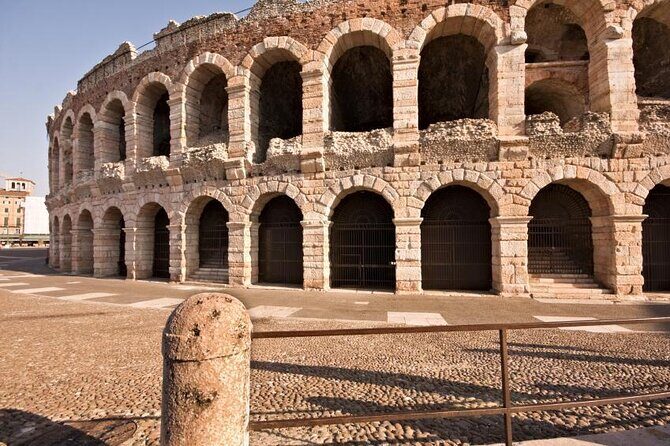
- Roman Arena, still in opera use: built in the 1st century AD and a working venue for the Verona Arena Festival
- Castelvecchio + Ponte Scaligero story: from WWII damage to a careful rebuild that matches the original design
- Scaligero cemeteries and arches: see the tomb arches for Cangrande I, Mastino II, and Cansignorio
- Three major squares in one loop: Piazza Bra, Piazza delle Erbe, and Piazza dei Signori, each with a different city role
- Shakespeare, without the museum vibe: Juliet’s courtyard inspiration plus Romeo’s medieval house seen from the outside
- English-speaking local guidance: the tour is offered in English with a maximum group size of 16
Verona at walking speed: Roman, medieval, and Shakespeare in one loop
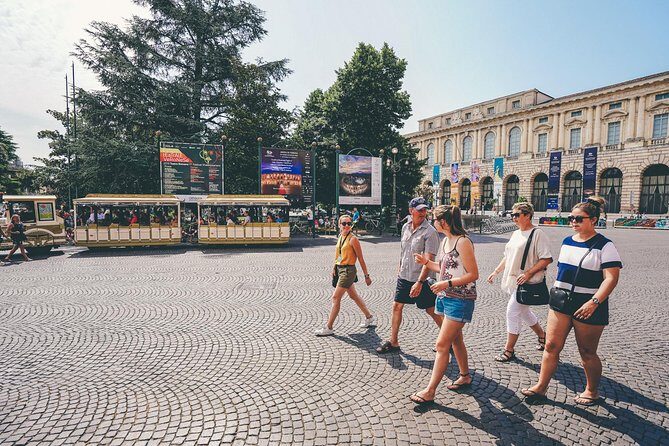
This is a practical way to get your bearings fast. In about two hours you’ll move through the kind of Verona that shows up in paintings, postcards, and opera programs—without feeling like you’re stuck in a lecture hall.
The big value is focus. Instead of wandering, you’ll follow a route that connects eras—Roman civic power, medieval rule, then the pop-culture afterglow of Romeo and Juliet.
And because the tour runs rain or shine, it’s built for real travel days. You don’t have to play calendar gymnastics just to see the highlights.
You can also read our reviews of more walking tours in Verona

Starting at Piazza Bra: how the walk stays relaxed

You meet in Piazza Bra and finish in the same place, which is convenient when you’re trying to keep plans simple. This square is the front porch of Verona—cafés nearby, lots of open space, and the feeling that the city is ready to perform.
From here, the pace works. You’re not sprinting between stops, but you also won’t feel stranded in the same spot long enough for “two-hour tour” to turn into “two-hour line waiting.”
Bring comfortable walking shoes. The route is mostly pedestrian, but you’ll be on city streets and stone surfaces for the full experience.
Castelvecchio and Ponte Scaligero: war scars and careful restoration
Your walk begins with the story of Castelvecchio, a medieval castle that ties Verona’s defensive past to what you see today. It’s the kind of stop that makes the city feel less like a theme park and more like a real place with layers.
Then you’ll pass the bridge that connects Castelvecchio to the Adige’s left bank—one that was almost destroyed in bombing and later fully rebuilt to look precisely like the original. That detail matters. It’s not just a dramatic backdrop; it’s proof that Verona preserves its look while repairing its history.
This is a good moment to ask questions. In a short walking tour, the best learning often comes when you ask something like, What changed here, and what stayed the same?
Arch of Gavi and the Roman leftovers you’ll notice after
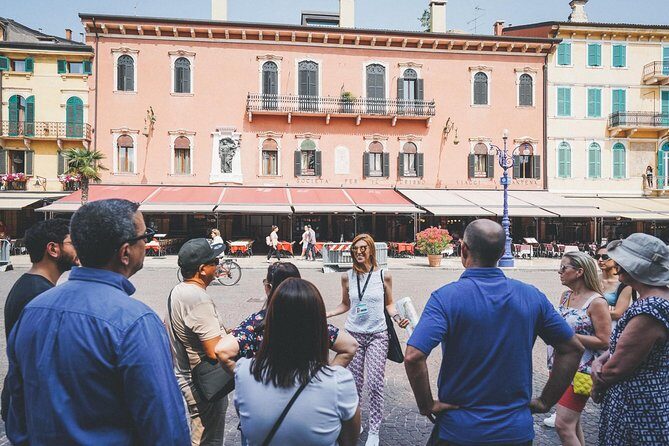
Next comes Roman Verona, and it’s not just about one building. You’ll see an elegant 1st-century AD construction associated with the Roman architect Vitruvio and the gens Gavia, an important local Roman family.
The arch also helps you understand how Roman power shaped where people traveled and lived. It’s a reminder that the city’s layout didn’t appear out of thin air—Verona’s older roads and monuments still guide your steps today.
If your guide points out Roman traces that sit in unexpected places along the route—like remnants visible through a store window—pay attention. Those small “how is this here?” moments are exactly what make the walk feel like insider navigation.
Arena di Verona: standing before 2,000 years of stage power
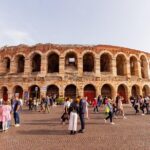
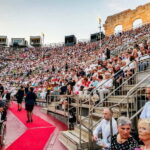
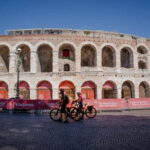
The Arena di Verona is the star for a reason. It was built in AD 30 during the Augustan period, and even today it remains a famous setting for opera season.
You’ll learn why it was so impressive in its time—up to 30,000 people once, and its survival is remarkable. The guide also connects the site to modern use, including the Verona Arena Festival, a summertime opera celebration that draws classical music lovers from around the world.
Here’s what I like most about this stop: it’s not only history. The Arena is a living venue, so you get two meanings at once—ancient engineering and current performance culture.
Practical note: the tour includes the stop, but admission isn’t included. Plan for separate tickets if you want to go inside.
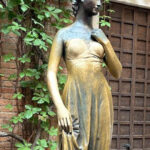
Juliet’s House (La Casa di Giulietta): the courtyard that started the myth
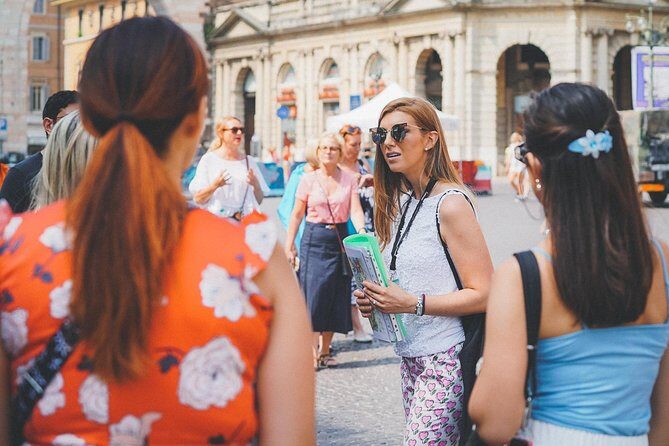
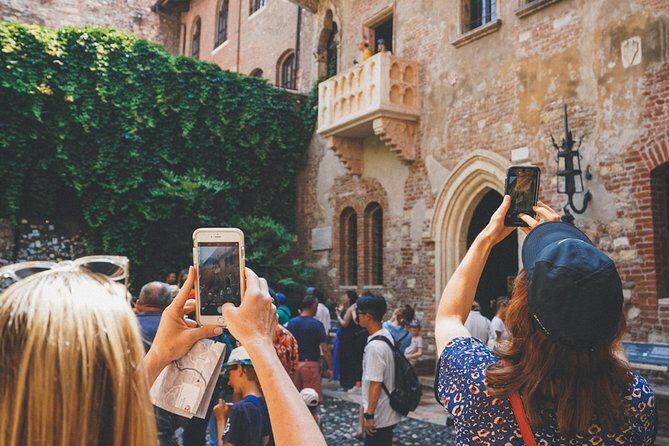
Then you move into the Shakespeare orbit with Juliet’s House. You’ll see the courtyard of the Capuleti’s house, the setting that inspired the Romeo and Juliet story as people know it.
This stop works even if you’re not obsessed with literature. The building and courtyard location help you understand why the myth stuck to Verona. It’s one thing to read about Juliet; it’s another to stand where the legend took on physical form.
One timing detail to watch: from December 6, 2025 to January 6, 2026, access to Juliet’s Balcony is not included as usual. During that period, the city administration requires a ticket for Balcony access. If you’re visiting in those dates, ask your guide how to handle it, since they won’t purchase the ticket for you.
Also, the tour doesn’t list admission as included for this stop, so budget for tickets if you want full access.
Romeo’s house from the outside: the Montecchi family connection
A little later you’ll pass Romeo’s house area, which is described as a medieval palace in the center of Verona. Up until the early 14th century it belonged to the Montecchi family, and the legends and literary tradition tie it to Romeo.
One honest detail here: the building is private and inhabited, so you can only see it from the outside. That can feel like a drawback if you’re expecting an indoor visit, but it also keeps the walk grounded. You’re seeing a real neighborhood, not a staged set.
Piazza Bra, Piazza delle Erbe, Piazza dei Signori: squares that explain how power worked
Verona’s squares aren’t just pretty. They help you decode the city’s politics.
Piazza Bra is the largest piazza in Verona and lines up nicely with cafés and restaurants. It’s a comfortable break in the walking flow, and it gives you a wide-angle view of the city’s scale.
Next is Piazza delle Erbe. This one used to be the Forum, the center of city life during Roman times. At the center you’ll find monuments reflecting the different rulers of Verona, including a fountain built during Scaligeri rule.
Finally, Piazza dei Signori shifts the mood. This was the former center of power, and Dante Alighieri’s large statue dominates the square since 1865—giving the place the nickname Piazza Dante. That statue presence makes the square feel like a living lecture about identity and authority.
These three stops in one tour are a big reason the timing works. In two hours you learn how public space changes as centuries change.
Arche Scaligere: the Scaligeri tomb arches and what to look for
You’ll also stop at the Arche Scaligere, the Scaligeri cemetery. It includes sarcophagi and three standout arches built for Cangrande I, Mastino II, and Cansignorio.
If you only see photos, the Gothic shapes can look “just decorative.” Up close, the purpose clicks: this is how rulers turned burial into public messaging. It’s the medieval version of leaving a legacy in stone that people can’t ignore.
This stop is short, but it’s a strong payoff. It adds emotional weight to the walk after the busyness of the squares.
How the tour handles time: lots covered, not rushed
A two-hour walking tour sounds like it could feel frantic. Here, the route is efficient, but the pacing seems designed to prevent that rushed feeling.
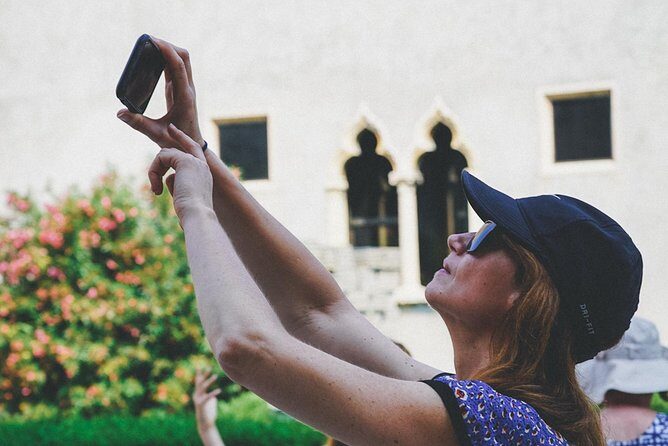
You’ll cover major landmarks across multiple periods, but the stops are spaced so you can actually look. You also get small moments for photos—especially around the Arena and Juliet’s courtyard.
And because the group is capped at 16, you’re less likely to get stuck behind a crowd. In practice, that means you spend more time facing the sights instead of negotiating walkways.
Price and value: what $42.33 buys you (and what it doesn’t)
The price is $42.33 per person for about two hours with a local guide in English, plus a mobile ticket. That’s fairly strong value if you’re using the tour for orientation and context.
What’s not included is important. Admission tickets are not included for key sites like the Arena and Juliet’s House, and the itinerary notes admission as ticketed-free for some squares (Piazza Bra area and the public plazas). Hotel pickup and drop-off aren’t included either, so you’ll rely on getting to Piazza Bra on your own.
So the smartest way to think about it is this: your money pays for the route, the historical explanations, and the smooth way the walk strings these landmarks together. If you only want outdoor views and you’re skipping paid entries, your spending will shift from “tour value” to “ticket strategy.”
Best guide fit: who this tour suits best
This is ideal if you want a first-timer overview that still feels personal. The small group size and question-friendly structure help a lot if you’re traveling with family or friends and want to keep everyone engaged.
It also suits you if you’re the type who likes legibility. The guide approach is built around helping you notice what matters—Roman engineering, medieval symbolism, and why the Shakespeare connection still draws people in.
If you’re visiting Verona for a short stay and you want the city’s big names without building a day from scratch, this is a clean solution.
If you have mobility concerns, check the route details and plan carefully. Some parts may not be easily accessible, so it’s worth asking before you commit.
Should you book the Verona Highlights Walking Tour?
Book it if you want a high-impact orientation walk that ties together Roman Verona, medieval power, and the Romeo and Juliet story in a single, manageable loop. The Arena stop alone gives you a strong anchor point, and the squares make the rest of the city easier to remember.
Skip it only if you’re mainly after inside-the-sites time with zero walking. Since admission for major attractions isn’t included, you’ll still need to handle tickets if you want to go farther than street-level viewing.
If your goal is to understand Verona fast—while still having time to explore afterward—this is a solid, practical choice. Start at Piazza Bra, end back at Piazza Bra, and leave with a mental map that actually makes sense.
FAQ
How long is the Verona Highlights Walking Tour?
It’s approximately 2 hours.
Where do I meet and where does the tour end?
You meet and end at Piazza Bra in Verona.
Is the tour offered in English?
Yes, the tour is offered in English.
Is hotel pickup and drop-off included?
No, hotel pickup and drop-off are not included.
Are tickets for the Arena and Juliet’s House included?
Admission tickets are not included for the Arena and Casa di Giulietta, so you should plan for separate ticket costs.
Does the tour run in bad weather?
Yes, it runs rain or shine.
What group size should I expect?
The tour has a maximum of 16 travelers, and it’s guaranteed with a minimum number of 2 participants.
Is Juliet’s Balcony access included year-round?
No. From December 6, 2025 to January 6, 2026, access to Juliet’s Balcony is not included as usual and requires purchasing a ticket.
Is the tour wheelchair or mobility-friendly?
Some parts of the tour may not be easily accessible for people with reduced mobility or disability. If you’re unsure, you should contact the provider for details.