REVIEW · PADUA
Live Padua as a local
Book on Viator →Operated by Lovivo Tour Experience · Bookable on Viator
Padua comes alive on foot. This 3–4 hour walk strings together big sights and everyday local life, so you get oriented fast and know what’s worth a second look. I love the local pacing and the included stop for Caffè Pedrocchi.
You’ll be in a small group (up to 8), which keeps the conversation going instead of turning into a lecture. I also like that the route moves from monumental Padua to food-and-market Padua, including the covered stalls of Sotto il Salone.
One thing to plan for: the tour asks for good weather, and you’ll still be walking between sites outdoors. If rain hits hard, you’ll rely on the covered stretches more than usual.
In This Review
- Key points worth knowing before you go
- Why this Padua walking tour feels like a local morning
- Prato della Valle: the 78-statue square that sets the tone
- Basilica of Saint Anthony (Il Santo): pilgrimage, mixed styles, and focus time
- Quartiere dell’Antico Ghetto Ebraico: history in narrow streets
- Sotto il Salone in Palazzo della Ragione: where Padua shops like a local
- Piazza delle Erbe: the big historic market square in the middle of everything
- Piazza della Frutta: another market square, same central pull
- Palazzo Bo: University of Padua roots and a quick look at a major scientific site
- Pedrocchi Café: mint coffee, the café that stayed open, and the final taste
- Getting your timing right: 3–4 hours that actually work
- How the small group size changes the experience
- Price and included value: what you’re really paying for
- Where you start and finish (and why that helps)
- Who should book this tour, and who might prefer something else
- Should you book Live Padua as a local?
- FAQ
- FAQ
- How long is the Live Padua as a local tour?
- What language is the tour offered in?
- What’s included in the tasting?
- Is admission to Palazzo Bo included?
- How many people are in the group?
- What happens if the weather is bad or I need to cancel?
Key points worth knowing before you go
- Up to 8 people for a more personal walk and easier questions
- Seven classic Padua stops in about 3–4 hours, with smart time at each
- Market time at Sotto il Salone in Palazzo della Ragione for real Paduan food culture
- Pedrocchi Café tasting of the famous mint coffee, made with Arabica espresso and mint syrup
- University connections at Palazzo Bo (ticket not included) tied to Padua’s long academic story
- Local guides by name are often praised, including Chiara, Martina, and Camilla
Why this Padua walking tour feels like a local morning
This tour is built for people who want more than a photo list. You start in Padua’s historic core, then work outward through squares, churches, and market streets, with a local tour leader handling the flow. The pace is meant to help you understand the city in “chunks,” the way a resident would.
I also like that it’s not only monuments. You get a taste break tied to one of Padua’s most specific food rituals (Pedrocchi mint coffee), plus time in the covered market where you can practically smell the everyday routine.
At $84.10 per person for roughly half a day, it’s priced like a guided highlight package, not a DIY scavenger hunt. You’re paying for the local guide, the included tasting, and the organization—plus roundtrip transport to the departure point depending on the option you choose.
You can also read our reviews of more tours and experiences in Padua.



Prato della Valle: the 78-statue square that sets the tone
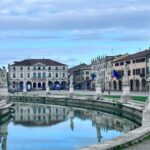
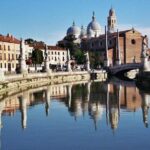
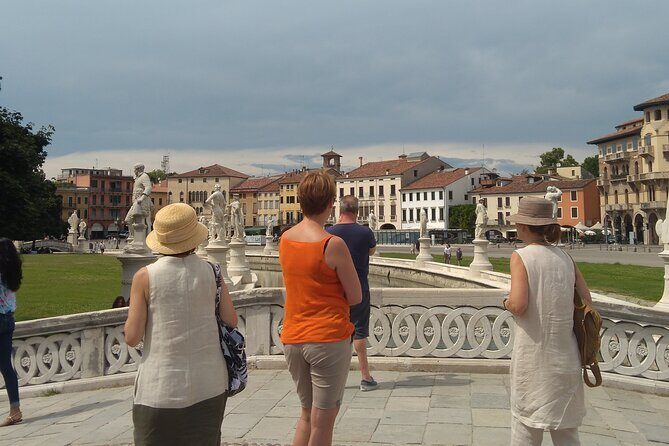
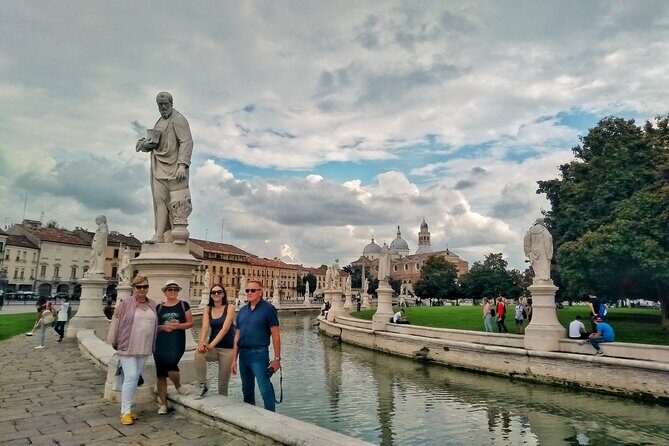
Your walk opens at Prato della Valle, one of Europe’s largest squares, and the biggest in Padua. It’s famous for its 78 statues, which is a fun way to “read” the city’s important figures at a glance.
This stop is short (about 15 minutes), and that’s on purpose. You’re not trying to memorize everything; you’re trying to get a mental map of where you are in Padua and how the city shapes its public spaces.
A practical tip: if you’re aiming for photos, take a minute early to find your angle before you move on. The square’s scale can make it easy to waste time later when you’re already behind schedule.
Basilica of Saint Anthony (Il Santo): pilgrimage, mixed styles, and focus time
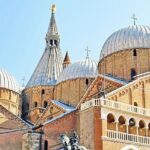
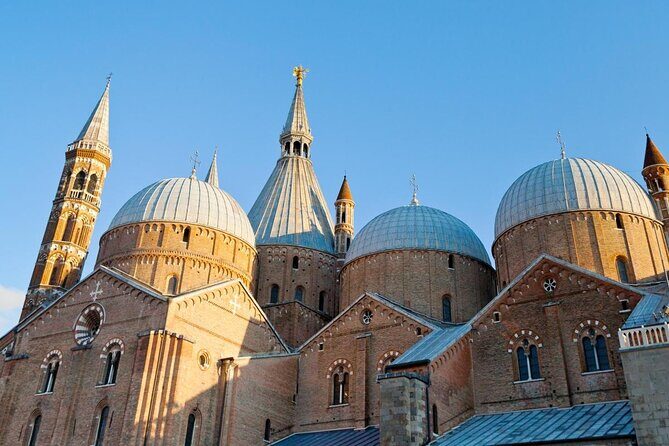
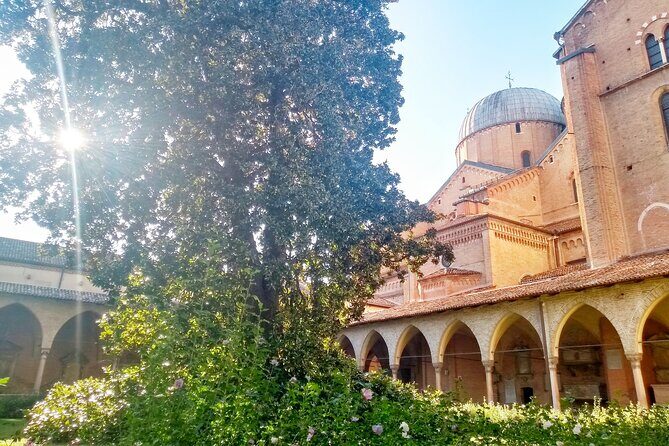
Next comes the Basilica of Sant’Antonio, known to many pilgrims simply as Il Santo. It draws millions of visitors each year, and it’s described as a mix of styles and cultures from around the world—so even in a limited visit, you get a sense of why it matters.
You’ll have about 20 minutes here, with admission free as part of the walk. That’s enough time to take in the atmosphere and understand what you’re looking at, especially with a guide pointing out what most first-time visitors miss.
One consideration: a church like this can feel busy. If you want the calm version, keep your eyes open for quieter corners as you move, rather than trying to pause at only the most obvious spots.
Quartiere dell’Antico Ghetto Ebraico: history in narrow streets
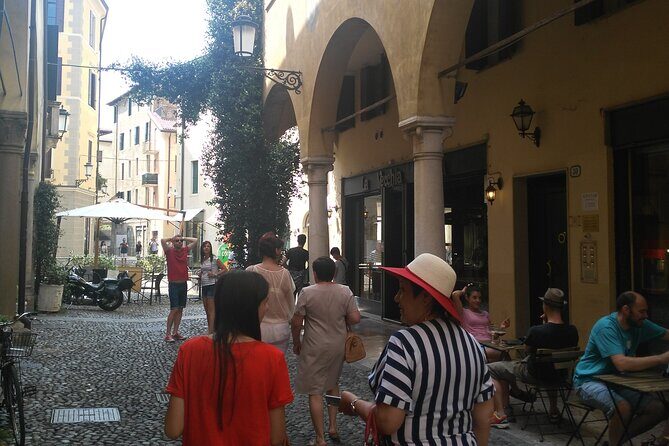
From the open feeling of a major square, the walk shifts into the labyrinth of the Jewish Ghetto area. It’s positioned south of Piazza delle Erbe, and it’s described as a tight network of narrow streets that shaped a distinct neighborhood over centuries.
You’ll spend around 10 minutes here. That’s brief, but it’s also long enough to understand the “layout idea” of the ghetto: streets that funnel you, corners that slow you down, and a sense of enclosure even today.
A key historical note that your guide will likely connect to what you see: the ghetto operated beginning in 1603 and was abolished in 1797, when Jews were declared free and equal under pressure of the French Revolution. It’s one of those moments where architecture and urban form become part of the story.
Sotto il Salone in Palazzo della Ragione: where Padua shops like a local
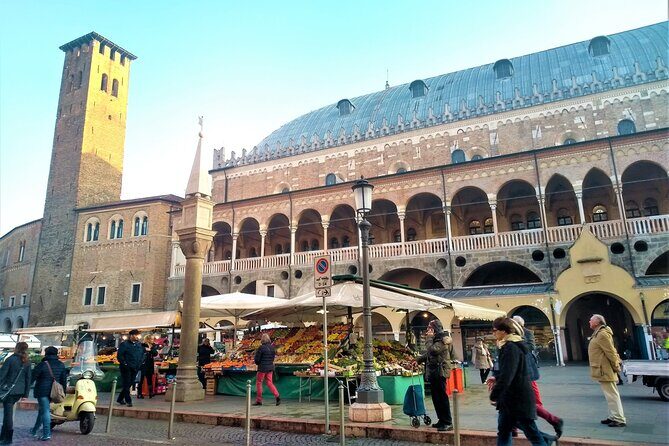
Now you get into the food-and-stall side of Padua at Sotto il Salone, the covered market inside Palazzo della Ragione. This is a great stop if you like travel that tastes like real life, not just real buildings.
You’ll have about 15 minutes at the market, and it’s set up with various specialty shops—think butchers, fishmongers, greengrocers, and sellers of oil, meat, cheeses, and more. Even without buying much, you can learn how locals talk to shops, what gets sold alongside what, and how the market’s rhythm keeps the city fed.
This is also a weather saver. With a covered market stop on the route, you’re less likely to lose the whole tour if it rains.


Piazza delle Erbe: the big historic market square in the middle of everything
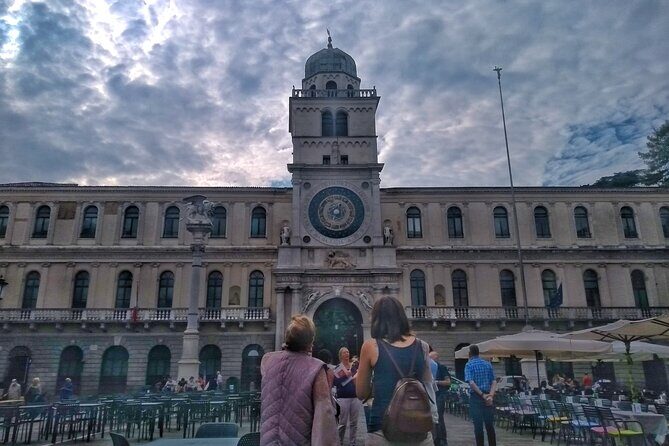
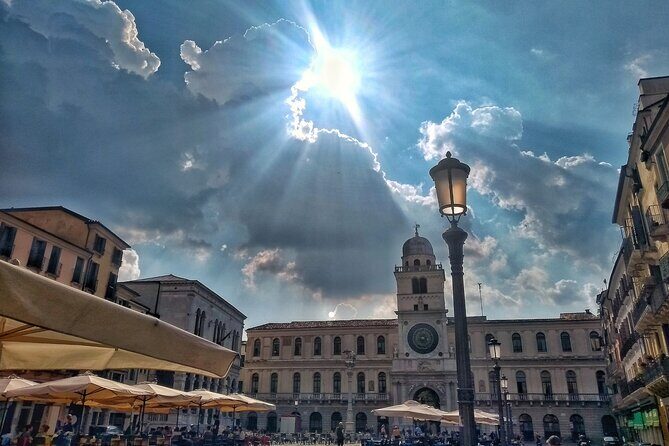
Then the walk opens into Piazza delle Erbe, one of Padua’s signature historic squares. The names alone hint at its changing role over time—once piazza delle Biade, piazza del Vino, and piazza della Giustizia—and it also served as the commercial center for centuries.
You’ll have about 10 minutes here. In that time, your guide can help you connect two big ideas: why markets happened in public squares, and how Palazzo della Ragione dominates the space.
If you’re wondering how to use this stop best, here’s my take: treat it as orientation. After the tour, you’ll know which corners are worth revisiting and which nearby streets are easiest to navigate on your own.
Piazza della Frutta: another market square, same central pull
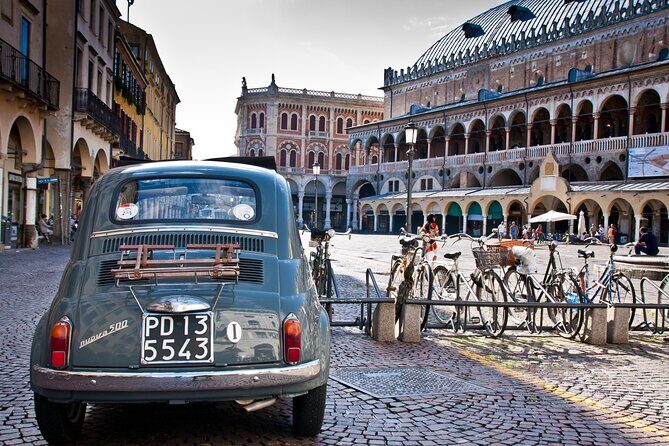
Right after Piazza delle Erbe, you’ll also visit Piazza della Frutta (about 10 minutes). It shares the same market-energy history—paired with Piazza delle Erbe for centuries as Padua’s commercial center—and it’s described as being dominated by the massive Palazzo della Ragione and the Torre degli Anziani.
This square is once also called Piazza del Peronio, and it’s one of those places where a “short stop” still makes sense. You’re learning the city’s grid of public life: two adjacent squares, both used for major markets.
If you’re visiting outside market hours, don’t expect a festival vibe. Instead, watch how the space is shaped for gathering and movement, and you’ll start to understand how locals use these plazas day to day.
Palazzo Bo: University of Padua roots and a quick look at a major scientific site
Next is Palazzo Bo, the seat of the University of Padua. It was founded in 1222 and still houses the Rectorate and the School of Law, so this isn’t just a pretty facade—it’s an operating institution.
Your time here is short (about 5 minutes), and admission is not included. That means you can enjoy the “why it matters” moment during the walk, then decide later if you want to pay for deeper entry.
Even in a quick stop, it helps to know what makes Palazzo Bo special: it’s described as the home of the oldest Anatomical Theater in the world. That fact alone gives you context for why Padua has such a strong reputation in learning and science.
Pedrocchi Café: mint coffee, the café that stayed open, and the final taste
The tour closes at Pedrocchi Café, via VIII Febbraio 15, and includes a tasting stop. Pedrocchi is famous as the café without doors, because it reportedly remained open day and night from its inauguration in 1831 until 1916.
You’ll spend about 15 minutes here. And unlike generic coffee stops, this one is built around a specific product: Caffè Pedrocchi, a mint coffee made from 100% Arabica espresso, an emulsion of fresh cream, mint in syrup, and a sprinkling of bitter cocoa.
This is one of the most “Padua-specific” moments on the route. You’re tasting a local signature that fits the city’s long-standing love of institutions, ritual, and fine details—not just caffeine.
If you’re sensitive to sweetness, consider sipping slowly and pacing yourself after a walk full of squares. The mint flavor and cream base can feel rich.
Getting your timing right: 3–4 hours that actually work
This experience is listed as about 3 to 4 hours. That’s long enough to cross major parts of the center, but short enough that you’re not wiped out for dinner plans.
Most tours like this fail when they cram too much. Here, the stops have small, fixed time windows—so you’re never standing around wondering what comes next. That also helps if your energy dips, because you’re not trapped in a long “one place only” wait.
Weather matters here. The tour requires good weather, but it’s still designed with covered spots like Sotto il Salone and the enclosed market area in mind. If rain shows up, keep your plan flexible and rely on your guide’s pacing.
How the small group size changes the experience
Maximum group size is 8 travelers, and that single detail changes the whole feel of the walk. With fewer people, it’s easier to ask questions about what you’re seeing—especially at places where first-time visitors often get lost, like the ghetto street pattern or when you’re trying to understand what makes Piazza delle Erbe different from the neighboring square.
You’ll also likely get better personalization on the questions that matter to you. The guide is described as a local tour leader, and guides such as Chiara and Martina have been praised for being friendly, patient, and good at handling questions at a pace that doesn’t feel sprint-like.
If you’re the type who likes to ask “why” more than “what,” this setup fits you.
Price and included value: what you’re really paying for
At $84.10 per person, the value comes from a bundle of things that are hard to DIY smoothly. You get:
- a guided walking tour with local tour leader accompaniment
- a typical Paduan tasting at Caffè Pedrocchi or at the Historical Market
- traditional Italian life with your guide
- roundtrip transport to the place of departure (depending on the option you select)
- insurance and technical organization by a certified travel agency
The “not included” piece matters too: Palazzo Bo admission is not included. That’s the only explicitly stated ticket gap in the tour information, and it’s easy to handle—you can see the exterior and key context on the walk, then pay only if you want the deeper interior experience.
If your goal is to see the highlights without spending your first day in Padua hunting for addresses and timing entry tickets, this is a sensible use of money. If you already know Padua well and just want a casual stroll, you might find it less necessary.
Where you start and finish (and why that helps)
Your start point is listed as 35123 Padua, Province of Padua, Italy. The experience ends at Pedrocchi Café, Via VIII Febbraio, 15, 35122 Padova PD, Italy.
Ending at Pedrocchi is a smart move. It puts you right near a classic historic café for an easy post-tour extension—an unplanned “one more thing” that doesn’t require extra transit.
Also, departure times are approximate, and the agency is set up to confirm your meeting or pick-up time in advance. You’ll need a valid contact (phone number with WhatsApp or email), which is worth setting up early so you’re not guessing on the day.
Who should book this tour, and who might prefer something else
This is a strong fit if you:
- want a guided overview of Padua’s top sights in a single half-day
- like market culture and food stops, not just churches and squares
- prefer small groups and a guide who can answer questions
It may not be your best choice if you:
- already plan to focus deeply on one site like Palazzo Bo and want a longer visit there
- need a super-indoor route, since the experience still depends on outdoor walking and weather
Language is English, and most travelers can participate. Service animals are allowed, and the start/end area is described as near public transportation.
Should you book Live Padua as a local?
Yes, if you want to get oriented quickly and still taste the city. The route balances big landmarks like Il Santo with market life at Sotto il Salone and the twin plaza system of Piazza delle Erbe and Piazza della Frutta. Then it caps with a very specific local signature: Caffè Pedrocchi.
I’d book it especially if Padua is a stop on a longer trip and you don’t have time for a slow, multi-day approach. It’s a focused introduction that helps you decide what to revisit later—without feeling like you rushed through Padua.
FAQ
FAQ
How long is the Live Padua as a local tour?
It runs about 3 to 4 hours.
What language is the tour offered in?
The tour is offered in English.
What’s included in the tasting?
A typical Paduan tasting is included at Caffè Pedrocchi or at the Historical Market (as offered in the tour).
Is admission to Palazzo Bo included?
No. Palazzo Bo admission is not included.
How many people are in the group?
The tour has a maximum of 8 travelers.
What happens if the weather is bad or I need to cancel?
The experience requires good weather. If it’s canceled due to poor weather, you’ll be offered a different date or a full refund. You can also cancel for a full refund up to 24 hours in advance.