REVIEW · VENICE
Off the Beaten Path Walk in Venice
Book on Viator →Operated by deTourist Venice Valerio Coppo · Bookable on Viator
Venice has quiet corners most miss. This 2-hour walk in Dorsoduro feels like getting a local map of the city’s lesser-visited streets: I love how it links Ca’ Foscari area architecture with real everyday squares, and how it ends with Squero San Trovaso gondola craftsmanship. One consideration: you’ll be walking a fair stretch on uneven cobblestones, so good shoes matter.
I like the pace here. With a maximum group size of 15, the licensed guide (Valerio Coppo) can keep things relaxed, answer questions, and adjust the route to your interests when possible. And if you’re visiting on a day Venice charges an access fee, budget for the potential €5 charge for some day visitors from outside the city.
In This Review
- What Makes This Off-the-Path Venice Walk Work
- Key Highlights You’ll Notice Right Away
- Entering the Dorsoduro Side of Venice (Campiello dei Squelini to Ca’ Foscari)
- San Pantalon: The Largest Ceiling Painting Moment (and a Modern Surprise)
- Campo Santa Margherita: The Nightlife Hub Side of Venice
- Campo San Barnaba: Indiana Jones and Katharine Hepburn at Canal Level
- Fondamenta Zattere: From Molino Stucky to a Long Promenade
- Squero San Trovaso: Gondola Craftsmanship at the Source
- Punta della Dogana: Customs-Building Art, Baroque Church, and the Fortune Goddess
- Price and Value: Is $92.92 Fair for Two Hours?
- Who This Tour Fits Best (and Who Might Skip It)
- Should You Book This Offbeat Venice Walk?
- FAQ
- How long is the Off the Beaten Path Walk in Venice?
- Where does the tour start and end?
- Is the tour in English, and do I need a paper ticket?
- Is pickup available?
- Are there admission fees for the sights on the walk?
- Is there an extra €5 Venice access fee?
What Makes This Off-the-Path Venice Walk Work
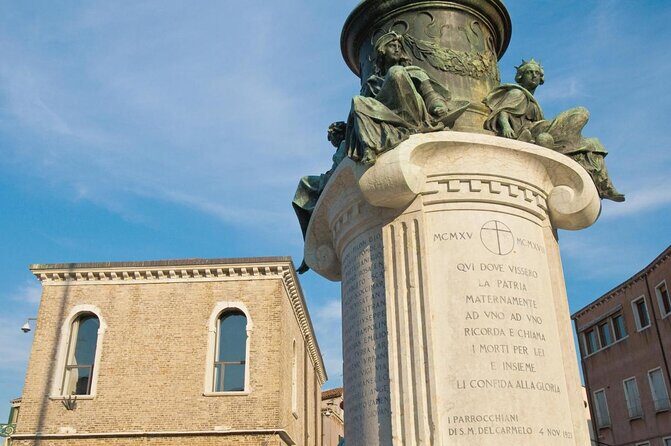
If your Venice plan is mostly lines and big-name sights, this tour is the “other Venice” you’re craving. Instead of racing from one landmark to the next, you take short stops in places that feel lived-in: campi (small squares), side canals, and church interiors you’d miss without someone pointing them out.
You’re also paying for context, not just walking. The guide connects what you’re seeing—Gothic facades, baroque churches, a famous ceiling painting, gondola boatbuilding—to how the city actually functions day to day.
Finally, it’s practical for a first or mid-trip day. The tour starts in Dorsoduro and finishes around Punta della Dogana, so you can roll into the rest of your afternoon or evening without feeling stuck at the start point.
Key Highlights You’ll Notice Right Away
- Small-group feel (max 15) keeps the pace calmer and the questions more natural
- Dorsoduro focus takes you into quieter Venice instead of the most overloaded tourist zones
- Ca’ Foscari Gothic details give you architecture you can actually read and understand on foot
- San Pantalon’s ceiling and the Banksy-related canal view mix art history with modern street culture
- Squero San Trovaso shows gondola-making craftsmanship in a working boatyard setting
- Punta della Dogana viewpoints cap the walk with landmark variety in one scenic corner
You can also read our reviews of more walking tours in Venice
Entering the Dorsoduro Side of Venice (Campiello dei Squelini to Ca’ Foscari)
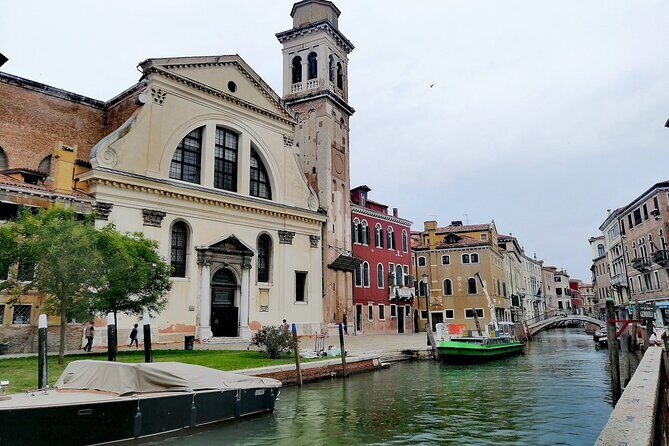
The tour begins at Campiello dei Squelini, near Ca’ Foscari, meeting the guide under the trees in that small, tucked-away square. I like this choice because it gets you into the rhythm of Venice quickly: short bridges, narrow lanes, and a neighborhood vibe that feels more local than postcard.
From the start, the focus is Dorsoduro—an area often known for students, art, and older, quieter streets. You’ll be walking through space where Venice’s daily life still shows up in the background: the kind of places where you’d slow down naturally even without a tour.
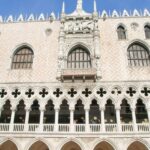
Stop-wise, you’ll spend time near Ca’ Foscari’s Gothic presence on the Grand Canal—its stonework and details are the kind that make you pause and look closer. The building is now tied to Venice University, so the setting carries a sense of learning and movement, not museum-stillness.
Why this matters for value: if you want to understand Venice beyond the main squares, this early connection to Ca’ Foscari helps you “read” the city’s architecture as you go.
Tip from how the route is structured: take out your camera early. The tour hits several photo-friendly corners in a row, and getting your bearings fast makes the rest of the walk more fun.
San Pantalon: The Largest Ceiling Painting Moment (and a Modern Surprise)
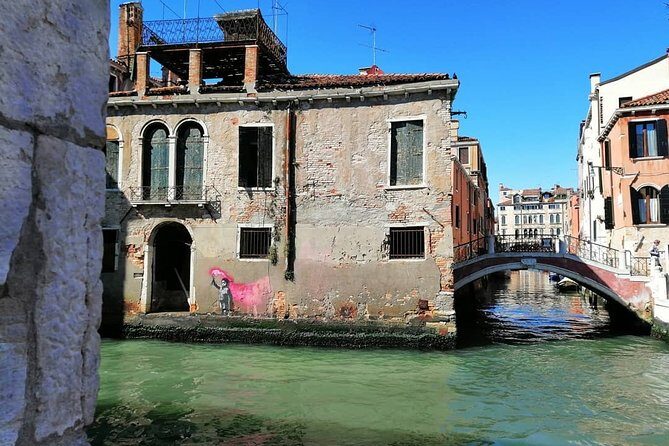
Next comes Campo San Pantalon, a stop that’s hard to appreciate without being guided to the right angle and moment. The church of San Pantalon is known for covering the ceiling with a massive canvas painting—complete enough that you feel like you’re looking at an artwork built for scale, not decoration.
Then there’s the modern twist: outside, you’ll spot Venice’s only Banksy graffito, and the guide points out a clever visual effect created by the canal water reflecting it. That’s exactly the kind of “you’d never notice this” detail that justifies hiring a guide, even when a stop is short.
This section is also a good example of why the tour avoids overload. Instead of five big-ticket attractions packed into an hour, you get one truly memorable visual and one unexpected modern reference, both delivered with enough explanation to stick.
Consideration: churches can mean quiet rules and slower movement. I’d plan to keep your voice low, move patiently, and take your time with the ceiling moment.
Campo Santa Margherita: The Nightlife Hub Side of Venice
Campo Santa Margherita is where the tour shifts from art-and-history pace to social-life pace. This square is known as a go-to gathering spot for cafés and bars, with outdoor seating and a crowd that tends to lean local and student.
Even if you’re not there at peak hours, the architecture around the open space and the square’s layout help you understand how Venice lives between tourist moments. Squares like this are where people meet first, then drift into nearby streets without a big itinerary.
What I like here is that it’s a reminder: Venice isn’t only “what to see,” it’s also “how people hang out.” A guide’s interpretation makes a simple square feel meaningful, especially when you compare it to the quieter campi you visited earlier.
Practical note: if you’re the kind of traveler who likes a break, this is a decent moment to pause, reset your feet, and then continue.
Campo San Barnaba: Indiana Jones and Katharine Hepburn at Canal Level
Campo San Barnaba is the tour’s movie-and-pop-culture beat, but it’s not just trivia. The square links real Venice details—its church setting and a canal view—with references that make you slow down and look at your surroundings.
The Indiana Jones connection (from The Last Crusade) gives you a recognizable frame for the space, and then Katharine Hepburn’s famous canal moment adds another layer. That combo works because you’re not hearing “facts,” you’re seeing the physical place those stories attach to.
The payoff is quiet. This is one of the spots where the energy stays calm, so you can actually take in the geometry of the canal, the way buildings face inward, and how a small square can still feel cinematic without being crowded.
What to watch for: the canal views here can be slightly tricky depending on where you stop. Let the guide guide your position—small changes in angle make these stops more impressive.


Fondamenta Zattere: From Molino Stucky to a Long Promenade
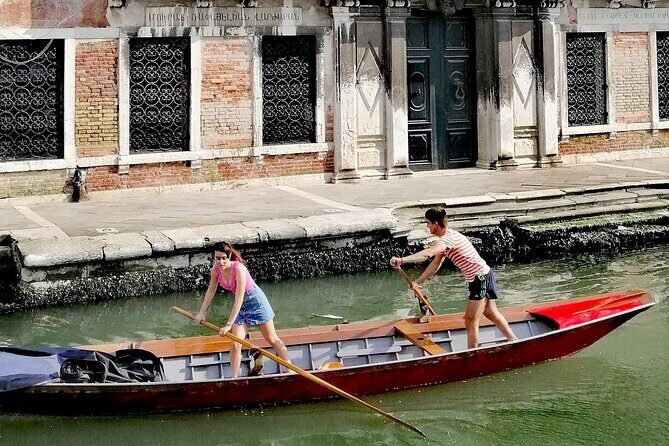
Now you shift to Fondamenta Zattere along the Giudecca Canal side. This is where Venice gets more open, more view-based, and less “tight streets” paced.
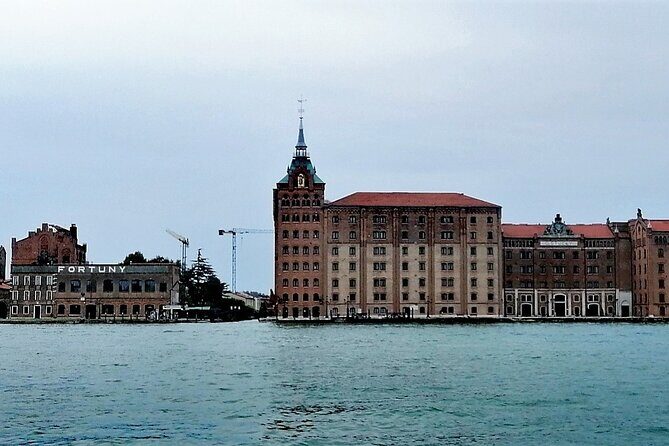
You’ll pass the Molino Stucky building, a 19th-century flour mill that’s been transformed into a luxury hotel. Even if you never plan to stay there, the building tells a story about Venice’s industrial past and how old structures can be reused without erasing their mass and character.
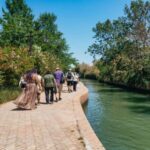
Then you continue along the wide fondamenta—this section is peaceful enough to feel like a reset after churches and narrow lanes. It’s also historically specific: the promenade area was paved in 1519, and it connects to the old “Zattere” system of rafts that carried wood toward the Arsenale from the mainland.
I love this part because the tour doesn’t pretend Venice is frozen in time. It shows how the city’s economy and transportation shaped the shoreline we walk today.
A practical reality: this is a good place to take slow steps. You’ll likely feel less rushed and more ready for the next hidden workshop stop.
Squero San Trovaso: Gondola Craftsmanship at the Source
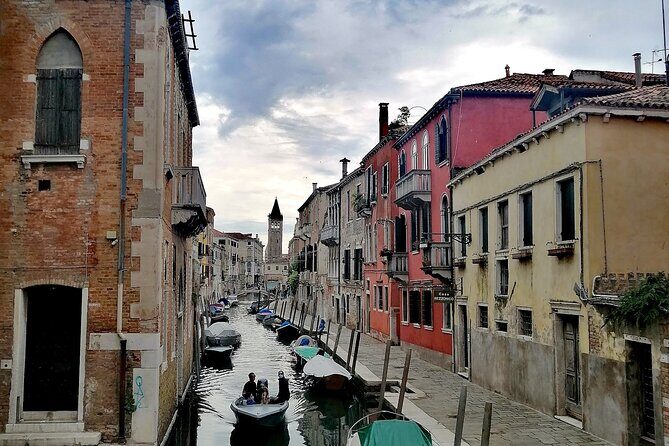
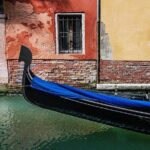
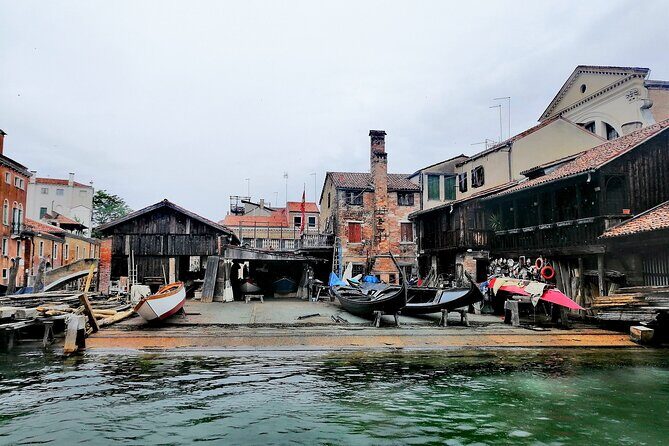
Squero di San Trovaso is where the tour gets genuinely hands-on in spirit. You’re taken to a boatyard that represents centuries of gondola-making tradition—woodwork, craft, and canal-side life instead of only architecture and art.
This stop feels like the Venice you can’t recreate in a photo. Even if everything isn’t “performing” for tourists, you’re seeing the space where a major Venetian symbol actually comes from: the craft behind the gondola, not just the gondola ride.
Why it’s highly praised: it’s specific. A big sightseeing list can feel interchangeable. A gondola workshop gives you a Venice identity you can’t swap out with another city.
If you care about skills, materials, and how things are made, you’ll probably like this stop the most. And it also breaks the day into something practical and tactile after the more conceptual moments (art, architecture, references).
Punta della Dogana: Customs-Building Art, Baroque Church, and the Fortune Goddess
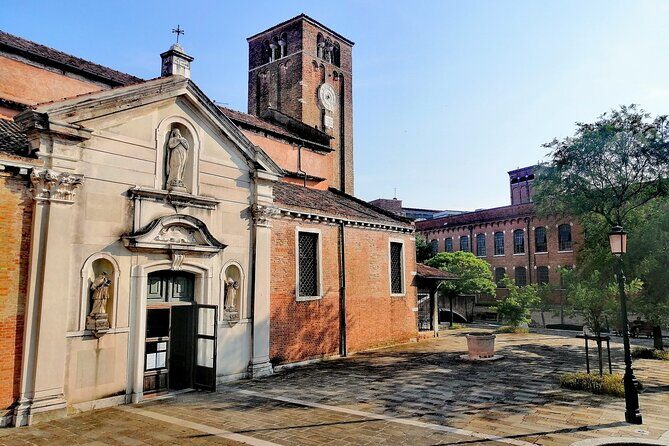
The walk reaches its scenic tip near Punta della Dogana in the Dorsoduro triangle area, where the Grand Canal meets the Giudecca Canal. This is one of those Venice corners that feels like it was built for viewpoints, not just passing through.
Along the way, you’ll pass a museum housed in an old customs building, see an impressive baroque church, and visit the Patriarchal Seminary of Venice area. The tour ties these together by showing how institutions—commerce, religion, education—occupied this strategic location.
Then comes the signature visual: the Fortune Goddess statue, watching over the scene. It’s a perfect endcap because it blends mythology, location, and water views into one clear finale.
I like ending here because it gives you momentum. After the tour ends, you’re in a place where it’s easy to keep walking, find a café, or connect to your next transportation plan without retracing your steps.
Price and Value: Is $92.92 Fair for Two Hours?
At $92.92 per person for about 2 hours, this isn’t a “budget throwaway” tour. But it also isn’t overpriced for what you get: a licensed guide, English commentary, a max group size of 15, and multiple stops that include both art sights and craft-focused Venice.
Here’s how I’d judge the value for your money:
- You’re paying for guidance to reach quieter, harder-to-spot sites and to understand details like the San Pantalon ceiling and the canal reflection effect tied to the Banksy graffito.
- You’re paying for pace control. Small group size matters in Venice, where crowds can crush the experience in minutes.
- You’re getting a coherent theme. Dorsoduro isn’t just random wandering; it’s a connected route from Gothic architecture to craft to a waterfront finish.
Also, the booking lead time is a clue. This tour tends to get reserved months ahead (on average around 122 days). If you’re visiting in a busy season, I’d lock in dates earlier rather than assuming you can wing it.
One more value detail: stop admission is listed as free across the included sights. So you’re not constantly budgeting for individual tickets mid-walk.
Who This Tour Fits Best (and Who Might Skip It)
This is a strong fit if you want a calmer Venice day that still feels meaningful. It works especially well for:
- First-time Venice visitors who want more than the big-name highlights
- Travelers who like neighborhoods and street-level details
- Anyone interested in architecture, art in unusual places, or Venice’s gondola craft tradition
- People who prefer small groups and a guide who can keep things moving at a human pace
You might consider another option if you’re expecting a high-speed “see everything” checklist, or if you’re dealing with mobility limits. This walk is short by duration, but it’s still a walking tour on uneven streets.
And for private-group planners: pickup is available only if you book a private group. Shared tours meet at the general meeting point in Campiello dei Squelini under the trees.
Should You Book This Offbeat Venice Walk?
If you’re choosing between another standard Venice highlight route and something that nudges you into the quieter side of the city, I’d pick this one. The combination of Dorsoduro neighborhoods, a memorable church ceiling moment, a modern street-art surprise, and a gondola workshop stop is a rare mix for a two-hour format.
Book it if you like guides who tell you what to look at and then get out of the way so you can actually see it. Also, if you’re hoping to avoid peak crowd pressure, the small group size and neighborhood routing are exactly what you want.
If you’re unsure, use the fact that you can cancel for a full refund with advance notice. That flexibility makes it easier to commit—especially when you’re building a multi-day Venice schedule.
FAQ
How long is the Off the Beaten Path Walk in Venice?
It’s about 2 hours.
Where does the tour start and end?
It starts at Campiello dei Squelini, 30123 Venezia VE, Italy, and it ends near Punta della Dogana in the Dorsoduro area (30123 Venezia VE).
Is the tour in English, and do I need a paper ticket?
The tour is offered in English, and you’ll receive a mobile ticket.
Is pickup available?
Pickup from your hotel or another location is available only for the private group option. For shared small-group bookings, you meet the guide at the general meeting point in Campiello dei Squelini under the trees.
Are there admission fees for the sights on the walk?
Admission tickets are listed as free for the stops included on the route.
Is there an extra €5 Venice access fee?
On certain dates, some day visitors staying outside Venice may need to pay a €5 access fee. You can check the applicable days and exemptions at https://cda.ve.it