REVIEW · PADUA
Padova Walking Tour with Audio and Written Guide by a Local
Book on Viator →Operated by Walking Cap · Bookable on Viator
Padua rewards walkers, and this self-guided format makes that easy. You get an audio + written guide in several languages, so you can pause, wander, and still understand what you’re looking at. I like that the route hits the city’s big names fast, without forcing a strict group timetable.
Two standout wins: you can start and stop the audio whenever you want, and the guide gives practical ideas for local food spots instead of only dates and dates. The one real catch is that the whole experience depends on your smartphone internet, so if you go in with spotty data (or no phone), you’ll feel the friction early.
In This Review
- Key Things to Know Before You Go
- A Self-Guided Padua Walk That Lets You Set the Pace
- How the Audio and Written Guide Works on Your Phone
- Route Overview: Nine Stops in About 3 to 4 Hours
- Scrovegni Chapel: Giotto’s Frescoes and the Optional 16€ Ticket
- Eremitani Church and the Art-Laced Side of Padua
- Piazza dei Signori: Power, Pageantry, and the Carraresi Era
- Pedrocchi Café: A Famous Break With a Very Padua Flavor
- Piazza delle Erbe and Palazzo della Ragione: Trade Meets Tradition
- Palazzo Bo: The University Founded in 1222
- Basilica of St. Anthony and Prato della Valle: Two Big Spiritual and Open-Sky Endings
- Price and Value: Why 7.84€ Makes Sense (and When It Doesn’t)
- What to Watch For: The One Big Practical Gotcha
- Who This Tour Fits Best
- Should You Book This Padova Walking Tour?
- FAQ
- Do I need to buy tickets for the Scrovegni Chapel?
- Is admission free for the other stops?
- How long does the walking tour take?
- Where does the tour start and end?
- What do I need on my phone to use the guide?
- Can I listen through headphones or my phone speaker?
- What if I need to cancel?
Key Things to Know Before You Go
- Audio and text together: you’re not stuck with one format
- Flexible timing: no fixed pace or “keep up” pressure
- Optional spend at Scrovegni: the 16€ ticket is not included
- Food-focus tips: guidance points you toward authentic local bites
- Smartphone required: internet connection is essential to use the guide
- Free monument stops: most key sights on the route don’t charge admission
A Self-Guided Padua Walk That Lets You Set the Pace
This is a walking tour in your control. The route is laid out with clear stops, but you’re not locked into a marching schedule. In about 3 to 4 hours, you can cover nine major landmarks and get enough context to enjoy them (and still have time to linger where something catches your eye).
That matters in Padua because the sights aren’t all “one big museum moment.” You’ll bounce from chapel art to church architecture, from famous squares to a classic café, and then into the religious gravity of the Basilica of St. Anthony. A group tour can rush the in-between parts. A self-guided format lets you slow down when the city is doing its job.
The tour also works well for people who want a first-day orientation. You’ll come away with a mental map of where everything is, and ideas for what to return to later.
You can also read our reviews of more walking tours in Padua
How the Audio and Written Guide Works on Your Phone
This guide is delivered digitally. You’ll use a smartphone with an internet connection to access the digital guide (the activation steps are in your voucher). You’ll hear the audio either through your phone speakers or using headphones if you have them.
What I really like about this system is the control. The audio isn’t an all-or-nothing blast. You can pause or restart as you walk, so you can read, look up at a façade, and then resume narration when you’re ready. The written guide mirrors the audio, so if your ears are busy (or you’re just standing there staring at frescoes), you can switch modes.
Language support is solid: the experience offers audio and text in English, Spanish, Italian, and German. That’s a big deal if you’re traveling with someone who wants the same information in their own language.
One practical note: this is not a “paper map and wander” situation. You’ll be figuring out directions via what’s provided in the guide, so bring patience at the start and get your phone ready before you begin.
Route Overview: Nine Stops in About 3 to 4 Hours
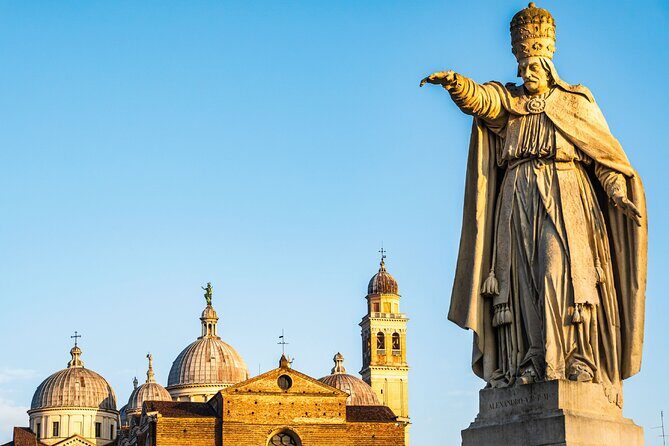
The tour loops back to the same place: Prato della Valle. Start there, follow the guide stop by stop, and end back at Prato della Valle. Most stops are built to take around 15 to 25 minutes, which is exactly what you want for a first pass through a historic core.
Here’s how the timing “feels” in real life:
- The route is short enough that you won’t be exhausted, even if you stop for photos.
- You’ll have time to read the essentials at each stop without turning the day into homework.
- The optional ticket at Scrovegni can stretch your time, but it’s clearly marked as not mandatory.
The maximum group size is listed as 99 travelers, but since this is self-guided, that number won’t translate into you being stuck in a crowd.
Scrovegni Chapel: Giotto’s Frescoes and the Optional 16€ Ticket

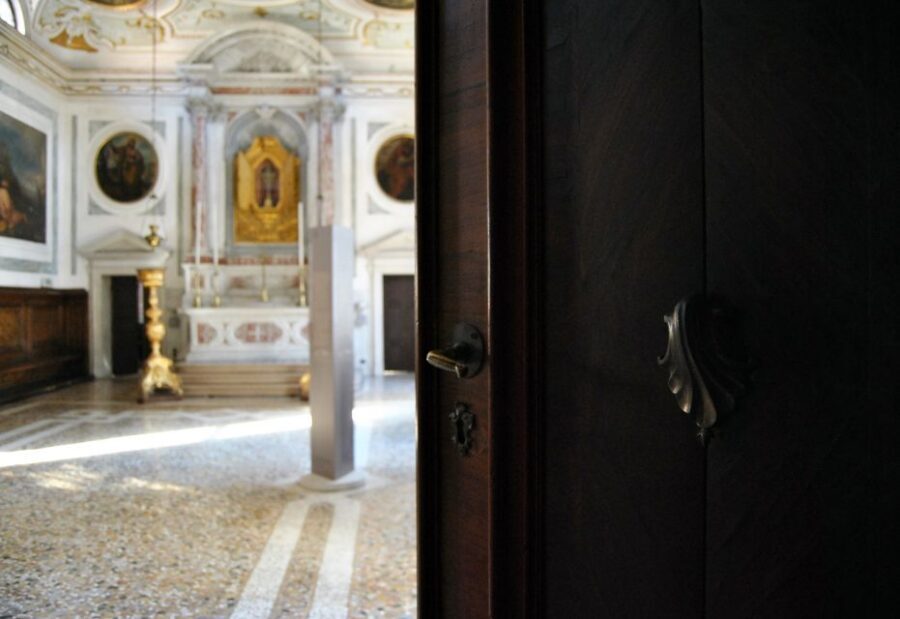
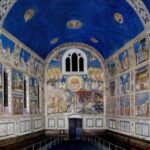
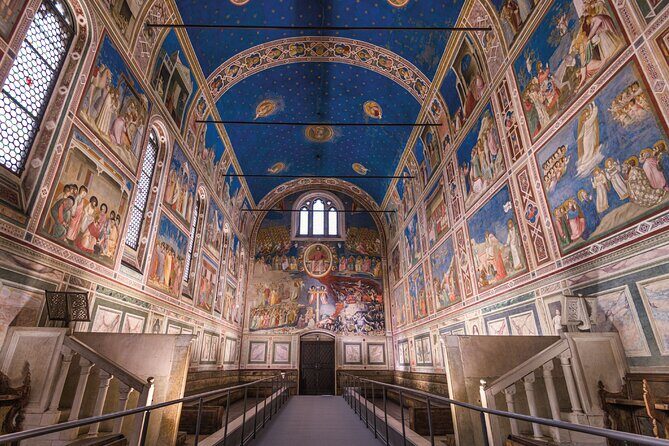
Stop one is the Cappella degli Scrovegni, often connected in people’s minds with Giotto’s fame. The setting here adds an extra layer: it sits within the area of the Roman amphitheatre, and even the chapel’s façade connects to older Roman building traces.
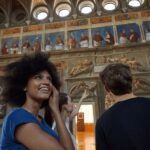
Inside is where the “worth it” argument lives. You’ll find paintings attributed to Giotto, and the whole place is described as a monumental treasure hiding in plain sight. Even if you don’t buy the ticket, knowing what to look for makes the exterior visit feel less like a quick peek and more like you’re oriented for when you return.
Budget note: the Scrovegni ticket is not included. The provided cost is 16€, and the ticket is described as not mandatory. My practical suggestion: if you care about fresco art, plan the ticket early so it doesn’t derail your timing. If you’re more about walking and squares, you can skip inside and keep moving.
Eremitani Church and the Art-Laced Side of Padua
Next up is Chiesa degli Eremitani, a World Heritage Site. This church was built between 1260 and 1306 for Augustinian hermit friars. Later, in the 14th century, it became one of the most important churches in Padua and attracted major artists.
Two names matter here: the church is associated with works by Andrea Mantegna and Guariento. Even without going deep into art history, that’s a useful mental hook. You’re not just looking at stone. You’re standing in a place that mattered to the city’s artistic ambitions.
Admission here is listed as free, so it’s a low-risk stop. The guide gives it around 20 minutes, which is enough time to absorb the key features without rushing.
If you’re trying to avoid museum fatigue, this is one of the good balance points on the route: meaningful, not long, and free.
You can also read our reviews of more guided tours in Padua

Piazza dei Signori: Power, Pageantry, and the Carraresi Era
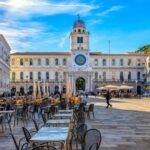
From churches you move into the civic heart: Piazza dei Signori. This square is named for the Palazzo della Signoria—also referred to as the Palace of the Carraresi—the home of Padua’s lords from 1318 to 1405.
What I like about this stop is the way it reframes what you see. Squares often feel generic to newcomers, but this one has a political story baked into its walls. When you understand it was tied to rulers and ceremonies, you’ll read the space differently while you stand there taking photos.
The guide keeps this stop at about 20 minutes, and admission is listed as free. You’ll likely want to spend a bit longer if you’re the type who likes to look up—architecture is doing a lot of the talking in Italian piazzas.
Pedrocchi Café: A Famous Break With a Very Padua Flavor

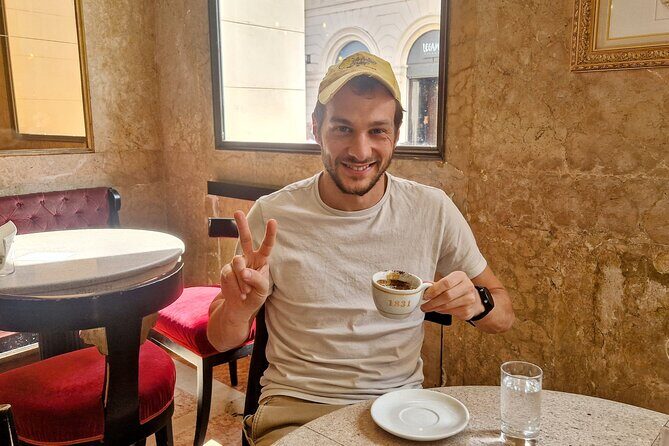
Then comes a stop that isn’t a landmark monument, but it’s absolutely part of the city’s identity: Pedrocchi Café. This is presented as an institution in Padua and a must-do on your walk.
If you’re in a hurry, the guide suggests a short visit. That’s smart. You’re not committing to a long meal, just checking out a classic place people associate with the city.
The standout detail here is their signature drink: the Caffè Pedrocchi. It’s described as espresso coffee mixed with cocoa, milk, and mint syrup. It’s the kind of combo you’ll remember because it sounds slightly unreal until you try it.
This is also one of the better moments to step away from walking intensity. Sit for a few minutes, let your phone rest, and enjoy a local-style break before you continue through more religious and civic sites.
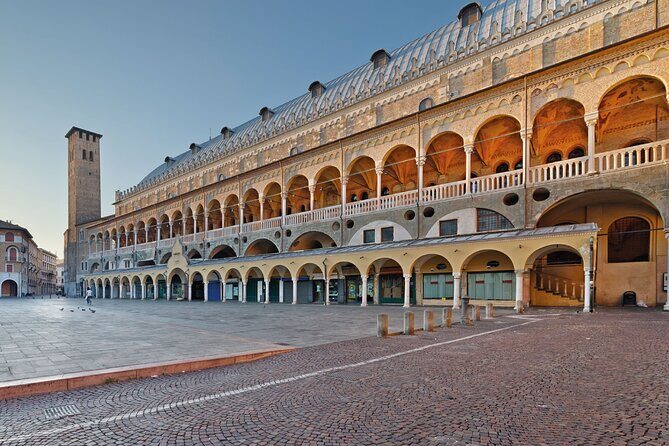
Piazza delle Erbe and Palazzo della Ragione: Trade Meets Tradition
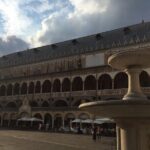
Next is Piazza delle Erbe, a square that historically served as Padua’s commercial center for centuries. The guide contrasts it with Piazza dei Signori: that nearby square was more tied to institutional celebrations, while Piazza delle Erbe hosted more popular festivities.
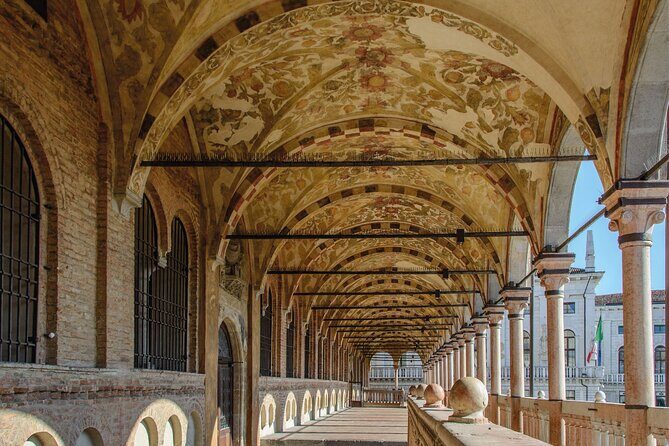
Look for the Palazzo della Ragione overlooking the square. This is a good “pause and watch” stop if you like people-watching and street-life energy. Even on a quiet day, the space has a working-market vibe baked in.
The guide gives you about 15 minutes here, which is enough time to take in the main surroundings and move on. Admission is listed as free, so there’s no reason to rush.
My advice: if you want one stop to “feel like Padua,” make it Piazza delle Erbe. It’s the most day-to-day sounding part of the route.
Palazzo Bo: The University Founded in 1222
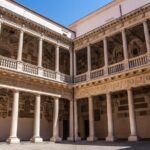
Now for Padua’s academic backbone: Palazzo Bo. This is where you connect with the University of Padua, known as the Studium Patavinum. The university was founded in 1222, designed to house students who left Bologna because the atmosphere was considered too controlled by the Church.
That context adds meaning to the building. You’re not just visiting old walls; you’re seeing a place that shaped how learning happened and where students went when they wanted something different.
The guide places this stop at around 20 minutes, and admission is listed as free. If you enjoy history that explains why cities developed the way they did, you’ll appreciate this one. It’s a reminder that Padua wasn’t only art and churches. It was also ideas and institutions.
Basilica of St. Anthony and Prato della Valle: Two Big Spiritual and Open-Sky Endings
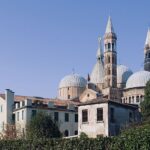
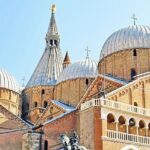
The route’s next major spiritual stop is the Basilica of St. Anthony (often called the Basilica del Santo). It’s described as one of the most visited sanctuaries in the world.
This is one of those sites where the practical payoff matters. You’ll learn that the basilica functions like a treasure chest, including the remains of Saint Anthony of Padua. So even before you step into details, the reason people come makes sense.
The guide offers about 25 minutes here. Admission is listed as free, which helps. If you’re short on time, focus on understanding the significance rather than trying to absorb everything at once. The audio and written parts make it easier to know what you’re looking at.
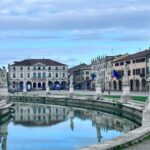
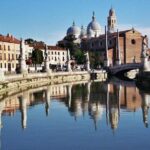
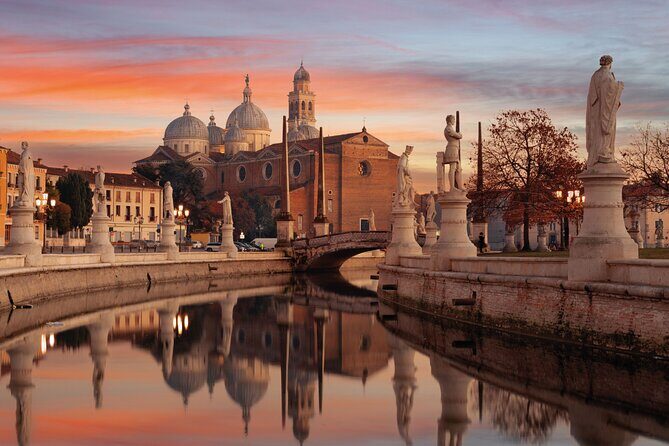
Finally, you wrap up at Prato della Valle. This huge square is described with serious scale: 88,620 m², and it’s listed as the second largest square in Europe, after Moscow’s Red Square. It’s a wide-open finish after dense stone, and it gives you room to breathe and regroup.
The guide estimates about 20 minutes here. It’s a good ending point because it makes the route feel complete. Start at a grand open space, visit art and faith in between, and return to openness.
Price and Value: Why 7.84€ Makes Sense (and When It Doesn’t)
At $7.84 per person, you’re paying mainly for the digital guide experience: audio and written commentary in multiple languages, plus tips for monuments, history, curiosities, and personal anecdotes. You also get advice for local restaurant stops with authentic food suggestions.
The best value part is flexibility. Instead of spending more money to “be led,” you’re spending a small amount to get context while walking at your pace. That’s a bargain if you’re comfortable using a smartphone and you want to move freely.
Now the tradeoff: the one explicit extra cost is Scrovegni Chapel. The ticket is 16€ and is not included. So your “real” total depends on your priorities:
- If you want chapel art, expect to add the ticket.
- If you’d rather focus on the wider city route, you can skip it and still see plenty.
This is also a good choice if you don’t want to schedule a guided group time. You’re choosing your hours, not fitting into someone else’s.
What to Watch For: The One Big Practical Gotcha
The biggest consideration is simple: you need your smartphone and internet connection to use the digital guide. If your data is weak in historic areas, have a plan. Don’t wait until you’re already at the first stop to test your connection.
The second practical issue is “finding your footing” early. Since this is self-guided and direction-based, it helps to start at Prato della Valle with your phone already ready to go. If you end up mixing up one church for another early on, you’ll lose time sorting things out.
Finally, the route is designed to be efficient. If you’re the kind of traveler who always wants “more sights,” you might wish the walk included extra stops or longer visits at each place. The time per stop is intentionally tight.
Who This Tour Fits Best
This one fits best if you:
- want Padua highlights without paying for a live guide
- like self-paced walking and the ability to pause for reading or photos
- enjoy combining sightseeing with local food ideas
- travel with at least one person who’s comfortable using a smartphone guide
You might look elsewhere if you:
- want a tour that works fully offline
- hate relying on a phone for navigation and content
- prefer a guide to answer questions on the spot
For most people who want a strong “first look” at Padua, this is a smart match.
Should You Book This Padova Walking Tour?
I think it’s worth booking if you want an easy, low-cost way to understand Padua while you walk. The mix of audio + written guidance, the control you get over timing, and the inclusion of food tips make it feel more useful than a basic sightseeing app.
Book it if you’re willing to manage one thing: your phone and internet connection. If that part sounds annoying, wait and reconsider, especially before you commit to the optional Scrovegni ticket. If you can handle that, you’ll get a smooth route that covers the city’s core in a way that’s actually enjoyable.
FAQ
Do I need to buy tickets for the Scrovegni Chapel?
The Scrovegni Chapel ticket is not included. The provided ticket cost is 16€ and it’s described as not mandatory.
Is admission free for the other stops?
Admission is listed as free for several stops including Chiesa degli Eremitani, Pedrocchi Café, Piazza dei Signori, the Cathedral Basilica of Santa Maria Assunta, Piazza delle Erbe, Palazzo Bo, Basilica of St. Anthony, and Prato della Valle.
How long does the walking tour take?
The duration is listed as approximately 3 to 4 hours.
Where does the tour start and end?
It starts at Prato della Valle, 35141 Padova PD, Italy, and ends at the same location.
What do I need on my phone to use the guide?
You’ll need a smartphone with an internet connection to use the digital guide, and activation instructions are included in your voucher.
Can I listen through headphones or my phone speaker?
Yes. You can hear the audio through your phone speakers or, if you have headphones, through your headphones.
What if I need to cancel?
Free cancellation is available. You can cancel up to 24 hours in advance for a full refund. If you cancel less than 24 hours before the start time, the amount paid is not refunded.