REVIEW · VERONA
Peschiera Walking Tour- Passeggiata nella storia
Book on Viator →Operated by Garda Landing · Bookable on Viator
Short walk, big walls.
This Peschiera del Garda walking tour gets you into the pentagonal fortress site that UNESCO lists, right on the ring of river and moat that made this place so defensible. You also get the story in a way that makes the architecture make sense, not just look impressive. I like how it’s a calmer option than the most crowded Lake Garda stops, and the guide-led format helps you read the fortress fast. One heads-up: this is an outdoor walking experience, and at least one guest noted it wasn’t comfortable on a hot day and may be tough if mobility is limited.
Two things I really like. First, the tour focuses on the fortress as a design problem—how the ramparts and defensive layout were built to work. Second, the guide does the heavy lifting by connecting time periods you might otherwise see as separate eras. In the past, guides such as Thomas and Mateo have been praised for being clear and informative (and even when you end up as a small group).
It’s short enough to fit into a busy day, but that also means you’ll be doing a lot of “see, learn, move” in a small window. I’d treat it as a smart primer for what you’ll explore next on your own.
In This Review
- Key highlights I’d plan around
- Why Peschiera’s fortress is the smart Lake Garda detour
- Timing and logistics: where you start, where you end
- Entering the pentagonal fortress: what the Venetian ramparts teach you
- The Austrian Empire military district: reading the fortress in layers
- Roman ruins inside the fortress: why it feels like time travel
- Views and photos: what to expect from the walking route
- Price and value: does $51.59 make sense?
- How to pair this with sightseeing in Peschiera
- Should you book Passeggiata nella storia?
- FAQ
- Where does the tour start and end?
- How long is the walk?
- What’s included in the ticket price?
- Do I need to print a ticket?
- Is there a limit on group size?
- Is confirmation provided after booking?
- Is the tour near public transportation?
- What if the weather is bad?
- Are service animals allowed?
Key highlights I’d plan around
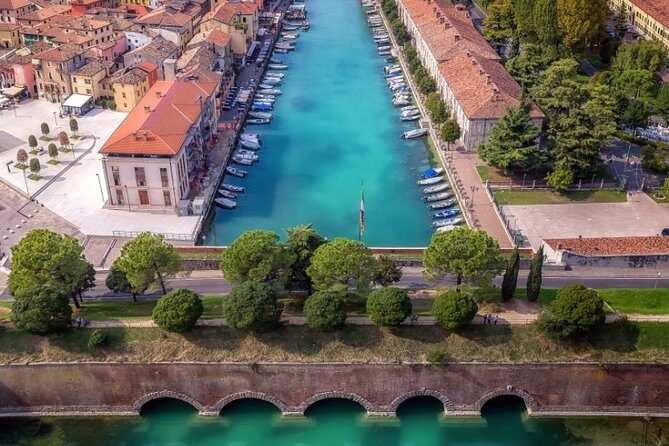
- UNESCO-listed fortress setting inside a pentagonal defensive structure
- Venetian ramparts plus Austrian Empire military district on one walk
- Ancient Roman ruins you pass through the fortress complex
- Guided pacing that keeps a 35–45 minute window focused
- Entrance included to the national monument Palazzina storica
- Small-group feel with a maximum of 25 people
Why Peschiera’s fortress is the smart Lake Garda detour
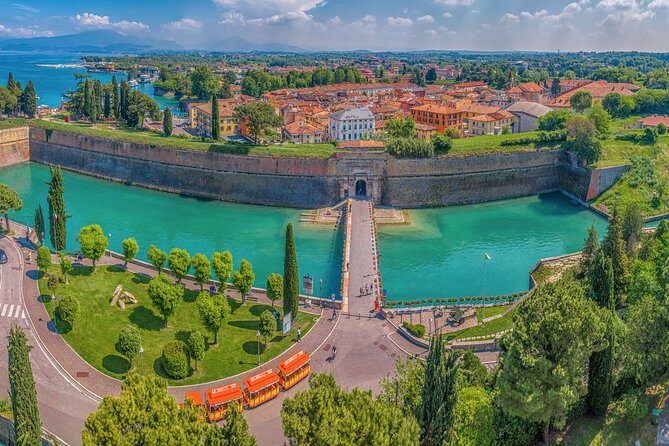
Peschiera del Garda sits on Lake Garda in that “pretty but practical” way—easy to reach, pleasant to wander, and calmer than some of the louder lake towns. The big reason to come is the Venetian fortress, and not just because it’s famous. It’s famous because the whole place was engineered as a defensive system, and the town’s waters and fortifications were designed as one unit.
On this tour, you’re not just looking at old stones from the outside. You’re walking along the fortress circuit, so you can actually understand the geography: where you’d position defenders, where the structure would control movement, and how the waterfront/water feature is part of the defense. If you like architecture that has a job—not just good looks—this kind of guided route pays off quickly.
And yes, it’s also a nice way to take a break from the lake crowds. Instead of doing another standard “photo stop,” you get a guided interpretation inside a site with real layers: Venetian planning, Austrian-era military updates, and even older Roman remnants.
You can also read our reviews of more walking tours in Verona

Timing and logistics: where you start, where you end
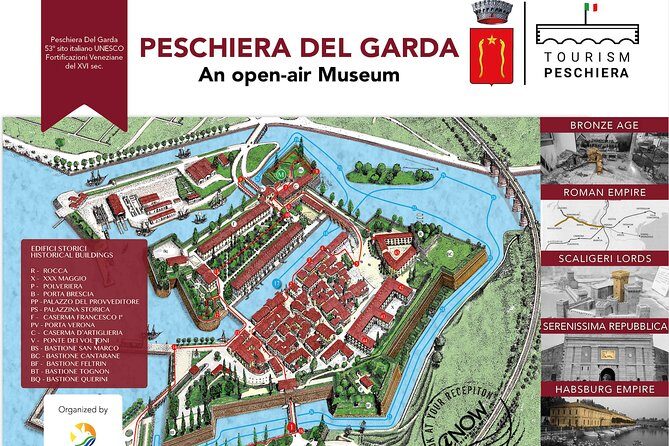
This is built to be easy to plug into a day. The walking tour runs about 35 to 45 minutes total, and the guided fortress portion is about 35 minutes. That extra time window matters because you’re moving from the meeting point area and ending back in the center of town.
You meet at the Tourism Peschiera Infopoint, Piazzale Cesare Betteloni, 15. The tour ends at Piazza Ferdinando di Savoia. Ending near a public square is a travel gift: you’re not stuck wandering back to where you started.
A few practical bits that make it smoother:
- You get a mobile ticket.
- You receive confirmation at booking time.
- It’s near public transportation.
- The tour allows service animals.
- Group size stays small, with a maximum of 25 travelers.
The one thing to plan around is weather. The experience requires good weather, and if it gets canceled for poor conditions you’ll be offered a different date or a full refund. In plain terms: don’t count on it as a rainy-day backup.
Entering the pentagonal fortress: what the Venetian ramparts teach you
The walk’s core attraction is the UNESCO-listed Venetian fortress. The most distinctive idea you’ll pick up is the fortress’s pentagonal defensive structure. Even if you don’t geek out on military engineering, your eyes will catch the shape and the logic behind it because the route takes you along the defensive lines.
As you move, you’ll see how the walls and ramparts worked together as a system, not random fortifications. The guide’s job is to connect those “visual clues” to the historical why. That’s the difference between standing in front of stone and actually reading it.
Also, this isn’t just a wall-walk. There’s a specific stop tied to the site: the entrance to the national monument Palazzina storica is included. That matters because it gives the tour a built-in “pause point” where you can shift from ramparts-and-structure to human scale. Even if you only catch a portion of the site details during the short visit, included admission keeps you from having to figure out ticket logistics mid-day.
If you’re hoping for a long, museum-style experience, this isn’t that. But for learning the fortress in a compact amount of time, it’s a strong format.
The Austrian Empire military district: reading the fortress in layers
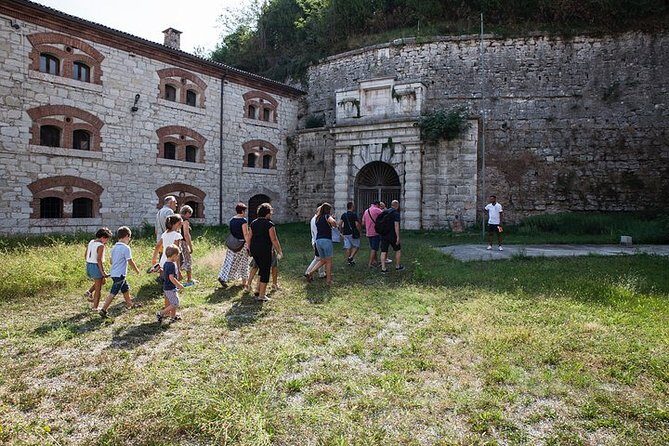
One reason I’d choose this particular tour is that it doesn’t pretend the fortress was frozen in time. It connects the Venetian era to what came later, especially the military district built during the Austrian Empire.
That’s useful for you because it changes how you interpret the same walls. Instead of asking, What am I seeing? you can ask, Why did the later power adapt the site? Those answers are exactly where guided tours earn their keep. Without a guide, you might see two styles and move on. With a guide, you start to notice how control, defense needs, and architectural updates shape what survives.
This is also a good moment to slow your brain down. In a short walking window, it’s easy to let everything blur. But when your route clearly marks the “Venetian ramparts” phase and then shifts to the “Austrian Empire” military district, your understanding sticks more than it would on a self-guided loop.
In past tours, guides from Garda Landing—such as Thomas and Mateo—have been praised for making explanations clear. When that works, you end up feeling like the fortress gave you its own cheat sheet.
Roman ruins inside the fortress: why it feels like time travel
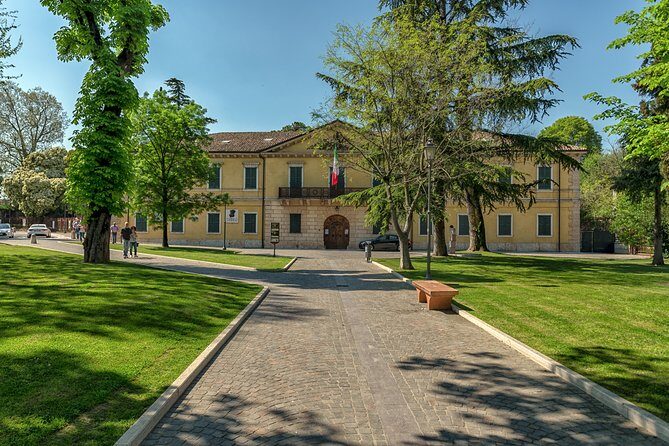
The final layer you’ll encounter during the route is the presence of ancient Roman ruins within the fortress area. That’s not just a trivia add-on. It helps you understand why this location mattered long before the Venetian era.
If you like travel that has continuity—places where different empires reused the same geography—this is satisfying. The fortress isn’t standing in isolation. It’s sitting on a spot where earlier settlement and strategic thinking were already in play, and later military planners took advantage of that.
And since this tour is organized around a walking itinerary, you don’t have to imagine connections. You see the layers in sequence, moving through the same strategic zone as the tour shifts eras.

Views and photos: what to expect from the walking route
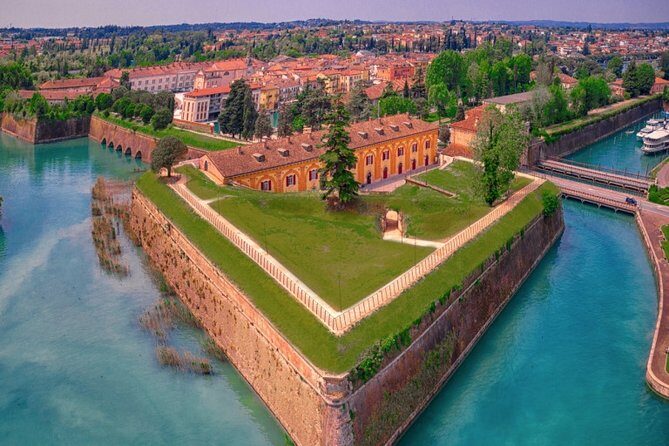
You’ll get photo opportunities as you move along the ramparts and defensive edges, with the fortress positioned beside the river/moat environment that made the site meaningful. That combination—structure plus water setting—tends to produce the best shots, because you’re not only photographing walls. You’re photographing the reason the walls were built.
The tour is also designed for a quick rhythm:
1) short explanation from the guide
2) you look at what that explanation points to
3) you move to the next section
It’s an efficient way to keep attention during a short 35-minute guided window.
What to wear and bring for comfort:
- Wear walking shoes you trust on uneven ground and steps (fortress sites often involve that reality).
- Bring water, especially in summer. One guest flagged that it can get hot, so plan for the outdoor parts.
- If you’re sensitive to heat, consider starting your day earlier so you’re not fighting midday sun.
For mobility concerns: the tour is generally described as possible for most people, but one guest noted it may not be suitable for physically impaired travelers. If you fall into that category, it’s worth thinking carefully about the walking demands before booking.
Price and value: does $51.59 make sense?
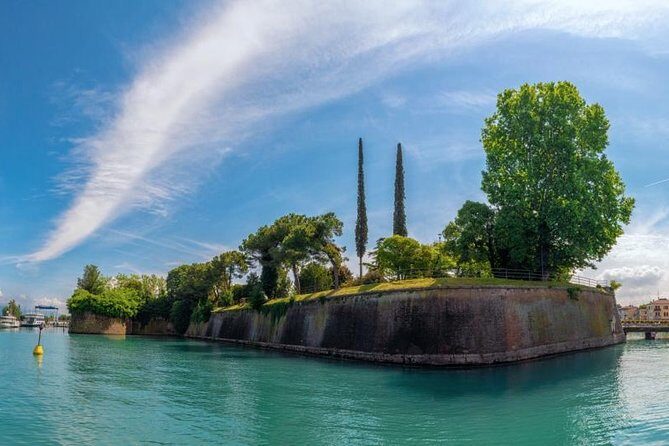
At $51.59 per person, this tour sits in the “small guided experience” range rather than a low-cost stroll. The value comes from what’s included and how it’s used.
You get:
- a guided tour inside the fortress (about 35 minutes)
- entrance to the national monument Palazzina storica
That included monument access is important. For many short tours, the guide is the main product, and entry fees aren’t always included. Here, you’re paying for both the interpretation and a meaningful portion of site access, which stretches your money farther than a pure “walk and talk” tour.
Also, the group size cap of 25 helps. A small cap doesn’t guarantee a private tour, but it does increase your odds of hearing the guide well and getting enough attention to connect details to the scenery. Reviews of the guides emphasize that the instruction style is a big part of why people enjoyed it, including cases where a guest ended up as the only participant.
In short: if you want a quick, guided read of a UNESCO fortress without paying for a longer museum day, the price feels fair.
How to pair this with sightseeing in Peschiera
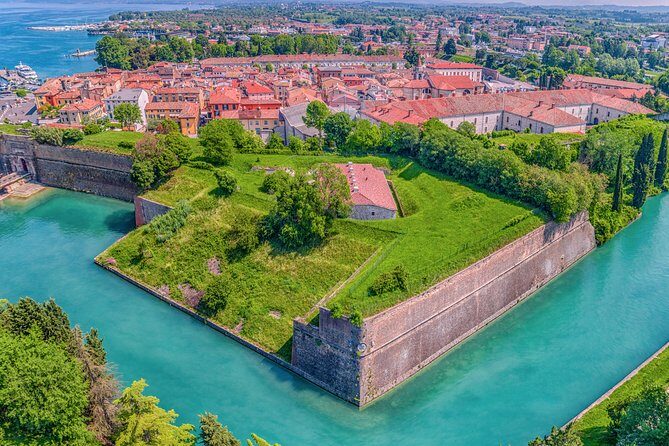
This is designed to be easy to pair with your own plans. The tour ends in a central square, so you can keep moving without losing time.
A practical way to plan your day:
- Do the fortress walk first, while your brain is primed for “how this place works.”
- Then use the rest of the day to wander Peschiera at your own pace—linger by the water, grab a snack, and explore the streets without rushing.
Because the tour gives you the fortress’s key layers, you’ll get more out of anything else you notice afterward: the shape of the perimeter, the logic of the defensive design, and the way later periods updated earlier structures.
Should you book Passeggiata nella storia?
Book it if you want a short, focused guide-led route that helps you understand UNESCO fortress architecture in layers—Venetian ramparts, Austrian Empire military updates, and Roman ruins—without turning your day into a long museum marathon.
Skip it (or at least think twice) if you can’t handle outdoor walking in warm weather, or if you need accessibility support that goes beyond a typical stroll. The experience is described as suitable for most travelers, but at least one guest specifically called out limitations for physically impaired visitors.
If you like practical travel—time-efficient, easy to fit in, and built around a real place rather than generic sightseeing—this one is a solid choice. It’s the kind of tour that makes the fortress feel less like scenery and more like a story you can actually follow.
FAQ
Where does the tour start and end?
The tour starts at the Tourism Peschiera Infopoint, Piazzale Cesare Betteloni, 15, 37019 Peschiera del Garda VR, Italy. It ends at Piazza Ferdinando di Savoia, 37019 Peschiera del Garda VR, Italy.
How long is the walk?
The tour lasts about 35 to 45 minutes, with the guided walking portion inside the fortress taking about 35 minutes.
What’s included in the ticket price?
The ticket includes the guided tour of the fortress and entrance to the national monument Palazzina storica.
Do I need to print a ticket?
No. The tour uses a mobile ticket.
Is there a limit on group size?
Yes. The tour has a maximum of 25 travelers.
Is confirmation provided after booking?
Yes. Confirmation is received at the time of booking.
Is the tour near public transportation?
Yes, it is described as near public transportation.
What if the weather is bad?
The experience requires good weather. If it’s canceled due to poor weather, you’ll be offered a different date or a full refund.
Are service animals allowed?
Yes, service animals are allowed.